
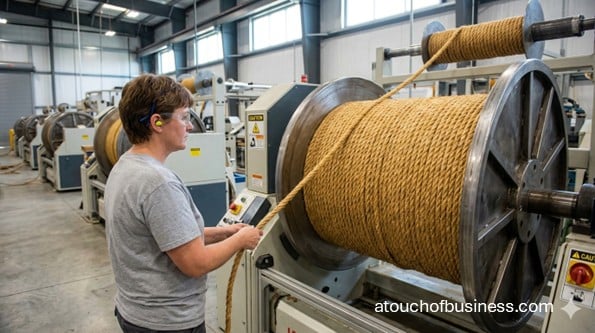
How to Start Rope Production With Buyer Needs in Mind
A rope manufacturing business turns raw fibers, yarns, or strands into finished rope and cordage products. In most startup cases, you will buy yarn or strand from suppliers, then wind it, twist it, braid it, coil it, cut it, label it, and ship it. Some businesses go further and make their own tape or monofilament in-house, but that adds more equipment, more utility demands, and a more complicated approval process.
Customers usually care about a few things right away: quality, consistency, lead time, and whether the rope arrives exactly as promised. That matters because rope is often bought by spec, not by impulse. Your buyer may need a certain diameter, breaking strength, package style, or cut length, and they may reject a shipment that looks fine to you but does not match their order sheet.
The work is practical and physical. A rope manufacturing startup needs a usable production sequence, room for raw materials and finished goods, safe machine setup, and clear quality checks before opening. If your layout is weak, small problems can turn into late orders, scrap, or customer complaints very fast.
Common products include laid rope, braided rope, specialty cordage, custom cut lengths, and rope packed on coils, spools, reels, or in cartons. Common customers include industrial distributors, utility contractors, marine suppliers, arborist suppliers, equipment manufacturers, and businesses that need private-label or custom packaged rope.
There are other ways to work in this industry, such as custom converting, private labeling, or highly specialized safety rope. Still, for a first launch, the most practical version is usually a plant that buys raw material and focuses on a narrow product range. That keeps the startup process cleaner and reduces the number of things that can go wrong before opening day.
Is This Business The Right Fit For You?
Before you look at machines, ask whether business ownership fits you at all. A rope manufacturing business can be rewarding, but it also brings pressure that many first-time owners do not expect. You are not just making rope. You are managing suppliers, production timing, quality checks, safety, paperwork, storage, shipping, and cash flow at the same time.
You also need to ask whether this specific business fits you. Do you like process-driven work? Can you stay calm when a machine goes down, a shipment arrives late, or a batch does not meet spec? Are you comfortable working in an industrial setting where accuracy and safety matter every day?
Passion still matters. If you do not care about the product, the production process, or the customer problems your rope solves, the daily work can wear you down fast. That is why it helps to think about staying interested in the work over time before you invest in a plant, machinery, and inventory.
Motivation matters just as much. Are you moving toward something or running away from something? Starting a rope manufacturing business only to escape a job, money problems, or status pressure is a weak foundation. The business needs steady attention long before it starts to feel stable.
You should also get advice from people already in business, but do it the smart way. Only talk to owners you will not compete against. Reach out to people in another city, region, or market area. Use that time to ask what the work is really like, what surprised them, and what they wish they had set up sooner. Their answers come from daily experience, and that gives you a kind of practical view you cannot get from theory alone. Another helpful step is to look for firsthand owner insight before you commit.
A short reality check helps too. The pros include repeat business, a wide range of possible customer types, and the ability to open with a narrow line instead of a huge catalog. The hard parts include equipment costs, safety responsibilities, space needs, supplier dependence, and the risk of quality problems if your process is not under control.
If you are still interested, that is a good sign. Now it is time to look at the startup process in the right order.
Step 1: Choose Your Rope Line Before You Shop For Equipment
Your first big decision is not the building. It is the product line. A rope manufacturing business can produce laid rope, braided rope, specialty cordage, or a mix of custom packaged products. Each choice changes the machinery you need, the plant layout, the labor needed, and the quality checks you must build into production.
Start with a narrow opening line. Pick the rope construction, fiber type, diameter range, intended use, and packaging style. Decide whether you will sell standard coils, spools, reels, boxed lengths, or custom cut orders. This choice drives almost every other startup decision, including supplier setup, testing, storage, and pricing.
A small startup usually has a better chance when it avoids trying to serve every market at once. A rope manufacturing plant aimed at industrial distributors will not look the same as one focused on arborist rope, marine rope, or private-label packaged cordage.
Step 2: Decide How Far Upstream You Will Manufacture
Many first-time owners picture a fully integrated factory, but that is not always the best opening move. You can launch a rope manufacturing business by buying yarns or strands and turning them into finished rope. That is usually simpler than making your own monofilament or split-film tape in-house.
Why does this matter so much? Because once you add in-house extrusion or coating, you may also add more utility needs, more environmental review, more maintenance demands, and a more expensive equipment stack. A dry production plant that winds, twists, braids, coils, cuts, and packs rope is easier to open than a plant that also makes its own raw inputs.
Keep this decision honest. If your market does not require in-house extrusion at launch, staying with purchased raw material can reduce complexity and protect your working capital.
Step 3: Validate Demand And Pick A Starting Market
A rope manufacturing business should not open with vague demand. You need to know who the likely buyers are, what they order, how they package it, and how often they reorder. Check local and regional demand for industrial rope, marine use, arborist supply, utility work, and private-label packaging. That kind of demand review belongs in your early look at supply and demand, not after you sign a lease.
This is also where you find out how customers buy. Do they want bulk reels? Custom lengths? Private-label product? Fast repeat shipments? Low minimum orders? These details affect equipment, storage, packaging, and labor from the start.
Rope manufacturing customers usually care less about clever branding and more about product reliability. If your quality is uneven or your delivery dates slip, it will be hard to recover.
Step 4: Build A Practical Startup Plan
You do not need a fancy document, but you do need a real plan. A rope manufacturing startup should lay out the opening product line, customer focus, production sequence, raw material needs, equipment list, staffing plan, startup costs, pricing method, and pre-opening approvals. This is where many owners discover that they were trying to do too much too early.
Your plan should also show how material moves through the building. Think through receiving, storage, winding, twisting or braiding, coiling, cutting, labeling, packing, and shipping. If you want help putting those details in order, it is worth building a business plan before you commit.
Be direct about risk. Early failures in manufacturing often come from weak process flow, poor quality standards, equipment downtime, raw-material delays, and underestimating working capital. A rope plant is no different.
Step 5: Set Up The Legal Structure, Name, And Tax Basics
Once the business model is clear, form the legal entity and get the tax pieces in place. That usually means choosing the structure, filing the business, getting an employer identification number, and setting up any needed state tax registrations before you start opening accounts or signing contracts.
A rope manufacturing business also needs a usable name. Check business name availability, secure the domain, and make sure your name works on labels, cartons, invoices, and freight paperwork. If you plan to use a trade name that differs from your legal entity, look into the filing rules for that setup in your state or county.
If you are still deciding how to organize the company, compare your options before moving ahead with choosing your legal structure. Manufacturing businesses often have more liability exposure than a simple solo service business, so this choice deserves careful thought.
Step 6: Find A Site That Actually Fits Rope Production
A rope manufacturing business needs more than square footage. You need the right type of space. Look for a site that supports industrial use, receiving and shipping, safe machine placement, storage for raw materials and finished goods, and the utility capacity your equipment needs.
Think about ceiling height, floor loading, truck access, loading doors, power supply, ventilation, fire protection, and room for safe movement around the machinery. If the site is cramped, the trouble shows up everywhere: harder material handling, slower production, awkward packaging, and greater safety risk.
Do not assume a cheap building is a good fit. A lower rent does not help if you later find out the site cannot support your rope production line or requires expensive rework before you can open.
Step 7: Confirm Approvals Before You Build Out
This is where a regulated manufacturing business can get delayed. Before you install equipment or start tenant improvements, confirm that the property allows your intended use and that you understand the local approval path. Depending on the site and your process, you may need zoning clearance, building permits, fire review, or a certificate of occupancy before opening.
Some items are commonly required. These often include business registration, tax setup, employer accounts if you hire staff, and local use approval for the property. Other items depend on the location and the process. Those may include stormwater coverage, sewer approval for industrial discharge, air permits, or hazardous-waste registration if your operation creates regulated waste.
Opening before approvals are in place can delay launch and lead to expensive rework. That is why this step belongs before machinery is anchored to the floor.
Keep the compliance side simple and practical. A rope manufacturing plant that only works with purchased yarn indoors may have a lighter review than one that adds extrusion, coating, chemical use, outdoor material storage, or process wastewater.
For a broader look at permit and filing issues, this guide to business licenses and permits can help you organize the basics.
What To Ask Agencies Or Pros:
- Does this property allow rope manufacturing and warehousing as planned, or would the use need special approval?
- Will the buildout require building, electrical, mechanical, or fire review before equipment can be installed?
- If materials or scrap are stored outside, does the site need industrial stormwater coverage or a no-exposure filing?
- If the process creates wastewater beyond normal restrooms and sinks, who reviews that discharge before startup?
- Does this site need a certificate of occupancy before operations begin?
Step 8: Buy Equipment That Matches Your Opening Product Line
Equipment should match the rope you plan to make, not the rope you might make someday. A rope manufacturing startup may need bobbin winders, payoff creels, stranding machines, rope making machines, braiding machines, take-up units, coiling machines, length measuring equipment, cut-to-length tools, and end-finishing tools.
If you start with purchased yarn or strand, your equipment package can stay more focused. If you add extrusion, the list grows fast. That can include resin handling, extrusion machinery, cooling sections, stretch or orientation sections, heavy-duty take-up winding, and more specialized maintenance support.
Ask each supplier about guarding, installation, spare parts, commissioning, maintenance needs, and training. Do not price machinery as if the machine alone is the full cost. Delivery, rigging, controls, utility work, and startup support often matter just as much.
Step 9: Design The Production Sequence Before Opening
A rope manufacturing business runs better when the work moves in a straight, logical order. Your startup layout should support receiving, raw-material storage, bobbin prep, twisting or braiding, winding or coiling, cutting, end finishing, labeling, packing, finished-goods storage, and shipping.
Bottlenecks show up early. A slow winding station can back up the entire line. Poor storage can create damaged raw material. Weak labeling can lead to shipping errors. This is why you should think about production flow long before the first live order.
Quality control belongs in the layout too. Make room for product checks, lot tracking, retained samples, and test records instead of trying to squeeze them in later.
Step 10: Line Up Suppliers, Packaging, And Service Vendors
A rope manufacturing business depends on reliable supply. Before launch, set up your core raw-material suppliers, backup vendors, packaging sources, freight carriers, and any outside service providers tied to testing, calibration, waste handling, or maintenance.
Your supplier list may include yarn or strand vendors, resin suppliers if you extrude in-house, spool and reel suppliers, carton vendors, label suppliers, and parts support for the machines. You also need to know lead times, minimum order sizes, payment terms, and how each supplier handles shortages or substitutions.
This step is easy to underestimate. If the rope itself is ready but your reels, labels, or cartons are late, you still cannot ship on time.
Step 11: Put Quality Standards In Place Before The First Sale
Quality is not something you add after opening. A rope manufacturing business needs product specifications, raw-material checks, in-process controls, and finished-product testing ready before the first shipment leaves the building. That may include break testing, diameter checks, length checks, winding quality checks, and lot coding.
Write down what each product must be, how you confirm it, who signs off, and what happens when a batch fails. Keep retained samples when practical. Make sure your labels match the actual product and packaging. This sounds basic, but it is where many small manufacturers get into trouble.
If your rope is intended for demanding uses, your documentation matters even more. Customers may expect test records, product specs, and consistent packaging from the first order.
Step 12: Build Safety Into The Plant Before Staff Starts Work
A rope manufacturing plant has real safety obligations from day one. Machines need guarding. Energy-isolation points need lockout procedures. Chemical handling, if any, needs hazard communication. Forklift use requires proper training. Noise, housekeeping, and emergency planning also need attention before the business opens.
Some safety items are commonly required in a manufacturing setting when they apply to your plant. These may include machine guarding, hazard communication, personal protective equipment assessment, recordkeeping, sanitation, and emergency planning. Other items depend on the exact operation, such as respiratory protection, hearing conservation, or combustible dust controls.
Do not treat safety as paperwork only. In a rope manufacturing startup, weak guarding or poor housekeeping can stop production, create injuries, and bring outside scrutiny at the worst possible time.
Step 13: Set Up Insurance And Risk Planning
Insurance is part of opening, not something to sort out later. A rope manufacturing business usually needs a serious review of property coverage, general liability, product liability, equipment-related risk, and workers’ compensation when required by state law. Depending on the setup, you may also need coverage tied to vehicles, inventory in transit, or business interruption.
This is one place where a good broker can help you spot gaps. Rope may look simple to outsiders, but a manufacturing plant with inventory, machinery, shipping activity, and product-use risk deserves a careful review. A basic overview of business insurance can help you frame the conversation before you speak with an agent.
Think about risk beyond the policy too. What happens if one key machine fails? What if your main raw-material supplier has a delay? What if a batch has to be remade? Risk planning at startup is often about reducing single points of failure.
Step 14: Set Up Banking, Payments, And Financial Controls
A rope manufacturing business needs banking that fits business-to-business sales. That usually means a business checking account, payroll access, wire and automated clearing house capability, and a clean way to handle invoices, deposits, receivables, and vendor payments. It helps to start by getting your business banking in place before you begin buying inventory or accepting orders.
Your financial setup also needs working controls. Separate raw-material costs, packaging costs, labor, freight, waste, utilities, and machine support. If you do not know what each order really costs, your price list can look fine on paper and still hurt you in practice.
Be careful with customer terms. Many rope buyers are business customers, and that means you may be shipping before you are paid. That makes working capital a major startup issue.
Step 15: Plan Startup Costs, Pricing, And Funding Early
There is no single national startup cost range for a rope manufacturing business because the spread can be huge. The total depends on the product line, number of machines, level of automation, facility condition, utility work, testing setup, storage needs, staffing, and whether you make raw material in-house or buy it ready to use.
Main startup cost areas often include facility deposit or purchase costs, industrial buildout, machinery, installation, testing equipment, opening inventory, packaging, approvals, insurance, and working capital. The working capital piece matters more than many first-time owners expect. Manufacturing businesses can tie up cash in raw materials, finished inventory, and unpaid invoices very fast.
Pricing usually depends on material, diameter, construction, end use, package style, test requirements, and order quantity. Some products are priced by length. Others are sold by spool, reel, coil, carton, or custom quote. Before you publish prices, spend time on setting your prices in a way that reflects both your true costs and the realities of your market.
Funding may come from owner capital, partners, equipment finance, or a business loan. If you need outside money, be clear about what it is for. Machines, inventory, leasehold work, and working capital should not be lumped together in a vague request. The process is easier when you understand the basics of getting a business loan before you approach lenders.
Step 16: Build Your Name, Domain, And Basic Digital Footprint
Even a manufacturing business needs a clean public presence. Your rope manufacturing company should have a business name that works well on labels, cartons, quotes, invoices, and shipping paperwork. Secure the domain early, even if the website is simple at first.
Keep your first digital setup practical. A basic website should show what you make, who it is for, how buyers can contact you, and what formats you supply. Add a business email tied to the domain. Make sure your company name and contact information match across your documents and online listings.
Brand identity still matters, but it should support clarity. Good labels, a usable logo, clean quote forms, and consistent packaging do more for a rope manufacturing startup than flashy design. If you want to organize that side properly, think in terms of a small set of brand identity materials that you can use across the business.
Step 17: Prepare Hiring, Training, And Day-To-Day Roles
You may start lean, but a rope manufacturing business still needs clear roles from the beginning. Someone has to handle receiving, machine setup, quality checks, packing, shipping, paperwork, and supplier follow-up. In a very small operation, that may be you plus one or two employees.
Do not hire before you know what each person will actually do. A good first hire in manufacturing is often someone who can support production, material handling, and packaging while following written procedures. When the time comes, think carefully about deciding when to hire instead of adding payroll too soon.
Training should cover machine use, product handling, quality checks, labeling, housekeeping, and safety procedures. In a rope manufacturing plant, weak training can lead to waste, bad output, damaged raw material, or preventable injuries.
What does daily work look like before launch? You may spend the morning receiving yarn, checking paperwork, and setting up bobbins. Then you move into trial production, quality checks, label review, packaging tests, vendor calls, and end-of-day cleanup. It is hands-on work, not just office work.
Step 18: Create A Simple Marketing Plan For Launch
Marketing for a rope manufacturing business should match how customers buy. This is usually not a broad consumer advertising play. A better starting point is a focused plan built around your product range, customer type, contact process, sample policy, and follow-up routine.
Think about who should hear from you first. Industrial distributors, local commercial buyers, marine supply channels, arborist suppliers, and private-label prospects are all different. Your opening message should make it clear what rope you produce, what sizes or formats you handle, and how orders are packaged and shipped.
Keep it simple. A clean website, useful product sheets, direct outreach, a workable quote form, and fast replies can do more for early sales than broad promotion. The key is to look ready and dependable from the first contact.
Step 19: Run Trials And Fix Problems Before You Open
Do not let your first paid order become your first real test. A rope manufacturing business should run trial batches before opening. Use those runs to confirm machine settings, winding quality, cutting accuracy, labels, packaging, and shipping paperwork.
Run the product through the full sequence from receiving to shipment. Check whether materials move smoothly, whether the workstations make sense, and whether the staff can follow the process without confusion. Small issues that feel harmless in a test can create expensive problems once real customers are waiting.
This step also helps you catch weak points in your startup process. A poor label layout, a missing spare part, or a bad packaging choice is much easier to fix before opening.
Step 20: Use A Pre-Opening Checklist And Delay Launch If Needed
A rope manufacturing business is ready to open only when the essentials are in place. That means the site is approved, the machinery is safe and working, suppliers are lined up, quality checks are ready, packaging is on hand, banking is working, and the first orders can move through the plant without confusion.
If important approvals or systems are still missing, delay the launch. That is better than opening with preventable problems built into the business.
- Entity, tax ID, and any state registrations are complete.
- The site is approved for the intended manufacturing use.
- Any required local licenses, permits, or occupancy approvals are in place.
- Stormwater, wastewater, air, or waste-related reviews have been handled if your setup triggers them.
- Machine guarding, lockout procedures, and safety training are ready.
- Raw materials, packaging supplies, and labels are on site.
- Quality checks and lot tracking are written and tested.
- Shipping paperwork, invoices, and customer forms are ready.
- Banking, payroll, and vendor payment systems work properly.
- A full trial run has been completed from receiving through shipment.
Red Flags Before You Launch
A rope manufacturing startup has some warning signs you should take seriously. One of the biggest is trying to open with too many product types at once. Another is signing a lease before you know the property can support your intended use and equipment.
Other red flags include weak quality standards, no backup supplier plan, poor raw-material storage, unclear packaging rules, no room for finished goods, or pricing based on guesswork. A plant can look busy and still lose money if your process is weak.
Watch for personal warning signs too. If you dislike process work, safety routines, and physical problem-solving, a rope manufacturing business may not fit you well. That is not failure. It is better to know that before you invest heavily.
Final Thoughts On Starting A Rope Manufacturing Business
A rope manufacturing business can be a solid startup when you keep the opening line focused, choose a site that truly fits the work, and build quality and safety into the plant from the beginning. The business rewards owners who like process, consistency, and practical problem-solving.
Keep your early decisions grounded. Start with the rope you can produce well, not the full catalog you hope to offer one day. Set up the approvals before the buildout goes too far. Know your costs before you publish prices. And get advice from owners in markets you will not compete in while you still have time to make changes.
If you treat launch as a careful setup process instead of a rush to open, you give your rope manufacturing business a far better chance of starting on solid ground.
FAQs
Question: Do I need rope industry experience before I start a rope manufacturing business?
Answer: It helps, but it is not required if you keep your opening line narrow and learn the production process well. You do need to understand raw materials, machine setup, quality checks, and safety before you open.
Question: What is the simplest way to start a rope manufacturing business?
Answer: The simpler path is usually to buy yarn or strands and turn them into finished rope. Making your own tape or monofilament in-house adds more equipment, more utilities, and more approvals.
Question: What legal steps usually come first?
Answer: Start by choosing the legal structure, registering the business, and getting an employer identification number if your setup needs one. Then handle state tax registration, banking, and any local filings tied to the site.
Question: Do I need a special license to manufacture rope?
Answer: There is no single nationwide rope manufacturing license. The required approvals usually depend on your location, your facility, and whether your process adds environmental or safety triggers.
Question: What permits might apply to a rope manufacturing plant?
Answer: You may need local business licensing, zoning approval, building permits, fire review, and a certificate of occupancy. Some plants also need stormwater, wastewater, air, or hazardous-waste review depending on the process and the site.
Question: Does my building need a certificate of occupancy before opening?
Answer: Many manufacturing spaces do, especially if the building use is changing or if you are doing tenant improvements. Confirm that with the local building department before you move in equipment.
Question: How do I know if my site is right for rope production?
Answer: Check zoning, truck access, floor space, power, ventilation, fire protection, and room for storage and shipping. A cheap space can become expensive fast if it does not support the machines or the work sequence.
Question: What equipment do I need to open a small rope manufacturing business?
Answer: That depends on the rope you will make, but common items include winders, payoff stands, stranding or braiding machines, rope making machines, coiling equipment, measuring tools, cutting tools, and labeling gear. You will also need storage, material handling, and quality-testing tools.
Question: What safety setup should be ready before employees start work?
Answer: Machine guarding, lockout procedures, hazard communication, personal protective equipment review, and emergency planning should be ready before production starts. If you use forklifts, chemicals, or noisy equipment, those areas need their own controls too.
Question: What insurance should I line up before opening?
Answer: Most owners look at general liability, property coverage, product liability, and workers’ compensation when required by state law. You may also need coverage for equipment, inventory, vehicles, and lost income after a shutdown.
Question: What usually drives startup costs the most?
Answer: The biggest drivers are the machines, the building setup, utilities, testing equipment, opening inventory, packaging, and working capital. Costs rise quickly if you add in-house extrusion, coatings, or a wide product range.
Question: How should I set prices for rope products at launch?
Answer: Base prices on material, diameter, construction, packaging, order size, labor, freight, and waste. Many rope products are priced by length, spool, reel, coil, carton, or custom quote.
Question: What are the most common startup mistakes in this business?
Answer: Common problems include opening with too many product types, weak process flow, poor quality standards, and not holding enough working capital. Another major mistake is signing a lease before the site is fully checked for approvals and utilities.
Question: What does the daily workflow look like right after opening?
Answer: Early days usually include receiving raw material, setting up bobbins or reels, running production, checking quality, cutting, labeling, packing, and shipping. You also spend time fixing small process problems and following up with suppliers.
Question: Should I hire employees before I open?
Answer: Many owners open lean, but you may need help with production, material handling, packing, or shipping before the first orders go out. Hire only after you know the work roles clearly and have basic training and safety procedures ready.
Question: What systems should be in place before the first order ships?
Answer: You should have basic inventory tracking, lot control, quality records, supplier files, invoicing, packing paperwork, and shipping labels ready. A simple system that works is better than a bigger system nobody knows how to use.
Question: How should I market a new rope manufacturing business in the first month?
Answer: Focus on the buyers most likely to order your opening product line, such as distributors, contractors, or private-label accounts. A clear website, product sheets, and direct outreach usually matter more than broad advertising at this stage.
Question: What cash flow problems show up in the first month?
Answer: Raw materials, packaging, freight, payroll, rent, and machine-related costs can hit before customer payments arrive. That is why working capital matters so much in a manufacturing startup.
Question: Do I need formal quality control before I open, or can I build it later?
Answer: You need it before you ship your first order. Even a small rope plant should have product specs, lot tracking, test checks, and a clear way to handle a batch that does not meet spec.
Question: When do environmental rules usually become a bigger issue?
Answer: They become more important when materials are exposed outdoors, when the plant creates industrial wastewater, or when the process creates air emissions or hazardous waste. A dry indoor setup that buys yarn is often simpler than a plant with coating, extrusion, or wet processing.
Expert Advice From People In The Rope Business
One of the fastest ways to sharpen your thinking before launch is to learn from people who already build, test, sell, or design rope products for real markets. These interviews can help you see how experienced operators think about product quality, customer feedback, manufacturing choices, certifications, supply chains, and where new rope businesses can get tripped up early.
- Company Spotlight: Samson Rope
- THR Gear Shed Podcast: Crossing Over to Glacier Black
- Interview With Stefanie Marisch And Florian Teufelberger
- An Interview With Vitus Wuhrer, CEO Of Edelrid
- They Know The Ropes
Related Articles
- How To Start Your Hammock Production Business the Right Way
- How To Start Your Jute Bag Manufacturing Business
- How To Start Your Life Jacket Manufacturing Business
- How To Start a Backpack Manufacturing Business
- Start a Jewelry Box Manufacturing Business
- How To Start Your Mirror Manufacturing Business
- How To Start a Knife Manufacturing Business
Sources:
- Census Bureau: NAICS Classification System
- EPA: Industrial Stormwater, Industrial Wastewater, Hazardous Waste Characteristics, Air Permit Overview
- IRS: Starting Business Checklist, Employer Identification Number
- OSHA: Machine Guarding, Hazard Communication, Powered Industrial Trucks, Combustible Dusts
- SBA: Pick Your Business Location, Licenses And Permits, Federal State Tax ID, 7(a) Loan Overview