
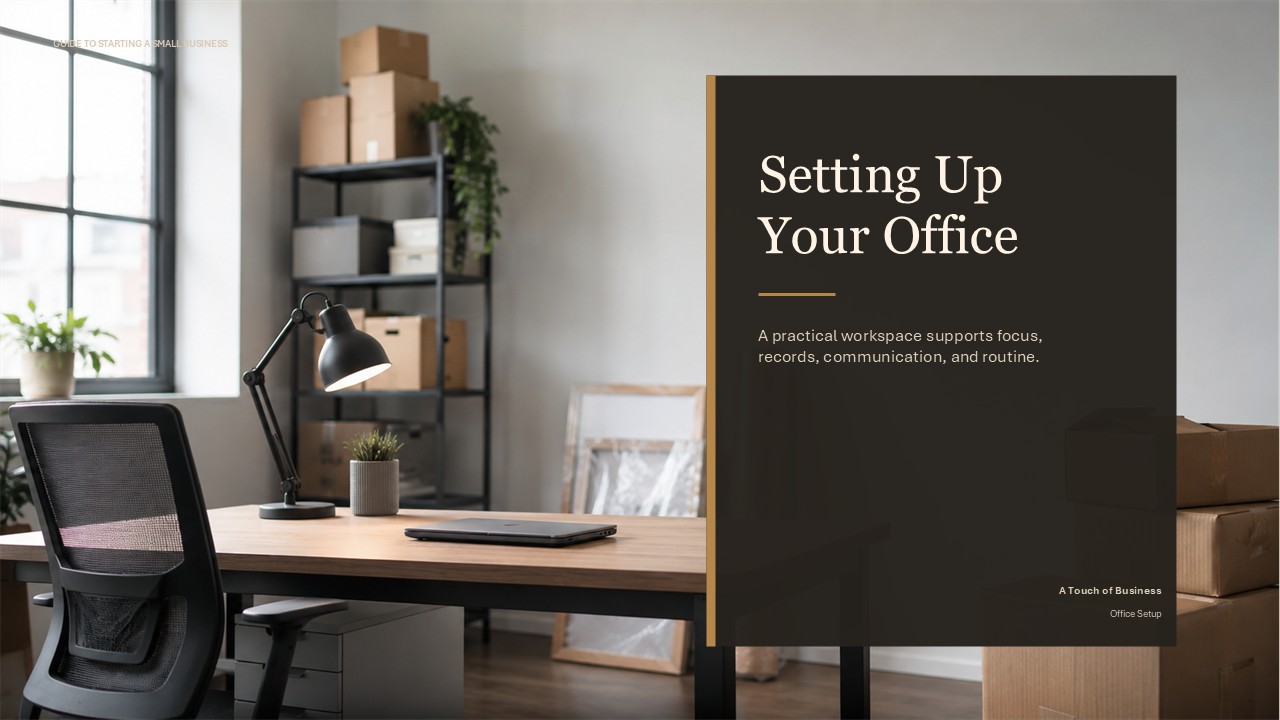
Setting Up Your Office
Part 10 of Acey Gaspard’s Guide to Starting a Small Business
Setting up your office takes real planning. This guide covers your options for space, the equipment and furniture you’ll need, and the local rules that may apply. It’s written for small business owners deciding how and where to work.
Options to Consider
Where will your office be located? You can rent office space, or you can start your business from home.
For a home office, you have several choices. A basement, garage, spare bedroom, or attic can all work as a workspace.
The right space depends on your type of business. If clients walk in to see you, an attic office won’t work well.
Interruptions are a real concern with a home office. Can you work without family members, friends, or household chores pulling your attention away? Be honest with yourself about what you can and can’t resist — a favorite TV show or a quick nap can eat into your workday fast.
If you don’t think you can work effectively from home, renting office space may suit you better. If money is tight, consider sharing space with an established business, or look into a coworking space.
Coworking has grown into a mainstream, affordable option for small businesses. As of 2026, memberships typically run $150 to $300 a month for a hot desk, $300 to $600 for a dedicated desk, and $600 or more for a private office. Many memberships also include shared services like phone lines, internet, and reception support, so you don’t have to buy everything yourself.
Office Equipment
You’ll find a wide range of photocopiers, computers, and other tools to run your business. Start by making a list of what you actually need.
Keep features to a minimum in the startup phase. You don’t need every bell and whistle.
At the same time, don’t buy anything that can’t do the job. Finding that balance takes some judgment.
Technology changes fast, and equipment loses value quickly as newer models come out. Buy the best fit for the job today, not more than you need.
You’ll also need to decide whether to buy or lease. Talk to your accountant about which option fits your situation best.
You may also be interested in our article, Office Essentials for the Perfect Office Setup.
Office Furniture
Office furniture doesn’t wear out as fast as equipment. Choose pieces that will last, and make sure whatever you buy or lease feels right for you.
Your desk is a good example. Your desk has to be right for you. Some owners want drawers, a hutch, and shelving. Others prefer something simple.
Either way, pick a desk that feels comfortable. If you’re uncomfortable at your desk, it’s harder to do your best work.
Getting Help
Setting up your office takes effort and planning. If design isn’t your strength, bring in someone who’s good at it.
Also remember you’ll need space for storage to stay organized.
Regulation
Rules for a home office depend on your location and the type of business you run. Always check with your local municipality before you set up.
Many areas use two tiers of permits. If clients never visit your home, a simpler, no-hearing permit often applies. If clients or employees will come to your home, you may need a more involved permit that requires a public hearing.
For example, if you run a website design business and all your client contact happens online, you’ll likely face fewer requirements than a business that brings people to your door.
Insurance is another piece to handle. As of 2026, standard homeowners insurance usually covers only a limited amount of business equipment — often around $2,500 — and typically excludes business liability altogether.
If you don’t update your policy to reflect your home business, your insurer may deny a claim tied to that business rather than cover it. Talk to your insurance agent about whether you need added coverage.
That’s The Basics
That covers the basics of setting up your office. Make the space comfortable and functional, and it’ll be easier to stay productive there.
Key Points and Facts About Setting Up Your Office
- Even if you can set up a home office, consider whether it’s truly the best fit for your business.
- For equipment, buy what gets the job done — no more, no less.
- For furniture, choose what feels right and comfortable for you.
- As of 2026, standard homeowners insurance typically covers only around $2,500 of home business equipment and usually excludes business liability.
- Check local zoning rules before you set up — requirements often depend on whether clients visit your home.
Action Steps for Setting Up Your Office
- Decide whether you need to rent space or if a home office will work.
- If you’re considering a home office, evaluate whether it’s truly the most productive environment for you.
- To find office space for rent, check local commercial listings or a coworking directory.
- If you want to rent affordably, look into co-renting space or a coworking membership that includes shared services.
- Check with your local zoning office to confirm what permit, if any, your home business needs.
Checklist for Setting Up Your Office
- Choose your location.
- Decide between a home office and rented space.
- Match the space to your business type — especially if clients will visit.
- Plan for interruptions.
- Identify what could pull your focus at home.
- Set boundaries with family members during work hours.
- Get your equipment.
- List only what you need to start.
- Decide whether to buy or lease.
- Choose your furniture.
- Pick pieces that are comfortable and built to last.
- Check local regulations.
- Confirm what permit level applies based on client visits.
- Review any HOA rules if you live in a planned community.
- Review your insurance.
- Ask your agent whether your homeowners policy covers business equipment and liability.
- Add a business endorsement or separate policy if needed.
FAQ: Setting Up Your Office
Do I need a permit to run a business from my home?
- It depends on your business and municipality. Many areas allow a simpler permit if clients never visit your home, and require a more involved permit if they do.
Will my homeowners insurance cover my home office?
- Only partly. As of 2026, most policies cap coverage for business equipment around $2,500 and don’t cover business liability. Ask your agent about adding coverage.
Is a coworking space cheaper than renting my own office?
- Often, yes. As of 2026, hot desks typically run $150 to $300 a month, well below the cost of a private lease.
Should I buy or lease my office equipment?
- It depends on your cash flow and how fast the equipment loses value. Your accountant can help you compare the two.
References:
- The Zebra — Home-Based Business Insurance: What to Know
- Hippo — Homeowners Insurance and Your Home-Based Business
- Property Insurance Coverage Law Blog — If Your Home Office Is Now Your Work Headquarters
- Nolo — Home Businesses and Zoning Laws
- Small Biz Handbook — Home-Based Business Permits & Home Occupation Licenses
- DropDesk — What Is Coworking? The 2026 Guide
Back to the table of contents of Acey Gaspard’s Guide to Starting a Small Business