
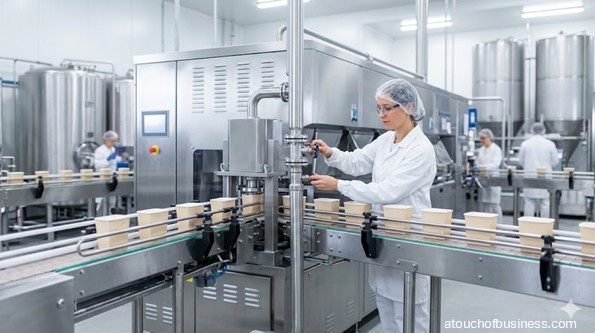
What an Ice Cream Manufacturing Business Does
An ice cream manufacturing business makes frozen desserts in a production facility. Products may include ice cream, frozen custard, frozen yogurt, sherbet, sorbet, frozen novelties, pints, tubs, and bulk containers.
This is a manufacturing business, not just a food idea. You need a safe facility, reliable equipment, approved ingredients, cold storage, labels, records, and inspections before you open.
The owner or team receives ingredients, prepares mix, runs production, packages finished product, hardens it in freezers, stores it, and prepares orders for buyers. Each step affects safety, quality, cost, and launch readiness.
Check Your Fit Before You Spend
Before you buy equipment or sign a lease, ask whether this business fits you. Ice cream manufacturing can look fun from the outside. The daily tasks are much more detailed.
You need patience for sanitation, records, freezer checks, labels, and inspections. You also need comfort with equipment, raw materials, batch size, product waste, and startup costs.
Enjoying the product helps, but passion alone isn’t enough. You also need the discipline to run a clean and consistent production process. If you want help thinking through your own fit, start with being passionate about the business, then test that interest against the real tasks.
Don’t start this business only to escape a job, follow a trend, or chase status. You need enough cash, patience, and support to handle delays, inspection issues, product tests, and freezer problems.
Learn From Non-Competing Owners
Talk to owners before you commit—but only with owners you won’t compete against. Choose people in another city, region, or market area.
Prepare your questions before each conversation. These owners have firsthand experience. Their path won’t be the same as yours, but their insight can save you from expensive mistakes.
- Ask what they wish they had checked before leasing space.
- Ask how they chose equipment and batch size.
- Ask what inspections took longer than expected.
- Ask what freezer or supplier issues surprised them.
- Ask whether they started with purchased mix or made mix from scratch.
These conversations are a reality check, not a shortcut. You can also use advice from real business owners to frame better questions.
Choose Your Ice Cream Manufacturing Model
Your model shapes almost every startup decision. Don’t shop for equipment until you know what kind of ice cream manufacturing business you’re building.
The main model here is a production facility that makes packaged frozen desserts for wholesale, foodservice, private label, direct retail, or a mix of channels.
- Purchased mix: You buy approved pasteurized mix and focus on flavoring, freezing, packaging, and storage.
- Made-from-scratch mix: You handle more of the process, including pasteurization requirements.
- Packaged products: You produce pints, tubs, bulk containers, or novelties.
- Private label: You produce frozen desserts for another brand.
Each choice changes space, equipment, labor, cost, records, and inspections. A small-batch setup may be simpler. A larger production line requires more planning and working capital.
Compare Starting, Buying, and Co-Packing
You can start from scratch, buy an existing facility, or use a co-packer. Each path has tradeoffs.
Starting from scratch gives you control. It also means you must solve facility approval, equipment setup, suppliers, labels, food safety records, and inspections from the beginning.
Buying an existing ice cream plant may reduce build-out uncertainty. Even so, you must check the lease, licenses, inspection history, refrigeration, equipment condition, and whether approvals transfer.
Franchising is more common for retail ice cream shops than for manufacturing plants. If you want a packaged ice cream brand without owning a plant, co-packing may be a better first test.
The best path depends on budget, timeline, support needs, risk tolerance, and how much control you want. A broader comparison of whether to start from scratch or buy a business can help you frame this decision.
Validate Demand and Competition
Don’t assume people will buy your product because they like ice cream. Local demand matters. Freezer space matters too.
Check grocery stores, specialty food shops, restaurants, cafés, scoop shops, event venues, and foodservice buyers. Look at freezer space, package sizes, local brands, and price points.
- Who already sells local ice cream?
- Which products dominate freezer shelves?
- Do buyers have room for another frozen dessert brand?
- Can your price cover production, storage, and delivery?
Ice cream is a large industry, but that doesn’t prove your local market is open. Run local supply and demand checks before you spend heavily.
Define Products Before Equipment
Your product line comes before your equipment list. A pint business isn’t the same as a frozen novelty business, and a bulk tub setup is different again.
Decide what you’ll make first, then match the facility, storage, packaging, and production process to those products.
- Ice cream, frozen custard, frozen yogurt, sherbet, or sorbet.
- Pints, tubs, bulk containers, bars, sandwiches, or other novelties.
- Dairy, plant-based, premium, or specialty formulas.
- Simple flavors or products with inclusions and ripples.
Be careful with product names. A product labeled as ice cream must meet federal frozen dessert standards. If the formula doesn’t qualify, you may need a different product name.
Product complexity affects space, cost, and risk. Nuts, cookie pieces, egg, sesame, wheat, soy, and dairy all affect allergen controls and label accuracy.
Business Plan
Your business plan should turn your startup decisions into a practical path. It shouldn’t be a generic document—it should explain how your ice cream manufacturing business will open safely and legally.
Use the plan to organize your main decisions before you spend on a facility, equipment, and inventory.
- Product line: What frozen desserts will you make first?
- Production model: Will you buy pasteurized mix or make mix from scratch?
- Facility plan: What space, utilities, drains, freezers, and approvals are needed?
- Startup costs: What will drive the largest costs before opening?
- Opening readiness: What must be in place before the first production run?
Your plan should also cover suppliers, labels, records, pricing, funding, staffing, insurance, and inspections. Keep it tied to the actual production process.
A strong plan helps you communicate with lenders, landlords, suppliers, and inspectors—and helps you avoid spending money in the wrong order. For more structure, use a practical business plan guide and adapt it to frozen dessert manufacturing.
Pick the Right Facility
The facility is one of the biggest startup decisions. It must support food manufacturing, cold storage, sanitation, inspections, deliveries, and safe production flow.
Inspect the building before you commit. A low-rent space can become expensive if it lacks drains, power, water, freezer capacity, or proper surfaces.
- Zoning for food manufacturing.
- Space for receiving, production, packaging, and frozen storage.
- Washable surfaces, handwashing sinks, and sanitation areas.
- Electrical, water, drainage, and ventilation capacity.
- Room for equipment maintenance and safe movement.
You may also need a certificate of occupancy, depending on the location and building use. Confirm this with the local building department before you install equipment.
Handle Legal and Compliance Checks
An ice cream manufacturing business has more compliance work than many startups. Food safety rules, frozen dessert regulations, labeling requirements, and facility approval all matter before opening.
Don’t treat these as afterthoughts. Confirm the rules before you lease a space, buy equipment, or print labels.
- Federal: FDA food facility registration, food safety rules, labeling, allergens, nutrition labeling, food-contact packaging, and sanitary transportation when it applies.
- State: Frozen dessert manufacturer license, dairy plant license, pasteurization rules, product testing, sales tax, and employer accounts may apply.
- City or county: Zoning, certificate of occupancy, building permits, health approval, fire review, wastewater rules, and local business license may apply.
Requirements vary by U.S. jurisdiction. Check with the state agriculture or health department, local zoning office, building department, fire marshal, and water or sewer authority.
You should also choose a business structure, register the business name, and obtain an Employer Identification Number if needed. This is separate from food and facility approval. A clear guide to business licenses and permits can help you organize the questions.
Set Up Production Flow and Equipment
Production flow is the path from raw materials to finished frozen product. It should be simple, safe, and easy to inspect.
A common ice cream process includes blending, pasteurization when needed, homogenization when used, aging, freezing, packaging, and hardening. Your setup should match your product line.
- Mixing and processing: Scales, blend tanks, mixers, pasteurizer, homogenizer, and aging tanks.
- Freezing and filling: Batch freezer or continuous freezer, inclusion feeder, filler, and packaging tools.
- Cold storage: Hardening freezer, finished-product freezer, shelves, and temperature monitors.
- Sanitation: Food-grade cleaners, sanitizers, brushes, hoses, and cleaning records.
- Safety: Guards, signs, protective gear, freezer gear, and training records.
Don’t buy equipment based only on price. Match it to batch size, package type, utility needs, cleaning requirements, and repair support.
Bottlenecks can raise costs quickly. A hardening freezer that runs too slowly can delay orders. A filler that doesn’t fit your containers wastes product. A poor layout makes cleaning harder.
Source Ingredients, Packaging, and Suppliers
Your suppliers affect quality, safety, cost, and lead time. Set them up before opening, not after your first production run.
For an ice cream manufacturing business, suppliers may include dairy vendors, mix suppliers, sweetener suppliers, stabilizer suppliers, flavor houses, inclusion suppliers, packaging companies, label printers, and sanitation chemical vendors.
- Ask for product specifications.
- Keep allergen statements on file.
- Track supplier lot numbers.
- Confirm food-contact packaging suitability.
- Set backup options for key ingredients.
Packaging must hold up in frozen storage. Labels must stay readable. Cases must protect the product. These choices affect waste and buyer confidence.
Build Labels, Records, and Quality Controls
Labels and records are part of opening readiness—not just office tasks.
Packaged frozen desserts need accurate labels. Your label must reflect the formula, ingredients, allergens, net quantity, business information, and nutrition facts rules or exemption status.
- Formula sheets.
- Batch sheets.
- Lot code system.
- Temperature logs.
- Sanitation and allergen records.
Use lot coding to connect ingredients, batches, and finished products. This matters if you ever need to hold, review, or recall a product.
Quality control starts before launch. Test batches should check texture, flavor, hardening, label fit, packaging strength, freezer stability, and batch consistency.
Plan Startup Costs and Funding
Don’t rely on a generic startup cost estimate for this business. Costs vary too much by facility, equipment, product line, cold storage, and licensing path.
Build your own cost list instead, then add a cushion for delays, failed test batches, repairs, and inspection timing.
- Facility lease, deposit, build-out, and utilities.
- Production, packaging, freezer, and sanitation equipment.
- Permits, licenses, inspections, labels, and testing.
- Ingredients, packaging, cold storage, and working capital.
- Insurance, training, accounting, and professional help.
Funding options may include owner savings, bank loans, SBA-backed loans, equipment financing, a line of credit, investors, or vendor terms. Base your funding decisions on your real startup budget, not optimistic projections.
You should also open a business bank account and keep business transactions separate from personal ones from the start. This keeps records cleaner and improves financial control.
Set Pricing Before You Open
Pricing an ice cream manufacturing business is more than adding a markup to ingredients. You need to price the full production process.
Start with batch cost, then include packaging, labor, utilities, waste, testing, cold storage, freight, and freezer risk.
- Wholesale pricing: Account for distributor and retailer margins.
- Foodservice pricing: Consider tub size and buyer yield.
- Private label pricing: Include formula, packaging, run size, and storage terms.
- Direct retail pricing: Use only if your facility has an approved retail channel.
Also factor in overrun—the amount of air added during freezing. It affects yield, texture, and cost per container.
Weak pricing can make a good product unprofitable before it ever reaches the freezer shelf.
Prepare Staffing, Training, and Safety
You may start small, but someone must own each key task. Production, sanitation, receiving, packaging, freezer checks, records, and regulatory contact all need clear responsibility.
If you hire employees, set up payroll and employer accounts before they start. Also confirm workers’ compensation requirements in your state.
- Train staff on sanitation and personal hygiene.
- Train staff on allergen controls and label accuracy.
- Train staff on machines, freezers, and chemical safety.
- Keep training records where inspectors can review them.
Machine safety matters. Mixers, pumps, conveyors, fillers, and packaging equipment all create injury risks. Guards and safe procedures should be in place before production begins.
If the plant uses ammonia refrigeration, review the safety and compliance requirements early. Don’t treat that as a minor equipment detail.
Get Ready for Opening
Opening readiness means the facility, equipment, staff, records, products, and approvals are all ready at the same time.
Don’t open just because the equipment arrived. You need proof that the whole system works.
- Pass required inspections and approvals.
- Run test batches and review product quality.
- Confirm labels, lot codes, and batch records.
- Check freezer performance and temperature logs.
- Make sure banking, invoicing, and payment systems are ready.
Also prepare for problems. Have a plan for freezer failure, equipment breakdown, supplier delays, label errors, and product holds.
A slow, careful opening is better than a rushed one. Frozen dessert manufacturing rewards clean process flow and punishes a weak setup.
A Short Day in the Life
A typical production day starts before the product reaches a freezer. The owner or team receives ingredients, checks lots and temperatures, prepares mix, runs the freezer, packages containers, adds lot codes, and moves product to hardening.
After that, the team cleans equipment, updates records, checks freezer logs, reviews orders, and prepares finished goods. This snapshot is useful for fit—it shows the detail behind the product.
If that routine sounds draining, pause. If it sounds like a challenge you can respect, the business may be worth deeper planning.
Red Flags Before Starting
Some warning signs should make you slow down. They don’t always mean you should quit—they mean you should verify the issue before spending more.
- You haven’t confirmed zoning, licensing path, or certificate of occupancy requirements.
- The facility lacks drains, power, water, freezer space, or washable surfaces.
- You bought equipment before choosing batch size and package format.
- Your labels aren’t tied to final formulas and allergens.
- You have no backup plan for freezer failure or supplier delays.
Other red flags include weak local demand, limited freezer space, underpriced wholesale products, no lot code system, no sanitation records, and no product testing plan.
The biggest risk is spending in the wrong order. Facility, compliance, equipment, labels, and cold storage must fit together.
Frequently Asked Questions
These questions focus on startup decisions for an ice cream manufacturing business. Use them before you commit to space, equipment, or production.
Is an ice cream manufacturing business good for a first-time owner?
It can be. But you must be ready for food safety, sanitation, equipment, labels, inspections, freezer systems, and records. Talk with non-competing owners first.
What should I verify before spending money?
Verify zoning, facility approval, state frozen dessert or dairy licensing, FDA food facility registration, freezer capacity, utilities, supplier records, and label rules.
Can I start from a home kitchen?
Not typically. Commercial frozen dessert manufacturing generally requires approved production space, cold storage, sanitation controls, records, and inspections.
Should I buy pasteurized mix or make mix from scratch?
Purchased mix may simplify startup. Making mix from scratch gives more control, but it can add pasteurization equipment, records, inspection requirements, and process controls.
Do I need FDA registration?
Many food manufacturing facilities must register with the FDA. Verify your specific situation through the FDA before opening.
What licenses may apply?
Requirements vary by U.S. jurisdiction. You may need a state frozen dessert license, dairy plant license, local business license, certificate of occupancy, and food manufacturing approval.
What equipment matters most?
Core equipment may include mixing tanks, pasteurization equipment if needed, aging tanks, freezers, fillers, hardening freezers, finished-product freezers, and sanitation tools.
Can every frozen dessert be called ice cream?
No. A product labeled as ice cream must meet federal standards. If it doesn’t qualify, use a more accurate product term.
What should be in the business plan?
Include product line, production model, facility needs, approvals, equipment, suppliers, labels, records, startup costs, pricing, funding, staffing, and opening checks.
What is a common pricing problem?
Many new owners undercount costs. Include waste, packaging, cold storage, freight, labor, testing, utilities, spoilage risk, and buyer margins.
Is buying an existing plant easier?
It can be. But check licenses, inspections, lease rights, refrigeration, equipment condition, records, and product liabilities before buying.
Should I use a co-packer first?
It may help if your main goal is a packaged brand. You’ll still need to manage formulas, labels, pricing, storage, and buyer requirements.
What records should be ready before opening?
Prepare batch sheets, lot codes, supplier files, receiving logs, temperature logs, sanitation logs, allergen records, label files, and recall contacts.
What inspections may happen before opening?
That depends on location. Possible inspections include state dairy or frozen dessert review, health inspection, building inspection, fire inspection, and certificate of occupancy review.
What is the biggest launch risk?
The biggest risk is committing to space or equipment before confirming your production model, licensing path, utilities, freezer capacity, labels, and local approval requirements.
Advice From Ice Cream Business Owners
One of the best ways to understand an ice cream manufacturing business is to learn from people who have already built one.
These interviews and founder stories can help you think through product quality, production decisions, freezer space, startup costs, cash flow, growth pressure, and the daily reality behind the product.
- How I Started a $400K/Month Ice Cream Brand — Shannon Imler of Ice Cream Factory shares how the business grew into packaged ice cream sold in hundreds of stores.
- How an Ice Cream Truck Turned Into a Frozen Treat Empire — Ben Van Leeuwen discusses how Van Leeuwen Ice Cream grew from one truck into shops and grocery distribution.
- Jerry Greenfield’s Tips for Business Startups — Ben & Jerry’s co-founder shares startup advice for small business owners.
- Frutero Ice Cream Founders on Building a Startup — Mike Weber and Vedant Saboo discuss startup lessons, cash discipline, product focus, and building an ice cream brand.
- How Izzy’s Ice Cream Was Bootstrapped — Jeff Sommers shares how he and his wife built Izzy’s Ice Cream from a local operation into a larger dessert company.
- Jeni Britton Bauer on Making Great Ice Cream — Jeni’s founder discusses flavor development, freezer realities, food safety issues, and running an ice cream business.
- How an Ice Cream Startup Melted Down and Bounced Back — Harvard Business School reviews the Ample Hills Creamery story and the risks of rapid growth, cash strain, and overexpansion.
Related Articles
- How To Start an Ice Cream Truck Business
- How To Start an Ice Cream Shop
- How To Start a Frozen Yogurt Shop
- How To Start a Gelato Shop
- How To Start an Acai Bowl Café
- How To Start a Bubble Tea Shop
Sources:
- FDA: Food Facility Registration, Preventive Controls Guide, Food Allergen Rules, Nutrition Label Exemption, Sanitary Transportation, Food Contact Packaging, Pasteurized Milk Ordinance, Dairy Manufacturer Guide, Traceability Rule FAQ
- eCFR: Frozen Dessert Standards
- USDA ERS: Frozen Dairy Production
- IDFA: Ice Cream Sales Trends
- University of Guelph: Ice Cream Manufacture
- Tetra Pak: Ice Cream Processing
- California Department of Food and Agriculture: Milk Product Licenses
- New York Agriculture and Markets: Frozen Dessert License
- New Jersey Department of Health: Frozen Dessert Procedure
- Pennsylvania Department of Agriculture: Dairy Product Manufacturing
- USDA AMS: Approved Dairy Plants
- IRS: Get an EIN, Employment Taxes
- SBA: Business Structure, Licenses and Permits, Business Plan, Business Location, Business Bank Account
- OSHA: Machine Guarding, Ammonia Refrigeration
- EPA: Ammonia RMP Guidance
- IBISWorld: NAICS 311520