
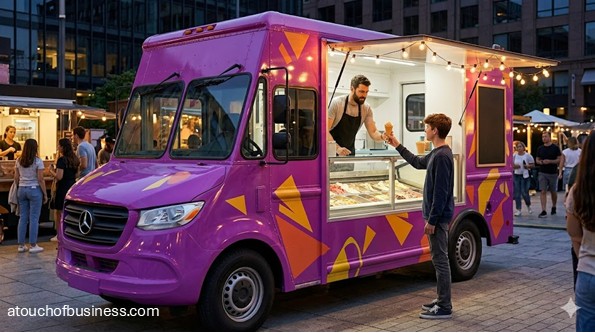
First Decisions for a Mobile Ice Cream Business
The choice is whether you want a simple mobile frozen dessert business or a more complex food operation. The tradeoff is speed and simplicity versus more products, more equipment, and more rules.
An ice cream truck business offers frozen desserts from a vehicle. The owner or driver brings the truck to approved streets, neighborhoods, parks, events, or private properties and serves customers from the truck window.
This can be a lean business if you sell only prepackaged frozen novelties. It can become much more involved if you scoop ice cream, dispense soft serve, add toppings, or prepare shakes and slushies.
Common products may include:
- Prepackaged ice cream bars, sandwiches, cones, cups, and popsicles.
- Scooped hard ice cream served in cups or cones.
- Soft serve, frozen yogurt, sherbet, sorbet, slushies, or milkshakes.
- Cones, cups, toppings, syrups, spoons, napkins, and drinks where allowed.
The mobile model changes almost every startup decision. You are not only planning food service. You are also planning a vehicle, route, freezer capacity, travel time, power, storage, permits, weather risk, and safe stopping places.
Is This Business Right for Your Personality?
The choice is whether this business fits your life, not just whether the idea sounds fun. The tradeoff is simple products and flexible locations against long days, heat, driving, rules, repairs, and seasonal pressure.
Ask yourself whether you actually want to own a business. That means making decisions, handling permits, watching costs, keeping records, solving problems, and dealing with customers even when the day does not go as planned.
Then ask whether an ice cream truck business fits you. Do you like mobile service? Can you stay calm when traffic, weather, freezer issues, or local rules disrupt the day?
This business can look cheerful from the outside. Inside the truck, the owner may be checking temperatures, tracking inventory, handling cash, watching children near the road, and deciding where the truck can legally stop.
Your reason matters too. Start because you are moving toward a business you care about, not mainly because you want to escape a job, a bad boss, financial problems, or the image of being an owner.
Status is a weak reason to start. The better reason is a real interest in the business and genuine passion for the products and value you provide. That kind of interest can help you stay focused when the startup process becomes slow or difficult.
If you want more help thinking this through, spend time on how passion affects your business before you buy a truck.
Talk With Owners Outside Your Market
The choice is whether to learn from real operators before you spend money. The tradeoff is a little extra effort now versus fewer avoidable surprises later.
Speak only with owners you will not compete against. Look for ice cream truck owners in another city, region, or market area.
Prepare real questions before you contact them. Ask about permits, truck problems, commissaries, supplier issues, freezer failures, route rules, seasonality, and what they wish they had known before opening.
Those conversations matter because experienced owners have lived through the details. Their route, city, and product list may differ from yours, but their insight can still help you spot risks early.
Use firsthand owner insights as part of your early decision process, especially before buying a used truck or signing a commissary agreement.
Decide Whether Local Demand Is Strong Enough
The choice is whether your area can support the truck. The tradeoff is entering a market with clear demand versus trying to make the business work in a weak location.
Demand depends on more than warm weather. You need enough legal places to stop, enough people nearby, and enough selling days to cover your startup costs and seasonal slow periods.
Look at local conditions before moving forward:
- Neighborhood density and walk-up traffic.
- Parks, beaches, sports fields, events, tourist areas, and private-property stops.
- Summer season length and rainy weather patterns.
- Existing ice cream trucks, ice cream shops, convenience stores, gas stations, and grocery stores.
- Rules that limit vending near schools, parks, streets, or public spaces.
Weak demand may mean the area is not a good fit. It may also mean the business model needs to change before launch.
Check local supply and demand before you spend money on the truck, freezer setup, permits, and initial inventory.
Choose Starting From Scratch, Buying, or Franchising
The choice is how to enter the business. The tradeoff is control, cost, speed, support, and risk.
Starting from scratch gives you the most control over the truck, products, routes, name, suppliers, and setup. It also means you must build every part yourself.
Buying an existing ice cream truck business may give you a vehicle, equipment, permits, route history, supplier contacts, and operating records. It may also come with old equipment, weak routes, hidden repairs, or permits that do not transfer.
A franchise may make sense only if a realistic frozen dessert or mobile vending franchise fits your area, budget, and goals. A franchise can add training and brand support, but it may limit your control and add fees.
Compare:
- Your available budget.
- Your timeline to open.
- Your need for support.
- Your risk tolerance.
- Your desire for control.
- Whether suitable businesses for sale exist in your market.
Buying a business already in operation may be worth comparing before you commit to building everything from scratch.
Choose the Product Model First
The choice is what you will sell from the truck. The tradeoff is product variety against equipment, food safety, permits, speed, and cleanup.
This decision affects almost everything. Do not buy equipment until you know the product model.
- Prepackaged-only: You sell wrapped manufacturer products from freezers. This is usually the simplest food flow.
- Scooped hard ice cream: You need dipping cabinets, scoops, cones, cups, sanitation, and careful serving procedures.
- Soft serve: You need a machine, mix storage, cleaning steps, power capacity, and possible frozen dessert permits.
- Mixed frozen desserts: You may add slushies, shakes, toppings, and drinks, but each item can add equipment and inspection issues.
Prepackaged products may keep service fast and reduce handling. Soft serve may create a better customer experience, but it can also bring machine cleaning, product testing, and extra local rules.
A simple product list is often safer at launch. Too many products can slow service, increase waste, and make the truck harder to inspect.
Map the Food Flow Before You Build
The choice is whether to design the truck around the actual food process. The tradeoff is a smoother launch versus a truck that fails inspection or slows service.
For an ice cream truck, the basic food flow should be clear before you buy freezers or apply for permits.
- Source frozen products from approved suppliers.
- Receive and store products at an approved location.
- Load the truck without breaking the cold chain.
- Hold products frozen during travel and service.
- Serve from the window quickly and cleanly.
- Take payment and track sales tax where required.
- Return to the commissary or storage site for cleanup, restocking, and wastewater disposal if required.
If you scoop or dispense product, add handwashing, utensil cleaning, sanitizer, water, wastewater, and machine-cleaning steps. These details affect space, labor, and inspection readiness.
Decide Where the Truck Can Legally Vend
The choice is where you will operate. The tradeoff is route flexibility against local limits on streets, parks, schools, private property, and public rights-of-way.
An ice cream truck cannot always stop anywhere customers appear. Local rules may control parking, vending zones, music, distance from schools, time limits, parks, and event sites.
Route planning is part of startup planning. A truck with no legal places to stop is not ready to open.
- Check public street vending rules.
- Confirm park and recreation department rules.
- Ask about school-area restrictions.
- Get written permission for private-property stops.
- Check local noise rules before using music or chimes.
- Confirm whether each city or county needs its own permit.
Verify this before buying the truck. Local vending limits can change the whole business model.
Prepare a Business Plan Around Real Constraints
The choice is whether to plan from facts or assumptions. The tradeoff is a slower start now versus better decisions before money is committed.
Your plan should be practical. It should explain what you will sell, where you can legally operate, what approvals you need, what equipment you need, and how the financials may work.
Include these startup details:
- Product model and approved product list.
- Target vending areas and legal limits.
- Truck purchase or build-out plan.
- Commissary or storage plan.
- Health permit and inspection steps.
- Supplier list and first inventory order.
- Startup cost categories and funding options.
- Opening checklist and backup plans.
A good plan should help you decide whether to continue, pause, change the model, or walk away. Use it as a decision tool, not a document you write once and ignore.
If you need a starting framework, focus on building a business plan around your local rules, product model, and vehicle setup.
Choose Equipment Based on the Ice Cream Truck Model
The choice is what equipment the vehicle needs. The tradeoff is having enough capacity without adding too much weight, cost, or inspection complexity.
Start with the product model. A prepackaged novelty truck needs dependable freezer space. A scooped truck needs a dipping cabinet and serving tools. A soft-serve truck needs a machine, mix storage, power, cleaning supplies, and possibly extra approvals.
Common launch equipment may include:
- Truck, van, trailer, or approved mobile food unit.
- Commercial freezers, chest freezers, reach-in freezers, or dipping cabinets.
- Soft-serve, frozen yogurt, slush, or shake machines if used.
- Thermometers and temperature logs.
- Generator, inverter, battery system, or shore power.
- Service window, lighting, storage, locks, and non-slip flooring.
- Handwashing sink, potable water tank, wastewater tank, and food-grade hose if required.
- Sanitizer, test strips, soap, paper towels, cleaning cloths, and trash containers.
- Point-of-sale device, card reader, receipt method, cash box, and backup battery.
- Required signs, decals, badges, price board, and safety equipment.
Some locations may require warning lights, mirrors, a stop arm, a crossing arm, or other child-safety equipment. This is one reason local verification matters before purchase.
Set Up Storage, Commissary, and Cleanup
The choice is where you will store the truck, handle food and water, and manage waste. The tradeoff is convenience against health-code approval.
Many mobile food operators need an approved commissary or base of operations. That site may be used for freezer storage, water filling, wastewater disposal, cleaning, restocking, and overnight truck storage.
A home garage or home freezer may not be allowed. Do not assume you can store frozen inventory at home.
- Verify with the local health department whether a commissary is required.
- Ask whether prepackaged-only trucks have different rules.
- Confirm whether the commissary must be inside the same county.
- Get the commissary agreement in writing before inspection.
- Confirm where the truck may park overnight.
If you plan to use a leased storage space, ask the building department whether a certificate of occupancy is needed. The truck itself may not need one, but a fixed facility might.
Choose Suppliers Before You Open
The choice is whether your supply chain can support your route and product model. The tradeoff is product consistency against spoilage, shortages, and weak margins.
An ice cream truck depends on reliable frozen product supply. The owner needs approved sources, freezer space, and a restocking process that keeps products frozen.
Possible suppliers include:
- Frozen novelty distributors.
- Ice cream wholesalers.
- Dairy or frozen dessert suppliers.
- Soft-serve mix suppliers.
- Cone, cup, spoon, napkin, and packaging vendors.
- Generator, freezer, and mobile refrigeration service providers.
Keep supplier invoices and product records. Health inspectors may ask where the food came from.
Supplier consistency also affects pricing. If costs change often or minimum orders are high, your opening budget needs room for that.
Plan for Health Compliance Early
The choice is whether to design for inspection from the start. The tradeoff is more planning now versus expensive rework later.
Ice cream trucks are food businesses. Local health approval is usually a core launch step.
The exact requirements vary. They may depend on the city, county, product list, water system, commissary, and whether the truck sells prepackaged products, scoops ice cream, or dispenses soft serve.
- Ask whether a mobile food unit plan review is required.
- Confirm whether the truck needs a preopening inspection.
- Ask if a Certified Food Protection Manager or food handler cards are required.
- Confirm handwashing, water, wastewater, and sanitizer requirements.
- Ask whether a commissary or restroom agreement is required.
- Confirm whether soft serve or frozen yogurt needs a frozen dessert permit.
Soft serve deserves special attention. In some places, a machine that freezes or dispenses dessert can trigger frozen dessert manufacturing or retail frozen dessert rules.
Do not guess here. Show the local health department your exact product list and truck layout before buying major equipment.
Verify Licenses, Permits, and Local Rules
The choice is whether to make permits a core startup task. The tradeoff is slower preparation against the risk of being unable to vend.
Rules vary by U.S. jurisdiction. An ice cream truck may need more than one approval before opening.
- Business registration or entity filing.
- Employer Identification Number if needed.
- Sales tax account if required.
- City or county business license.
- Mobile food service permit.
- Mobile vendor license or unit permit.
- Frozen dessert permit if applicable.
- Police permit, badge, fingerprinting, or background check where required.
- Park, event, school, or private-property vending approval where applicable.
- Fire inspection if the truck uses propane, certain generators, electrical modifications, or event equipment.
Make local licenses and permits part of your early checklist, not something to handle after the truck is finished.
- What to verify: Which permits apply to your product list, vehicle, route, and vending locations.
- Who to ask: Local health department, city licensing office, police department, parks department, fire marshal, and state tax agency.
- Why it matters: A rule in one city may not apply in another, and one permit may not allow vending across city or county lines.
Decide on Business Structure, Taxes, and Records
The choice is how to set up the business legally and financially. The tradeoff is simple formation against liability, tax, banking, and hiring needs.
Common structures include sole proprietorship, limited liability company, partnership, and corporation. The right choice depends on ownership, liability concerns, taxes, paperwork, and future plans.
You may need to register the business, file a Doing Business As name, apply for an Employer Identification Number, and set up state tax accounts.
Sales tax rules can be tricky for food. Frozen novelties, prepared foods, drinks, toppings, and event sales may be treated differently by state or local tax rules.
Before opening, prepare records for:
- Permits and inspections.
- Supplier invoices.
- Temperature logs.
- Cleaning logs.
- Commissary visits if required.
- Vehicle registration and insurance.
- Sales, cash, card payments, and sales tax.
- Employee paperwork if you hire staff.
If you plan to hire, ask your state labor agency about withholding, unemployment, workers’ compensation, and any required employer accounts.
Set Up Banking and Payment Readiness
The choice is whether to separate business transactions from personal ones from the start. The tradeoff is setup time now against cleaner records later.
Open a business bank account before you accept customer payments. Then connect your point-of-sale system, card reader, and payment processor to that account.
Most ice cream truck payments are small and quick. Your payment system should work from the truck, handle sales tax correctly, and have a backup plan if the mobile signal is weak.
- Business checking account.
- Mobile point-of-sale device.
- Card reader.
- Cash box or lockbox.
- Receipt method.
- Sales tax settings.
- Backup battery or charger.
- Daily sales record.
Get your business banking in place before your first public sale.
Plan Startup Costs and Funding Choices
The choice is how much you can afford to launch safely. The tradeoff is buying enough to operate legally without overspending before demand is proven.
There is no single reliable startup cost for every ice cream truck business. Costs vary by truck condition, product model, equipment level, permits, location, inventory, storage, and repairs.
Plan for these cost categories:
- Truck purchase, lease, or conversion.
- Freezers, dipping cabinets, or soft-serve machines.
- Generator, battery, electrical, and power setup.
- Water, wastewater, handwashing, and sanitation equipment.
- Commissary, storage, or parking fees.
- Licenses, permits, inspections, and possible background checks.
- Vehicle registration, repairs, fuel, and maintenance.
- Initial frozen inventory and packaging supplies.
- Point-of-sale hardware and payment processing.
- Business registration, name filing, domain, signs, decals, and basic online contact information.
- Insurance and risk planning.
Funding options may include owner savings, a vehicle loan, equipment financing, supplier credit, a business line of credit, or a small business loan.
Build your budget from actual quotes. Used truck repairs, freezer failures, and commissary requirements can change the total quickly.
Make Pricing Decisions Before the First Sale
The choice is how to price each item. The tradeoff is staying affordable while covering product cost, waste, fuel, fees, and seasonal downtime.
Pricing is not only about what customers will pay. It also has to reflect the real cost of selling from a mobile truck.
Include these inputs:
- Wholesale cost of each frozen item.
- Portion size for scooped products.
- Cups, cones, spoons, napkins, gloves, and toppings.
- Spoilage, melt loss, and damaged product.
- Fuel and travel time.
- Payment processing fees.
- Sales tax treatment.
- Commissary and permit costs.
- Event fees if applicable.
- Local competitor prices.
Common methods include item pricing for packaged novelties, size-based pricing for cups and cones, add-on pricing for toppings, and event minimums for private bookings.
Use setting your prices as a practical exercise before you buy opening inventory.
Decide What Identity Items Are Needed Before Opening
The choice is how much business identity you need at launch. The tradeoff is basic trust and compliance against spending on extras too early.
An ice cream truck does not need a complex brand package to open. It does need clear identification, legal name use, required signs, and customer-facing information where required.
Prepare these items as needed:
- Business name or trade name registration.
- Truck lettering or exterior name display.
- Required permit decals and badges.
- Price board.
- Basic website or contact page for permits, event organizers, suppliers, and payment processors.
- Product labels for prepackaged items.
- Allergen notice if required locally.
- Warning signs or child-safety signs where required.
Business cards may help when dealing with event organizers, property owners, or suppliers.
Plan Insurance and Risk Protection
The choice is how to protect the truck, equipment, inventory, and customer-facing service. The tradeoff is added cost against the risk of one problem stopping the business.
Some insurance may be legally required. Some may be required by event organizers, commissaries, lenders, or property owners. Other coverage is risk planning.
Common coverage to discuss with a licensed insurance professional includes:
- Commercial auto insurance.
- General liability insurance.
- Product liability coverage.
- Equipment or inland marine coverage.
- Spoilage coverage.
- Business property coverage for freezers and inventory.
- Workers’ compensation if you hire employees and your state requires it.
Do not assume personal auto insurance covers a commercial ice cream truck. Verify the vehicle use, route area, equipment, and event vending exposure before opening.
Decide Whether to Stay Solo or Hire Help
The choice is whether you can launch alone. The tradeoff is lower payroll against limits on driving, serving, cleaning, restocking, and event capacity.
A one-person ice cream truck can work for a simple route or limited schedule. The owner drives, parks, serves, takes payments, watches inventory, and returns to clean and restock.
Hiring may be needed if you plan longer service windows, events, multiple trucks, or a route that needs a second person for safety and speed.
Before hiring, verify:
- Food handler or manager training requirements.
- Driver eligibility and insurance coverage.
- State employer registration.
- Workers’ compensation rules.
- Cash handling and point-of-sale training.
- Food safety, cleaning, and temperature log responsibilities.
Staffing too early can raise costs. Waiting too long can slow service or create safety issues during busy stops.
Prepare Forms, Logs, and Internal Documents
The choice is whether to organize records before inspection and opening. The tradeoff is extra preparation against confusion during a busy day.
Food trucks often need proof that food, equipment, and daily tasks are being handled correctly. Keep the system simple enough to use from a small vehicle.
Prepare:
- Approved product list.
- Supplier invoice file.
- Temperature logs for each freezer.
- Cleaning and sanitizer logs.
- Commissary visit log if required.
- Vehicle maintenance log.
- Permit and inspection folder.
- Daily cash count sheet.
- Inventory reorder sheet.
- Employee training checklist if hiring.
Good records help during inspections, tax filing, supplier issues, and equipment problems. They also help you see whether the financials make sense.
Test the Ice Cream Truck Before Opening
The choice is whether to complete a full test run. The tradeoff is finding problems privately versus finding them in front of customers.
A test run should cover the whole service process, not just the truck engine. You want to know whether the freezers, power, payment system, inventory layout, and cleanup process work together.
Test these items:
- Freezer temperatures before, during, and after service.
- Generator or battery capacity under real load.
- Card reader and mobile internet connection.
- Cash handling and receipt method.
- Service window flow.
- Loading and unloading process.
- Route timing and legal stopping areas.
- Handwashing, sanitizer, and cleanup steps.
- Wastewater disposal and commissary return process.
If the truck cannot hold temperature or power the equipment for a full service period, it is not ready to open.
Understand a Day in the Life Before You Commit
The choice is whether you can live with the daily routine. The tradeoff is mobile flexibility against physical, seasonal, and administrative demands.
A typical day may start at the commissary or approved storage site. The owner checks freezer temperatures, loads products, fills water, checks wastewater capacity, confirms permits, tests the payment system, and reviews the route.
During service, the owner or driver moves between approved stops, parks legally, serves customers from the window, handles payments, watches product levels, and keeps the area clean.
After service, the truck returns for restocking, cleaning, wastewater disposal, cash reconciliation, and freezer checks. Repairs and supplier orders often happen outside selling hours.
This routine may fit you if you like direct service, simple products, driving, and hands-on problem solving. It may not fit if you want predictable indoor hours or dislike frequent local rule checks.
Watch for Ice Cream Truck Red Flags
The choice is whether to face warning signs early. The tradeoff is protecting your budget versus pushing forward with a weak setup.
Some red flags can make an ice cream truck hard to launch, fund, operate, or keep profitable.
- Your target streets, parks, or schools do not allow vending.
- The local season is too short to support truck costs.
- A used truck needs major repairs before inspection.
- The truck cannot hold safe frozen temperatures.
- No approved commissary is available.
- Home freezer storage is not allowed.
- Soft serve triggers permits or testing you did not budget for.
- Permit processing includes long waits, background checks, or restricted zones.
- Competition keeps prices low while costs stay high.
- Fuel, insurance, repairs, and freezer maintenance are underestimated.
- Generator or electrical problems create service interruptions.
- Weather and school schedules leave too few strong selling days.
- Multiple cities require separate permits for the route you want.
If several of these apply, pause before spending more. The problem may be the location, product model, truck, or timing.
Make the Final Pre-Opening Decision
The choice is whether the business is truly ready to open. The tradeoff is launching later with fewer problems versus opening early and risking shutdowns, complaints, or wasted inventory.
Use this checklist before the first public sale.
- Business registration is complete.
- Employer Identification Number is secured if needed.
- Sales tax account is set up if required.
- Business bank account and payment processor are active.
- Health permit, vending license, and local approvals are complete.
- Police permit, badge, or background check is complete if required.
- Commissary agreement is signed if required.
- Truck inspection is passed.
- Freezers hold temperature through a full test.
- Generator or power system works under load.
- Inventory is purchased from approved suppliers.
- Product labels, supplier invoices, and temperature logs are ready.
- Sanitation supplies are stocked.
- Required signs, decals, badges, and price board are in place.
- Insurance is active.
- Legal vending locations are confirmed.
- Route timing and cleanup steps have been tested.
Opening should feel controlled, not rushed. If the truck, permits, storage, payment system, and food safety process are not ready, wait.
Answer Common Startup Questions
The choice is whether to answer practical questions before they become problems. The tradeoff is slower planning now versus fewer surprises later.
Is an ice cream truck regulated like a restaurant?
It is usually regulated as a mobile food unit or mobile food establishment by local or state health authorities. The exact rules depend on your location and product list.
Is prepackaged ice cream easier than soft serve?
Usually, yes. Prepackaged frozen novelties reduce handling and cleaning. Soft serve can add machine cleaning, mix storage, power needs, and frozen dessert permit questions.
Do I need a commissary?
Often, but not always. Ask the local health department whether your exact truck and product list require an approved commissary or base of operations.
Can I store ice cream at home?
Do not assume that. Many health departments restrict home storage for mobile food businesses. Ask before buying home freezers or using your garage.
Can one permit cover every city?
Not always. Some cities, counties, boards of health, parks, or events require separate approval.
What should I check before buying a used truck?
Check the vehicle condition, freezer performance, power system, water and wastewater setup, inspection history, service window, safety equipment, and whether the truck can pass local plan review.
Do I need a certificate of occupancy?
Usually not for the truck itself. A fixed commissary, warehouse, garage, or storage facility may need one, depending on local rules.
What is the biggest go/no-go question?
Ask whether your area has enough legal vending locations, enough seasonal demand, and enough margin to cover the truck, inventory, permits, storage, insurance, fuel, and repairs.
Learn From Ice Cream Truck Owners
Advice from people already in the ice cream business can help you spot problems that do not always show up in basic startup guides.
The interviews and owner stories below, can give you a closer look at truck maintenance, location challenges, product choices, service speed, power needs, and what daily ownership can really feel like before you invest in a truck.
My Job: We All Scream for Ice Cream! — Hawaii Business Magazine interview with Cari Ann Leong, owner of Ice Cream Dreamz, an ice cream and gelato truck.
GOF Interview: Diane Tchen of Kream Kong Ice Cream — Owner interview covering the challenges of running an ice cream truck, including heat inside the truck and finding good locations.
3 Questions with Freezie Fresh Owner Xzavian Cookbey — Short interview about product choice, service speed, labor concerns, and why the owner shifted from rolled ice cream to scoops.
Joule Case Spotlight: Tanya Rosenzweig – GoGo YumYum — Q&A with the owner of a Texas ice cream truck about heat, older vehicle issues, solo ownership, and learning through setbacks.
Sweet Success: A Delicious Interview With Tiffany Ferrell and Karissa Jones — Interview with the owners of The Cone Connection about buying an ice cream truck, planning the early stages, and handling startup concerns.
Building an Ice Cream Empire With a Beat-up Truck and a Few Good Friends — Podcast interview with Ben Van Leeuwen about starting with an ice cream truck and building Van Leeuwen Ice Cream.
Communal Table Podcast: Big Gay Ice Cream’s Doug Quint — Podcast interview with a co-founder of Big Gay Ice Cream, which began as a seasonal ice cream truck.
Natasha Case Transcript — Interview transcript with Coolhaus co-founder Natasha Case, including the early launch from a beat-up postal van used as an ice cream truck.
Related Articles
- Starting a Food Truck Business
- How To Start an Ice Cream Business
- Start a Hot Dog Cart Business
- Starting an Ice Cream Shop
- Start a Mobile Car Wash
- How To Start a Concession Stand
- How To Start Your Mobile Detailing Business
- Starting a Profitable Coffee Cart Business
- Start a Frozen Yogurt Shop
- Start a Gelato Shop
- How To Start a Popsicle Production Business
Sources:
- U.S. Food and Drug Administration: Start a Food Business, FDA Food Code
- U.S. Small Business Administration: Register Your Business, Choose a Structure, Licenses and Permits, Open a Bank Account, Fund Your Business, Get Business Insurance
- Internal Revenue Service: Get an EIN
- PCI Security Standards Council: Merchant Resources
- Federal Motor Carrier Safety Administration: URS Glossary
- Salt Lake County Health Department: Mobile Food Permits
- NYC Health: Mobile Food Vendors
- NYC Business: Food Vending License, Frozen Dessert Permit
- Town of Wrentham, MA: Frozen Dessert
- Town of Lexington, MA: Food/Ice Cream Truck
- LA Business Navigator: Mobile Food Vending
- City of St. Charles, IL: Ice Cream Vendors
- City of Shaker Heights, OH: Ice Cream License
- Connecticut House Democrats: Ice Cream Truck Safety
- eCFR: Ice Cream Standards, Frozen Desserts
- WebstaurantStore: Food Truck Equipment, Ice Cream Supplies
- NACS Magazine: Ice Creamy Sales