
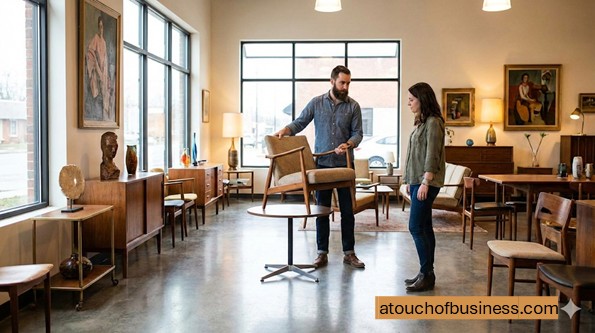
Antique Shop Startup Guide: Plan Your Model and Inventory
Business Overview
An Antique Business sells older, secondhand items that are usually one-of-a-kind. Your inventory might include furniture, art, jewelry, books, vintage clothing, or architectural salvage—depending on what you choose to specialize in.
You can run this as a storefront, an online-only shop, a booth in an antique mall, a pop-up at events, or a mix. Some owners also sell on consignment, which means you sell items for someone else under a written agreement.
Before you get excited about the “fun stuff,” understand what makes this different from many retail ideas: supply is availability-driven. You are not placing repeat orders for the same product over and over—you are finding items, validating what they are, documenting condition, and pricing them with care.
Common products you might offer:
Most antique shops focus on a few categories so customers know what you’re about.
- Furniture and home decor (tables, cabinets, lighting, mirrors)
- Art and framed pieces
- Jewelry and small collectibles
- Books, paper goods, and ephemera
- Vintage clothing and accessories
- Architectural salvage (doors, hardware, trim, fixtures)
Common services and selling formats:
Many of these are optional. Pick what fits your time, risk tolerance, and space.
- Direct resale (you buy inventory, then resell)
- Consignment sales (you sell items for others under agreed terms)
- Online listings with shipping (or local pickup)
- Pop-ups and event selling
Who typically shops with you:
Customer types depend on your niche, location, and price point. A few common groups show up again and again.
- Collectors looking for specific categories and time periods
- Home decorators and homeowners hunting for unique pieces
- Gift shoppers who want something unusual
- People restoring older homes (especially for architectural salvage)
- Set, prop, and staging needs (varies by region)
Pros and cons to weigh before you commit:
This business can be started small, but it can also get risky fast if you don’t control inventory and compliance.
- Pros: flexible models (online, booth, storefront), unique inventory, multiple sourcing channels (estate sales, auctions, dealers, private collections)
- Cons: unpredictable inventory flow, authenticity and provenance risk, theft risk, cash tied up in inventory, location rules and sales tax rules that vary
If you want broader startup context before you pick a lane, read these startup considerations and use them as your baseline.
Is an Antique Business the Right Fit for You?
You’re not just opening a shop. You’re choosing a work style where you must make decisions with imperfect information—especially early.
Income can be uncertain, hours can run long, and you’ll own the full responsibility. That includes compliance screens for certain inventory types, sales tax setup, and the stress of tying cash up in items that might take time to sell.
Passion matters here because challenges will show up. When you’re cleaning, photographing, identifying, writing descriptions, and researching sold comps at night, passion becomes fuel, not decoration.
If you want a practical reminder of why passion helps persistence, read this guide on passion and business.
Now ask yourself this—honestly: “Are you moving toward something or running away from something?” Wanting freedom or more money can be part of it. But if the only reason is escaping a job, financial stress, or prestige chasing, this can fall apart the moment it gets hard.
Reality check time: expect hard tasks, fewer vacations in the beginning, and a steady stream of decisions. You’ll need family support, a basic financial plan, and the ability to learn skills you don’t have yet.
Owner conversations (non-competing only):
Talk to owners you will not be competing against—different city, different region, different area. You want truth, not guarded answers.
- What category took you the longest to learn to price accurately?
- What do you do when you’re not sure an item is authentic or legally sellable?
- Which selling model (storefront, booth, online) surprised you the most after you started?
- What would you do differently about inventory storage and security before opening?
- What did you underestimate about permits, zoning, or sales tax setup?
If you want more grounded questions to ask, use inside advice from real owners as your prompt list.
Choose Your Antique Business Model
In an antique shop, small setup choices can create big problems later—so get this right before you open.
Your model drives nearly everything: startup costs, risk level, workflow, and the rules you’ll need to follow.
Common models to consider:
Pick one primary model first, then add others only after your basics are stable.
- Storefront: retail space with public hours (often more permits, inspections, and fixed costs)
- Online-only: listings and shipping/local pickup (more packaging, photography, and returns handling)
- Antique mall booth: lower overhead, shared foot traffic, limited control over customer experience
- Pop-ups/events: flexible, but schedule-driven and often requires transport and display gear
- Consignment: less cash tied in inventory, but needs clear contracts and pricing authority
Solo vs. staff:
This is typically solo startup, especially online-only or a booth model. Storefronts can start solo too, but staffing becomes more likely as hours expand and inventory volume grows.
Pick Your Niche and Your “No-Sell” List
This looks generic, but it works differently in an antique resale business.
You need a niche so your sourcing and pricing get sharper over time. You also need a “no-sell” list so you don’t buy yourself a legal problem.
Start with a narrow focus:
Pick two or three core categories you want to be known for, like furniture and art, or books and small collectibles.
- Choose categories you can store safely and display well
- Choose categories you can research and describe with confidence
- Choose categories that match your selling model (shipping-friendly vs. local pickup)
Create a no-sell list now:
Some inventory categories create major compliance risk. Rules vary by jurisdiction—verify before you buy.
- Items that may contain ivory or protected wildlife materials
- Archaeological or ethnological cultural property with unclear origin
- Children’s products with safety risks or recall concerns
- Firearms categories you are not equipped to classify correctly
Validate Demand Using Sold-Item Data
Picture your shop in real life—what has to be true for opening day to go smoothly?
Demand validation is not guesswork. In this category, you validate with sold results, not asking prices.
What to do before you spend real money:
Make sure you can source items at a price that leaves room for your time, overhead, and risk.
- Check sold listings for your categories (condition-adjusted)
- Watch local competition: shops, booths, estate sale companies, auction houses, and online sellers
- Notice what moves quickly versus what sits
- Track how often your “must-have” categories actually appear in the supply stream
If you want a structured way to evaluate whether the business fits your life and budget, revisit these planning checkpoints before you lock in a lease or inventory spend.
Build Your Antique Business Sourcing Plan
Don’t aim for perfect—aim for ready. That matters in an antique resale setup.
Your inventory plan is your launch plan. If you don’t know where items come from, you can’t price, stock, or scale.
Common sourcing channels:
Choose two primary channels and one backup channel to start.
- Estate sales
- Auctions (in-person and online)
- Dealer networks
- Consignors (people who want you to sell items for them)
- Antique malls and booth networks
- Private collections
Early sourcing rules that protect you:
Set standards before you get emotionally attached to “cool finds.”
- Decide what documentation you will require for higher-risk categories (age evidence, provenance, chain-of-ownership)
- Decide your condition floor (what you will and won’t spend time repairing or cleaning)
- Decide your storage limits (large furniture can overwhelm small spaces fast)
Set Inventory Standards and a Listing Workflow
The goal is simple: make your shop easy to run and hard to break.
Every item must pass through the same workflow, even when you’re tired. This is where you protect your reputation and your cash.
A practical workflow from arrival to sale:
Keep it consistent so you can scale your inventory without chaos.
- Receive the item and record where it came from
- Photograph it (multiple angles)
- Identify what it is (maker, time period, materials if known)
- Write condition notes and disclose known restoration or reproduction status
- Research sold comps for pricing
- Set a price and tag it (SKU or internal ID helps)
- Store it securely until it goes on the floor or online
- Display or list it with clear photos and descriptions
- Complete the sale and issue a receipt
Why this matters:
Customers forgive “imperfect.” They don’t forgive vague descriptions, surprise damage, or authenticity claims you can’t support.
Screen High-Risk Inventory Before You Buy
Skip this and your shop may still open—but you’ll pay for it later.
Some items can trigger federal restrictions, state rules, or local requirements. If you’re unsure, ask a local small business attorney before you spend money on questionable inventory.
Common risk triggers to treat seriously:
Rules vary—confirm before you import, list, or display these items.
- Imports: for U.S. Customs purposes, an “antique” classification requires the item to be over 100 years old at importation
- Tariff classification: antiques can fall under Harmonized Tariff Schedule Chapter 97 (including “antiques of an age exceeding 100 years”)—verify classification if importing
- Cultural property: archaeological or ethnological material may face import restrictions depending on country and category
- Ivory/wildlife materials: federal restrictions can be strict, and some states add more limits
- Children’s products: you are not required to test used products, but you cannot knowingly sell hazardous or noncompliant items; recalls matter
- Firearms: federal law defines “antique firearm” differently than modern firearms—verify your inventory category before selling
What to verify (quick paths):
Varies by jurisdiction—confirm with the right agency before you put inventory cash at risk.
- U.S. Customs and Border Protection: search “import duty antiques 100 years”
- U.S. Department of State (cultural property): search “current agreements import restrictions cultural property”
- U.S. Fish and Wildlife Service: search “elephant ivory commercial trade rules”
- Consumer Product Safety Commission: search “resale thrift store guidance” and check recalls for children’s products
Plan Startup Costs Without Guessing
Set this up now, while your shop is still in planning mode.
Instead of chasing random cost claims, build a list of categories and get real quotes. A practical structure is to separate one-time setup costs from recurring monthly costs.
Startup cost categories to plan:
Your biggest drivers are usually location choice, initial inventory budget, and security needs.
- Business formation and registrations (varies by state)
- Licenses and permits (varies by city/county and business model)
- Insurance (some coverage may be required if you have employees; rules vary)
- Location costs (rent, deposit, basic buildout, utilities setup if storefront)
- Inventory acquisition (your core investment)
- Fixtures and equipment (display, storage, security, POS)
- Technology and software (POS, inventory cataloging)
- Payments setup (card-present, online, or both)
- Brand and marketing assets (domain, signage, photography)
- Professional support (accountant, lease review, legal help if needed)
- Working cash buffer (so one slow month doesn’t break you)
Key cost drivers you should decide early:
For an antique resale shop, this decision affects costs, workflow, and customer experience.
- Storefront vs. booth vs. online-only
- Furniture-heavy inventory vs. small collectibles
- Consignment-heavy vs. direct resale
- Security level (cameras, alarm, locked cases)
- Shipping intensity (local pickup only vs. regular shipping)
Choose a Legal Structure and Register the Business
This is how you avoid last-minute chaos while building a retail resale business.
Rules vary—check with your Secretary of State and tax agency before you file. Choose a structure that fits your risk and tax situation, then register it the right way.
What you’re typically deciding:
You’re choosing how the business exists legally, and how it will be taxed. If you’re unsure, ask a local accountant before you commit.
- Sole owner vs. a registered entity (rules and protections vary)
- Your business name plan (legal name vs. a “doing business as” name, if required)
- Whether to run a trademark search before you invest in signage and branding
Practical verification paths:
Some setups require this, others don’t—verify based on your location and service model.
- Secretary of State: search “(your state) form an LLC” or “(your state) business registration”
- Internal Revenue Service: search “apply for employer identification number”
- United States Patent and Trademark Office: search “trademark database search”
If you want a broader checklist mindset before you file anything, revisit these startup decision points and make sure you’re not skipping fundamentals.
Set Up Taxes and Employer Accounts the Clean Way
Think about how this will feel in your shop on a busy day—does your plan still hold up?
Retail resale is not the place to “figure it out later.” You need sales tax clarity before your first sale, and employer registrations before your first hire.
What commonly applies (varies by jurisdiction):
Do not assume your city or state works like someone else’s.
- Sales and use tax registration (state rules vary; some states have no statewide sales tax)
- Resale certificates for inventory purchases (state rules vary)
- Employer withholding and unemployment insurance accounts (if hiring)
- New hire reporting (employer requirement handled through your state’s program)
Practical verification paths:
Rules vary—check with your tax agency and workforce agency before you run payroll or charge tax.
- State tax agency: search “(your state) sales tax permit” and “(your state) resale certificate”
- State workforce/labor agency: search “(your state) unemployment insurance employer registration”
- State new hire reporting: search “(your state) new hire reporting”
Confirm Local Licenses, Zoning, and the Certificate of Occupancy
This looks simple, but local rules can stop your opening date fast.
Varies by jurisdiction—confirm with your city/county permitting office and zoning/planning department before you sign a lease or renovate a space.
Local items that often apply to a public-facing shop:
Not all locations require all of these, but you must verify locally.
- General business license
- Zoning approval for retail resale at your address
- Home occupation rules (if running from home)
- Certificate of occupancy or change-of-use approval (often for storefronts)
- Sign permits for exterior signage
- Fire inspection steps (commonly tied to public occupancy; varies locally)
- Secondhand dealer or used goods rules (sometimes tied to recordkeeping or permits)
Practical verification paths:
If you’re unsure who owns the rule, start with city/county licensing and zoning, then ask who the next authority is.
- City/county business licensing portal: search “business license application (city/county)”
- Planning/zoning: search “zoning retail (city/county)” or “home occupation permit (city/county)”
- Building department: search “certificate of occupancy business (city/county)”
- Fire marshal: search “fire inspection business opening (city/county)”
- Police department or licensing: search “secondhand dealer permit (city/county)”
Insurance and Risk Planning for an Antique Shop
Don’t aim for perfect—aim for ready.
Separate what’s legally required from what’s smart to carry. The legal requirement side is often tied to employees and varies by state.
Legally required coverage (varies by jurisdiction):
If you hire employees, workers’ compensation requirements are set by your state.
- Workers’ compensation (if required based on your state and hiring situation)
Commonly recommended coverage (not a legal requirement in many cases):
Talk to an insurance agent who understands retail resale and inventory-heavy risk.
- General liability (slip-and-fall and customer injury claims)
- Property coverage for your inventory and fixtures
- Theft coverage considerations based on inventory type and security
- Business interruption considerations (varies by policy and situation)
Risk controls you can decide before opening:
These choices often lower risk and make day-to-day work calmer.
- Locked display cases for small, high-value items
- Cameras and an alarm system
- Document standards for high-risk inventory categories (age evidence, provenance)
- Clear condition notes and restoration disclosures
Funding and Banking for Your Antique Business
For an Antique Business, this decision affects costs, workflow, and customer experience.
Inventory is a major cost driver, so your funding plan must match your sourcing plan. If you borrow money, you need a realistic path to convert inventory into cash without panic pricing.
Common funding paths:
Pick the path that keeps you stable if sales start slower than you hope.
- Self-funding and reinvestment (common for inventory-driven retail)
- Small business lending options through banks and lenders
- SBA Microloan Program (up to $50,000; repayment term up to 7 years; interest rates generally 8%–13% through intermediaries)
- SBA 7(a) loans (maximum loan amount $5 million)
- SBA 504 loans (maximum loan amount $5.5 million)
- SBA Express as a 7(a) delivery method (maximum loan amount $500,000)
Banking setup before you take payments:
Banks commonly ask for formation documents (if you formed an entity), your employer identification number if you have one, and identification. Requirements vary—ask the bank for a checklist before you show up.
Payment acceptance setup you should not skip:
Payment Card Industry Data Security Standard requirements apply to entities that store, process, or transmit cardholder data. Choose a payment setup that fits your model, then follow the security requirements your processor gives you.
If you need mindset support for the “why” behind your work while you do the setup grind, revisit how passion supports persistence.
Pricing Setup for Antiques and Collectibles
This is how you protect your cash and your credibility.
Pricing is not just a number. It’s a signal to customers and a test of whether your sourcing plan works.
Common pricing methods:
Use the method that matches your inventory type and how confident you are in identifying it.
- Market comps: price based on comparable sold results, adjusted for condition
- Appraisal-informed pricing: use qualified valuation input when the item is difficult or high-risk
- Cost-plus (limited use): acquisition cost plus cleaning/repair effort plus overhead and margin
- Consignment split pricing: price and split defined by contract terms and who has pricing authority
What affects pricing in a resale shop:
Condition and authenticity drive value. So does rarity, maker attribution, completeness, provenance, and shipping complexity.
What to verify before setting prices:
Rules vary—check with your tax agency and confirm any inventory restrictions before you advertise an item for sale.
- Sales tax treatment in your state
- Whether the item triggers wildlife, cultural property, or firearms classification issues
- Your written disclosures (condition, restoration, reproduction status)
Supplier and Vendor Setup for an Antique Store
Don’t confuse this with traditional retail procurement.
Most inventory here is one-of-a-kind, purchased per item or per lot. That means minimum order quantities are not typically applicable for inventory.
Who your “vendors” often are:
These are the relationships that feed your inventory pipeline.
- Auction houses and auction platforms (account setup varies)
- Estate sale companies (schedule-driven supply)
- Dealer networks
- Consignors (if you run consignment)
- Antique mall or booth operators (if you rent a space)
Account setup expectations:
Requirements vary by counterparty. Some may ask for resale documentation depending on state tax rules. If you’re unsure, ask the counterparty what they require before you plan your first buying trip.
Lead times:
Inventory supply is availability-driven, not manufacturer lead-time driven. Fixtures and shipping supplies do have lead times—confirm with each vendor before opening week.
Name, Domain, and Digital Footprint
Set this up now, while you’re still planning.
You need a business name, a matching domain, and social handles that don’t confuse customers. If you plan to protect your name, you may also run a federal trademark search before you order signage.
Pre-launch digital basics:
Choose only what you can maintain consistently in early launch.
- Secure your domain name
- Claim social handles that match your name
- Set up profiles where you plan to sell or be discovered
- If you have a storefront, consider a local profile that helps customers find hours and directions
Core brand assets to have before opening:
Keep it simple. The goal is clarity and consistency.
- Logo (basic is fine)
- Readable fonts and a small color set
- Storefront signage files (if applicable)
- Photo style basics (clean background, consistent lighting)
Essential Equipment to Launch and Open
This is how you avoid last-minute chaos in a retail resale launch.
Below is a practical equipment list organized by category. Your exact list depends on whether you’re storefront, booth, online-only, or pop-up.
Point of sale and payments:
Even a small setup needs a way to ring sales, collect tax correctly, and issue receipts.
- Point of sale system (software plus device)
- Card reader (in-person payments)
- Receipt printer (if using printed receipts)
- Cash drawer (if accepting cash)
- Internet connection equipment (router/modem as needed)
Inventory cataloging and item tagging:
Your catalog is your control system. It helps with pricing, customer questions, and loss prevention.
- Smartphone or camera for item photos
- Basic photo lighting or light box (for small items)
- Neutral photo backdrop
- Measuring tape and ruler (dimensions matter for listings)
- Small scale (useful for shipping and some categories)
- Tags and tag strings or label stock
- Label printer (optional but useful for consistent tagging)
- Magnifier or loupe (helpful for marks and details)
- Protective gloves (handling delicate items)
Display fixtures and merchandising:
For an antique shop, presentation helps customers understand value without you “selling” them.
- Shelving and display tables
- Locked display cases for small valuable items (as needed)
- Wall hooks or racks (for art or accessories)
- Mirrors (helpful for vintage clothing areas)
- Basic lighting that shows true condition
- Price signage and item labels
Storage and handling:
If you sell furniture or bulky items, plan handling tools early so you don’t get stuck.
- Backroom shelving and storage bins
- Protective blankets or pads (for furniture and glass)
- Hand truck or dolly (if handling large pieces)
- Sturdy boxes for small-item storage
- Basic locks for storage areas
Packing and shipping (if selling online):
If you ship, you need repeatable packaging that protects items and reduces returns.
- Shipping boxes in common sizes
- Bubble wrap or cushioning material
- Packing paper
- Shipping tape and dispenser
- Shipping labels and label printer (or print capability)
Office and recordkeeping:
Good records support taxes, permits, and inventory documentation standards.
- Computer or tablet for admin work
- Printer/scanner (optional but useful)
- Filing system (digital folders or physical file storage)
- Notebook or digital notes system for provenance and sourcing records
Forms, Policies, and Records You Need Before Opening
The goal is simple: prevent disputes and protect trust.
You don’t need a stack of paperwork. You need the right few documents that match your selling model.
Common pre-opening documents:
If you’re unsure what’s required, ask a local small business attorney before you publish policies that create liability.
- Return and refund policy (aligned with your payment processor rules)
- Condition disclosure language (especially for older items)
- Authenticity and attribution language (careful and accurate)
- Consignment agreement template (if you sell on consignment)
- Basic receipt format and recordkeeping routine
Inventory documentation standards:
For higher-risk categories, set a rule for what documentation you require before you list an item for sale.
Plan How Customers Will Find You Before You Open
Don’t aim for perfect—aim for discoverable.
In early launch, your best marketing plan is clarity: what you sell, where you sell it, and how customers can trust what they’re getting.
Practical discovery channels to set up early:
Choose what fits your model and time.
- Local online profile for your storefront (if you have one)
- Online marketplace profiles if you plan to sell there
- Social accounts that show new arrivals and item stories
- Simple website page with hours, location, and contact method (if applicable)
- Event calendar for pop-ups or antique shows (if applicable)
If you want better questions to guide your launch marketing without guessing, use these owner insights to shape what you promote and what you avoid.
Set Up Your Payments and Test a Full Transaction
This is how you protect your opening week.
Before you open the doors or publish your first listings, test the entire flow: sale, tax, receipt, refund, and recordkeeping.
What to test before opening day:
Run this like a rehearsal, not like a theory.
- Point of sale settings, including sales tax configuration
- Card payments, refunds, and receipts
- Inventory updates after a sale (so you don’t oversell)
- Packaging and shipping steps if you sell online
- Your condition disclosure process (so every listing is consistent)
Payment data security:
Payment Card Industry Data Security Standard requirements apply to businesses that store, process, or transmit card data. Follow your processor’s setup requirements and do not build a workaround that creates security risk.
Prepare Your Space and Merchandising Plan
Think about how this will feel in your shop on a busy day—does your layout still hold up?
Your physical setup is part of your business model. It affects security, customer flow, and how fast you can restock and re-tag items.
Storefront setup decisions that change cost and risk:
Some setups require this, others don’t—verify based on your location and selling model.
- Whether you need a certificate of occupancy or change-of-use approval
- Where high-value items will be displayed (locked cases vs open shelving)
- Backroom storage capacity (especially if you carry furniture)
- Where you photograph items (consistent lighting and background)
Signage and labeling readiness:
Exterior signs often require permits. Interior pricing and condition notes should be clear so customers aren’t guessing.
Legal and Compliance Checkpoints Before Your First Sale
Skip this and you might still open—but you’ll spend your early launch cleaning up avoidable problems.
Use this as a quick checkpoint list. Rules vary by jurisdiction—confirm with your local agencies and keep documentation of what you learn.
Federal checkpoints that can apply:
These show up most often through hiring and certain inventory categories.
- Employer verification steps if you hire employees
- Import classification and age threshold if you import items (over 100 years old for “antique” classification)
- Cultural property restrictions if importing archaeological/ethnological items
- Wildlife material restrictions if items contain ivory or similar materials
- Children’s product resale obligations (do not knowingly sell hazardous or noncompliant items; recalls matter)
State checkpoints that often apply:
Rules vary—check with your Secretary of State and tax agency.
- Entity formation filings (if forming an entity)
- Sales and use tax registration (and resale certificate rules)
- Employer accounts if hiring (withholding, unemployment insurance)
- Workers’ compensation requirements if hiring (state-based)
City/county checkpoints that often apply:
Varies by jurisdiction—confirm with your city/county licensing and zoning offices.
- General business license
- Zoning approval for your address and use
- Home occupation rules (if home-based)
- Certificate of occupancy or change-of-use approval (often storefront-related)
- Sign permits and possible fire inspection steps
- Secondhand dealer or used goods rules (sometimes apply)
Red Flags to Catch Before You Spend More Money
This is how you protect yourself from the “slow leak” problems that drain cash and confidence.
These red flags are especially common when inventory decisions get emotional and compliance gets ignored.
Watch for these warning signs:
If two or more show up at once, slow down and verify your plan.
- You can’t explain where inventory will come from next month (not just today)
- You’re buying high-risk items without documentation or verification steps
- You’re pricing based on asking prices instead of sold comps
- You’re signing a lease before zoning and local approvals are confirmed
- You’re accepting payments before your sales tax setup is correct
- You’re taking consignment items without a clear written agreement
- Your security plan is “hope,” not locked cases, cameras, and controls
If you’re feeling pressure to rush, pause and reread these startup checkpoints to make sure your timeline isn’t controlling your decisions.
Pre-Launch Day-in-the-Life Snapshot
This looks simple on paper, but it’s a real workload before you ever open.
Here’s what a pre-launch day can look like when you’re building inventory and setting up systems.
Example pre-launch day:
This is not a schedule you must follow. It’s a realistic snapshot of what the work often includes.
- Morning: visit an estate sale or pick up an auction lot; record sourcing details
- Late morning: clean items carefully, photograph them, and note condition
- Midday: research and identify items; check sold comps and write descriptions
- Afternoon: tag items, update your inventory catalog, and stage for display or listings
- Late afternoon: confirm local licensing/zoning steps, insurance quotes, and payment setup tasks
- Evening: work on name/domain/social setup and finalize policies like returns and disclosures
When that sounds tiring, ask yourself again: are you moving toward something you truly want, or running away from something you hate?
Early-Launch Responsibilities to Expect
Don’t aim for perfect—aim for stable.
These responsibilities matter here because they directly affect pre-launch readiness and the first weeks after opening.
What you’ll be doing a lot of early on:
If this list feels miserable, that’s useful information before you commit.
- Sourcing inventory consistently (estate sales, auctions, dealer relationships)
- Cataloging and tagging items with photos and condition notes
- Pricing with sold comps and revising prices when items sit
- Handling customer questions about condition, authenticity, and provenance
- Managing payments, receipts, refunds, and sales tax routines
- Maintaining security routines and locked displays as needed
If you want a reality-based view of what owners say surprised them early on, read this collection of owner advice and use it to stress-test your expectations.
Launch Your Antique Business With a Readiness Checklist
Picture your Antique Business in real life—what has to be true for opening day to go smoothly?
Use this checklist as your “go/no-go” gate. If several items are incomplete, delay opening long enough to fix the foundation.
Business and inventory readiness:
Your inventory pipeline and documentation standards should be stable before you invite customers in.
- Primary selling model selected (storefront, online-only, booth, pop-up)
- Niche categories chosen and a no-sell list defined
- Sourcing channels active (at least two)
- Inventory workflow in place: photograph, identify, condition-note, price, tag, store securely
- High-risk inventory screening steps defined (imports, cultural property, wildlife materials, children’s products, firearms classification)
Legal and approvals readiness (varies by jurisdiction):
Rules vary—confirm with your Secretary of State, tax agency, and city/county offices.
- Business registered appropriately for your structure
- Employer identification number obtained if needed
- Sales tax registration completed if required
- Local business license approved if required
- Zoning confirmed for your address and use
- Certificate of occupancy or change-of-use approval completed if required
- Sign permits approved if installing exterior signage
- Secondhand dealer rules verified if applicable
Insurance and risk controls readiness:
Separate legally required coverage from optional protection.
- Workers’ compensation addressed if hiring (state-based)
- General liability and property/inventory coverage discussed and activated as needed
- Security plan in place (locked cases, cameras/alarm as chosen)
Financial and payment readiness:
Test your financial setup before starting.
- Business bank account open
- Payment processor active and tested
- Point of sale sales tax settings tested
- Refund and receipt flow tested
- Recordkeeping routine defined
Brand and launch readiness:
Clarity beats complexity in early launch.
- Business name confirmed; domain secured; social handles claimed
- Core brand assets ready (logo, basic style, signage files if applicable)
- Policies written (returns/refunds, condition and restoration disclosures, consignment agreement if used)
- Soft opening plan or test sale completed
If you want a final mindset check before you open, revisit how passion supports persistence and make sure you’re building this for the right reason.
27 Tips to Start a Successful Antique Business
Starting an Antique Business can be exciting, but it’s also a compliance-and-cashflow test before you ever open.
These tips keep you focused on the decisions that affect risk, cost, and opening-day readiness.
Use them like a pre-launch checklist as you choose your model, build inventory standards, set up registrations, and test payments.
Before You Commit (Fit, Skills, Reality Check)
1. Choose your primary selling model first—storefront, online-only, antique mall booth, pop-up/events, or consignment-heavy—because it changes your permits, equipment, and risk profile.
2. Pick two or three inventory categories you want to be known for (such as furniture, art, jewelry, books, vintage clothing, or architectural salvage) so your sourcing and pricing skills sharpen faster.
3. Write a “no-sell list” before you source a single item, especially for anything that may involve ivory/wildlife materials, archaeological/ethnological cultural property, children’s products, or firearms categories you can’t confidently classify.
Demand and Profit Validation
4. Validate demand using sold-item data, not asking prices, and adjust for condition so you don’t price your launch inventory based on wishful thinking.
5. Study your local competition by business model (shops, antique malls, auction houses, estate sale companies, flea markets, online sellers) to see where demand is already served and where it’s not.
6. Confirm supply reality by tracking how often your target categories appear at estate sales and auctions, because this business is availability-driven and “restocking” is never guaranteed.
Business Model and Scale Decisions
7. Decide how you’ll source inventory at launch—estate sales, auctions, dealer networks, consignors, antique malls/booths, or private collections—and choose at least two primary channels plus one backup.
8. If you plan to sell on consignment, define pricing authority and payout timing in writing from day one, since unclear terms create disputes before you’ve even stabilized.
9. Choose your shipping stance early (local pickup only vs. regular shipping) because it changes packaging equipment, space needs, and how you price bulky or fragile items.
Legal and Compliance Setup
10. Choose your business structure and register it correctly in your state before you sign major contracts, and if you’re unsure which structure fits, ask a local attorney or accountant.
11. Get an Employer Identification Number from the Internal Revenue Service when you need one (common triggers include certain entity types, hiring, and many business banking setups).
12. Register for sales and use tax where required before your first sale, because retail resale often requires correct tax setup up front and rules vary by state.
13. Confirm local licensing and zoning for your exact address and business model, since storefront, home-based, and event-based setups can trigger different city/county rules.
14. If you’re opening a public-facing storefront, verify whether a certificate of occupancy or change-of-use approval is required, and do it before you commit to buildout.
Budget, Funding, and Financial Setup
15. Build your startup budget by separating one-time setup costs from monthly costs, then plug in real quotes for your location, inventory, security, and point of sale system.
16. Treat inventory acquisition as a primary startup cost driver and set a hard starting inventory budget, because cash tied up in slow-moving pieces can delay your opening readiness.
17. If you need funding, compare self-funding with Small Business Administration-backed options early; for example, the Microloan Program can go up to $50,000 through intermediaries, and terms and pricing depend on the lender.
18. Open a business bank account before you accept payments, and ask the bank for a document checklist first so you don’t lose time during your pre-launch window.
Location, Build-Out, and Equipment
19. Choose your space based on storage and security needs, not just foot traffic, because antiques can include bulky furniture, fragile items, and small high-value pieces that require controlled display.
20. Set up a consistent cataloging workflow before opening: receive the item, photograph it, identify it, record condition notes (including known restoration or reproduction status), research sold comps, then tag and store it securely.
21. Buy equipment in functional categories, not impulse purchases: point of sale and card reader, photography setup (camera/phone, lighting, backdrop), item tagging tools, storage/handling tools (shelving, bins, protective pads), and security (locked cases, cameras/alarm as needed).
Suppliers, Contracts, and Pre-Opening Setup
22. Don’t plan inventory like traditional retail—minimum order quantities usually don’t apply because items are one-of-a-kind and purchased per item or per lot, so focus on access to auctions, estate sales, and dealer relationships instead.
23. Set documentation standards for higher-risk items (age evidence, provenance, chain-of-ownership) and stick to them, especially if you might import inventory or sell items with restricted materials.
Branding and Pre-Launch Marketing
24. Secure your business name basics early—domain and social handles that match—so customers can find you the same way you present yourself at launch.
25. Build your pre-launch visibility around what you sell and how you sell it (storefront hours, online listings, pop-up schedule), and keep your message category-specific so the right customers recognize you fast.
Final Pre-Opening Checks and Red Flags
26. Run a full test transaction before opening: sale, sales tax settings, receipt, refund, and inventory update, and follow Payment Card Industry Data Security Standard requirements that apply to your payment setup.
27. Stop and verify if you see these red flags: pricing from asking prices instead of sold comps, buying restricted items without documentation, signing a lease before zoning approval, taking consignment without a written agreement, or relying on “hope” instead of a real security plan.
If you treat your model choice, inventory standards, and local verification steps as your real “product,” you’ll launch with fewer surprises.
Don’t rush the parts that protect your cash and compliance—those are the parts that decide whether opening day feels smooth or stressful.
FAQs
Question: What business model should I start with for an Antique Business?
Answer: Start by choosing one primary model: storefront, online-only, antique mall booth, pop-ups/events, or a consignment-focused setup. Your choice changes permits, equipment, security needs, and how you manage inventory.
Question: Can I start an Antique Business from home or online only?
Answer: Yes, many owners start online-only or home-based to keep fixed costs lower. Rules vary by jurisdiction, so confirm home-occupation limits and local licensing with your city/county offices.
Question: How do I pick a niche for my antique shop?
Answer: Pick two or three categories you can source consistently and describe with confidence, like furniture, art, books, jewelry, vintage clothing, or architectural salvage. A narrow focus makes pricing, sourcing, and marketing easier before opening.
Question: How do I validate demand before I buy inventory?
Answer: Use sold-item data, not asking prices, and adjust for condition. Compare what sells in your niche against local competitors like shops, antique malls, estate sales, and auctions.
Question: Where do new owners usually source inventory at launch?
Answer: Common channels include estate sales, auctions, dealer networks, consignors, antique malls/booths, and private collections. Choose two primary channels plus one backup so supply gaps do not stall your launch.
Question: What is a “no-sell list,” and what should be on it?
Answer: It’s your written list of categories you will not buy or sell unless you can verify legality and documentation. Start with ivory/wildlife materials, archaeological or ethnological cultural property with unclear origin, children’s products with safety concerns, and firearms categories you cannot classify correctly.
Question: If I import items, what qualifies as an “antique” for U.S. Customs?
Answer: For U.S. Customs purposes, antiques under the relevant tariff heading are generally over 100 years old at importation. Keep proof of age and classification support before you ship anything.
Question: How do I avoid cultural property problems when sourcing antiques?
Answer: If an item could be archaeological or ethnological material, import restrictions may apply by country and category. Check current U.S. Department of State agreements and restrictions before importing, and avoid items with unclear origin.
Question: What should I know about ivory or wildlife materials in antiques?
Answer: Federal rules can tightly restrict commercial trade in elephant ivory, and some states add stricter limits. If you cannot clearly verify what the material is and whether sale is allowed, treat it as a no-sell item.
Question: Do I need an employer identification number to start?
Answer: Many businesses need an Employer Identification Number for taxes, hiring, and banking, and the Internal Revenue Service issues them directly. If you are unsure whether you need one, confirm with the Internal Revenue Service guidance or your accountant.
Question: Do I need to register for sales tax before opening?
Answer: Often yes, because retail resale may require sales and use tax registration before your first sale, and rules vary by state. Confirm with your state tax agency and ask how resale certificates work for inventory purchases.
Question: What local permits and zoning checks should I do before signing a lease?
Answer: Confirm zoning for retail resale at your exact address and verify whether a local business license is required. Rules vary by jurisdiction, so ask your city/county licensing office and zoning/planning department what approvals apply to your model.
Question: When do I need a certificate of occupancy to open a storefront?
Answer: Many jurisdictions require a certificate of occupancy or a change-of-use approval for a public-facing retail space. Verify this with your city/county building department before you spend money on buildout or signage.
Question: Do secondhand dealer rules apply to an Antique Business?
Answer: Sometimes, especially if you buy items from the public or operate as a secondhand dealer. Rules vary by jurisdiction, so check your city/county licensing office and ask if local police reporting or record rules apply.
Question: What insurance do I need before opening?
Answer: Legally required insurance often depends on whether you have employees, and workers’ compensation rules vary by state. Most owners also price coverage based on inventory value, theft risk, and whether customers visit a storefront.
Question: What equipment do I need to open an Antique Business?
Answer: At minimum, plan a point of sale setup, payment acceptance hardware, and an inventory cataloging workflow with photos, tagging, and secure storage. Add locked display cases, cameras/alarm, and packing supplies if your model needs them.
Question: How should I plan startup costs if reliable ranges are hard to find?
Answer: Build your budget by categories and gather quotes, separating one-time setup costs from monthly costs. Your biggest cost drivers are usually location choice, initial inventory budget, and security needs.
Question: How do I set prices without guessing?
Answer: Use sold comps, adjust for condition, and be careful with authenticity claims you cannot support. For hard-to-value or high-risk items, consider appraisal-informed pricing or avoid listing until you can verify details.
Question: What should my pre-opening inventory workflow look like?
Answer: Use a repeatable flow: receive, photograph, identify, write condition notes, research sold comps, price, tag, and store securely before listing or displaying. This reduces pricing errors and helps you answer customer questions fast.
Question: What do I need in place before I can accept credit cards?
Answer: You need a payment processor setup, a tested point of sale flow, and a refund process you can follow consistently. Follow Payment Card Industry Data Security Standard requirements that apply to how you process card data, and avoid storing card details yourself.
Question: What basic policies and paperwork should I have ready before opening?
Answer: Prepare a return/refund policy, condition and restoration disclosure language, and careful authenticity language. If you do consignment, use a written agreement that clearly states pricing authority and payout timing.
Question: When should I hire help, and what legal steps come with the first hire?
Answer: Hire when your hours, intake volume, or security needs exceed what you can handle safely. If you hire, complete Form I-9 for each employee and follow your state’s new hire reporting rules and deadlines.
Question: What should I focus on in the first month after opening?
Answer: Track cash tightly, because inventory ties up money and sales can be uneven early. Keep your cataloging, pricing, tagging, and security routines consistent so you can learn what sells without chaos.
Expert Advice From Antique Shop Owners and Dealers
Learning from people who have actually run an antique shop, booth, or resale operation can save you from expensive guesswork.
You’ll get real-world insight on sourcing channels, inventory standards, pricing habits, and the early setup choices that affect risk and cash before opening day.
- Square — How Vintage Retailer Funny Pretty Nice Grows Its One-of-a-Kind Business
- Carla Aston (DESIGNED) — Valuable advice from antique shop owner, Carolyn Bradford
- Up in Your Business (FlagandBanner) — Roy Dudley interview (antique shop owner perspective)
- iHeart — Interview with Rob Wolfe of American Pickers
- Art Dealer Diaries (Buzzsprout) — Robert Sommers: Fine Arts & Antique Dealer (Interview)
- The Ramble Journal — Interview with an antique store owner (Alley Cat Vintage Mercantile)
- Castbox — The Business of Antiques (interviews with dealers and shop owners)
- Apple Podcasts — Shop Talk: Selling Vintage with Whitney & Nicole (tips and guest conversations)
Related Articles
- How to Start an Estate Sale Business
- Starting a New Auction Business
- Start an Art Appraisal Service
- Start an Art Restoration Service
- Starting an Ebay Business
- How to Start a Picture Framing Business the Right Way
- The A-Z of Launching Your Own Bookstore Business
Sources:
- Administration for Children and Families: New hire reporting
- Code of Federal Regulations (eCFR): 19 CFR cultural property
- Federal Register: African elephant 4(d) rule
- Internal Revenue Service (IRS): Get employer ID number, Business start checklist, Starting a business
- PCI Security Standards Council: PCI DSS standards, Merchant resources
- U.S. Citizenship and Immigration Services (USCIS): I-9 verification form
- U.S. Consumer Product Safety Commission (CPSC): Resale thrift stores, Total lead content, Resellers guide PDF
- U.S. Customs and Border Protection (CBP): Antiques import duty
- U.S. Department of State: Import restrictions
- U.S. Fish & Wildlife Service (USFWS): Elephant ivory FAQs, What to do with ivory
- U.S. International Trade Commission (USITC): HTS 9706.10.00.40
- U.S. Patent and Trademark Office (USPTO): Trademark database search
- U.S. Small Business Administration (SBA): Register your business, Choose business structure, Choose business name, Pick business location, Licenses and permits, Federal and state tax IDs, Open business bank account, Calculate startup costs, Microloans, 7(a) loans, 504 loans, Types of 7(a) loans, Get business insurance
- U.S. Code (House): 18 USC 921 definitions