
How a Flower Shop Works
A storefront flower shop sells cut flowers, floral arrangements, potted plants, and related products from a walk-in retail location. Customers come in off the street, call ahead, or order online and pick up in store or receive local delivery.
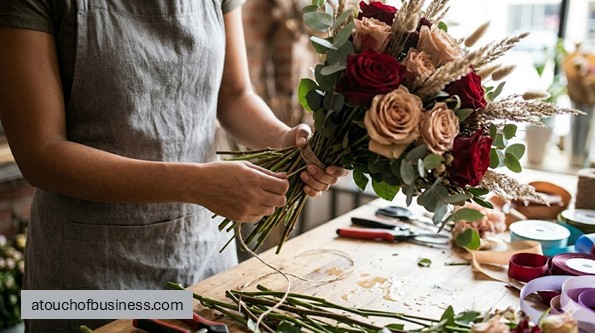
Floral designers arrange live, dried, and silk flowers and greenery into decorative displays for everyday buyers, weddings, funerals, holidays, and corporate accounts.
The shop can stay focused on walk-in retail or expand into sympathy work, event florals, custom orders, local delivery, potted plants, and gift add-ons. That scope decision shapes your cooler size, daily workload, staffing, and startup budget before you open a single door.
Is This the Right Business for You?
Before anything else, think honestly about whether owning a business suits you. Ownership means making decisions alone, absorbing losses, covering every role that goes unfilled, and staying focused when things get difficult.
Escaping a bad job or a financial problem is a weak reason to open a business. Those pressures tend to fade once you are inside the business — and new pressures take their place. Genuine passion for the business and real interest in what it provides are far more useful over the long run.
Prestige is also a weak motivator. Running a flower shop because it sounds charming rarely holds up under the actual daily demands of receiving deliveries at dawn, managing perishable inventory, and handling customer orders through a holiday rush.
Ask yourself a few honest questions. Do you enjoy working with flowers and floral design? Are you comfortable with early mornings, physical labor, and the pressure of high-volume holidays? Are you ready for the financial and operational responsibility that comes with a lease, cooler equipment, and staff?
If you have real doubts, that is worth sitting with before you sign anything.
Talk to working florists before you move forward. Find owners in a different city or region — people you will not compete against.
Prepare real questions about daily workflow, cooler management, supplier relationships, holiday pressure, and what they wish they had known. Those conversations carry more weight than anything you can read online.
Check Local Demand Before You Commit
A storefront flower shop depends on local traffic, visibility, and buying habits. Before committing to a location, do a real demand check.
Look at what is already in the area: independent florists, grocery store floral departments, garden centers, warehouse clubs, farm-direct sellers, and online order platforms. If the area is well served, you need a clear reason for customers to choose you.
Also confirm the location has what a retail florist needs. Walk-in foot traffic, nearby parking, delivery access, and proximity to funeral homes, hospitals, event venues, offices, and residential buyers all matter.
Holidays are a key part of this check. Floral demand spikes around Valentine’s Day, Mother’s Day, and Christmas, and fresh flowers cannot be prepared far in advance. Knowing whether local buying habits support those peaks helps you plan inventory and staffing ahead of time.
Weak local demand is not a fixable problem once you are locked into a lease. Understanding the local supply and demand picture before you commit is one of the most useful things you can do at this stage.
Start from Scratch, Buy, or Franchise?
Starting a flower shop from scratch gives you full control over the layout, product mix, branding, suppliers, and location. It also means building everything from zero — customers, cooler systems, supplier relationships, and daily workflow.
Buying an existing flower shop may give you a working space, an established customer base, trained staff, supplier accounts, and equipment already in place. The tradeoff is a higher upfront cost and the need to evaluate whether the business is actually healthy before you buy.
Franchising is not common in independent flower retail, but some floral networks and wire-service models offer structured entry paths. If that interests you, compare the total cost, territory rules, and ongoing fees against opening on your own.
The right path depends on your budget, timeline, risk tolerance, and how much control matters to you. Comparing your startup options carefully before committing can prevent a difficult situation later.
Write a Business Plan
A business plan helps you test your assumptions before you spend money on them. It does not need to be a formal document, but it needs to force you to think through the key decisions.
Cover your product mix, target customers, location, pricing structure, startup costs, expected revenue, and how you plan to handle holiday demand spikes. Include your cooler and equipment budget, your supplier plan, and how many weeks of working capital you can cover if sales start slowly.
The plan also gives you something concrete to show a bank or lender. If your numbers do not hold together on paper, they usually will not hold together in the shop either.
Skills Needed to Run a Flower Shop
Running a storefront flower shop takes both floral and business skills. The two do not always come together naturally, so be honest about where your gaps are.
On the floral side, you need to identify, process, and condition flowers, manage cooler storage, build arrangements, and handle a range of product types — from everyday bouquets to sympathy sprays, corsages, and wedding centerpieces.
On the business side, you need to handle pricing, inventory control, supplier ordering, customer orders, daily cash and card transactions, payroll if you hire, delivery coordination, and basic bookkeeping.
Gaps in business management are one of the most common reasons early flower shops struggle. If floral design is your strength and business operations are not, plan for how you will cover that side before opening day.
Choose a Legal Structure and Register
Most flower shops start as a sole proprietorship or a limited liability company. The choice affects how you pay taxes, how your personal assets are protected, and what paperwork you file.
A sole proprietorship is simpler to set up but offers no separation between personal and business liability. An LLC creates that separation, which matters when you are leasing a storefront, carrying perishable inventory, and potentially hiring staff.
Register your entity through your state’s Secretary of State or business registration portal. If your public-facing shop name differs from your legal entity name, you will need to file a Doing Business As name as well.
Apply for an Employer Identification Number through the IRS. You will need it to open a business bank account, hire employees, and apply for licenses and permits. The application is free and available directly through the IRS.
Licenses, Permits, and Compliance
A storefront flower shop operates in a physical location, sells taxable retail goods, and may handle live plants, chemicals, and delivery vehicles. That creates several items to verify before you open.
Sales tax permit: In most states with a sales tax, flowers, plants, vases, cards, and gift items are taxable retail goods. Register with your state’s Department of Revenue before your first sale.
Local business license: Most cities and counties require a general business license or tax registration to operate a storefront retail business. Check with your local licensing office before you open.
Zoning and certificate of occupancy: Confirm that retail flower sales are permitted at the address you are considering. A certificate of occupancy may be required before you open — particularly if there are any build-out changes, a change of use, or tenant improvements involved. Check with the city building department before signing a lease.
Live plants and nursery stock: If you plan to sell potted plants, bulbs, or outdoor plant material, some states require a nursery-stock dealer license or plant dealer registration. Check with your state Department of Agriculture before adding live plants to your inventory.
APHIS plant import permits: If you import cut flowers, greenery, or plants directly from outside the United States, federal permits may apply through the USDA Animal and Plant Health Inspection Service. If you buy only through domestic wholesalers, this is generally not part of a basic launch.
OSHA Hazard Communication: If employees handle cleaners, sanitizers, preservatives, or other chemical products, you are required to have chemical labels, safety data sheets, and worker training in place before those employees start.
ADA access: A storefront open to the public must meet accessibility requirements under the Americans with Disabilities Act. Review your customer entrance, checkout path, and pickup area before opening day.
Confirming all required local licenses and permits with the relevant agencies in your city, county, and state before you open protects you from costly surprises after launch.
Pick and Set Up the Right Location
Location is one of the most consequential decisions for a storefront flower shop. The right space can drive walk-in traffic. The wrong one quietly drains cash month after month.
Look for a space with good street visibility, nearby parking, and easy access for wholesale delivery drivers dropping off fresh flowers. The space needs water access, drainage, and enough electrical capacity to support floral coolers, which have specific power requirements.
Before signing a lease, confirm zoning for retail flower sales and ask about any restrictions on signage, cooler placement, or exterior modifications. Check whether a certificate of occupancy is required and what that process involves at that location.
Also think about the internal layout. You will move flowers through a receiving area, into the cooler, onto a design bench, and back out to the pickup counter multiple times a day. A poorly planned backroom adds physical effort and time to every order you process.
Getting the location and internal layout right before you open is far easier than trying to fix either one after you are already operating.
Equipment and Storefront Setup
A floral cooler is the most critical piece of equipment in a flower shop. Fresh flowers are perishable, and temperature control directly affects vase life. Cut flowers should be cooled quickly and are commonly stored at around 32–35°F. Most varieties store best near 33°F, though some require slightly warmer conditions.
A standard food refrigerator is not an adequate substitute. Floral coolers are built to maintain the temperature and relative humidity that cut flowers need. Budget for this equipment early — it is not optional.
The rest of your storefront setup will include:
- Design benches and a utility sink with water access
- Display tables, shelving, and a display cooler for the retail floor
- Floral tools: knives, shears, pruners, wire cutters, and thorn strippers
- Floral mechanics: foam, chicken wire, floral tape, wire, picks, and pins
- Wrap materials: ribbon, cellophane, kraft paper, and tissue
- Containers: glass vases, ceramic pots, baskets, compotes, and sympathy easels
- Clean buckets, sanitizer, bucket brushes, and receiving logs
- Point-of-sale system, card reader, cash drawer, and receipt printer
- Delivery racks, transport trays, vase stabilizers, and order tags if offering delivery
- Safety data sheet binder, gloves, aprons, wet floor signs, and a first aid kit
Start a cooler temperature log from day one. Cooler failure is a real business risk, and a written temperature record helps you catch problems before they become an inventory loss.
Running a full operations test before your first public day — receiving flowers, conditioning stems, building arrangements, ringing up a test sale, and staging a pickup order — helps opening day go more smoothly.
Suppliers and Inventory
You need supplier accounts active and confirmed before you open. A wholesale flower supplier is the most important relationship you will build. Confirm order minimums, delivery days, substitution policies, invoice terms, and credit terms before you depend on them.
You will also need accounts with:
- Plant wholesalers, if selling potted or blooming plants
- Container and vase suppliers
- Floral supply distributors for hard goods, ribbon, and wrap
- Greeting card and gift vendors, if you plan to carry those
- Delivery supply vendors
- A cooler service provider for maintenance and repairs
Identify a backup local supplier before your first major holiday. Wholesale substitutions happen regularly, and your primary supplier may not have what you need during peak demand weeks.
Start with a controlled opening inventory. Overbuying perishable flowers before demand is established is one of the most common early mistakes in this business. Buy conservatively, track your shrink, and build your order volume as sales patterns become clear.
Having your supplier accounts active and your first flower order scheduled before opening day puts you in a much stronger position from the start.
Startup Costs and Funding
Opening a storefront flower shop carries higher startup costs than a home-based or studio floral operation. The physical build-out, cooler equipment, display fixtures, and lease commitments are all part of that.
Your main startup cost categories include:
- Lease deposit and first month’s rent
- Build-out, plumbing, electrical, and HVAC work
- Floral cooler and walk-in cooler if needed
- Display fixtures, design benches, and backroom setup
- Point-of-sale hardware and payment processing setup
- Initial flower, plant, container, and hard-goods inventory
- Delivery vehicle or delivery setup if offering delivery
- Exterior signage and sign permit costs
- Business registration and local licensing fees
- Insurance
- Basic website and contact presence
- Working capital for slower early weeks and invoice timing
The total varies significantly by market rent, the condition of the space, cooler type, inventory depth, staffing, and local permit costs. Get actual quotes on the big-ticket items — especially the cooler and any required build-out work — before you set your budget.
Common funding options include owner savings, small business loans, equipment financing for coolers and point-of-sale gear, supplier credit terms after account approval, and a business line of credit for seasonal inventory swings. If a loan is part of your plan, prepare your documents and financial projections before approaching a lender.
Pricing Your Arrangements
Pricing is one of the areas where flower shops most commonly undercharge, especially on custom designs. Every arrangement has four cost components: flowers and foliage, the container, supplies and mechanics, and labor.
A common approach used by U.S. floral professionals applies roughly a 3.5x markup on flowers and foliage, a 2x markup on containers, assigns supplies at around 6% of the arrangement price, and sets labor at about 20%. That is a starting framework, not a universal rule — your local market, actual costs, and product mix will influence where you land.
Also account for perishable shrink when pricing. Flowers that spoil before they sell are a real cost, and they need to be factored into your margin, not absorbed as invisible loss.
Set delivery charges separately. Adjust pricing during holiday periods when wholesale flower costs increase. Setting your prices correctly from the beginning protects your margin and keeps the business financially viable.
Build your pricing structure before you open. Trying to figure out what to charge while also learning a new operation leads to underpriced orders and compounding margin problems.
Banking, Bookkeeping, and Taxes
Open a business bank account before your first sale. Keeping business money in a separate account from your personal finances is a basic step that makes bookkeeping, tax preparation, and financial tracking significantly easier.
Banks typically ask for your Employer Identification Number, formation documents, ownership agreements, and a business license if required. Have those ready before your appointment.
Configure your point-of-sale system to apply sales tax correctly before your first transaction. Flowers, plants, vases, cards, and gift items are taxable in most states with a sales tax, and incorrect settings create problems that are tedious to correct later.
Set up basic accounting software early. You will need to track wholesale invoices, supply costs, daily sales, card transactions, payroll if you hire, and tax remittances. Starting this on day one is far easier than reconstructing records after several months of trading.
Insurance and Risk Planning
A flower shop carries real and specific risks: perishable inventory that can spoil quickly, a cooler that can fail, a wet floor that can cause a customer injury, and a vehicle if you offer delivery.
Required insurance depends on your state, your landlord’s lease requirements, and any lender conditions. Common coverage to evaluate before opening includes:
- General liability for customer injury or property damage
- Commercial property for the space, fixtures, and equipment
- Spoilage or equipment breakdown coverage for the floral cooler
- Workers’ compensation if you hire employees — state requirements vary
- Commercial auto if using a vehicle for deliveries
- Business interruption if the shop cannot operate after a covered event
Talk with a commercial insurance agent who works with retail businesses. Have coverage bound before you open, not after something goes wrong.
Hiring and Staff Readiness
Many flower shops open with the owner handling most or all of the daily tasks. That is manageable on quiet days. But holiday periods — Valentine’s Day, Mother’s Day, Christmas — create serious design-capacity and staffing pressure that cannot be improvised.
If you plan to hire before opening, register employer tax accounts with both the IRS and your state agencies. Confirm workers’ compensation requirements, unemployment insurance registration, and required workplace posters for your business size.
Train any staff on stem handling, cooler sanitation, point-of-sale use, order accuracy, customer pickup procedures, and delivery staging. A new hire who is not trained on stem processing or cooler discipline can cause inventory losses that hit your margin quickly.
Think through your staffing plan before opening day — especially if you are launching close to a major holiday.
Business Name, Identity, and Online Presence
Choose a business name that works for a local storefront: easy to say, easy to remember, and relevant to what you sell. Check whether the name is already in use in your state before you register it.
If your public-facing shop name differs from your legal entity name, file a Doing Business As registration. Secure a matching domain name at the same time.
A basic website with your address, phone number, hours, and a way for customers to contact you or place orders is enough to open with. You do not need a full e-commerce platform on day one.
Before opening, confirm whether your landlord and local sign code allow an exterior sign and what the permit process involves. A visible storefront sign is one of the most basic trust signals for a walk-in retail business.
Have receipts ready with your business name and tax information. If you use order forms or delivery tickets, have those printed and tested before your first customer order comes in. This helps opening day go more smoothly.
Forms and Internal Documents
A few internal forms make daily operations more manageable from the start and reduce order errors when things get busy.
- Arrangement pricing sheets and recipe cards for standard designs
- A custom order form for phone, in-person, and online orders
- A wedding or event inquiry form if offering event florals
- Delivery tickets and a route sheet if offering delivery
- A receiving and quality-control log for incoming shipments
- A cooler temperature log
- A substitution and refund policy written out for internal use and customer communication
These do not need to be elaborate. Simple and consistent is what matters. Clear forms also make it much easier to bring in additional staff during busy periods.
A Day in the Life of a Flower Shop Owner
Most days in a flower shop start early. Wholesale deliveries often arrive in the morning, and fresh flowers need to be unboxed, inspected for quality, stripped of lower leaves, re-cut, hydrated, and moved into the cooler before the customer day begins.
After receiving, the owner or designer builds pre-made arrangements for the display cooler. Then the day shifts to customers — walk-ins, phone orders, and any online requests that came in overnight.
Between customers, the owner or staff is designing custom orders, staging pickup arrangements, coordinating deliveries, and monitoring the cooler temperature. At the end of the day, the team cleans buckets, sanitizes tools, removes plant waste, reviews the next day’s orders, and places the next wholesale flower order based on what sold and what is still in the cooler.
Holidays change everything. Valentine’s Day and Mother’s Day compress weeks of design work into a few days. That pace requires advance planning, staffing, and inventory discipline — not improvisation when the rush arrives.
Red Flags to Think Through Before Opening
Some problems in a flower shop startup are avoidable if you catch them early. These are the ones most worth thinking through before you commit.
- Weak local demand or heavy nearby competition, especially from grocery store floral departments with lower prices and higher foot traffic.
- Storefront rent that requires unrealistic daily sales to cover fixed monthly costs.
- No cooler budget or a space that cannot support the electrical capacity a floral cooler requires.
- Overbuying fresh flowers before demand is established, leading to spoilage and lost margin before the business finds its footing.
- Underpricing custom arrangements by ignoring labor, supplies, containers, and the landed cost of flowers including freight.
- Signing a lease before confirming zoning and whether a certificate of occupancy is required for that specific space and use.
- No holiday staffing or supplier backup plan — high-volume holidays will not wait for you to work out the details in real time.
- Hiring staff without first checking payroll tax registration, workers’ compensation rules, and required workplace poster requirements for your state.
- Selling live plants without verifying whether your state requires a nursery-stock dealer or plant dealer registration through the Department of Agriculture.
- Importing flowers or plants directly without checking USDA APHIS permit requirements first.
It is also worth knowing that floral designer employment is projected to decline 6% from 2024 to 2034. That reflects broader pressure in the industry and is worth factoring into your local demand assessment before committing to a long-term lease.
Pre-Opening Readiness Checklist
Work through this list before your first public day. If something is incomplete, resolve it before you open.
Legal and tax setup:
- Business entity registered
- Employer Identification Number obtained
- State tax accounts opened
- Sales tax permit active and settings confirmed
- Local business license confirmed
- Doing Business As filed if the shop name differs from the legal entity name
- Employer tax accounts registered if hiring
- Required insurance bound before opening day
- Required workplace posters posted
Location and build-out:
- Zoning confirmed for retail flower sales at that address
- Certificate of occupancy confirmed or issued
- All build-out permits closed
- Exterior sign permit approved if required
- ADA access reviewed for customer entrance, checkout path, and pickup area
Plant and product compliance:
- Nursery-stock or plant dealer rules checked if selling live plants
- APHIS import permit requirements checked if importing flowers or plants directly
- Local food permit checked if selling any food or beverage items
Storefront setup:
- Floral cooler installed and tested at target temperature
- Cooler temperature log started
- Retail display area arranged and price tags in place
- Design benches and sink access confirmed ready
- Safety data sheets accessible and chemical labels in place
- Wet floor signs and first aid kit on hand
Suppliers and inventory:
- Wholesale flower account active with first order scheduled
- Container and supply orders received
- Plant supplier confirmed if selling live plants
- Emergency backup local supplier identified
Operations test:
- Received, inspected, processed, and conditioned a flower shipment
- Built and staged sample arrangements in the display cooler
- Ran a test sale with correct sales tax settings applied
- Processed a card payment and printed a receipt
- Staged and labeled a pickup order
- Tested the delivery route and staging process if offering delivery
Customer-facing readiness:
- Business name, address, phone number, and hours visible on the storefront and online
- Basic website or contact page live
- Order forms, delivery tickets, and custom inquiry forms ready
- Substitution and refund policy documented
- Receipts formatted with business name and tax information
Frequently Asked Questions
Does a flower shop need a special federal florist license?
Not typically for standard retail sales. Federal review becomes relevant if the shop imports plants or plant products directly, transports regulated plant material, or sells protected plant species in covered commerce. Check with the USDA APHIS and the U.S. Fish and Wildlife Service if any of those situations applies to your business.
Does a storefront flower shop need a sales tax permit?
Usually yes, in states with a sales tax. Flowers, plants, vases, greeting cards, and gift items are tangible retail goods subject to sales tax in most states. Verify with your state Department of Revenue before you process your first sale.
Does a flower shop need a certificate of occupancy?
It depends on the jurisdiction and the space. A certificate of occupancy is commonly required when there is a change of use, tenant improvements, or new construction. Check with the city building department before you sign a lease or start any build-out work.
Can the shop sell potted plants without extra permits?
Not always. Some states regulate nursery stock or require a plant dealer registration before a retailer can sell live plants, bulbs, or outdoor plant material. Verify with your state Department of Agriculture before adding live plants to your product mix.
What should be checked before choosing a retail location?
Zoning, certificate of occupancy requirements, sign rules, parking access, delivery-driver access, water access, electrical capacity for coolers, walk-in visibility, nearby competition, and local buying demand. Cover all of these before signing anything.
Can regular refrigeration replace a floral cooler?
No. Flower handling guidance emphasizes specific temperature and relative humidity conditions that standard food refrigerators are not designed to maintain. Most cut flowers store best near 33°F, but some varieties require warmer storage. A dedicated floral cooler is the correct equipment for this business.
What pricing inputs should be set before opening?
Wholesale flower cost, freight or landed cost, container cost, supply cost, labor time, perishable shrink, delivery cost, sales tax settings, expected supplier price increases during holidays, and local competitor pricing. Build your pricing structure before your first customer order.
Should the shop offer wedding flowers right away?
Only if the owner has the design skill, consultation process, event pricing, delivery and setup plan, client contracts, and staffing capacity already in place. Wedding and event work changes workflow, staffing, transport logistics, and financial risk significantly. It is a valid service to add, but it requires its own preparation before launch.
What suppliers does a flower shop need before opening?
At minimum: a wholesale flower supplier, a hard-goods distributor, a container and vase vendor, and a ribbon and wrap supplier. Add a plant wholesaler if selling live plants, a card and gift vendor if carrying add-ons, a delivery supply vendor if delivering, and a cooler service provider for maintenance.
What should be tested before the first public opening day?
Receiving and processing a flower shipment, cooler temperature performance, arrangement building, point-of-sale tax settings, card payment processing, receipt printing, pickup order staging, delivery flow if offering delivery, and end-of-day cleanup and ordering process.
What insurance should be considered before opening?
Legally required coverage depends on your state, landlord, and any lender requirements. Common risk-planning coverage includes general liability, commercial property, spoilage and equipment breakdown for the cooler, workers’ compensation if hiring, and commercial auto if using a delivery vehicle. Confirm requirements with a commercial insurance agent before opening.
Are online orders part of the storefront model?
They can be added as opening infrastructure, but a storefront flower shop is built around walk-in retail first. Before adding online ordering, make sure your storefront zoning, build-out, cooler capacity, point-of-sale, and pickup and delivery processes are fully ready. Online ordering should support the physical operation, not replace the pre-opening checks that make it work.
Advice From Florists and Flower Shop Owners
One of the best ways to prepare for a flower shop is to listen to people who have already handled the real decisions: opening a storefront, buying flowers, managing customers, pricing arrangements, dealing with slow periods, and learning the business by doing.
The resources below include interviews, podcasts, videos, and first-person articles from florists, floral designers, and flower business owners who share practical lessons from inside the industry.
- Owning a Flower Shop With Maggie Bailey
- 5 Floral Business Lessons From a Flower Shop Kid
- Maggie Smith of Pine State Flowers
- How I Started a $120K/Month Modern Flower and Plant Shop
- Small Business Advice With Lutey’s Flower Shop Owner Sarah Ruuska
- How to Become a Florist: My Story Opening a Flower Shop
- Meet Tim Huckabee, Founder of The Profitable Florist
Related Articles
- Start a Houseplant Shop
- Start an Orchid Nursery and Grow a Thriving Business
- Start a Rose Farm
- Start a Greenhouse Business
- Start a Plant Nursery
- How To Start a Gift Store
- How To Start Your Gift Basket Business
- Start a Profitable Wedding Venue Business
- Start a Bridal Boutique
- Starting a Wedding Invitation Business
- How To Start a Catering Business
Sources:
- U.S. Census Bureau: NAICS 459310 Florists
- U.S. Bureau of Labor Statistics: Floral Designers Outlook
- U.S. Small Business Administration: Apply Licenses Permits, Federal State Tax IDs, Open Business Bank Account, Get Business Insurance
- Internal Revenue Service: Employer Identification Number
- USDA APHIS: Import Plants Guide
- U.S. Fish and Wildlife Service: CITES Plants Permit Form
- Occupational Safety and Health Administration: Hazard Communication Standard
- ADA.gov: Public Business Access ADA
- U.S. Department of Labor: Workplace Posters Requirements
- Oklahoma State University Extension: Care Handling Cut Flowers
- UMass Amherst: Harvesting Handling Cut Flowers
- Society of American Florists: Floral Shop Accounting 101
- California Department of Tax and Fee Administration: Obtaining Sellers Permit
- NYC Department of Buildings: Certificate Occupancy NYC