
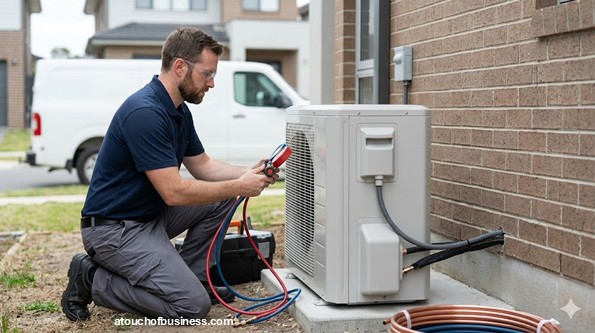
What to Expect From This Guide to Starting an HVAC Business
The guide lays out the key decisions and practical steps involved in starting a mobile HVAC business, from defining a legal service scope and testing demand to equipping the vehicle, preparing field systems, and completing pre-opening checks. The bullets highlight selected areas covered in depth.
Inside the guide, you will find:
- Startup roadmap: Follow 20 ordered steps from owner fit and service selection through licensing, finances, vehicle setup, safety, permits, and mock-job testing.
- Industry interviews: Learn from HVAC owners discussing licensing, tools, trucks, pricing, cash flow, scheduling, customer expectations, acquisitions, and field-service pressure.
- Startup FAQs: Review answers about EPA certification, contractor licensing, home-based setups, tools, permits, insurance, pricing, break-even, and required records.
- Fit and demand: Consider technical skill, physical conditions, urgent calls, household finances, climate, competition, supplier access, territory, and appointment flow.
- Licensing and permits: Verify EPA Section 608 certification, contractor license scope, local approvals, refrigerant rules, job permits, inspections, and contract requirements.
- Vehicle and equipment: Organize service vehicles, diagnostic and refrigerant tools, ladders, safety gear, truck stock, supplier accounts, restocking, and maintenance.
- Financial field systems: Build pricing and break-even logic around travel, permits, callbacks, insurance, parts, software, paperwork, payments, safety, and opening checks.
Begin by confirming which HVAC services you can legally and practically deliver within a workable service area.
An HVAC business covers heating, ventilation, air conditioning, and related comfort services for homes and buildings. As the owner or technician, you may diagnose a no-cooling call, replace a furnace, install a heat pump, service a ductless mini-split, repair ductwork, or handle refrigerant-related service when properly certified.
This guide focuses on starting a mobile HVAC business. That means the service vehicle, tools, supplier access, licenses, paperwork, pricing, and scheduling process matter before you open. You can use a broader startup checklist for general planning, but your HVAC path must be built around field service realities.
Start With Fit, Not Tools
An HVAC business can look attractive because people need heating and cooling. But demand alone doesn’t make this business a good fit for you.
You need to be comfortable with technical diagnosis, physical tasks, customer stress, weather swings, attics, crawl spaces, ladders, rooftops, and urgent calls. You also need patience for paperwork, permits, pricing, supplier runs, and warranty callbacks.
Ask yourself a direct question: Are you chasing a future or outrunning a past?
Don’t start an HVAC business only because you want to escape a job, financial stress, or status pressure. You need an interest in the business itself. You also need enough personal savings or household support to handle income uncertainty during launch.
Talk to Owners You Won’t Compete Against
Talk with HVAC owners outside your market. Choose owners in another city, region, or service area so you’re not asking direct competitors to train you.
Prepare questions before the conversation. Ask about licensing delays, truck setup, supplier accounts, slow seasons, callback costs, pricing mistakes, permit rules, and which jobs they avoided.
These owners have firsthand experience. Their journey won’t match yours exactly, but their insight can reveal problems that a tool list or business plan may miss. This is where advice from real business owners can help you see the business before you commit.
Check Demand in Your Local Market
HVAC demand depends on your service area. Local climate, housing age, fuel types, heat pump use, new construction, commercial buildings, and existing contractors all affect the start-or-stop decision.
A key factor is your territory. A service area that’s too wide can create lost time, extra fuel, weak scheduling, and fewer completed jobs per day.
Look at local supply and demand before major purchases. You need to know whether your area can support the service model you plan to offer.
Red Flags Before You Start
Some problems should make you pause before you buy tools, finance a vehicle, lease space, or quit a job.
- You can’t meet the license, certification, experience, bond, or insurance rules for the services you want to offer.
- You plan to handle refrigerant without EPA Section 608 certification.
- You don’t know which jobs need permits or inspections in your local area.
- Your home base may violate zoning, truck parking, storage, employee, or customer-visit rules.
- Your startup budget covers tools but not insurance, fuel, parts, permits, taxes, slow months, and callbacks.
- Your service area is too wide to schedule jobs profitably.
- You can’t explain how many service calls, installations, or maintenance visits you need to cover fixed costs.
- You want to offer gas, oil, boiler, electrical, or refrigeration services without confirming the license scope.
- You’re uncomfortable with customer stress, urgent calls, tight spaces, weather, rooftops, or physical service tasks.
A red flag doesn’t always mean you should walk away. It may mean you need to delay, narrow your service model, get licensed, reduce startup costs, buy instead of starting from scratch, or choose a different business.
Step 1: Confirm Owner Fit Before You Spend
Your first step isn’t buying gauges, a van, or software. It’s deciding whether owning an HVAC business fits your skills, lifestyle, and pressure tolerance.
HVAC field service can include electrical testing, airflow checks, refrigerant handling, combustion awareness, customer explanations, estimates, safety procedures, and physical jobsite tasks. Some calls happen in extreme heat or cold. Some happen in cramped areas.
Be honest about your strengths. Can you diagnose problems without guessing? Can you explain options clearly? Can you stay calm when a customer is upset because the heat or air conditioning is down?
This business also has financial pressure. Tools, truck setup, insurance, parts, software, licenses, and slow months can all affect your cash needs before you have steady revenue.
Step 2: Check Your Motivation and Startup Reality
Motivation matters because HVAC ownership can test you fast. You may need to answer calls, drive to appointments, quote jobs, pick up parts, pull permits, collect payment, and handle callbacks.
If you enjoy solving technical problems and serving customers, that helps. If you only want the title of business owner, the daily tasks may feel heavier than expected.
Also look at personal finances. Can you cover living expenses while the business builds job volume? Does your household understand the schedule, risk, and income uncertainty?
The startup choice should fit your real life, not just your best-case forecast.
Step 3: Speak With HVAC Owners Outside Your Market
Now turn your questions into real conversations. Contact HVAC business owners who serve different markets and won’t compete with you.
Ask about the launch stage, not long-term growth. Useful questions include:
- Which license or permit issue caused the most delay?
- Which tools were essential at launch?
- Which truck stock was useful, and which parts sat unused?
- Which suppliers helped new contractors get started?
- Which jobs weren’t worth taking?
- How did they avoid underpricing service calls and installations?
- What was the most effective way to get customers early on?
These conversations can also help you avoid unexpected costs. A low tool budget may look fine until you add recovery equipment, ladder storage, safety gear, truck organization, software, insurance, and permit time.
Step 4: Choose Whether to Start or Buy
You can start an HVAC business from scratch or buy an existing company. Each path changes your cost, control, risk, and timeline.
Starting from scratch gives you more control. It also means you must build systems, supplier accounts, pricing, records, and customer trust from the ground up.
Buying an existing HVAC business may give you vehicles, tools, staff, customer records, supplier accounts, and a local history. But you must review licenses, debts, warranty obligations, equipment condition, employee status, and financial records before committing.
The best path depends on your budget, desired support, risk tolerance, and available opportunities. This is where the choice to start from scratch or buy a business deserves serious thought.
Step 5: Define Your HVAC Service Model
Your HVAC service model controls your tools, licensing path, supplier needs, pricing, insurance, and startup costs. Don’t call yourself full-service until you know what that means legally and technically.
Choose your starting focus. Common options include:
- Residential service and repair.
- Residential replacement installations.
- Heat pump service and installation.
- Furnace and air conditioning service.
- Ductless mini-split installation and repair.
- Light commercial HVAC service.
- Commercial refrigeration, only if licensed, trained, insured, and equipped.
- New construction HVAC, if you can handle plans, permits, scheduling, and inspections.
This decision also affects costs. A repair-focused truck needs strong diagnostic tools and a useful parts stock. A replacement-focused operation needs installation tools, load calculation support, a permit workflow, and supplier coordination.
Step 6: Validate Demand in Your Service Area
After you define the service model, test whether your area can support it. Do this before buying a vehicle, financing equipment, or leasing space.
Look at climate needs, housing age, fuel types, heat pump adoption, local building activity, existing HVAC contractors, and supplier access. A market with many established contractors may still have opportunity, but you need evidence.
Also think about travel. A mobile HVAC business loses money when you spend too much time driving between calls. Build your service radius around realistic appointment flow.
For financial planning, ask: can this territory produce enough booked jobs to cover truck costs, insurance, tools, parts, software, permits, taxes, and owner income?
Step 7: Verify HVAC Licensing and Refrigerant Rules
HVAC compliance isn’t one simple national license. EPA Section 608 certification applies to technicians who handle regulated refrigerants, while contractor licensing often depends on state and local rules.
Before you offer services, verify the exact license scope for your planned jobs. Check whether your area requires an HVAC contractor license, mechanical license, refrigeration license, fuel-gas license, electrical license, home improvement registration, bond, exam, insurance, or qualifying individual.
Varies by U.S. jurisdiction: state and local rules decide many contractor, mechanical, zoning, permit, and inspection requirements. Start with your state contractor board and local building department. A general guide to business licenses and permits can help you organize the questions, but your local agencies control the final answer.
Also verify refrigerant rules before buying refrigerant or accepting refrigerant-related jobs. Depending on the service, you may need proper recovery equipment, records, labels, and handling procedures.
Business Plan
Your business plan should turn the HVAC startup path into clear decisions. It shouldn’t be a generic document that avoids the hard questions.
Use it to organize your service model, license path, service area, vehicle setup, tools, suppliers, safety procedures, permit process, pricing method, payment terms, insurance, staffing needs, and opening checklist.
Include the financial side. Your plan should show what you need to price out, quote, verify, or compare before you spend money.
- Vehicle purchase, lease, setup, storage, and maintenance.
- Diagnostic tools, refrigerant tools, recovery equipment, ladders, and safety gear.
- Initial truck stock and supplier account requirements.
- Licenses, permits, inspections, registration, bonds, and insurance.
- Software, phone, payment processing, accounting, and document storage.
- Slow-season cash needs and warranty callback risk.
Your business plan should also explain how you’ll generate revenue. Service calls, repairs, installations, maintenance visits, and commercial jobs have different pricing and cash-flow patterns.
Use a practical business plan as a planning tool, not a formality. If it doesn’t help you decide what to do before launch, it isn’t detailed enough.
Step 8: Test Profit Potential Before Major Purchases
Before you buy expensive tools or commit to a vehicle, test the break-even logic. You don’t need perfect numbers, but you need a clear method.
An HVAC business may generate revenue through diagnostic calls, repair labor, parts markup, replacement installations, maintenance visits, light commercial service, or specialty services. Each has different costs and timing.
Service repair may require many completed jobs to cover fixed costs. Replacement installation may require fewer jobs, but each can involve equipment orders, labor planning, permits, inspections, and payment timing.
Calculate with your own numbers:
- Monthly fixed costs, including vehicle, insurance, software, licenses, storage, and loan payments.
- Variable costs, including parts, equipment, refrigerant, fuel, permits, supplies, and payment fees.
- Expected gross profit per service call, installation, or maintenance visit.
- Slow-month job volume.
- Owner income needed to stay afloat.
- Cash needed for callbacks, delayed payments, and warranty issues.
Pricing must cover more than parts and labor. Travel time, overhead, insurance, permit time, warranty risk, and unpaid administrative time also matter. This is why pricing your services should happen before you open, not after the first few jobs expose the gaps.
Step 9: Choose a Legal Structure and Register the Business
Once the model and feasibility look realistic, choose a legal structure. Common options include sole proprietorship, limited liability company, corporation, or partnership.
The structure can affect taxes, liability, paperwork, banking, and funding. It may also affect how customers, suppliers, lenders, and licensing agencies view the business.
After choosing a structure, register the business with the state where required. If you use a trade name that differs from your legal name, check whether you need an assumed name or Doing Business As registration.
This step should happen before business banking, supplier accounts, contracts, and most licensing applications.
Step 10: Set Up Tax Accounts Before You Open
You need clean tax setup before the first paid job. Start with an Employer Identification Number if your structure, hiring plan, bank, or tax situation requires one.
Then check state tax rules. HVAC sales and use tax treatment can vary by state and by job type. Repair labor, parts, installed equipment, service agreements, and real-property improvements may be treated differently.
If you’ll hire employees, also verify employer withholding, unemployment insurance, new-hire reporting, workers’ compensation, and payroll record requirements.
Set up accounting categories before opening. Track labor, parts, equipment, refrigerant, fuel, permits, insurance, tools, subcontractors, taxes, and vehicle costs separately from personal spending.
Step 11: Confirm Workspace, Zoning, and Local License Rules
A mobile HVAC business may start from a home office, garage, storage unit, small warehouse, or leased shop. Each choice can affect costs, rules, and daily job flow.
Varies by U.S. jurisdiction: home occupation rules may limit truck parking, outdoor storage, employees, customer visits, deliveries, noise, signage, and material storage.
If you lease a commercial space, verify zoning, fire storage rules, utilities, parking, and the certificate of occupancy before signing. Don’t assume a shop, warehouse, or storage space is approved for contractor use.
This is also the time to check city or county business license rules. Some areas require local business tax registration or contractor registration before you operate there.
Step 12: Set Up the Service Vehicle
Your HVAC vehicle is part of your field system. It needs to carry tools, ladders, recovery equipment, cylinders, parts, safety gear, forms, and payment tools safely.
Plan the vehicle around the jobs you’ll accept. A repair-focused van may need different parts and diagnostic tools than a replacement-focused setup.
Build routines for loading, restocking, ladder checks, tool storage, cylinder restraint, and vehicle maintenance. A poorly organized truck wastes time and can mean extra trips to suppliers.
Also verify commercial vehicle registration, insurance, and any state or federal transportation rules that may apply to your vehicle size, interstate travel, or business use.
Step 13: Open Supplier and Vendor Accounts
HVAC suppliers affect your launch more than many first-time owners expect. You need access to parts, equipment, refrigerant, filters, controls, sheet metal supplies, safety supplies, and disposal or reclamation options when applicable.
Ask each supplier what they need before approving an account. They may ask for business registration, credit information, tax documents, license proof, or EPA certification for refrigerant-related purchases.
Compare more than price. Pickup distance, delivery options, warranty handling, equipment lines, return policies, and credit terms can affect cash flow and scheduling.
Unexpected supplier costs can show up when you need special-order parts, emergency pickup, equipment deposits, or extra trips across town. Build those realities into your pricing.
Step 14: Buy or Lease the Right Launch Equipment
Don’t buy every HVAC tool you see. Buy around your legal scope, service model, vehicle capacity, and first jobs.
Core launch equipment may include:
- Hand tools, power tools, ladders, lighting, and tool storage.
- Electrical testing tools such as a clamp meter, multimeter, voltage tester, and lockout/tagout kit.
- Refrigerant tools such as gauges, hoses, recovery machine, recovery cylinders, refrigerant scale, vacuum pump, micron gauge, and leak detector.
- Airflow and temperature tools such as thermometers, manometer, psychrometer, and static pressure tools.
- Installation tools such as tubing cutters, flaring tools, duct tools, fasteners, sealants, and brazing equipment where appropriate.
- Safety gear such as eye protection, gloves, hearing protection, fall protection where required, first aid kit, fire extinguisher, and Safety Data Sheet access.
Tools can carry hidden startup costs. Batteries, chargers, calibration, replacement parts, storage bins, racks, personal protective equipment, and duplicate critical tools can add up fast.
Step 15: Prepare Field Documents and Customer Paperwork
Clear paperwork protects the customer and the business. It also helps you price jobs, document scope, collect payment, and handle callbacks.
Prepare the basics before opening:
- Estimate forms.
- Customer authorization forms.
- Invoices.
- Warranty terms.
- Maintenance inspection sheets.
- Equipment model and serial number records.
- Permit checklists.
- Refrigerant records where applicable.
- Safety checklists.
- Vehicle and tool inventory lists.
Some jurisdictions may require specific contract wording, cancellation notices, license numbers, insurance disclosures, or home improvement contract language. Verify those rules before you use a form with customers.
Scope clarity matters in HVAC. A vague estimate can lead to change orders, disputes, damage claims, delays, and unpaid time.
Step 16: Set Up Insurance and Risk Controls
Handle insurance before the first job, not after a claim. Verify which coverage is legally required in your state, city, license category, and employment situation.
Legally required coverage may include workers’ compensation when employees are hired, commercial auto coverage for business vehicles, contractor bonds, or license-required liability coverage. The exact rules depend on the jurisdiction.
Common risk-planning coverage may include general liability, commercial auto, tools and equipment coverage, inland marine coverage, workers’ compensation, employer liability, umbrella coverage, and pollution or contractor errors coverage where relevant.
Insurance also affects pricing. If your prices don’t cover premiums, deductibles, tool replacement risk, vehicle exposure, and jobsite liability, the business may look profitable on paper while losing money in practice.
Step 17: Prepare Safety Systems Before Field Service
HVAC service can involve electricity, refrigerants, ladders, rooftops, sharp sheet metal, confined areas, chemicals, combustion equipment, and lifting. Safety procedures must be ready before launch.
Set up practical procedures for:
- Lockout/tagout.
- Personal protective equipment.
- Hazard communication.
- Safety Data Sheets.
- Refrigerant handling.
- Ladder and fall protection practices.
- Confined-space checks where applicable.
- Hot work and fire prevention.
- 811 call-before-you-dig checks for jobs involving digging.
If you hire employees, safety duties become more demanding. Training, documentation, supervision, and jobsite habits can affect both liability and launch quality.
Step 18: Hire or Train Only When the Model Supports It
Don’t hire simply because you want the business to look bigger. Hire only when the service model, cash flow, license rules, schedule, and job volume support it.
If you hire technicians or helpers, verify certification, license supervision rules, driving record, safety training, refrigerant limits, tool responsibility, and payroll setup.
Also consider whether apprentices, subcontractors, or helpers may legally perform certain tasks under supervision. Don’t assume a helper can do regulated HVAC tasks just because you are licensed.
Staffing affects more than wages. It can change insurance, vehicle needs, scheduling, training time, payroll taxes, tools, uniforms, safety duties, and supervision costs.
Step 19: Confirm Job-Level Permits and Inspections
Before opening, know which HVAC jobs require permits and inspections. This often depends on the city, county, job type, building type, and system involved.
Varies by U.S. jurisdiction: replacement systems, new installations, duct changes, gas piping, boilers, commercial jobs, refrigeration, electrical connections, and fuel-gas work may trigger different permit requirements.
Build a permit workflow before you quote jobs. Know who pulls the permit, when it must be pulled, what information is needed, how inspections are scheduled, and how permit costs affect the estimate.
A permit mistake can delay the job, upset the customer, create rework, and damage trust before the business is established.
Step 20: Test the Full Job Process Before Opening
Before you announce that the HVAC business is open, test the full service process. Don’t wait for a real customer to reveal gaps.
Run a mock job from first call to payment:
- Receive the inquiry.
- Collect the needed job details.
- Check the service area and schedule.
- Load tools and parts.
- Arrive at the jobsite.
- Diagnose the issue.
- Prepare the estimate.
- Get customer approval.
- Complete the repair or installation.
- Document readings, parts, photos, and refrigerant activity where applicable.
- Collect payment.
- Send the invoice.
- Restock the vehicle.
- File records.
This test shows whether your scheduling, forms, payment setup, truck stock, supplier access, and safety process are ready for a real job.
Pre-Opening Checklist
Use this checklist after the startup steps are mostly complete. It helps you decide whether the business is ready to accept the first customer job.
- Business structure chosen and registration completed where required.
- Employer Identification Number obtained if needed.
- Trade name or Doing Business As registration completed if used.
- HVAC, mechanical, refrigeration, home improvement, or contractor license verified and obtained where required.
- EPA Section 608 certification completed for refrigerant service.
- State tax and employer accounts set up where required.
- Sales and use tax treatment checked for your job types.
- Local business license, zoning approval, home occupation approval, or certificate of occupancy checked where applicable.
- Commercial vehicle registration and insurance confirmed.
- Workers’ compensation rules checked before hiring.
- Supplier accounts opened.
- Refrigerant purchase and recovery process verified.
- Service vehicle stocked, organized, and inspected.
- Ladders secured and safety gear loaded.
- Estimate, authorization, invoice, warranty, service report, and safety forms ready.
- Payment processing tested.
- Accounting categories created.
- Permit workflow documented.
- Refrigerant log created where applicable.
- Mock job completed from first call to payment.
- Jobs outside your license, skill, insurance, or equipment limits clearly identified and declined.
Opening-Day Red Flags
These red flags don’t always mean the HVAC business is a bad idea. They mean you may not be ready to open yet.
- You haven’t tested payment processing, invoicing, and job documentation.
- Your service vehicle isn’t stocked, organized, or safe to use.
- You don’t have required permits, licenses, approvals, or certifications for the jobs you plan to accept.
- Your supplier accounts are not active.
- You can’t access refrigerant legally for the services you offer.
- Your estimate forms don’t clearly define scope, approvals, warranty terms, and payment expectations.
- Your permit workflow is unclear.
- Your safety gear, Safety Data Sheets, and lockout/tagout process are not ready.
- You have no process for recording model numbers, serial numbers, job notes, photos, and refrigerant activity where needed.
- You’re still guessing at prices instead of using your own costs.
If any of these apply, delay opening or limit the jobs you accept until the gap is fixed.
Financial Decisions That Bite Later
Some financial choices feel small at startup but create problems later. In HVAC, many come from underestimating field costs.
- Setting a wide service area: longer drives reduce billable time and increase fuel, wear, and scheduling gaps.
- Buying tools before defining services: a repair model, install model, and refrigeration model don’t need the same launch setup.
- Ignoring permit time: permits, inspections, corrections, and return visits can affect both price and schedule.
- Understocking the truck: missing common parts can turn a simple call into two trips.
- Overstocking the truck: too much inventory can tie up cash before demand is proven.
- Pricing only parts and labor: travel, insurance, software, vehicle costs, taxes, callbacks, and owner income must be covered too.
- Hiring too early: payroll, insurance, tools, training, and supervision can strain cash before job volume is steady.
The goal isn’t to avoid every cost. It’s to know which costs belong in your startup budget and which ones must be built into pricing from the start.
Frequently Asked Questions
These questions focus on startup decisions for a future HVAC business owner.
Is an HVAC business a good fit for a first-time owner?
It can be, but only if you have the technical skill, legal path, safety habits, physical stamina, and customer communication skills to handle field service. This is not a simple handyman business.
Do I need EPA Section 608 certification?
Yes, if you’ll maintain, service, repair, or dispose of equipment that could release regulated refrigerants. The certification applies to the technician who handles that service.
Do I also need an HVAC contractor license?
That depends on your state, city, and service scope. Verify HVAC, mechanical, refrigeration, fuel-gas, electrical, plumbing, and home improvement rules before offering services.
Can I start an HVAC business from home?
Possibly. Check home occupation rules, truck parking, customer visits, employees, deliveries, signage, noise, and material storage before using a home base.
Do I need a shop before opening?
Not always. A mobile HVAC business may start with a properly equipped vehicle and approved storage setup. A shop becomes more important when you need staging space, employee parking, parts storage, or fabrication space.
What should I verify before buying tools?
Verify your service model, license scope, refrigerant rules, supplier access, vehicle capacity, storage rules, permit needs, and job types.
Is NATE certification required?
NATE certification is an industry credential, not a universal legal requirement. EPA Section 608 certification and state or local contractor licensing are separate compliance issues when they apply.
Should I start from scratch or buy a business?
Both can be realistic. The best choice depends on budget, support needs, control, risk tolerance, and available businesses for sale.
What belongs in the HVAC business plan?
Include service scope, licensing, service area, vehicle setup, tools, suppliers, pricing, insurance, permit workflow, safety procedures, payment setup, staffing needs, and break-even logic.
How should I think about pricing before opening?
Build prices from your actual costs. Include labor, parts, equipment, travel, permits, insurance, vehicle expenses, software, taxes, warranty risk, callbacks, and owner income.
How does an HVAC business reach break-even?
You need enough profitable service calls, installations, maintenance visits, or commercial jobs to cover fixed costs, variable costs, taxes, and owner income. Use your own costs and expected job volume.
Do HVAC jobs need permits?
Many installations, replacements, alterations, fuel-gas jobs, refrigeration jobs, duct changes, and commercial jobs may need permits. Rules vary by U.S. jurisdiction, so verify with the local building department.
What insurance is legally required?
It depends on your state, city, license category, vehicle use, and hiring plan. Check workers’ compensation, commercial auto, contractor bond, and license-required liability rules before opening.
What records should be ready before launch?
Prepare estimates, authorizations, invoices, service reports, equipment records, permit records, warranty notes, payment records, refrigerant records where applicable, Safety Data Sheets, and safety checklists.
What is the biggest start-or-stop question?
You need to know whether you can legally perform the service, safely complete the job, price it profitably, and generate enough local demand to cover fixed costs during busy and slow periods.
Insights From HVAC Business Owners
One of the best ways to understand an HVAC business is to learn from people who have already worked through the early decisions.
The advice can help you think about licensing, tools, trucks, pricing, customer expectations, cash flow, scheduling, and the pressure that comes with field service. The resources below include interviews, audio episodes, and owner-written lessons that can give you a clearer view before you start.
- Starting an HVAC Business in 2020 – ACHR News podcast interview with Thaddeus Liversedge, owner of Phoenix Air Department, about how he started an HVAC company and the career steps that led there.
- Can You Handle Your Own HVAC Business? – ACHR News article featuring input from HVACR contractor owners on what it takes to start and run the business beyond tools, a truck, and technical skill.
- Successful HVACR Ownership: From Zero To 6 Million – HVACR Business article by Bart Hawley, who shares his path from HVAC technician to business owner and the lessons he learned about building the company.
- So You Wanna Start a Business Eh? – HVAC School podcast episode from Bryan Orr covering what technicians should think about before starting an HVAC/R business, including pricing, cash reserves, support, and discipline.
- How to Buy a $4m HVAC Business at Age 24 – Acquiring Minds episode about buying an HVAC business, including the role of industry knowledge, acquisition challenges, and why trusted HVAC experience matters.
- Starting a Business After Both Were Fired Tested Them As a Couple – Business Insider as-told-to essay based on a conversation with Stephanie Postell, co-owner of Anchor Heating and Air, about starting and running an air conditioning business with her husband.
- Tom Smith of All Year Cooling and Heating – Authority Magazine interview with Tom Smith, president of All Year Cooling and Heating, with business lessons from an HVAC company owner.
Related Articles
- How To Start a Duct Cleaning Business
- How To Start a Plumbing Business
- How To Start an Electrician Business
- How To Start a Home Energy Audit Business
- How To Start an Appliance Repair Service
- How To Start a Sprinkler Installation Service
Sources:
- EPA: Section 608 Certification, Refrigerant Sales Restriction, Recovery Equipment, Leak Repair Requirements, Refrigerant Records, HFC Phasedown FAQs
- BLS: HVACR Mechanics Profile
- O*NET: HVACR Occupation Summary
- ACCA: Technical Manuals, Quality Standards, Truck Stock Notes, Commercial HVAC Pricing
- ENERGY STAR: HVAC Quality Installation
- OSHA: Lockout Tagout, Hazard Communication, Construction PPE, Fall Protection, Confined Spaces, Trenching Safety
- IRS: Get an EIN, Business Records, Business Vehicle Use
- SBA: Business Structure, Register Business, Licenses and Permits, Business Plan, Buy or Franchise, SBA Loans
- FTC: Buying a Franchise, Franchise Disclosure, Cooling-Off Rule
- NASCLA: Contractor Licensing Directory
- NATE: NATE Certification Paths
- Department of Labor: Workers’ Compensation
- FMCSA: USDOT Number
- State Revenue Examples: Wisconsin Contractors Tax, Kentucky Installation Tax, Minnesota Contractors Tax
- Local Permit Examples: Bridgeport HVAC Permits, Seattle Mechanical Permit, Michigan Mechanical Permits, Occupancy Permits, Home Occupation Permit
- Consumer Protection Examples: PA Contractor Registration, CT Home Improvement, CA Home Contracts, NJ HIC FAQ