
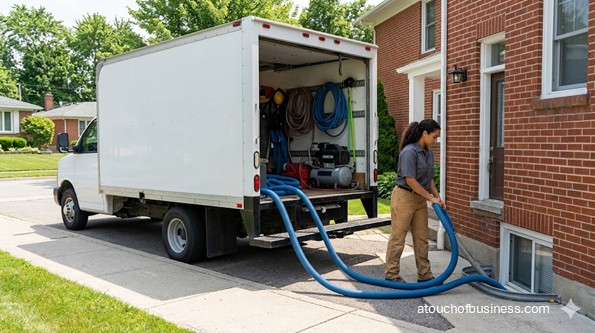
What to Expect From This Guide to Starting a Duct Cleaning Business
This guide walks through the key decisions and practical steps involved in starting a mobile duct cleaning business. It connects service scope and market fit with equipment, vehicle setup, customer documentation, safety, pricing, and opening preparation, while offering more detail than the selected points below.
Inside the guide, you will find:
- Startup roadmap: Move from owner fit and demand validation through scope, legal checks, equipment, training, test jobs, and pre-opening review.
- First-hand insights: Read interviews and owner profiles about acquiring or building duct cleaning companies, customer trust, service quality, staffing, and business structure.
- Startup FAQs: Review answers on licensing, NADCA credentials, EPA claims, chemical treatments, HVAC repairs, equipment choices, and dryer vent services.
- Service boundaries: Define what you will clean, which customers you will serve, and which HVAC, mold, asbestos, or chemical tasks remain excluded.
- Equipment planning: Compare portable, truck-mounted, and trailer-mounted systems alongside vehicle access, loading, storage, parts, filters, and supplier support.
- Pricing and costs: Examine estimate inputs, startup cost categories, funding options, payment systems, and the financial effect of service and equipment choices.
- Opening preparation: Test equipment and customer workflow, then check insurance, forms, safety procedures, payments, supplies, and stop-work rules before appointments.
The guide first asks whether the physical service routine and customer-facing responsibilities fit the business you want to build.
How to Start a Duct Cleaning Business
A duct cleaning business involves cleaning parts of forced-air heating and cooling systems. That can include supply ducts, return ducts, registers, grilles, diffusers, air handler areas, and related components when they fall within the service scope.
This is usually a mobile service. You or your technician drive to the customer, inspect the system, protect the home, set up vacuum equipment, clean accessible duct areas, document the job, and collect payment.
Before you go further, step back. Duct cleaning is not just “cleaning vents.” It involves equipment choices, careful customer communication, liability, vehicle setup, local rules, and safety procedures.
If you want a broader view of the startup process, this general startup checklist can help. But your duct cleaning plan still needs to fit this specific service.
Is This Business a Good Fit for You?
A duct cleaning business can be a good fit for a hands-on owner who likes practical service calls, mechanical spaces, and customer interaction.
You may work in basements, utility rooms, laundry areas, crawlspace-adjacent spaces, attics, and finished living areas. You also need to carry equipment, route hoses, remove registers, protect floors, and explain what you found.
Ask yourself a few honest questions before you move forward:
- Can you handle dusty jobs without cutting corners?
- Are you comfortable working around heating and cooling equipment?
- Can you stay patient with homeowners who have questions or doubts?
- Can you avoid making broad health claims just to sell a job?
- Can you cover your living expenses during startup?
You also face income uncertainty. Some weeks may fill well. Others may not. Your household needs to understand that pressure before you commit.
Be honest before you begin.
Check Your Motivation Before You Start
Your reason for starting matters. Launching a duct cleaning business takes planning, money, training, patience, and physical effort.
If you are only trying to escape a job, financial pressure, or the appeal of owning a business, pause. That kind of pressure can push you into fast equipment purchases, weak pricing decisions, or promises you should not make.
A better reason is clear and grounded. You want to build a service business, learn the trade, serve local customers, and run the numbers before you commit.
You don’t need to know everything on day one. But you do need the patience to verify what matters.
Talk to Owners Outside Your Market
Before you buy equipment, speak with duct cleaning business owners who won’t compete with you.
Look for owners in another city, county, or region. Their experience can help you understand the real demands of running the business, even though your path won’t match theirs exactly.
Prepare your questions before the call. Ask about:
- Portable, truck-mounted, and trailer-mounted equipment
- Vehicle setup and loading routines
- Common customer misunderstandings
- Licensing or insurance surprises
- Dryer vent cleaning as an add-on
- Tools that wear out quickly
- Jobs they would avoid as a new owner
These conversations are valuable because experienced owners have lived through the problems. For more perspective, review how to get advice from real business owners before you commit.
Ask before you spend.
Check Local Demand Before You Commit
Your success with duct cleaning depends on the local market. Not every area has the same mix of forced-air heating and cooling systems.
Look at your service area before buying equipment. You need enough realistic demand to support the service model you want to launch.
Review these factors:
- How many homes use forced-air systems
- The age of local housing
- Renovation activity in the area
- Households with pets
- Dryer vent cleaning needs
- Property managers and landlords
- Small commercial buildings
Also review the competition. You may compete with duct cleaning companies, HVAC contractors, carpet cleaners, chimney cleaners, restoration companies, and franchises.
Demand validation is not advertising. It’s a go-or-stop check. A strong local supply and demand review can keep you from buying equipment for a weak market.
Red Flags Before You Start
Some warning signs should make you pause, change the model, or reconsider the business entirely.
Don’t ignore these just because you’re excited.
- Weak demand: If your area has few ducted heating and cooling systems, you may not get enough work.
- Unsupported claims: If your plan depends on telling customers every home needs routine duct cleaning, rethink the model.
- Unclear licensing: If you can’t confirm state or local rules, delay major spending.
- Too much price pressure: If competitors are racing to the bottom, your pricing may not support careful service.
- Wrong equipment fit: If the equipment you can afford doesn’t match the service scope, reduce the scope or wait.
- Chemical upsell dependence: If your plan relies on sanitizers, biocides, or sealants, verify product labels, rules, safety, and insurance first.
- Poor physical fit: If lifting, kneeling, climbing, driving, and working in dusty spaces are deal breakers, this may not be the right business.
- No insurance path: If you can’t get suitable coverage, don’t open.
A red flag doesn’t always mean stop forever. It may mean pause, verify, adjust the model, or start smaller.
Step 1: Check Owner Fit
Your first step is not buying a vacuum system. It’s deciding whether this business fits you.
As a duct cleaning owner, you need patience, care, and a strong sense of responsibility. You’ll be working inside customers’ homes, near furnaces, air handlers, vents, and finished floors.
Think through the daily reality:
- Driving to each appointment
- Parking a service vehicle or trailer
- Carrying hoses and tools into homes
- Protecting floors and furnishings
- Removing and reinstalling registers
- Explaining what you can and cannot clean
- Documenting the job with photos or reports
You also need to manage customer expectations. A strong duct cleaning service doesn’t rely on fear. You explain the service clearly and avoid claims that aren’t supported.
Fit comes before equipment.
Step 2: Clarify Your Motivation and Risk Tolerance
After you check fit, look at your motivation and risk tolerance.
Starting a duct cleaning business can create financial stress. You may need equipment, a vehicle setup, insurance, training, software, payment tools, and startup cash before regular income begins.
Ask yourself:
- Can I handle slow early weeks?
- Can I cover personal bills during launch?
- Do I have household support for the time demands?
- Am I willing to say no to unsafe or unclear jobs?
- Can I handle customer complaints without getting defensive?
Risk tolerance matters here. Duct cleaning involves customer property, HVAC components, dust control, and safety. A rushed owner can generate damage claims fast.
Step 3: Speak With Non-Competing Duct Cleaning Owners
Before you make major decisions, learn from people who already run duct cleaning businesses.
Only speak with owners you won’t compete against. A nearby competitor may not be willing to share useful details. An owner in another market is more likely to give you an honest picture of the business.
Prepare questions about:
- Startup equipment choices
- Truck-mounted versus portable systems
- Vehicle setup
- Job timing
- Common customer concerns
- Licensing checks
- Insurance needs
- Supplier support
Ask what they would do differently if they were starting today. That answer may save you from an expensive mistake.
Step 4: Decide Whether to Start, Buy, or Franchise
You don’t have to enter the duct cleaning business in only one way.
You can start from scratch, buy an existing business, or explore a franchise. Each path changes your budget, control, timeline, support, and risk.
- Starting from scratch: Gives you more control, but you must build every system yourself.
- Buying an existing business: May include equipment, service history, reviews, phone numbers, and trained workers.
- Franchising: May provide systems and training, but it can also bring fees, rules, territory limits, and required procedures.
If you buy a business, inspect the equipment, customer records, complaints, licenses, insurance, and seller claims carefully. If you explore a franchise, review the required disclosure documents and speak with current and former franchisees.
Your best path depends on your budget, desired control, risk tolerance, support needs, and available opportunities. This start-from-scratch or buy comparison can help frame the decision.
Step 5: Define Your Duct Cleaning Service Model
Now decide what you’ll actually provide at launch.
This decision affects equipment, training, insurance, pricing, scheduling, and legal checks. Keep the launch model clear.
Common service choices include:
- Residential forced-air duct cleaning
- Dryer vent cleaning as an add-on
- Light commercial duct cleaning
- Post-renovation duct cleaning
- Property manager or landlord service
- HVAC contractor referral jobs
Also decide what you won’t do. HVAC repair, refrigerant work, duct replacement, mold remediation, asbestos work, and chemical treatment may require separate training, licensing, insurance, or procedures.
Set the scope before you price anything.
Step 6: Validate Demand and Competition Locally
Don’t move forward on assumptions alone.
Check whether the local market can support your service before you buy equipment or sign any contracts.
Look for practical demand signs:
- Many homes with forced-air systems
- Older housing stock
- Renovation and remodeling activity
- Property managers with multiple units
- Dryer vent concerns in homes and rentals
- Small commercial buildings with ducted systems
Then look at the competition. Review dedicated duct cleaners, HVAC companies, carpet cleaners, restoration companies, chimney companies, and franchises.
You’re not copying them. You’re testing whether your planned service can fit the market at a price that makes sense.
Step 7: Organize Your Startup Decisions
Before legal setup and equipment purchases, organize the core decisions for your duct cleaning startup.
This keeps you from buying tools before you understand the model.
- Service scope and exclusions
- Residential, commercial, or mixed customer focus
- Service radius and travel limits
- Vehicle and equipment approach
- Training and certification plans
- Licensing and tax checks
- Insurance needs
- Pricing method
- Funding options
- Opening-readiness tasks
You’ll use these decisions to build your business plan.
Business Plan
Use your business plan to turn your duct cleaning decisions into a practical startup path.
Keep it focused on launch. You don’t need a lengthy theory document. You need a clear plan that helps you avoid wrong purchases, undefined services, weak pricing, and missed legal checks.
Include these items:
- Service scope: State what you will clean and what you will exclude.
- Customer types: Define whether you will serve homeowners, landlords, property managers, small commercial sites, or a mix.
- Demand check: Summarize local demand, competition, and pricing reality.
- Equipment plan: Choose portable, truck-mounted, trailer-mounted, or staged equipment.
- Vehicle plan: Decide how equipment, hoses, tools, PPE, and supplies will be stored and moved.
- Legal checks: List the state and local licenses, tax rules, and zoning items to verify.
- Cost planning: Price out equipment, tools, insurance, training, vehicle setup, software, and opening supplies.
- Pricing method: Decide how estimates will be built before you accept jobs.
- Funding plan: Decide whether you will use savings, financing, a loan, seller financing, or franchise-related funding.
- Opening checklist: List what must be ready before your first paid appointment.
A practical business plan should help you make decisions, not sit in a folder.
Plan the service before you sell it.
Step 8: Set Up the Legal Foundation
Legal setup for a duct cleaning business depends on your state, city, county, services, and workspace.
Don’t assume the rules are the same everywhere.
Start with the basics:
- Choose a business structure
- Register the business name or entity if required
- Apply for an Employer Identification Number if needed
- Check state tax registration
- Verify whether duct cleaning services are taxable in your state
- Check whether a state or local business license applies
Then check service-specific triggers. Some jurisdictions may treat duct cleaning as HVAC, mechanical, contractor, home improvement, or specialty work. Verify this before you operate.
If you plan to hire, check employer accounts, unemployment insurance, and workers’ compensation rules. These vary by state.
Use the right offices: state business portal, contractor licensing board, HVAC or mechanical board, state revenue department, city clerk, county clerk, and local licensing office. This guide to business licenses and permits can help you think through the questions.
Step 9: Check Home Base, Storage, and Vehicle Rules
A mobile duct cleaning service still needs a base.
You may work from a home office, rented storage space, small shop, garage, warehouse, or commercial unit. Each choice can affect zoning, parking, equipment storage, insurance, and startup costs.
Check these items before you commit:
- Home occupation rules if you work from home
- Commercial vehicle parking limits
- Trailer parking rules
- Equipment storage rules
- Signage limits
- Employee parking if you hire
- Certificate of occupancy if you rent commercial space
If you rent a shop or storage space, confirm the allowed use before signing. A cheap space can get expensive fast if you can’t legally use it for the business.
Verify the base before you load the van.
Step 10: Choose Your Equipment Approach
Your equipment choice shapes the entire startup.
Portable, truck-mounted, and trailer-mounted systems each change vehicle needs, setup time, storage, funding, and job capacity.
Compare these choices carefully:
- Portable equipment: May be easier to position closer to the duct system, but still requires careful loading, power planning, and filtration.
- Truck-mounted equipment: Can support larger jobs, but may require more vehicle investment and parking planning.
- Trailer-mounted equipment: May offer more power and storage, but trailer rules, parking, towing, and access become important factors.
Your service scope matters. Residential-only work may call for a different setup than light commercial jobs. Dryer vent cleaning also requires its own tools.
Don’t buy based only on equipment claims. Ask suppliers about training, parts, filters, warranty support, and field repair help.
Step 11: Build Safety Procedures Before Launch
Safety needs to be part of the startup process, not something you add later.
You may deal with ladders, dust, moving equipment, sharp duct edges, electrical areas, tight spaces, and customer property.
Prepare procedures for:
- Personal protective equipment
- Respirator use when needed
- Ladder safety
- Dust control
- Tool handling
- Electrical awareness near HVAC equipment
- Floor and furniture protection
- Stop-work triggers
If you hire workers, safety responsibilities become more formal. You may need written procedures, training records, hazard communication, and documentation tied to employee protection.
Write the safety rules before the first job.
Step 12: Set Chemical and Sealant Boundaries
Many duct cleaning startups should begin with mechanical cleaning only.
Chemical treatments, sanitizers, disinfectants, biocides, ozone, and sealants can create legal, safety, insurance, and customer disclosure issues.
If you plan to offer any chemical treatment, verify:
- The product label allows that exact HVAC use
- The product is suitable for the surface involved
- State pesticide or applicator rules
- Safety data sheet requirements
- Employee protection requirements
- Customer disclosure language
- Insurance coverage
Don’t apply a product inside an HVAC system just because it sounds useful. The label and the law control how it can be used.
When in doubt, leave chemical treatment out of the launch model.
Step 13: Confirm What You Will Not Do
You may get requests that belong to other trades or regulated services.
Set your exclusions before customers ask.
You may need to exclude:
- HVAC repair
- Refrigerant work
- Duct replacement
- Electrical work
- Mold remediation
- Asbestos disturbance
- Unverified chemical treatment
If you want to add one of these services later, verify licensing, training, insurance, and procedures first. Don’t let a single customer request push you into work you’re not ready or permitted to perform.
Step 14: Set Your Pricing Method Before Opening
Your duct cleaning pricing should reflect the actual service call.
A vague “whole house” price can cause disputes if the system count, vent count, access issues, or exclusions are unclear.
Build your estimates around real pricing inputs:
- Number of HVAC systems
- Number of supply and return vents
- System accessibility
- Duct material and layout
- Contamination level
- Dryer vent add-on
- Travel distance
- Parking and hose routing
- Equipment setup time
- Commercial documentation needs
Common methods include per-system pricing, per-vent pricing with a system fee, flat residential packages with clear limits, dryer vent add-ons, and commercial quotes after inspection.
Price clarity protects both sides. This guide to pricing products and services may help you think through the decision.
Step 15: Price Out Startup Costs and Funding
Don’t guess your startup costs.
Price out the items that fit your chosen duct cleaning model. Portable, truck-mounted, and trailer-mounted equipment can produce very different startup budgets.
Include these cost planning items:
- Business registration and legal setup
- Licensing and local approval fees to verify
- Training and certification
- Vehicle purchase, lease, or upfit
- Vacuum collection equipment
- Agitation tools
- Compressed-air tools if used
- HEPA equipment and replacement filters
- Dryer vent tools
- Personal protective equipment
- Property protection supplies
- Software, phone, and payment tools
- Insurance
- Storage or workspace
- Fuel, maintenance, and replacement parts
Explore funding before you commit to major purchases. Your options may include savings, equipment financing, vehicle financing, a small business loan, seller financing, or franchise-related funding.
Quote the big items before you sign.
Step 16: Set Up Banking and Payments
Be ready to accept payment before the first paid job.
Set up your financial basics after your registration and tax steps are clear.
Prepare these items:
- Business checking account
- Business payment processor
- Invoice and receipt system
- Sales tax tracking if applicable
- Deposit policy if used
- Recordkeeping for equipment, supplies, insurance, payroll, and vehicle costs
Keep business transactions separate from personal ones from the start. That habit makes taxes, pricing, funding, and recordkeeping cleaner.
Step 17: Line Up Suppliers and Equipment Support
Duct cleaning equipment needs parts, filters, accessories, and maintenance support.
Don’t wait until a hose, brush, filter, or vacuum part fails during a job.
Line up suppliers for:
- Replacement filters
- Vacuum hoses
- Brushes and rods
- Air whips and nozzles
- Access panels and plugs
- Register bags and covers
- Personal protective equipment
- Floor protection supplies
- Dryer vent tools
- Vehicle storage equipment
Ask suppliers about training, warranty terms, replacement part lead times, and repair support. Backup access matters when your equipment is your livelihood.
Step 18: Prepare Forms and Customer Documents
Clear paperwork helps prevent confusion.
Before your first appointment, prepare the documents that define the job, protect both sides, and record what happened.
You may need:
- Written estimate template
- Service agreement
- Scope and exclusions list
- Pre-cleaning inspection checklist
- Access authorization for panels or ports
- Before-and-after photo process
- Chemical-use disclosure if applicable
- Completion report
- Invoice and receipt
- Safety data sheets if chemicals are stored or used
Clear documents are especially important in residential work. Customers care about price clarity, cleanup, trust, and confidence in the result.
Put the scope in writing.
Step 19: Train Yourself and Any Staff
Duct cleaning requires more than equipment ownership.
You or your technician need to understand HVAC system components, duct materials, safe access, agitation methods, negative pressure setup, dryer vent routing, property protection, and documentation.
Training should cover:
- Supply and return duct systems
- Registers, grilles, and diffusers
- Air handler areas
- Blower compartments within scope
- Cooling coil and drain pan limits
- Sheet metal, flex duct, duct board, and lined ducts
- Vacuum collection and debris control
- Dryer vent cleaning tools
- Customer walkthroughs
Industry certification may also help you learn accepted methods and terminology. It’s not the same as a government license, so keep those checks separate.
Step 20: Run Test Jobs Before Paid Appointments
Test jobs reveal problems while the stakes are lower.
Use practice appointments to test your equipment, vehicle setup, forms, and customer walkthrough process.
During a test job, check:
- Loading and unloading time
- Parking and hose routing
- Floor protection setup
- Register removal and reinstallation
- Vacuum performance
- Brush and air tool handling
- Debris capture
- Photo documentation
- Cleanup routine
- Payment process
After each test, update your checklist. Missing tools and weak routines are easier to fix before a paying customer is involved.
Step 21: Complete Your Pre-Opening Checklist
Before you accept paid duct cleaning jobs, confirm that you’re truly ready.
This is your final launch check, not a growth plan.
- Business structure chosen
- Business registered where required
- Employer Identification Number obtained if needed
- DBA filed if needed
- State and local licensing checked
- Sales tax treatment verified
- Home base or storage approval checked
- Certificate of occupancy checked if using commercial space
- Insurance active
- Service scope and exclusions written
- Vehicle organized and safe
- Equipment tested
- Replacement filters and parts ready
- PPE stocked
- Estimate, agreement, checklist, report, and invoice ready
- Payment system tested
- Supplier list ready
- Test job completed
- Stop-work rules written
Also prepare basic identity items. You need a business name, phone number, email, basic contact page or online listing, technician identification, and vehicle identification if local rules require it.
Don’t open with unresolved safety, licensing, payment, or equipment questions.
Opening-Day Red Flags
Some problems mean you’re not ready for paid appointments yet.
These are not reasons to abandon the business. They’re reasons to delay opening until the basics are resolved.
- Licensing is still unclear: Confirm state and local rules first.
- Insurance is not active: Don’t enter customer homes without coverage.
- Equipment has not been tested: Run a full setup before the first job.
- No written scope: Customers need to know what’s included and excluded.
- No stop-work rules: You need a plan for asbestos suspicion, mold beyond scope, damaged ducts, unsafe wiring, inaccessible systems, and pest issues.
- Payment is not ready: Test invoices, receipts, card payments, and tax settings before opening.
- Vehicle setup is weak: Loose tools, tangled hoses, and poor loading routines slow every job.
- Chemical treatment is unclear: Leave it out until labels, rules, insurance, and safety procedures are verified.
Opening too early can turn a routine service call into a complaint, damage claim, or legal problem.
What a Duct Cleaning Day Can Look Like
A short day-in-the-life view can help you picture the owner’s responsibilities.
You may start by loading tools, filters, hoses, PPE, floor protection, and payment devices. Then you drive to the customer, park, and walk through the home.
At the job, you confirm the scope, inspect accessible areas, protect the home, remove registers, set up vacuum equipment, agitate ducts, collect debris, document results, and clean up.
After the final walkthrough, you collect payment, answer questions, record the job, and prepare the equipment for the next appointment.
That’s the real rhythm. It’s physical, detailed, and customer-facing.
Frequently Asked Questions
These questions focus on startup decisions for a future duct cleaning owner.
Is a duct cleaning business good for a first-time owner?
It can be, if you’re comfortable with physical service calls, equipment care, customer communication, and careful scope setting. It’s not a good fit if you plan to rely on fear-based claims or shortcuts.
What should I verify before buying equipment?
Verify licensing, service scope, local demand, target customers, vehicle fit, storage rules, supplier support, insurance, and whether portable, truck-mounted, or trailer-mounted equipment fits your launch plan.
Does duct cleaning require a special license?
It depends on the state and local jurisdiction. Some areas may treat duct cleaning as HVAC, mechanical, contractor, home improvement, or specialty work. Check before you operate.
Is NADCA certification legally required?
Not as a universal federal rule. It’s an industry credential, not a government license. It may still help you learn methods, standards, and terminology.
Does EPA certify duct cleaning companies?
No. Don’t claim EPA certification for a duct cleaning company. Keep your wording honest and accurate.
Should I offer sanitizing or biocide treatments at launch?
Only after you verify product labels, legal use, state rules, safety procedures, customer disclosures, and insurance. Many startups should leave chemical treatment out at first.
Can I also do HVAC repairs?
Only if you have the required licensing, certification, training, and insurance for the specific repair. Duct cleaning and HVAC repair are not the same service.
What belongs in my business plan?
Include your service scope, exclusions, customer types, local demand check, equipment model, vehicle plan, legal checks, pricing method, funding plan, insurance, supplier setup, safety procedures, and opening checklist.
Should I start from scratch or buy an existing business?
Either can work. Starting from scratch gives more control. Buying may provide equipment, history, reviews, and records, but you must inspect everything carefully.
Is franchising realistic for this business?
Yes, franchising can fit home services. Review the disclosure documents, fees, territory, training, equipment rules, and current franchisee feedback before signing.
What is a major startup mistake to avoid?
Avoid opening before you define your service scope. You need to know what you clean, what you exclude, how you price it, and what rules apply.
Is dryer vent cleaning a natural add-on?
Yes, it can fit the mobile service model if you have the right tools and procedures. Treat it as a separate service with its own equipment, scope, pricing, and safety checks.
Learn From People Already in the Duct Cleaning Business
Learning from people already in the duct cleaning business can help you see what the work looks like beyond equipment lists and startup steps.
The interviews and owner profiles can give you a better feel for customer trust, pricing pressure, service quality, hiring, marketing, and the shift from doing the work to running the business.
- Buying & Growing a Business While Keeping a Day Job — An Acquiring Minds interview with Dominick Blue about buying an air duct cleaning business, keeping a W-2 job, hiring help, and expanding into HVAC services.
- Ducts Air Duct Cleaning™ Podcast Episode — A podcast episode with Terry Rankin, CEO and founder of Ducts Air Duct Cleaning™, discussing the service model, launch process, training, branding, and territory-based growth.
- Meet Camie Beattie of Breezeway Air Duct Cleaning — A business profile covering customer education, low-price competition, scams in the industry, service quality, and the role of administration and customer communication.
- Exploring Life & Business with Rahsaan Caine of RC Duct Cleaning — An owner interview about starting an air duct and dryer vent cleaning company, learning the work firsthand, hiring, marketing, and building structure in the business.
- Exploring Life & Business with Eden Gabai of AirPro UT — An owner profile about starting from scratch, learning the trade, building a team, and serving commercial and residential duct cleaning customers.
- Life, Values & Legacy: Our Chat with Doug Long — An interview with the owner of Power Vac America about acquiring a duct cleaning company, shifting toward commercial work, specialization, honesty, and long-term customer trust.