
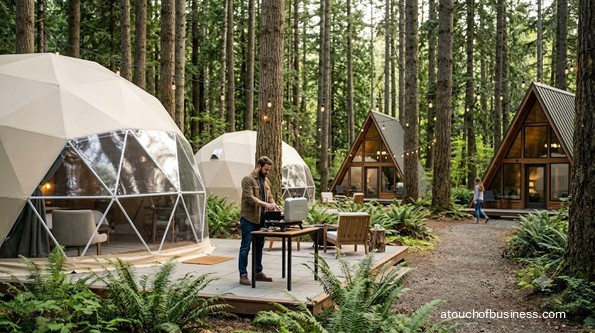
What to Expect From This Guide to Starting a Glamping Business
This guide walks readers through the key decisions and practical steps involved in starting a glamping business, from evaluating personal and market fit to planning the property, finances, guest systems, and opening preparations. The points below highlight several areas covered in greater depth.
Inside the guide, you will find:
- Startup steps: Follow an ordered progression from evaluating fit and demand through site planning, setup, staffing, and opening tests.
- Industry interviews: Explore an interview collection featuring operators and professionals discussing real projects, obstacles, decisions, and operating experiences.
- Startup FAQs: Review practical answers about land, zoning, permits, seasonality, insurance, taxes, financing, and starting scale.
- Local requirements: Understand how zoning, permits, sanitation, fire access, taxes, insurance, and other location-dependent rules can affect plans.
- Financial planning: Examine startup costs, seasonal occupancy, pricing, fixed and variable expenses, reserves, funding, and profit calculations.
- Site preparation: Consider land assessments, utilities, access, structures, furnishings, booking software, payment processing, and guest communication.
- Opening preparation: Spot major risks, verify essential systems, run test stays, and use a limited opening to uncover problems.
The guide begins by examining what operating a glamping property requires from the owner and household.
A glamping business gives travelers the feeling of being in nature without giving up a comfortable bed, reliable warmth, or a private place to clean up.
As the owner, you set up and maintain distinctive structures — safari tents, yurts, geodesic domes, cabins, or pods — on your property, charge guests a nightly rate to stay, and deliver an experience that sits somewhere between camping and a boutique hotel.
It’s a real business, not a passive income stream. You’re combining outdoor land management, hospitality, property maintenance, and guest communication into one operation. The experience has to match the promise — because glamping guests are paying a premium and sharing their stay publicly in reviews.
Before you follow the startup steps below, take time to think honestly about whether this business fits your life right now.
Running a glamping site means being available when guests arrive, responding quickly to booking inquiries, coordinating unit turnovers, keeping the property safe and maintained, and solving problems in an outdoor environment where things break in inconvenient ways.
You also need to think about the financial side before any shovels go in the ground. Startup costs can be significant, especially if you don’t already own suitable land with utilities in place. Income is seasonal. The first season rarely hits target occupancy. Can your household cover living expenses while the business builds its reputation and review base?
Talk to owners who are already running glamping sites in other markets — not your local competitors. Ask them about their permitting timeline, their first-year occupancy reality, what they underestimated, and what they would do differently. That firsthand insight is worth more than any industry guide.
Think through your entry path before committing. Three approaches are worth considering:
- Start from scratch on land you own or will acquire — gives you full design control but requires navigating the full permitting process
- Buy an existing campground or glamping operation — gives you permits already in place, existing infrastructure, and a booking history, though it requires more upfront capital
- Lease land from a landowner — reduces initial capital outlay but may limit what lenders will finance and affects long-term site security
The right path depends on your budget, your timeline, how much operational control you want, and what’s available in your target area.
Red Flags Before You Start
Some issues with glamping are worth identifying before you commit money or time. These aren’t reasons to walk away — but they’re worth taking seriously before you move forward.
Zoning is the first thing to verify — not the last. The most costly mistake in this business is buying or leasing land before confirming that a campground or transient lodging use is actually permitted there. A parcel with the wrong zoning cannot be developed without a successful variance or rezoning, which is expensive and not guaranteed. Get a written confirmation from the local planning department before spending anything on the site.
Permitting timelines can push your opening date by months. Depending on your jurisdiction, the conditional use permit, environmental review, building permits, and health inspections can collectively take six to 18 months. If your plan depends on opening for a specific summer season, verify the realistic permit timeline in your county early — before you’ve committed to the land.
Undercapitalized operators are the ones who close. Investing all available capital in construction and structures leaves nothing for the slow first winter or an unexpected repair. You need enough cash to fund startup costs and carry three to six months of operating expenses without relying on booking revenue. This isn’t optional cushion — it’s a structural requirement of a seasonal business.
Infrastructure costs on raw land often exceed expectations. Well drilling, commercial septic engineering and installation, power line extension, and road development to meet commercial access standards can collectively dwarf the cost of the glamping structures themselves. Get contractor quotes on utility infrastructure before closing on any raw land.
Guest injury exposure is elevated in outdoor settings. Fire pits, uneven terrain, fuel-burning appliances, and wildlife contact all carry liability risk. Operating without adequate insurance — or with a policy that doesn’t correctly classify your operation as campground or transient lodging — can expose you to personal financial liability in the event of a guest injury.
Two structural industry challenges also deserve honest consideration before you start.
Glamping requires significant physical infrastructure before you earn a single booking. Small operations face the same land, utility, platform, and structure costs as larger ones — spread across fewer revenue-generating units. Thin margins at small scale are a real structural challenge, not just a startup growing pain.
Regulatory complexity is also increasing as glamping grows in popularity. More jurisdictions are adding glamping-specific rules, tightening campground codes, or creating new short-term rental regulations. Owners who built without full compliance have faced forced closures and retroactive costs. Know the rules before you build.
Step 1: Assess Your Fit and Motivations Honestly
Starting a glamping business without a clear-eyed self-assessment is a fast path to burnout or financial loss. Glamping is a hybrid of real estate investment, outdoor hospitality, land management, and guest services — all at once.
Ask yourself these questions before going further:
- Do you have access to land, or sufficient capital to acquire or lease it?
- Can your household manage an income gap during build-out and the first season or two?
- Are you willing to oversee housekeeping turnovers, maintenance, guest communications, and bookings on an ongoing basis?
- Do you have any background in hospitality, property management, real estate, or outdoor recreation?
None of those boxes has to be fully checked before you start. But the gaps you identify now tell you what to plan for — whether that’s hiring experienced help, extending your financial runway, or choosing a simpler launch model.
If you genuinely enjoy hosting people in outdoor settings and take satisfaction from well-maintained spaces, this business can be deeply rewarding. If the idea of fielding guest messages at 9 p.m. and coordinating same-day turnovers feels draining before you’ve started, that’s worth factoring in early.
Step 2: Define Your Business Model Before Spending Anything
Your business model decisions drive every other startup choice — land requirements, zoning classification, permit type, utility infrastructure, and total startup cost. Locking these down before spending money saves significant time and rework later.
Key decisions to make at this stage:
- Structure type: canvas safari tents, bell tents, geodesic domes, yurts, cabins/pods, or treehouses — each carries a different cost, permitting level, and guest experience
- Scale: a small-scale operation with two to five units, or a larger multi-unit site
- Service level: fully equipped private units with in-unit baths, a shared bathhouse model, or a more minimalist off-grid setup
- Experience theme: nature retreat, agritourism overlay, romantic couples escape, adventure destination, or wedding/event venue add-on
Fabric structures — canvas tents and bell tents — are often classified as temporary in many jurisdictions and may not require full building permits. Permanent structures like cabins, hard-sided pods, and treehouses typically require building permits regardless of location. That distinction affects your permitting timeline and cost meaningfully.
If you’re weighing whether to start from scratch, acquire an existing operation, or lease land, think through your budget, timeline, and how much permitting complexity you’re willing to manage. Buying an existing operation gives you immediate permits, infrastructure, and booking history. Starting from scratch gives you full design control but adds permitting time and site development cost.
Step 3: Check Local Demand and Run a Feasibility Check First
Demand validation matters here because glamping is location-dependent. A well-built site in a low-demand area will underperform a modestly built site near a national park, lake, ski area, or wine trail.
Research nearby glamping sites, campgrounds, and outdoor lodging properties. What structures do they offer? What nightly rates do they charge? What are guests praising in their reviews — and what are they complaining about? Those gaps are your opportunity.
Your most likely first customers will come from one or more of these groups:
- Couples seeking a romantic outdoor escape for anniversaries, birthdays, or proposals
- Friend groups and families who want nature access without traditional camping gear
- Wedding travelers looking for distinctive accommodation near a venue
- Nature-curious travelers who want comfort as a safety net in the outdoors
- Adventure travelers layering glamping into a regional trip near parks or attractions
For a larger development, commission a formal feasibility study before committing to land or major expenses. Lenders offering SBA or USDA loans for glamping projects typically require a third-party feasibility study.
It assesses market demand, site suitability, projected financial performance, and regulatory risk — and it’s far cheaper than building a site that can’t support itself.
Step 4: Identify Your Land and Confirm Zoning First
The zoning check is the prerequisite for everything else — not just an early task, but the step that determines whether the site is buildable at all.
Contact the city or county planning and zoning department for any parcel you’re considering. Ask directly: “Is a campground, glamping operation, or transient lodging use permitted on this parcel?” Request the answer in writing — even an email summary is sufficient. Do not sign a purchase agreement or lease before you have that answer.
“Glamping” will rarely appear as a permitted use in zoning ordinances. Look instead for terms like campground, recreational resort, transient lodging, or hotel, then read how each use is defined and what regulations apply.
Two common zoning outcomes:
- Permitted by right — your use is allowed in that zone with standard permits; this is the fastest path
- Conditional use permit (CUP) or special use permit (SUP) — required when the use isn’t allowed by default; involves a formal application, site plan submission, public hearing, and neighbor notification process
When evaluating raw land versus land with existing utilities and structures, look past the asking price. Raw land may require costly surveys, drainage studies, wildlife assessments, and full utility extension before it’s usable. Existing utility access can dramatically reduce site development costs.
Step 5: Commission a Professional Site Assessment and Infrastructure Plan
A professional site assessment protects you from expensive surprises during build-out. Work with a licensed landscape architect, land surveyor, or glamping-specific consultant to evaluate what the property actually requires before you commit to it.
The assessment should cover topography, drainage, soil conditions, access roads, setbacks, utility availability, water source, and fire access. Your sanitation plan deserves particular attention — the local environmental health department’s requirements for wastewater, gray water, and toilet facilities often drive the permitting timeline and infrastructure cost more than any other single factor.
Critical infrastructure questions to resolve at this stage:
- Does the parcel have access to grid water and electricity, or does it require a well, solar power, and off-grid waste management?
- What type of commercial septic system is required — and is the site suitable for one? A commercial-grade system must handle the full load of rotating guest occupancy, not residential use.
- Is the access road adequate for guest vehicles and emergency services, or does it need upgrading to meet county commercial access standards?
- Does the fire marshal require fire cisterns, dry hydrant systems, or other fire suppression infrastructure for transient lodging at this location?
If any part of the property is near wetlands, a floodplain, or waterways, check whether federal environmental review under the Clean Water Act applies before disturbing the land. Discovering this requirement after site work has begun is far more costly than identifying it beforehand.
Step 6: Apply for Zoning Approval and All Required Permits
Getting permits right is what turns a piece of land into a legal glamping operation. This is also where most timelines extend and most budget surprises happen.
If a conditional use permit or special use permit is required, submit your application with complete site plans. Engage architects, land use consultants, or glamping-specific permit specialists who have experience with this type of development in your region. Reaching out to neighbors before the public hearing improves approval odds by reducing the chance of organized opposition.
Permits you may need to apply for, depending on your jurisdiction:
- Zoning or land use approval (conditional use permit or special use permit if required)
- Building permits for each structure that qualifies as permanent or semi-permanent
- Septic and wastewater permit from the county environmental health department
- Health department permit for sanitation facilities and water supply
- Fire marshal review and approval for fire egress, suppression infrastructure, and emergency access
- Certificate of occupancy for any permanent structures or bathhouses that require it
- Food service permit if the operation includes any food preparation or sale
- General business license from the city or county
Build extra time into your timeline for the permit process. Simple fabric tent setups in cooperative jurisdictions may move quickly. Larger developments with public hearings, traffic studies, or environmental review can take many months from application to approval.
Step 7: Choose a Legal Structure and Register the Business
Your legal structure affects how you’re taxed, how liability is handled, and how lenders view the business. Most glamping operators form a limited liability company (LLC) to separate personal assets from business liability — particularly important in outdoor hospitality, where guest injury exposure is elevated.
File your entity formation documents with your state’s secretary of state office, then apply for an Employer Identification Number (EIN) through the IRS at no charge. The EIN is required before opening a business bank account and before hiring any employees.
Additional registration steps to complete before opening:
- Register a trade name or DBA if you operate under a name different from your legal entity
- Register for state and local transient lodging or occupancy tax — this applies to accommodation revenue and goes by different names depending on location (hotel tax, bed tax, room tax); verify with your state’s department of revenue
- Register for state sales tax on accommodation revenue if your state requires it
- Open employer accounts with the state labor department if hiring paid staff
The tax treatment of a glamping operation can be more complex than a typical rental because you’re providing active hospitality services. Talk to a CPA experienced in short-term rental or outdoor hospitality businesses before you open to make sure you’re set up correctly from the start.
Step 8: Develop the Site and Build Out the Infrastructure
Site development is the most capital-intensive phase of the startup — and the phase where cost overruns are most common. A clear plan, licensed contractors, and inspections at each stage protect you from expensive rework.
Build your site plan before breaking ground. Map out where each unit goes, how units are spaced for guest privacy, where paths and parking run, how utilities are routed, and where waste management is placed. Common areas — fire pit seating, gathering space, and pathway lighting — should be part of the initial layout, not added as an afterthought.
Infrastructure to install before any unit goes up:
- Water supply: grid connection, drilled well with pressure tank, or a hauled water system using food-grade storage tanks
- Electricity: grid service extension with GFCI outlets, solar power station and battery bank, or generators positioned at least 100 feet from sleeping areas
- Sanitation: commercial-grade septic system or a permitted composting or vault toilet system designed for commercial occupancy loads
- Fire safety infrastructure: fire suppression water supply or cisterns as required by the fire marshal, and access road adequate for emergency vehicles
- Internet and connectivity: router, repeaters, or mobile hotspot infrastructure — most guests expect it
Have all electrical work done by a licensed electrician and all septic or water systems installed by licensed contractors. Commercial code requirements differ from residential — a residential installation won’t pass commercial inspection.
Finish the access road, parking area, pathways, and site signage before any unit is installed. Guests should arrive to a finished, navigable property.
Step 9: Procure Your Glamping Structures and Furnish Each Unit
Your structures and furnishings are what guests pay for. The bed, the warmth, and the ambiance inside each unit determine your reviews and your repeat booking rate.
Source structures from reputable manufacturers and request engineering documentation with your order. Many permit applications require structural specs, especially for yurts, domes, and permanent structures. Set up each unit on the prepared platform or pad, following manufacturer specifications.
Each unit should be furnished and stocked with:
- Raised bed frame with a hospitality-quality mattress, bedding, and pillows
- Climate control: propane or wood-burning stove, portable electric heater, and a fan or AC unit where the structure allows
- Seating and storage furniture suited to the unit size
- Interior and exterior lighting
- Coffee station with kettle, mugs, and basic supplies
- Outdoor seating: deck chairs, a table, and fire pit access
- Safety items: smoke detector, CO detector, fire extinguisher, and a posted emergency contact card
- Welcome packet: arrival instructions, site map, house rules, and a local activity guide
Once each unit is set up and furnished, have it photographed professionally. On online travel agency (OTA) platforms like Airbnb, Hipcamp, and Glamping Hub, the listing photo drives the booking decision. Distinctive, well-lit images of a beautifully staged unit convert browsers into guests.
Step 10: Put Insurance in Place Before You Open
Insurance is not optional for a glamping operation — and standard business policies often don’t cover the specific exposures this type of property carries. Work with an insurer who has experience with campgrounds or outdoor hospitality businesses.
Coverage to have in place before your first guest arrives:
- General liability: covers guest injuries on the property due to negligence or dangerous conditions
- Commercial property: covers structures, equipment, and on-site assets from covered losses
- Business interruption: replaces lost income if a covered event — weather damage, fire, or structural failure — forces a temporary closure
- Commercial auto: for any site vehicles used in operations
- Inland marine: for outdoor gear rentals like kayaks, bikes, or paddleboards if you offer them
- Workers’ compensation: legally required in most states for any paid employees
Glamping is elevated camping — and that means elevated risk. Guest injuries involving fire pits, uneven terrain, fuel-burning appliances, or wildlife encounters are real exposures. Make sure your policy correctly classifies your operation as transient lodging or campground use, not a standard residential rental, or coverage may not respond the way you expect.
Read more about your options at business insurance.
Step 11: Set Up Your Booking System, Brand, and Payment Processing
A smooth booking experience is what converts an interested traveler into a confirmed guest. Guests expect to find your site on a platform they trust, book instantly, receive clear arrival instructions, and feel confident the experience will match what they saw in the listing.
Register your business name and confirm that a matching domain name is available before committing to your brand. Set up a business bank account and payment processing account before accepting any reservations.
Choose a property management system (PMS) built for glamping or outdoor hospitality — platforms like ResNexus, RoverPass, Lodgify, or Newbook handle online reservations, guest communications, availability calendars, housekeeping task scheduling, and OTA channel management from one dashboard.
Connect your booking system to the OTA platforms most relevant to your guest type:
- Airbnb and VRBO for broad traveler reach
- Hipcamp, Glamping Hub, and The Dyrt for outdoor-specific audiences
- BookOutdoors and Spot2Nite for campground-focused booking traffic
OTAs are how most new operations get their first bookings — they provide built-in audience access before you’ve accumulated reviews or a direct booking following. Set up a basic website with direct booking capability as well. Direct bookings capture more revenue per reservation by eliminating OTA commission fees.
Set your pricing structure before going live:
- Nightly base rates by unit type and season
- Cleaning fee per booking
- Weekend and holiday premiums
- Minimum stay requirements (two nights on weekends is common)
Make sure your availability calendar is synced across every platform. A double booking — two guests reserved for the same unit on the same night — damages trust and reputation immediately.
A channel manager that automatically blocks dates across all connected platforms the moment any booking is confirmed prevents this.
Step 12: Hire and Train Staff Before the First Guest Arrives
Staffing affects the guest experience more directly than almost any other operational decision. A beautifully set-up unit with a fumbled check-in or a missed turnover loses its value immediately.
A small two-to-five-unit operation is often owner-operated at launch, sometimes with part-time help from family or hired contractors. Larger sites will need defined roles: housekeeping for unit turnovers, a maintenance person for property issues, and coverage for guest check-in and communication.
Before your first guest arrives, confirm:
- Housekeeping staffing is arranged and the turnover checklist for each unit is written and tested
- A maintenance contact is on call for plumbing, electrical, heating, and structural issues
- Guest communication coverage is set — who answers booking questions and handles issues outside your own availability?
Train all staff on emergency procedures and fire evacuation protocol before the site opens. Every person who works on the property needs to know where the fire extinguishers are, how to respond to a guest emergency, and who to call.
If you’re bringing on paid employees, comply with federal and state requirements: payroll setup, workers’ compensation coverage, Form I-9 completion, and applicable wage laws. Review the hiring checklist to make sure nothing is missed before your first hire starts work.
Step 13: Build Your Financial Plan Around the Three Numbers That Matter
Three variables determine whether your glamping operation is financially sustainable: your nightly rate, your occupancy rate, and your per-unit operating cost. Before you open, you need realistic estimates of all three based on your own local market and cost structure.
Your nightly rate should reflect local competitive rates, your structure type and amenity level, and the demand profile of your area. Research comparable properties on OTAs to understand what guests in your market are willing to pay for a stay like yours.
Occupancy will be seasonal for most U.S. locations. Summer months may deliver high occupancy; winter months may drop sharply unless you’ve winterized your structures or built a distinctive off-season draw. Fixed costs — insurance, loan payments, licensing, and base utilities — continue regardless of occupancy. Plan how you’ll cover those costs through slow months from reserves, not from bookings alone.
Variable costs to account for per occupied night include:
- Cleaning and linen turnover
- Consumable restocks (toiletries, fire supplies, coffee station items)
- OTA commission fees on platform bookings
- Maintenance and minor repairs
Keep an operating capital reserve. Have enough cash to cover at least three to six months of fixed operating costs beyond your build-out, without relying on booking revenue. New operations typically run below target occupancy in the first season while building their review base.
Consider add-on revenue from the start to reduce pressure on accommodation occupancy. Gear rentals, provisions baskets, guided experiences, and local activity partnerships all increase revenue per guest without adding units. Read more about estimating profitability for a new business before committing to major expenses.
Step 14: Complete the Pre-Opening Checklist and Run a Soft Launch
A premature opening damages your reputation before your review base is built. Verify that every system, safety item, and guest-facing element is fully operational before your first paying guest arrives.
Confirm each of these items before going live:
- All permits and approvals are in hand and posted where required
- Certificate of occupancy obtained for any structures that require it
- All utility systems tested and fully operational — including a water quality test if you’re using a well
- Smoke detectors, CO detectors, and fire extinguishers in every unit — all tested and dated
- Emergency evacuation routes and contact information posted in each unit
- Booking software live with pricing set, calendars synced across all OTA platforms, and payment processing tested
- Housekeeping turnover process confirmed: staffing arranged, supplies stocked, checklist written per unit
- Guest welcome packet complete with arrival instructions, site map, house rules, and local activity suggestions
- Linen inventory sufficient for full turnover cycles between bookings
- Maintenance vendor contacts identified and on call
- ADA-accessible parking, pathways, and facilities confirmed where required
Before your first real guest, have a trusted person complete a test stay in each unit. Let them experience the full guest cycle — from booking confirmation through checkout — and note anything that felt unclear, uncomfortable, or missing.
Open with a soft launch: take a limited number of initial bookings over a few weeks before fully opening your calendar. This lets you test your turnover process, communication flow, unit performance, and booking system under real conditions — while there’s still time to make adjustments before peak season.
Business Plan
A business plan for a glamping operation forces you to confirm your numbers before you spend money. For anyone pursuing SBA or USDA financing, a detailed plan — and often a third-party feasibility study — is required. Even if you’re self-funding, working through the plan protects you from expensive assumptions.
Your plan should start with the business model decisions from Step 2 — structure type, scale, service level, and experience theme — and work forward through site selection, zoning confirmation, permitting, infrastructure development, unit setup, insurance, and booking system configuration. Each of those decision points has cost implications that belong in the financial section.
The financial section is where your three core variables — nightly rate, occupancy rate, and per-unit operating cost — come together. Use local competitive research to set a realistic nightly rate range. Build an occupancy scenario that accounts for seasonal variation. Then calculate what you need to cover fixed costs each month and how many occupied nights that requires.
Seasonality is one of the most important variables to model. Most glamping operations in temperate climates generate the majority of their revenue during a compressed summer peak. If your fixed costs continue through winter, your summer revenue has to carry the weight of the full year. Plan for the worst-case slow season before assuming average occupancy.
Your plan should also account for the ramp-up period. First-season occupancy is typically lower than long-run levels because new listings lack review history. Budget accordingly — and keep your operating capital reserve intact to fund that gap.
Document your add-on revenue plan. Gear rentals, provisions baskets, guided experiences, and event hosting all reduce your dependence on nightly accommodation revenue and make the operation more resilient through slow periods.
Funding options worth addressing in your plan include personal savings, SBA 7(a) loans, SBA 504 loans (designed for fixed assets like land and permanent structures), USDA Business and Industry loans (available for rural-area operations), equipment financing, and landowner lease or profit-share arrangements.
If you’re pursuing institutional financing, confirm your personal credit strength and the experience you’ll present to lenders. Glamping lenders look for relevant background in hospitality, real estate, property management, or operations. More on business loans.
Opening-Day Red Flags
A few warning signs on opening day tell you the site isn’t ready — even if permits are in hand. Address these before taking paying guests.
Safety equipment is missing or untested. Every unit must have a functioning smoke detector, a CO detector, and a fire extinguisher before any guest arrives. If you’re using propane or wood-burning heat inside a structure, CO exposure is a real risk. Check, date, and document all safety devices as part of the pre-opening walkthrough.
The booking calendar isn’t synced correctly. A double booking — two reservations for the same unit on the same night — creates an immediate hospitality failure. Before your first live booking, verify that your channel manager is correctly blocking dates across every OTA platform the moment a reservation is confirmed.
Housekeeping hasn’t been tested under real turnover conditions. The gap between checkout and check-in is your operational pressure point. If your turnover process — stripping and restocking linens, resetting supplies, and cleaning the unit — hasn’t been timed and staffed under realistic conditions, a tight same-day turnover will expose the gap. Run at least one full-speed test turnover before opening.
Utilities aren’t fully operational in all units. A guest arriving to a cold yurt because the propane ran out, or a unit without hot water, generates a one-star review that follows the listing for years. Test every utility in every unit before your soft launch date.
Guest arrival instructions aren’t clear. Glamping sites are often in rural or semi-remote locations with no front desk. If your guest can’t find the property, can’t access the unit, or doesn’t know where the emergency exits are, you have a service failure before the stay even begins. Review your arrival instructions from the perspective of a first-time visitor who has never been to the property.
Insurance certificates aren’t confirmed before the first reservation. Don’t open without written confirmation from your insurer that all coverage is active and that the policy correctly classifies your operation as transient lodging or campground use. A claim made before coverage is confirmed — or under the wrong policy classification — may not be paid.
Frequently Asked Questions
Do I need to own land to start a glamping business?
No. Some operators lease land from landowners, and profit-share arrangements also exist in the industry. However, leased land can create complications for permits and financing — some lenders and permit agencies require ownership.
If you plan to lease, confirm that the lease term is long enough to justify your infrastructure investment and that the lease explicitly allows commercial transient lodging use.
What is the most important step before investing in a glamping site?
Confirm zoning. Before spending money on permits, structures, or site work, contact the county or city planning department and get written confirmation that transient lodging, campground, or recreational resort use is permitted on the specific parcel you’re considering.
Many would-be operators have purchased land only to discover it cannot legally be used for commercial guest accommodations.
Do glamping structures require building permits?
It depends on the structure type and jurisdiction. In many U.S. jurisdictions, fabric-based structures like canvas tents and bell tents — classified as temporary — don’t require building permits.
Semi-permanent and permanent structures including most yurts, geodesic domes, cabins, and pods typically do require building permits. The local building department, also called the Authority Having Jurisdiction (AHJ), is the definitive source for any specific property.
Is a glamping business seasonal?
For most U.S. climates, yes. Summer is typically peak demand. Shoulder seasons can generate moderate occupancy. Winter occupancy drops sharply unless you’ve winterized your structures, your site is in a mild climate year-round, or you’ve built a specific off-season draw — ski-adjacent access, winter stargazing retreats, or similar.
You need to plan for cash flow through slow months from reserves, not from bookings alone.
What insurance coverage does a glamping site need?
At minimum: general liability for guest injury exposure, commercial property for structures and equipment, and business interruption for weather-caused or damage-related shutdowns. Workers’ compensation is legally required in most states if you employ paid staff.
Work with an insurer experienced in campground or outdoor hospitality coverage. Standard business insurance policies often don’t adequately address the exposures of transient lodging on private land.
How are glamping revenues typically taxed?
Glamping operations are generally subject to state and local transient lodging or occupancy taxes. The exact name and rate vary by location — hotel tax, bed tax, and room tax are common terms. State sales tax on accommodation revenue may also apply depending on your state.
A CPA experienced in short-term rental or hospitality businesses should advise on the correct treatment for your specific operation before you open.
Can I get a loan to start a glamping business?
Yes, but preparation matters. The SBA 7(a) and SBA 504 programs are commonly used for glamping development. USDA Business and Industry loans are available for rural-area operations and can support larger projects.
Lenders evaluate personal credit, relevant experience, a detailed business plan, and — for larger loans — a third-party feasibility study. SBA 504 financing requires that you provide active hospitality services, not passive land rental.
How many units should I start with?
Most industry practitioners recommend two to five units to start. A small initial site lets you test the market, build your review base, and learn the operational rhythm before committing to a larger build-out.
It also keeps startup costs, debt service, and operational complexity lower — which gives you more margin for error in the first season. Additional units can be added once the initial operation is proven.
Interviews with Glamping Business Professionals
These interviews share practical lessons from glamping operators who have developed properties, handled permits, financed projects, attracted guests, and managed daily operations. :contentReference[oaicite:0]{index=0}
Readers can use their experiences to identify potential challenges, compare startup approaches, and make more informed decisions before investing in a glamping business.
From Backyard Tent to Thriving Glamping Brand: The Monument Glamping Story
Chris Jeub explains how a temporary backyard tent developed into Monument Glamping, an operation with two properties and multiple permitted accommodations.
The interview provides useful lessons about county regulations, neighbour concerns, gradual expansion, pricing decisions, and building an experience-focused glamping brand. :contentReference[oaicite:1]{index=1}
From Bare Ground to Welcoming Guests in Just Four Months
The founders of Nature Nooks Acadia describe developing their property and welcoming their first guests in less than four months while maintaining other employment.
Their experience helps prospective owners understand project management, construction pressure, unexpected problems, difficult trade-offs, and the effort required to open quickly. :contentReference[oaicite:2]{index=2}
Stay-At-Home Mom Launches Glamping Business To Rave Reviews
Halley Fleming shares how she developed Ozark Mountain Adventure with a limited budget and a schedule designed around her family responsibilities.
The interview demonstrates how phased development can reduce financial pressure, limit dependence on investors, and create a more manageable operating model. :contentReference[oaicite:3]{index=3}
165. Buying An Abandoned Campground! – Interview with Heather Mueur
Heather Mueur discusses purchasing an abandoned campground and turning it into The Embers, a glamping and recreational vehicle resort in Branson, Missouri.
She explains the permit, planning, construction, financing, investor, additional revenue, and promotional decisions involved in completing the two-year project. :contentReference[oaicite:4]{index=4}
How to Run a Glamping Business in the Winter
Blackstrap Glamping Resort owners Josh Turner and Jane Rushbridge describe operating a glamping property through the extreme winters of Saskatchewan, Canada.
The conversation offers practical insight into seasonal operations, government agencies, influencer marketing, weather planning, and starting a business with a life partner. :contentReference[oaicite:5]{index=5}
Episode 3: Glamping Marketing Tips with Sarah Orchard: How to Get Fully Booked
Marketing consultant and glamping property co-owner Sarah Orchard discusses attracting different guests, generating direct reservations, and reducing reliance on booking agents.
Her advice helps prospective owners plan their website, email marketing, customer targeting, branding, and promotional budget before accepting reservations. :contentReference[oaicite:6]{index=6}
Related Articles
- How To Start a Campground Business
- How To Start an RV Park
- How To Start a Hostel
- How To Start a Bed and Breakfast
- How To Start a Camping Supply Store
- How To Start a Houseboat Rental Business
Sources:
- Branch Out Glamping / Glampitect: Glamping Zoning & Permitting USA
- Glampitect (North America): How to Start a Glamping Business, Glamping Startup Costs, Glamping Utilities Guide
- Hypedome: US Glamping Permits & Zoning 2026
- Glamping Dome Store: Glamping Site Permitting Intro
- The Out Factory: Best Glamping Structures for Business, Commercial Glamping Permits
- Wilderness Resource: How to Start a Glamping Business, Glamping Site Setup Guide
- CRR Hospitality: Legal Aspects of Glamping Business
- American Glamping Association: AGA Zoning & Permitting Guide, SBA & USDA Financing for Glamping
- Cross Insurance: Glamping Resort Insurance Coverage
- XINSURANCE: Glamping Insurance Overview
- Dream Assurance Group: Campsite and Glamping Insurance
- Avalara: State Lodging Tax Requirements
- Woodall’s Campground Magazine: SBA 504 Loans for Glamping, Feasibility Studies for SBA/USDA Loans
- Outdoor Hospitality Institute (OHI): Financing Options for Glamping
- Sage Outdoor Advisory: Glamping Feasibility Study
- Spot2Nite for Operators: ADA Compliance for Campgrounds
- RoverPass: Campground Permits Overview
- Newbook (Storable): How to Start a Glamping Business
- BusinessJourn: Glamping Economy Explained
- RMS Cloud: Glamping Operations Guide
- Glamping Show USA: Glamping Industry Trends & Challenges
- Tree Tents USA: Glamping Business Profitability
- FSM.How: Glamping Industry Challenges
- Smoobu: Complete Glamping Business Checklist
- MyGlampingPlan: SBA Loans for Glamping Businesses