
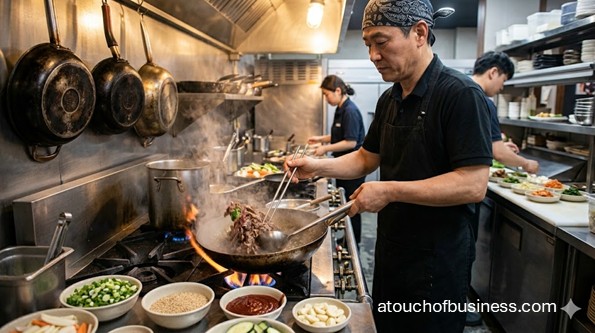
Starting a Korean Restaurant Begins With Better Prep
A Korean restaurant is a food business built around prepared meals, dine-in service, takeout, and sometimes delivery. In this guide, the default setup is a restaurant, which means your launch depends on the right location, a workable layout, strong food flow, and approvals being in place before opening day.
This kind of business can look simple from the dining room, but the startup work is detailed. You need a concept that fits the space, a kitchen that supports your menu, supplier consistency, health-code compliance, a payment setup that works on day one, and enough working capital to get through the opening stage without panic.
- Common offer types include full-service dining, casual dine-in, takeout, family meals, lunch specials, and in some cases Korean barbecue.
- Typical customer groups include local households, lunch traffic, office workers, students, groups, and people looking for quick takeout.
- Big early decisions include service style, menu size, alcohol service, seating count, and whether the space is a former restaurant or a full conversion.
- Major risks include a weak location, poor prep flow, slow service, labor underestimation, food waste, and opening before permits and inspections are complete.
Start with the business model, not the logo.
Is This Business The Right Fit For You?
Before you think about equipment or permits, ask whether business ownership fits you at all. A Korean restaurant can be rewarding, but it is demanding. You deal with long days, supplier issues, staffing gaps, food safety pressure, cleanup, and cash flow concerns before the public ever sees the finished place.
You also need to ask whether this specific business fits you. Do you actually enjoy the day-to-day work of food service? Can you handle prep schedules, receiving deliveries, checking temperatures, solving staffing problems, and making quick decisions when service gets busy? Passion matters here because it helps you stay steady during hard weeks, and that is one reason passion for the work matters more than people think.
Ask, Are you moving toward something or running away from something?
Do not start a Korean restaurant only to escape a hated job, solve immediate financial pressure, or chase the image of being a business owner. Those reasons fade fast when the freezer fails, an employee calls in sick, or the city inspector asks for corrections before opening.
You should also talk to owners who run restaurants in another city, region, or market area so you are not speaking with direct competitors. Ask them real questions about startup costs, permit delays, vendor issues, staffing, layout problems, and what they wish they had done before signing a lease. That kind of firsthand owner insight is hard to replace, even when their exact path is different from yours.
- Do you like food service work, not just food?
- Can you handle pressure without making rushed decisions?
- Are you willing to work evenings, weekends, and launch-week long hours?
- Can you stay organized with permits, payroll, vendors, and training at the same time?
- Are you ready for a business where cleanliness, consistency, and speed all matter every day?
Be honest with yourself before you spend money.
Step 1: Define Your Korean Restaurant Concept
Your first real startup decision is the concept. A Korean restaurant can be full-service, casual dine-in, takeout-focused, lunch-focused, or centered on grilling. That choice changes your kitchen setup, seating plan, staffing level, ventilation needs, and even the kind of space you can lease.
Keep the first version simple. A broad menu sounds exciting, but a large launch menu creates more prep, more refrigeration pressure, more training, more waste, and slower service. In food and beverage, a tighter offer is often easier to launch well.
- Choose your service style: full-service, counter service, or hybrid.
- Decide how important dine-in, takeout, and delivery will be at launch.
- Set your opening menu around dishes you can prep, hold, plate, and repeat consistently.
- Decide whether alcohol is part of the opening plan.
- Decide whether Korean barbecue or grill-at-table service is truly part of the concept, because that can raise fire, ventilation, and build-out complexity.
Pick a concept you can execute cleanly from day one.
Step 2: Study Demand And Competition In Your Area
A Korean restaurant does not work just because the food is good. It has to fit the area. You need enough local demand, the right customer mix, and a location people will actually use. Lunch traffic, neighborhood income, parking, nearby offices, nearby schools, and existing restaurant density all affect the opening stage.
Do not just count competitors. Study their service style, ticket pace, menu size, hours, pricing level, takeout flow, and online reviews. You are trying to see what the market supports and where there is room for a better fit. That is part of checking local supply and demand before you commit.
- Visit competing restaurants at lunch and dinner.
- Watch how busy they get, how fast they move, and who their customers are.
- Check whether the area supports dine-in, takeout, or both.
- Look for parking, walkability, and visibility problems.
- Notice whether customers complain about slow service, poor consistency, weak value, or lack of late hours.
A Korean restaurant needs the right neighborhood more than a clever idea.
Step 3: Choose Your Business Structure And Name
Once the concept looks realistic, choose the legal structure and the public name. This is one of those startup decisions that feels administrative, but it affects taxes, liability, ownership records, and how you open accounts and sign contracts.
If you are unsure where to start, compare your options before filing. The right setup depends on whether you are opening alone, bringing in partners, or planning to separate business and personal liability from the beginning. It helps to review how to decide on a business structure before you register anything.
- Choose the legal structure before signing major agreements.
- Check that the business name is available in your state.
- File a Doing Business As name if your public-facing restaurant name is different from the legal entity name.
- Make sure the name works on signs, online listings, and printed materials.
- Think about whether the name fits only one dish trend or can still work if your offer changes slightly later.
Lock down the structure and name before the paperwork spreads.
Step 4: Register The Business And Tax Accounts
Your Korean restaurant needs the basic registrations in place early. That usually means entity filing, an Employer Identification Number, and state tax registrations tied to sales tax and payroll. The exact terms vary by state, so use your state portals, not guesswork.
This part is boring, but it protects you from messy delays later. If the name, tax ID, and state accounts do not match your lease, payroll, bank account, and permit applications, you create extra cleanup work. It helps to understand both the registration steps and how to handle your business tax ID before you move forward.
- Register the legal entity with your state if needed.
- Apply for the Employer Identification Number through the Internal Revenue Service.
- Set up state tax accounts for taxable sales and payroll where required.
- Register any local business license if your city or county requires one.
- Keep the business name, address, and ownership details consistent across all filings.
A clean paper trail saves time when permits and banking start piling up.
Step 5: Find A Location That Can Legally Work
This is one of the biggest make-or-break points for a Korean restaurant. A pretty space means very little if restaurant use is not allowed, the utilities are weak, the parking is poor, or the layout fights your service style. A restaurant needs more than visibility. They need a space that can support receiving, storage, prep, cooking, sanitation, service, and cleanup without constant friction.
Try to favor a former legal restaurant space when possible. It does not remove all risk, but it can reduce the chance of expensive surprises tied to zoning, ventilation, plumbing, grease handling, or occupancy issues. Even then, you still need to verify the site based on your own concept and local approvals.
- Confirm zoning and permitted use before signing the lease.
- Ask whether the current or prior use was a restaurant.
- Verify the certificate of occupancy and whether it fits your planned service and seating.
- Check gas, electrical, plumbing, and ventilation capacity.
- Look at receiving access, dry storage, cold storage space, and trash handling.
- Check parking, visibility, foot traffic, and signage potential.
Never assume a space is restaurant-ready just because it has a dining room.
Step 6: Build The Menu Around Food Flow
Your opening menu should match the kitchen, the staff, and the pace you want to deliver. For a Korean restaurant, food flow matters a lot because you may be handling rice production, marinated proteins, soups or stews, side dishes, cold prep, hot holding, and takeout packaging all in the same operating window.
This is where first-time owners often overreach. A large menu can slow ticket times, strain refrigeration, increase spoilage, and make training harder. Keep the first version narrow enough that your team can prep it well and serve it fast.
- List each opening dish and trace how it moves from receiving to storage to prep to service.
- Count how much cold storage you need for proteins, produce, sauces, and side dishes.
- Decide which items can be batch prepped and which must be finished to order.
- Plan how takeout packaging will affect speed and quality.
- Set portion standards early so food cost and consistency stay under control.
A Korean restaurant works better when the menu serves the kitchen, not the other way around.
Step 7: Handle Permits, Plan Review, And Inspections
This is a regulated business, so compliance belongs in the startup process from the beginning. You are not just filing a few forms. You are proving that the space, equipment, workflow, and records meet the rules that apply to your location and your service model.
Many local health departments require plan review before construction or remodeling starts. You may also need building, plumbing, electrical, mechanical, and fire approvals depending on what you install. If the Korean restaurant will sell alcohol, that adds a separate licensing track. If the concept includes strong grilling or grease-producing cooking, the hood and fire protection side becomes more important.
- Contact the city or county health department before build-out begins.
- Ask whether plan review is required for your exact scope of work.
- Confirm zoning, building permits, and any fire review for cooking equipment.
- Ask what must be approved before the first day of service.
- Find out whether a certified food protection manager is required locally.
- Verify food handler training rules, if your jurisdiction uses them.
- Ask whether sign permits, outdoor dining permits, or grease-related approvals apply.
Opening before approvals are in place can delay launch and create expensive rework.
Step 8: Plan The Physical Layout Before You Buy Equipment
A Korean restaurant needs a layout that supports actual movement, not just a nice floor plan. You need a receiving path, cold storage, dry storage, prep space, cooking space, dish area, handwashing access, service stations, pickup flow, and room for waste handling. If those pieces fight each other, your staff will lose time all day.
The dining room matters too. Seating count affects comfort, service speed, and labor needs. A crowded room can look busy, but if the server path is awkward or the kitchen pass is too tight, customers feel the delay.
- Separate clean dish flow from dirty dish return.
- Make sure hand sinks are easy to reach where the rules require them.
- Protect cold storage space from being eaten up by the dining-room plan.
- Set up a practical takeout pickup area if off-premise sales matter.
- Leave enough room for receiving, unpacking, and stock rotation.
- Plan service stations so staff are not crossing the room for basic items.
Fix the layout on paper before you fix problems in service.
Step 9: Build A Real Startup Cost Plan
Restaurant startup costs can move fast, so broad averages are not enough. A Korean restaurant budget depends on the lease terms, whether the space is second-generation, how much ventilation and utility work is needed, what equipment is new or used, how many seats you open with, and how much cash you need to survive the early months.
Industry estimates for opening a restaurant often fall in a very wide range. That is useful only as a reminder that the number can swing hard. Build your own budget from the ground up. If you have never done that before, this is where putting your business plan together and estimating profitability and revenue become practical, not academic.
- Lease deposit and rent reserve
- Build-out and permit drawings
- Kitchen equipment and smallwares
- Furniture, service stations, and front-of-house setup
- Initial food, paper, and cleaning inventory
- Payroll before opening and during training
- Insurance, licenses, and permit fees
- Point-of-sale, software, and card processing setup
- Working capital for slow early weeks
Do not open a Korean restaurant with a budget that covers build-out but not breathing room.
Step 10: Set Your Prices With Labor And Waste In Mind
Pricing a Korean restaurant is not just about what nearby places charge. You need to think about ingredient mix, prep time, side-dish labor, takeout packaging, portion control, waste, and whether your opening service level can support the price. Customers care about value, but value is not the same as low prices.
Some dishes look profitable until you count prep labor, garnish loss, or slow pickup times during busy periods. Keep pricing tied to your own menu, your own portions, and your own service model. That is why it helps to think carefully about setting your prices before you print anything.
- Set portion standards before final pricing.
- Price full meals, sides, and add-ons as a system, not as separate guesses.
- Watch how side dishes affect labor and waste.
- Separate dine-in value from delivery-platform economics if you use third-party apps.
- Test whether lunch pricing and dinner pricing need different logic.
Good pricing protects the business without making the offer confusing.
Step 11: Line Up Funding, Banking, And Payment Systems
If your cost plan shows a gap, you need to solve it before the opening rush begins. That could mean owner cash, partner investments, or loan financing. Solve the funding question while you still have choices, not after deposits, equipment orders, and contractor invoices are due.
You also need the banking and payment side ready before launch. A Korean restaurant should not be testing card processing, cash controls, or payout timing during its first weekend. Set this up early and test it more than once. If you need outside funding, learn the basics of getting a business loan. Once the entity and tax ID are in place, get serious about opening a business bank account and your card setup.
- Choose the bank before deposits and payroll begin.
- Set user permissions for cash drawers and refunds.
- Test your card processor and receipt flow before opening.
- Make sure sales tax settings are correct in the point-of-sale system.
- Build simple daily controls for deposits, voids, and overages.
Financial problems feel bigger when the systems are weak.
Step 12: Buy Equipment That Matches The Menu
Do not buy equipment by habit or by someone else’s kitchen list. Buy it for your menu, service pace, and layout. A Korean restaurant often needs reliable refrigeration, rice production equipment, prep surfaces, hot-line support, warewashing capacity, and enough storage for sauces, proteins, and side dishes.
If your concept uses grill-focused cooking or a strong hot line, the ventilation and fire side becomes even more important. Equipment decisions also affect permits, utility work, and cleaning routines, so they need to line up with the approved plan.
- Commercial range, burners, and holding equipment that fit the opening menu
- Rice cookers and rice warmers sized for expected volume
- Walk-in or reach-in refrigeration based on actual storage needs
- Prep tables, shelving, pans, and food containers
- Three-compartment sink, hand sinks, and dishwashing setup that meet local rules
- Point-of-sale terminals, printers, and kitchen ticket flow tools
- Non-slip mats, thermometers, sanitizer test strips, and cleaning tools
Buy for the opening menu, not the dream version three years from now.
Step 13: Set Up Suppliers Before The First Delivery Arrives
A Korean restaurant depends on consistent supply. That includes broadline food delivery, produce, proteins, dry goods, takeout containers, cleaning chemicals, linen if you use it, pest control, waste service, and often specialty items tied to Korean cooking. You want backup options in place before you need them.
Do not think only about price. Think about delivery windows, minimum orders, credit terms, stock consistency, substitution risk, and what happens if a key item is out. A cheap supplier can still cost you money if the delivery schedule breaks your prep plan.
- Set up core food vendors and at least one backup for key items.
- Decide who checks deliveries and how quality issues are documented.
- Set simple receiving rules for temperatures, package condition, and dating.
- Plan stock rotation and par levels before the first full order.
- Choose takeout packaging that holds up during transport.
A Korean restaurant gets easier to run when the supply side is steady.
Step 14: Put Your Records And Systems In Writing
You do not need a mountain of paperwork to open, but you do need clear working documents. In a restaurant, written systems reduce confusion and make training faster. They also help when an inspector, a new employee, or a rushed shift reveals that everyone assumed something different.
Keep the first batch practical. Focus on what your team will use during the opening stage, not on building a giant binder nobody reads.
- Opening and closing checklists
- Cleaning schedule and sanitizer checks
- Temperature logs and cooling records where needed
- Receiving checklist for deliveries
- Basic prep sheets and portion guides
- Cash handling and refund rules
- Illness reporting and employee hygiene instructions
- Vendor contact list and reorder points
Write the systems you will actually use in the first month.
Step 15: Handle Insurance, Payroll, And Hiring Before Opening Week
Once hiring begins, your Korean restaurant takes on a new layer of responsibility. You are no longer just building a space. You are running payroll, handling wage rules, posting required notices, and training people to work safely and consistently around food, heat, sharp tools, and customer pressure.
Insurance and payroll should not be last-minute tasks. The exact requirements vary by state and location, but workers’ compensation rules, tax withholding, unemployment accounts, and other employer obligations can start as soon as you hire. This is also a good time to review the basics of business insurance and think carefully about hiring your first employees.
- Set up payroll before the first training shift.
- Confirm state employer registrations and withholding accounts.
- Post required workplace notices.
- Train staff on handwashing, cleaning, cross-contact prevention, and safe equipment use.
- Teach the service flow, not just the menu.
- Make sure each role has a simple checklist for opening, service, and closing.
Train for consistency, not just speed.
Step 16: Build The Customer-Facing Side Of The Restaurant
Customers judge the place before they taste the food. They notice visibility, sign quality, cleanliness, menu clarity, pickup flow, wait times, and whether the space feels ready.
You do not need elaborate branding to open well, but you do need the basics done right. That includes signs, simple identity materials, hours, listings, and clear information for takeout and dine-in customers. If the location allows sign installation only with approval, handle that early. Your restaurant should help customers trust the place, not confuse them. That is one reason smart owners think ahead about signage instead of treating it like decoration.
- Install approved exterior signage if your city requires a permit.
- Set consistent business hours across the door, website, and listings.
- Make dine-in, takeout, and pickup instructions clear.
- Keep the host, cashier, or pickup zone easy to understand.
- Use clean printed menus or boards that match the actual offer.
- Set up online listings and basic digital contact points before launch.
A Korean restaurant should look ready before people ever walk in.
Step 17: Know What Day-To-Day Work You Are Signing Up For
Even though this guide is about startup, you still need a clear picture of the daily work so you can judge whether the business is realistic for you. A Korean restaurant owner’s opening-stage day often starts with deliveries, prep checks, staffing, refrigeration checks, and point-of-sale issues before customers even arrive.
Later in the day, you may be handling service problems, supplier calls, customer questions, schedule changes, dish flow, end-of-day counts, and cleanup. If you hate repetitive detail, fast problem-solving, or physically demanding work, that matters now, not later.
- Review deliveries and receiving quality
- Check prep status and cold storage
- Confirm staffing and shift coverage
- Watch ticket times and customer flow
- Handle refunds, shortages, or service breakdowns
- Reset the kitchen and front-of-house for the next day
Do not romanticize restaurant ownership. Picture the work clearly.
Step 18: Plan Your Opening And Early Customer Handling
Your first customers do not just judge the food. They judge how ready you look. A Korean restaurant launch should focus on a controlled opening, not a huge promotion that overwhelms the kitchen. Opening week is about execution, not showing off.
Use a soft opening or limited-service test before the full public launch. You want to learn where orders slow down, where the dining room backs up, which dishes create waste, and whether takeout packaging holds up. This is also your chance to make sure early customers get clear communication if wait times run long.
- Run a soft opening with a smaller guest count.
- Test lunch and dinner separately if both matter.
- Watch pickup timing for takeout orders.
- Track which dishes cause delay or confusion.
- Prepare a simple customer recovery plan for errors and slow tickets.
Open in a way that lets you learn without losing control.
Step 19: Watch For Red Flags Before You Open
Some warning signs deserve attention before launch, not after. If your Korean restaurant concept is drifting, the fix is usually cheaper before the first public day. This is where you protect yourself from common startup mistakes instead of pushing ahead out of pride.
If any of these problems are showing up, pause and fix them. A delayed opening is often less damaging than opening weak.
- The lease is signed, but zoning or permit answers are still vague.
- The menu is growing faster than the kitchen can support.
- You are short on working capital before training even begins.
- The layout still creates traffic jams or storage shortages.
- Key vendors are not confirmed.
- The point-of-sale system and tax settings are still not tested.
- You are counting on opening revenue to solve immediate cash pressure.
A Korean restaurant should not open on hope alone.
Step 20: Use A Pre-Opening Checklist For Launch Readiness
The last step is simple in theory and hard in practice. Bring everything together in one launch-readiness list. This keeps you from discovering on opening morning that one missing approval, one missing vendor, or one broken system can stall the entire day.
For a regulated Korean restaurant, launch readiness is not just about food. It is about permits, space readiness, staffing, payment tools, supplier flow, and service practice all being in place at the same time.
- Business registrations, tax accounts, and permits completed
- Health department approvals and inspections finished
- Certificate of occupancy confirmed if required for the site and work completed
- Hood, fire protection, and utility work signed off where applicable
- Kitchen equipment installed and tested
- Cold storage holding temperature correctly
- Cleaning tools, thermometers, and logs ready
- Suppliers active and opening inventory received
- Point-of-sale, card processing, and receipts tested
- Payroll ready and staff trained
- Signage, hours, and customer-facing details in place
- Soft opening completed and corrections made
Open only when the business is ready to serve consistently.
FAQs
Question: Do I need restaurant experience before I open a Korean restaurant?
Answer: No, but you do need a clear grasp of food prep, sanitation, staffing, and service speed. If you lack hands-on experience, spend time working in or closely observing a busy restaurant before you sign a lease.
Question: What is the best first business model for a new Korean restaurant owner?
Answer: A simple dine-in and takeout setup is often easier than a larger concept with many moving parts. The more seating, alcohol, or table grilling you add, the more work, cost, and approval steps you usually create.
Question: Should I start with a big menu or a small one?
Answer: Start smaller than you think you need. A shorter opening list is easier to prep, train, price, and serve well.
Question: What permits usually matter most for a new Korean restaurant?
Answer: The main items are usually food-service approval, building-related permits for any work, and proof that the site can legally be used as a restaurant. If you plan to sell alcohol, that is usually a separate license path.
Question: When should I talk to the health department?
Answer: Talk to them before construction starts and before you order major kitchen equipment. That helps you catch layout or food-safety problems while changes are still easier to make.
Question: Can I lease any retail space and turn it into a Korean restaurant?
Answer: Not always. You need to confirm zoning, occupancy status, utility capacity, and whether the space can support commercial cooking and food handling.
Question: How much should I budget to open a Korean restaurant?
Answer: The number can vary a lot based on rent, build-out, kitchen work, refrigeration, furniture, and opening inventory. Build your budget line by line instead of trusting one average number.
Question: What costs do first-time owners forget the most?
Answer: Many miss training payroll, smallwares, cleaning supplies, permit fees, deposits, and the cash needed for the first slow weeks. Opening budgets and operating budgets are not the same thing.
Question: What equipment is most important on day one?
Answer: Focus first on cold storage, safe cooking equipment, rice production, dishwashing, handwashing, and reliable point-of-sale hardware. Buy around the opening offer, not around a future dream layout.
Question: Do I need special ventilation for a Korean restaurant?
Answer: It depends on what and how you cook. Grill-cooking, grease-producing equipment, or barbecue-style service can raise the need for stronger hood and fire protection systems.
Question: How should I set prices before I open?
Answer: Base your prices on portions, ingredient cost, prep time, waste risk, and your local market. Do not copy another restaurant’s numbers without checking whether your labor and packaging costs are different.
Question: What insurance should I ask about before opening?
Answer: Ask about general liability, property coverage, workers’ compensation, and any coverage tied to alcohol if you will serve it. Your agent should also know you are opening a restaurant, not a general retail business.
Question: What are common early mistakes when starting a Korean restaurant?
Answer: New owners often choose the wrong site, add too many dishes, underbuy cold storage, and run short on cash before the first full month ends. Another common problem is assuming approvals will move faster than they do.
Question: How many people should I hire before opening?
Answer: Hire only enough people to cover prep, service, dishwashing, and basic backup for the opening plan. A lean team is fine if each role is clear and cross-training is built in.
Question: What should my team know before the first real service?
Answer: They should know handwashing, food handling rules, cleaning steps, ticket flow, table or counter service steps, and how to handle mistakes calmly. They also need to know who makes decisions when the rush starts.
Question: What should the first month of workflow look like?
Answer: Keep it steady and repeatable. Your early focus should be receiving, storage, prep timing, service pace, cleanup, and daily reorder checks.
Question: What simple systems should I have before launch?
Answer: Put basic tools in place for payroll, card payments, sales tracking, temperature checks, cleaning logs, and ordering. You do not need a fancy system stack, but you do need one that works every day.
Question: How do I protect cash flow in the first month?
Answer: Watch labor cost, and expenses closely. It also helps to keep the opening offer tight so you do not tie up too much cash in slow-moving stock.
Question: What kind of early marketing is enough for launch?
Answer: Clear signs, accurate online listings, clean photos, and a simple opening message are often enough to start. Your early goal is to make it easy for nearby people to find you, trust you, and try you once.
Question: Should I do a soft opening for a new Korean restaurant?
Answer: Yes, in most cases that is a smart move. A smaller practice opening gives you time to spot slow points, kitchen bottlenecks, and service mistakes before the full public push.
Question: What policies should I write down before opening?
Answer: Put your cleaning rules, food safety steps, shift duties, refund approach, cash handling, and absence reporting in writing. Short, clear rules are better than long documents nobody uses.
Lessons From People Running Korean Restaurants
Advice from working operators can save you time, money, and avoidable mistakes.
These interviews and conversations are useful because they come from Korean restaurant owners and chef-operators who talk about real issues like concept choices, team building, authenticity, service standards, and the hard parts of running a restaurant in the real world.
- Amy Bae of SsamJang Korean BBQ: 5 Things I Wish Someone Told Me Before I Became a Restaurateur — Authority Magazine
- 6 Questions with Ji Hye Kim of Miss Kim on Chef As a Second Career, Misconceptions About Korean Cuisine, & Prioritizing Fair Wages — Best Served Creative
- How Vegas High Rollers Prepared This NYC Restaurateur for Fine Dining — Eater
- Chef, Entrepreneur, and Podcaster Esther Choi on Balancing Authenticity and Accessibility — The Creative Independent
- Interview: Chef Jenee Kim (Park’s Barbeque) — Food GPS
- A Conversation Between Chefs: Esther Choi & Judy Joo — The Korea Society
- Fighting Food Delivery Fees | Perilla Diaries | Ep. 2 — KoreanAmericanStory.org
Related Articles
- How To Start Your Successful Korean Barbecue Restaurant
- How To Start Your Noodle Bar and Build a Successful Business
- Starting a Mexican Restaurant Business
- Starting an Italian Restaurant the Smart Way
- Starting a Lebanese Restaurant
- Start a Moroccan Restaurant
- Starting a Pasta Restaurant
- Start a Seafood Restaurant
- Start a Kebab Shop
- How To Start a Barbecue Business
- How To Start a Café
Sources:
- SBA: Register Your Business, Federal State Tax ID Numbers, Pick Business Location, Open Business Bank Account, 7(a) Loans, Microloans, 504 Loans
- FDA: Food Establishment Plan Review, FDA Food Code, Employee Health Policy Tool, Retail Food Protection Materials
- IRS: Employer Identification Number, Hiring Employees, Employment Taxes, Tip Recordkeeping Reporting
- U.S. Department of Labor: Workplace Posters, Tipped Employees Fact Sheet
- TTB: Liquor Laws Retail Dealers, Beverage Alcohol Retailers
- National Restaurant Association: Restaurant Industry 2026, Elevated Costs Pressure Profitability
- Toast: Complete Cost Guide Opening
- WebstaurantStore: Commercial Kitchen Equipment List, Essential Restaurant Technology 2025
- NYC Buildings: Certificate Of Occupancy
- LA Business Navigator: Starter Kit Restaurants
- Delaware State Fire Marshal: Kitchen Hood Suppression Plans