
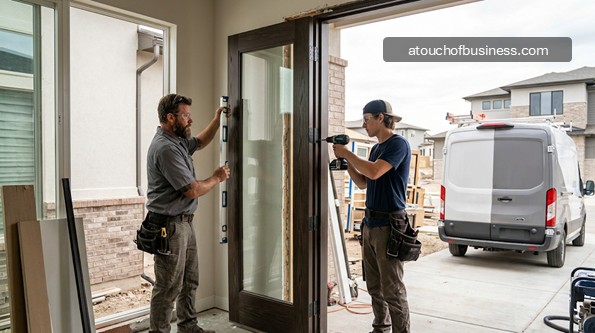
What to Expect From This Guide to Starting a Door Installation Business
This guide walks you through the key decisions and practical steps involved in starting a mobile door installation business, moving from an honest look at fit through a step-by-step startup sequence and into your first completed job. The bullets below point to select areas of value, not everything the guide covers.
Inside the guide, you will find:
- Startup roadmap: Follow an ordered sequence of steps from choosing a business model through licensing, insurance, suppliers, pricing, and your first job.
- Common questions: Find concise answers on lead-paint rules, part-time operation, hiring a helper, and buying new versus used equipment.
- Business fit: Weigh the physical demands, income uncertainty, and household impact of this hands-on trade before you commit.
- Market demand: Learn how to check local competition and identify underserved customers before you invest in tools and a vehicle.
- Financial planning: Work through pricing methods, profit potential, and the operating capital needed to get through slow periods.
- Local requirements: Understand how licensing, business registration, insurance, and federal lead-paint rules vary depending on where you work.
- Risks and warnings: Review red flags before you start and pitfalls that often surface just before your first scheduled jobs.
From here, the guide starts where every installer’s day starts: assessing whether the work itself is a fit for you.
Door installation contractors travel to homes and job sites to measure openings, order doors, and hang finished units for homeowners and contractors.
You work out of a vehicle instead of a storefront, moving between appointments across a service area you define.
This guide walks through the decisions and steps involved in starting a mobile door installation business.
It follows the process from picking a business model through your first completed job.
Is This a Fit?
Door installation is physical, hands-on carpentry work, and that reality is worth weighing before you commit.
You’ll lift and carry heavy doors, work overhead, and spend hours on ladders and knees.
Ask yourself honestly whether that pace fits your body and your schedule.
Beyond the physical side, consider your interest in precise, detail-driven trim work.
Income can be uneven in the beginning months, so weigh how much uncertainty you can accept.
Talk with the people in your household about the schedule and any income gap this business may create.
You’ll also need funds to cover tools, a vehicle, insurance, and licensing before you take your first job.
A typical day might include several appointments, loading and unloading doors, and cleanup at each stop.
Not every startup in this field succeeds, so weigh the financial and schedule risk with your eyes open.
Talk to Installers
Before committing, talk with door installers and trim carpenters who work outside your own service area.
These conversations reveal how lead flow, pricing, and supplier relationships actually work day to day.
Prepare specific questions in advance instead of asking generic ones.
Firsthand insight from people already running this kind of business is valuable, even though every path differs.
Start, Buy, or Partner
You can build a door installation business from scratch, by buying an existing one, or through a dealer or franchise program.
A handful of door-focused dealer and franchise programs exist, offering training and a built-in supply pipeline.
See this comparison of starting versus buying a business for a closer look at the tradeoffs.
Check Local Demand
Research how many independent installers and retailer installer programs already serve your target area.
Look for underserved segments, such as specialty, historic, or commercial door work.
Identify your likely first customers, whether homeowners, remodelers, or property managers.
Decide how you’ll reach them once you’re taking jobs, through referrals, a simple website, or a retailer program application.
Red Flags Before You Start
A few structural realities in door installation are worth understanding before you commit money or time.
- Jobs booked through retailer installer programs are often priced below what independent installers charge, which limits your pricing power in some markets.
- The work is physically demanding, and solo installers may struggle with large or heavy doors without help.
- Licensing rules vary widely, and some states require years of experience plus an exam before a license issues.
- Demand for exterior door work often swings with the weather, creating slow stretches in many climates.
- Special-order doors depend on manufacturer lead times, and delays can strain both cash flow and customer trust.
None of these should stop you outright, but each deserves a clear look before you invest in tools and a vehicle.
Step 1: Choose Your Model
Beyond how you enter the business, decide how you’ll actually get work: direct from customers or through a retailer installer network.
With independent work, you keep full pricing control but handle your own marketing from the start.
A retailer installer network can supply steadier leads, though you’ll generally follow the retailer’s pricing and scheduling rules rather than set your own.
A dealer or franchise path typically bundles this operating-model decision with the training and supply access covered above.
This choice shapes the licensing, insurance, and tool requirements covered in the steps ahead.
Step 2: Register the Business
Choose a business structure, such as a sole proprietorship or an LLC, and register it with your state.
File a doing-business-as name if you’ll operate under anything other than your legal name.
Apply for a federal tax ID number through the IRS, which most banks require to open a business account.
Step 3: Get Licensed
Contractor licensing for door installation varies a great deal from one state to another.
Some states fold door work into general contractor or home-improvement contractor licensing once a job passes a certain value.
A few states use a dedicated license category specifically for door and window installation, with its own exam and experience requirements.
Other states leave the work largely unregulated at the state level, though your city or county may still require registration.
Check with your state’s contractor licensing board directly, since a mistake here can delay your first job.
See this overview of business licenses and permits for the general registration process.
Step 4: Handle Lead Paint Rules
If your jobs include homes built before lead-based paint was phased out, federal lead-safe rules likely apply.
The EPA’s Renovation, Repair and Painting rule covers door and window replacement that disturbs painted surfaces in older housing.
Your firm must be certified before taking those jobs.
At least one installer must also complete renovator training.
You’ll also need to give homeowners a lead-hazard information pamphlet before work begins on a qualifying property.
Skipping this step isn’t a minor paperwork gap; it carries real penalty exposure if you’re caught working without it.
Step 5: Set Up Your Base
Most mobile door installers work from a home base for storing tools, hardware, and doors awaiting installation.
Check whether local zoning or a homeowners association restricts parking a marked commercial vehicle at your residence.
If storage space runs short, a small rented shop or warehouse can hold special-order doors and bulk supplies.
Step 6: Outfit Your Vehicle
Your vehicle is effectively your workshop, so outfit a van or truck with racks and secure storage for doors.
Core tools include levels, a hinge-mortising jig, drills and drivers, shims, low-expansion foam, and basic safety gear.
Define a realistic service radius based on drive time, not just distance on a map.
Build travel buffers into your schedule, since traffic and weather delays are routine in this trade.
Set a loading routine so tools and hardware are checked before every appointment, not discovered missing on-site.
Plan for vehicle maintenance and a backup set of core tools, since a breakdown or missing tool can cost you a full day.
Spreading jobs across a wide area is a common startup mistake, since drive time quietly eats into billable hours.
Step 7: Line Up Suppliers
Set up accounts with at least one door manufacturer or distributor and a hardware supplier before you need them.
Ask about special-order lead times and any minimum order requirements up front.
A second supplier relationship can protect you if your primary source runs into shortages or delays.
Step 8: Get Insured
General liability insurance covers claims for property damage or injury connected to your work on a customer’s property.
Workers’ compensation is required in most states once you hire employees, and it also covers work-related injury costs for you.
Commercial auto insurance covers your work vehicle, since a personal auto policy typically won’t.
Tool and equipment coverage, sometimes called an installation floater, protects doors and materials in transit or storage.
Retailer networks and commercial clients often require liability limits above a basic policy, so confirm coverage before you sign on.
See this overview of business insurance for how these policies generally work.
Step 9: Set Up Banking
Open a dedicated bank account for your door installation business before you take your first deposit.
Set up payment processing so you can collect deposits, progress payments, and final balances without delay.
Keeping business and personal transactions separate from the start makes tax time and record-keeping far simpler.
Step 10: Price Your Jobs
Most jobs follow the same basic sequence: inquiry, site visit, written estimate, and approval.
From there, it’s scheduling, the installation itself, a final walkthrough, and payment.
A written estimate that spells out scope protects both you and the customer if anything changes mid-job.
Define how you’ll handle change orders, such as discovering rotten framing behind an old door, before it happens.
Decide whether you’ll price per door, by the hour, or by the full project.
Labor-only pricing applies when a customer supplies their own door.
Material pricing applies when you supply the door and mark up the unit.
Factor in travel time, permit costs, disposal of the old door, and any complexity like sidelights or upgraded locks.
Step 11: Decide on Staff
Decide whether you’ll work solo, bring in a part-time helper for heavier doors, or hire an employee outright.
Larger exterior doors are difficult and can be unsafe for one person to set alone.
If you hire, confirm what training or licensing that person needs in your state.
Business Plan
Turn everything above into a short, practical plan before you commit to major spending.
Define your service radius, primary customer type, business model, and staffing approach in one place.
Set aside operating capital to cover slow weeks, since running out of cash is a leading reason startups close.
Profit potential in door installation depends heavily on job volume, since most revenue comes from many smaller transactions rather than a few large ones.
Work through how many jobs per week cover your fixed costs, such as insurance, vehicle expenses, and licensing renewals.
Subcontracting through a retailer or millwork network can mean thinner margins per job in exchange for steadier volume.
Price out your own equipment, vehicle, and licensing costs locally, since figures vary by region and by how much you already own.
Use this guide to writing a business plan to help organize these pieces.
Opening-Day Red Flags
A few pitfalls tend to surface just before your first jobs, not during planning.
- Ordering a special-order door before a final on-site measurement can leave you with a unit that doesn’t fit.
- Taking a job through a retailer network before your license and insurance meet their minimums can stall onboarding.
- A wall modification or an enlarged opening may need engineering review, so flag it before you quote the job.
- Missing lead-safe certification on a qualifying older home blocks you from legally taking that job at all.
- An uninsured or underinsured start can shut you out of commercial and general contractor work entirely.
Confirm your license, insurance, and supplier accounts are active before you schedule your first appointment.
Run a trial installation on a small job to test your full process, from measuring through the final walkthrough.
Frequently Asked Questions
Does the lead rule apply even if the door itself is new?
Yes. The rule is based on when the house was built, not the age of the door being replaced.
If the home falls in the covered era, the painted trim and jamb around any door can still trigger the rule.
Can I run this business part-time while keeping my current job?
Yes, though it changes which model fits best.
A retailer installer network runs on the retailer’s schedule, which can conflict with part-time availability.
Building a smaller base of direct customers usually gives you more control over your own hours.
How do I know when I need to bring on a helper?
There’s no fixed number to watch for.
If you’re regularly declining or delaying jobs because you can’t lift or set a door solo, that’s a signal it’s time.
Should I buy new tools and a new vehicle, or start with used equipment?
It depends on your job volume, financing options, and what you already own from prior trade work.
A used vehicle and a core tool set can be perfectly workable if your budget is tight to start.
Interviews with Door Installation Professionals
These interviews feature owners and operators from garage door, commercial door, and window-and-door installation companies.
They discuss starting, managing, marketing, hiring, training, customer service, and business growth.
Readers can use these experiences to compare business models, identify operational challenges, and consider how experienced operators approached staffing, customer relationships, systems, and growth.
How Community Sponsorships Helped This Garage Door Company Double Revenue
Nick Finnen, owner and founder of Nick’s Overhead Door Service, discusses his decades of door-industry experience and his move into business ownership. He also covers community sponsorships, referral marketing, employee training, reviews, and systems for tracking jobs and follow-ups.
This interview is useful for seeing how an experienced installer transitioned into ownership and developed marketing and operating systems as the company grew.
Brian Johnson on Refocusing Pioneer Overhead Door
Brian Johnson discusses acquiring Pioneer Overhead Door without previous industry experience and learning how the company operated. The conversation covers technician training, customer experience, commercial and residential work, service margins, sales processes, and operational improvement.
This interview gives prospective owners a look at the decisions involved in taking over an established door company, developing technicians, and improving the customer journey and service operation.
How Great Companies Turn Mistakes Into Customer Loyalty
Jonathan Harvey, co-owner of HarLand Windows & Doors, discusses communication, job-site mistakes, product knowledge, customer expectations, and operating a turnkey company where products and installation are handled under one business.
The discussion is useful for understanding how communication failures can affect installation projects and why clear responsibility, product knowledge, and prompt problem-solving matter in a growing door business.
Gene Kettler | How to Grow Your Business Every Year
Gene Kettler, founder and CEO of Frontier Door and Cabinet, explains how the company began as an installation business and grew from a garage-based operation. He discusses choosing profitable areas of focus, ideal projects, customer communication, staffing, acquisitions, operational systems, and managing multiple construction scopes.
This interview offers detailed lessons about positioning an installation company, choosing customers and projects, developing systems, managing growth, and avoiding operational problems when expanding.
Podcast: How to Rebuilt ASAP Commercial Doors Into a Multi-State Growth Business
Tasha Roberts, owner and CEO of ASAP Commercial Doors, discusses rebuilding the company’s team and culture, expanding into another state, delegating responsibility, marketing commercial services, managing incoming leads, and serving commercial clients.
Her advice is especially useful for someone considering commercial door work because she discusses the differences between installation contracts and service work, including why she recommends establishing service and maintenance relationships before pursuing large construction projects.
Tommy Mello – $1 Billion Company Founder (A1 Garage Doors) | Why Control Keeps You Small
Tommy Mello, founder of A1 Garage Door Service, discusses starting the business, learning technical work from other companies, handling calls and customers, building operating procedures, recruiting, training, delegation, marketing, and developing systems as the company expanded.
This conversation is useful for understanding how a small garage door operation can become increasingly dependent on documented processes, capable employees, training, and delegation as workload and staffing increase.
Related Articles
- How To Start a Garage Door Business
- How To Start a Carpentry Business
- How To Start a Siding Installation Business
- How To Start a Home Renovation Business
- How To Start a General Contracting Business
- How To Start a Construction Business
Sources:
- Insureon: Door & Window Install Insurance, Install Insurance Cost Guide
- TechInsurance: Door Window Installer Coverage
- MyFloridaLicense.com: Construction Industry FAQs
- City of Sausalito: Exterior Door Replacement Info
- City of Saint Paul: Window and Door Replacement Permit
- City of Arden Hills: Window/Door Replacement Permits
- Renewal by Andersen: EPA Lead Safety (RRP Rule)
- Loyola University Chicago: EPA RRP Rule Fact Sheet
- JLC (Journal of Light Construction): Installing a Prehung Door
- Fine Homebuilding: Hinge Mortising Technique
- Bob Vila: Prehung Door Installation Steps
- iHireConstruction: Door Installer Subcontractor Model