
What to Expect From This Guide to Starting a Vehicle Inspection Business
This guide walks you through the key decisions and practical steps for starting a vehicle inspection station, from checking whether your area allows private stations to final pre-opening confirmations. The bullets below highlight selected areas, not everything included.
Inside the guide, you will find:
- Startup steps: Follow 16 numbered steps from checking your area’s program through station approval, equipment, inspectors, and final pre-opening confirmations.
- Common questions: Find answers to questions the steps leave open, such as part-time operation, off-site inspections, owner certification, and employee violations.
- Daily reality: See what a typical day involves, including recurring tasks and the parts owners often find hard.
- Local requirements: Learn how program rules, station authorization, facility standards, and inspector certification can vary by state and county.
- Financial planning: Work through fees, break-even logic, startup costs, funding questions, and operating capital for the months before approval.
- Equipment and staffing: Review approved equipment, certified inspector coverage, and insurance questions to ask before you open.
- Risks and warnings: Spot red flags before you start, before you spend, and before opening day, including audits, owner accountability, and program changes.
The guide begins with whether this business fits you, since strict procedures, audits, and a stretch without income shape every decision that follows.
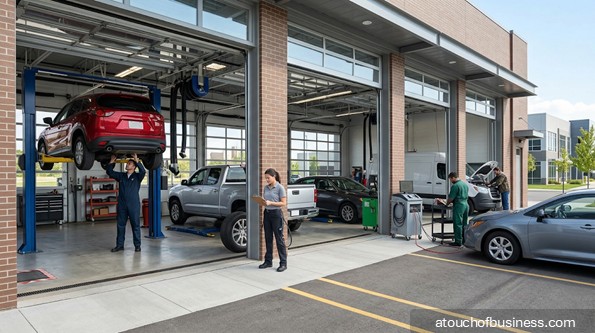
Owners and certified inspectors at a vehicle inspection station check cars and trucks against a government program’s standards.
Station owners and inspectors record each pass or fail and issue the official result.
Running a vehicle inspection business depends on government approval.
You can issue official results only where a program allows private stations and your regulator approves your station and inspectors.
Many areas have no inspection program. Where one exists, the program sets the rules for stations, equipment, and inspectors.
Beyond program approval, you still follow the general startup process every new venture shares, from registration to funding.
Risk runs through this guide because approvals, audits, and owner accountability shape nearly every decision you make.
Is a Vehicle Inspection Business a Good Fit for You?
A vehicle inspection business fits best when you can follow strict procedures, accept audits, and fund a stretch with no income before approval.
Why do you want to own an inspection station? Be honest about whether strict procedure and paperwork appeal to you.
Pressure tolerance matters, because a regulator can review your work without warning.
Income is uncertain. You will pay for rent and equipment before you can bill a single inspection.
Some programs cap what you may charge, so income per vehicle can stay limited even when you stay busy.
Plan for the possibility that the business fails, and decide what loss you can accept.
Can your household cover living costs while you wait for approval and build volume?
Ask family or household members how they feel about the time demands and the financial risk.
Startup costs include equipment, a qualifying site, certified inspectors, and operating capital. Price each item locally before you commit.
Demand depends on how many vehicles in your area must be inspected and how many authorized stations already serve them.
Think about why drivers would pick you over nearby stations. Convenience, appointment availability, and inspector trust are possible reasons.
You also need vehicle systems knowledge, accurate records, and clear communication with customers.
Talk with owners you will not compete against before you commit. Their experience shows what manuals and application packets leave out.
Red Flags Before You Start
Stop and verify first if your area has no program or only state-run or contractor-run testing, because a private station may not be allowed.
Before you commit, weigh these warning signs:
- Required inspections can be reduced or eliminated, and station owners lose that fee income.
- Fee caps limit your income per vehicle, so thin volume makes break-even harder.
- In some programs, you are responsible for the complete operation of your station, including every inspection issued.
- In some programs, record violations can bring suspension, and fraudulent recordkeeping can lead to permanent loss of authorization.
- Inspection-only rules in some programs bar you from repairing vehicles that fail.
- You cannot earn until approval, and site or equipment rules can add delay.
- You need certified inspectors, so a hiring or retention problem becomes an operating problem.
- Automotive technicians face one of the highest injury and illness rates of any occupation.
Several conditions come with this industry no matter how skilled you are.
The regulator sets many operating terms, so you have limited control over fees and procedures.
Rules also vary by program and vehicle class, so experience in one area may not transfer to another.
None of these flags means you must walk away. Each one tells you what to verify, change, or fund before you go further.
A Day in the Life of Running a Vehicle Inspection Business
Your day centers on inspecting vehicles by the program’s procedure, recording each result, and handling the paperwork that follows.
Either you or a certified inspector completes each inspection. A pass leads to a certificate, and a fail leads to a rejection report.
Failed vehicles return after repairs. Some programs allow reinspection at the same station within a set window without a new fee.
Beyond inspections, your day also includes these recurring tasks:
- Ordering, counting, and locking up certificates and stickers.
- Keeping records ready to produce on demand.
- Instructing and supervising your inspectors.
- Keeping tools and equipment in working order.
- Explaining problems and results to customers.
What owners often find hard:
- Staying audit-ready, since regulators can review your tools, records, and procedures without warning.
- Supervising inspectors so every result follows the program’s procedure.
- Standing for most of a shift and working with heavy parts and tools, as automotive technicians do.
Does a day built around procedure, paperwork, and keeping your station audit-ready sound like a fit for you?
Step 1: Confirm You Can Handle Rule-Driven Inspection Work
You fit this business if you can follow a written inspection procedure on every vehicle, including when a customer hopes for a pass.
The numbered steps in this guide run from this fit check through your final pre-opening confirmations.
Before moving on, decide how involved you will be in daily inspections.
Step 2: Talk to Non-Competing Owners and Inspectors
Talk to inspection station owners outside your service area, certified inspectors, and people who run repair shops in other towns.
Learning from real business owners shows you what the rules and forms do not.
Prepare your questions first. Each owner’s path differs, so compare several answers.
Ask them about these points:
- How long approval took.
- How audits go.
- What equipment problems came up.
- How they keep certified inspectors on staff.
- What surprised them.
Step 3: Confirm Your Area Has an Inspection Program
Confirm your state or county runs an inspection program that allows private stations before you spend on anything else.
Inspection mandates are set by each state and sometimes by county. Emissions testing often applies only in certain counties.
Federal air quality law requires emissions inspection programs in certain areas, and states run them.
Program design differs. In some programs, a contractor operates the testing network under state environmental agency oversight.
If testing is state-run or contractor-run, a private shop-based station may not be an option.
Search for your state’s vehicle inspection station application, then call the program office to confirm.
Ask the regulator whether it accepts new station applications and which station types it offers.
Where no program exists, the official inspection path in this guide does not apply.
Red flag: If no private-station path exists, stop here and reconsider your plan.
Step 4: Choose Your Inspection Model
Choose whether to offer safety inspections, emissions inspections, or both, and which vehicle classes you will inspect.
Vehicle classes can include passenger vehicles, motorcycles, trailers, and commercial vehicles.
Programs tie your authorization to the station type and vehicle classes you choose.
Some programs treat safety and emissions as separate station types. You may need a separate application packet for each.
Next, decide whether to inspect only or to inspect and repair.
In some programs, inspection-only stations cannot troubleshoot or repair vehicles that fail the emissions test.
Decide whether to inspect only before you plan repair income, because inspection-only rules can remove it.
Weigh your options to start from scratch or buy an existing business, including the cost and risk of each.
If you buy a station, ask the regulator whether the authorization transfers to you.
Step 5: Validate Local Demand and Competition
Estimate local demand by comparing the vehicles that must be inspected with the authorized stations already serving them.
Study local supply and demand before you pick a site.
Ask your regulator whether it publishes a list of authorized stations, then review each nearby location.
Likely customers include:
- Everyday drivers who must inspect to register or renew.
- Fleet operators.
- Commercial vehicle operators.
Consider why each group would choose you. Convenience, appointment availability, inspector trust, and on-site repairs, where allowed, are possible reasons.
Drivers often find stations by searching for places that offer inspections. Plan how they will locate you when you open.
If many authorized stations already serve your area and fees are capped, volume per station may stay thin.
Step 6: Run the Profit and Break-Even Check
Before any major spending, calculate whether inspection fees can cover your fixed costs using your own local numbers.
Use this guide to estimate profit and revenue for your plan.
Your revenue comes from the per-vehicle inspection fee, plus repair work where your program allows it.
Fee rules differ by program, so verify yours. Some programs set a maximum fee and let you charge less.
Ask which part of the fee you keep. In one program, the maximum fee includes administrative fees that you pay to the transportation department.
Check the reinspection rule. In one program, a failed vehicle can return to the same station within a set window with no new fee.
If your program offers free reinspections, count returning failed vehicles, because each adds a visit without adding a fee.
Your fixed costs may include:
- Rent.
- Lift and equipment.
- Insurance.
- Loan payments.
- Program or contractor fees.
- Wages for certified inspectors.
Break-even depends on the fee you keep per vehicle and the time each inspection takes. The number of vehicles your lane can handle matters too.
Calculate how many inspections cover your fixed costs each month. Use your own prices, costs, and expected volume.
Check whether inspection due dates cluster around registration cycles. Plan cash for slow periods.
Ask your regulator and local shop owners how stable the program is.
Red flag: If break-even needs more vehicles than your lane can inspect, change the plan before you spend.
Step 7: Choose a Business Structure and Register the Business
Plan your business structure before you sign a lease or equipment agreement, because running an inspection station creates liability exposure.
Customer vehicles, lifts, and employees all add liability and property risk.
In some programs, regulator action can reach beyond the company, including owners, officers, directors, and shareholders paid from daily operations.
Operating without a separate entity puts your personal assets at risk if a claim arises.
Learn how to choose a business structure, then send the final choice to an attorney and a tax professional.
Do not assume one entity type is required. Ask your regulator whether it wants proof of incorporation.
Registration usually involves these items:
- An EIN, which you can learn about in this guide to a business tax ID.
- Your business name or DBA.
- State tax and employer accounts, as needed.
- A municipal business certificate or local license.
- Secretary of State registration, where required.
Expect a background check. One program requires the applicant to pass one.
Step 8: Verify the Location Before You Sign a Lease
Confirm zoning, occupancy approval, and your regulator’s facility standards before you sign a lease or buy a building.
Ask your city or county planning or building department whether zoning permits an inspection station and whether you need a certificate of occupancy.
One program requires local approval for occupancy and a state police site visit before you can operate.
Regulators set facility standards and may review your premises and tools before approving a station.
If your program requires an initial site assessment or layout confirmation, get it before you sign the lease. Step 10 covers that assessment.
Minimum inspection-area dimensions vary by program and by the headlight testing equipment you use.
Facility standards may cover these items:
- Adequate lighting.
- Level floor space.
- A lift or pit.
- A separate repair area, if you offer repairs.
Ask your landlord which lift installation and signage changes the lease allows.
Home-based setups do not typically fit, because stations must meet facility standards for an approved inspection area.
Ask your city about a general business license before you sign.
Step 9: Fund the Startup and Plan Operating Capital
List every inspection station startup cost and price it locally, then plan operating capital to cover the weeks before you earn income.
Your cost list may include:
- Application, license, and renewal fees.
- Inspector exam and training fees.
- Background check fees.
- Lease or purchase, build-out, and lift installation.
- Equipment, analyzers, software, and computers.
- Certificate and sticker inventory.
- Signs.
- Wages and payroll taxes for certified inspectors.
- Program or contractor fees.
Your most accurate estimate comes from pricing each item with local suppliers and your regulator’s fee schedule.
Funding options include savings, bank loans, equipment financing, and investors.
Learn how to get a business loan if you plan to borrow.
Before you apply, ask each lender or investor which documents they require.
Do not assume every lender requires a plan. Start drafting yours as you finish these steps.
The Business Plan section below pulls your costs, funding, pricing, and break-even inputs together.
Operating capital matters because you earn nothing until the regulator approves your station. Ask how long approval usually takes.
Your operating capital must also cover wages, rent, supplies, and certificate inventory during ramp-up.
Step 10: Apply for Station Authorization and Start the Facility Assessment
Apply to the regulator that runs your program and begin its facility assessment, which you must pass before you earn any inspection income.
Expect an application, fees, required forms, and a background check.
Regulators may visit your facility to confirm space, personnel, and equipment.
Sequencing matters. In one program, you complete an initial site assessment first, buy equipment next, and pass a final assessment last.
Your final facility assessment may come after your equipment and inspectors are in place. Ask the program office for the order.
Sign any terms and conditions form the program requires.
Step 11: Buy and Set Up Approved Equipment and Systems
Buy only the equipment your program lists and approves for your station type and vehicle classes.
Program manuals typically list tools such as these:
- A jack or lift with a minimum capacity.
- A headlight tester or aimer.
- A workbench.
- Tire tread depth and tire pressure gauges.
- A brake lining gauge.
- A window tint meter.
- An OBD-II scan tool.
Equipment lists vary by program and station type, so treat your regulator’s manual as the final list.
In emissions areas, expect extra equipment. One program requires emissions testing equipment and a communications agreement with the program contractor.
Some programs require electronic reporting, including a contract with an electronic form contractor.
Keep reference manuals on hand, such as the inspection manual and an emissions control system application manual.
Keep tools in good working condition, because some programs require it.
Step 12: Arrange Certified Inspectors and Staffing
Plan certified inspector coverage for your station type and vehicle classes, including backup if one inspector is absent.
Inspectors must be certified. One program requires a minimum age, a background check, and written and practical exams.
A commercial vehicle endorsement can require a hands-on practical exam.
If you inspect commercial vehicles, motor carriers must ensure annual inspectors meet federal qualification standards and keep proof, so carrier customers may ask you for it.
Commercial brake work has a separate federal qualification standard. Check 49 CFR Part 396 to confirm what applies.
Confirm whether certification or station approval comes first. In one program, inspection mechanics must be employed by a licensed station.
Learn how and when to hire staff.
Train staff on the program procedure. Rules in one program tell owners to instruct employees and supervise them.
Red flag: Relying on one certified inspector leaves you unable to inspect when that person is absent.
Step 13: Set Up Insurance and Risk Planning
Ask an insurance agent which commercial coverage fits an inspection station, including coverage for customer vehicles in your shop.
Garage liability does not pay for damage to a customer’s car. Garagekeepers coverage addresses that gap.
Ask about commercial property insurance for lifts, compressors, and tools.
If you hire employees, ask your state workers’ compensation agency what coverage you must carry.
Some programs also require a surety bond or station liability insurance. Check your program manual for this requirement.
Read more about business insurance before you request quotes.
Step 14: Set Up Certificate Supplies, Records, and Posted Notices
Plan how you will order, count, and secure inspection certificates and stickers before you inspect any customer’s vehicle.
One manual tells owners to count each shipment and keep certificates locked in a secure area.
Report lost or stolen certificates to the regulator. Regulators may audit your certificate inventory.
Plan record keeping too. One program requires inspection reports, rejection reports, stickers, and a copy of the rules.
Prepare required notices. One statute requires posted signs showing the maximum and minimum fee, the fee you charge, and the reinspection window.
Red flag: Unsecured certificates can lead to suspension, so lock them up before you open.
Step 15: Set Your Pricing and Payments
Set your inspection price within any fee cap, then price repair work separately where your program allows it.
Learn how to approach pricing your products and services for any services outside the capped fee.
Decide your reinspection policy within program rules.
Open a business bank account to keep inspection income separate from personal funds.
Set up card payments through a merchant account or payment processor.
Step 16: Complete Final Pre-Opening Confirmations
Confirm that every approval, inspector, tool, and certificate is in place before you inspect your first vehicle for a customer.
Confirm each of these items:
- Station authorization is in hand.
- The final facility assessment is passed.
- Inspectors are certified for your station type.
- Equipment is installed and working.
- Reporting systems are active.
- Certificates and stickers are counted and locked up.
- Fee notices and required signs are posted.
- Zoning and occupancy approvals are confirmed.
- Insurance, bond, and workers’ compensation are in place where required.
- Your bank account and payment processing work.
- Staff are trained on the program procedure.
Ask your regulator exactly when you may begin issuing official certificates.
Business Plan
Draft your business plan as you complete the earlier steps. Finish it once your costs, funding, pricing, and break-even inputs are in place.
Use this guide to write a business plan that ties your startup decisions together.
Your vehicle inspection business plan should pull together these inputs:
- Your startup cost list from Step 9.
- Funding sources and the documents each lender or investor requires.
- Your fee, any cap, and the reinspection rules.
- Your break-even math using your own local numbers.
- Operating capital for the months before approval.
- Inspector staffing and wages.
- Insurance, bond, and program fees.
Include slow periods and program change risk in your cash plan. Keep the plan focused on opening, not long-term growth.
Opening-Day Red Flags
Do not open until your regulator confirms approval and your inspectors are certified for your station type. Your reporting systems must be working too.
Delay your opening if you see any of these gaps:
- The final facility assessment is not passed, or your approval date is unconfirmed.
- An inspector is certified for a different station type than your station.
- Reporting systems or contractor agreements are not active.
- Fee notices or required signs are not posted.
- Zoning or occupancy approvals are still pending.
- Insurance, bond, or workers’ compensation is not in place.
- Staff are not trained on the program procedure.
In one program, failing to maintain required personnel, space, tools, equipment, and bond or insurance is cause for immediate suspension.
Red Flags Before You Spend
Hold major spending until your regulator confirms your site, equipment list, and station type. Purchases made too soon can be wasted.
Pause before spending if you see any of these:
- A lease offered before you ask the regulator whether your site meets facility standards.
- Equipment that the program does not approve for your station type.
- Funding sized for equipment but not for the months without income.
- Wages for certified inspectors before you know your approval date.
- Break-even math built on a fee higher than your program allows.
Waiting for written confirmation from your regulator costs less than paying for a site, tools, or staff you cannot use.
Frequently Asked Questions
Can I run a vehicle inspection station part-time while keeping another job?
It depends on your program. Some programs require stations to keep a defined minimum schedule with a certified inspector on hand.
In one program, stations must be open a minimum number of hours each normal business day and inspect year-round, except for private appointments.
Check your program’s operating rules before you plan around another job’s schedule.
Can I inspect vehicles at a customer’s location?
It depends on your program. One program requires inspections to be made only at the approved location and in the approved inspection lane.
Ask your regulator whether any off-site option exists in your program.
Do I have to be a certified inspector to own a station?
Whether you must be certified depends on the program. One program requires the owner, manager, or supervisor to be a certified inspector.
Another program requires you to employ at least one certified inspector.
A third program puts owners and on-site managers through the same approval process as inspection technicians.
Ask your regulator which rule applies before you plan your staffing.
Can I avoid suspension if an employee broke a rule without my knowledge?
Possibly. One program lets an owner accept a point assessment instead of a suspension when management did not know and should not have known.
In one program, owners can be penalized for violations by employees acting within their authority, even when the owner could not have anticipated them.
Ask your regulator whether your program offers a point assessment or a similar option.
Interviews with Vehicle Inspection Professionals
These interviews share firsthand perspectives from professionals involved in vehicle inspection and MOT testing businesses. They discuss testing operations, staffing, customer service, training, business growth, technology, and the demands of running an automotive service operation.
Readers can use these experiences to better understand how inspection businesses operate, what customers expect, and why staff development, consistent procedures, equipment, and trust can matter when building this type of business.
Hayley Pells, Owner and MOT Tester at Avia Autos
Hayley Pells discusses taking over Avia Autos, moving the business toward servicing, repair, and MOT testing, managing a small team, developing staff, keeping up with automotive technology, and responding to changing customer needs.
The interview is useful for someone considering a vehicle inspection business because it shows how an experienced owner combines technical services with staff development, operational flexibility, customer education, and continued investment in equipment and skills.
Elle-May Wills, MOT Tester at The Test Centre
Elle-May Wills discusses working for a business dedicated exclusively to MOT testing, its expansion into additional testing stations, tester training, customer service, staffing, and maintaining a consistent experience across multiple locations.
The interview is useful for someone considering a vehicle inspection business because The Test Centre focuses entirely on inspections. It provides perspective on specialization, expansion, tester training, customer confidence, and maintaining consistent operating standards.
Mick and Roz Bentley, Owners of Britannia MOT & Repair Centre
Mick and Roz Bentley discuss operating an independent garage that provides MOT testing alongside repair and servicing. They cover daily workflow, customer retention, staff training, scheduling, commercial clients, equipment investment, technology, and changes in the automotive service sector.
The interview is useful for someone considering a vehicle inspection business because it gives a detailed view of day-to-day operations and shows how inspections can fit alongside complementary automotive services, staff management, customer communication, and long-term facility investment.
Related Articles
- How To Start a Home Inspection Business
- How To Start an Auto Repair Shop
- How To Start a Used Car Dealership
- How To Start an Automotive Fleet Maintenance Business
Sources:
- Texas DPS: Station Qualifications, Inspector Qualifications
- Mass.gov: Station License Application
- Pennsylvania DMV: Station Owner FAQs, Publication 45 Regulations
- Pennsylvania Code: Cause for Suspension, Official Inspection Stations, Penalties and Suspensions
- Maryland MVA: Station and Mechanic Licensing
- Maine State Police: Motor Vehicle Inspections
- New Hampshire DMV: Inspection Stations
- West Virginia State Police: Inspection Manual
- Rhode Island Rules: Official Inspection Manual
- Texas Law: Suspension and Revocation, Station Audit Authority
- Hawaii Rules: Station Permits, Inspection Fees
- Virginia Admin Code: Station Requirements
- North Carolina: Inspection Fee Statute, OBD-II Course Materials
- Utah Rules: Safety Inspection Equipment
- eCFR: Inspector Qualifications, Part 396 Brake Inspectors
- U.S. EPA: I/M Program Information
- Illinois EPA: Emissions Testing Program
- City of Albuquerque: Inspector Training Manual
- University of Vermont: State Inspection Requirements
- Vermont DMV: Periodic Inspection Manual
- Bureau of Labor Statistics: Automotive Technicians Profile, Heavy Vehicle Technicians
- Ratchet+Wrench: Safety Inspection Changes
- The Hartford: Garage Keepers Insurance
- Forbes Advisor: Garagekeepers Coverage