
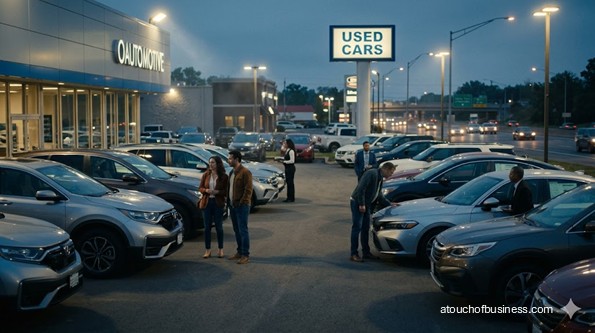
Starting a Used Car Dealership
A used car dealership sells previously owned vehicles from a licensed physical location. The owner or team buys inventory, prepares vehicles for sale, handles title paperwork, displays required buyer disclosures, and helps customers complete payment, financing, and registration steps.
This business can be practical, but it is not casual. Before you lease a lot or buy inventory, you need to understand licensing, vehicle sourcing, reconditioning, financing rules, title records, customer trust, and the fixed costs of a physical site.
- Used cars, SUVs, trucks, and vans may all fit the model.
- Retail sales to the public differ from wholesale-only sales.
- Financing changes your paperwork, privacy, and security duties.
- Repair or reconditioning on site affects equipment, safety, insurance, and environmental requirements.
This guide focuses on a physical-location used car dealership, not a home-based broker model or a long-term growth plan.
Can You Operate Your Own Business?
A used car dealership may look simple from the outside. Buy vehicles, clean them up, sell them, and repeat. In practice, you must manage risk before any sale happens.
You need to be comfortable with capital tied up in inventory, title delays, shifting wholesale prices, customer complaints, and strict paperwork. You also need enough patience to inspect details others may skip.
- Vehicle judgment: Can you spot condition problems before buying?
- Paperwork discipline: Can you keep title, odometer, warranty, and sale records clean?
- Financial patience: Can you carry vehicles that don’t sell right away?
- Customer pressure: Can you explain price, financing, and vehicle condition clearly?
- Risk tolerance: Can you handle repairs, returns, complaints, or inventory value changes?
Don’t start a used car dealership just to escape a job, chase status, or solve short-term financial stress. The business requires capital, discipline, local approval, and daily decisions that can affect your cash quickly.
Decide whether ownership fits you before you decide whether the lot fits you.
Talk With Non-Competing Owners
Before you commit to a location, speak with used car dealership owners you won’t compete against. Look in another city, region, or market area.
Prepare questions before those conversations. Experienced owners have firsthand insight, even if their path won’t match yours exactly.
- What delayed their dealer license?
- What did they underestimate before opening?
- Which title problems caused the most trouble?
- How did they choose their first inventory mix?
- What should a new dealer know about floor plan financing?
- Which reconditioning surprises hurt their margins?
- Which forms, systems, or vendors did they need before opening?
You can also use insight from real business owners to shape better questions before you talk with anyone.
Ask before you lease, buy inventory, or apply for financing.
Validate Local Demand and Competition
A used car dealership depends on local demand, inventory access, and location fit. A busy road isn’t enough if the wrong vehicles are on the lot or buyers can’t afford the inventory.
Study the market before you spend heavily. Use local supply and demand as a practical filter, not a theory exercise.
- How many used car dealerships already serve the area?
- What price range do local buyers shop most often?
- Are nearby dealers focused on budget cars, trucks, luxury vehicles, SUVs, or specialty models?
- Can you source enough vehicles in the segment you want to sell?
- Will local income, commuting patterns, and credit access support your inventory plan?
- Does the location give buyers easy access, parking, and confidence?
Affordable used vehicles may be harder to source than higher-priced units in some markets. That matters because your inventory plan drives your startup costs, financing needs, and pricing decisions.
Don’t let a cheap lease hide a weak market.
Choose Your Dealership Model
Your model shapes almost every startup decision. A retail used car dealership is not the same as a wholesale-only operation, a buy-here-pay-here dealership, or a repair-focused lot.
Choose your model before you apply for licenses, sign a lease, build systems, or buy vehicles.
- Independent retail used dealer: Sells used vehicles to the public from a licensed location.
- Wholesale-only dealer: Sells to other licensed dealers and may not sell to retail buyers in many states.
- Buy-here-pay-here dealer: Carries more financing risk and customer payment duties.
- Specialty used dealer: Focuses on trucks, vans, budget cars, luxury vehicles, or another segment.
- Used dealer with repair on site: Requires more equipment, safety planning, vendors, and insurance review.
If you plan to arrange financing, offer service contracts, sell warranties, or repair vehicles on site, your setup becomes more complex.
Pick the model before you build the lot around it.
Decide Whether to Start, Buy, or Explore a Franchise
You can start a used car dealership from scratch, buy an existing dealership, or explore a franchise-style option where it fits. The right path depends on your budget, timeline, support needs, risk tolerance, and desire for control.
Starting from scratch gives you more control. It also means you must build the location, inventory, vendor network, systems, and licensing path yourself.
- Start from scratch: Best if you want control and can handle the full setup process.
- Buy an existing dealership: Worth considering if the site, staff, vendors, lender relationships, and inventory justify the price.
- Explore a franchise: More common for new-car or branded automotive retail concepts than a standard independent used car dealership.
If you buy an existing dealership, review inventory value, title status, floor plan debt, lawsuits, complaints, lease terms, staff, vendor contracts, and whether licenses or approvals can continue after the sale.
Use the choice between starting and buying as a serious planning step, not a shortcut.
Business Plan
Your business plan should turn the used car dealership startup path into decisions you can act on. It should not read like a generic template.
Focus on what must be true before you open the doors, display vehicles, accept payments, or arrange financing.
- Dealership model: Retail, wholesale-only, buy-here-pay-here, specialty, or mixed.
- Inventory plan: Vehicle types, price range, sourcing channels, starting inventory count, and reconditioning approach.
- Location plan: Zoning, lot layout, signage, office, parking, access, and certificate of occupancy needs.
- Legal setup: Entity, Doing Business As name, dealer license, bond, tax accounts, and local approvals.
- Paperwork flow: Title checks, odometer disclosures, Buyers Guides, deal jackets, warranty forms, and sale documents.
- Financing plan: Cash purchases, floor plan financing, bank funding, lender setup, and payment processing.
- Staffing plan: Owner duties, title support, sales help, finance support, lot help, and reconditioning vendors.
- Opening checklist: What must be ready before the first vehicle is displayed for sale.
The plan should also show how startup costs, pricing decisions, inventory funding, and compliance requirements connect. A low vehicle price can still fail if reconditioning, floor plan interest, fees, or title delays eat the expected margin.
A practical business plan helps you see those links before money is already committed.
Set Up the Legal Foundation
Legal setup for a used car dealership starts before the dealer license application. You need a business structure, business name, tax setup, and local fit for the physical location.
Start with the basics, then move into dealer-specific licensing.
- Choose a legal structure.
- Register the business with the state when required.
- Register a Doing Business As name if the lot uses a different trade name.
- Get an Employer Identification Number when needed.
- Set up state tax accounts that apply to vehicle sales and employment.
- Open a business bank account after the formation and tax pieces are ready.
For a physical used car dealership, the business name, license records, exterior sign, bank account, tax accounts, and customer-facing documents should all match cleanly.
You can use business registration steps as a starting point, but dealer licensing will add more requirements.
Secure the Right Physical Location
The location is not just a sales address. It must fit the dealership model, licensing rules, customer flow, vehicle display, records storage, and local approval process.
Check the site before signing a lease or buying property. A location that looks right may still fail zoning or premises rules.
- Zoning: Confirm retail motor vehicle sales are allowed at the address.
- Display space: Make sure the lot can show vehicles safely and legally.
- Office area: Plan space for customers, files, signing, payments, and staff.
- Parking and access: Buyers need safe entry, exit, and test-drive flow.
- Signage: Check whether a permanent exterior sign is required or needs approval.
- Certificate of occupancy: Verify whether the city or county requires one for dealership use.
- Repair limits: Confirm whether repairs, detailing, washing, or fluid handling are allowed on site.
Location-dependent rules vary across the United States. Check with the city or county planning office, building department, and dealer licensing agency before you commit.
Get location approval before you fall in love with the lot.
Apply for the Dealer License
A used car dealership needs the correct state dealer license before selling vehicles as a dealer. The exact license class, bond, education, inspection, and premises rules vary by U.S. jurisdiction.
Don’t assume another state’s checklist applies to your state. Dealer licensing is location-specific.
- Correct dealer license class
- Retail or wholesale status
- Entity and ownership documents
- Lease or property ownership proof
- Zoning proof or local approval
- Premises photos or inspection
- Dealer education certificate, if required
- Surety bond, if required
- Background or fingerprint steps, if required
- Dealer plates or temporary tag access, if applicable
Dealer licensing can also affect when you may display vehicles, issue temporary tags, use dealer plates, or keep official records at the licensed premises.
For broader context, review business license and permit planning, then confirm the dealer-specific rules with your state motor vehicle agency.
Build the Vehicle Paperwork System
Paperwork is one of the core parts of a used car dealership. A missing title, bad odometer disclosure, lien issue, or incomplete Buyers Guide can delay a sale or create legal trouble.
Set up a vehicle file before each vehicle is offered for sale.
- Title or title reassignment documents
- Bill of sale or purchase invoice
- Vehicle identification number
- Odometer disclosure
- Lien release or payoff record, if needed
- Auction invoice or acquisition record
- Vehicle-history report
- Inspection or reconditioning notes
- FTC Buyers Guide
- Warranty or service contract documents, if offered
- Sales contract forms
- Tax, title, and registration documents
Use a deal jacket checklist so the owner, title clerk, and sales staff know what belongs in each file. Keep the process simple enough that it can be followed every time.
No clean file, no ready vehicle.
Prepare FTC Buyers Guides and Warranty Decisions
Used car dealers must handle the FTC Buyers Guide correctly for covered vehicles. The guide tells buyers whether the vehicle is sold as is, with implied warranties only, or with a dealer warranty.
The guide must be posted before a covered vehicle is displayed for sale or shown to a customer for purchase inspection. It must also match the final warranty terms at sale.
- Keep Buyers Guide forms ready before inventory goes on display.
- Use the correct warranty status for each vehicle.
- Use Spanish Buyers Guides if sales are conducted in Spanish.
- Give the buyer a copy at sale.
- Prepare a separate written warranty if you offer one.
- Check state law before relying on an as-is sale approach.
Service contracts are separate from warranties. If you plan to offer them, verify state rules and decide who handles claims before opening.
Decide How You Will Handle Financing
Financing changes the startup setup for a used car dealership. It affects forms, disclosures, privacy duties, lender access, staff training, and customer files.
Decide your financing model before you accept credit applications.
- Outside financing only: Customers bring their own lender or pay another way.
- Third-party lender financing: The dealership helps arrange financing through lenders.
- Retail installment contracts: The dealership may originate contracts and assign them.
- Buy-here-pay-here: The dealership carries more credit and collection risk.
If you arrange financing or leasing, prepare for Truth in Lending disclosures, privacy notices, and customer information security duties. Staff should know what information they may collect, where it is stored, and who can access it.
A financing process that isn’t ready can slow sales and create compliance risk.
Plan Inventory Sourcing and Reconditioning
Inventory is the largest startup decision for many used car dealerships. The vehicles you buy control your price, margin, repair risk, and time on the lot.
Choose sourcing channels that match your license, cash, floor plan access, and vehicle knowledge.
- Dealer auctions
- Trade-ins
- Private purchases
- Fleet or lease returns
- Wholesale marketplaces
- Other licensed dealers
- Consignment, if allowed locally
Before you buy, review the title, vehicle identification number, odometer, brand history, accident history, recall issues, mechanical condition, cosmetic condition, transport cost, auction fees, reconditioning cost, and likely retail price.
Reconditioning deserves special attention. A vehicle that looks profitable at auction can lose margin after tires, brakes, detailing, diagnostics, transport, and small repairs.
- Outsource reconditioning: Lower equipment needs, but more vendor coordination.
- Handle light prep on site: More control, but more tools, supplies, and safety planning.
- Run a repair bay: More capacity, but more staffing, equipment, insurance, and environmental requirements.
Buy the vehicle only after the numbers still work with reconditioning included.
Estimate Startup Costs and Funding Needs
Don’t rely on a universal startup cost estimate for a used car dealership. Costs vary by inventory level, vehicle price range, location, lot size, licensing rules, equipment, staffing, insurance, and financing method.
Build your estimate from real quotes, local fees, and your planned model.
- Business registration and name filings
- Dealer license fees
- Dealer education, if required
- Surety bond premium, if required
- Lease deposit or property purchase
- Site improvements and signage
- Office setup
- Starting inventory
- Auction fees and vehicle transport
- Reconditioning and detailing
- Dealer management software
- Vehicle-history reports
- Legal and accounting support
- Insurance
- Payroll before opening
- Working capital
Funding may come from owner cash, investors, a bank loan, seller financing, equipment financing, or floor plan financing. Floor plan financing is tied to inventory vehicles, so it can help you stock the lot but can also create pressure if vehicles sit too long.
Keep enough working capital for rent, payroll, reconditioning, insurance, software, utilities, title delays, and vehicles that don’t sell quickly.
Set Pricing, Banking, and Payment Systems
Pricing at a used car dealership must reflect more than the purchase price. Each vehicle has its own cost story.
Before opening, decide how you’ll price vehicles and record the numbers behind each decision.
- Vehicle acquisition cost
- Auction and transport fees
- Reconditioning and detailing
- Title and registration processing costs
- Floor plan interest, if used
- Comparable retail listings
- Mileage, condition, history, and title status
- Warranty or service contract decisions
- State rules on fees and advertised prices
Payment setup should also be ready before opening. That includes a business bank account, merchant services, procedures for cashier’s checks or wires, lender payoff handling, refund procedures, and secure customer records.
If you need a starting point, review business bank account setup before meeting with banks or lenders.
Choose Equipment, Systems, and Setup Essentials
A physical used car dealership needs more than vehicles. The site must support customer visits, records, payments, vehicle display, key control, and safe movement around the lot.
Prepare the basic setup before inspection, staff training, or opening.
- Office: Desks, chairs, printer, scanner, phone, internet, signing area, and secure file storage.
- Lot: Lighting, customer parking, vehicle display space, traffic flow, cameras, and key storage.
- Compliance forms: Buyers Guides, odometer disclosures, sale forms, warranty forms, and test-drive agreements.
- Dealer systems: Dealer management software, accounting software, inventory records, and vehicle-history access.
- Payment tools: Merchant services, bank access, and procedures for down payments and lender funds.
- Inventory tools: VIN lookup tools, stock labels, key tags, vehicle file checklists, and appraisal tools.
If you handle light reconditioning on site, you may also need basic hand tools, battery chargers, diagnostic tools, tire pressure tools, cleaning supplies, spill supplies, and safe fluid storage.
If you run a full repair bay, the setup changes again. Lifts, scan tools, tire equipment, parts storage, used oil handling, safety equipment, and environmental compliance become part of the startup decision.
Plan Vendors, Parts Flow, and Vehicle Handoff
A used car dealership needs reliable vendors before the first sale. Delays in title support, transport, detailing, repairs, or parts can hold inventory off the lot.
Set up vendor relationships early, then test the full vehicle path from purchase to sale.
- Auctions and wholesale sources
- Transport companies
- Mechanics and reconditioning vendors
- Detailers
- Vehicle-history providers
- Floor plan lenders
- Retail finance lenders
- Insurance and bond providers
- Waste pickup vendors, if fluids are handled on site
The vehicle workflow should feel real before opening. A vehicle is sourced, inspected, transported, entered into inventory, reconditioned, checked, priced, displayed, sold, paid for, and handed off with proper title and registration steps.
Test the process before customers test it for you.
Prepare Insurance and Risk Planning
Insurance planning for a used car dealership should start before you sign a lease or buy inventory. Coverage needs depend on the lot, inventory, staff, lenders, repair activity, and local rules.
Verify legally required coverage with the dealer licensing agency, local authority, lender, lease, and an insurance professional. Don’t assume every common coverage type is legally required.
- Garage liability
- Garagekeepers coverage
- Dealer open lot coverage
- General liability
- Commercial property
- Workers’ compensation, if employees and state law require it
- Cyber or data coverage
- Crime or employee dishonesty coverage
Financing customers, storing personal records, keeping keys, moving vehicles, and allowing test drives all create risk. Plan for those risks before opening day.
Hire and Train Before Opening
You may start small, but a used car dealership still needs clear roles. The owner may handle many tasks at first, but title work, financing, inventory control, and lot preparation can’t be left vague.
Decide who will handle each pre-opening task.
- Owner/operator: Licensing, inventory buying, vendors, pricing, and final approvals.
- Title clerk: Title, lien, registration, and deal jacket accuracy.
- Salesperson: Customer questions, test drives, pricing explanation, and deal forms.
- F&I support: Financing forms, lender portals, privacy steps, and disclosures.
- Lot attendant or detailer: Vehicle prep, keys, display, and basic lot flow.
- Mechanic or vendor: Inspection, diagnostics, repairs, and reconditioning estimates.
Training should cover dealer license rules, Buyers Guides, odometer disclosures, title documents, privacy, financing disclosures, customer files, test drives, and complaint handling.
Don’t let the first customer become the staff training session.
Run a Pre-Opening Test
Before you open, walk one vehicle through the full process. This exposes gaps while there’s still time to fix them.
Use a real or sample vehicle file and test each step.
- Acquire the vehicle.
- Verify title, vehicle identification number, and odometer details.
- Check vehicle history.
- Estimate reconditioning.
- Enter the vehicle into inventory.
- Prepare and post the Buyers Guide.
- Assign a stock number.
- Set the price.
- Prepare a customer file.
- Use the test-drive form.
- Prepare sale documents.
- Complete financing disclosures, if applicable.
- Process payment.
- Complete title and registration steps.
- Store the records correctly.
This test should include the owner, salesperson, title person, finance person, and anyone who handles vehicles or paperwork.
Open only after the test shows the system works.
Pre-Opening Readiness Checklist
Use this checklist before displaying vehicles or inviting buyers onto the lot. Keep it focused on what must be ready at launch.
- Dealership model chosen.
- Non-competing owner conversations completed.
- Business plan finished.
- Entity registered.
- Doing Business As name registered, if used.
- Employer Identification Number obtained, if needed.
- State tax accounts set up, if applicable.
- Location approved for dealership use.
- Lease or property documents support the dealership model.
- Zoning approval confirmed.
- Certificate of occupancy handled or confirmed not needed.
- Dealer license approved.
- Surety bond filed, if required.
- Dealer education completed, if required.
- Premises inspection passed, if required.
- Permanent sign installed or approved, if required.
- Dealer plates and temporary tag access ready, if applicable.
- Business bank account open.
- Payment processing ready.
- Floor plan financing approved, if used.
- Auction and vendor accounts active.
- Starting inventory entered into the system.
- Vehicle-history process ready.
- Odometer disclosure process ready.
- FTC Buyers Guides posted on displayed vehicles.
- Warranty and service contract documents ready, if offered.
- Privacy notices ready, if financing or leasing applies.
- Written information security program ready, if financing or leasing applies.
- Dealer management system tested.
- Deal jacket checklist ready.
- Test-drive agreement ready.
- Title and lien checklist ready.
- Reconditioning vendors ready.
- Insurance active.
- Staff trained.
- Mock sale completed.
A Short Day on the Lot
A startup owner should understand the daily demands before opening. A used car dealership mixes sales, paperwork, inventory, vendor coordination, and customer trust in one place.
A typical day may include checking keys, reviewing auction listings, confirming title documents, approving reconditioning, checking Buyers Guides, answering customer questions, reviewing financing files, tracking payoffs, updating inventory, and following up on title paperwork for sold vehicles.
This snapshot is not a long-term operations plan. It’s a fit check. If those tasks sound frustrating, think carefully before committing capital.
Main Red Flags
These warning signs can make a used car dealership harder to launch, fund, or keep stable in the opening stage.
- The site is not zoned for retail vehicle sales.
- The lease does not allow vehicle display, signage, sales, repairs, or detailing.
- The dealer license requires a bond, education, inspection, or premises detail you haven’t planned for.
- You sign a lease before confirming site rules.
- Starting inventory is underfunded.
- Wholesale vehicle prices rise before you open.
- Affordable inventory is hard to source.
- You rely on floor plan financing without enough working capital.
- Your sourcing plan depends on one auction or one seller.
- Reconditioning costs are not estimated before buying vehicles.
- Titles, liens, odometer records, or brand history are unclear.
- You have no process to verify vehicle identification numbers, title status, liens, odometers, and vehicle history.
- Buyers Guides are missing, incomplete, hidden, or not updated after warranty discussions.
- Your as-is sale plan does not match state law.
- Financing is offered before privacy, Truth in Lending, and information security processes are ready.
- Staff are not trained on title paperwork, odometer disclosures, privacy, and customer file handling.
- You plan repairs on site without checking waste, safety, fire, and environmental requirements.
- Insurance is delayed, limited, or too costly for the model.
- Lot security, key control, and test-drive procedures are weak.
If several of these apply, slow down before you spend more.
Frequently Asked Questions
These questions focus on startup decisions for a future used car dealership owner.
- Is a used car dealership a good fit for a first-time owner? It can be, but only if you’re comfortable with licensing, inventory risk, title documents, customer financing, vehicle condition issues, and detailed paperwork.
- What should I verify before spending money on a location? Check zoning, certificate of occupancy needs, dealer license premises rules, sign rules, office and display-lot requirements, fire requirements, and whether repairs or detailing are allowed.
- Does every used car dealership need a dealer license? A business selling vehicles as a dealer generally needs a state motor vehicle dealer license. The exact threshold, license class, and exemptions vary by state.
- Is wholesale-only the same as a retail used car lot? No. Wholesale-only dealers typically sell to licensed dealers, while retail used car dealerships sell to the public and handle customer-facing disclosures and paperwork.
- Can I run this from home? Not typically for the physical retail lot model. Many states require an approved business location, office, display area, sign, and inspection.
- What belongs in the business plan? Include license class, location, inventory segment, sourcing, title workflow, reconditioning, pricing, financing, vendors, staffing, compliance, working capital, insurance, and opening readiness.
- Should I start from scratch or buy an existing dealership? Starting from scratch gives more control. Buying may provide a site, staff, vendors, and existing systems, but you must review inventory, debt, titles, licenses, lease terms, and complaints.
- Is a franchise realistic? Some automotive retail franchise options exist, but a typical independent used car dealership is not usually a franchise. New-car franchise sales are a different model.
- What is the FTC Buyers Guide? It is the used-vehicle window disclosure that tells buyers whether the dealer offers a warranty and what terms apply.
- Can I sell vehicles as is? Maybe. State law controls whether as-is sales are allowed and what language or documents are required.
- What is floor plan financing? It is inventory financing tied to specific vehicles. It can help stock the lot, but it adds pressure if vehicles don’t sell quickly.
- What records should be ready before opening? Prepare title documents, acquisition records, vehicle identification numbers, odometer disclosures, vehicle-history checks, Buyers Guides, warranty documents, sale forms, and tax/title/registration documents.
- Does arranging financing add legal duties? Yes. Financing can trigger Truth in Lending disclosures, privacy duties, and customer information security requirements.
- Does a small used car lot need environmental compliance? It depends on what happens on site. Repairs, oil changes, batteries, detailing, washing, solvents, and fluid storage can trigger additional requirements.
- What must be ready before the first vehicle is displayed? Dealer license approval, compliant lot setup, title and vehicle checks, Buyers Guide posting, inventory records, pricing, insurance, payment setup, and trained staff.
Learn From People in the Used Car Business
One of the best ways to understand a used car dealership is to hear from people who have already spent time inside the business.
The following interviews and podcast resources can help you hear how dealers think about inventory, reconditioning, pricing, staffing, financing, customer trust, and the path from salesperson or manager to dealership owner.
- How to Build a Used Car Dealership Empire
- Conversation About Cars: Path to Ownership
- Interview With a Used Car Dealer on Challenges and Success
- Interview With Ed French on Used Cars, Service, and Human Capital
- Private Vehicle Acquisition Strategies With Tom Gregg
- Inventory Management Through the Lens of Independent Dealers
- The Independent Dealer Podcast
Related Articles
- Starting an ATV Dealership
- Start an Auto Parts Store
- Starting an Auto Repair Shop
- How To Start an Auto Body Repair Shop
- Start an Auto Salvage Business Before Opening Day
Sources:
- FTC: Used Car Rule, Dealer Used Car Rule Guide, Dealer Safeguards FAQs, Auto Dealer Privacy FAQs, Dealer Pricing Warning
- IRS: Get an EIN
- SBA: Register Your Business, Federal State Tax IDs, Licenses and Permits, Business Bank Account, Calculate Startup Costs, SBA Loans, Write Business Plan, Market Research, Buy or Franchise
- CFPB: Truth in Lending
- NHTSA: Odometer Disclosure
- eCFR: 49 CFR Part 580
- DOJ NMVTIS: NMVTIS Vehicle History
- California DMV: Vehicle Dealer License, Occupational License Form
- Texas DMV: Independent GDN License, Dealer Licensing Overview, Franchise Dealer Guide
- EPA: Managing Used Oil
- OSHA: Motor Vehicle Dealers
- OCC: Floor Plan Lending
- Cox Automotive: Used Inventory March 2026, MUVVI Q1 2026
- NADA: Dealership Fundamentals
- U.S. Census Bureau: NAICS Used Car Dealers