
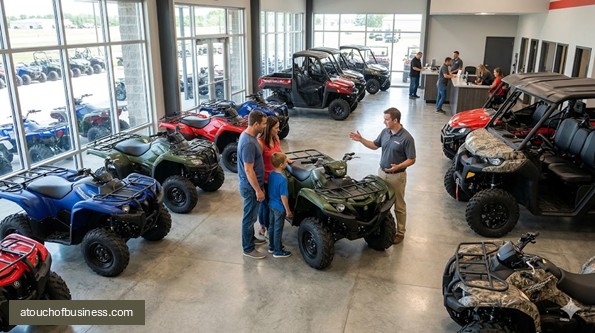
What to Expect From This Guide to Starting an ATV Dealership
This guide walks readers through the key decisions and practical steps involved in starting an ATV dealership, from evaluating the model and market to testing the showroom, service process, and opening setup. The bullets highlight selected areas covered in greater depth.
Inside the guide, you will find:
- Startup roadmap: Move through owner fit, dealership format, demand, funding, approvals, suppliers, records, staffing, and final opening checks.
- Dealer interviews: Read dealership stories and interviews about acquisitions, team building, service management, parts flow, product lines, and customer confidence.
- Common questions: Review answers about dealer licensing, floor plan financing, manufacturer approval, service scope, safety labels, and opening delays.
- Dealership choices: Compare new and used sales, side-by-sides, parts, service, warranty support, starting from scratch, buying, and dealer networks.
- Funding and approvals: Examine inventory financing, manufacturer requirements, dealer rules, tax setup, zoning, occupancy, bonds, and location-dependent licensing.
- Service workflow: Plan unit receiving, vehicle records, parts handling, estimates, repairs, quality checks, payments, and customer handoff.
- Safety and risk: Address product labels, customer financial data, shop chemicals, insurance questions, staff training, and opening-day warnings.
Start by deciding whether the financial pressure, paperwork, inventory responsibility, and customer-facing demands suit the dealership you have in mind.
A Detailed Overview of Starting an ATV Dealership
Starting an ATV dealership means opening a powersports retail business, not just a small showroom with a few machines on display. You may sell new ATVs, used ATVs, parts, accessories, riding gear, service, repairs, warranty support, financing help, and trade-ins.
That mix can be exciting. It can also be demanding. You will deal with inventory, manufacturer approval, state rules, customer paperwork, service questions, safety issues, and a physical storefront that must be ready before opening.
Before you follow any general startup checklist, ask whether this specific business fits you. Do you like the ATV industry enough to handle the daily details? Can you deal with customers, suppliers, lenders, technicians, and government offices without losing patience?
You also need to think about your personal situation. Startup costs, income uncertainty, lease commitments, and inventory funding can add pressure. Make sure your household understands the time, risk, and financial strain that can come with opening a dealership.
Talk to owners before you commit. Speak only with ATV or powersports dealership owners you will not compete against, such as owners in another city or market area. Prepare questions before those conversations.
Ask about dealer approval, floor plan financing, service staffing, parts delays, warranty work, title paperwork, slow seasons, and the real pressure of carrying inventory. Their experience will not match yours exactly, but firsthand accounts can show you things no checklist can.
You should also compare your entry path. Starting from scratch gives you control, but it requires more groundwork. Buying an existing dealership may bring a location, staff, systems, inventory, and supplier relationships.
Joining a manufacturer dealer network can bring structure, but it may also limit choices and add brand requirements. The best path depends on your budget, timeline, support needs, risk tolerance, and desire for control.
A deeper look at whether to start from scratch or buy a business can help you think that through.
Red Flags Before You Start
Some warning signs should make you pause before you sign a lease, order inventory, or apply for dealer approval.
These are not opening-day details. They are start-or-stop signals.
- Manufacturer approval looks unlikely: If the brands you want will not approve your location, ownership team, facility, market, or credit setup, rethink the plan.
- Inventory funding is weak: If you cannot qualify for floor plan financing or carry enough inventory safely, scale back the plan or delay.
- The location does not fit: Stop before signing if zoning does not allow vehicle sales, outdoor display, storage, or service work.
- The certificate of occupancy is a problem: Do not assume a building can be used as an ATV showroom or service shop just because it is vacant.
- Dealer licensing is unclear: Pause until you know whether your state requires an ATV dealer registration, off-highway vehicle dealer license, motor vehicle dealer license, bond, or salesperson license.
- Service support is missing: If you plan to offer warranty work or repairs but cannot hire or train qualified ATV technicians, change the launch plan.
- Local demand is weak: A market with few rural users, limited trails, strong existing dealerships, or strict riding limits may not support a new dealership.
- Used units have poor paperwork: Avoid buying used ATVs without clean ownership documents, vehicle identification number records, title paths, or lien checks.
- Safety is treated casually: ATVs involve real product safety duties. If you do not want to handle labels, customer education, and compliance checks, this business may not fit.
- Customer financing information is not protected: If you plan to arrange financing, you need a real process for handling customer financial information.
Step 1: Check Whether This Business Fits You
An ATV dealership can look fun from the outside. The daily reality is more serious.
You may spend your day reviewing inventory, checking service jobs, explaining safety issues, handling title documents, approving trade-ins, meeting supplier reps, and processing financing paperwork.
This business may fit you if you can handle:
- Large inventory decisions.
- Customer financing conversations.
- Sales tax and vehicle paperwork.
- Product safety responsibility.
- Seasonal demand.
- Service complaints and repair delays.
- Staff coverage in a public-facing dealership.
You do not need to be an expert technician. But you should understand ATVs, off-highway use, common service issues, warranty flow, and the kind of questions buyers ask before they trust a dealer.
Step 2: Test Your Motivation and Reality
Liking ATVs is not enough. A dealership requires patience, capital, paperwork, and judgment.
You may need to carry inventory before sales happen. You may need to cover personal living expenses while the showroom gets ready. You may also face delays with licensing, suppliers, build-out, financing, or inspections.
Be honest with yourself. Can you handle risk without rushing bad decisions? Can you stay calm when parts are delayed, a customer is upset, or a repair takes longer than planned?
If your answer is no, pause. A weaker launch does not become stronger just because you open the doors.
Step 3: Speak With Non-Competing Dealership Owners
Before you commit, talk to ATV or powersports dealers outside your market.
Choose owners who will not see you as a competitor. Then prepare clear questions so the conversation is useful.
- Which ATV models sell in your area?
- How hard was manufacturer approval?
- What did the building need before opening?
- Which service tools mattered most?
- How did floor plan financing work in practice?
- What paperwork caused the biggest delays?
- What would you check before signing a lease?
These conversations are worth the time. Experienced owners have lived through the setup process, even if their market is different from yours. You can also learn more about getting advice from real business owners before you make major commitments.
Step 4: Choose Your ATV Dealership Model
Your model shapes almost every other decision. Do not pick a location, inventory mix, or service setup until you know what kind of dealership you want to open.
An ATV dealership may focus on one or more of these areas:
- New ATVs.
- Used ATVs.
- Youth ATVs.
- Utility ATVs.
- Sport ATVs.
- Side-by-sides, if included.
- Parts and accessories.
- Riding gear and helmets.
- Maintenance and repair.
- Warranty support.
- Trade-ins.
- Customer financing support.
A new ATV dealership usually needs manufacturer or distributor approval. That can affect your facility, training, tools, parts supply, branding, dealer systems, and inventory financing.
A used-only model may sound simpler, but it still needs strong paperwork controls. You need clean ownership documents, vehicle identification number records, title or registration paths, trade-in forms, and sales tax records.
A service-focused launch changes staffing, equipment, insurance, and shop setup. The more repairs you accept, the more you need qualified technicians, tools, parts flow, repair orders, quality checks, and clear customer approvals.
Step 5: Compare Starting, Buying, or Joining a Dealer Network
You can start from scratch, buy an existing dealership, or seek approval as an authorized dealer for a manufacturer or distributor.
Each path carries different risks.
- Starting from scratch: You build the location, systems, supplier accounts, staff, and customer-facing setup from the ground up.
- Buying an existing dealership: You may get a location, trained staff, inventory systems, supplier accounts, and customer records, but you must verify what transfers.
- Joining a dealer network: You may gain brand access, training, parts systems, warranty processes, and product support, but you must meet the brand’s requirements.
If you buy a dealership, check the lease, licenses, inventory liens, floor plan debt, supplier agreements, warranty obligations, service records, and staff status. Do not assume manufacturer approval transfers automatically.
Step 6: Validate Local Demand
An ATV dealership depends on the local market. The right building will not fix weak demand.
Look at the area around the dealership. Are there rural property owners, farms, ranches, hunters, trail riders, land managers, or commercial users? Are there nearby public trails or riding areas? Are there strong limits on ATV use?
Study your local competition too. Compare other powersports dealers, motorcycle dealers, farm equipment sellers, used ATV sellers, online listings, and parts sources.
You are not trying to create an advertising plan here. You are testing whether the market can support a showroom, inventory, parts, accessories, service, and the cost of opening. A clear look at local supply and demand can help you avoid spending money in the wrong market.
Business Plan
Your business plan should turn your ATV dealership idea into a practical startup plan.
Keep it focused on decisions you must make before opening. This is not a long theory document. It should help you choose the model, price out startup costs, seek funding, apply for approvals, and prepare the showroom.
Include the main choices that affect launch:
- New, used, or mixed ATV sales.
- Whether side-by-sides are included.
- Parts, accessories, apparel, and helmets.
- Service and repair scope.
- Manufacturer or distributor targets.
- Facility size and layout.
- Dealer licensing path.
- Inventory funding.
- Sales tax setup.
- Title and registration workflow.
- Staffing needs.
- Insurance and risk planning.
- Opening-readiness checklist.
Your plan should also show how estimates, approvals, parts sourcing, repair jobs, quality checks, payment, and handoff will work if you offer service.
For a first-time owner, a practical business plan can also help you explain the dealership to lenders, landlords, suppliers, and manufacturer representatives.
Step 7: Price Out Startup Cost Categories
Do not guess your startup costs. Build a list of items to price out before you commit to a building, inventory, or brand agreement.
An ATV dealership can have several large cost categories:
- Business registration and professional help.
- Dealer licensing and possible bonds.
- Sales tax registration.
- Lease, purchase, or build-out.
- Certificate of occupancy and inspections.
- Showroom fixtures.
- Parts counter setup.
- Service bay setup.
- Specialty tools and diagnostic tools.
- Dealer management software.
- Point-of-sale and payment systems.
- New and used ATV inventory.
- Parts, accessories, fluids, batteries, tires, apparel, and helmets.
- Insurance and risk-related coverage.
- Staff hiring and training.
- Working capital.
Your cost planning will change if you sell new ATVs, carry used units, include service, open as a multi-line powersports dealership, or need major building changes.
Get quotes, compare supplier terms, and confirm what lenders, manufacturers, landlords, and local agencies expect before you spend heavily.
Step 8: Confirm Funding Feasibility
Inventory funding is one of the biggest early decisions for an ATV dealership.
Many dealers use floor plan financing. This lets a dealer finance inventory until units are sold. The lender usually keeps a collateral interest in the inventory until repayment.
Before you rely on this type of funding, understand the terms. Ask about payment timing, audits, curtailments, liens, collateral rules, and what happens when each ATV sells.
You may also need to explore owner capital, bank loans, SBA-backed loans, equipment financing, a line of credit, manufacturer-affiliated credit, or seller financing if you buy an existing dealership. Learn what lenders require before you sign a lease or order inventory. A guide on how to approach a business loan can help you prepare for those conversations.
Step 9: Choose Your Legal Structure and Register the Business
Choose your legal structure before you open accounts or apply for other business registrations.
Your structure can affect taxes, paperwork, liability, ownership, and funding. Common choices include a limited liability company, corporation, partnership, or sole proprietorship, depending on your situation.
Do not treat this as a formality. Talk with an accountant or attorney if you are unsure which structure fits the dealership, especially if you will have partners, employees, inventory financing, or a service department.
After choosing the structure, register the business name or doing-business-as name if needed. Keep business transactions separate from personal ones from the start.
Step 10: Get Tax Accounts, Banking, and Payment Systems Ready
An ATV dealership needs tax and payment setup before it sells units, parts, accessories, or service.
After forming the business, apply for an Employer Identification Number if your structure or hiring plan requires one. You may also need it for banking, tax accounts, lenders, and suppliers.
Register for state sales and use tax before selling taxable goods. ATVs, parts, gear, accessories, and some service items may be taxable depending on your state rules.
Set up your business bank account and payment systems before opening. You may need a merchant account or payment processor, check handling rules, cash controls, sales tax tracking, and a clean way to separate inventory payments from other expenses.
Step 11: Verify Dealer Licensing Before You Commit
Dealer licensing rules can block an ATV dealership before it opens.
Rules vary by state. Some states may require an ATV dealer registration, off-highway vehicle dealer license, motor vehicle dealer license, dealer bond, location approval, salesperson license, or dealer plates.
Do not assume a general retail license is enough. Before you buy inventory, ask the state agency that regulates dealers what applies to ATV sales.
Keep the questions simple and direct:
- Do I need an ATV dealer registration or motor vehicle dealer license?
- Does the rule change for new, used, or both?
- Is a dealer bond or insurance filing required?
- Does the business location need approval before the license is issued?
- Are salesperson licenses or dealer plates available or required?
- What records must I keep for each sale?
This is also the point to review title, registration, manufacturer’s certificate of origin, manufacturer’s statement of origin, bill of sale, and vehicle identification number requirements.
Step 12: Confirm Zoning and the Certificate of Occupancy
A storefront ATV dealership needs the right location before it needs a beautiful showroom.
The site may need approval for retail vehicle sales, outdoor display, service or repair, storage, customer parking, loading, signage, and safe access.
Check zoning before signing a lease. Then confirm whether the building’s certificate of occupancy allows your planned use. A building that worked for one type of retailer may not work for an ATV dealership with service bays and vehicle storage.
Use one clear list when speaking with local agencies, your landlord, or a real estate professional.
- Planning or zoning office: Ask whether ATV sales, outdoor display, service, storage, and signage are allowed at the address.
- Building department: Ask whether the current certificate of occupancy matches your planned showroom, service, storage, and customer use.
- Fire marshal: Ask about oils, batteries, flammable liquids, extinguishers, exits, and service bay safety.
- City or county business licensing office: Ask whether a local business license, sign permit, or secondhand dealer license applies.
- State dealer regulator: Ask whether the location must be inspected or approved before a dealer license is issued.
- Insurance agent: Ask what coverage lenders, landlords, suppliers, and the dealer licensing process may expect.
- Attorney or accountant: Ask how to structure ownership, tax accounts, contracts, and financial records before launch.
Compliance does not have to be confusing. But it does have to be checked early.
Step 13: Secure Manufacturer, Supplier, and Parts Accounts
Your ATV dealership will need reliable product and parts sources before opening.
If you want to sell new ATVs, contact the manufacturers or distributors you want to represent. Ask about dealer approval, territory, facility expectations, product lines, required training, specialty tools, warranty process, branding, parts ordering, and dealer system requirements.
For used ATVs, build a process for checking ownership documents, vehicle identification numbers, liens, condition, repairs, and trade-in values.
You will also need parts and accessory suppliers. Plan for tires, batteries, fluids, filters, winches, plow kits, racks, helmets, apparel, and common replacement parts.
Parts flow matters. Missing parts can delay service jobs, frustrate customers, and tie up technicians. Before opening, decide how orders will be placed, received, labeled, stored, matched to repair orders, and charged to the customer.
Step 14: Set Up the Showroom, Parts Counter, and Service Area
The physical space must support the way customers buy and the way your team handles units.
Think through the full path: receiving inventory, storing units, displaying ATVs, writing estimates, ordering parts, completing service, checking quality, taking payment, and handing the unit back to the customer.
Your setup may include:
- Indoor showroom space.
- ATV display floor or mats.
- Customer desk or sales area.
- Parts and accessories wall displays.
- Apparel and helmet displays.
- Locked storage for higher-value accessories.
- Secure unit storage.
- Loading and unloading area.
- Service bays.
- Technician benches.
- Parts bins and shelves.
- Customer waiting area, if service is offered.
- Exterior sign and parking.
Visibility, parking, traffic patterns, signage, and layout matter because this is an in-person buying experience. Customers need to see the units, ask questions, compare models, and feel confident before they buy.
Step 15: Prepare Sales, Service, and Vehicle Records
Paperwork can make or break an ATV dealership launch.
Before opening, prepare the forms and systems needed for sales, trade-ins, financing, service, and registration-related documents.
You may need:
- Bill of sale templates.
- Sales tax records.
- Inventory records.
- Vehicle identification number tracking.
- Manufacturer’s certificate of origin or manufacturer’s statement of origin handling.
- Title or registration forms where applicable.
- Trade-in appraisal forms.
- Warranty documents.
- Repair order forms.
- Service estimate forms.
- Customer approval records.
- Financing and privacy documents if financing is offered.
Service records need special attention. A clear repair order should show the concern, estimate, approval, parts needed, technician notes, quality check, payment, and handoff.
This protects the customer. It also protects you from confusion, comebacks, and damage claims.
Step 16: Set Up Safety, Data, and Service Compliance
Treat safety and records as part of opening readiness.
For ATV product safety, check that new units come through approved manufacturer or distributor channels and carry the required compliance labels. Do not ignore safety labels, youth ATV concerns, or customer education.
If you arrange financing, you may need a written process for protecting customer financial information. That includes who can access applications, where records are stored, and how digital systems are protected.
If you offer service, plan for oils, batteries, cleaners, fuels, solvents, safety data sheets, chemical labels, spill control, used oil containers, and employee training. A repair shop area is not just a corner with tools.
Keep compliance crisp. Ask the right agency or professional what applies, write down the answer, and build it into your opening checklist.
Step 17: Arrange Insurance and Risk Planning
Insurance for an ATV dealership depends on your state, landlord, lender, manufacturer, staffing, and service setup.
Do not call a policy legally required unless the rule, license, lease, loan, or manufacturer agreement confirms it.
Still, you should discuss risk-related coverage before opening. Ask an insurance agent about:
- General liability.
- Garage liability.
- Property coverage.
- Inventory coverage.
- Product liability.
- Workers’ compensation if you hire employees.
- Cyber or data coverage if you handle financing information.
- Coverage for service mistakes.
- Coverage for test rides or demonstrations.
- Coverage for customer units left for service.
Service mix changes risk. A dealership that only sells units has a different exposure than one that repairs brakes, installs winches, changes tires, stores customer ATVs, and handles warranty claims.
Step 18: Hire and Train Before Opening
An ATV dealership may need more than sales help.
Your staffing depends on whether you sell new units, arrange financing, offer repairs, carry parts, or handle warranty service.
Common early roles may include:
- Owner or general manager.
- Sales staff.
- Finance and insurance support.
- Parts counter staff.
- Service manager.
- ATV technician.
- Setup or prep technician.
- Admin or title clerk.
Do not open with a service promise the team cannot support. Weak estimating, poor scheduling, underpriced labor, missing parts, and untrained staff can create problems from the first week.
Train the team on sales documents, safety points, title or registration steps, repair approvals, payment handling, and customer handoff. If you plan to hire, guidance on how and when to hire can help you think through timing.
Step 19: Complete Your Pre-Opening Readiness Check
Before opening, make sure the dealership can complete real transactions without scrambling.
Test the showroom as if customers are already walking in.
- Business structure is registered.
- Employer Identification Number is received if needed.
- Sales tax accounts are active.
- Dealer license or ATV dealer registration is approved where required.
- General business license is approved where required.
- Zoning approval is confirmed.
- Certificate of occupancy matches the planned use.
- Manufacturer or distributor accounts are active.
- Floor plan financing or inventory funding is ready.
- Insurance and any required bond are active.
- Dealer management system is configured.
- Inventory is entered with vehicle identification numbers.
- Sales, trade-in, service, and warranty forms are ready.
- Payment processing is tested.
- Parts and accessories are organized.
- Service tools are installed and tested.
- Safety data sheets are available if service is offered.
- Required signs, licenses, permits, and notices are posted where needed.
- Staff have practiced a sample sale, repair order, payment, and handoff.
A soft opening can help you catch weak spots before the pressure of a full public launch. Keep it simple.
Opening-Day Red Flags
Some problems do not mean the business idea is wrong. They mean the dealership is not ready to open yet.
Delay opening if any of these issues remain unresolved.
- Licenses or approvals are missing: Do not open if required dealer, tax, business, zoning, or certificate of occupancy approvals are not ready.
- Payment systems are untested: A sale should not be the first time you test credit card processing, deposits, or financing paperwork.
- Inventory records are incomplete: Every unit should have proper vehicle identification number tracking and ownership paperwork.
- Service tools are not ready: Do not accept service jobs if lifts, diagnostic tools, repair forms, waste handling, and technician training are incomplete.
- Parts flow is disorganized: Missing or unlabeled parts can delay repairs and create customer disputes.
- Safety records are not in place: Labels, safety data sheets, chemical storage, and spill controls must be ready before service begins.
- Staff do not know the process: If the team cannot explain a sale, trade-in, repair order, or customer handoff, practice more before opening.
- Required signs or notices are missing: Confirm license displays, permit displays, and public-facing notices before customers arrive.
Frequently Asked Questions
These questions focus on startup decisions for a future ATV dealership owner. Use them to check whether your plan is ready for the next step.
- Is an ATV dealership a good fit for a first-time owner? It can be, but only if you are ready for regulated retail, inventory financing, vehicle paperwork, customer financing, safety responsibilities, and service-related pressure. It is not just a hobby shop.
- What should I verify before spending money? Check manufacturer interest, local demand, state dealer licensing, zoning, certificate of occupancy, sales tax setup, inventory funding, supplier access, insurance, and service staffing.
- Do ATV dealerships need a special license? It depends on the state. Some states require ATV dealer registration, off-highway vehicle dealer licensing, motor vehicle dealer licensing, bonds, or related approvals.
- Can I start as a used ATV dealership only? Possibly. You still need to verify dealer licensing, sales tax rules, zoning, title or ownership records, unit condition, and vehicle identification number tracking.
- Is manufacturer approval required? For major new ATV brands, approval is usually part of the process. Manufacturers or distributors may control dealer access, training, tools, branding, warranty support, and product lines.
- Should I offer service at launch? Only if the setup can support it. Service adds technician needs, tools, parts inventory, repair orders, waste handling, safety procedures, quality checks, and more insurance questions.
- What belongs in the business plan? Include product lines, new or used mix, service scope, facility layout, licensing path, title and registration workflow, inventory funding, supplier approval, staffing, insurance, sales tax setup, and opening readiness.
- What is floor plan financing? It is a form of inventory financing used by dealers. The dealer finances units for sale and repays the lender according to the financing terms as inventory is sold.
- What is an MCO or MSO? A manufacturer’s certificate of origin or manufacturer’s statement of origin is the original ownership document from the manufacturer. It is often used in the title or registration process.
- Do ATV dealers need to collect sales tax? Retail sellers of taxable goods usually need state sales tax registration, but the exact rules vary by state. Verify this with your state tax agency before selling.
- What safety rules affect ATV inventory? New ATVs should come through compliant manufacturer or distributor channels and carry required compliance labels. Safety information should be part of your receiving and sales process.
- Does arranging financing add compliance work? Yes. If you handle customer financing information, you need a process for protecting that data and controlling who can access it.
- Can an ATV dealership operate from home? Not typically for this kind of showroom-based dealership. Dealer licensing, inventory storage, customer visits, signage, service work, and manufacturer approval usually point to a commercial location.
- What can block opening even if inventory is ready? Missing dealer approval, zoning problems, certificate of occupancy delays, sales tax issues, failed inspections, unavailable insurance, incomplete supplier accounts, or weak title and registration workflow can all delay opening.
Insights From Powersports Dealers
Learning from people already in the powersports business can help you see what the startup process looks like beyond forms, licenses, inventory, and showroom setup.
These interviews and dealer stories touch on real issues such as buying a dealership, building a team, managing service, handling parts flow, choosing product lines, and creating a dealership customers trust.
- Florida Dealer Shares Key Areas of Focus — Nate Stickney of RiderMarket discusses acquiring his first dealership, growing to multiple locations, building teams, and improving dealership culture.
- What Makes a Great Dealership Work — Bobby Whitney of Progressive Powersports talks about staff training, dealership culture, customer loyalty, and managing multiple brands.
- S & S Sports Dealer Story — Jake Starkel explains how a simple service shop grew into a larger powersports dealership by expanding product lines, improving inventory control, and focusing on service.
- Quad Expert Journal Interview — Quad Expert co-owner Roxanne Rollin shares how the business started with used ATVs, moved out of the home, rebranded, built a showroom, and earned customer trust.
- Dealership Owner Adds Third Location — Mandy Witt discusses a dealership acquisition and the process of adding another powersports location.
Related Articles
- How To Start an ATV Rental Business
- How To Start an ATV Repair Business
- How To Start a Motorcycle Rental Business
- How To Start a Golf Cart Dealership
- How To Start a Golf Cart Repair Shop
Sources:
- CPSC: All-Terrain Vehicles ATVs
- California DMV: Occupational Licensing, Off-Highway Vehicle Registration
- New York DMV: ATV Dealer Registration, ATV Owner and Dealer Info
- SBA: Choose Business Structure, Register Your Business, Write Business Plan, Buy or Franchise, SBA Loans
- IRS: Employer Identification Number
- CDTFA: Permits and Licenses
- FTC: Dealer Safeguards Rule, Used Car Rule Guide
- EPA: Managing Used Oil, Underground Storage Tanks
- OSHA: Hazard Communication
- AAMVA: Manufacturer Certificate Origin
- Yamaha Motorsports USA: Become a Dealer
- Polaris: Become a Dealer
- BRP: Dealer Network
- Huntington: Floorplan Financing
- O*NET: Motorcycle Mechanics
- NYC Buildings: Certificate of Occupancy
- Austin Development Services: Small Business Permitting
- City of Phoenix: Certificate of Occupancy