
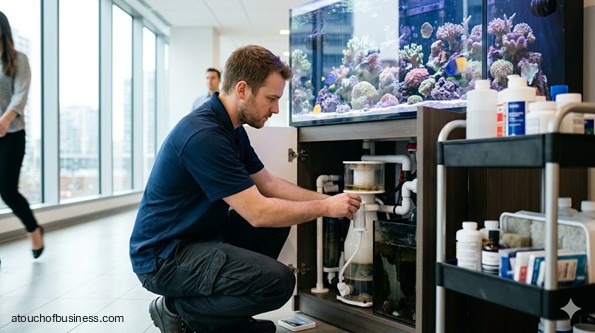
What to Expect From This Guide to Starting an Aquarium Maintenance Business
This guide walks readers through the key decisions and practical steps involved in starting an aquarium maintenance business, from testing personal and local fit to building a mobile service system and preparing for paid visits. The highlights below show several planning areas covered in greater depth.
Inside the guide, you will find:
- Startup roadmap: Follow an ordered path through service choices, demand checks, legal setup, pricing, practice calls, and opening preparation.
- Industry interviews: Hear aquarium service owners discuss customer acquisition, pricing, route planning, recurring accounts, and operating realities.
- Startup FAQs: Review practical answers about fit, licensing, home operation, equipment, pricing, insurance, product sales, and pre-opening needs.
- Business fit: Consider aquarium knowledge, physical service demands, travel, customer-property risk, and income uncertainty.
- Financial planning: Work through startup costs, route density, per-visit pricing, break-even volume, slow periods, and funding choices.
- Equipment and systems: Plan the vehicle, storage, freshwater or saltwater tools, suppliers, customer forms, payments, and bookkeeping.
- Local rules and risks: Verify location-dependent licensing, zoning, tax, wildlife, disposal, insurance, and staffing requirements while checking startup and opening-day red flags.
Continue into the guide to evaluate whether this service model fits your skills, territory, finances, and preferred scope.
Aquarium service isn’t only about loving fish. It also involves protecting floors, dealing with pumps and heaters, tracking water quality, carrying equipment, and staying calm when a tank is already in poor condition.
Financial planning matters from the beginning. A long drive, one missed tool, one unpaid emergency call, or one underpriced saltwater visit can make a job far less profitable than it looked when you quoted it.
Before you commit, speak with owners you won’t compete against. Prepare your questions before these conversations. Every owner’s path is different, but firsthand insight can help you avoid costs and risks that are hard to see from the outside.
You also need to think about personal finances. Can you cover living expenses while the route fills up? Do you have household support if income is uneven at first? Can you handle the chance that the business may not earn enough to continue?
This isn’t meant to scare you off. It’s meant to help you start with clear eyes.
Red Flags Before You Start
Some warning signs should make you pause. These aren’t small setup tasks — they affect whether the business makes sense at all.
This business may not fit you if:
- You can’t explain basic water chemistry, including ammonia, nitrite, nitrate, pH, chlorine, salinity, and temperature.
- You don’t want to drive between jobs or carry wet equipment.
- You dislike cleaning, documenting tank conditions, or dealing with customer concerns.
- You need steady full-time income before you have enough recurring accounts.
- You can’t get suitable insurance for customer-site service.
- Your vehicle can’t safely carry water containers, tools, towels, and supplies.
Weak local demand is another major warning sign. If you can’t find enough homes, offices, commercial display tanks, fish stores, or aquarium owners in your service area, the route may not support your costs.
Competition also matters. If aquarium stores and established service providers already cover your area, you need to know whether there’s room for another provider before you buy equipment.
Saltwater and reef service creates another decision point. It’s more specialized and adds water preparation, salinity tools, extra testing, and higher risk. Don’t offer it until you’re ready.
Pause before moving forward if you can’t answer these questions:
- How many recurring visits would you need to cover your fixed costs?
- How far can you drive before travel time hurts profit?
- Which tank types will you service at launch?
- What will you do if a tank is already in poor condition?
- How will you document existing problems before touching the aquarium?
If the answers are unclear, slow down. The right move may be to delay, narrow the service, start part-time, buy an existing route, or choose a simpler model.
Step 1: Check Whether Aquarium Maintenance Fits You
Start with fit before you buy tools or register a name. You need to know whether the daily tasks match your skills, patience, and risk tolerance.
The owner or technician visits customer sites, tests water, changes water, cleans algae, checks filters, watches livestock, and leaves clear notes. That sounds simple until you add travel, spills, fragile fish, customer expectations, and equipment problems.
Aquarium maintenance calls can be physical. You may carry buckets, hoses, towels, and water containers. You may kneel beside tanks, reach into cabinets, and clean around furniture or flooring that must not get wet.
There’s also emotional pressure. Customers care about their fish, coral, and display tanks. If a fish dies after a visit, even when the tank was already unstable, the conversation can be difficult.
Ask yourself these fit questions:
- Can I handle wet, detailed service calls without rushing?
- Do I understand enough water chemistry to protect fish and aquatic life?
- Can I explain tank problems in plain language?
- Can I work inside homes and offices with care?
- Can I stay patient when a customer has unrealistic expectations?
Step 2: Learn From Non-Competing Aquarium Service Owners
Talk with aquarium service owners outside your planned area. Don’t contact direct competitors and expect them to share sensitive details.
These conversations can help you understand the owner experience. They can also help you spot hidden costs that don’t show up in a basic startup list.
Prepare questions about:
- freshwater versus saltwater pricing
- recurring service frequency
- travel time and route limits
- tools they carry on every service call
- which jobs become unprofitable
- how they handle customer property risk
- what they document before and after each visit
Ask about mistakes they see new owners make. Many problems come from weak policies, poor handling routines, underpriced labor, and unclear service limits.
One honest conversation may help you avoid buying tools you don’t need or offering services you aren’t ready to handle.
Step 3: Choose Your Aquarium Service Model
Not every aquarium maintenance business offers the same services. Your model affects your tools, supplies, pricing, training, risk, and startup costs.
Common startup choices include:
- freshwater maintenance only
- saltwater aquarium maintenance
- reef tank maintenance
- residential aquarium service
- office and commercial display tank service
- new tank setup plus maintenance
- emergency service as an add-on
- aquarium relocation only if you can handle the risk
A freshwater-only service may be easier to start. Saltwater and reef tanks require more testing, salinity control, prepared water, salt mix, additives, and technical skill.
Commercial customers can create useful recurring service calls, but they may expect proof of insurance, clear records, reliable scheduling, and professional communication.
Don’t offer every service just because customers ask. A narrow service model can reduce startup costs and simplify pricing.
Avoid unexpected costs by deciding ahead of time:
- Will you prepare water before each visit?
- Will you supply filter media, salt mix, and additives?
- Will you service reef tanks at launch?
- Will you transport fish or coral?
- Will you charge for travel beyond a set area?
Each answer changes your equipment list and financial plan.
Step 4: Validate Local Demand and Competition
Your aquarium maintenance business depends heavily on local demand. You need enough tanks in a workable area to support your service route.
Look for homeowners with larger aquariums, offices with display tanks, medical and dental waiting rooms, restaurants, lobbies, schools, senior living facilities, and fish stores that may need service support.
Also check existing providers. Competition may come from aquarium stores, solo service operators, pet stores, and general cleaning companies that claim basic tank cleaning.
This is where local supply and demand matters. A town may have pet owners, but that doesn’t mean it has enough aquarium owners who’ll pay for recurring maintenance.
Check these demand signals before moving forward:
- number of fish stores in the area
- visible commercial display tanks
- existing aquarium service listings
- local income levels and housing types
- nearby offices, clinics, restaurants, and lobbies
- how far customers are spread across the territory
Route density affects profit. Ten nearby accounts may be easier to serve than ten accounts scattered across a large area.
Customer attraction and retention also matter, but keep this stage focused on feasibility. You’re checking whether the market can support the business before making larger commitments.
Step 5: Decide Whether to Start, Buy, or Franchise
You can start an aquarium maintenance business from scratch if you have the skills, equipment, and time to build a route. This path gives you more control, but it may take longer to create steady income.
Buying an existing aquarium service can make sense if the seller has active recurring accounts, clear records, service notes, and customers who are willing to transfer.
A franchise may be possible only if a suitable aquarium or pet-service franchise exists in your area and fits your budget, support needs, and desired control.
Compare the paths carefully:
- Starting from scratch may cost less at first but can take longer to produce steady revenue.
- Buying an existing route may provide accounts, but you must verify customer quality and pricing.
- Franchising may offer guidance, but it can limit control and add fees.
The best path depends on your budget, timeline, risk tolerance, and need for support. A helpful overview of whether to start from scratch or buy a business can help you think through the decision.
Before buying any route, review the service records. A route that looks busy may still be underpriced or spread too far apart.
Business Plan
Your business plan should turn your startup decisions into a clear path. It doesn’t need to be fancy, but it does need to help you see costs, risks, and launch requirements before you spend heavily.
For an aquarium maintenance business, the plan should be built around your service model, territory, equipment, pricing, legal checks, insurance, and opening-readiness steps.
Your plan should cover:
- which aquarium services you will offer at launch
- whether you will focus on freshwater, saltwater, reef, residential, or commercial tanks
- your service area and travel limits
- your startup cost categories
- your equipment and supply list
- your supplier plan
- your water preparation process
- your legal and local verification tasks
- your insurance plan
- your pricing method
- your break-even logic
- your opening-readiness checklist
Use your plan to test financial feasibility. Booked service calls must cover travel, supplies, insurance, vehicle costs, payment fees, software, and your income.
Recurring visits can create steadier revenue, but only if the route is priced correctly. Long drives, extra supplies, skipped visits, and slow months can weaken profit.
You don’t need to invent profit numbers. You need to calculate based on your own local costs and expected visit volume.
Before major purchases, answer these questions:
- How many service calls do I need each month to cover fixed costs?
- How much does each visit cost after supplies, travel, labor, and payment fees?
- Which services have the best chance of covering my time?
- Can I survive slow periods while the route grows?
- Will saltwater or reef service add enough revenue to justify the extra setup?
A detailed business plan can also help if you need financing. Lenders will want to see that you understand the numbers, not just the idea.
Step 6: Set Up the Legal Structure and Tax Basics
After you know the model is worth pursuing, choose a business structure and register the business as required. This step should happen before banking, contracts, licenses, and customer payments.
The structure you choose can affect taxes, paperwork, liability, and how the business is owned. Because aquarium service involves water, electricity, glass tanks, livestock, and customer property, it’s smart to discuss liability with an attorney or accountant.
Common setup items to verify include:
- business structure
- state registration
- business name registration
- assumed name or DBA if needed
- Employer Identification Number if required
- state tax registration if selling taxable products or services
Don’t guess on these items. Check your state business portal, state revenue department, and local licensing office.
If you need more background, review how to register a business before you file anything.
Step 7: Verify Local Licenses, Zoning, and Home Rules
A mobile aquarium service may operate from a home office, garage, small workspace, storage area, or rented commercial space. The rules depend on where you’re located.
Some requirements vary by U.S. jurisdiction. That means you must verify them locally instead of assuming one rule applies everywhere.
Check these items before opening:
- general business license
- home occupation rules if working from home
- zoning rules for storage, parking, signs, water, and chemicals
- certificate of occupancy if using commercial space
- sales tax registration if selling supplies, equipment, livestock, or taxable services
- employer accounts and workers’ compensation if hiring
Ask the city or county licensing office whether a mobile aquarium maintenance service needs a local license. Ask the zoning department whether your home setup or storage plan is allowed.
Also ask the state revenue department whether aquarium services, supplies, replacement media, fish, plants, coral, or invertebrates are taxable in your state.
Do this before you buy inventory or print customer forms. Fixing a tax or licensing mistake later can be costly.
Step 8: Check Animal, Wildlife, and Disposal Rules
Routine maintenance of customer-owned aquariums is different from selling, importing, exporting, breeding, or moving aquatic life. The rules can change when you handle fish, coral, plants, or invertebrates beyond basic service.
If you plan to sell livestock, transport restricted species, import or export wildlife, or move fish across borders, check the rules before you offer that service.
Verify rules if your business may handle:
- fish sales
- coral sales
- aquatic plants
- invertebrates
- aquarium relocations
- international shipments
- restricted or invasive species
You should also check local disposal rules for aquarium water, saltwater, chemicals, plants, dead livestock, and debris.
Never release fish, plants, invertebrates, or aquarium water into natural waters. This can harm local ecosystems and may violate local or state rules.
This step is also financial. If your plan depends on selling livestock or moving tanks, a rule you missed can change your entire startup budget.
Step 9: Plan Your Workspace, Vehicle, and Storage
Running a mobile aquarium maintenance business requires a clean, organized setup. Your vehicle and storage area are part of the service.
You need a place for equipment, buckets, hoses, water containers, salt mix, towels, test kits, chemicals, forms, and replacement parts.
Your setup should account for:
- clean and dirty bucket separation
- dry storage for test kits and forms
- safe chemical storage
- towel storage and laundry
- water storage if you prepare water in advance
- saltwater mixing space if offering saltwater service
- vehicle loading routines
- spill control
- weather protection for supplies
A saltwater service may need reverse osmosis/deionization water storage, mixed saltwater containers, a refractometer, a total dissolved solids meter, and safe transport containers.
Vehicle planning also affects pricing. If each visit takes extra loading time, long travel time, or multiple trips to the vehicle, that time must be reflected in your rates.
Don’t treat your vehicle as an afterthought. A weak vehicle setup can cause delays, broken supplies, spilled water, and missed appointments.
Step 10: Build Your Aquarium Maintenance Kit
Your equipment list should match the services you plan to offer. Don’t buy a full reef-service setup if you’re starting with freshwater tanks only.
For routine service calls, you need tools that help you clean, test, drain, refill, protect property, document the visit, and collect payment.
A basic mobile kit may include:
- buckets with lids
- dedicated aquarium-only water containers
- siphon or gravel vacuum
- water-change hoses
- faucet adapters
- algae pads and scrapers
- fish nets
- specimen containers
- filter brushes
- towels and absorbent pads
- floor protection
- gloves
- spill kit
- test kits
- water conditioner
- basic replacement filter media
Saltwater and reef service may add:
- reverse osmosis/deionization system
- total dissolved solids meter
- salt mix
- mixing container
- refractometer
- salinity calibration fluid
- reef test kits
- clean saltwater transport containers
Test kits should be current and complete. Ammonia, nitrite, nitrate, pH, chlorine or chloramine, temperature, phosphate, alkalinity, and salinity checks may all matter depending on the tank.
Equipment decisions are also financial decisions. Extra tools can help, but unused tools tie up cash before you have enough paying accounts.
Step 11: Set Up Suppliers and Vendors
You need reliable sources for supplies before your first paid service call. Running out of test reagents, water conditioner, filter media, or salt mix can disrupt the schedule.
Identify sources for:
- local fish store support
- dry goods
- salt mix
- test kits and reagents
- replacement filter media
- emergency heaters and pumps
- water containers
- payment processing
- bookkeeping help
- legal document review
Ask suppliers whether they require business registration, a resale certificate, a commercial address, minimum orders, or account approval.
If you plan to resell supplies or livestock, check tax rules first. Product sales can change your recordkeeping and tax setup.
Avoid unexpected costs by asking about minimum orders and shipping before you depend on a supplier. A cheap item may not be cheap if it arrives late or requires a large order.
Step 12: Prepare Customer Forms and Service Boundaries
Clear paperwork protects you and helps customers understand what you will and won’t do. This is especially important when the aquarium already has problems.
Before touching a tank, you should document the tank’s condition, equipment, livestock concerns, water test results, and any visible risks.
Prepare these documents before opening:
- service agreement
- estimate form
- customer information form
- tank profile form
- water test log
- livestock observation notes
- equipment checklist
- customer approval form for major changes
- payment terms
- emergency contact process
Ask an attorney to review your service agreement. Aquarium maintenance involves water, electricity, glass, cabinetry, livestock, and customer property.
Service boundaries also help with pricing. If a customer expects free emergency troubleshooting, free supplies, or extra cleaning outside the quote, the visit can quickly become unprofitable.
Step 13: Set Prices That Reflect the Real Service Call
Pricing an aquarium maintenance business is more than choosing a number by tank size. Two tanks with the same gallons can require very different service.
Freshwater, saltwater, reef complexity, filtration, algae level, livestock sensitivity, travel time, parking, water source, and supplies all affect the price.
Common pricing factors include:
- tank size
- freshwater versus saltwater
- reef complexity
- service frequency
- travel distance
- parking difficulty
- water preparation
- filter type
- supplies included
- one-time cleanup versus recurring service
- after-hours or emergency service
Some owners use a flat visit fee. Others use an hourly rate, a monthly service plan, separate supply charges, or a travel charge beyond a set area.
You can learn more about pricing products and services, but your final rates must reflect your own service model and costs.
Don’t ignore unpaid time. Loading, driving, parking, cleanup, invoicing, restocking, and recordkeeping all affect your true profit.
One pricing mistake can follow you:
If you set a recurring account too low, you may feel stuck providing service at a rate that doesn’t cover the real cost of the visit. It’s easier to price carefully before the first agreement than to fix weak pricing later.
Step 14: Run the Profit and Break-Even Check
Before you commit to major purchases, test whether the numbers can work. You need enough paid visits to cover both fixed and variable costs.
Revenue may come from recurring maintenance, one-time cleanups, setup jobs, emergency calls, relocation jobs, and supply sales if you offer them.
Fixed costs may include:
- insurance
- vehicle payments or business-use vehicle costs
- software
- phone and email
- storage or workspace
- licenses and registrations
- bookkeeping
- basic website or contact page
- loan payments
- your required owner income
Variable costs may include:
- fuel
- test reagents
- water conditioner
- salt mix
- filter media
- towels and laundry
- replacement parts
- payment processing fees
- helper labor
- extra travel time
Break-even means your revenue covers your costs. You don’t need a perfect forecast, but you do need a realistic estimate.
For a service business, billable visits must cover more than the time spent at the tank. They must also cover driving, supplies, insurance, administration, and your income.
Slow months matter. If several customers skip service or delay payment, you still have costs to cover.
Calculate these before moving forward:
- how many recurring accounts you need
- how many visits you can handle in a day
- how far you can drive profitably
- which supplies are used on each visit
- how much each service type contributes after variable costs
If the route needs more demand than your area can support, change the model before spending more.
Step 15: Secure Funding Before Major Purchases
Once you know what the startup requires, decide how you’ll pay for it. Do this before buying equipment, signing agreements, or taking on customers.
Don’t use a rough guess as your budget. Price out the actual items you need for your service model.
Startup costs may include:
- business registration
- local licenses or permits
- professional advice
- insurance
- vehicle setup
- tools and service supplies
- test kits and reagents
- water containers
- saltwater equipment if offered
- software
- payment processing
- forms and documents
- storage setup
- working cash for slow periods
Funding options may include owner savings, a small business loan, equipment financing, cautious business credit use, written family or friend funding, or starting part-time.
If you plan to borrow, review what lenders may expect before you apply. A guide to a business loan can help you prepare.
Used equipment may reduce upfront costs, but only if it’s safe, clean, and reliable. A cracked container, expired test kit, or weak pump can cost more than it saves.
Step 16: Open Banking, Bookkeeping, and Payment Systems
Set up business banking and payments before any transactions take place. This keeps your business and personal finances separate from day one.
You’ll also need a simple way to track invoices, receipts, mileage, supplies, service income, product sales, and sales tax if it applies.
Before opening, set up:
- business checking account
- payment processor
- invoicing system
- receipt tracking
- mileage tracking
- bookkeeping categories
- sales tax tracking if needed
- deposit process for setup or installation jobs
Payment setup affects cash flow. If customers pay late, or if you wait too long to invoice, you may struggle to restock supplies.
Also think about deposits. Setup jobs, larger cleanups, and special-order supplies may require a deposit so you don’t carry all the risk.
Step 17: Arrange Insurance and Risk Controls
Aquarium maintenance brings real risk. You may be working around water, electricity, glass tanks, expensive livestock, cabinetry, flooring, and customer property.
Talk with an insurance agent before opening. Don’t assume a personal auto policy or basic home policy covers business service calls.
Coverage to discuss may include:
- general liability
- professional liability or errors and omissions
- business property and tools
- inland marine or tool coverage
- commercial auto
- non-owned auto if others drive for the business
- workers’ compensation if hiring
Workers’ compensation rules vary by state. If you hire employees, check your state workers’ compensation board before they begin.
Risk controls also belong in your daily setup. Use floor protection, spill supplies, written service notes, customer approvals, and clear limits on what you’ll touch.
Insurance is a cost driver, but skipping it can create a much larger financial problem later.
Step 18: Plan Chemical Safety and Training if You Hire
If you stay owner-operated, this step may be simple. If you hire employees, chemical safety and training become more important.
Aquarium supplies may include dechlorinators, algaecides, test reagents, disinfectants, adhesives, salt mixes, and other products that need careful handling.
If employees handle chemicals, prepare for:
- proper labels
- safety data sheets
- safe storage
- worker training
- gloves and eye protection when needed
- clear procedures for spills
Don’t hire before you understand the added costs. Employees can increase capacity, but they also add payroll, training, insurance, scheduling, supervision, and compliance duties.
If you’re unsure whether a rule applies, check with the appropriate labor or safety agency before opening with staff.
Step 19: Run Practice Service Calls Before Opening
Don’t let your first full service process happen in front of a paying customer. Practice the full routine first.
Run a test call on a simple freshwater tank. If you plan to offer saltwater service, test that process too.
Practice the full service call:
- load the vehicle
- protect floors
- set up hoses safely
- test water
- drain the planned amount
- vacuum substrate
- clean algae
- inspect filters, pumps, heaters, and lights
- refill with treated water
- check temperature and salinity when needed
- record results
- clean and pack tools
- create an invoice
A practice call helps you find missing tools, slow steps, awkward loading, weak forms, and pricing problems.
It also helps you see how long the full appointment really takes. That timing should feed back into your pricing and route plan.
Step 20: Complete Your Pre-Opening Readiness Check
Before you open, make sure you’re ready for real customers. This is the final check before taking paid service calls.
The goal isn’t perfection. The goal is to avoid preventable problems that could damage trust, property, livestock, or cash flow on day one.
Before opening, confirm that:
- your service model is clear
- your service territory has travel limits
- local demand and competition have been checked
- business registration and licensing tasks have been verified
- sales tax rules have been checked if selling products
- restricted species rules have been checked if needed
- insurance has been arranged
- service agreements and customer forms are ready
- payment processing works
- bookkeeping is set up
- the vehicle is loaded safely
- the mobile kit is complete
- test kits are stocked and current
- saltwater systems are tested if offered
- supplier sources are identified
- spill supplies are packed
- a practice service call has been completed
Keep the opening schedule light. Mobile service calls can run long when you’re new, especially if tanks are dirty, parking is difficult, or a tool is missing.
A slower opening can protect your reputation and your finances.
Financial Decisions That Bite Later
Some financial decisions seem small at first. Later, they can shape your whole aquarium maintenance business.
Watch these choices closely:
- pricing recurring accounts too low
- offering saltwater or reef service before you have the tools and skill
- driving too far without charging for travel
- including supplies without tracking their cost
- buying equipment for services you may not offer soon
- servicing problem tanks without documenting their condition
- taking setup jobs without deposits
- assuming product sales are simple without checking tax rules
- using a personal vehicle without reviewing business-use coverage
The lesson is simple. Price the real appointment, not the ideal one.
A profitable visit must cover travel, preparation, supplies, testing, cleanup, records, payment fees, and your time. If it doesn’t, a busy schedule may still leave you short.
Opening-Day Red Flags
Opening-day red flags are different from start-or-stop warnings. These signs mean the business may be worth starting, but it isn’t ready to serve customers yet.
Delay launch if:
- your service agreement is not ready
- your insurance is not arranged
- payment processing has not been tested
- test kits are missing or expired
- you have not practiced the full service call
- your vehicle setup is messy or unsafe
- clean and dirty equipment are not separated
- you do not have a spill kit
- you cannot document water test results
- you do not know where to get emergency parts
- saltwater mixing is untested but saltwater service is being offered
- local licensing, tax, or zoning checks are still unresolved
Don’t open just because the first customer is ready. Open when the service process is ready.
A delayed launch is better than a rushed first visit that causes damage, confusion, or unpaid costs.
Frequently Asked Questions
These questions focus on startup decisions for the future owner, not customer-facing service details.
Is an aquarium maintenance business a good fit for a first-time owner?
It can be if you already understand aquarium care, water chemistry, safe water changes, and customer-site service. It’s a poor fit if you enjoy fish but dislike cleaning, driving, documenting, and managing risk.
Do I need a special federal license to clean aquariums?
Routine local aquarium maintenance doesn’t appear to require one universal federal license. Extra rules may apply if you import, export, sell, or transport regulated fish, coral, plants, invertebrates, or wildlife.
What should I verify before starting?
Verify local demand, competition, service territory, business licensing, home-based rules, sales tax rules, restricted species rules, insurance options, and whether your pricing can cover the real cost of each visit.
Should I start with freshwater or saltwater tanks?
Freshwater service is usually simpler to start. Saltwater and reef service is more specialized and requires more testing, salinity control, water preparation, and technical skill.
Can I run this business from home?
Often, yes, but you must check local zoning, home occupation rules, storage limits, parking rules, chemical storage, water preparation, and any homeowner association rules that apply.
What equipment do I need before opening?
You need a mobile service kit with buckets, hoses, siphons, algae tools, towels, floor protection, test kits, water conditioner, forms, payment tools, and a reliable vehicle setup. Saltwater service needs additional water and salinity equipment.
How should I price aquarium maintenance?
Price by tank type, tank size, service frequency, travel distance, filtration, water preparation, supplies, and time required. Don’t rely only on gallons.
What belongs in the business plan?
Include service model, territory, equipment, supplier setup, legal checks, insurance, pricing method, startup cost categories, break-even logic, customer documents, and pre-opening checks.
Is buying an existing aquarium route a good idea?
It can be if the accounts are active, payment records are clear, service notes are complete, customers will transfer, and the route is priced profitably.
Do I need insurance before taking customers?
Yes. Discuss coverage before opening because aquarium service involves customer property, water, electricity, glass tanks, livestock, and possible damage claims.
Can I sell fish and supplies with the service?
Yes, but selling products or livestock can add tax, supplier, inventory, and animal-rule questions. Verify those before offering sales.
What is the biggest profit risk?
The biggest risk is underpricing the real cost of each visit. Travel, supplies, saltwater preparation, unpaid troubleshooting, and longer-than-expected service calls can all reduce profit.
What should be ready before the first paid job?
Legal checks, insurance, customer forms, equipment, payment processing, supplier sources, water testing supplies, spill protection, and at least one full practice service call should be ready before launch.
Advice From Aquarium Service Professionals
Interviews with people already running aquarium service businesses can reveal challenges that are easy to miss during planning. These professionals discuss finding customers, pricing service calls, managing recurring accounts, marketing locally, preparing for growth, and turning aquarium knowledge into a dependable service.
- How to Start an Aquarium Maintenance Business – $70K a Year Part-Time — In this podcast and written interview, aquarium maintenance business owner Larry McGee discusses finding his first customers, setting prices, planning routes, retaining accounts, hiring help, and choosing between residential and commercial clients.
- There’s Nothing Fishy About SEO: Interview With Boodleshire Aquatics Owner Brian Blake — Brian Blake explains how he started his aquarium design and maintenance company, used savings while building the business, found customers through local search, worked with a business mentor, and prepared systems for future employees.
- Breaking in to Aquarium Maintenance — This Reef Beef podcast interview speaks with Huntur about starting an aquarium maintenance company and entering the professional aquarium service industry.
- The Big Business of Celebrity Fish Tanks: Interview With Nic Tiemens of Infinity Aquariums — Infinity Aquariums co-founder Nic Tiemens discusses how he entered the aquarium installation and maintenance business, the demands of maintaining large custom tanks, and the responsibilities that come with serving high-end clients.
Related Articles
Sources:
- U.S. Small Business Administration: Choose business structure, Register your business, Licenses and permits, Pick business location, Tax ID numbers, Business bank account, Business insurance, Market research, Write business plan, Calculate startup costs, Break-even point, Buy or franchise
- Internal Revenue Service: Get an EIN
- Merck Veterinary Manual: Fish water quality, Water quality tests, Aquatic diseases
- University of Florida IFAS: Ammonia in aquatic systems
- Tropical Fish Hobbyist Magazine: Marine maintenance checklist
- The Spruce Pets: Aquarium essentials checklist, Gravel vacuuming guide
- Advanced Aquarium Concepts: Start aquarium company
- Big Al’s: Aquatic care services
- American Pet Products Association: Pet ownership stats
- U.S. Fish & Wildlife Service: CITES permits, Don’t ditch fish
- National Invasive Species Information Center: Aquarium release prevention
- U.S. Customs and Border Protection: Wildlife import declaration
- Occupational Safety and Health Administration: Hazard communication
- U.S. Department of Labor: Workers’ compensation
- National Association of Insurance Commissioners: Small business insurance