
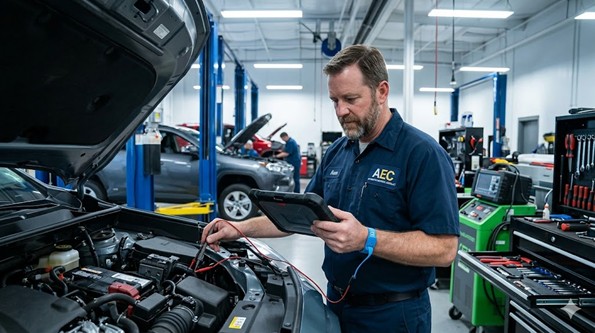
Startup Overview of an Automotive Electrical Repair Shop
An automotive electrical repair shop specializes in diagnosing and repairing electrical problems in vehicles. In a workshop-based setup, the owner or technician works from service bays, benches, diagnostic stations, and parts storage areas.
This is not the same as a full general repair shop unless you choose to offer broader mechanical services. Your core focus is electrical diagnosis, wiring, batteries, starters, alternators, circuits, sensors, modules, and related vehicle systems.
- Battery testing and replacement
- Starting-system diagnosis
- Charging-system diagnosis
- Alternator and starter replacement
- Fuse, relay, wiring, and connector repair
- Lighting, power window, lock, and accessory diagnosis
- Scan-tool diagnosis and fault-code review
- Parasitic draw testing and voltage-drop testing
Decide your service scope early. That choice affects your equipment, training, insurance, shop layout, supplier accounts, and compliance checks.
If you add motor vehicle air conditioning refrigerant service, federal EPA Section 609 rules can apply. If you add hybrid or electric vehicle high-voltage service, safety training and special tools become more important.
Do Your Interests Fit This Business?
Before you plan the shop, decide whether business ownership fits your life. You will not only diagnose vehicles. You will also handle estimates, approvals, suppliers, invoices, records, staff decisions, and customer concerns.
Ask yourself a direct question: are you moving toward a business you truly want, or mainly trying to get away from a job, boss, status anxiety, or financial strain?
That matters. Prestige and the image of owning a shop are weak reasons to start. They usually fade when a bay is tied up, a part is delayed, or a customer wants a clear answer on a hard electrical fault.
You should have a real interest in the business, the service, and the value you provide. A genuine interest in the business can help you stay focused when the setup process gets difficult.
You also need pressure tolerance. Electrical diagnosis can be slow. A faulty ground, damaged connector, or intermittent circuit problem may take time to trace. If you underprice that time, the job can become unprofitable before the repair even begins.
Talk to owners before you commit. Choose shop owners in another city, region, or market area so you are not asking direct competitors for help. Prepare real questions about startup costs, tools, layout, parts delays, pricing, comebacks, and the hardest first-year decisions.
Those conversations matter because experienced owners have already faced problems you have not seen yet. Their answers can help you avoid assumptions that look fine on paper but fail inside a real service bay.
Check Local Demand Before You Move Forward
An automotive electrical repair shop needs enough local vehicle demand to support paid diagnostic time. Do not assume demand exists because cars are everywhere.
Confirm it in your area first. Weak demand may mean the location, service scope, or business idea is not a good fit.
- Count nearby general repair shops, dealerships, battery stores, and diagnostic specialists.
- Look at local vehicle age, commuter patterns, fleet activity, and used-car dealer presence.
- Ask whether local shops sublet difficult electrical diagnosis.
- Compare how nearby shops present diagnostic fees and repair authorization.
- Check whether customers in your area expect fast turnaround, low price, specialty skill, or all three.
Use this step to test local supply and demand, not to build a promotion plan. The question is simple: can this market support another shop with your chosen service scope?
If the area is full of strong repair shops with advanced diagnostic tools, you may need a sharper setup. If no one handles difficult electrical faults well, that may point to an opening. Confirm before you spend.
Compare Startup Paths
You can start an automotive electrical repair shop from scratch, buy an existing repair business, or explore a franchise if a realistic option fits your goals.
Each path changes cost, control, timing, and risk.
- Start from scratch: You choose the location, tools, service scope, name, layout, and systems. You also build everything from zero.
- Buy an existing business: You may gain equipment, a lease, records, staff, vendor accounts, and a customer base. You also inherit problems if you do not inspect carefully.
- Explore a franchise: Some automotive service concepts are franchised, but not every specialty electrical model will fit. Compare fees, support, rules, territory, and control.
The best choice depends on your budget, timeline, support needs, risk tolerance, businesses available for sale, and how much control you want. Take time comparing your startup options before you commit.
Write a Practical Business Plan
Your business plan does not need fancy language. It needs clear decisions.
Write down what the shop will offer, what it will not offer, who it will serve, what equipment it needs, and how each repair job will move from diagnosis to payment.
- Define your service scope.
- List your target vehicle types.
- Estimate bay count and daily capacity.
- Set your diagnostic fee structure.
- List startup equipment and tool needs.
- Plan parts suppliers and waste vendors.
- Map the customer approval process.
- Estimate startup costs and monthly fixed costs.
- Decide whether you can open alone or need staff.
Use your plan to catch weak assumptions early. A simple plan can show whether you are underpricing labor, choosing a poor location, or taking on services your setup cannot support.
Choose Your Automotive Electrical Service Scope
Your service mix shapes almost every startup decision. Decide it before you choose tools, space, insurance, suppliers, or staff.
A narrow electrical shop can focus on diagnosis and common electrical repairs. A broader shop may need more bays, more tools, more waste handling, and more specialized technician skill.
- Basic electrical diagnosis: Scan-tool checks, battery tests, circuit tests, lighting issues, fuses, relays, and basic wiring faults.
- Starting and charging systems: Starters, alternators, batteries, cables, grounds, and charging performance.
- Advanced electrical diagnosis: Intermittent faults, parasitic draw, module communication issues, sensor faults, and wiring harness problems.
- Hybrid and electric vehicles: Low-voltage work may fit your shop, but high-voltage service requires added safety planning and training.
- Motor vehicle air conditioning: Electrical diagnosis is different from refrigerant service. Refrigerant service can trigger EPA certification and equipment rules.
Draw a firm line around what you will accept at launch. Taking on jobs your setup cannot support leads to delays, comebacks, damage claims, and unpaid diagnostic time.
Know Your Likely Customer Types
An automotive electrical repair shop may serve more than individual vehicle owners. Your customer mix affects scheduling, payment terms, parts needs, and documentation.
Decide who you are prepared to serve before opening.
- Individual vehicle owners with warning lights, no-start issues, dead batteries, or electrical faults
- Used-car buyers who need diagnosis before deciding on repairs
- Small business vehicle owners who need quick repair decisions
- Local fleets with repeated electrical or charging-system issues
- Delivery, rideshare, or taxi operators who depend on vehicle uptime
- Used-car dealers that need electrical faults fixed before resale
- General repair shops that send out difficult electrical diagnosis
Customers care about trust, speed, clear prices, and confidence that the problem was found correctly. Build your opening process around those expectations.
Set Up the Shop Location and Layout
A poor layout slows diagnosis, blocks bays, misplaces parts, and creates safety problems.
Confirm the building can support the business before you sign a lease.
- Service bays with enough space to open doors and access under-dash areas
- Stable lighting for engine-bay and wiring diagnosis
- Enough electrical power for chargers, tools, lights, computers, and equipment
- Ventilation suitable for shop activity and chemical use
- Parts staging shelves or bins near the repair area
- Secure tool storage
- Safe battery charging area
- Inoperable vehicle parking or storage, if allowed
- Customer drop-off and handoff area
- Waste storage area away from traffic, heat, and customer access
Confirm loading access too. Parts deliveries, used battery pickup, waste collection, and equipment service all need practical access.
Decide whether customers will enter the shop or only use a front counter. If customers enter the building, plan safety barriers, signs, and a clean handoff path.
Buy the Right Tools and Equipment
Do not open with tools that only support easy jobs. Electrical repair depends on diagnosis, testing, service information, and clean documentation.
Start with equipment that matches your service scope.
- Diagnostic tools: Professional scan tool, service information access, wiring diagrams, digital multimeters, automotive oscilloscope, current clamps, and test leads.
- Battery tools: Battery tester, battery charger, battery maintainer, jump starter, terminal cleaner, battery carrier, and battery safety supplies.
- Circuit tools: Back-probe pins, relay tester, fuse tester, short finder, connector tools, terminal release tools, and crimping tools.
- Repair supplies: Automotive wire, terminals, connectors, fuses, relays, heat-shrink tubing, wire loom, dielectric grease, contact cleaner, and labels.
- Shop setup: Workbenches, toolboxes, lighting, lift or jack setup, parts shelves, computers, printer, scanner, and payment terminal.
- Safety items: Eye protection, gloves, spill kit, fire extinguishers, first aid supplies, Safety Data Sheets, chemical labels, and lockout/tagout supplies.
Add high-voltage tools only if you will service hybrid or electric vehicle high-voltage systems. That may include insulated gloves, insulated tools, warning barriers, rated meters, and written procedures.
Add refrigerant equipment only if you will service motor vehicle air conditioning systems. Do not confuse electrical diagnosis with refrigerant service.
Plan Parts Flow Before Opening
Parts flow can make or break turnaround time. Electrical jobs often stall when the shop cannot get the right connector, terminal, relay, module, or battery quickly.
Set up supplier accounts before opening.
- Battery supplier
- Starter and alternator supplier
- General automotive parts distributor
- OEM parts source
- Electrical connector and terminal supplier
- Wire, loom, fuse, relay, and circuit supply vendor
- Tool and equipment supplier
- Service information provider
- Battery recycling vendor
- Waste vendor, if the shop generates regulated waste
Build a small launch stock around common electrical items. Do not overload inventory before you know local demand, but do not open with empty shelves either.
Use labeled bins for fuses, relays, terminals, connectors, wire, and small parts. A messy parts area turns simple jobs into delays.
Handle Startup Costs and Funding
Startup costs vary by location, bay count, build-out, tool level, service scope, and staffing. Do not rely on a universal cost range.
Build your own estimate from quotes.
- Lease deposit or property purchase costs
- Build-out and tenant improvements
- Certificate of occupancy and inspection fees
- Electrical upgrades
- Lift, bay, bench, and lighting setup
- Scan tools and diagnostic equipment
- Battery-service equipment
- Shop software and service information subscriptions
- Initial parts, supplies, and safety items
- Waste storage and pickup setup
- Business registration and local approvals
- Insurance premiums
- Basic sign, domain, contact page, forms, and required notices
Funding options may include owner savings, equipment financing, a bank loan, an SBA-backed loan through a lender, a business line of credit, vendor financing, or used equipment purchases.
If borrowing is part of the plan, prepare quotes, startup cost estimates, service scope, pricing assumptions, and cash needs before applying for a loan.
Set aside working capital for delays. A tool update, failed inspection, missing lift part, or extra electrical panel requirement can slow opening.
Set Prices Before the First Job
Set prices that cover skill, tools, software, bay time, and risk.
- Diagnostic fee
- Hourly labor rate
- Minimum shop charge
- Flat-rate replacement jobs
- Extended diagnosis authorization
- Parts markup
- Shop supplies charge, where allowed
- Waste fee, where allowed and properly disclosed
- Battery test fee, if separate
- Scan fee, if separate
Write your diagnostic policy in plain language. Explain what the first fee covers and when the customer must approve more time.
Underpricing creates a real problem. If you spend three hours tracing an intermittent wiring fault but only charge for a quick scan, you are funding the repair from your own pocket.
Use clear pricing decisions before you open, not after customers start asking for estimates.
Set Up Banking, Payments, and Records
Keep business transactions separate from personal ones from the start. Set up the business account before collecting deposits, buying parts, or paying vendors.
You may need formation documents, tax identification, ownership records, and business address details to open the account.
- Business checking account
- Payment processor or merchant account
- Card reader or terminal
- Accounting software
- Receipt storage process
- Sales tax tracking, if applicable
- Payroll setup, if hiring
- Repair records and invoice storage
Connect payment deposits to bookkeeping from the start. A repair shop handles parts, labor, taxes, fees, refunds, deposits, and vendor bills. Poor records make pricing and tax filing harder.
Register the Business and Verify Legal Requirements
An automotive electrical repair shop does not need one general federal auto electrical license. Most startup checks happen at the state, city, county, tax, zoning, safety, and environmental levels.
Do not guess. Verify before opening.
- Business structure: Choose a sole proprietorship, limited liability company, corporation, or partnership.
- Business registration: Register with the state if your structure requires it.
- Business name: Register a Doing Business As name if you use a name that differs from your legal name or entity name, where required.
- Employer Identification Number: Get one if your structure, hiring plans, bank, or tax setup requires it.
- Sales and use tax: Confirm whether parts, labor, diagnostic fees, shop supplies, or waste fees are taxable in your state.
- Employer accounts: Set up payroll tax, unemployment, and workers’ compensation accounts before hiring.
- Repair-shop rules: Check whether your state requires repair dealer registration, written estimates, invoice language, repair authorization, or record retention.
Also verify local zoning, a general business license, certificate of occupancy, fire inspection, building permits, sign permits, and wastewater or floor drain rules.
Use local agencies, not assumptions. Your city, county, state revenue agency, state consumer protection office, environmental agency, and building department can confirm what applies.
This is the point to confirm the local licenses and permits that must be in place before customers bring vehicles to the shop.
Plan Environmental and Safety Compliance
Even a focused electrical repair shop can handle regulated materials. Batteries, used oil, aerosols, solvents, refrigerants, and chemical cleaners can create compliance duties.
Set up safety and waste handling before the first paid job.
- Used oil: If the shop generates used oil, store it in proper containers, label it, and use qualified transport or recycling vendors.
- Batteries: Set up a safe storage area and recycling process for used lead-acid batteries and other batteries you accept.
- Lithium-ion batteries: Handle damaged or waste batteries with care and verify state rules.
- Chemicals: Maintain Safety Data Sheets, labels, and employee training where hazardous chemicals are present.
- Personal protective equipment: Match gloves, eye protection, and other gear to the hazards in the shop.
- Lockout/tagout: Prepare procedures where employees may face stored or unexpected energy during equipment service.
- Battery charging: Use a designated area and control ignition, acid, and electrical hazards.
If you service motor vehicle air conditioning refrigerant systems, confirm EPA Section 609 certification and certified equipment before opening that service.
If you service high-voltage hybrid or electric systems, create a written safety process. High-voltage components can create shock, fire, gas-release, and battery hazards when damaged or mishandled.
Choose Insurance and Risk Protection
An automotive electrical repair shop faces property, liability, customer vehicle, tool, and employee risks. Insurance should match what happens inside the shop.
Separate legal requirements from smart risk planning.
- Workers’ compensation, if required after hiring employees
- General liability
- Garage liability
- Garagekeepers coverage for customer vehicles
- Commercial property coverage
- Tools and equipment coverage
- Equipment breakdown coverage
- Commercial auto, if the business owns or uses vehicles
- Cyber or data coverage, if storing customer or payment data
Ask an insurance professional about your actual service scope. A shop that only handles low-voltage diagnosis has a different risk profile than one that stores customer vehicles, performs high-voltage service, or handles refrigerants.
Review coverage for the business before signing a lease or accepting vehicles. Landlords and lenders may also require specific coverage.
Create the Forms You Need Before Opening
Forms protect the customer, the shop, and the repair process. Prepare them before the first vehicle arrives.
Do not rely on verbal approval for diagnostic time or repair changes.
- Vehicle drop-off form
- Diagnostic authorization form
- Written estimate
- Repair authorization
- Work order
- Invoice
- Diagnostic notes
- Parts record
- Declined repair notes
- Warranty statement
- Vehicle release form
- Waste pickup and recycling records
Confirm your state’s rules for estimates, invoices, storage charges, replaced parts, customer approval, and record retention. Some states have specific rules about what must appear on repair documents.
Use forms to control scope. If a customer approves one hour of diagnosis, your process should require approval before the technician continues beyond that limit.
Prepare the Basic Business Identity
Your shop needs basic identity materials before opening. Keep this practical. The goal is legal readiness, customer trust, payment setup, and clear contact information.
Start with the essentials.
- Registered business name or Doing Business As name
- Shop phone number
- Business email address
- Domain name
- Basic website or contact page
- Exterior sign, if allowed and approved
- Required license display, if local rules require it
- Labor rate posting, if required
- Required safety, waste, or customer notices
- Business cards or simple contact cards
- Consistent logo and document layout, if used
Confirm local sign rules before ordering exterior signage. Some cities require sign permits or restrict size, lighting, placement, or window coverage.
Plan Hiring and Training
You may start alone, but do not underestimate the opening workload. The owner may need to answer calls, inspect vehicles, prepare estimates, order parts, complete repairs, process payments, and keep records.
Decide whether one person can handle the first stage.
- Owner-operated launch: Lower payroll cost, but slower capacity and more pressure on one person.
- Technician support: More diagnostic or repair capacity, but more payroll, training, and safety setup.
- Service advisor or office help: Better call handling and paperwork, but higher wage and training costs.
If you hire, set up employer accounts before payroll starts. Prepare safety training, hazard communication, PPE procedures, repair documentation rules, and customer authorization procedures.
Do not hire for services your shop cannot yet support. A high-voltage technician, for example, still needs the correct tools, bay safety, procedures, and insurance alignment.
Map the Repair Workflow
A clear workflow helps the shop avoid missed approvals, misplaced parts, poor notes, and delayed handoffs.
Write the process before opening.
- Customer drops off the vehicle or approves the diagnostic appointment.
- Staff records the concern, vehicle details, keys, contact information, and initial authorization.
- The technician performs scan-tool checks, battery tests, circuit tests, or other approved diagnosis.
- The technician documents findings, test results, likely cause, and recommended repair.
- The shop prepares an estimate with parts, labor, taxes, and any allowed fees.
- The customer approves or declines the repair.
- Staff orders or stages parts.
- The technician completes the repair and performs a quality check.
- The shop prepares the invoice and collects payment.
- Staff returns the vehicle, explains the repair, and files the record.
Use this workflow to design the shop. Parts shelves, workbenches, parking, key storage, waste containers, and the front counter should support the path from estimate to handoff.
Prepare for Daily Owner Responsibilities
Running an automotive electrical repair shop requires both technical focus and business control. Your day can shift quickly when a vehicle will not start, a part arrives late, or a diagnostic job takes longer than expected.
Expect early owner responsibilities like these:
- Review scheduled vehicles
- Confirm diagnostic authorizations
- Test batteries, circuits, and charging systems
- Check scan-tool results and service information
- Prepare estimates
- Order parts and track deliveries
- Review repair notes
- Retest completed repairs
- Process payments
- Store records
- Check waste containers and battery storage
- Keep tools, chargers, and diagnostic equipment ready
A typical day may begin with a no-start vehicle, a battery test, and a scan-tool check. By noon, the owner may be waiting for an alternator, tracing a wiring fault, approving a revised estimate, and answering a customer who wants a firm completion time.
That is the reality check. The business rewards skill and organization, but it punishes weak scheduling, poor notes, and unclear approvals.
Build Your Pre-Opening Checklist
Do not open because the sign is up. Open when the shop can legally, safely, and practically complete paid repair jobs.
Use this checklist before taking vehicles.
- Business structure selected
- Business registration completed, if required
- Doing Business As filed, if used and required
- Employer Identification Number obtained, if needed
- State tax registration completed, if required
- Employer accounts set up, if hiring
- Zoning confirmed for automotive repair
- Certificate of occupancy approved, if required
- Fire inspection completed, if required
- Repair-shop registration completed, if required
- Estimate and invoice forms prepared
- Diagnostic authorization process ready
- Scan tools, meters, battery equipment, and software tested
- Service information access active
- Supplier accounts opened
- Battery recycling and waste vendors confirmed
- Safety Data Sheets and labels ready
- PPE and spill supplies stocked
- Insurance reviewed and active
- Business bank account and payment processing tested
- Mock repair workflow completed from drop-off to payment
Run a test job before opening. Create a mock estimate, record approval, order a part, generate an invoice, process a test payment, and file the record. Fix weak points before real customers are waiting.
Main Red Flags
Some warning signs should slow you down before you commit more capital. Treat them as decision points, not small details.
If several appear at once, rethink the plan.
- The location is not zoned for automotive repair.
- The building cannot get a certificate of occupancy for the intended use.
- The lease limits vehicle storage, waste storage, signage, or repair activity.
- The shop needs costly electrical, fire, ventilation, or building upgrades.
- You plan to service refrigerant systems without EPA Section 609 readiness.
- You plan high-voltage electric vehicle service without training, tools, PPE, and procedures.
- Your diagnostic fee does not cover real diagnostic time.
- You lack current service information and wiring diagrams.
- Your scan tool cannot support the vehicles you want to service.
- Parts suppliers cannot provide connectors, terminals, batteries, starters, alternators, or modules fast enough.
- Used batteries, used oil, chemicals, or aerosols have no storage or pickup plan.
- You have not checked state repair estimate and invoice rules.
- The local market has strong competitors and little unmet demand.
- The site lacks enough parking or disabled vehicle storage.
- You need staff but have not set up payroll, workers’ compensation, or safety training.
Act on these issues before opening. Once vehicles are in the bays, every weak setup decision becomes harder to fix.
Frequently Asked Questions
These questions focus on startup decisions for a future owner. Use them to clear up common pre-opening concerns.
Does an automotive electrical repair shop need a federal repair license?
Not for basic electrical diagnosis and repair. Federal rules may apply if you add specific regulated services, such as paid motor vehicle air conditioning refrigerant service.
When does EPA Section 609 certification matter?
It matters when technicians service or repair motor vehicle air conditioning systems. If you only diagnose an electrical issue without refrigerant service, verify the exact scope before assuming the rule applies.
Do I need zoning approval for a workshop-based shop?
Yes, verify zoning before signing a lease. Automotive repair may be restricted by use, parking, vehicle storage, noise, waste handling, or building rules.
What state rules should I check before opening?
Check repair dealer registration, written estimate rules, invoice requirements, repair authorization, storage charges, sales tax, employer accounts, and environmental rules.
What tools matter most at launch?
Start with a professional scan tool, service information access, wiring diagrams, digital multimeters, battery testing equipment, circuit tools, wiring repair supplies, and safety equipment.
Should I service hybrid and electric vehicles at launch?
Only if you have the right training, tools, safety procedures, PPE, and insurance review. High-voltage systems add serious risk and startup complexity.
What waste issues should I plan for?
Used batteries are likely. Used oil, aerosols, solvents, refrigerants, and other regulated waste depend on your service scope. Verify state and local rules before opening.
What forms should be ready before the first vehicle arrives?
Prepare a diagnostic authorization, estimate, repair authorization, work order, invoice, warranty statement, vehicle release form, and repair record process.
How should I price diagnostic time?
Set a clear diagnostic fee and define what it covers. Require extra approval before moving into extended testing.
Can I start without employees?
Yes, if you can handle diagnosis, repair, estimates, records, calls, payment, and compliance alone. If you hire, set up employer accounts and safety training before payroll begins.
What insurance should I review before opening?
Review general liability, garage liability, garagekeepers coverage, property coverage, tools and equipment coverage, workers’ compensation if hiring, and commercial auto if vehicles are used for business.
What is one of the biggest location mistakes?
Signing a lease before confirming zoning, certificate of occupancy, fire inspection needs, parking, vehicle storage, signage, and waste handling rules.
What should I test before opening day?
Test the full process: drop-off, authorization, diagnosis, estimate, approval, parts order, repair, retest, invoice, payment, waste handling, and record filing.
Expert Tips From Automotive Repair Shop Owners
Before you open an automotive electrical repair shop, it helps to hear from people who have already worked inside repair bays, handled diagnostic jobs, priced labor, dealt with customers, and learned the business side of the shop.
The advice can help you spot problems that are easy to miss during planning, such as underpriced diagnostic time, poor scheduling, weak parts flow, and the shift from technician to owner.
- Starting an auto repair shop: The good, bad, and unexpected — Article featuring shop owner Chris Enright on startup costs, scheduling mistakes, pricing, hiring, and the move from technician to business owner.
- Matt Fanslow technician interview — Audio interview with a diagnostic technician and shop manager who focuses on drivability, electrical, electronic diagnosis, scan tools, meters, and real-world testing.
- Electrical engineers become shop owners — Audio interview with John and Karen Manelas about buying their first auto repair shop, learning the numbers, using mentors, and building from one location.
- Insights from retired shop owners — Article with veteran shop owners discussing how repair shops have changed, including technology, specialization, training, staffing, and financial focus.
- Automotive Diagnostic Podcast — Audio resource focused on automotive diagnostics, tools, testing methods, technical thinking, and interviews with experts in the automotive field.
- Talking Shop with ShopOwner — Audio interviews with shop owners and industry leaders on repair shop management, hiring, technology, workflow, and operational decisions.
- Taming the Chaos: How Shop Owners Can Regain Control — Article and podcast episode with David Rogers on shop systems, reducing wasted effort, and helping owners regain control of daily shop activity.
- Geared for Success: Top Auto Repair Shop Owner Tells His Story — Video interview with an experienced auto repair shop owner sharing lessons from decades in the automotive industry.
Related Articles
- Starting an Auto Repair Shop
- How To Start Your Automotive AC Repair Business
- How To Start Your Car Audio Business
- Starting an Automotive Fleet Maintenance Business
- Start an Automotive Radiator Repair Business
- How To Start Your Oil Change Business
- How To Start an Auto Body Repair Shop
- How To Start a Tire Shop
- Starting a Windshield Repair Business
- How To Start a Custom Car Shop
- How To Start Your Motorcycle Repair Shop
Sources:
- U.S. Bureau of Labor Statistics: Automotive Service Technicians
- Federal Highway Administration: Highway Statistics MV-1
- Auto Care Association: Auto Care Industry Overview
- U.S. Small Business Administration: Choose Business Structure, Register Your Business, Apply Licenses Permits, Open Business Bank Account, Get Business Insurance
- Internal Revenue Service: Employer ID Number, Business Taxes
- U.S. Environmental Protection Agency: MVAC System Servicing, Section 609 Certification, Certified Equipment, Managing Used Oil, Universal Waste Questions, Used Lithium-Ion Batteries
- Electronic Code of Federal Regulations: Used Oil Standards
- Occupational Safety and Health Administration: Hazard Communication, PPE General Requirements, Lockout Tagout Rules, Battery Charging Safety
- National Highway Traffic Safety Administration: Electric Hybrid Vehicles
- Bureau of Automotive Repair: Write It Right
- The Florida Senate: Florida Statutes 559.905