
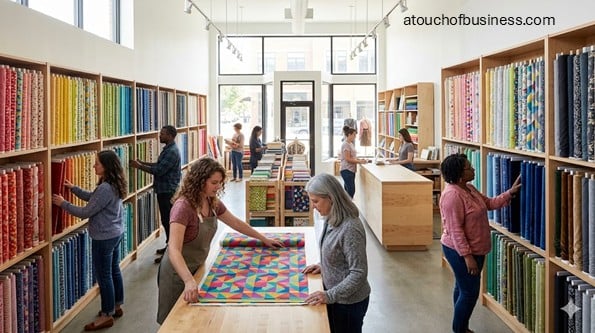
Key Areas to Think Through Before Opening a Fabric Shop
A fabric shop is a specialty retail store that sells fabric, sewing supplies, patterns, and related items to hobbyists and small-scale professional creators. In a storefront model, you are not just selling products. You are also managing display space, stock flow, measuring and cutting fabric, checkout, returns, and the overall in-store experience.
If you are thinking about opening a fabric shop, start with a simple question: do you actually like the day-to-day reality of running a retail business?
You may love sewing, quilting, or textile design, but owning the store means ordering inventory, checking deliveries, pricing stock, fixing display gaps, helping customers, and keeping transactions separate and organized.
Is a Owning a Fabric Shop What You Really Want?
A fabric shop can be a good fit if you enjoy retail, product selection, and helping people choose the right materials for a project. It also helps if you notice details. In this business, small errors in pricing, ordering, labeling, or cutting can turn into wasted stock or unhappy customers.
You also need to be honest about pressure. A storefront fabric shop comes with rent, inventory decisions, and the need to keep the store looking ready every day. That does not mean you are behind if you are still sorting this out. It means you are asking the right questions early.
Passion matters here because it helps you stay steady during slow weeks, stock problems, and long setup days. If you are passionate about running the business, it is easier to keep going when the workload rises.
Try to start this business because you are moving toward a real goal, not mainly because you want to get away from a job, a boss, short-term financial stress, or the image of owning a business.
You should also look closely at the tougher side of ownership. A fabric shop can be enjoyable, but it still brings long days, financial risk, and constant decisions. It helps to understand the tough side of ownership before you commit.
Before you move forward, talk with fabric shop owners who are not your future competitors. Speak with people in another city, region, or market area. Go in with real questions about inventory, rent, suppliers, margins, and what they wish they had known sooner. Those conversations matter because those owners have direct experience, even if their path was different from the one you will take. You can get useful perspective from firsthand owner insight and compare it with what you are seeing locally.
How a Fabric Shop Makes Money
A fabric shop usually earns money by selling fabric by the yard, half-yard, fat quarter, bundle, remnant, or kit. Many shops also sell thread, rulers, cutting tools, batting, interfacing, patterns, books, and other notions.
Your product mix matters more than many first-time owners expect. A shop built around quilting cottons will feel different from one focused on garment fabrics or home décor textiles. That choice affects your customer base, shelf space, vendor list, storage needs, and how much inventory you must carry at opening.
Some fabric shops add classes, sewing machines, or special orders. Those can be useful additions, but they are not required to open. For a first launch, it is often better to build the core retail setup first and add extras only if the space, systems, and demand support them.
Who Your Customers Are and Whether Local Demand Is There
A storefront fabric shop usually serves quilters, garment sewists, home décor shoppers, hobby crafters, and people looking for notions or project supplies. Some stores also attract guild members, teachers, gift buyers, and customers who need matching thread, batting, or patterns.
That does not automatically mean your area has enough demand. You need to find out whether enough people nearby are likely to shop often enough to support the store. Weak local demand may be a sign that the area, the concept, or the product mix is not the right fit.
Take time to study local supply and demand. Look at nearby competitors, traffic patterns, parking, nearby craft activity, and whether your area is already well served. This is where checking local supply and demand becomes practical, not theoretical.
Pay attention to what competing stores actually stock. Are they focused on quilting? Do they sell broad apparel fabrics? Do they have strong notions walls? Are they discount-driven? A fabric shop usually struggles when its position is unclear.
Starting From Scratch, Buying a Shop, or Looking at a Franchise
Starting from scratch gives you more control over the brand, location, product mix, and layout. It also means you build every system yourself, from vendor setup to cutting-counter workflow.
Buying an existing fabric shop may give you fixtures, known demand, vendor relationships, and an established customer base. It may also come with weak inventory, outdated systems, or a poor lease. In some cases, buying a business already in operation may be a better fit than opening a new one.
Franchising is not the usual path for this business type, so it should not drive your decision. The real comparison is usually between building your own store and buying an existing local operation.
Your best path depends on budget, timeline, risk tolerance, and how much help you want during setup. If you want full control and can handle a more complex launch, starting from scratch may work. If you want existing traffic and systems, buying may be worth a closer look.
Write the Plan Before You Sign Anything
Your fabric shop needs a real startup plan before you lease space, place large orders, or buy fixtures. This plan does not need to be fancy. It does need to answer the big questions clearly.
At minimum, your plan should cover:
- Your store concept and product mix
- Your target customers
- Your location criteria
- Your startup costs
- Your pricing approach
- Your expected monthly sales needs
- Your supplier strategy
- Your opening checklist
If you need help organizing it, start with guidance on building a business plan. Then make it specific to a fabric shop, not generic retail.
Choose the Right Product Mix for Your Fabric Shop
This is one of the biggest early decisions. A fabric shop with a broad but shallow assortment can feel scattered. A shop with a clear niche often feels easier to understand and easier to shop.
Your opening mix may include:
- Quilting cottons
- Garment fabrics
- Home décor fabrics
- Thread
- Batting
- Interfacing
- Patterns
- Rulers and cutting tools
- Notions
- Kits and precuts
- Remnants
For a storefront fabric shop, assortment choices affect almost everything else. They shape storage, display fixtures, reorder timing, staff knowledge, and how much working capital you need.
Try not to buy too much too early. That is one of the most common startup mistakes in this type of business. Fabric takes space, ties up cash, and can move slower than expected if the mix is off.
Find the Right Location Before You Build the Store
A fabric shop depends on location more than some first-time owners think. Good visibility, easy parking, safe access, and a comfortable shopping layout matter because customers want a store that feels easy to browse.
Before signing a lease, confirm that the space works for:
- Retail use under local zoning
- Storefront signage
- Receiving deliveries
- Backstock storage
- A cutting counter
- Checkout flow
- Any needed tenant improvements
Ask whether the space already has the right approvals for retail use. Also ask whether a new certificate of occupancy, sign permit, fire review, or building permit is required before opening. Rules vary by location, so this is the stage to speak with the city or county, not after the lease is locked in.
You are not behind if you are taking your time here. A weak location fit can create problems that good inventory cannot fix.
Set Up the Legal Structure and Basic Registrations
Choose your legal structure before you open bank accounts, register for taxes, or sign some vendor documents. The right structure depends on liability concerns, taxes, and how you plan to operate.
You may want to review guidance on choosing your legal structure and compare options such as a sole proprietorship, limited liability company, partnership, or corporation.
Your startup steps often include:
- Registering the business with the state when required
- Registering a business name or “Doing Business As” (DBA) status if needed
- Getting an Employer Identification Number if it applies
- Registering for state sales tax collection where required
- Setting up employer accounts if you will hire staff
Local license rules vary, as do the rules for zoning, signage, and tenant improvements. It is much more effective to work through your local permit and license requirements early instead of treating them as a last-minute step.
Understand the Compliance Issues That Matter Most
A storefront fabric shop is usually not regulated like a food business or medical business, but it still has important compliance points. Most of them are practical.
At the federal level, you may need an Employer Identification Number, employer poster compliance, and workplace safety planning if you have staff. At the state level, sales tax registration is often a major item because you are selling tangible goods. At the city or county level, zoning, a business license, signage, and the certificate of occupancy question often matter most.
If you sell finished textile products, pay attention to labeling rules for textile and wool products. If you mainly sell fabric cut from properly labeled bolts, the rules can be different from selling finished consumer textile goods. If this could apply to your store, verify it before you set up labeling or product descriptions.
Build Supplier Relationships Before Opening Day
A fabric shop depends on reliable wholesale sources. You will usually need business documents and resale-related paperwork before many suppliers will open an account.
As you compare suppliers, ask about:
- Minimum order requirements
- Freight terms
- Case packs or ordering units
- Damage claims
- Return rules
- Lead times
- Seasonal ordering cycles
This matters because a fabric store often lives or dies by inventory discipline. If your suppliers force large buys and your store is small, you may end up with too much slow-moving stock too soon.
It also helps to balance suppliers. Depending too much on one source can make your assortment feel narrow and can increase risk if an order arrives late or a line underperforms.
Plan the Inventory System Before You Buy Deep
Inventory control is one of the biggest make-or-break issues in a fabric shop. You are not just counting finished items. You may be tracking bolts, cut lengths, fat quarters, bundles, kits, remnants, and notions all at once.
Your system should tell you:
- What you have on hand
- What is selling
- What needs reordering
- What is moving too slowly
- How much cash is tied up in stock
Be clear about how you will identify products. That may include vendor, collection, fabric type, width, colorway, and unit of sale. It should also cover how you will handle special orders and damaged goods.
If you open without solid inventory discipline, the store can feel busy while the numbers quietly slip the wrong way.
Choose a Point-of-Sale System That Fits Fabric Retail
A basic point-of-sale system is not always enough for a fabric shop. You need to know whether it can handle fabric by the yard, partial-yard sales, remnants, and category differences between bolts and small packaged notions.
Before you commit, test whether the system can support:
- Variable-unit selling
- Barcode scanning
- Sales tax settings
- Returns and exchanges
- Gift cards if you want them
- Special orders
- Basic customer records
The checkout area also needs to work in real life. Customers should be able to move from browsing to cutting to payment without confusion. In a storefront fabric shop, the checkout experience is part of the service.
Set Up the Physical Store Around Real Workflow
Your layout should support how the business actually runs, not just how you want it to look. In this business, the flow from receiving to shelving to cutting to checkout matters every day.
Your physical setup may include:
- Fabric shelving or bolt displays
- A large cutting counter
- Thread racks and notions walls
- Pattern displays
- Backstock shelving
- Receiving space
- A clear checkout counter
- Storage for remnants and overflow stock
Good lighting matters too. Customers need to see colors clearly, and staff need safe, accurate cutting space.
Do not rush the opening before the space is ready. Poor layout, missing signage, or messy backstock can create problems on day one that make the store feel less trustworthy.
Know the Startup Costs Before You Commit
A fabric shop can require more startup money than people expect because it combines retail inventory, fixtures, technology, and location costs. The opening inventory alone can be a major financial commitment.
Your startup cost planning should include:
- Lease deposit and rent
- Build-out and repairs
- Store signage
- Shelving and fixtures
- Cutting tables and work surfaces
- Point-of-sale hardware and software
- Opening inventory
- Packaging and store supplies
- Licenses and registrations
- Insurance
- Payroll if you will hire
- Working capital for reorders and slow months
There is no reliable universal startup number for this business because costs change so much by location, inventory depth, build-out needs, and whether you add extras such as sewing machines or classes.
This is where estimating your break-even point and early revenue planning becomes important. It helps you see how much the store needs to sell just to stay steady.
Set Your Prices With Care
Pricing in a fabric shop is more than marking up fabric. You need a method that works across yardage, notions, patterns, kits, and clearance stock.
Your pricing decisions should account for:
- Wholesale cost
- Freight
- Product category
- Local competition
- Store overhead
- Markdown risk
- Expected margin by item type
Most shops use per-yard pricing for bolt fabric and fixed pricing for notions, patterns, and kits. Remnants and aging stock may need separate markdown rules.
Take time with this. Weak pricing can hurt the business before you notice it. If you want a simple framework, start with guidance on setting your prices and then adapt it to fabric, not general retail.
Funding, Banking, and Recordkeeping
You may fund a fabric shop with savings, outside investment, a business loan, a line of credit, or a mix of those. The right choice depends on your financial position, risk tolerance, and how much working capital you need after opening.
If you need outside funding, it helps to understand the basics of getting a business loan before you approach lenders.
Once the structure is in place, open a dedicated business bank account and separate business transactions from personal ones from the start. You may also want help with setting up your business account and comparing card payment options.
Your bookkeeping needs to capture purchases, sales, taxes collected, payroll if any, returns, and inventory activity. A fabric shop can look busier than it is, so clean records matter from day one.
Insurance and Practical Risk Planning
Insurance needs vary, but a fabric shop often needs basic business coverage tied to the space, stock, and day-to-day customer activity. If you will have staff, additional coverage may apply under state rules.
It helps to look at business insurance basics before you choose policies. Then confirm local and state requirements with a qualified insurance professional.
Risk planning for a fabric shop should also include theft, damage to inventory, slips and falls, delivery handling, ladders, and cutting-tool safety at the work counter.
Build the Store’s Name, Brand Basics, and Online Presence
Your fabric shop needs a name that is easy to remember, fits the type of customer you want, and is available for registration and web use. Before you get attached to a name, confirm that you can legally use it and that the matching domain or a practical version of it is available.
At opening, the brand basics usually include:
- The business name
- A clean logo or wordmark
- Store signage
- Business cards if useful
- Basic social profiles
- A simple website with location, hours, and contact details
The goal is not to overbuild. It is to make the store easy to recognize and easy to find.
Documents, Forms, and Store Systems You Need Before Opening
New owners often focus on products and forget paperwork. A fabric shop runs better when basic forms and internal documents are ready before the first sale.
You may need:
- Purchase order records
- Receiving logs
- Vendor files
- Price and markdown rules
- Return and exchange policies
- Special-order forms
- Damage logs
- Incident records
- Cash-handling procedures
These are quiet systems, but they matter. They help the store feel stable and reduce avoidable mistakes.
Hiring, Hours, and Staff Readiness
You may open alone, with family help, or with one or two employees. A small fabric shop does not always need a large team, but it does need reliable coverage for receiving, cutting, checkout, and customer service.
If you hire, train staff on:
- Measuring and cutting accurately
- Point-of-sale use
- Returns and exchanges
- Receiving and restocking
- Basic product knowledge
- Store safety and housekeeping
Hours of operation should match your location and customer habits. Longer hours are not automatically better. Start with a schedule you can staff well and keep consistent.
What Daily Work Looks Like in a Fabric Shop
Before you commit, picture a normal day. In a fabric shop, the work often starts before customers arrive. You may be checking deliveries, putting out stock, straightening displays, and preparing the cutting counter.
During the day, you may help customers compare fabrics, pull matching notions, cut yardage, ring up sales, answer product questions, and fix display gaps. Between customer visits, you may process orders, review reorders, check margins, and clean the space.
If that sounds satisfying, this business may suit you. If you only enjoy the creative side and not the retail side, take that seriously.
Main Red Flags Before You Move Forward
A fabric shop can work well, but some warning signs deserve real attention before you invest money.
- Too much inventory too early. This ties up cash and can leave you with slow-moving stock.
- A weak location. Low visibility, poor parking, or awkward access can hurt traffic from the start.
- No clear niche. If the store looks broad but unfocused, customers may not understand why they should shop there.
- The wrong point-of-sale system. If it cannot handle yardage and mixed units well, you create daily problems.
- Lease risk you have not checked. Zoning, signage, build-out, or certificate of occupancy issues can delay opening.
- Thin margins. Retail overhead can eat into profit fast if pricing and buying are weak.
- Competition you underestimated. Large chains, local specialty shops, and online sellers all affect demand.
You are not behind if one of these issues slows your decision. It is better to pause now than to open into a problem you could have spotted earlier.
How to Reach Your First Customers
Your early marketing should be simple and local. A fabric shop usually benefits from being visible, consistent, and easy to understand.
At opening, focus on:
- Clear storefront signage
- Accurate online business listings
- A basic website
- Social posts showing product mix and store feel
- Email capture if you are ready for it
- A soft opening or opening event if the setup is truly ready
Be clear about what kind of fabric shop you are. If your strength is quilting, say that. If your strength is garment fabric or curated notions, say that. Clear positioning helps the right customers notice you faster.
Launch Readiness for a Storefront Fabric Shop
Before opening day, make sure the shop works as a business, not just as a room full of stock. The store should feel ready, organized, and easy to shop.
Your launch checklist should include:
- Business registration complete
- EIN and tax setup handled where needed
- Sales tax registration complete where required
- Local licenses and permits checked
- Zoning verified
- Certificate of occupancy status confirmed
- Signage approved if required
- Payment processing active
- Point-of-sale tested
- Opening inventory received and tagged
- Cutting workflow tested
- Return and exchange policies posted
- Staff trained if hiring
- Store cleaned and merchandised
- Soft-opening transactions completed
If even a few of these items are still uncertain, slow down and fix them first. A calm opening is better than a rushed one.
Real-World Tips From Fabric Retail Owners
You can learn a lot from people already working in fabric, quilt, and sewing retail. Their interviews can help you spot blind spots early, think more clearly about buying, store setup, customer mix, and the real work behind opening a shop.
Starting A Quilt Shop with Sandy Labby of Sew Much Class — Video interview with a shop owner, including discussion of naming, promotion, and advice for opening a quilt shop.
Love to Sew Podcast: Sister Mintaka with Sandeep Sandhu — Interview with a fabric store owner who talks about fabric selection and shares advice for small business owners in the sewing space.
What It’s Like to Own a Local Quilt Shop — Article interview covering the daily work, needed business skills, and direct advice for someone hoping to open a fabric store.
Becoming a Fabric Shop — Article interview with Heather of Lark Cottons about how she got into fabric retail and why she chose her shop model.
Craft Industry Alliance: Arvin Pairavi of Shannon Fabrics — Podcast interview on building a fabric company, market saturation, and working with retail and wholesale fabric customers.
The Saturday Night Stitch Show: Sarah Johnston, Owner of Fabrics for All — Podcast interview described as a candid conversation about the challenges of running a fabric shop and fabric trend choices.
Related Articles
- How To Start a Yarn Store
- Start a Sewing Pattern Business
- Starting a Drapery Business
- How To Start Your Upholstery Business
- How To Start a Quilt Business
- Essential Steps to Launch a Successful Craft Store
- Start an Embroidery Business
- Starting a Weaving Business
- How To Start a Tie Dye Business
- Starting a Screen Printing Business
- Starting an Art Supply Store
Sources:
- IRS: Employer identification number, Starting a business, Starting Business and Records, Recordkeeping basics
- U.S. SBA: Choose a business structure, Register your business, Federal and state tax IDs, Pick your business location, Licenses and permits, Open a business bank account
- U.S. Department of Labor: Workplace posters
- OSHA: On-Site Consultation Program
- Federal Trade Commission: Apparel and labeling, Textile Products Identification Act
- U.S. Census Bureau: Retail NAICS definitions
- IBISWorld: Industry report snapshot
- Craft Industry Alliance: Garment fabric sourcing guide
- Checker Distributors: Wholesale distributor overview
- EE Schenck: Supplier overview, Notions catalog
- Moda Fabrics: Precuts category, Precut guide
- Brilliant POS: Fabric store POS
- AP News: Joann closure article