
Before You Start: Quick Readiness Check
We’ve all had that moment. You see a calm, curious ferret and think, “I could raise animals like this.” You picture a small setup, happy kits, and customers who are thrilled to bring one home.
Then reality shows up. This is a regulated animal in some places. The health risks are real. And once you sell even one kit, you are responsible for what you produce, what you promise, and how you house and care for live animals.
Fit: Are you ready to own a business, and is a ferret breeding business the right match for you? If you prefer work that stays on a clean schedule, breeding may clash with your life.
Passion: Passion matters because it helps you keep solving problems when challenges show up. If you need a reset on what passion looks like in business, read passion as a key to success.
Motivation: Ask yourself this exact question: “Are you moving toward something or running away from something?” If you’re starting only to escape a job or financial stress, that pressure can push you into rushed decisions.
Reality check: Expect uncertain income, long hours, hard tasks, fewer vacations, and total responsibility. You will also need family support, the right skills, and enough funding to start and operate, not just “get set up.”
Before you spend or invest, talk to owners. Only talk to owners you will not be competing against. Look for breeders in a different state, or at least a different metro area.
Ask questions like:
- What surprised you most about health issues and veterinary costs during the first year?
- What legal or zoning issue slowed you down before you sold your first kits?
- What would you do differently before buying your first breeding pair?
If you also want a broad checklist for business ownership, start with business start-up considerations and then review a business inside look to pressure-test your plan.
Ferret Breeding Business Overview
A ferret breeding business breeds domestic ferrets and sells kits to customers, usually as pets. Some breeders also place retired adults, offer limited stud services, or sell starter supplies as a convenience.
This is usually a small business you can start on your own if local rules allow home-based animal activity. But scaling up quickly changes the game, because you will need more space, more animals, more cleaning capacity, more records, and more help.
Ferrets have specific reproductive and health realities that affect your launch plan. Ferrets are induced ovulators, and jills (females) can face serious health risks if they remain in heat and are not bred or otherwise managed by a veterinarian. Gestation is short (often around six weeks), so your setup and veterinary relationship need to be ready before breeding begins.
How Does a Ferret Breeding Business Generate Revenue
Your main revenue is selling kits. Your pricing needs to cover animal acquisition, housing, feed, bedding, veterinary care, testing, recordkeeping, marketing, and your time.
Common revenue streams include:
- Pet kits: Sale of young ferrets placed with families and individual owners.
- Breeding-quality kits: Limited placements for experienced breeders (when legally allowed and when you can verify experience).
- Stud service: Pairing a proven male with an outside female (only if your local rules and veterinary guidance support it).
- Retired adults: Placing adults who are no longer part of your breeding plan.
- Optional add-ons: Starter kits such as a carrier, litter box, or approved bedding (only if you can store and supply safely).
Pricing is not just a number. It is a promise that you can deliver a healthy animal, clear records, and a responsible placement process. Use pricing your products and services to build a price list that covers costs and still leaves room to pay yourself.
Typical Customers for a Ferret Breeding Business
Most customers are looking for a pet. Many are first-time ferret owners who need basic guidance and clear expectations.
Customer types often include:
- Families and individuals looking for a companion animal
- Experienced ferret owners looking for a specific temperament or color
- People who want a young ferret from a breeder with clear records
- Out-of-area customers (only if you can meet them in person or you can comply with any federal rules that apply to sight-unseen sales)
Pros and Cons to Weigh
This business can be rewarding, but it can also be stressful if you underestimate legal and health realities. Use these points as a simple filter before you commit.
Pros:
- Can start small if legal in your area
- Clear demand in many markets for well-bred companion animals
- Work is hands-on and relationship-driven
- Strong reputation can create repeat referrals
Cons:
- Legality varies widely by state and city, including outright bans
- Animal health risks can create sudden expenses and hard outcomes
- Time demands can spike during breeding, birth, and placements
- Recordkeeping and customer screening can be intense
Essential Equipment and Setup Checklist
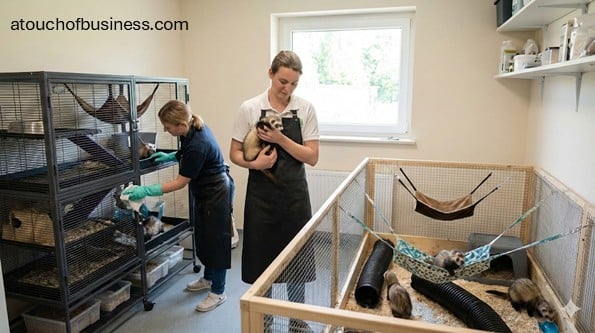
Your equipment needs are about animal safety, containment, sanitation, and climate control. Start small and build a setup that is easy to clean and easy to monitor.
Many care guidelines emphasize safe housing, stable temperature, enrichment, and access to an exotic animal veterinarian. Your setup should support that from day one.
Housing and Containment
- Primary enclosures suitable for ferrets (appropriate size and secure latching)
- Separation enclosures for quarantine and isolation
- Baby-safe containment area for kits (secure pen or enclosure)
- Playpen or controlled exercise space for supervised time
- Carrier(s) for veterinary visits and safe transport
- Escape-prevention items for doors and gaps (as needed for your space)
Environmental Control
- Room thermometer and humidity monitor
- Air filtration (as needed for odor and airborne particles)
- Fans or cooling solutions appropriate for animal spaces
- Safe space heaters if your climate requires it (with burn prevention and cord control)
Sanitation and Waste Management
- Litter boxes sized for ferrets
- Approved litter and bedding (avoid unsafe materials)
- Cleaning tools dedicated to animal spaces (buckets, brushes, cloths)
- Disinfectants appropriate for animal environments (follow label directions)
- Waste bags, sealed trash container, and odor control solutions
- Laundry plan for bedding (washer and dryer access, dedicated hamper)
Feeding and Watering
- Food bowls and water bowls or bottles designed for ferrets
- Food storage containers that seal against pests and moisture
- Measuring tools for consistent feeding
Health and Recordkeeping
- Digital record system (spreadsheet or software) for breeding, veterinary notes, and placements
- File system for signed customer agreements and receipts
- Basic first-aid supplies for animals (per veterinary guidance)
- Scale for monitoring weight (especially for kits)
Enrichment and Safety
- Enrichment items that cannot be easily torn and swallowed
- Hammocks, tubes, and safe hiding spaces
- Chew-safe toys appropriate for ferrets
- Cord control and hazard-proofing supplies for play areas
Business and Customer Setup
- Website and email address tied to your domain
- Phone number (dedicated line is helpful)
- Payment processing method to accept payment
- Customer screening form and waiting list system
- Printed or digital care sheet to send before pickup
For cost planning, focus on cost drivers instead of guessing numbers. Animal acquisition, enclosure count, climate control, veterinary access, and local permit requirements will drive your budget. Use estimating startup costs to build a realistic launch budget that matches your scale.
Skills You Will Need
You do not need to be a veterinarian, but you do need strong animal observation skills and the discipline to follow veterinary guidance. You also need business basics like recordkeeping and customer communication.
Useful skills include:
- Understanding ferret reproductive basics and health risks
- Animal handling, safe containment, and sanitation routines
- Recordkeeping for breeding, health, and placements
- Customer screening and clear written communication
- Basic finance tracking and cash planning
- Risk thinking and contingency planning
If you are missing skills, you can learn them or pay for help. Consider building a small support circle early using a team of professional advisors.
What Day-to-Day Work Looks Like
Even though this guide focuses on startup, you should understand the daily work before you launch. Animal care is not something you can pause when life gets busy.
Typical day-to-day activities include:
- Feeding and fresh water checks
- Enclosure cleaning and bedding changes
- Health checks and behavior observation
- Exercise and supervised play time
- Record updates for each animal
- Customer messages, scheduling, and paperwork
- Preparing animals and records for placement day
A Day in the Life of the Owner
You start early with health checks and cleaning. You watch for small changes, because small changes can become big problems fast with small animals.
Midday is usually paperwork, customer messages, and supply runs. Late day is often play time, more cleaning, and confirming pickup schedules or veterinary appointments.
Red Flags to Watch For
If you ignore red flags, they show up later as sick animals, unhappy customers, or compliance problems. These issues are much harder to fix after you sell your first kits.
Watch for red flags like:
- Not confirming legality in your state and city before buying animals
- No established relationship with an exotic animal veterinarian
- Breeding without a clear plan for jill health management
- Overcrowded housing or weak separation plans for quarantine
- Missing or inconsistent records for breeding, veterinary care, and placements
- Promising shipping or sight-unseen sales without checking federal requirements
- Relying on verbal agreements instead of clear written terms
Common Ferret Breeding Business Models
Your business model is a choice about scale, placements, and how you manage compliance. Pick a model that matches your space, time, and risk tolerance.
Common models include:
- Home-based micro-breeder: Small number of breeding animals, local placements, appointment-only pickups.
- Specialty breeder: Focus on specific traits, strong screening, and reputation-driven placements.
- Partnership model: Two owners share care, facilities, and placement workload (use clear roles in writing).
- Facility-based breeder: Larger setup with dedicated space, more animals, and potential staffing needs.
If you are starting alone, a small home-based model is the most common entry point when legal. If you want a larger facility model, expect higher startup needs and stronger licensing and inspection pressure.
Step 1: Confirm This Business Is Legal Where You Live
Before anything else, confirm that you can legally possess and breed ferrets in your state and city. Some places restrict or prohibit ferrets, and enforcement can include seizure and penalties.
For example, the California Department of Fish and Wildlife describes ferrets as restricted in California and explains permit requirements. New York City’s health code lists ferrets under prohibited mustelids.
The Hawaii Department of Agriculture’s Biosecurity Division states ferrets are strictly prohibited as pets under Hawaii law.
This is the first gate. If your location is a no, do not spend money hoping you will “figure it out later.”
Step 2: Choose Your Launch Scale and Ownership Structure
Decide if you are launching solo, with a partner, or with investors. Most first-time owners start solo with a small setup because it keeps risk lower and simplifies decisions.
At the beginning, many owners start as a sole proprietorship for simplicity, then form a limited liability company later as the business grows and risk increases. If you are unsure, review how to register a business and talk to a qualified professional in your state.
Your scale choice should match your time and space. More animals means more care hours and more compliance exposure.
Step 3: Define Exactly What You Will Offer
Write down what you will sell and what you will not sell at launch. Keep it simple so you can deliver quality consistently.
At minimum, define how many litters you plan for in your first year, what placements look like, and whether you will offer any add-ons. If you cannot support add-ons safely, skip them.
This is also where you set your boundaries. Boundaries protect the animals and protect you.
Step 4: Validate Demand and Profit Potential
Do not assume demand just because you like the idea. You need proof that customers in your region are actively looking for ferrets and that your pricing can cover your costs.
Start with local market checks, then expand to regional checks if you plan to place outside your area. Use supply and demand basics to evaluate whether the market can support your prices.
Your goal is simple: confirm you can cover expenses and still pay yourself.
Step 5: Build a Starter Budget That Matches Your Scale
List what you must buy before breeding begins: enclosures, separation space, bedding system, climate controls, carriers, and record tools. Then add ongoing essentials you must fund from day one, like feed and veterinary access.
Do not guess. Build your estimate line by line using a startup cost estimating guide. Your scale will drive costs more than almost anything else.
Budget for setbacks. With live animals, setbacks are not rare.
Step 6: Line Up an Exotic Animal Veterinarian Before You Breed
Do not wait until you have a problem. Find an exotic animal veterinarian who treats ferrets and discuss breeding plans before you breed your first jill.
Ferret reproductive health has specific risks. Educational resources note that female ferrets can be at high risk of severe outcomes when they remain in heat without proper management, and that breeding decisions should be made with informed veterinary support.
Ask the veterinarian what records they want you to keep and what their after-hours plan is for urgent issues.
Step 7: Create a Health and Records Plan You Can Actually Follow
Decide what you will track for every animal: identification, breeding dates, veterinary visits, vaccinations when applicable, weight checks, and placement details.
Keep your system simple. A clean spreadsheet and a consistent file structure can be enough at launch.
Your records protect you. They also make you a better breeder.
Step 8: Write a Simple Business Plan
You do not need a long document. You need clarity. Write a short plan that states your business model, your target customer, your pricing approach, your launch budget, and your compliance plan.
If you want a structured approach, use how to write a business plan and keep it focused on startup decisions.
This plan becomes your filter. If a decision does not fit the plan, you pause.
Step 9: Decide How You Will Fund the Launch
Many small breeders self-fund because the startup can be modest at a small scale. If your model requires a dedicated facility, significant buildout, or staffing, you may need outside funding.
If you explore lending, learn what lenders expect using how to get a business loan. Even if you do not borrow, this helps you organize your financial story.
Open a dedicated business account at a financial institution to keep business and personal activity separate.
Step 10: Pick a Business Name and Secure Your Digital Footprint
Choose a name that is easy to say and easy to spell. Then secure the matching domain and social handles before you print anything.
Use selecting a business name to avoid common naming problems.
Your online presence is often your first impression, so handle it early.
Step 11: Choose a Location and Confirm Zoning
Most ferret breeding startups are home-based, but that does not mean your location is automatically allowed. Zoning, home occupation rules, and animal limits can apply.
Use business location guidance to think through space, neighbors, noise, and waste handling. Then confirm rules with your local zoning office.
If you plan a dedicated facility, confirm whether a Certificate of Occupancy (CO) is required and what inspections apply.
Step 12: Set Up Housing, Separation, and Safety Controls
Build your animal space before you buy breeding animals. You need separation space for quarantine, safe containment for kits, and a setup you can clean and monitor daily.
Care resources emphasize secure housing, safe enrichment, temperature limits, and avoiding hazards that can be swallowed. Use those basics as your standard for setup.
Do a full safety walkthrough. Assume a ferret can fit anywhere its head can fit.
Step 13: Source Animals Responsibly and Plan Genetics
Where you source your breeding animals shapes everything that follows. Use reputable sources and insist on clear records when available.
Do not rush this step. A cheap animal with unknown history can cost far more later in veterinary bills and reputation damage.
If you do not have enough experience to evaluate breeding stock, work with a mentor in a different market or use veterinary support to set your standards.
Step 14: Build Customer Paperwork and a Placement Process
Before you market, create your written terms. Decide how deposits work, what your health disclosures include, and what happens if a customer changes plans.
Set up invoicing and a way to accept payment that fits your customer base. Keep clear receipts and keep all signed documents organized.
Also create a simple education packet you send before pickup so customers know what to expect.
Step 15: Form the Business and Get Your Federal Tax Identification
Once you are confident you can legally operate and you have a clear launch plan, form your business. If you start as a sole proprietorship, you may still need registrations depending on your state and city.
Apply for an Employer Identification Number through the Internal Revenue Service if you need it for banking, taxes, or hiring. The Internal Revenue Service provides the official process for obtaining an Employer Identification Number.
Keep your business records in one place from day one. That habit saves you later.
Step 16: Handle State and Local Registrations and Activity Rules
Licenses and permits can apply even for home-based businesses. The Small Business Administration provides a starting point for registration and for identifying licenses and permits that may apply.
For animal businesses, you may face state or local requirements tied to animal sales, inspections, or animal limits. Do not guess. Verify with your state and your city or county.
If you plan to sell animals sight-unseen, confirm whether federal Animal Welfare Act licensing or registration applies using United States Department of Agriculture Animal and Plant Health Inspection Service guidance.
Step 17: Choose Insurance Based on Your Real Risks
Insurance is not only about checking a box. It is about protecting you from one bad incident that could wipe out your savings.
Start with general liability, then consider animal-related coverage based on your setup. Use business insurance guidance to evaluate what fits your risks.
If you hire employees later, workers’ compensation rules may apply. That requirement varies by state.
Step 18: Build Basic Brand Assets and Proof Materials
Before you promote, make sure your basics look professional and consistent. This includes your logo, business cards, and a simple website with clear contact options.
Use corporate identity package guidance to keep branding consistent. If you plan printed materials, review business cards and business sign considerations if signage applies to your location.
For your website, start with an overview of developing a business website and keep it simple.
Step 19: Set Up Your Marketing Plan and Waiting List
Most ferret breeding startups do not need a grand opening. They need trust, clarity, and a steady flow of qualified customers.
Decide how customers will find you: local search, referrals, social pages, and partnerships with non-competing animal professionals. Keep your message factual and consistent.
Your goal before launch is a waiting list that matches your capacity, not a flood of unqualified requests.
Step 20: Do a Final Pre-Launch Compliance and Readiness Check
Before you advertise a first litter, do a final review. Confirm your location rules, your paperwork, your veterinary plan, and your record system.
Walk through a worst-case day. Ask yourself if you can handle an urgent veterinary visit, a customer cancellation, and a sanitation issue in the same week.
If you find gaps, fix them now. It is always cheaper to fix problems before you open.
Varies by Jurisdiction: How to Verify Locally
Do not rely on general articles for permits and animal rules. Use them only to learn what to ask. Then confirm your local requirements directly.
Use this checklist to verify locally:
- State level: Search your state’s fish and wildlife agency site for “ferret” and “possession permit” or “restricted species permit.”
- City or county level: Search your city or county code for “ferret,” “mustelidae,” “prohibited animals,” and “animals for sale.”
- Zoning: Call the zoning office and ask whether breeding animals at home is allowed under home occupation rules and whether inspections apply.
- Business licensing: Use your city or county business license portal and search “animal sales,” “kennel,” “pet dealer,” and “breeder.”
- Federal check: Review United States Department of Agriculture Animal and Plant Health Inspection Service guidance if you will sell sight-unseen or ship animals.
101 Essential Tips for a Successful Ferret Breeding Business
You’re about to read tips that touch different parts of this business.
Use what fits your situation and skip what doesn’t.
Bookmark this page so you can come back when a new question pops up.
For real progress, pick one tip, apply it with care, and then move to the next.
What to Do Before Starting
1. Confirm ferrets are legal where you live and where you plan to sell. State rules and city rules can be different, so check both.
2. Decide how you will sell: in-person only, delivery, or shipped. Your sales method can change which federal rules apply.
3. Pick a realistic launch scale based on your space and time. If you can’t clean and observe every animal daily, your scale is too big.
4. Find an exotic animal veterinarian before you buy breeding stock. Ask about after-hours options and how fast you can be seen in an emergency.
5. Create a written plan for intact female health with your veterinarian. Don’t breed until you know what you will do if a female stays in heat or has complications.
6. Set up a quarantine area before you bring any new ferrets home. Separate space and separate tools help lower disease spread.
7. Build a record system on day one. Track breeding dates, health notes, weights, and placement details for every animal.
8. Choose a simple business structure to start, then upgrade as risk grows. Many owners start as a sole proprietorship and form a limited liability company later when the business grows.
9. Open a dedicated business account at a financial institution. Keeping business activity separate makes taxes, tracking, and decisions easier.
10. Build a startup budget with a medical reserve. If you can’t cover an unexpected veterinary bill, you are not ready to breed.
11. Check zoning and home occupation rules before you set up cages. Ask whether animal limits, inspections, or special permits apply.
12. If you rent, get written approval for animals and business activity. Verbal “it’s fine” can turn into a lease problem later.
13. Choose reliable suppliers for food, litter, bedding, and cleaning products. Consistency protects animal health and stabilizes costs.
14. Draft your paperwork before your first litter: deposits, pickup terms, and what records customers receive. Clear terms reduce disputes.
15. Set pricing with your full costs in mind. Include feed, bedding, veterinary care, cleaning supplies, and your time.
16. Choose a payment method that is easy to track and document. Clean records protect you if a dispute comes up.
17. Secure your business name, domain, and social handles early. Don’t market publicly until you confirm legal and regulatory requirements.
What to Know About the Industry (Rules, Seasons, Supply, Risks)
18. Learn basic ferret reproduction facts before you breed. Timing and readiness matter because gestation is short and problems can escalate quickly.
19. Treat prolonged heat in intact females as a serious risk. Set clear decision points with your veterinarian so you don’t delay care.
20. Prepare a nesting and nursery setup before breeding starts. You don’t want to build the critical space during an urgent week.
21. Plan for emergencies as part of your launch. Know your closest emergency clinic, the route, and what information you must bring.
22. If you plan to sell without in-person selection, confirm whether federal licensing applies. Use the United States Department of Agriculture Animal and Plant Health Inspection Service Licensing and Registration Assistant for a first pass.
23. Understand the federal concept of a “retail pet store” and why in-person sales can be treated differently from sight-unseen sales. Design your sales process around verified requirements, not assumptions.
24. If licensing could apply, set up like you expect an inspection. Cleanliness, secure housing, and organized records should be standard from day one.
25. Expect local restrictions even when your state allows ferrets. Some cities prohibit them, so verify before accepting deposits.
26. Verify vaccination rules and sale disclosures in your state and city. Ask your veterinarian which rules are common in your area and where to confirm them.
27. Odor control is a business issue, not just a comfort issue. Good ventilation and disciplined cleaning help prevent neighbor complaints and landlord issues.
28. Bite risk is real with small mammals. Build handling rules and teach them to anyone who will touch the animals.
29. Limit visitors to protect animal health. The more people and pets entering your space, the higher the risk of disease introduction.
30. Track pedigrees and avoid close pairings. If you can’t verify lineage, slow down and get help from a non-competing breeder or veterinarian.
31. Plan transport carefully, especially during temperature extremes. Heat stress and cold exposure can become emergencies fast.
32. Have a temperature contingency plan for power outages. Decide how you will keep animals safe if heating or cooling fails.
33. Build an evacuation plan you can execute alone. Keep carriers ready and a list of safe temporary locations.
What Successful Ferret Breeding Business Owners Do
34. They set written standards for breeding stock selection and stick to them. Standards protect animal health and protect the brand.
35. They keep fewer animals than their space could technically hold. Lower density makes care easier and problems easier to spot.
36. They log daily observations instead of relying on memory. Small changes are often the first warning sign.
37. They educate customers before taking a deposit. Clear expectations reduce returns and reduce conflict.
38. They screen customers for readiness and legal ownership. Selling to the wrong home creates long-term issues for the animal and for your name.
39. They set firm pickup windows and enforce them. Extended stays can disrupt care routines and increase disease risk.
40. They learn from non-competing breeders in other areas. Mentorship is cheaper than learning through preventable failures.
41. They schedule routine veterinary check-ins, not just emergency visits. Preventive care supports better outcomes.
42. They build cleaning checklists and treat them like a contract with themselves. Consistency is how you avoid missed steps.
43. They use a clear identification system for each ferret. Photos plus a unique ID code prevents record mix-ups.
44. They keep a cash reserve dedicated to animal care. It prevents rushed decisions when stress is high.
45. They track where inquiries come from and which ones convert. Data helps you focus on the channels that work.
Running the Business (Operations, Staffing, SOPs)
46. Write standard operating procedures for feeding, cleaning, and daily checks. When you’re tired or busy, the procedure keeps quality steady.
47. Use a daily health checklist for every animal. Appetite, stool, energy, and breathing are quick checks that matter.
48. Weigh kits on a schedule and record the numbers. Weight trends often show trouble before obvious symptoms appear.
49. Separate any sick animal immediately and document what you did. Fast isolation protects the rest of your animals.
50. Assign dedicated cleaning tools to each room or area. This reduces cross-contamination during outbreaks.
51. Use cleaning products that are appropriate for animal spaces and follow label directions. Rinse well and let surfaces fully dry.
52. Keep extra bedding, litter, and food in reserve. Running short forces rushed purchases and inconsistent care.
53. Label storage bins and rotate supplies so older stock is used first. It reduces waste and keeps quality more consistent.
54. Keep feeding times consistent. Routine helps you notice when an animal stops eating or acts “off.”
55. Create a visitor policy and enforce it without guilt. You are protecting animals, not trying to be unfriendly.
56. Keep a maintenance log for cages, locks, and barriers. Small failures become escapes if you don’t track them.
57. Test latches and door gaps regularly. Ferrets are fast and persistent, and weak points don’t stay hidden for long.
58. Keep a calm, low-traffic space for nursing and young kits. Less stress can support better outcomes.
59. Avoid strong fragrances and aerosols near animal areas. Air quality is part of animal safety and part of customer confidence.
60. Standardize how people handle ferrets. Safe, consistent handling reduces bites and reduces escapes.
61. If you bring in help, train them first and watch them work. A quick “show and tell” is not enough with live animals.
62. Use written roles even if helpers are family. Clear expectations prevent missed chores and resentment.
63. Keep customer records organized and separate from animal medical records. Link them with an ID so you can find what you need fast.
64. Back up your records on a schedule. A lost phone or computer should not wipe out your history.
65. Prepare a transfer packet that includes sale terms and any records you provide. A consistent packet keeps your placements professional.
66. Create a return plan that prioritizes animal safety. Decide how you will handle returns before you ever need one.
67. Review insurance needs as animal count grows. What worked when you had a few ferrets may not fit when you scale up.
Marketing (Local, Digital, Offers, Community)
68. State your location and service area clearly in all marketing. This helps avoid inquiries from places where ferrets are restricted.
69. Use clear photos that show your animals and your environment. Clean, well-lit images build trust faster than flashy claims.
70. Avoid health claims you can’t verify. Keep your marketing factual and supported by your records.
71. Build a waiting list and communicate realistic timelines. Clear timelines reduce frantic messages and cancellations.
72. Set up a basic local presence that matches how you operate. If you are appointment-only, say so clearly.
73. Keep your website simple and focused: process, policies, contact method, and current availability. More pages are not always better.
74. Use educational content to attract the right customers. People who read your care expectations are often easier to work with.
75. Network with exotic animal veterinarians and ask what referral policies they follow. Some clinics can point customers to reputable breeders.
76. Build relationships with local rescue organizations to support responsible placement and rehoming practices. Even if you don’t partner formally, you can learn a lot.
77. Track which channels bring qualified inquiries. Spend your time where your best customers actually come from.
78. Don’t advertise a litter until your compliance steps and systems are ready. Marketing should never get ahead of your capacity.
79. Ask for referrals and reviews in a way that protects trust. Encourage honest feedback instead of pushing incentives.
Dealing with Customers (Trust, Education, Retention)
80. Use a pre-screen form to confirm experience, home setup, and expectations. It saves time and prevents mismatches.
81. Ask customers to confirm their city allows ferrets before taking a deposit. This protects them and protects you.
82. Put deposit terms in writing and keep them simple. Spell out what triggers a refund and what does not.
83. Set clear pickup expectations, including travel time and required carrier. Reducing surprises makes pickup day smoother.
84. Encourage a prompt veterinary visit after placement and be clear that ongoing care is the customer’s responsibility. A good start reduces problems later.
85. Teach basic handling and escape prevention during pickup. A short demo can prevent a first-week crisis.
86. Be clear about what support you offer after placement and what you do not. Clear boundaries reduce stress for everyone.
87. Use professional communication rules, including response windows. Consistency helps customers respect your process.
88. Document important conversations by follow-up message. Written notes prevent “but you said” arguments.
89. If a conflict happens, stick to your written policy and avoid emotional debate. Calm consistency protects your time and your reputation.
Customer Service (Policies, Guarantees, Feedback)
90. Send a short FAQ before deposits are accepted. It reduces repeat questions and helps customers self-select.
91. Use a standard first-response template for new inquiries. It saves time and keeps your message consistent.
92. Provide a care sheet that matches your feeding routine and general veterinary guidance. Consistency reduces confusion.
93. Do a brief follow-up check-in after placement. It helps you spot early issues and improves customer trust.
94. Request reviews after the ferret has had time to settle. Reviews are more accurate after the first adjustment period.
95. Keep a complaint log and look for patterns. If the same problem repeats, change the process.
96. If you offer a health guarantee, define it clearly and require veterinary documentation. Vague guarantees create disputes.
What Not to Do
97. Don’t start in a state or city where ferrets are prohibited without verified authorization. Hope is not a compliance plan.
98. Don’t breed intact females without a written veterinary plan for heat management and emergencies. Delays can lead to serious harm.
99. Don’t introduce new ferrets to your main group without quarantine and observation. One new arrival can spread illness fast.
100. Don’t scale animal count faster than your cleaning time, space, and veterinary access can support. A crowded setup breaks systems and creates avoidable risk.
101. Don’t sell sight-unseen without confirming whether you need a United States Department of Agriculture Animal and Plant Health Inspection Service license. Check before you accept deposits.
FAQs
Question: How do I confirm ferrets are legal where I plan to operate?
Answer: Check both your state rules and your city or county rules, because they can differ. Use your state wildlife agency site and your local code or health department rules to confirm.
Question: Can a city ban ferrets even if my state allows them?
Answer: Yes, local rules can be stricter than state rules. Confirm legality before you spend money or accept deposits.
Question: Do I need a United States Department of Agriculture Animal and Plant Health Inspection Service license to breed and sell ferrets?
Answer: It depends on how you sell and whether sales are sight-unseen. Use the Licensing and Registration Assistant to check your situation before you advertise.
Question: What is the “retail pet store” concept, and why does it matter to my startup plan?
Answer: Federal rules use a definition that can treat in-person sales differently from sight-unseen sales. Your sales process can affect whether federal licensing applies.
Question: What permits and licenses should I expect to research first?
Answer: Start with your city or county business license, zoning or home occupation rules, and any animal business rules. Then confirm state tax registration and any state animal dealer or breeder rules that apply.
Question: Can I run a ferret breeding business from home?
Answer: Sometimes, but it depends on zoning, home occupation rules, and animal limits. Ask your zoning office what is allowed, and whether inspections or a Certificate of Occupancy is required for your setup.
Question: Do I need an Employer Identification Number to start?
Answer: Many owners get one for banking and business setup, even without employees. The Internal Revenue Service issues Employer Identification Numbers for free.
Question: Should I start as a sole proprietorship or form a limited liability company right away?
Answer: Many first-time owners start as a sole proprietorship for speed and simplicity, then form a limited liability company later as risk and revenue grow. The right choice depends on your state rules, risk level, and plans to hire.
Question: Do I need a sales tax permit to sell ferrets?
Answer: It depends on your state tax rules and how animal sales are treated. Check your state department of revenue site for sales and use tax registration and guidance.
Question: What insurance should I consider before I sell my first kit?
Answer: Start by asking an insurance agent about general liability and animal-related risks tied to your facility and visitor access. If you hire help, ask what triggers workers’ compensation requirements in your state.
Question: What equipment must be in place before I buy breeding stock?
Answer: You need secure housing, a quarantine area, cleaning tools, and climate monitoring before animals arrive. You also need carriers for veterinary visits and a record system you will actually use.
Question: How do I choose breeding stock without getting burned?
Answer: Buy from reputable sources and ask for health history and any available lineage records. If you cannot verify basics, slow down and get guidance from a veterinarian or an experienced breeder in another market.
Question: How early do I need an exotic animal veterinarian relationship?
Answer: Before you breed, because reproductive problems can escalate fast. Ask about emergency coverage and what warning signs should trigger an immediate visit.
Question: What reproductive risks do I need to plan for at the startup stage?
Answer: Female ferrets can face serious health risks if they remain in heat without proper management. Build a written plan with your veterinarian before breeding starts.
Question: What records should I keep from day one?
Answer: Track each ferret’s identification, breeding dates, health notes, weights, and placement details. Good records help you manage care and support compliance if you are regulated.
Question: How do I estimate startup costs for this business?
Answer: Price your setup by categories like cages, quarantine, cleaning supplies, climate control, and veterinary access. Add a medical reserve so one urgent case does not derail your launch.
Question: How should I set pricing as an owner?
Answer: Price to cover all costs, including veterinary care, housing, cleaning supplies, and your time. Keep pricing consistent with your written placement process and what you can document.
Question: What suppliers should I line up before launch?
Answer: Lock in reliable sources for food, litter, bedding, and disinfectants that are appropriate for animal areas. Avoid frequent brand changes, because consistency supports stable care and easier tracking.
Question: What does a workable daily workflow look like for an owner-operator?
Answer: Build a daily routine for feeding, cleaning, and quick health checks, then log what you see. Use simple checklists so nothing depends on memory.
Question: How do I reduce disease risk in a small breeding setup?
Answer: Use quarantine for new arrivals and isolate any sick ferret fast. Keep dedicated cleaning tools for each area and control visitor access.
Question: When should I hire help, and what should they do first?
Answer: Hire when your care tasks no longer fit your daily schedule without rushing. Start helpers on cleaning and restocking tasks using written procedures, then expand duties after training.
Question: What marketing should I focus on early as a new breeder?
Answer: Start with clear facts about your process, your location rules, and how people apply for a placement. Avoid claims you cannot prove, and keep your message consistent across channels.
Question: How do I manage cash flow when income is uneven?
Answer: Treat veterinary care and supplies as fixed needs and keep a dedicated reserve. Avoid expanding animal count until you can fund care during slow months.
Question: What numbers should I track each week to stay in control?
Answer: Track animal count, supply spend, veterinary spend, cash balance, and inquiry volume. Also track how many inquiries become qualified placements so you can spot weak points.
Question: What are the most common mistakes new ferret breeders make?
Answer: Starting without confirming legality, skipping quarantine, and breeding without a veterinary plan are top mistakes. Another common mistake is scaling too fast for the space, time, and cleaning capacity you have.
Question: How do I stay inspection-ready if I end up regulated?
Answer: Keep housing secure, sanitation consistent, and records organized as if you will be reviewed. Use official tools from United States Department of Agriculture Animal and Plant Health Inspection Service to confirm what applies to your sales method.
Related Articles
- How to Start a Dog Breeding Business (Beginner Guide)
- Starting a Dog Kennel Business: Key Steps to Launch
- Starting a Dog Grooming Business: Licensing and Gear
- Starting a Dog Training Business: Setup and Launch Plan
- Starting a Dog Treat Business: Steps, Permits, Labels
Sources:
- Association of Exotic Mammal Veterinarians: How keep your ferret
- AVMA: Selecting ferret
- California Department of Fish and Wildlife: California outdoors ferrets, Ferrets restricted species
- eCFR: 9 CFR 1.1 definitions
- Federal Register: Retail pet stores rule
- Hawaii Department of Agriculture and Biosecurity: Illegal ferret captured Hilo
- Internal Revenue Service: Get employer ID number
- Merck Veterinary Manual: Breeding reproduction ferrets
- NYC Department of Health: Article 161 animals
- U.S. Small Business Administration: Register your business, Apply licenses permits
- USDA APHIS: Apply animal welfare license, Licensing registration assistant
- VCA Animal Hospitals: Reproductive diseases ferrets