
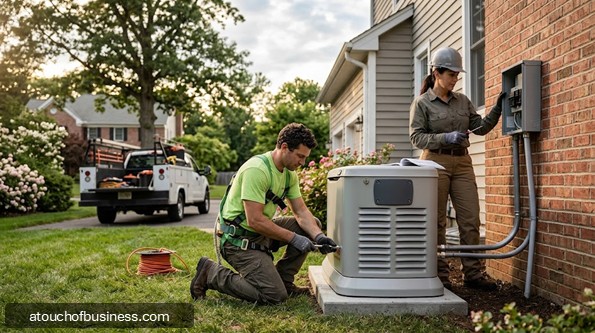
What to Expect From This Guide to Starting a Generator Installation Business
This guide walks you through the key decisions and practical steps involved in starting a generator installation business, from evaluating fit through opening preparation. The bullets below point to selected areas of value; the guide itself goes deeper than any highlight list can show.
Inside the guide, you will find:
- Startup steps: Follow 14 numbered stages from evaluating fit through licensing, funding, equipment, permitting, and your first job.
- Business fit: Weigh the physical demands, uneven seasonal income, and licensing hurdles before you commit to this trade.
- Market demand: Check local outage patterns, fuel access, and competition before deciding where to focus your business.
- Financial planning: Work through revenue mix, seasonal cash flow, and margin pressure without relying on fixed cost figures.
- Local requirements: Sort through licensing, permits, zoning, insurance, and bonding, since rules vary by state and city.
- Risks and warnings: Spot the estimating, scheduling, and site mistakes that commonly trip up installers before and during a job.
- Common questions: Review answers on equipment inventory, step sequencing, and fuel-line licensing that the article leaves open.
From here, the guide moves into the fit questions worth answering before you commit to installing standby power systems for a living.
As the owner of a generator installation business, you set up standby power systems for homes and small businesses.
These systems keep the power running when the grid goes down.
You evaluate the property and size the system for each job.
You coordinate the electrical and fuel-line work and see it through to a passed inspection.
This guide walks you through the startup steps involved in opening a generator installation business, from choosing your model to your first job.
You will find guidance on business fit, licensing, equipment, and pricing.
The guide covers common mistakes that can slow down an installer working through these steps.
Is a Generator Installation Business a Good Fit for You?
This work is physically demanding: lifting equipment, kneeling on pads, and working outdoors in every season.
It also carries electrical and fuel-related risk, so genuine comfort with hands-on trade work matters.
Demand for standby power often spikes around storms, then drops off for stretches in between.
Ask whether your household can handle uneven income during slower months before you commit.
Talk with electricians, HVAC contractors, or generator dealers who won’t compete with you directly.
Firsthand accounts from other owners can surface problems that research alone won’t show you.
Prepare specific questions before those conversations: licensing hurdles, manufacturer training, and how they juggle multiple trades on one job.
Decide this before you spend money on any of it.
Will you start from scratch, buy an existing electrical or generator business, or join a manufacturer’s dealer network?
A side-by-side look at starting versus buying a business can help you weigh the tradeoffs.
Buying an established, licensed contracting business can shorten how long it takes to build a reputation.
Joining a manufacturer’s dealer network is closer to certification and supply access than a traditional franchise.
Think through who your first customers might be and why they would pick a generator installation business over an established one.
Homeowners who’ve already lost power once, and small businesses that can’t afford downtime, are common starting points.
Red Flags Before You Start
You cannot operate a generator installation business without a licensed electrical contractor on staff or as the owner.
Confirm your path to that license, or to a dependable partner who holds one, before you spend on anything else.
Some states also require a separately licensed gas or plumbing trade for the fuel-line connection.
Committing to one manufacturer’s dealer program can restrict which brand you sell in your territory.
Compare a single-brand relationship against a multi-brand approach before you commit to training and fees.
Generator and switchgear availability from manufacturers has a history of stretching out unpredictably.
A long delay on an ordered unit can tie up a customer’s deposit and your cash flow at the same time.
Each installation can require electrical, building, and plumbing permits from more than one department.
One delayed permit can stall an entire project and the payment tied to it.
Demand for standby systems tends to spike around severe weather, then fall off for months at a time.
Plan your operating budget around the slow stretches, not the busiest week of storm season.
Heavier liquid-cooled and commercial units require lifting equipment or a rigging crew to move.
Decide the largest unit you can handle on your own before you advertise for bigger jobs.
A few structural conditions are worth understanding before you commit:
- A small number of manufacturers supply most standby units, so your business depends on their production decisions.
- This work spans electrical code, fuel-gas code, building code, and local zoning rules, more coordination than a single-trade contractor faces.
- Vehicles, rigging capability, and brand certification add up to a higher starting cost than many single-service trades.
Step 1: Choose Your Business Model and Generator Brand Relationship
Choose which fuel types you will support: natural gas, liquid propane, diesel, or a combination.
Decide whether you will focus on residential whole-home systems, light commercial work, or both.
Decide whether fuel-line work will be handled in-house, if your state allows it, or subcontracted to a licensed gas trade.
Compare joining a manufacturer’s dealer network against staying independent and certifying with more than one brand.
A dealer relationship brings training and supply access but usually comes with territory and exclusivity terms.
These early decisions shape almost every step that follows, so this helps opening day go more smoothly.
Step 2: Check Local Demand, Fuel Access, and Competition
Check how often the power grid goes down in the area where you plan to install generators.
Confirm whether natural gas lines reach most homes there, or whether propane is the primary fuel option.
Count how many electricians, HVAC companies, and dedicated dealers already install generators nearby.
Identify your likely first customers: outage-prone homeowners, medical-equipment households, and small businesses protecting refrigeration or sales systems.
Decide how you will reach them once you’re ready to take on jobs: referral partners, local directories, or storm-season visibility.
Step 3: Choose a Business Structure and Register Your Company
Compare a sole proprietorship, an LLC, and a corporation for the liability protection you’ll need.
You are installing electrical and fuel systems inside occupied homes, so liability protection matters more here than in many startups.
Register your chosen structure with your state once you’ve made a decision.
Step 4: Get Licensed Before You Take on Installation Work
Most jurisdictions require a licensed electrical contractor or master electrician to perform or supervise the wiring connection.
Verify whether your state licenses electricians individually, licenses the business itself, or leaves licensing to the local level.
Confirm separately whether the fuel-line connection needs its own licensed gas fitter or plumber.
Some jurisdictions also require you to carry a contractor bond before they’ll issue your license.
Before you take on any paid work, confirm:
- Your individual trade license status
- Whether the business itself needs separate contractor registration
- Whether the fuel connection requires a different license than the electrical work
Step 5: Complete Manufacturer Dealer Certification
Most manufacturers require hands-on training and an exam before you can install their units under warranty.
This certification is separate from your state electrical license, even though the two overlap in practice.
Skipping it can void the customer’s warranty even when your wiring meets code.
Factor training time and any related fees into your opening-day timeline.
Step 6: Check Zoning and Home-Based Business Rules
If you plan to run your generator installation business from home, check local home-occupation rules first.
Storing a vehicle, tools, or parts there can trigger limits you need to know about.
Confirm whether your city requires a general business license to operate within its limits.
Handle this before you sign a lease or commit to a shop space, so you know your baseline obligations.
Step 7: Line Up Funding and Operating Capital
Your vehicle, rigging equipment, and brand certification are typically your largest startup costs.
You’ll face them before you take your first paid job.
Compare an SBA-backed loan, equipment financing, a business line of credit, and manufacturer floor-plan financing where it’s offered.
A business loan comparison can help you weigh these funding paths.
Plan enough operating capital to cover permit delays and payment holdbacks, not just equipment.
List everything you need and price it against local rates rather than relying on a general figure.
Step 8: Set Up Business Banking and Payment Processing
Open a dedicated business bank account separate from your personal finances.
Set up an invoicing or merchant account that supports deposits, progress payments, and a final payment after inspection sign-off.
Milestone billing matters here because jobs run over multiple stages: deposit, installation, and inspection sign-off.
This keeps opening day from turning into a cash-flow scramble on your first few jobs.
Step 9: Secure Insurance and a Contractor Bond
Plan for general liability insurance, workers’ compensation once you hire anyone, and commercial auto coverage for your generator installation vehicles.
Add tools and equipment coverage, often called inland marine coverage, for gear that travels between job sites.
A business insurance overview can help you compare these policy types.
Confirm whether your state requires a contractor bond before it will issue your electrical license.
Workers’ compensation is legally required in most states once you hire an employee.
Verify your state’s exact threshold before you bring anyone on.
Step 10: Buy Vehicles, Rigging Equipment, and Tools
A service van or truck with equipment racks covers most residential generator jobs.
Decide whether to own lifting or rigging equipment for heavier units or subcontract a rigging company instead.
Heavier liquid-cooled and commercial units generally need more than a dolly to move without damage.
Core tools for this trade include:
- Digital multimeter, clamp meter, and insulation tester
- Conduit benders, fish tape, and torque wrenches for panel connections
- Level, string line, and layout tools for pad placement
- Personal protective equipment and lockout/tagout gear
- A combustible gas detector and a fire extinguisher rated for electrical and fuel fires
Add pipe-joining and pressure-test tools if you handle fuel-line work in-house.
Step 11: Set Up Supplier and Distributor Accounts
Open an account with a generator manufacturer or distributor before you quote your first job.
Open a second account with an electrical supply house for transfer switches, conduit, and wire.
If you install propane systems, add a propane supplier relationship to that list.
Ask each supplier about typical delivery timelines, since equipment delays affect the scheduling promises you make to customers.
Step 12: Build a Permitting Workflow You Can Repeat
Most generator installations need an electrical permit, and many also need a separate building, mechanical, or plumbing permit.
Some electric utilities also require notification before an automatic transfer switch goes into service.
Build a checklist for what to file, with which department, and in what order for a typical job.
Test this checklist before you promise a customer a completion date.
A missed permit step can stall a project and the payment attached to it.
Step 13: Set Your Pricing and Staffing Plan
Price each generator installation job by adding up labor, materials, permit fees, subcontracted trades, and any rigging cost.
Set separate pricing logic for one-time installs versus recurring maintenance contracts.
Decide whether you’ll handle every job on your own at the start or bring in a second technician.
Heavier units often need a second set of hands for rigging, not just wiring.
Decide this before your schedule fills up, so you’re not caught short-handed on a bigger job.
Step 14: Run a Pre-Opening Check and Line Up Your First Customers
Confirm your license, certification, insurance, and bond are all active before you take on a paying customer.
Make sure your vehicle, tools, and supplier accounts are all functional.
Run a trial or shadow installation to confirm your full process works from site visit to final inspection.
Set up your business name, phone or scheduling system, and a basic web presence.
This helps customers and referral partners find you.
Add vehicle signage showing your license and insurance status; it builds trust before you say a word.
Reach out to electricians, HVAC contractors, or roofers who don’t install generators themselves for referral partnerships.
Before your first job, confirm:
- Licensing and certification are active
- Insurance and bonding are in place
- Your permitting checklist has been tested
- Your pricing method and forms are ready
This is the checklist that gets you to opening day with confidence.
Business Plan
Turn every decision above into one working plan for your generator installation business before you commit money to any of it.
Map your revenue mix: how many installs versus maintenance contracts you need each month to cover fixed costs.
Standby systems are typically sold as project-based jobs.
A slow month can hit cash flow faster than in a subscription-style business.
Factor in equipment lead times: a long wait on an ordered unit delays both the job and the payment tied to it.
Look at gross margin pressure from established competitors and dealer networks with more buying power.
Weigh seasonal demand, too: storm-driven spikes followed by slower stretches affect both revenue and staffing.
Calculate, using your own local costs and pricing, how many jobs you need each month to cover your fixed costs.
No fixed formula works for every market, so run the calculation with your own costs, not an industry average.
Opening-Day Red Flags
Watch for these signs before you take on your first paying job.
An unclear scope of work is a common cause of a bad estimate on this kind of project.
Put the fuel type, unit size, pad location, and every trade involved in writing before you schedule the job.
A change order mid-project, like a customer wanting a bigger unit after the pad is poured, is common.
Price that separately, or it can erase your margin on the job.
Missed site constraints, like a buried utility line or an HOA restriction you didn’t check, can stall a job after you’ve already started.
A supplier delay on the generator itself can leave you holding a signed contract with no equipment to install.
Weather can push back pad pours and outdoor electrical work.
Build slack into your schedule instead of promising a tight date.
Poor documentation, such as skipping the final walkthrough or the handoff paperwork, invites disputes after the job is done.
Confirm these before your crew leaves a job site:
- The transfer switch and disconnect are labeled correctly
- The inspection has been scheduled or passed
- The customer has walked through the system and received handoff paperwork
- The job site has been cleaned up
This is what keeps a finished job from turning into a dispute later.
Frequently Asked Questions
What changes if I don’t have a shop or warehouse to store equipment?
Many installers never carry standby-unit inventory at all.
You order each unit from your distributor once a job is signed and scheduled, rather than storing it yourself.
This shifts your risk toward delivery timing instead of storage space, so build delivery lead time into every quote.
Which steps can I do out of order, and which ones cost me if I reverse them?
Ordering the generator before your permit, zoning, or HOA approval is confirmed is the costliest mistake.
A long-lead unit purchased for the wrong site or fuel type can sit unused while you sort out the change.
Pouring the concrete pad before your conduit and fuel-line routing are finalized is a close second.
Anchor points and utility stub-ups are set in the concrete, so a late change means breaking it out.
Do I need a separate license for the fuel-line connection, or does my electrical license cover it?
It depends on your state.
Some states license the gas or plumbing trade separately from electrical work, even on the same job.
Others allow a single licensed trade to cover more of the connection.
Check with your state’s licensing board before you plan to handle fuel-line work in-house.
As the owner of a generator installation business, you set up standby power systems for homes and small businesses.
These systems keep the power running when the grid goes down.
You evaluate the property and size the system for each job.
You coordinate the electrical and fuel-line work and see it through to a passed inspection.
This guide walks you through the startup steps involved in opening a generator installation business, from choosing your model to your first job.
You will find guidance on business fit, licensing, equipment, and pricing.
The guide covers common mistakes that can slow down an installer working through these steps.
Is a Generator Installation Business a Good Fit for You?
This work is physically demanding: lifting equipment, kneeling on pads, and working outdoors in every season.
It also carries electrical and fuel-related risk, so genuine comfort with hands-on trade work matters.
Demand for standby power often spikes around storms, then drops off for stretches in between.
Ask whether your household can handle uneven income during slower months before you commit.
Talk with electricians, HVAC contractors, or generator dealers who won’t compete with you directly.
Firsthand accounts from other owners can surface problems that research alone won’t show you.
Prepare specific questions before those conversations: licensing hurdles, manufacturer training, and how they juggle multiple trades on one job.
Decide this before you spend money on any of it.
Will you start from scratch, buy an existing electrical or generator business, or join a manufacturer’s dealer network?
A side-by-side look at starting versus buying a business can help you weigh the tradeoffs.
Buying an established, licensed contracting business can shorten how long it takes to build a reputation.
Joining a manufacturer’s dealer network is closer to certification and supply access than a traditional franchise.
Think through who your first customers might be and why they would pick a generator installation business over an established one.
Homeowners who’ve already lost power once, and small businesses that can’t afford downtime, are common starting points.
Red Flags Before You Start
You cannot operate a generator installation business without a licensed electrical contractor on staff or as the owner.
Confirm your path to that license, or to a dependable partner who holds one, before you spend on anything else.
Some states also require a separately licensed gas or plumbing trade for the fuel-line connection.
Committing to one manufacturer’s dealer program can restrict which brand you sell in your territory.
Compare a single-brand relationship against a multi-brand approach before you commit to training and fees.
Generator and switchgear availability from manufacturers has a history of stretching out unpredictably.
A long delay on an ordered unit can tie up a customer’s deposit and your cash flow at the same time.
Each installation can require electrical, building, and plumbing permits from more than one department.
One delayed permit can stall an entire project and the payment tied to it.
Demand for standby systems tends to spike around severe weather, then fall off for months at a time.
Plan your operating budget around the slow stretches, not the busiest week of storm season.
Heavier liquid-cooled and commercial units require lifting equipment or a rigging crew to move.
Decide the largest unit you can handle on your own before you advertise for bigger jobs.
A few structural conditions are worth understanding before you commit:
- A small number of manufacturers supply most standby units, so your business depends on their production decisions.
- This work spans electrical code, fuel-gas code, building code, and local zoning rules, more coordination than a single-trade contractor faces.
- Vehicles, rigging capability, and brand certification add up to a higher starting cost than many single-service trades.
Step 1: Choose Your Business Model and Generator Brand Relationship
Choose which fuel types you will support: natural gas, liquid propane, diesel, or a combination.
Decide whether you will focus on residential whole-home systems, light commercial work, or both.
Decide whether fuel-line work will be handled in-house, if your state allows it, or subcontracted to a licensed gas trade.
Compare joining a manufacturer’s dealer network against staying independent and certifying with more than one brand.
A dealer relationship brings training and supply access but usually comes with territory and exclusivity terms.
These early decisions shape almost every step that follows, so this helps opening day go more smoothly.
Step 2: Check Local Demand, Fuel Access, and Competition
Check how often the power grid goes down in the area where you plan to install generators.
Confirm whether natural gas lines reach most homes there, or whether propane is the primary fuel option.
Count how many electricians, HVAC companies, and dedicated dealers already install generators nearby.
Identify your likely first customers: outage-prone homeowners, medical-equipment households, and small businesses protecting refrigeration or sales systems.
Decide how you will reach them once you’re ready to take on jobs: referral partners, local directories, or storm-season visibility.
Step 3: Choose a Business Structure and Register Your Company
Compare a sole proprietorship, an LLC, and a corporation for the liability protection you’ll need.
You are installing electrical and fuel systems inside occupied homes, so liability protection matters more here than in many startups.
Register your chosen structure with your state once you’ve made a decision.
Step 4: Get Licensed Before You Take on Installation Work
Most jurisdictions require a licensed electrical contractor or master electrician to perform or supervise the wiring connection.
Verify whether your state licenses electricians individually, licenses the business itself, or leaves licensing to the local level.
Confirm separately whether the fuel-line connection needs its own licensed gas fitter or plumber.
Some jurisdictions also require you to carry a contractor bond before they’ll issue your license.
Before you take on any paid work, confirm:
- Your individual trade license status
- Whether the business itself needs separate contractor registration
- Whether the fuel connection requires a different license than the electrical work
Step 5: Complete Manufacturer Dealer Certification
Most manufacturers require hands-on training and an exam before you can install their units under warranty.
This certification is separate from your state electrical license, even though the two overlap in practice.
Skipping it can void the customer’s warranty even when your wiring meets code.
Factor training time and any related fees into your opening-day timeline.
Step 6: Check Zoning and Home-Based Business Rules
If you plan to run your generator installation business from home, check local home-occupation rules first.
Storing a vehicle, tools, or parts there can trigger limits you need to know about.
Confirm whether your city requires a general business license to operate within its limits.
Handle this before you sign a lease or commit to a shop space, so you know your baseline obligations.
Step 7: Line Up Funding and Operating Capital
Your vehicle, rigging equipment, and brand certification are typically your largest startup costs.
You’ll face them before you take your first paid job.
Compare an SBA-backed loan, equipment financing, a business line of credit, and manufacturer floor-plan financing where it’s offered.
A business loan comparison can help you weigh these funding paths.
Plan enough operating capital to cover permit delays and payment holdbacks, not just equipment.
List everything you need and price it against local rates rather than relying on a general figure.
Step 8: Set Up Business Banking and Payment Processing
Open a dedicated business bank account separate from your personal finances.
Set up an invoicing or merchant account that supports deposits, progress payments, and a final payment after inspection sign-off.
Milestone billing matters here because jobs run over multiple stages: deposit, installation, and inspection sign-off.
This keeps opening day from turning into a cash-flow scramble on your first few jobs.
Step 9: Secure Insurance and a Contractor Bond
Plan for general liability insurance, workers’ compensation once you hire anyone, and commercial auto coverage for your generator installation vehicles.
Add tools and equipment coverage, often called inland marine coverage, for gear that travels between job sites.
A business insurance overview can help you compare these policy types.
Confirm whether your state requires a contractor bond before it will issue your electrical license.
Workers’ compensation is legally required in most states once you hire an employee.
Verify your state’s exact threshold before you bring anyone on.
Step 10: Buy Vehicles, Rigging Equipment, and Tools
A service van or truck with equipment racks covers most residential generator jobs.
Decide whether to own lifting or rigging equipment for heavier units or subcontract a rigging company instead.
Heavier liquid-cooled and commercial units generally need more than a dolly to move without damage.
Core tools for this trade include:
- Digital multimeter, clamp meter, and insulation tester
- Conduit benders, fish tape, and torque wrenches for panel connections
- Level, string line, and layout tools for pad placement
- Personal protective equipment and lockout/tagout gear
- A combustible gas detector and a fire extinguisher rated for electrical and fuel fires
Add pipe-joining and pressure-test tools if you handle fuel-line work in-house.
Step 11: Set Up Supplier and Distributor Accounts
Open an account with a generator manufacturer or distributor before you quote your first job.
Open a second account with an electrical supply house for transfer switches, conduit, and wire.
If you install propane systems, add a propane supplier relationship to that list.
Ask each supplier about typical delivery timelines, since equipment delays affect the scheduling promises you make to customers.
Step 12: Build a Permitting Workflow You Can Repeat
Most generator installations need an electrical permit, and many also need a separate building, mechanical, or plumbing permit.
Some electric utilities also require notification before an automatic transfer switch goes into service.
Build a checklist for what to file, with which department, and in what order for a typical job.
Test this checklist before you promise a customer a completion date.
A missed permit step can stall a project and the payment attached to it.
Step 13: Set Your Pricing and Staffing Plan
Price each generator installation job by adding up labor, materials, permit fees, subcontracted trades, and any rigging cost.
Set separate pricing logic for one-time installs versus recurring maintenance contracts.
Decide whether you’ll handle every job on your own at the start or bring in a second technician.
Heavier units often need a second set of hands for rigging, not just wiring.
Decide this before your schedule fills up, so you’re not caught short-handed on a bigger job.
Step 14: Run a Pre-Opening Check and Line Up Your First Customers
Confirm your license, certification, insurance, and bond are all active before you take on a paying customer.
Make sure your vehicle, tools, and supplier accounts are all functional.
Run a trial or shadow installation to confirm your full process works from site visit to final inspection.
Set up your business name, phone or scheduling system, and a basic web presence.
This helps customers and referral partners find you.
Add vehicle signage showing your license and insurance status; it builds trust before you say a word.
Reach out to electricians, HVAC contractors, or roofers who don’t install generators themselves for referral partnerships.
Before your first job, confirm:
- Licensing and certification are active
- Insurance and bonding are in place
- Your permitting checklist has been tested
- Your pricing method and forms are ready
This is the checklist that gets you to opening day with confidence.
Business Plan
Turn every decision above into one working plan for your generator installation business before you commit money to any of it.
Map your revenue mix: how many installs versus maintenance contracts you need each month to cover fixed costs.
Standby systems are typically sold as project-based jobs.
A slow month can hit cash flow faster than in a subscription-style business.
Factor in equipment lead times: a long wait on an ordered unit delays both the job and the payment tied to it.
Look at gross margin pressure from established competitors and dealer networks with more buying power.
Weigh seasonal demand, too: storm-driven spikes followed by slower stretches affect both revenue and staffing.
Calculate, using your own local costs and pricing, how many jobs you need each month to cover your fixed costs.
No fixed formula works for every market, so run the calculation with your own costs, not an industry average.
Opening-Day Red Flags
Watch for these signs before you take on your first paying job.
An unclear scope of work is a common cause of a bad estimate on this kind of project.
Put the fuel type, unit size, pad location, and every trade involved in writing before you schedule the job.
A change order mid-project, like a customer wanting a bigger unit after the pad is poured, is common.
Price that separately, or it can erase your margin on the job.
Missed site constraints, like a buried utility line or an HOA restriction you didn’t check, can stall a job after you’ve already started.
A supplier delay on the generator itself can leave you holding a signed contract with no equipment to install.
Weather can push back pad pours and outdoor electrical work.
Build slack into your schedule instead of promising a tight date.
Poor documentation, such as skipping the final walkthrough or the handoff paperwork, invites disputes after the job is done.
Confirm these before your crew leaves a job site:
- The transfer switch and disconnect are labeled correctly
- The inspection has been scheduled or passed
- The customer has walked through the system and received handoff paperwork
- The job site has been cleaned up
This is what keeps a finished job from turning into a dispute later.
Frequently Asked Questions
What changes if I don’t have a shop or warehouse to store equipment?
Many installers never carry standby-unit inventory at all.
You order each unit from your distributor once a job is signed and scheduled, rather than storing it yourself.
This shifts your risk toward delivery timing instead of storage space, so build delivery lead time into every quote.
Which steps can I do out of order, and which ones cost me if I reverse them?
Ordering the generator before your permit, zoning, or HOA approval is confirmed is the costliest mistake.
A long-lead unit purchased for the wrong site or fuel type can sit unused while you sort out the change.
Pouring the concrete pad before your conduit and fuel-line routing are finalized is a close second.
Anchor points and utility stub-ups are set in the concrete, so a late change means breaking it out.
Do I need a separate license for the fuel-line connection, or does my electrical license cover it?
It depends on your state.
Some states license the gas or plumbing trade separately from electrical work, even on the same job.
Others allow a single licensed trade to cover more of the connection.
Check with your state’s licensing board before you plan to handle fuel-line work in-house.
Interviews with Generator Installation Business Professionals
These interviews feature generator business owners and professionals discussing installation, service, customer relationships, staffing, business growth, and the operational demands of the standby power industry.
Readers can use their experiences to better understand the skills, service systems, staffing needs, and business practices involved before starting a generator installation business.
How to Build a Generator Business Through Trust & Word of Mouth | Alin Scheusan
Alin Scheusan, owner and operator of Florida Generator Power Inc., discusses running a generator sales and service business that includes installations while focusing heavily on maintenance and repair. He talks about starting with limited resources, working through another dealership, building business through referrals, and considering ways to scale.
This interview provides a close look at building a small generator business around technical service and customer trust. It also highlights the limits of relying entirely on referrals and some of the decisions an owner faces as the business begins to grow.
Grant Winston on Growth, Culture, and Standby Generators
Grant Winston, owner of Current Power Technologies, discusses how Winter Storm Uri influenced his move into the standby generator industry. The conversation covers company growth, the Texas power market, shortages of electricians, employee retention, and the company’s expansion into related electrical services.
This interview is useful for considering staffing and company culture alongside generator sales and installation. It also illustrates how a generator business can respond to changing demand while building a broader electrical service operation.
From Technician to Entrepreneur: Scott Forte’s Generator Journey
Scott Forte, owner of Upstate Power Systems, discusses a 20-year career that took him from generator technician to sales and management before becoming a dealership owner. He addresses competing with larger dealers, customer relationships, staffing, logistics, inventory, and changes affecting the standby power market.
This interview is useful for seeing how technical generator experience can develop into business ownership. It also identifies several operational challenges that become important as a generator dealership grows.
How ARK Generator Built a 40-Person Generator Business
Tim Weaver, owner of ARK Generator, explains how the company shifted from general electrical contracting toward generator installation and service. He discusses the need for electrical, mechanical, fuel, maintenance, and service capabilities, along with staffing, in-house installation work, site visits, customer education, and building a service department.
This interview is especially useful for understanding that generator installation involves more than electrical work alone. It provides practical insight into specialization, staffing different skill sets, controlling installation quality, and developing service and maintenance alongside new installations.
Related Articles
- How To Start an Electrician Business
- How To Start an EV Charging Station Business
- How To Start a General Contracting Business
Sources:
- Houston Permitting Center: Generator Permit Guideline,
- Village of Ardsley, NY: Standby Generator Permit FAQ,
- Town of Topsham, Maine: Generator Clearance NFPA 37,
- Facility Compliance Hub: NFPA 37 Room Design Guide,
- New York Electrical Inspection Agency: Standby Generator Setback,
- Utah DOPL: Generator Installation CE Outline,
- ServiceTitan: Electrical Contractor Insurance Guide,
- Insureon: Installation Business Insurance,
- Generac Support: Generac Dealer Designations,
- Generac: Generac Dealers and Installers,
- Consumer Reports: Whole-House Generator Guide,
- Generator Source: Industrial Generator Installation