
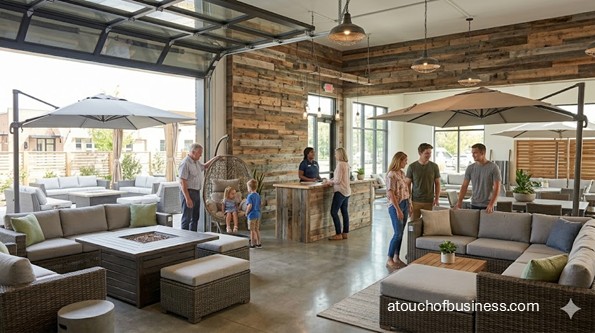
Outdoor Furniture Store Startup Overview and Fit
An outdoor furniture store sells products people use to furnish patios, decks, porches, balconies, and backyards. In a storefront model, your job is not just to stock furniture. You need to create a showroom people can walk through, compare pieces in person, and picture in their own space.
This business usually includes patio dining sets, lounge seating, sectionals, umbrellas, fire tables, cushions, rugs, covers, and related outdoor living items. Some stores focus on in-stock products. Others use floor samples and place special orders with suppliers after the sale.
Is This Business The Right Fit For You?
Before you go further, ask a simple question. Do you actually like this kind of work?
An outdoor furniture store can look appealing from the outside. The daily reality is different. You may spend your time receiving bulky inventory, dealing with freight damage, resetting displays, tracking special orders, solving delivery problems, and helping customers compare materials, finishes, and price points.
You also need to think about your motivation. Are you moving toward a real goal, or just trying to get away from a job, financial pressure, or the idea that owning a business will solve everything? If you do not have a genuine interest in the business itself, hard periods will feel even harder.
Passion matters because it helps you stay steady when sales are slow, inventory arrives damaged, or the season does not go the way you expected. That is one reason it helps to think carefully about why real interest in the work matters before you commit.
This business also comes with lifestyle tradeoffs. A storefront retail business ties you to a location, store hours, staff coverage, and seasonal demand. If you want a business with more flexibility, this may not be the right fit.
You should also talk to owners who will not become your competitors. Speak with owners in another city, region, or market area. Go in with real questions prepared. Ask about their inventory choices, supplier problems, returns, delivery issues, location mistakes, and what they wish they had done before opening. Their path will not match yours exactly, but firsthand owner insight is still hard to replace.
Local demand is a gate, not a side issue. You need enough people in your area who want outdoor furniture at the price level you plan to offer. If demand is weak, the location may be wrong, or the business may not make sense there at all. Take time to study local supply and demand before you sign anything.
You should also compare your entry path. Starting from scratch gives you control, but it also means building everything yourself. In some cases, buying a business already in operation may be the better move if the store already has a location, inventory systems, supplier accounts, and local recognition. For this type of business, franchising is not usually the first route people consider, so the main comparison is often scratch versus existing store.
Understand What You Will Sell
Your outdoor furniture store needs a clear product mix from the start. That decision affects space, cash needs, storage, pricing, delivery, and the kind of customers you attract.
Some stores stay focused on core furniture. Others build a broader outdoor living assortment. A wide mix can help average sale value, but it can also spread your budget too thin.
- Patio dining sets
- Lounge chairs and sofas
- Sectionals
- Chaise lounges
- Umbrellas and bases
- Fire tables or fire pits
- Outdoor rugs
- Cushions and replacement cushions
- Covers and storage boxes
- Decor and add-on accessories
Be clear about what kind of store you are opening. A focused assortment is often easier to launch than trying to serve every customer type at once.
Decide How Your Store Will Operate
A storefront outdoor furniture store usually runs in one of three ways. You carry inventory for immediate sale, you show floor samples and place special orders for most products, or you use a hybrid setup.
That choice changes your startup costs fast. A stock-focused store needs more cash, more storage, and stronger inventory control. A sample-driven store may need less inventory up front, but it depends more on supplier reliability, lead times, and clear customer paperwork.
- In-stock model: better for fast delivery and same-week pickup
- Floor sample and special order model: lower opening inventory, but longer wait times
- Hybrid model: common for storefront retail because it balances choice and cash flow
This is one of the biggest early decisions you will make. It shapes the whole business.
Know Your Customers Before You Choose Inventory
An outdoor furniture store does not serve one single type of buyer. Your best customers may be homeowners with large patios, condo owners with smaller outdoor spaces, new-home buyers, or people replacing worn-out sets.
Your location should match the customer you want. A high-end showroom needs a different area, product line, and presentation than a value-focused store.
Think about what people in your area actually need. Do they want compact balcony sets, full backyard dining collections, weather-resistant cushions, or premium outdoor sectionals? The answer should guide your buying decisions more than your personal taste.
Write A Business Plan For The Outdoor Furniture Store
You do not need a fancy document. You do need a clear plan.
Your plan should explain what you will sell, who you want to serve, how your store will operate, what your startup costs look like, how much inventory you need, and how you plan to get customers through the door. If you have never done this before, it helps to start with a simple guide to building a business plan.
- Your store concept and price range
- Your target customer
- Your location criteria
- Your inventory approach
- Your supplier strategy
- Your delivery and pickup plan
- Your startup costs and funding plan
- Your first-stage sales targets
If your plan feels vague, your launch is probably still too vague.
Choose Your Legal Structure Early
Your legal structure affects taxes, liability, paperwork, and how you set up the business. Decide on this before you open accounts, sign major contracts, or hire staff.
Many first-time owners compare a sole proprietorship with an LLC. Others may use a corporation or partnership, depending on who owns the business and how they want to handle liability and taxes. It helps to review how to choose your legal structure before you register anything.
If you use a name other than your legal personal name or entity name, you may also need a DBA filing, depending on your state or local rules.
Register The Business And Get Tax Setup In Place
Once the structure is chosen, register the business with the proper state office if required. Then get your federal Employer Identification Number from the Internal Revenue Service.
An outdoor furniture store selling tangible goods usually also needs state sales tax registration before making retail sales. If you plan to hire, you will likely need state employer accounts for withholding and unemployment as well.
This is also the point where you should get your bookkeeping, tax records, and document storage organized. Clean records matter from day one, especially when you are buying inventory, paying freight, taking deposits, and handling returns.
Pick The Right Store Location
Your location matters more than many new owners realize. Outdoor furniture is a visual, in-person category. Customers often want to touch the materials, sit on the seating, compare sizes, and look at full sets before they buy.
Good visibility helps. So do parking, loading access, easy entry, and room for delivery traffic. A pretty space that is hard to find or hard to use can become a problem fast.
- Visibility from the road
- Parking for shoppers
- Access for freight and deliveries
- Enough room for showroom displays
- Backroom or warehouse storage
- A customer base that matches your price point
Do not sign a lease until the use fits the site. Retail furniture sales may be allowed at one address and restricted at another.
Handle Local Licenses And Location Approvals
Compliance for a storefront outdoor furniture store is usually practical rather than extreme, but you still need to get it right before opening.
At the federal level, you will usually deal with your tax ID, payroll setup if hiring, workplace poster requirements, and accessibility requirements for a public-facing business.
At the state level, you may need business registration, sales tax registration, and employer accounts.
At the city or county level, the big issues are often the ones that affect the space itself.
- General business license, if your area requires one
- Zoning approval for retail furniture sales at that address
- Certificate of occupancy, if needed for the tenant space
- Sign permit for exterior signs
- Fire or building inspection, if tied to the opening or build-out
Because local rules vary, keep your questions plain and direct.
What To Ask
- Are retail furniture sales allowed at this address?
- Do I need a new certificate of occupancy before opening?
- Can I place any products outside as display items?
- Do I need a sign permit before installing storefront signage?
- What local licenses must be active before the first sale?
If you need a broader walkthrough, this is where a practical guide to local licenses and permits can help you keep track of what applies.
Plan Your Startup Costs With Real Quotes
Startup costs for an outdoor furniture store can vary widely. The range depends on your location, the size of the store, your build-out, your opening inventory, and whether you carry deep stock or mostly floor samples.
Do not guess. Define your setup first. Then list what you need and get quotes.
- Lease deposit and early rent
- Build-out and painting
- Storefront signage
- Showroom fixtures
- Point-of-sale and software
- Opening inventory
- Floor samples
- Freight and inbound shipping
- Storage and receiving setup
- Insurance
- Licenses and registrations
- Website and digital setup
- Launch marketing
- Payroll and training
Your biggest cost drivers will often be inventory, freight, rent, and how much space the store needs. If you buy too much too early, you can lock up cash in bulky stock that moves slowly.
This is also a good time to think through early revenue and profit planning so you are not building the store on guesswork.
Choose Funding And Banking Before Opening
Once your startup cost picture is clear, decide how you will fund the business. Some owners use savings. Others use a business loan, outside investors, or a mix of sources.
If you need borrowed funds, compare options early because lenders often want to see your structure, plan, and cost estimates before approval. A simple guide to getting a business loan can help you understand what lenders usually expect.
You also need business banking in place before your first sale. Separate business transactions from personal ones from the start.
- Business checking account
- Merchant processing or other card setup
- Deposit handling process
- Refund controls
- Basic bookkeeping system
- Sales tax recordkeeping
Outdoor furniture is often a high-ticket purchase. Your store should be ready to take deposits, final payments, and card transactions without confusion.
Set Up Pricing That Covers Real Costs
Pricing an outdoor furniture store is not just about marking up what you buy. You need to understand landed cost, freight, damage risk, assembly time, delivery, markdown risk, and the price level your market will accept.
A chair set that looks profitable on paper can shrink fast once freight claims, floor sample wear, and late-season discounts show up. That is why setting your prices carefully matters from the beginning.
- Product cost from the supplier
- Inbound freight
- Receiving and handling time
- Assembly costs
- Delivery margin
- Floor sample discount risk
- Competitive local pricing
- Warranty or damage allowance
Be clear about what is included in the sale. Customers should know whether assembly, delivery, and setup are extra.
Build Supplier Relationships Carefully
Suppliers shape your store more than many new owners expect. They affect product quality, lead times, freight terms, sample programs, minimum orders, and how warranty claims get handled.
Before opening the outdoor furniture store, get clear on the basics.
- Opening order minimums
- Floor sample options
- Lead times
- Freight terms
- Damage claim deadlines
- Return policies
- Replacement parts process
- Pricing policies, if any apply
A weak supplier setup can hurt the business even if your showroom looks good. This is one place where rushed decisions can cost you later.
Set Up Inventory And Receiving Systems
Retail businesses rise or fall on inventory discipline. For an outdoor furniture store, this matters even more because the products are bulky, seasonal, and expensive to store.
You need a system that tracks stock levels, floor samples, vendor details, purchase orders, and product variants. Even a smaller store needs clear counts and clean receiving records.
- Stock on hand
- Floor sample status
- Purchase orders
- Backordered items
- Damaged goods
- Customer special orders
- Accessories and replacement parts
Buying too much too soon is one of the most common early problems in retail. Stockouts hurt too, but dead inventory can drain cash for months.
Create A Showroom Customers Can Understand Quickly
A storefront outdoor furniture store depends on presentation. Customers want to see full sets, compare sizes, and imagine the pieces in real life.
Your showroom should feel clear, not crowded. Group products in a way that makes the shopping process easier.
- Dining collections together
- Lounge seating arranged as finished sets
- Umbrellas displayed with bases when possible
- Cushions and fabric samples easy to compare
- Accessories placed where they support the sale
- Price tags easy to read
Good merchandising helps customers buy with confidence. Poor layout creates hesitation.
Buy The Equipment And Store Setup Essentials
You do not need every tool on day one, but you do need the basics in place before inventory arrives and customers walk in.
For this type of store, equipment falls into a few main groups.
- Sales floor: display platforms, sign holders, sample racks, checkout counter, customer seating, measuring tools
- Backroom: pallet jack, dollies, hand trucks, packing tables, shelving, label printer, bins for small parts
- Technology: point-of-sale system, barcode scanner, receipt printer, inventory software, accounting software, store Wi-Fi
- Paperwork: receipts, deposit forms, special-order forms, delivery acknowledgements, return policy notices, damage reports
- Safety: first-aid kit, fire extinguisher, wet-floor signs, approved ladders or step stools, workplace posters
- Office setup: desk, printer, filing storage, cash drawer or safe, cleaning supplies
If you outsource delivery, you may not need your own truck at launch. You still need a clean process for staging, scheduling, and documenting each order.
Build A Clear Sales And Payment Process
Customers should never feel confused about what they are buying, when it will arrive, or what happens if something goes wrong.
Your sales process should cover the full path from inquiry to payment.
- Customer enters the showroom
- Staff helps them compare styles, materials, and sizes
- Items are priced clearly
- Special-order details are written down
- Deposit or full payment is collected
- Delivery or pickup is scheduled
- Order status is tracked
- Any damage or warranty issue is documented fast
For an outdoor furniture store, special-order paperwork matters. That includes finish, fabric, dimensions, lead time, payment terms, and customer approval.
Plan Delivery, Pickup, And Returns Before The First Sale
Large outdoor pieces are not like small retail items. Delivery, pickup, and returns can become a major pain point if you wait too long to design the process.
Decide early whether you will offer customer pickup, threshold delivery, white-glove delivery, or outside delivery partners.
- How orders get staged
- Who confirms delivery windows
- What happens if freight arrives damaged
- How returned items are inspected
- Whether floor samples can be returned
- What customers sign at delivery
Make the rules clear before the sale, not after the complaint.
Name, Domain, And Brand Basics
Your business name should fit the kind of store you are building. Keep it easy to say, easy to remember, and easy to spell.
Before you print signs or cards, make sure the name is available for registration where needed and that a matching domain is still open. Then build a simple identity that works across your storefront, website, tags, and receipts.
- Business name
- Domain name
- Simple logo
- Storefront signage
- Business cards
- Basic style choices for tags and printed materials
This does not need to be elaborate at the start. It does need to look consistent.
Set Up Your Digital Presence Before Opening
Even though this is a storefront business, many customers will look you up before they visit. Your online presence should make the store feel real, active, and easy to shop.
At minimum, have your hours, address, phone number, product focus, delivery area, and contact information ready before launch. If you are using floor samples and special orders, say that clearly so expectations stay realistic.
A simple website, store profile, and clean contact process can do a lot of work for you early on.
Prepare To Hire And Train If Needed
Some owners open solo. Others need staff from day one because the store hours, delivery coordination, and physical handling make solo coverage hard.
If you hire, train people on more than sales talk. They need to understand the products, lead times, warranties, payment policies, and how to document special orders correctly. If you are unsure when to add help, it may help to think through when hiring actually makes sense.
- Product features and materials
- Store policies
- Checkout and deposits
- Special-order paperwork
- Delivery scheduling
- Damage reporting
- Customer communication standards
One bad order form can create a long and expensive problem.
Understand Your Day-To-Day Responsibilities
Before you open the outdoor furniture store, picture the daily responsibilities clearly. This helps you judge whether the business fits you, not just your goals.
A typical early day may include reviewing purchase orders, checking shipment arrivals, receiving product, inspecting for damage, resetting showroom displays, answering customer questions, processing deposits, and confirming delivery windows.
You may also spend time calling suppliers, solving backorder issues, updating inventory counts, and handling returns or warranty claims. That is the real rhythm of the business.
Get The Right Customers Through The Door
Your first-stage marketing should match the kind of store you opened. A premium showroom, a value-driven patio store, and a compact urban outdoor store do not attract customers the same way.
At launch, keep the plan practical.
- Clear storefront signage
- Local business listings
- A useful website
- Photos of your showroom and product types
- Local promotions tied to the season
- Simple follow-up process for leads and quotes
You do not need a complicated campaign to open well. You do need a clear message about what you sell, who you serve, and why people should visit your store instead of another one nearby.
Watch For Red Flags Before You Open
Some problems show up before launch if you are honest enough to notice them. Do not ignore warning signs because you want the opening to happen fast.
- No clear target customer
- Weak demand in the local area
- A poor location with low visibility or hard access
- Too much inventory ordered too early
- No reliable delivery plan
- Vague supplier terms
- No clear pricing method
- Unfinished store setup close to opening day
- Confusing return or special-order policies
- Not enough working cash after opening inventory arrives
If several of these are showing up at once, pause and fix them before launch. Opening on time matters less than opening ready.
Use A Practical Pre-Opening Checklist
A final checklist helps you catch gaps while there is still time to fix them. For a storefront outdoor furniture store, the checklist should cover the business, the space, the products, the systems, and the customer experience.
- Business registration complete
- Tax ID obtained
- Sales tax setup active
- Local approvals confirmed
- Insurance in place
- Lease and landlord requirements complete
- Signage ready
- Point-of-sale system tested
- Card payments working
- Inventory entered and tagged
- Supplier accounts active
- Opening inventory received
- Damage claim process ready
- Showroom fully arranged
- Special-order forms printed or loaded
- Delivery and pickup process tested
- Website and contact info live
- Staff trained, if hiring
- Return and payment policies posted
- Soft opening or test run completed
That last test run matters. It helps you find small problems before customers do.
Final Thoughts On Starting An Outdoor Furniture Store
An outdoor furniture store can be a solid retail business, but it is not a light setup. You are dealing with bulky inventory, seasonality, supplier timing, store presentation, and customer expectations around delivery and product quality.
If you take the time to test local demand, choose the right location, control inventory, and open with clear systems, you give yourself a much better start. If you rush the setup, the business can become expensive and messy very quickly.
FAQs
Question: Do I need a seller’s permit before I open an outdoor furniture store?
Answer: In many states, yes, because you are selling taxable goods. You should get your sales tax registration or seller’s permit in place before your first sale.
Question: Is an LLC the best structure for this kind of retail business?
Answer: It depends on your tax situation, ownership setup, and risk concerns. Many owners compare an LLC with a sole proprietorship or corporation before they register.
Question: Can I open with only display pieces and order everything after the sale?
Answer: Yes, some stores start that way to reduce opening inventory. The tradeoff is that you depend more on supplier lead times and clear sales paperwork.
Question: What licenses should I ask about for a patio furniture showroom?
Answer: Ask about local business licensing, zoning approval, sign rules, and whether the space needs a certificate of occupancy. The exact list depends on the city, county, and the building.
Question: How much inventory should I buy before launch?
Answer: Start with enough depth to make the store feel real, but not so much that cash gets trapped in slow stock. Your opening buy should match your space, season, and customer type.
Question: What kind of insurance should I look into before opening?
Answer: Most owners look at general liability, commercial property coverage, and workers’ compensation if they hire.
If you handle delivery yourself, ask about commercial vehicle coverage too.
Question: Do I need a warehouse for an outdoor furniture store?
Answer: Not always, but you do need room for receiving, staging, and storing bulky pieces. A store with only a small back room may struggle if you carry deep stock.
Question: What are the biggest startup expenses for this business?
Answer: The biggest items are usually rent, store build-out, opening inventory, freight, fixtures, and software. Costs can swing a lot based on store size and how much stock you carry.
Question: Should I offer delivery from day one?
Answer: In most cases, yes, because large outdoor pieces are hard for many buyers to move on their own. You can use your own team or hire a delivery partner.
Question: How do I set prices without guessing?
Answer: Build your price from product cost, freight, handling, and any delivery or setup charges. Then compare that number with your local market before you finalize your tags.
Question: What tools or systems do I need before the store opens?
Answer: You need a point-of-sale system, a way to track stock, and a method for writing up special orders. You also need a simple process for deposits, refunds, and delivery scheduling.
Question: What mistakes do new outdoor furniture store owners make early?
Answer: Common problems include ordering too much, choosing the wrong location, and opening before the sales process is clear. Weak supplier terms can also create expensive surprises.
Question: What does the daily routine look like right after opening?
Answer: Early days often include receiving product, checking for damage, helping shoppers, updating displays, and answering order questions. You may also spend time with vendors, payments, and delivery follow-up.
Question: Should I hire staff before I open or wait?
Answer: That depends on your store hours, store size, and how much physical handling the business requires. A solo launch is possible, but coverage can get thin fast in a storefront setting.
Question: What should I train my first employee to do?
Answer: Start with product basics, order writing, payment steps, and how to explain lead times clearly. They should also know how to report damage and handle customer questions the same way every time.
Question: How do I keep first-month cash flow from getting tight?
Answer: Watch inventory buying closely and do not let large orders drain your working cash. Deposits, payment timing, and freight costs need close attention in the first phase.
Question: What policies should I have ready before the first customer walks in?
Answer: Have written rules for deposits, special orders, returns, damaged goods, and delivery timing. Clear policies reduce confusion and protect you when problems come up.
Question: How should I market the store in the first few weeks?
Answer: Focus on local visibility, clear signage, strong photos, and basic online listings. People need to know what kind of store you are and why they should visit in person.
Question: Do I need special forms for custom orders and large purchases?
Answer: Yes, especially if customers can choose fabrics, finishes, or other options. The form should show exactly what was ordered, the timing, and the payment terms.
Question: How do I know if a location is wrong before I commit?
Answer: A weak site often has poor visibility, awkward access, or the wrong nearby customer base. If the area does not match your price level or shopping style, the store can struggle from the start.
Question: Can I start this business part time?
Answer: It is possible, but a storefront usually needs consistent hours, customer coverage, and close attention to deliveries and suppliers. Part-time ownership is harder when the store depends on in-person traffic.
Question: What should I ask suppliers before I place my first order?
Answer: Ask about minimum buys, shipping terms, damage claims, parts support, and how long orders usually take. Those details matter as much as the product line itself.
Learn From People Already In The Business
If you are starting an outdoor furniture store, owner interviews can help you spot issues before they become expensive problems.
These resources give you a closer look at inventory choices, showroom strategy, supply chain pressure, customer expectations, and how experienced operators think through the category.
- Today’s Patio Customers Want What’s In Stock — Interview-based article with Today’s Patio COO Stephen Ramey. Strong resource for launch planning around inventory depth, in-stock selling, supplier delays, and competing on service instead of price alone.
- Get ’N Business Podcast Ep. 47 | The Porch + Patio Store — Video podcast interview with the Porch+Patio team. Good for hearing how a real patio-focused retailer talks about its business in a more conversational format.
- How Outdoor Furniture Brand Yardbird Started On Craigslist And Expanded Nationally — Modern Retail podcast episode with Yardbird co-founder Jay Dillon. More brand-focused than store-focused, but still useful for product-market fit, sourcing, showroom growth, and category positioning.
Related Articles
- How To Start a Retail Furniture Store
- Start an Ergonomic Furniture Store
- How To Start Your Home Decor Business
- Start a Garden Ornament Store
- How To Start a Gazebo Building Business
- How To Start Deck Building Service
- Starting an Outdoor Lighting Installation Business
- Start a Hot Tub Retail Business
- How To Start a Hammock Retail Shop
- How To Start an Interior Design Business
- Starting a Garden Supply Business
Sources:
- IRS: Business Structures, Employer Identification Number, Hiring Employees
- SBA: Pick Your Business Location, Apply For Licenses And Permits, Tax ID Numbers, Business Insurance
- OSHA: Workplace Poster, Employer Responsibilities
- ADA.GOV: Businesses Open To Public
- HOME FURNISHINGS ASSOCIATION: White Glove Delivery
- FURNITURE TODAY: Seasonal Inventory Problem
- NRF: Visual Storytelling
- SQUARE: Inventory Management Software