
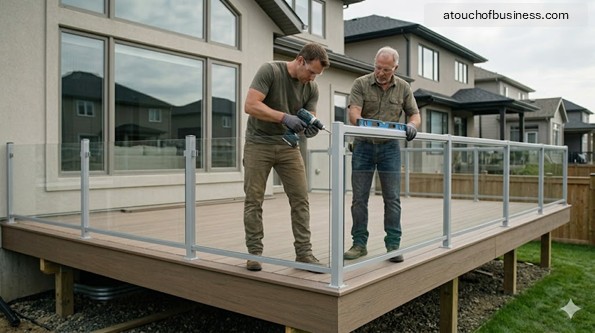
What to Expect From This Guide to Starting a Deck Building Service
This guide walks readers through the key decisions and practical steps involved in starting a deck building service, from evaluating trade skills and local demand to arranging licensing, tools, contracts, permits, and first-project preparation. The points below represent selected areas rather than the full discussion.
Inside the guide, you will find:
- Startup roadmap: Work through fit, demand, service scope, entry options, licensing, finances, suppliers, field setup, contracts, permits, and opening checks.
- Industry interviews: Compare deck builders’ experiences with pricing, sales, staffing, safety, design, systems, craftsmanship, and customer expectations.
- Common questions: Review practical answers about contractor licensing, permits, inspections, deposits, materials, project timing, and written change orders.
- Business fit: Evaluate carpentry skill, outdoor demands, seasonal income, client pressure, job estimating, and whether more supervised experience is needed.
- Local requirements: Research contractor licensing, bonds, insurance, permits, inspections, code amendments, zoning, and worker rules for each service area.
- Project economics: Plan material purchases, labor estimates, deposits, milestones, change orders, seasonal cash flow, overhead, margins, and funding.
- Field preparation: Organize suppliers, vehicles, tools, safety gear, subcontractor relationships, project systems, and a manageable first build.
Keep reading to judge whether your skills, seasonal finances, job systems, and local approvals support the deck projects you intend to offer.
What It Takes to Start a Deck Building Service
As a deck building contractor, you travel to residential properties, design outdoor structures, pull permits, manage the build, and leave homeowners with something they’ll use for years.
The work spans framing, footings, decking surfaces, railing systems, stairs, and final inspections — all on-site, all project by project, at properties you don’t control.
It’s skilled trade work. You read building codes, produce drawings for permit applications, coordinate inspections, manage material deliveries, and keep jobs on schedule through weather and surprises.
Before you go any further, the startup steps for a trades business like this are worth understanding in full. There’s more setup here than most people expect.
Is This Business a Good Fit for You?
Deck building is physically demanding outdoor work. You’ll be on job sites in heat, cold, and mud — hauling lumber, digging footings, working at elevation, and doing it all on a timeline a client is watching.
Do you have real carpentry and framing skills, or are you planning to learn on the job? Early mistakes on poorly priced or poorly built projects can end a new business quickly.
The business is also deeply seasonal in most markets. Spring and summer drive the majority of revenue. You need to plan for slow months — financially and psychologically — before your first project is ever booked.
Will your household manage on reduced or uneven income while you get established? Does your family understand that evenings may be spent estimating and managing jobs?
This is a business where precision matters as much as hustle. Structural failures, bad ledger attachments, and missed inspections create liability that can follow you long after a project closes.
Before going further, ask yourself:
- Can you read construction drawings and apply building code requirements?
- Are you comfortable managing permits, inspections, and client expectations on every job?
- Do you have the physical stamina for full-day outdoor construction work?
- Can you accurately estimate your own labor hours on a project you’ve never built before?
- Do you have enough savings to cover six months of personal expenses while the business finds its footing?
If some of those answers are no right now, that doesn’t mean you can’t start. It might mean the timing needs work — or that you need a season under an experienced builder before going independent.
Talk to people who own and operate deck building companies in markets where you won’t compete. Ask them what they wish they’d known in year one, how they handle slow months, and what nearly broke them early on. Firsthand owner insight is worth more than any guide written from the outside.
Come to those conversations with real questions prepared — about licensing timelines, material supplier relationships, estimating pitfalls, and how long it actually took before things felt stable.
Red Flags Before You Start
Some of these issues are personal fit questions. Others are structural realities of the deck building trade. Both deserve honest attention before you spend anything significant.
Skills gaps that aren’t fixable by starting:
If you can’t confidently frame, read a set of construction drawings, or apply IRC requirements to a real project, entering as the primary builder before acquiring those skills is a serious risk. You’ll make costly errors on early jobs that damage your reputation and your finances.
Licensing takes longer than most people expect:
In many places, obtaining a contractor license takes weeks to months — exam preparation, application processing, and insurance and bond setup all take time. You can’t legally take projects until you’re licensed. Verify the realistic timeline in your area before spending on tools and equipment.
Seasonal cash flow is a structural challenge:
Most markets see peak demand in spring and summer. If you’re in a cold-weather area, your building season may be four to six months. You must plan how to sustain the business — and your own income — through the rest of the year. This is one of the main reasons deck businesses close in years one and two.
Underestimating labor hours ends jobs in the red:
Labor is the largest variable cost on most projects, often representing more than half of total project price. A single badly estimated job can wipe out the margin from several good ones. If you can’t yet accurately estimate your own labor costs, sit with that before signing your first contract.
Material price volatility affects every bid:
Lumber and decking material prices fluctuate. Because you purchase materials before each project — sometimes weeks in advance — price increases between bid and purchase can compress margins. Order on a per-job basis, and lock in pricing with suppliers before committing to a client quote wherever possible.
Skilled labor is harder to find than people expect:
If you plan to hire crew from the start, experienced carpenters who can run a job site are in demand. Hiring costs more than many first-time contractors plan for. Misclassifying employees as independent contractors to avoid payroll obligations creates serious legal and financial risk — the IRS prioritizes this in the construction trades.
Franchise decking models carry structural margin pressure:
Deck building franchises exist, but franchise fees and mandatory material purchasing from the franchisor at marked-up prices can consume a significant share of project revenue before construction costs are paid. Research franchise cost structures carefully before committing to any arrangement.
Liability follows the work long after you leave:
Decks are structural additions to homes. A ledger attachment failure or footing problem can cause serious injury. Claims arising after a project is complete are a real risk in deck construction. Working without proper insurance or building permits leaves you personally exposed.
Step 1: Assess Your Skills, Fit, and Motivation
The first honest question is whether you have the trade skills to build decks safely and correctly — or whether you need more time under an experienced contractor before going independent.
Working a season with an established deck builder gives you a controlled environment to learn estimating, permitting, inspection processes, and job site workflow before your own money is on the line.
Beyond skills, think about the day-to-day reality. A typical project day starts with loading the truck, arriving on-site, completing the day’s construction phase, and returning home to handle estimates or admin in the evening.
Inspection days mean coordinating with the building department and being on-site to walk an inspector through structural work — a different kind of day that still has to fit in your schedule.
Are you motivated by the craft, by ownership, or both? That matters when a job runs long, a client is difficult, or March arrives with no jobs booked. Passion for the business doesn’t mean every day is satisfying — it means you stay committed when things get hard.
Step 2: Research Your Local Market and Validate Demand
Before committing to licensing, insurance, and tools, confirm that your target service area can actually support a deck building business.
Look at these local demand factors:
- Homeownership rates and density of single-family homes with yard space
- Average home values — lower-value markets often can’t support higher-ticket deck projects
- How many established deck builders and general contractors already serve the area
- Prevalence of HOAs, which require board approval before construction and can slow or complicate projects
- Climate and seasonal build window — how many months of the year is outdoor construction realistically feasible?
Identify your competition honestly. Your competitive set includes not just other deck specialists, but general contractors who build decks as part of broader renovation practices. That group is easy to overlook and hard to beat on reputation alone.
Check whether demand in your area is consistent enough to support the business through the full calendar year, or whether slow-season planning will be critical to survival. Understanding local supply and demand before you commit is not optional.
Step 3: Choose Your Business Model and Service Scope
Not every deck business is built the same. Your scope decisions at launch affect your licensing, insurance, equipment needs, and how you price jobs.
Decide these questions before you move forward:
- What deck types will you build at launch — ground-level wood decks, attached elevated decks, composite builds, multi-level structures, or a combination?
- Will you start as a solo owner-builder, a two-person crew, or hire from day one?
- Will you add adjacent services like pergolas, railings, or shade structures from the start?
- Are you targeting residential homeowners only, or also light commercial clients like restaurants with outdoor dining areas?
The solo-vs.-crew decision changes almost everything. A solo operation keeps startup costs lower and eliminates early payroll obligations, but limits how many jobs you can take on and how complex those jobs can be.
Hiring from the start means workers’ compensation insurance, payroll compliance, and higher overhead from day one — before you’ve established steady revenue.
Your scope decision also determines what contractor license classification you’ll need to pursue. Get clear on this before you start the licensing process.
Step 4: Decide Whether to Start From Scratch, Buy, or Explore a Franchise
Most deck builders start from scratch, and that’s a legitimate path. But it’s worth considering the other options before you commit.
Three entry paths exist:
- Starting from scratch gives you full control over your model, pricing, service area, and brand. It requires the most runway before revenue is consistent.
- Buying an existing deck building business can bring established client relationships, a trained crew, equipment, and a local reputation. If businesses are available in your area, it’s worth exploring.
- A deck building franchise offers systems and brand recognition, but comes with fees, mandatory material purchasing at franchisor prices, and royalties that can compress margins significantly. Research the full cost structure carefully before committing.
The right choice depends on your available capital, your timeline, how much support you need, and what’s actually available in your market. You can read more about buying vs. building a business to weigh those tradeoffs carefully.
Step 5: Research Your Contractor Licensing Requirements
No state issues a standalone “deck contractor license.” Deck construction for pay falls under a general contractor, residential contractor, or home improvement contractor license — depending on where you operate.
Most places require a license from the state licensing board to build decks above a low project-value threshold. Some places don’t have a statewide license at all and regulate contractors at the city or county level instead.
Licensing typically requires:
- Passing a trade knowledge exam and a business and law exam
- Submitting proof of insurance and a surety bond
- Demonstrating work experience
- Paying application fees
Some places also require a separate home improvement contractor registration for residential work, in addition to a general contractor license.
Operating without a license when one is required can result in significant fines, inability to collect payment legally, and loss of your lien rights. Verify your requirements before spending money on anything else.
Contact your state contractor licensing board and the building department in each jurisdiction where you plan to work. Do this early. In many places, the full licensing process takes weeks to months — exam prep, application processing, bond setup, and insurance minimums all take time. You can’t legally take jobs until the license is active.
Learn more about general business licenses and permits as a foundation, then layer in the contractor-specific requirements for your area.
Step 6: Form Your Business Entity and Complete Required Registrations
Once you know your licensing path, set up the legal framework before you start operating.
An LLC is widely used in the construction trades because it separates your personal assets from business liability. A structural failure or client dispute can result in a lawsuit, and operating as a sole proprietor leaves your personal finances exposed. Explore your business structure options carefully before deciding.
Obtain your EIN (Employer Identification Number) from the IRS. You need this for tax filing and to open a business bank account. The application is free and completed online.
If you’re operating under a trade name, file a DBA with your state or county. Some jurisdictions require your license number and business name to appear on your work vehicles and advertising — verify this with your state licensing board.
Some states also require contractors to separately register with the state revenue or labor department. Check this alongside your licensing application, not after.
Step 7: Obtain Required Insurance and Surety Bonds
Insurance is legally required for licensing in most places, operationally essential for every project, and the line between a manageable problem and a business-ending one.
Coverage you’ll need before taking any jobs:
- General liability insurance — required for licensing in most states; covers third-party bodily injury and property damage claims. Most residential contractors carry at least a $1 million per-occurrence policy.
- Workers’ compensation insurance — legally required in almost every state when you have employees; some states require it even with no employees once you’re a licensed contractor. Verify your state’s threshold.
- Contractor surety bond — required for licensing in many states; bond amounts vary by state and license classification.
- Commercial auto insurance — required by law in almost every state for vehicles registered to the business.
Beyond what’s legally required, consider inland marine insurance — tools and equipment coverage. If tools are stolen from a job site or damaged in transit, this policy covers replacement.
Also ask your insurer about a completed operations endorsement within your general liability policy. Deck-related structural failures can surface months after a project closes. That endorsement covers claims that arise after you’ve left the site.
Learn more about the full range of business insurance options relevant to a trades operation.
Step 8: Set Up Business Banking, Accounting, and Payment Systems
Open a dedicated business checking account before you take any client deposits or make any business purchases. Commingling personal and business finances creates accounting problems, tax complications, and removes the liability separation your LLC was designed to provide.
Set up basic bookkeeping or accounting software from day one. You need to track income, expenses, material costs per job, and labor costs — not just for tax time, but to know whether each project actually made money.
Set up the ability to accept electronic payments. Many homeowners expect credit card or ACH options for deposits and milestone payments.
A standard payment structure in deck building is a deposit at contract signing — commonly 30–50% — to cover initial material purchases and secure the job on your schedule. Progress payments are tied to construction milestones. Final payment is collected at completion.
Never start a project without a deposit. This protects your cash flow and removes the risk of purchasing materials for a job that falls through.
Details on opening a business bank account and setting up a merchant account for payment processing are worth reviewing before your first client conversation.
Step 9: Build Your Supplier Relationships Before the First Job
Open contractor accounts at local lumber yards and building materials suppliers before you have a project that needs them. Contractor accounts typically offer discounts, better service, and priority access that retail customers don’t get.
If you plan to offer composite decking options, identify the local or regional distributors for major brands like Trex, TimberTech, Fiberon, and Azek. These products are typically sold through specific distributor networks — not always available at big-box stores in contractor quantities.
Order materials on a per-job basis at startup. Tying up capital in inventory before you have consistent job flow damages cash flow before the business has stabilized.
Also identify a reliable electrical subcontractor. Decks near the house often require GFCI outlets and sometimes hardwired lighting — work that typically falls outside a general contractor license. Have someone lined up before a job requires it.
Step 10: Acquire Tools and a Work Vehicle
A deck building business requires a substantial tool investment before any project can be completed. The full list covers power tools, hand tools, layout equipment, concrete and footing tools, fastening systems, and safety gear.
Core power tools you’ll need before your first project:
- Circular saw with standard and composite/carbide-tipped blades
- Miter saw for angle and crosscuts
- Jigsaw for curved cuts and tight spaces
- Multiple cordless drills and impact drivers with sufficient batteries
- Reciprocating saw for demolition or modification work
- Rotary hammer for footing and concrete anchor work
Layout, footing, and structural essentials:
- Laser level or rotary laser for establishing consistent grades
- Post hole digger or two-person gas-powered auger
- Concrete footing forms and mixing equipment
- Post bases, joist hangers, and structural connector hardware — all hot-dipped galvanized or stainless steel as code requires
- Structural lag screws and proper flashing material for ledger connections
Safety equipment that must be on every job site:
- Hard hats, safety glasses, and hearing protection
- Dust masks or respirators, especially when cutting pressure-treated lumber
- Fall protection equipment — harness, lanyard, and anchor points — when working at height
- First aid kit on the truck
A pickup truck — at minimum a 3/4-ton — or a truck-and-trailer combination is essential. You’ll be hauling lumber, sheet goods, concrete bags, and tools to every site.
Secure, dry storage for tools and equipment matters more than most new contractors expect. A locked trailer or storage unit protects your investment when tools aren’t on a job site.
You don’t have to buy everything new at launch. Renting specialty tools for early projects is a practical way to preserve startup capital while you confirm which jobs you’ll be taking regularly.
Step 11: Plan Your Startup Costs, Profit Potential, and Funding
Before you commit to significant purchases, work through the financial reality of the business with your own numbers.
Startup cost categories to price out locally:
- Contractor license application, exam, and registration fees
- Surety bond premium (varies by state and your credit history)
- Business entity formation costs
- General liability, workers’ compensation, commercial auto, and inland marine insurance premiums
- Power tools and hand tools (new or used)
- Work vehicle — purchase, financing, or existing vehicle adaptation
- Tool and material storage
- Accounting software setup
- Website and basic business identity materials
- Operating capital to cover business overhead and personal living expenses during the months before consistent project revenue arrives
Those startup costs vary significantly based on whether you already own a suitable vehicle and tools, how much license fees and bond amounts are in your state, and whether you’re hiring crew from day one or starting solo.
On the revenue side, understand your break-even point before you take on debt or make major purchases. How many projects do you need to complete per month or quarter, at what average project price, to cover your fixed costs — insurance, vehicle, tools, licensing, overhead — plus your own living expenses?
Labor is the largest cost variable on most projects, often representing more than half of total project price. Many builders get into trouble by underestimating labor hours on early jobs. Track your time meticulously on every early project to build a reliable baseline for future quotes.
Residential contractors commonly target a gross margin of 20–40%, with pre-tax net profit in the 5–10% range for well-managed operations. That margin has to cover all your overhead — not just materials and labor — before it becomes actual income.
Deck building is seasonal. Plan your operating capital to sustain both the business and your personal income through slow months. Running out of capital before the next peak season is one of the most common reasons deck businesses don’t survive their first two years.
Funding options worth exploring:
- SBA 7(a) loans for startup costs, equipment, and working capital
- Equipment financing for vehicle and tool purchases
- Credit union small business loans
- Business line of credit for managing cash flow gaps
If external funding is part of your plan, explore a business loan before you commit to major purchases — not after.
Step 12: Develop Your Written Contract, Pricing, and Estimate Process
Every project must be governed by a written, signed contract. This protects your lien rights in most states, establishes payment terms, defines the scope of work, and documents any changes that come up during construction.
A complete written contract should include:
- Project scope and materials, specified by brand and product detail
- Start and end dates
- Payment schedule tied to milestones
- Who pulls the permits and who pays the fees
- Warranty terms on workmanship and materials
- A change order clause requiring written agreement before any scope change proceeds
Have your contract template reviewed by a construction attorney familiar with your state’s lien and home improvement laws before you sign your first client agreement.
On pricing, cost-plus is the standard approach: calculate your total material cost at contractor purchase price with markup, estimate labor hours for each phase of work, add overhead, and add profit margin.
Per-square-foot pricing is useful for initial client conversations and rough estimates. But final proposals must be fully itemized by scope, materials, and labor. Variables like footing depth, site access, elevation, material type, and add-ons like pergolas change project costs significantly — and per-square-foot math doesn’t capture those differences.
Underpricing jobs to win early work is a cash flow trap. Set prices that cover your real costs and a sustainable profit margin. If a job doesn’t work at market rates, it’s better to pass than to take it at a loss.
Every change to the original scope must go through a written change order, signed before the additional work starts. This applies to material upgrades, layout changes, added features — anything not in the original contract. Verbal agreements for scope changes are one of the most common causes of payment disputes in residential construction.
Learn more about pricing your services to build a model that holds up as your job volume grows.
Step 13: Learn the Building Code and Permit Process for Your Area
Most deck projects require a building permit. Permits are generally required for attached decks, decks more than 30 inches above grade, and decks over a certain square footage — though the specific thresholds vary by jurisdiction and you must verify locally.
As the licensed contractor, you pull the permit under your license. The homeowner-builder exemption — which allows homeowners to pull their own permits — applies only when the homeowner is actually performing the work. When you’re being paid to do it, that exemption doesn’t apply.
Permit applications typically require a site plan, deck drawings showing footing sizes and locations, framing details, and materials specifications. Learn what your local building departments require before your first project — not during it.
The International Residential Code (IRC) establishes baseline requirements for residential deck construction, covering footings, posts, beams, joists, ledger attachment, guardrails, stair construction, and fastener requirements. But local jurisdictions adopt and amend the IRC. Always verify local amendments with the building department for each jurisdiction where you work.
Most jurisdictions require at least a framing inspection — before decking boards go down, so the inspector can see the substructure and ledger connections — and a final inspection after completion. Some also require a footing inspection before concrete is poured.
Build inspection wait times into your project schedule. Permit processing can take a few days or several weeks, depending on the jurisdiction and time of year. A project waiting on a permit isn’t generating revenue.
Decks built without permits create real liability: fines, potential demolition orders, insurance claim denials for clients, and problems at property resale. Don’t skip this step for any job.
Step 14: Establish Your Business Identity and Pre-Opening Readiness
Before you take your first project, get the basic business infrastructure in place.
Register your business name. In some jurisdictions, your license number and business name are required on your vehicles, business cards, and advertising — verify this with your state licensing board.
Obtain a certificate of insurance (COI) from your insurer. Homeowners and HOA management companies will ask for proof of insurance before allowing work to start. Have one ready to send before your first site visit.
Set up a professional email address and a dedicated business phone number. Professionalism matters in a trade where clients are making a significant investment in something attached to their home.
You’ll also want basic estimating and project management tools in place before you start scheduling jobs. Whether that’s software or well-designed spreadsheet templates, your system needs to track material costs, labor hours, project timelines, and payment milestones per job.
Step 15: Complete Your Pre-Opening Checklist and Take Your First Project
Before you sign your first contract, confirm that everything is actually in place — not just planned.
Your pre-opening checklist:
- Contractor license or registration obtained and active
- Business entity formed and registered with the state
- EIN obtained from the IRS
- DBA filed if operating under a trade name
- Local business license confirmed or obtained
- General liability insurance policy active; COI available
- Workers’ compensation confirmed, or exemption confirmed in writing
- Surety bond in effect
- Commercial auto insurance active
- Inland marine/tools coverage active
- Business bank account open; finances separated
- Contractor accounts established at lumber yard and building materials supplier
- Composite decking distributor identified if offering composite at launch
- All power tools and hand tools tested and ready
- Work vehicle loaded and equipped
- Written contract template reviewed by a construction attorney
- Change order form template ready
- Estimating process tested on a hypothetical project
- Payment processing capable of accepting deposits
- Permit application process verified with building departments in your service area
- Electrical subcontractor identified for jobs requiring outlets or lighting
- Fall protection equipment on-site and crew trained on its use
For your first project, start with something manageable — a straightforward ground-level or single-elevation attached deck. Build your permit, inspection, and job execution experience before taking on complex multi-level or premium composite builds.
Take detailed photographs of every phase of your first few projects. These become your portfolio and your documentation of hidden structural connections that building inspectors and future clients will both care about.
Business Plan
A business plan for a deck building service isn’t a formality — it’s the document that forces you to confront the financial and operational questions that will determine whether the business survives years one and two.
Start with your startup costs. Price out every category: licensing and bond fees, insurance premiums, tools and equipment, vehicle costs, storage, software, and the operating capital you’ll need to cover personal living expenses and business overhead before consistent project revenue arrives. Your most accurate estimate comes from listing every specific item and pricing it locally.
Then work through your break-even math. What does your average project price need to be to cover your fixed costs — insurance, vehicle, tools, licensing, overhead — plus your own income? How many projects per month gets you there? Is that number realistic given your local market and current capacity?
Build the seasonal reality into your plan honestly. If your market has a peak season of four to six months, your plan needs to account for the months on either side. How much capital do you need in reserve to sustain the business and your personal income through the slow period?
On pricing, your plan should lay out how you’ll calculate project quotes — materials at contractor purchase price plus markup, labor hours estimated by phase, overhead allocation, and profit margin target. Make sure that model actually generates the margin your business needs to function.
Include your funding plan. If you’re financing tools, a vehicle, or startup costs through a loan or line of credit, model the monthly payment obligations into your overhead before you commit to those amounts. Debt service reduces your effective margin on every project.
Your business plan should also address the operational side: how many projects can you realistically complete per month as a solo operator or with your crew? What’s your scheduling system? How will you manage material ordering, permit timelines, and inspection scheduling across multiple overlapping projects?
Get more guidance on building a financially grounded plan at how to write a business plan.
Opening-Day Red Flags
Before you start your first project, verify that every operational piece is genuinely in place — not just pending or assumed.
- License not yet active. You can’t legally take a project until your contractor license or registration is confirmed. Don’t sign a contract assuming your application will clear in time.
- Insurance not yet in effect. Starting a project without active general liability coverage exposes you personally to any claim that arises. Confirm your policy is active and your COI is ready before your first site visit.
- No written contract signed before starting work. Verbal agreements for scope, price, or materials leave you with no lien protection and no enforceable record if a payment dispute arises.
- Permit not yet pulled before breaking ground. Skipping or delaying permit applications to start a job faster is one of the most common early mistakes. The risks — fines, stop-work orders, demolition orders, insurance issues — are not recoverable.
- Material order not confirmed before the job starts. Material availability varies by supplier and season. Confirm delivery timing before you commit to a project start date.
- No deposit collected before purchasing materials. Ordering materials before the deposit clears puts your capital at risk if the client backs out.
- Crew not confirmed for the start date. If you’re relying on a subcontractor or hired crew and their availability isn’t locked in, don’t commit to a start date you can’t meet.
- Change order process not discussed with the client. The client should understand before construction starts that any scope or material change requires a written change order — signed before the additional work proceeds. Set this expectation at contract signing.
- Inspection scheduling not accounted for in the timeline. A framing inspection mid-project can mean a pause of several days. Build that into the project timeline and communicate it to the client upfront.
Frequently Asked Questions
Do I need a specific “deck contractor license,” or will a general contractor license cover deck building?
No state issues a standalone deck contractor license. Deck construction for pay falls under a general contractor, residential contractor, or home improvement contractor license, depending on where you operate.
Contact your state contractor licensing board to confirm the specific classification and requirements before spending anything on the business.
Can I operate without a contractor’s license if my projects are small or I only use subcontractors?
Using subcontractors doesn’t remove the licensing requirement for the company holding the prime contract with the homeowner. Most places set project-value thresholds below which licensing isn’t required, but those thresholds are often low.
Operating without a license when one is required can result in fines, inability to collect payment, and loss of your lien rights. Verify the threshold and requirements in your state before taking any paid work.
Who is responsible for pulling the building permit — me or the homeowner?
As the licensed contractor doing the work for pay, you pull the permit under your license. The homeowner-builder exemption applies only when the homeowner is genuinely performing the work — not when a contractor is being paid to do it.
Verify this with the local building department for each jurisdiction where you plan to work.
What inspections are typically required on a deck project, and when do they occur?
Most jurisdictions require at least a framing inspection — before decking boards go down, so the inspector can see the substructure and ledger attachment — and a final inspection after completion. Some also require a footing inspection before concrete is poured.
Verify the inspection sequence with the local building department before starting each project, and build inspection wait times into your schedule.
How should I handle the gap between project deposits and material costs?
A standard payment structure is a deposit at contract signing — commonly 30–50% — to cover initial material purchases and secure your schedule. Progress payments are tied to milestones, and final payment is collected at completion.
Maintain operating capital to bridge any gap between material orders and deposit receipt, rather than delaying orders and pushing your project schedule.
What’s the difference between composite decking and pressure-treated wood, and do I need different tools or skills for each?
Pressure-treated wood is chemically treated to resist rot and insects. It’s less expensive upfront but requires periodic maintenance — sealing and staining. Composite decking is made from a blend of wood fiber and plastic. It costs more upfront but is low-maintenance and typically carries longer manufacturer warranties.
Composite decking usually requires specialized hidden fastener systems, and some products require specific blades or techniques. If you plan to offer composite installation, obtain manufacturer installation training before your first composite project.
How long does a typical residential deck project take from contract to final inspection?
A straightforward single-level attached deck with a two- to three-person crew typically takes three to seven construction days. But total calendar time from contract signing to final inspection is usually longer — often two to four weeks — once permit processing, material delivery, framing inspection scheduling, and weather are factored in.
Complex multi-level decks or projects with long material lead times can take six weeks or more from start to final inspection.
What happens if a homeowner wants changes to the project after construction starts?
Every change to the original scope must be documented in a written, signed change order before any additional work proceeds. This applies to material upgrades, layout changes, added features — anything not in the original contract.
In many states, written change orders are required to maintain your lien rights for additional work. Verbal scope changes are one of the most common causes of payment disputes in residential construction. Establish this expectation at contract signing, and hold to it without exception.
Advice From Experienced Deck Building Professionals
These interviews share practical lessons from deck builders and outdoor living contractors who have already dealt with pricing, jobsite standards, sales, staffing, design, systems, and customer expectations.
Readers can use these conversations to compare real business models, spot common mistakes, and think through how they want to sell, price, plan, and deliver deck projects before starting.
A Deep Dive Interview with Infinite Decks owner Mark King
This podcast interview features Mark King of Infinite Decks and covers how he built his reputation as an award-winning deck builder.
It is useful for beginners because it gives a real look at what it takes to move from skill to a serious deck building business.
Jeff Mudd on Deck Building and Recruitment
This interview covers Jeff Mudd’s path from hands-on repair work into the deck industry, along with hiring, safety, and labor challenges.
It helps new owners think beyond getting jobs and focus on the people, standards, and training needed to build a dependable service.
Episode 88 – How George Hesse Built a Profitable Deck Company That Runs Like a Machine
This interview with George Hesse of North County Deck & Patio covers systems, efficient proposals, sales processes, team structure, and profit control.
It is useful for someone starting out because it shows why smaller, well-managed jobs can be stronger than chasing large projects too soon.
Episode 79 – Bobby Parks – How to Sell Your Business, NADRA Awards Scoring & Future of Deck Industry
This interview features Bobby Parks, who built and sold Peachtree Deck, and discusses pricing, premium positioning, consultation fees, and industry involvement.
It is useful for new deck builders because it explains how to move away from competing only on price and toward selling value and expertise.
Episode 77 – How Outback Deck Scaled to $10M and Built DeckMetriX Software
This interview with Brian Miller and John Gwaltney covers scaling Outback Deck, improving pricing, using takeoffs, and protecting margins.
It is useful for beginners because it highlights hidden deck job costs, such as permits, dumpsters, footings, and other details that can hurt profit.
Builder Dan Pettit on Craft, Design & Community
This interview with Dan Pettit of Northern Outdoor Living covers craftsmanship, detailed design, word-of-mouth growth, climate challenges, and learning from other builders.
It is useful for someone starting a deck building service because it shows how reputation, listening, and continual learning shape higher-quality projects.
Related Articles
- How To Start a Carpentry Business
- How To Start a Home Renovation Business
- How To Start a General Contracting Business
- How To Start a Construction Business
- How To Start a Gazebo Building Business
- How To Start a Handyman Business
Sources:
- CheckLicensed: Deck license requirements
- Procore: Contractor license guide
- Next Insurance: GC license requirements
- Angi: Start deck building business, Who builds decks, General contractor markup
- JIM: Deck building startup blueprint
- Insureon: General liability contractors
- Construction Coverage: Construction insurance guide
- Simply Business: General contractor insurance
- Decks.com: IRC deck code requirements
- PermitDeck: IRC R507 requirements guide
- Grip-Rite: Deck code updates 2025
- Decks & Docks: Tools build deck
- Washington State L&I: Register contractor WA
- Levelset: Mechanics lien written contract
- OSHA: Residential construction guidance
- TimberTech: Decking cost guide
- Garden Structure: Franchise deck companies
- Ergeon: Deck cost 2026 prices
- Do It Or Hire: Deck DIY pro timeline
- US Chamber CO: Get contractor license
- Mastt: Construction challenges 2026