
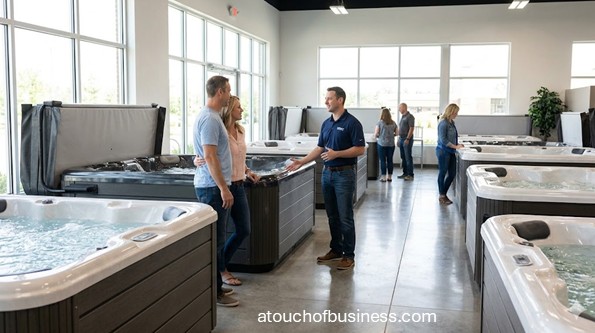
Hot Tub Retail Business: What It Takes To Open
A hot tub retail business sells finished hot tubs, swim spas, covers, steps, filters, water-care products, and related accessories through a storefront showroom.
In most cases, the sale is not just about the tub. You also help the customer compare models, review features, talk through delivery and installation, and buy the products they need to maintain the spa after the sale.
This is a retail business, but it does not run like a low-ticket gift shop. A showroom hot tub store depends on product mix, display quality, inventory discipline, financing options, and a smooth handoff from inquiry to payment to delivery.
- Common customers include homeowners, families, wellness buyers, and shoppers comparing hot tubs and swim spas for home use.
- Customers usually care about comfort, selection, price, warranty, service, and whether the store feels trustworthy.
- The daily workflow often includes showroom appointments, product demos, quotes, financing discussions, accessory sales, and follow-up after delivery.
A hot tub retail business can work well if you like high-ticket retail and face-to-face selling. It gets harder fast if you dislike inventory control, product education, or customer questions that continue after the purchase.
Is A Hot Tub Retail Business Right For You?
Before you think about leases or inventory, ask whether owning a business fits you at all. Then ask whether this specific business fits you.
You are not just opening a store. You are taking on financial responsibility, long hours, vendor coordination, customer problems, and local compliance. If you skip that reality check, the showroom can look exciting while the owner role feels miserable.
You also need to like the day-to-day work. That means answering questions, learning product details, handling accessories and water-care products, following up on leads, and staying patient through long sales cycles.
Passion matters here. A hot tub store is easier to stick with when you have real interest in the work, not just interest in owning something.
Ask yourself this once and answer honestly: are you moving toward this business, or are you mostly trying to get away from a job, immediate financial pressure, or the image of being a business owner?
A storefront hot tub business also changes your lifestyle. Even if you hire help, you may spend evenings answering leads, weekends helping shoppers, and weekdays dealing with suppliers, paperwork, and delivery issues.
- Good fit: You like consultative selling, product education, and helping people make a major purchase.
- Warning sign: You want a passive retail store that mostly runs itself.
- Another warning sign: You dislike inventory, vendor terms, or ongoing customer support after the sale.
Talk to owners before you commit. Speak only with owners who are outside your market area, in another city or region, so you are not asking a direct competitor to train you.
Go in with real questions. Ask about floor models, showroom size, accessory sales, slow inventory, delivery problems, margins, staffing, and what they wish they had done before opening.
That kind of firsthand owner insight is hard to replace. Their path will not match yours exactly, but they know what this business feels like once the doors open.
Step 1 Choose Your Store Model And Product Mix
Your first big decision is what kind of hot tub store you want to open. This choice affects inventory, supplier options, startup costs, and how the showroom feels to customers.
Some stores work as authorized dealers for one major brand. Others carry more than one line. Some also add swim spas, covers, filters, water-care products, and backyard accessories to widen the average sale.
- Single-brand dealer: Cleaner brand story, but you are tied more tightly to one supplier.
- Multi-brand store: More comparison selling, but more complexity in inventory and training.
- Broader wellness or backyard store: More add-on sales, but also more shelf planning and stock control.
For a storefront hot tub retail business, the opening assortment matters. Buy too little and the store looks weak. Buy too much and your cash gets trapped in floor models and slow-moving accessories.
At a minimum, define your core offer before you do anything else.
- Will you sell hot tubs only, or hot tubs and swim spas?
- Will you stock water-care products from day one?
- Will you carry steps, covers, cover lifters, filters, and replacement parts?
- Will you offer wet tests if your space allows it?
- Will delivery be in-house or handled by outside partners?
This is also the right point to start putting your business plan together. Keep it practical. Focus on your product mix, supplier plan, location, startup costs, and what needs to be ready before opening.
Step 2 Test Local Demand And Competitive Reality
A hot tub retail business does not work just because people like the idea of owning a spa. You need enough local demand, the right customer base, and a reason for shoppers to visit your store instead of another dealer.
This is where you study your market with plain eyes. If you skip this, you can end up with a polished showroom in the wrong area, selling the wrong models at the wrong price points.
Start by looking at your local competition. Visit stores, study their brands, note their pricing style, and pay attention to how they present floor models, financing, accessories, and service.
- How many hot tub or swim spa retailers are within a reasonable driving distance?
- Are they high-end showrooms, discount-focused stores, or broad pool-and-spa retailers?
- Do they look busy, well stocked, and professionally merchandised?
- Is there an obvious gap in product range, service style, or customer experience?
Then look at your area itself. A hot tub store depends on local supply and demand, but also on visibility, parking, easy access, and whether shoppers can picture themselves buying from that location.
Your early target customers should also be clear. A showroom aimed at luxury buyers looks different from a store built around value models and strong accessory sales.
- Homeowners upgrading a backyard space
- Families wanting relaxation and recreation at home
- Wellness buyers focused on recovery, sleep, or stress relief
- Shoppers comparing swim spas for exercise or training
Do not guess your position. Decide what kind of buyer you want to serve, what price range you will support, and what experience you want people to remember after they leave the store.
Step 3 Build A Simple Startup Plan
Your plan does not need to be fancy. It does need to show that you understand how a storefront hot tub business works from inquiry to sale to follow-up.
This is where you put numbers, decisions, and timing in one place. If you skip this, it becomes easy to approve expenses without knowing whether they actually help you open well.
- Your store model and product mix
- Your target customer types
- Your supplier and dealer plan
- Your startup cost categories
- Your pricing approach
- Your location needs
- Your opening checklist
- Your first-stage sales targets
Keep the targets simple. You are not trying to predict the next five years. You are trying to know how many leads, showroom visits, quotes, and sales you need to get through the first stage without running blind.
That is also the right time to think about early revenue planning. Be conservative. High-ticket retail can look strong on paper and still feel tight when inventory, rent, and slow sales cycles hit at the same time.
Step 4 Choose Your Structure, Name, And Registration
You need the legal setup in place before you start signing contracts, opening accounts, or filing local applications.
For many first-time owners, the real decision starts with structure. You may look at a sole proprietorship, a partnership, or an LLC. Pick the structure that fits your risk tolerance, tax situation, and ownership setup.
- Choose the legal structure first.
- Register the business with the state.
- File a DBA if you will use a trade name that differs from your legal name or entity name.
- Get a federal Employer Identification Number.
- Use the same business name on your sign, invoices, bank account, and online listings.
If you want help sorting the basics, start with choosing your legal structure before you file anything.
Once your name is settled, secure the matching domain if it is available. A simple website with store hours, contact details, and product categories is enough at the start. What matters is consistency.
Step 5 Handle Taxes, Licenses, And Local Rules
This step matters more than many new owners expect. A storefront hot tub retail business may look straightforward, but local rules can affect the address, the build-out, the sign, the inventory, and even how you store chemicals.
Keep the legal side practical. You are looking for the rules that affect launch readiness, not every law that exists.
- Sales tax registration: A retail store usually needs the proper state sales tax setup before making taxable sales.
- Employer accounts: If you hire staff, you may need payroll tax and unemployment accounts before the first paycheck.
- Local business license: Many cities or counties require one for a storefront retailer.
- Zoning: Confirm that the address allows your planned retail use.
- Certificate of occupancy: A new space, remodel, or change in use may trigger this before opening.
- Sign approval: Exterior signs often need local approval.
- Chemical storage review: If you stock spa chemicals, ask whether your local fire or building officials have storage rules that apply.
The rule set depends on location. That is why a hot tub retail business should never sign a lease first and ask questions later.
Use your city or county licensing, planning, zoning, and building offices as the main local checkpoints. For the broader setup, it also helps to review common license and permit requirements before you start filing forms.
Ask these questions before you commit to the space.
- Does this address allow hot tub and accessory retail?
- Is a certificate of occupancy required before opening?
- Do exterior signs need approval?
- Will tenant improvements need permits?
- Are there local rules for storing spa chemicals on-site?
Step 6 Pick The Right Storefront And Plan The Layout
The storefront is not just a place to hold inventory. It is part of the sales process.
People buying a hot tub usually want to compare shell sizes, seating, cabinet finishes, features, and accessories in person. If the space feels cramped, confusing, or unfinished, trust drops fast.
- Good visibility from the street
- Clear business signage
- Easy customer parking
- Space for floor models and accessory displays
- A receiving area for deliveries
- Backroom storage for filters, covers, parts, and water-care stock
- A checkout and quote area that feels organized
- A layout that lets people walk around and compare products comfortably
Do not overlook the back end of the store. Retail flow matters.
You need a place for receiving, tagging, shelving, storing paperwork, and keeping overflow stock out of the customer area. If you skip this, the showroom can look polished for a week and messy after the first few deliveries.
If you plan to offer wet tests, privacy, cleaning, towels, and scheduling need to be part of the layout from the start. That is easier to solve before build-out than after opening.
Step 7 Set Up Suppliers, Inventory, And Receiving
This step can make or break a hot tub retail business. Supplier terms shape your opening inventory, your margins, your display requirements, and how much cash you need before the first sale.
Some dealer programs also expect more than just a storefront. They may look at showroom presentation, inventory levels, aftermarket supplies, marketing readiness, and delivery or service support.
- Dealer agreement: Understand territory, brand standards, ordering terms, and display expectations.
- Opening floor models: Choose enough models to make the store feel real, but not so many that you choke your cash flow.
- Accessory stock: Covers, steps, cover lifters, filters, and water-care products can support early revenue.
- Replacement parts: Keep the opening assortment tight and practical.
- Receiving process: Decide how products are received, checked, tagged, stored, and moved into the showroom.
- Warranty process: Know what paperwork or registration must happen after each sale.
Inventory discipline matters from day one. A storefront hot tub business can lose money by buying too much too early, but it can also lose sales by looking thin or unprepared.
Think like a retailer. Plan what belongs on the floor, what belongs in back stock, and what should be ordered only when a sale is close.
You also need written policies for damaged goods, special orders, deposits, cancellations, delivery reschedules, and returns. This is not a detail to leave for later.
Step 8 Plan Startup Costs, Pricing, Funding, And Banking
A hot tub retail business usually needs more capital than many first-time owners expect. The major drivers are the storefront, floor models, build-out, signage, opening inventory, delivery setup, and working cash.
There is no universal startup number that fits every store. One dealer program says a successful setup may start around $50,000 and run well past $250,000 depending on the market, competition, inventory, parts, merchandising, advertising, and delivery equipment. Treat that as one example, not a rule.
- Lease deposits and rent
- Build-out and improvements
- Store fixtures and accessory displays
- Floor-model hot tubs and swim spas
- Water-care and accessory stock
- POS and card processing setup
- Insurance
- Licenses and local approvals
- Hiring and training
- Working capital for slow sales periods
Pricing should reflect more than the tub itself. In this business, the real sale often includes upgrades, covers, steps, delivery planning, installation support, and future water-care purchases.
Before you finalize anything, spend time on setting your prices in a way that protects margin without making your offer hard to understand.
- Use clear model-based pricing.
- Separate optional upgrades when that helps the customer compare choices.
- Decide whether delivery is bundled or listed separately.
- Know your accessory margins before you run promotions.
- Make sure deposits, finance paperwork, and payment timing are clear.
On the funding side, new owners often look at savings, partner capital, or loans. If you need funding, define what the money is for before you borrow it.
You also need business banking in place before opening. That includes a business bank account, card processing, and a clean process for deposits, refunds, and reconciliations. The basics of getting your business banking in place and choosing card processing should be finished before the showroom is ready.
Step 9 Build Your Systems, Forms, And Recordkeeping
A hot tub retail business feels more controlled when the paperwork and systems are ready before customers walk in.
You do not need a huge software stack. You do need a repeatable workflow from first contact to final payment to post-sale follow-up.
- Lead tracker or CRM
- Quote form or quoting software
- Customer contact and site-detail form
- Financing application workflow if you offer financing
- Sales agreement and deposit terms
- Delivery checklist
- Warranty registration process
- Inventory receiving and tagging process
- Simple bookkeeping and document storage system
Think through the store workflow in order.
- Inquiry comes in
- Customer visits the showroom
- You guide the model comparison
- You prepare the quote
- Payment or financing is handled
- Delivery and installation are scheduled
- Warranty and customer records are filed
- Water-care and accessory follow-up begins
If you skip this step, your store will look open but feel disorganized. Customers notice that quickly, especially when they are spending a lot of money.
This is also where you set your written rules for deposits, cancellations, damaged deliveries, returns on accessories, and who handles customer issues after delivery.
Step 10 Prepare Insurance, Safety, Hiring, And Training
Some startup owners treat this as paperwork. It is really about risk control.
A storefront hot tub business brings together customers, expensive inventory, water-care products, and sometimes delivery vehicles or outside installers. You need practical protection before opening, not after the first problem.
- General liability: Common starting point for customer-facing retail.
- Property coverage: Important for the store, fixtures, and stock.
- Workers’ compensation: Often required when you hire employees, depending on state rules.
- Commercial auto: Relevant if your business owns delivery vehicles.
- Product and installation discussions: Review with your insurance professional based on how much of the sale and delivery chain sits under your brand.
If you stock spa chemicals, employee safety matters right away. Labels, safety data sheets, staff training, and safe storage are not optional when workers handle hazardous products.
- Keep chemicals in original labeled containers.
- Store them in a dry area away from heat and ignition sources.
- Separate products in a way that supports safe storage.
- Keep safety data sheets accessible.
- Train staff on handling, cleanup, and what to do if something spills.
Hiring can wait if you are opening small, but training cannot. Even a one-person showroom needs clear knowledge of models, accessories, water care, pricing, paperwork, and customer handoff.
If you bring in staff, train them on how the store sells, not just what the tubs look like.
- How to guide a comparison without rushing the customer
- How to explain options clearly
- How to document quotes and follow-up
- How to handle accessories and water-care sales
- How to escalate delivery or warranty questions
Step 11 Set Up The Showroom And Early Sales Experience
This is the part customers see, but it should be built on all the work you already did. A hot tub retail business sells trust as much as product.
Your showroom should feel simple, clean, and easy to compare. Customers should understand what each display model is, what makes it different, and what comes next if they want to move forward.
- Place floor models where people can move around them easily.
- Group accessories so they look intentional, not like leftover stock.
- Set up a quote area that feels calm and organized.
- Use clear signs, not clutter.
- Make the checkout and paperwork process easy to follow.
- Decide whether visits are walk-in, appointment-based, or both.
Your opening marketing should stay simple. Start with consistent business name use, strong storefront signage, accurate store hours, a basic website, and a clean contact path for calls and form submissions.
For a hot tub store, early customer handling matters a lot.
- Respond quickly to inquiries.
- Invite qualified shoppers into the showroom.
- Schedule wet tests if you offer them.
- Follow up on quotes within a clear time frame.
- Keep notes on preferences, model interest, and delivery questions.
Do not open with a showroom that looks half ready. If the signs are missing, the accessories are not arranged, and staff cannot explain the models, customers will feel it.
Step 12 Check Red Flags And Finish Opening Readiness
This last step is about honesty. You want to know what is still weak before the public finds it for you.
Run a soft opening, or at least a full internal test of the store. Walk through the real customer path and fix what feels slow, unclear, or unfinished.
- Red flag: You signed a lease before confirming zoning, licensing, or certificate of occupancy requirements.
- Red flag: You bought too much inventory before testing demand.
- Red flag: The showroom looks good, but the backroom receiving and stock process is still messy.
- Red flag: Pricing is not clear, or staff explain it differently.
- Red flag: Deposit, cancellation, delivery, and return terms are still not written down.
- Red flag: You are counting on fast sales to solve immediate cash pressure.
Before you open the hot tub store, make sure these items are actually done.
- Business registration, tax setup, and local approvals are complete.
- The storefront is ready for customers.
- Signs are installed or approved.
- Floor models are clean, placed, and labeled.
- Accessory stock is received and shelved.
- Card processing works.
- Quotes, sales forms, and delivery documents are ready.
- Chemical storage and safety materials are in place if you stock them.
- Staff know the sales process and product basics.
- Delivery and installation contacts are confirmed.
- Your website, hours, phone number, and business name match everywhere customers will see them.
A soft opening can save you from an embarrassing full launch. Use it to test lead response, quoting, payments, scheduling, and handoff after the sale.
Once that works, opening week becomes much calmer. That is the real goal.
FAQs
Question: Do I need to pick one spa brand before I open my store?
Answer: No, but you should decide your supplier approach early. A single-brand setup is simpler to present, while a multi-brand store gives shoppers more comparison options.
Question: What kind of business structure should I use for a hot tub store?
Answer: That depends on ownership, liability, and tax planning. Many new owners compare an LLC, sole proprietorship, partnership, or corporation before filing anything.
Question: Do I need a separate tax registration to sell hot tubs and spa supplies?
Answer: In many places, yes. A retail business often needs state sales tax registration before the first taxable sale.
Question: Can I sign a lease first and sort out permits later?
Answer: That is risky. You should confirm zoning, local licensing, sign rules, and occupancy requirements before you lock in the space.
Question: Will a hot tub showroom need a certificate of occupancy?
Answer: Sometimes. It often depends on the building, the prior use of the unit, and whether you are changing the space or doing improvements.
Question: Do I need insurance before opening the doors?
Answer: Yes, insurance should be lined up before launch. Common starting points include general liability, property coverage, and workers’ compensation if you hire employees.
Question: What equipment matters most for getting started?
Answer: Focus on display tubs, accessory fixtures, shelving, a checkout setup, quote paperwork, and a clean backroom receiving area. If you plan to stock water-care products, safe storage also matters from the start.
Question: How much inventory should I buy for opening week?
Answer: Enough to make the store look complete, but not so much that your cash gets stuck in slow stock. New owners often get into trouble by overbuying floor models and accessories too early.
Question: Should I sell only hot tubs, or should I add swim spas and accessories right away?
Answer: That depends on your budget, floor space, and target buyer. Adding related items can help the average sale, but it also raises stock and display demands.
Question: How should I set prices when I am brand new?
Answer: Start with your true costs, supplier terms, delivery plan, and desired margin. Then decide what should be included in the base sale and what should stay as an add-on.
Question: Do I need financing options for customers before I open?
Answer: It is smart to decide that early because hot tubs are large purchases. If you plan to offer financing, test the process before launch so staff can explain it clearly.
Question: What are the biggest opening mistakes in this type of retail business?
Answer: Common problems include weak location choice, too much opening inventory, poor display planning, and loose control over cash. Another one is opening before the store systems are truly ready.
Question: Do I need special rules for storing spa chemicals in the store?
Answer: If you stock them, you need safe handling and storage practices for employees. Local fire or building officials may also have rules that apply to the amount and type you keep on-site.
Question: What should the daily workflow look like in the first month?
Answer: A simple routine works best. Most days should cover lead follow-up, store readiness, customer visits, quotes, supplier coordination, and paperwork tied to pending sales.
Question: Should I hire staff before I open, or start alone?
Answer: Either can work. Starting solo lowers payroll pressure, but you still need enough help if the showroom, paperwork, and customer traffic will overwhelm one person.
Question: What systems should be in place before opening day?
Answer: You need a way to track leads, write quotes, take payments, store customer records, and keep inventory organized. Even a small store feels chaotic without those basics.
Question: How do I handle cash flow in the first few months?
Answer: Keep a close eye on rent, payroll, loan payments, inventory orders, and marketing spend. Big-ticket sales can be uneven, so working cash matters more than early optimism.
Question: What kind of early marketing is enough for opening a hot tub store?
Answer: Start with the basics done well. Clear signage, accurate business listings, a simple website, and quick response to inquiries matter more than flashy campaigns at the start.
Question: Do I need written policies before I make my first sale?
Answer: Yes, you should have them ready early. New owners need clear rules for deposits, cancellations, delivery timing, damaged goods, and accessory returns.
Question: What should I test before the grand opening?
Answer: Walk through the real customer path from first contact to final payment. Then test follow-up, delivery scheduling, paperwork, and any handoff to installers or service partners.
Learn From People Already In The Hot Tub Business
You can save time and avoid costly blind spots by learning from dealers, store owners, and industry operators who have already worked through hiring, showroom design, product mix, service, and sales process decisions.
The resources below are useful because they come from interviews, profiles, and retailer-focused coverage rather than shopper advice.
SpaRetailer Podcast — A strong starting point because SpaRetailer describes this as a podcast for owners and operators of hot tub retail stores, with interviews across retail, business, marketing, chemicals, accessories, and store operations.
Fred Bachmann’s Journey In The Hot Tub Industry — A dealer-owner interview that is useful for seeing how someone came into the business and built a long-term place in the industry.
Water By Design — A retailer profile with direct owner comments on adapting to market changes, retraining staff, and hiring for personality and fit.
Spa Dealer Profile: Tropical Bullfrog Spas — Helpful for ideas on showroom standards, tech use on the sales floor, staff education, and how a dealer frames service as part of the store experience.
Q&A With Spa Dealer Norm Coburn — Good for practical guidance on hiring, staffing coverage, greeting customers, and using a more consultative sales style in the store.
3 Dealers On Why They Sell Tubs — And Skip Pools — Useful if you want to understand the case for specialization, large showroom presentation, focused service, and staying expert in one product category.
Top Of Their Game — A roundup of award-winning dealers sharing how they adjusted product range, pricing approach, service emphasis, and showroom choices to match the market.
How To Find The Right Hot Tub Product Mix — One of the better resources for assortment planning, shelf and floor productivity, neighborhood fit, and how experienced retailers think about what belongs in the showroom.
Jacuzzi Dealer Q&A: Jay Gavin, Aqua Paradise — A dealer interview that gives a clear look at how a showroom can guide buyers through size, budget, seating, installation prep, and post-sale support.
Related Articles
- Starting a Pool Service Business
- How To Start a Profitable Sauna Installation Business Now
- How To Start a Pool Cleaning Service
- How To Start Deck Building Service
- How To Start Your Outdoor Furniture Store From the Ground Up
- How To Start a Gazebo Building Business
- How To Start Your Bathroom Renovation Business
- Start a Plumbing Business
- How To Start an Aquatic Therapy Business
- How To Start Your Water Park Business
- How To Start Your Aquarium Maintenance Business from Scratch
Sources:
- SBA: Choose Business Structure, Choose Business Name, Federal State Tax ID, Apply Licenses Permits, Pick Business Location, Open Business Bank Account, Calculate Startup Costs, Fund Your Business
- IRS: Understanding Employment Taxes
- OSHA: Hazard Communication Rule
- CDC: Pool Chemical Safety
- Bullfrog Spas: Become Dealer, Options Accessories
- Jacuzzi: Discover Store Locations Hours