
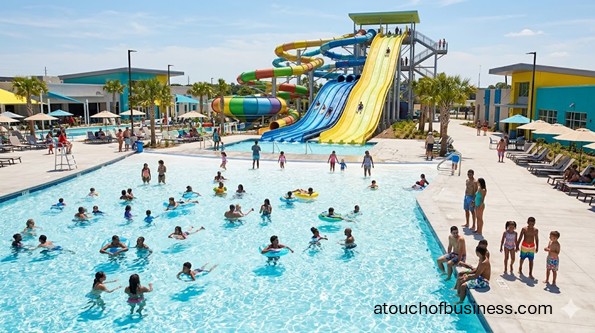
Water Park Business Guide For A Strong First Opening
A water park business is a fixed-site recreation venue built around water slides, pools, splash areas, and other aquatic attractions. In this model, you are not just opening a place with fun features. You are building a full guest experience that depends on safety, timing, capacity, staffing, and smooth customer flow.
Most water park businesses serve families first, then teens, groups, and guests looking for a seasonal day trip. Your offer may include admissions, season passes, lockers, cabanas, food, retail, and private events. The exact mix changes your startup costs, staffing plan, and permit list.
- Common attractions include slides, wave pools, lazy rivers, activity pools, and children’s play areas.
- Common customer concerns are safety, clean facilities, short waits, easy booking, and whether the park feels worth the price.
- Common launch risks include weather, weak demand, poor layout, understaffing, equipment trouble, and opening before the site is ready.
Is This Business Right For You?
A water park business can look exciting from the outside. The day-to-day work is less glamorous. You may spend more time on permits, staffing gaps, inspections, safety drills, water systems, and customer complaints than on the attractions themselves.
Ask yourself one honest question: are you moving toward something you want, or just trying to get away from a job, financial problems, or the image of working for someone else? That answer matters.
You also need to like the real work. A water park business brings long setup days, fast decisions during busy periods, weather pressure, and a lot of responsibility for guest safety.
Passion for the work matters. It helps you stay steady when the build takes longer, the staffing plan gets tight, or opening day problems show up. That is one reason passion for the work is more than a feel-good idea.
Before you commit, speak with owners in another city or region so you are not talking to a direct competitor. Ask real questions about startup costs, inspections, staffing, guest flow, off-season pressure, and what they wish they had done sooner. That kind of firsthand owner insight is hard to replace.
- You may be a good fit if you handle pressure well, like facility-based businesses, and do not mind seasonal swings.
- You may be a poor fit if you want a low-risk startup, dislike supervising large teams, or want a simple business you can run mostly alone.
How Will You Prove Demand Before You Build?
A water park business is expensive to build and slow to reverse. That is why demand comes first. Do not start with slide catalogs or design sketches before you know who will come, how often they will come, and what other options they already have.
Look at your trade area, local population, tourism patterns, school calendars, weather, and nearby entertainment venues. A park in a tourist corridor works differently from a park built for local families and repeat pass holders. Start by studying local supply and demand in a very practical way.
- Identify your main customers: local families, tourists, teens, camps, birthday groups, or hotel guests.
- Study nearby pools, splash pads, theme parks, family entertainment centers, and indoor recreation sites.
- Test whether people want day passes, season passes, party packages, or a smaller neighborhood-style park.
- Match demand to climate and season length before you choose an outdoor or indoor concept.
What Kind Of Water Park Will You Open?
This is one of the biggest early decisions. A water park business can be outdoor and seasonal, indoor and year-round, or a mixed model. It can lean toward younger families, thrill seekers, or a broad age range.
Your attraction mix drives almost everything else. A wave pool, lazy river, and large slide tower increase the footprint, utility needs, staffing, and maintenance burden. A smaller family-focused park may lower cost, but it also changes how people value the visit.
- Choose your basic format: outdoor seasonal, indoor year-round, or hybrid.
- Decide whether you want a family park, thrill park, or mixed-age venue.
- Choose your revenue mix: admissions only, or admissions plus food, lockers, cabanas, retail, and events.
- Set a first-stage scope that fits your budget and your market, not your wish list.
Scope creep is dangerous here. Every new feature affects permits, insurance, staffing, utilities, and guest expectations.
How Will Guests Move Through The Venue?
A water park business succeeds or struggles based on flow. Think through the full guest path before you get too deep into design. How will people discover the park, buy tickets, arrive, park, enter, change, store items, move between attractions, get food, find first aid, and leave?
Poor flow ruins the experience even when the attractions are strong. Long entry lines, crowded tube pickup, weak sightlines, bad locker placement, and tight deck space create stress fast.
Capacity matters too. You need enough space for peak days, but not so much cost that the park becomes too expensive to open. For a water park business, guest flow is not a side issue. It is part of the product.
How Will You Put The Plan On Paper?
You need a working plan before you chase serious financing or sign a site deal. This does not have to be fancy. It does have to be grounded.
Use the plan to define the concept, startup budget, target market, capacity, pricing approach, staffing model, and opening timeline. If you need help organizing it, start with building a business plan that answers real startup questions instead of filling pages.
- Set your opening goal and your first-season targets.
- Estimate attendance by day type, not just by year.
- Project admissions, food, lockers, cabanas, and retail separately if you will offer them.
- List your major risks, including weather, staffing shortages, and delayed approvals.
A water park business plan should also show what must be ready before opening day. That includes permits, mechanical systems, staffing coverage, payment systems, and emergency response procedures.
Where Should The Water Park Go?
Site choice can make or break the whole project. A water park business needs more than a visible address. It needs the right zoning, traffic access, parking, drainage, utility capacity, and room for safe circulation.
Start with whether the property can legally support this kind of venue. In some places, the use may fit standard zoning. In others, you may need special approval. Do not assume that an empty parcel or old recreation site is automatically a fit.
- Confirm zoning and land use before major design spending.
- Check water, sewer, power, and stormwater capacity early.
- Review traffic flow, bus access, rideshare drop-off, and peak-day parking.
- Ask whether a certificate of occupancy will be required before opening.
If the site cannot support the park without major utility or access work, walk away early if the numbers stop making sense.
How Will You Set Up The Business Legally?
A water park business needs a proper legal setup before you move into contracts, bank accounts, hiring, or permit applications. Start by deciding how you will own and operate it.
You may look at a limited liability company, corporation, partnership, or another structure that fits your ownership and tax situation. This is where choosing your legal structure becomes a practical decision, not just a paperwork step.
- Form the entity with your state if you are not operating as a sole proprietor under your legal name.
- Apply for an Employer Identification Number.
- Register any needed assumed business name if you will operate under a trade name.
- Set up state tax accounts if your state requires them for sales tax, payroll withholding, or other business taxes.
If you will sell admissions, food, retail items, or alcohol, your tax setup may become more layered. Keep that part simple by sorting your revenue lines before you open.
Which Permits And Approvals Apply To A Water Park Business?
This is where many first-time owners underestimate the work. A water park business can touch building, fire, health, accessibility, labor, and in some states amusement-ride oversight. The exact list depends on where the park is located and what features you will offer.
At the federal level, pool and spa drain rules matter. Accessible entry requirements matter too. At the state and local level, public aquatic permits, plan review, inspections, and occupancy approvals may be central.
- Ask your local building department how plan review works for a water park project.
- Ask the health department or environmental health office who regulates public aquatic venues in your area.
- Ask whether water slides or other attractions fall under a state ride inspection program.
- Ask whether food service, alcohol sales, signage, and special events need separate approvals.
You also need to verify basic permit timing. Some approvals come before construction. Others come before opening. A water park business should never assume that one permit covers everything.
What Equipment And Systems Must Be Ready Before Opening?
The obvious equipment is only the start. Yes, a water park business needs slides, pools, splash features, tubes, deck furniture, lockers, and admissions hardware. It also needs the systems behind the scenes that keep the venue safe and usable.
Think about pumps, filtration, recirculation, chemical feed, water testing, compliant drain covers, first-aid equipment, radios, public-address systems, and cleaning tools. If the park is indoors, ventilation matters too because poor air handling can make chloramine problems worse.
- Aquatic hardware: slides, wave pool equipment, lazy river systems, play structures, tubes, and racks.
- Mechanical systems: pumps, filters, controllers, valves, meters, and chemical storage.
- Safety gear: lifeguard stations, rescue equipment, backboards, first-aid supplies, and automated external defibrillators.
- Front-end systems: ticketing, point of sale, lockers, wristbands, scanners, and signage.
- Maintenance tools: water test supplies, spare parts, housekeeping gear, and inspection forms.
Your supplier list will usually include slide manufacturers, aquatic engineers, filtration vendors, ticketing providers, locker vendors, uniform suppliers, and safety equipment vendors. Choose partners who understand public aquatic venues, not just general recreation businesses.
What Will Startup Costs Really Depend On?
There is no useful one-size-fits-all startup number for a water park business. Cost changes fast based on land, grading, utilities, attraction mix, indoor or outdoor design, parking, buildings, and local construction pricing.
That is why you should build your budget by category instead of chasing a universal range. Use clear buckets so you can see where the real pressure sits.
- Land control or leasehold rights
- Site work, drainage, and utility upgrades
- Pools, slides, structures, and theming
- Mechanical systems and chemical systems
- Buildings, restrooms, change rooms, lockers, and admissions areas
- Permits, engineering, legal, accounting, and insurance
- Software, payment systems, opening inventory, and staff training
- Working capital and contingency funds
A water park business usually needs a larger contingency than a simple service startup. Too many moving parts can shift during design, permitting, or construction.
Funding may come from owner equity, partners, investors, bank financing, or Small Business Administration loan programs. Lenders will want a serious plan, a realistic budget, and a clear path to opening.
How Will You Price Tickets And Set Up Payments?
Pricing for a water park business is more than setting one ticket number. You may have day passes, season passes, child pricing, group rates, lockers, cabanas, food, and retail. Each part should make sense on its own and as part of the full guest experience.
Base your pricing on local competition, capacity, attraction mix, season length, and the kind of customer you want. A park aimed at local repeat visits may price differently from a destination park that depends on one-time traffic.
Before opening, get your payment systems fully tested. That includes online ticketing, point of sale, refunds, card processing, and daily settlement. It also means opening a business bank account that fits your transaction flow and reporting needs.
If lines build at the gate or payment problems hit on a busy day, the guest experience starts badly before anyone reaches the water.
How Will You Handle Bookkeeping, Taxes, And Records?
A water park business needs organized records from day one. You will likely track ticket sales, add-on revenue, payroll, supplier invoices, maintenance purchases, refunds, and tax-related records across several revenue streams.
You also need operating records that matter for safety and inspections. This can include daily ride checks, water chemistry logs, incident reports, fecal contamination response logs, maintenance work orders, and staff training sign-offs.
- Set up bookkeeping before opening, not after the first busy weekend.
- Separate admissions, food, retail, lockers, and events in your reporting if you offer them.
- Keep permit documents, inspection reports, and warranty records in one place.
- Make sure managers know who records what and when.
Clean records protect you. They also help you see problems faster.
What Insurance And Risk Planning Do You Need?
A water park business faces injury claims, weather interruptions, property damage, equipment failure, and high guest volume. Insurance planning should happen early because the park design, attraction mix, and staffing model all affect the discussion.
You may review general liability, property coverage, workers’ compensation where required, umbrella coverage, and other policies tied to your setup. If you sell alcohol, that can add another layer. A qualified broker who understands aquatic or amusement venues is worth finding.
Risk planning goes beyond insurance. You need emergency action plans, first-aid coverage, communications procedures, evacuation steps, bad weather decisions, contamination response, and clear shutdown authority when conditions are unsafe.
Do not leave emergency planning for the last week before opening. It needs to shape training, signage, and supervisor roles.
Who Will You Need To Hire Before Opening?
A water park business is rarely a one-person operation. Even a modest venue needs enough coverage for lifeguard zones, guest services, cleaning, maintenance, and supervision. Peak-time staffing matters more than average-day staffing.
Your early team may include lifeguards, slide attendants, admissions staff, maintenance technicians, janitorial staff, food workers, security staff, and shift supervisors. If you plan to hire younger seasonal workers, confirm labor rules before you build the schedule.
- Define each position before recruiting starts.
- Match staffing to attraction count, sightlines, hours, and expected attendance.
- Decide who handles water testing, maintenance calls, and guest incident reports.
- Build backup coverage for absences on peak days.
A water park business can look overstaffed on paper and still feel short during a rush. That is why staffing should follow venue flow, not just attraction count.
How Will You Train And Test The Operation?
Training is where the paper plan becomes real. A water park business needs training on attraction positions, guest rules, emergency response, water testing, sanitation, payment systems, and supervisor communication.
Run drills before opening. Test lost-child response, weather shutdowns, first-aid calls, contamination events, payment outages, crowd buildups, and end-of-day closing routines. Problems show up faster in live practice than in staff meetings.
A soft opening is smart when the park is ready enough to operate but still small enough to learn. Use it to test queue flow, staffing levels, signage, locker use, food lines, and guest questions.
How Will You Name, Present, And Launch The Business?
A water park business needs a clear name, a clean website, and an easy ticket-buying path. People should understand what the park offers, who it serves, when it is open, what they can bring, and how to buy tickets.
Secure the business name, domain, and social handles early enough to avoid confusion. Then build the basics: logo, signage, ticketing pages, park rules, waiver language if your setup needs it, and simple guest-facing policies.
Your launch should focus on the right customers, not everyone. For many parks, that means local families first, then group buyers, hotels, camps, and nearby visitors who can actually become repeat customers.
- Show the attractions clearly, but also show parking, lockers, seating, and family amenities.
- Make hours, age guidance, height rules, and weather policies easy to find.
- Keep online buying simple on a phone screen.
- Answer common pre-visit questions before guests have to call.
If guests feel confused before arrival, the water park business starts losing trust before the first ticket scan.
What Does A Pre-Opening Day Look Like?
For a water park business, a pre-opening day is usually packed. You may walk the site with a contractor in the morning, review an inspection item before lunch, test water chemistry in the afternoon, and end the day with staff drills and point-of-sale checks.
You may also be solving small problems that affect the guest experience in a big way. A tube rack in the wrong place, poor sightlines at a slide exit, weak signage, or a confusing locker process can slow the whole venue down.
This is the reality check. If you do not like this kind of work, the business may not fit you as well as the idea of it does.
What Should Stop You From Opening?
Sometimes the smartest launch decision is to wait. A delayed opening hurts. An unsafe or disorganized opening can hurt much more.
- You do not have final approvals or your certificate of occupancy is still unresolved.
- The water systems are not stable or testing routines are not working.
- You are still short on critical staff or supervisors.
- Queue flow, signage, or guest entry still feels confusing during live tests.
- Your payment systems, refund process, or daily settlement process are not reliable.
- Emergency drills still feel slow, unclear, or poorly led.
Do not open just because the calendar says you should. Open when the facility experience is ready.
What Should Be On Your Opening Checklist?
A water park business needs a final launch list that covers approvals, people, systems, and guest experience. Keep it simple enough to use. Keep it detailed enough to catch what matters.
- Entity formation, tax ID, and core registrations are complete.
- Zoning, building, fire, health, and occupancy approvals are in place.
- Any required ride-related inspections have been completed.
- Drain covers, accessibility items, and safety signage have been verified.
- Filtration, recirculation, chemical feed, and water testing systems are working.
- First-aid equipment, communications devices, and emergency plans are ready.
- Lifeguard and operating staff have been trained and scheduled.
- Ticketing, point of sale, refunds, and daily settlement have been tested.
- Lockers, restrooms, changerooms, seating, and guest pathways are ready.
- Food, retail, and alcohol approvals are ready if those services will open with day one.
- Cleaning supplies, logs, inspection sheets, and maintenance tools are in place.
- A soft opening or full operational test has already happened.
That is the standard you want. Not perfect. Ready.
FAQs
Question: Do I need a legal entity before I start talking to landlords and vendors?
Answer: You can explore options first, but many owners form the business before signing serious contracts. It also makes banking, taxes, and licensing easier to organize.
Question: Is an Employer Identification Number required for a water park startup?
Answer: In many cases, yes, especially if you will hire workers or open business accounts. You can get one directly from the IRS at no cost.
Question: What permits usually take the longest for a new water park?
Answer: Building review, site approval, and aquatic health approvals often take the most time. Ride-related review can also slow things down in states that regulate fixed-site attractions.
Question: Can I open a water park on any large commercial property?
Answer: No. The site must fit local land-use rules, utility capacity, drainage needs, parking demand, and public safety requirements.
Question: What makes startup costs rise so fast in this business?
Answer: Land work, water systems, structures, utilities, and guest support buildings push costs up quickly. Indoor construction, major slides, and large parking areas can raise the budget even more.
Question: Should I start with a small attraction mix or go big right away?
Answer: Many first-time owners are safer with a smaller first-stage concept that matches real demand. Adding too much too soon can strain permits, staffing, and cash.
Question: Do water parks need special insurance beyond normal business coverage?
Answer: They often need more than a basic policy because the risk profile is different from a simple retail business. A broker with aquatic or amusement experience can help you sort the right mix.
Question: How should I think about ticket pricing before opening?
Answer: Start with your local market, your feature mix, and the kind of guest you want to attract. Then decide whether add-ons like lockers, cabanas, or food should carry part of the revenue load.
Question: What basic tech should be in place before launch day?
Answer: Most parks should have on-site payment processing, a clear way to track sales by category, and ideally online ticket sales before opening. It also helps to have simple reporting for refunds, passes, and daily cash closeout.
Question: How early should I hire lifeguards and front-line staff?
Answer: Early enough to train them well before the first public day. A rushed team can create safety problems and long lines even if the facility looks ready.
Question: What should my team check every morning during the first month?
Answer: Focus on water quality, attraction readiness, safety gear, radios, payment systems, and guest areas. Small failures at opening time can affect the whole day.
Question: What policies should I have ready before the first guest arrives?
Answer: Have written rules for emergencies, weather shutdowns, contamination events, injuries, lost children, and refund handling. Staff should know who makes the call when service must stop.
Question: How much cash reserve should I keep for the first month?
Answer: Enough to cover payroll, supplies, utilities, and surprise fixes without depending on perfect attendance. A water park can have slow days, weather hits, or last-minute repairs right after opening.
Question: What is a common early mistake with staffing?
Answer: New owners often count workers by headcount instead of by coverage need. Busy zones, breaks, absences, and shift changes can leave the park short even when the schedule looks full.
Question: How should I market the park before opening without overspending?
Answer: Put your early effort into local families, nearby groups, and partners who can send real traffic. Clear photos, opening details, and easy online buying matter more than broad promotion at first.
Question: Is a soft opening worth it for a water park?
Answer: Yes, because it gives you a controlled way to test entry, staffing, food lines, locker use, and response time. It can reveal weak spots before a full crowd shows up.
Question: When should I delay opening even if the calendar says go?
Answer: Delay if approvals are incomplete, water systems are unstable, or your team still looks shaky in drills. A late opening is easier to recover from than a bad first impression tied to safety or confusion.
Expert Tips From Water Park Operators
One of the fastest ways to shorten your learning curve is to study operators, executives, and industry specialists who have already dealt with staffing, pricing, guest flow, safety, and opening pressure.
The resources below give you first-hand advice from people who have built, run, or supported water parks and similar attractions.
- AttractionPros: Bill Lentz On Park Acquisitions, Believing In The Team, And Walking The Walk — Helpful for readers who want insight from a veteran who has led Soak City, Wet n’ Wild Sydney, Palace Entertainment water parks, and other attraction operations.
- blooloop: What Sets Water Parks Apart From Theme Parks, Operationally? — A useful interview with Scott Sanders on staffing, safety, pricing, seasonality, and why water parks work differently from dry parks.
- AttractionPros: Mark Moore On Cabanas, Pricing, And Guest Experience — Good for startup owners thinking about premium offers, demand-based pricing, and how to shape the guest day at a regional water park.
- blooloop: Great Wolf CEO Kim Schaefer Interview — Strong choice for readers who want leadership and team-building ideas from a major water park resort operator.
- Aquatics International: Opening Up — A practical piece built around advice from park managers on getting through opening day and early-season operations.
Related Articles
- Starting a Family Entertainment Center
- Starting a Pool Service Business
- How To Start Pool Cleaning Service
- Starting an Indoor Playground
- Start a Mini Golf Business
- How To Start a Go-Kart Business
- How To Start an Aquatic Therapy Business
- How To Start a Profitable Sauna Installation Business Now
- Start a Hot Tub Retail Business
- Start a Kids’ Summer Camp the Right Way
- How To Start Your Scuba Diving Shop
Sources:
- ADA.gov: Accessible Pools Entry Exit
- Aquatics International: Facility Operations Aquatic Play
- CDC: Model Aquatic Health Code, Poop Pool Response, Chloramines Pool Operation, Operating Public Pools Hot
- CPSC: Pool Spa Drain Cover, State Ride Safety Officials
- eCFR: Medical Services First Aid
- FDA: Food Code 2022
- IAAPA: Annual Safety Reports
- IRS: Employer Identification Number, Business Structures
- ProSlide: 9 Steps Starting New Water
- SBA: Pick Business Location, Register Your Business, Federal State Tax ID, Open Business Bank Account, Calculate Startup Costs, 7(a) Loans, 504 Loans, Get Business Insurance
- TTB: Alcohol Beverage Authorities
- U.S. Department of Labor: Federal Child Labor Lifeguards