
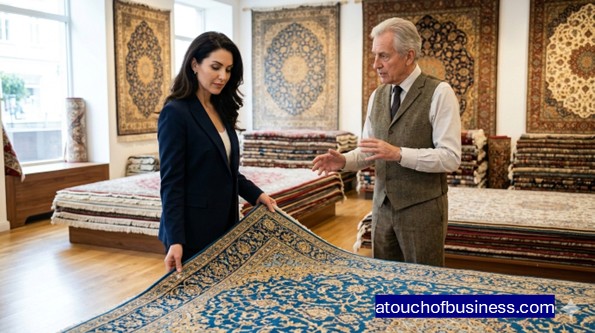
What to Expect From a Persian Rug Storefront Setup
A Persian rug store is a specialty retail business built around product knowledge, presentation, and trust. You are not just selling floor coverings. You are helping people judge color, size, fiber, craftsmanship, condition, and fit in a real room.
That changes the startup picture. A storefront Persian rug store needs the right mix of inventory, good lighting, clean storage, reliable checkout, and enough space to unroll rugs without damaging them. The biggest early risk is usually not lack of interest. It is tying up too much cash in the wrong rugs before you know what your market wants.
Your customers may include homeowners, interior designers, home stagers, repeat collectors, office buyers, and gift shoppers. Some will want a true hand-knotted statement piece. Others want a Persian-style rug that looks rich, fits the room, and lands at a price they can justify.
This business can be rewarding if you enjoy product selection, in-person selling, and visual merchandising. It can also be stressful. High-ticket inventory sits on your floor, every buying mistake ties up money, and vague claims about origin or quality can damage trust fast.
If you want a grounded place to start, it helps to think through the key issues before opening, before you sign a lease or place inventory orders.
Is A Persian Rug Store Right For You?
First, ask two separate questions. Does owning a business fit you? Then ask whether a Persian rug store fits you.
Owning any store means pressure. Rent shows up every month. Inventory moves slower than you hoped. A customer asks for a refund on a large purchase. A shipment arrives with a damage issue. You need to stay steady when that happens.
A Persian rug store adds another layer. You need patience, a good eye, comfort with higher-ticket sales, and enough discipline to avoid buying rugs just because you like them. Your taste matters, but your market decides what pays the bills.
Your interest in the work matters too. If you do not care about textiles, design, fibers, color, and the look of a room, this business can become a grind. A real passion for the work helps when you are unpacking, tagging, cleaning up the floor, and answering the same product questions all week.
Here is the harder question: “Are you moving toward something or running away from something?”
Do not open a Persian rug store just to escape a job, solve financial pressure, or prove something. That is a weak reason to take on rent, inventory risk, and customer expectations.
Before you go further, talk only to owners you will not compete against. Look for rug store owners in another city, region, or market area. Ask for firsthand owner insight, not encouragement.
Useful fit questions include:
- What part of opening took more cash than you expected?
- Which rugs sold first, and which ones sat too long?
- What kind of customer problem showed up early: returns, delivery issues, color disputes, or damaged goods?
- What do you now require from every supplier that you did not require at the start?
- If you were opening again, what would you buy less of in month one?
Step 1: Choose Your Persian Rug Store Positioning
A Persian rug store can look very different depending on what you sell. You might focus on true hand-knotted rugs, a mix of Persian and Persian-style rugs, vintage pieces, decorator-friendly midrange rugs, or a blend of rugs and accessories such as pads and delivery service.
This is your first real risk decision. Product mix shapes inventory cost, supplier choices, price points, customer expectations, and how much product knowledge you need on the sales floor.
Think about the lane you want to own. Are you selling collectible statement pieces, practical room rugs for upper-middle-income homeowners, or a store that speaks strongly to designers? A fuzzy position creates weak buying decisions. That is how stores end up with too many nice rugs and not enough sellable rugs.
Keep the storefront model in view. A store with walk-in traffic needs visible assortment, clear price logic, and strong presentation. If the floor feels random, people will browse and leave.
Step 2: Check Demand Before You Commit To A Lease
Do not fall in love with the idea of a Persian rug store before you test demand where you plan to open. Specialty retail depends on local taste, household income, competition, and how people shop for home goods in your area.
Start with basic local checks. Who already sells rugs nearby? Are they furniture stores, design showrooms, antique stores, discount chains, or dedicated rug dealers? That tells you whether your market is underserved or already crowded.
You also need to check who your likely buyers are. Homeowners and designers do not shop the same way. One group may want instant availability and room-size guidance. The other may care more about curation, special orders, and consistent support. This is where checking local supply and demand becomes practical, not academic.
Look at parking, visibility, neighboring businesses, and nearby traffic patterns too. A beautiful rug store hidden in the wrong retail strip can struggle from day one. Weak location fit is a real startup risk.
Step 3: Choose Your Structure And Register The Store
Before you buy inventory or sign contracts, decide how the Persian rug store will be set up legally. Your structure affects taxes, liability, ownership, and how you handle the lease and bank account.
Many first-time owners compare a sole proprietorship with a limited liability company. Others may open with partners or form a corporation. This is one of those choices you want clear before the rest of the setup starts rolling. If you need a simple breakdown, review choosing your legal structure before filing anything.
Once you settle that, register the business at the state level as needed, handle any DBA filing if you are using a trade name, and apply for an Employer Identification Number from the Internal Revenue Service. That tax ID is usually needed for banking, payroll, and many vendor applications.
If ownership is shared, do not keep the agreement casual. A rug store can tie up a lot of money in inventory fast. Ownership, profit splits, and exit terms need to be settled early, not after the first disagreement.
Step 4: Secure A Storefront That Fits Rug Retail
A Persian rug store needs more than a nice-looking space. You need enough room to display rugs well, receive shipments, store rolled inventory safely, and let customers see color and pattern under good light.
That means the lease decision carries real risk. Check whether the location allows your planned retail use, how signs are handled, whether customer parking works, and whether deliveries can be received without constant hassle. In many places, a new tenant, a change of use, or renovation work can trigger permits, inspection, or a certificate of occupancy before opening.
If the space needs electrical changes, display-wall work, flooring changes, or new fixtures, confirm the local process with the city or county building office before spending. A storefront that looks ready may still need approvals.
Walk the space like an operator. Where will rolled rugs go? Where will high-value pieces be kept? Can you unroll a large rug without blocking the whole store? Can a customer move comfortably through the showroom? Poor layout creates selling problems before you even advertise.
Step 5: Handle Legal, Tax, And Local Approval Basics
This business is not heavily licensed in the way some regulated industries are, but a storefront Persian rug store still has important launch requirements. Miss one of them, and the opening can stall.
At the federal level, get the tax ID you need. At the state level, set up sales tax registration where your state requires it for retail sales of tangible goods. If you will hire employees, set up the employer accounts your state requires for withholding, unemployment, and workers’ compensation where applicable.
At the city or county level, verify the local business license, zoning approval, sign rules, and any occupancy or building sign-off tied to your space. A store open to the public may also need accessibility issues addressed if you are changing the space.
Keep the steps simple. Start with local license and permit requirements, then confirm the use of the exact address, then ask whether your build-out triggers any inspection or occupancy approval.
For a Persian rug store, there are also product-specific risks. Carpets and rugs sold in the United States are subject to federal flammability rules. If you import directly or private-label goods, do not wait until after inventory arrives to ask for compliance documents. Build that into your buying process at the start.
Step 6: Set Supplier Standards Before You Buy Inventory
This is where many specialty retailers get in trouble. They buy too early, buy too broadly, or trust supplier claims that should have been documented.
Your Persian rug store needs clear vendor standards before the first purchase order goes out. Decide what you will require on every invoice and product record. That usually includes size, fiber, construction type, item identifier, origin information when claimed, and damage or return terms.
If you plan to buy from U.S. wholesalers or importers, the process is simpler. If you plan to import directly, the risk rises. Imported goods generally need country-of-origin marking, and the importer is responsible for customs compliance. That means you need clean paperwork, not verbal promises.
Be especially careful with true Iranian-origin carpets. Do not treat that as a routine sourcing choice. If any inventory may come from Iran or be described as Iranian-origin, review current sanctions rules before you place orders, move money, or advertise those goods.
For a Persian rug store, this step is also about honesty in selling. If you cannot support an origin or construction claim, do not build your showroom story around it.
Step 7: Plan Inventory, Pricing, And Cash Use
Inventory is usually the biggest startup cost and the biggest early risk in a Persian rug store. A showroom can look beautiful and still be financially weak if too much money is sitting in slow-moving stock.
Plan inventory by depth, not just by taste. Think in size ranges, price bands, colors, room uses, and buyer types. You may need a few signature pieces, but a floor full of expensive statement rugs will not help if most customers are shopping for practical living-room sizes.
Set pricing rules before the floor is full. Decide whether your store will use fixed ticket prices, limited negotiation on higher-ticket rugs, bundled pricing with pads and delivery, or special-order pricing for customer requests. A vague pricing approach creates inconsistency, and inconsistency weakens trust fast.
Keep margins in mind, but remember the full landed cost. Freight, duties, brokerage, storage, packaging, card fees, delivery time, and returns all affect what a rug must sell for. A good place to think this through is estimating profit before launch and then matching your numbers to the actual rugs you plan to carry.
If you need help refining the numbers, work through the basics of setting your prices before you start tagging inventory.
Step 8: Build The Showroom, Storage, And Checkout Area
A Persian rug store lives or dies on presentation. Customers need to see rugs clearly, compare them, and imagine them in a room. That means your physical setup matters as much as the inventory itself.
Your store may need rug display racks, hanging systems, strong lighting, mirrors, a clean area for unrolling large pieces, measuring tools, and dry secure storage for back stock. You also need safe handling tools such as carts, wraps, ties, and clean inspection space. Moisture, dirt, pests, and rough handling can ruin margin quickly.
The checkout side needs just as much attention. Set up your point-of-sale system, card terminal, receipt printer, cash drawer, stock labels, and special-order forms before opening. Test refunds, deposits, split payments, and tax settings. A store that looks polished but cannot process a sale cleanly will feel shaky to customers.
Do not ignore security. High-value inventory and a public showroom mean you should think about cameras, alarms, controlled storage access, and safe handling of cash and documents from the start.
Step 9: Put Banking, Payments, And Insurance In Place
Before opening the Persian rug store, separate the money properly. That means a business bank account, a working way to take card payments, and clear rules for deposits, refunds, special orders, and large cash transactions.
Take the banking setup seriously. You are dealing with inventory purchases, shipping payments, rent, possible payroll, and customer transactions that may be much larger than the average small retail sale. Get your business banking in place before inventory starts arriving.
Card acceptance also needs to be tested early. Many rug stores rely on higher-ticket sales, so delayed funding, weak chargeback handling, or an awkward terminal setup can become a real problem. Review the basics of card payment processing while you are comparing providers.
Insurance matters too. General liability and commercial property coverage are common review points for a storefront. If you will have employees, workers’ compensation may be required under state law. A Persian rug store should also think carefully about protection for inventory, delivery exposure, and customer claims tied to product handling or installation.
There is another concrete risk here. If you may receive more than $10,000 in cash in one transaction or related transactions, set up a Form 8300 reporting process before opening, not after it happens.
Step 10: Decide On Staffing, Training, And Daily Work
A new Persian rug store can open as a one-person business, but that only works if the space, hours, and delivery expectations stay realistic. The moment you promise frequent deliveries, long store hours, or constant appointment coverage, staffing pressure starts to build.
If you stay solo at first, be honest with yourself about the tradeoff. You will handle receiving, tagging, customer help, checkout, follow-up, vendor communication, and store care. That can work, but only if the schedule and traffic pattern fit a one-person operation.
If you hire from the start, train for the actual work. In a rug store, that means safe handling, basic product language, measuring, deposit rules, return policies, and how to document damage or customer complaints. A new employee does not need to be a textile expert on day one, but they do need to avoid making claims they cannot support.
The day-to-day work is more physical than some people expect. A typical pre-launch day might include receiving a shipment, checking tags and paperwork, unrolling pieces for display, meeting a sign installer, testing the point-of-sale system, helping a walk-in customer, and then re-rolling stock before you lock up.
If you are unsure whether to add help at opening, think through when it makes sense to hire instead of waiting for a staffing problem to force the decision.
Step 11: Build Your Name, Signage, And Opening Marketing
A Persian rug store depends on trust, so your name, signage, and online presence need to feel consistent before the doors open. Customers should be able to find you, understand what you sell, and feel that the store is real and prepared.
Start with the business name and domain. Then make sure your contact details, hours, and location are consistent anywhere the store appears online. For a storefront, signage is not a side issue. It affects visibility, walk-in traffic, and first impressions. If you need exterior signs, confirm local rules early and plan your storefront signage before opening week.
Keep the opening marketing simple and specific. Show the style of rugs you carry. Make your positioning clear. Mention whether you focus on hand-knotted pieces, decorator-friendly options, vintage rugs, or a broader mix. Good launch marketing helps the right customer understand why they should step inside.
Also think about basic identity pieces such as receipts, care cards, packaging, and printed business cards. These details matter more in a specialty store than many new owners realize because they reinforce the sense that the business is careful and established.
Step 12: Run A Soft Opening And Fix Weak Points Before Launch
Do not make the first day customers see your Persian rug store the first time your systems are tested. A soft opening gives you a chance to catch small problems before they turn into embarrassing ones.
Test how inventory moves from storage to floor. Test the point-of-sale system. Test card payments, taxes, receipts, deposits, and refunds. Walk the customer path from the front door to the rug display to checkout. Watch for blind spots, awkward traffic flow, weak lighting, and clutter.
This is also the time to test delivery, rug wrapping, condition sign-off, and special-order paperwork. If a customer buys a large rug, can your store process the sale cleanly, protect the product, and hand off the next step without confusion?
A soft opening is not just a celebration. It is a controlled way to find problems while the stakes are lower.
Red Flags Before You Spend
Pause if you are about to spend real money and any of these are still unresolved.
- You have no clear product position and keep changing what kind of Persian rug store you want to be.
- You are about to buy inventory without written standards for size, fiber, origin claims, and return terms.
- You love the storefront but have not confirmed zoning, signage, or occupancy issues.
- You are planning to import directly without customs paperwork and sanctions review in place.
- You have not tested pricing against landed cost, card fees, and likely delivery work.
- You are opening because you want out of your current job, not because you want this business.
- You are promising cleaning, repair, or appraisal help without a solid outside partner or a clear process.
Pre-Opening Checklist
Before a Persian rug store opens to the public, the basics need to be finished and tested. Use this as a final readiness check.
- Business structure chosen and registration completed
- Employer Identification Number obtained
- Sales tax registration completed where required
- Local business license or tax certificate confirmed if required
- Zoning and address use checked for the storefront
- Any needed permit, inspection, or certificate of occupancy issue resolved
- Sign approval handled if required
- Lease signed and use terms reviewed carefully
- Insurance bound
- Business bank account open
- Card processing tested and working
- Refund, deposit, special-order, and return policies written clearly
- Supplier files and vendor terms organized
- Compliance and origin documents collected for inventory where needed
- Store lighting, racks, mirrors, storage, and checkout area finished
- Inventory tagged, priced, photographed, and entered into stock records
- Security basics in place
- Staff trained or opening hours adjusted for a solo setup
- Delivery process tested
- Care cards, receipts, forms, and packaging ready
- Online contact details and store hours posted accurately
- Soft opening completed and weak points corrected
51 Practical Tips for Starting Your Persian Rug Store
Starting a Persian rug store takes more than renting a space and filling it with inventory.
You need the right product mix, the right documents, and the right location before you open the doors.
These tips walk through the startup stage in a practical order so you can spot risks early and get the store ready to open.
Before You Commit
1. Be honest about why you want to open a Persian rug store. If you are only trying to escape a job or chase status, the rent, inventory cost, and slow sales cycles can hit harder than you expect.
2. Make sure you enjoy the day-to-day work, not just the idea of owning the store. You will spend time lifting rugs, checking invoices, fixing display problems, and answering detailed product questions.
3. Talk only to owners outside your market before you commit. Ask what they bought too early, what moved first, and what supplier problems showed up during the opening stage.
4. Decide whether you want a true Persian-focused store, a broader Oriental rug store, or a Persian-style home décor store. That choice affects inventory cost, supplier type, and how much product knowledge you need at launch.
5. Check your comfort with higher-ticket selling before you spend money. A Persian rug store often depends on fewer sales with larger dollar amounts, so weak confidence can hurt cash flow fast.
6. Think about physical demands before you sign up for the business. Large rugs take space, time, and careful handling, and that matters even before your first customer walks in.
Demand And Profit Validation
7. Study the local market before you look at rugs. Check who already sells premium rugs, Persian-style rugs, antique rugs, and decorator-focused rugs in your area.
8. Visit competing stores in person and watch what they emphasize. Their mix of styles, sizes, price bands, and store presentation can tell you what your market already has.
9. Compare your likely customers before you buy inventory. Homeowners, interior designers, and collectors shop differently, and each group pushes you toward a different opening assortment.
10. Match your opening inventory to room use, not just beauty. Living room sizes, runners, and practical midrange pieces may move faster than rare statement rugs in many markets.
11. Build a rough sales plan before ordering stock. Estimate how many rugs you may need to sell each month to cover rent, utilities, freight, merchant fees, and payroll if you will have staff.
12. Check local income and buying patterns around your planned area. A beautiful showroom will not fix weak demand for premium floor coverings.
Business Model And Scale Decisions
13. Choose your business model early and stick to it during setup. A store that tries to be a collector gallery, a discount rug outlet, and a designer showroom at the same time usually opens with a confused identity.
14. Decide whether you will buy from U.S. wholesalers, import directly, or mix both. Domestic sourcing is usually simpler at launch, while direct importing adds customs work and more paperwork risk.
15. Decide whether you will sell only rugs or also include pads, delivery, and cleaning coordination. These add-ons can help the launch, but they also create more forms, more policies, and more vendor setup.
16. Keep your first store smaller than your ego wants. A showroom that is too large can force you to overbuy inventory just to make the floor look full.
17. Set clear buying rules before your first purchase order. Define acceptable size ranges, fiber types, origin claims, price bands, and condition standards so you do not buy based on emotion.
18. Build your opening mix around what your market is likely to buy first. Signature pieces are useful, but too many of them can trap cash in slow-moving inventory.
Legal And Compliance Setup
19. Choose your legal structure before you sign the lease or open vendor accounts. The structure affects tax setup, liability, ownership records, and how your business name is filed.
20. Get your Employer Identification Number early. Banks, payment providers, and many suppliers ask for it during setup.
21. Register for sales tax where your state requires it before you start retail sales. A rug store sells tangible goods, so this is usually one of the first tax checks to handle.
22. Check whether your city or county requires a general business license or local tax certificate. Do this before opening because local approval often depends on the exact address.
23. Confirm zoning for the exact storefront before you commit to the lease. Ask whether rug and floor-covering retail is allowed there and whether signs, receiving, and customer parking create any extra conditions.
24. Ask if the space needs inspection or a certificate of occupancy before opening. A tenant change, remodel, or build-out can trigger approval steps even when the space looks retail-ready.
25. If you plan to import directly, learn the basics of country-of-origin marking and importer setup before placing orders. Missing or weak paperwork can delay goods and create expensive problems.
26. Treat any Iranian-origin rug sourcing as a sanctions issue that needs review first. Do not place orders, move money, or advertise that inventory until you confirm the current rules.
27. Require federal flammability and product compliance documents from vendors when needed. This matters most when you import directly or private-label inventory.
28. Set a procedure for large cash transactions before you open. If the store may receive more than $10,000 in cash in one transaction or related transactions, you need to know the reporting rule in advance.
Budget, Funding, And Financial Setup
29. Build your startup budget around real categories, not guesses. Include rent, deposit, build-out, signage, display racks, opening inventory, freight, insurance, payment setup, and working capital.
30. Keep a separate line in the budget for freight, duties, brokerage, and storage if you may import. These costs can change your pricing and your opening cash needs more than expected.
31. Protect working capital instead of putting every dollar into inventory. You still need money for utilities, merchant fees, payroll, supplies, and unexpected store fixes during the first weeks.
32. Set your pricing method before tagging rugs. Decide whether you will use fixed prices, limited negotiation, bundled pad and delivery pricing, or special-order pricing.
33. Price from full landed cost, not just the vendor price. A rug that looks profitable on paper can become a weak sale once freight, card fees, and delivery labor are added in.
34. Open your business bank account before the store setup gets busy. It is easier to keep payments, deposits, and vendor spending clean when the account is ready early.
35. Compare payment processors before opening day. A Persian rug store may have large-ticket sales, so funding speed, refund handling, and customer payment options matter more than basic swipe rates alone.
36. If you need outside funding, tie the request to clear startup uses. Lenders respond better when you can show how much will go to inventory, fixtures, working capital, and opening expenses.
Location, Build-Out, And Equipment
37. Walk the space like an operator before you sign anything. Check where rugs will be unrolled, where overflow stock will sit, and how deliveries will come in and out.
38. Choose a location with visibility, simple access, and practical parking. A specialty rug store needs people to find it easily and feel comfortable carrying out a large purchase.
39. Put good lighting near the top of your setup list. Rugs can look very different under poor light, and that can hurt both customer confidence and product presentation.
40. Plan clean, dry, secure storage from the start. Moisture, dust, pests, and rough handling can damage expensive inventory before it ever reaches the floor.
41. Buy display systems that let customers compare rugs without chaos. Strong racks, hanging systems, mirrors, and a safe viewing area make the store easier to shop and easier to manage during the pre-opening stage.
42. Set up the checkout area as carefully as the showroom. Test the point-of-sale system, card terminal, receipt printer, stock labels, and refund settings before the soft opening.
43. Add security before opening inventory arrives. Cameras, alarms, secure back-room storage, and cash protection are easier to install before the store is full.
Suppliers, Contracts, And Pre-Opening Setup
44. Do not buy from suppliers who cannot give clear invoices and documentation. You want clean records for size, fiber, construction, item number, and any origin claim you plan to use in selling.
45. Confirm return terms, damage terms, and freight responsibility before placing orders. Verbal promises are weak protection when a shipment shows up with problems.
46. Write your core store policies before the first sale. Returns, deposits, special orders, rug holds, delivery, and damage claims should all be clear before launch.
47. Tag and record every rug before it hits the floor. A store that opens with weak stock records can lose track of costs, pricing logic, and basic product details right away.
48. Line up any outside cleaning or repair partner before you promise those services. It is safer to offer help you can actually deliver than to improvise after opening.
Branding And Pre-Launch Marketing
49. Secure the business name, domain, and basic brand look before launch. Your signs, care cards, receipts, and online listings should all feel like they belong to the same store.
50. Keep your early marketing simple and specific. Show the kind of rugs you carry, make the store position clear, and avoid broad claims that your opening inventory cannot support.
Final Pre-Opening Checks And Red Flags
51. Run a soft opening before the real launch and treat it like a test. Watch for weak layout, missing tags, payment issues, confusing policies, or supplier paperwork gaps, because those are the kinds of problems that are cheaper to fix before the full opening.
Real-World Advice From Rug And Flooring Retailers
Before you open a Persian rug store, it helps to hear how rug executives, showroom leaders, and specialty flooring retailers talk about assortment, pricing, supplier relationships, showroom space, and what actually drives sales.
The resources below are interview-based pieces and podcast conversations that can give a new owner a more grounded view of the business before opening day.
- Rug News — David Chambers: NFM’s Revamped Area Rug Strategy Boosts Category Sales
- Rug News — Retail Insights: Sergenian’s Next-Generation Rug Business
- Floor Focus — Best Practices: Carr’s Floor & Home and Carr’s Flooring America
- Floor Covering Weekly — FloorRight Interiors Services Western Canada
- Business of Home — Pierce & Ward Started Off With a Dream of Retail
- Apple Podcasts — Ben Soleimani Built His Name on Rugs. Now He’s Going After Furniture
Related Articles
- How To Start a Carpet Shop
- Starting a Weaving Business
- Start a Profitable Carpet Installation Business
- How To Start Your Carpet Cleaning Business
- How To Start Your Home Decor Business
- How To Start an Interior Design Business
- Start an Antique Business
- How To Start a Retail Furniture Store
- How To Start Your Furniture Restoration Business
- Starting a Drapery Business
- How To Start Your Upholstery Business
- How To Start a Successful Art Gallery
Sources:
- IRS: Business Structures, Employer Identification Number, Form 8300 Reporting Cash
- U.S. Small Business Administration: Pick Business Location, Apply Licenses Permits, Open Business Bank Account, Business Insurance, Federal State Tax ID Numbers, Choose Business Structure
- Consumer Product Safety Commission: Carpets Rugs
- U.S. Customs and Border Protection: Marking Country Origin U.S., Importer Create Update Identity, CBP Form 5106
- eCFR: 31 CFR 560.534 Winding down
- ADA.gov: Businesses That Are Open Public
- Office of Foreign Assets Control: Iran Sanctions