
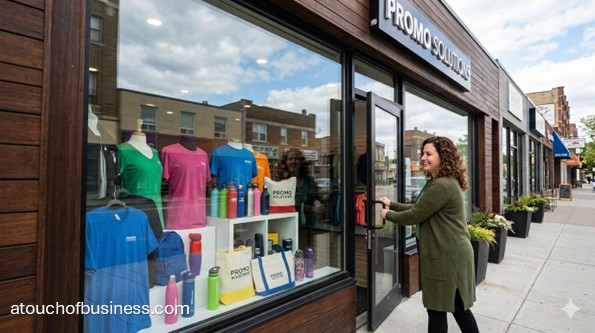
Business Overview
A promotional products business sells branded merchandise for companies, schools, nonprofits, teams, and events. In a storefront model, your space usually works best as a showroom, consultation area, and pickup point. You may outsource most decoration, or you may add light in-house personalization later.
This business sits between creative work and order management. A client comes in with an idea, brand standard, event, or staff need. You turn that into product options, pricing, proofs, approvals, a purchase order, production follow-up, and final delivery. If you like combining presentation, problem-solving, deadlines, and customer communication, that part can be very appealing.
It also helps to know what sells. Apparel and drinkware remain major categories, and many buyers use promotional products for brand awareness, business gifts, staff programs, trade shows, and school or team needs. That gives you room to focus your opening offer instead of trying to sell everything on day one.
Is A Promotional Products Business The Right Fit For You?
Start with two questions. First, does business ownership fit you? Second, does a promotional products business fit you? Those are not the same thing. Owning any business means pressure, uncertainty, and a long list of decisions that land on your desk. A promotional products business adds custom orders, proof approvals, deadline pressure, and a lot of communication.
You also need to enjoy the daily work. In this business, your day will often include client brief calls, product searches, quote changes, proof reviews, sample checks, supplier follow-up, receiving shipments, and pickup coordination. If that sounds draining, pay attention. If that sounds interesting, you may have a better fit than you think.
Passion for the work matters because this is not only a product business. It is also a deadline business, a communication business, and a detail business. Are you moving toward something or running away from something? If you are only trying to escape a job, financial pressure, or status anxiety, slow down and take a hard look at what ownership will actually ask from you.
Before you go further, get firsthand owner insight. Only talk to owners you will not compete against. They should be in another city, region, or market area. That gives you cleaner answers and lowers the chance that someone holds back because you may become a local rival.
- What kinds of orders paid off fastest when you first opened?
- Where did the biggest delays happen between quote, proof, approval, and delivery?
- What did customers expect from your showroom that you did not see coming?
- How many suppliers and decorators did you need before your turnaround times felt dependable?
- What would you set up differently before opening the doors?
Choose Your Offer And Positioning First
Before you can build a workflow, you need to decide what you are actually selling. A promotional products business can look broad from the outside, but your opening offer should stay narrow enough that you can quote well, present well, and deliver on time.
One practical way to start is to choose a few use cases instead of trying to cover the whole industry. You might focus on staff apparel programs, event giveaways, school spirit items, welcome kits, contractor uniforms, business gifts, or branded drinkware for local companies. That choice affects your samples, your suppliers, your pricing, your proofs, and even the way your store feels to a walk-in customer.
Your positioning matters here too. Are you the local showroom with polished client guidance? Are you the fast-turn shop for local business orders? Are you the branded merchandise partner for schools and teams? In a creative service business, clients care about style fit, clarity, and confidence that the final order will match the brief.
As you shape the offer, spend time checking local supply and demand. You do not need a giant study. You do need a clear sense of who already serves your market, what they are good at, and where customers still get weak service.
Build The Workflow Before You Sign A Lease
In a promotional products business, workflow comes before layout. Before you can choose the right space, you need to know how orders will move from inquiry to payment. If that path is fuzzy, the store will be harder to set up and harder to run.
A practical launch sequence usually looks like this: inquiry, discovery, brief, product research, quote, proof, revisions, approval, deposit if required, supplier order, production follow-up, receiving, customer pickup or shipment, and final payment. That sounds simple on paper, but handoffs create risk. A vague brief leads to bad product options. A weak proof process leads to rework. A messy pickup area leads to delays and confusion.
This is where many new owners underestimate the work. A storefront promotional products business is not only about finding products. It is about controlling handoffs so the customer sees a smooth process from first conversation to final delivery.
Choose The Legal Structure, Name, And Tax ID
Before you open accounts, sign contracts, or set up banking, choose the legal structure for your promotional products business. That decision affects taxes, records, and liability. Many first-time owners compare a sole proprietorship and a limited liability company first, then decide whether a partnership or corporation makes more sense for their situation.
If you want extra background, this is a good time to review how to choose your legal structure. After that, handle your state registration if required, lock down the business name, and get the Employer Identification Number from the Internal Revenue Service.
Do not leave the name work until the end. Your business name needs to work on signage, online, on invoices, and in supplier paperwork. A name that sounds clever but looks weak on a storefront sign or proof email can create problems right away.
Open Banking And Payment Processing Early
Before you can take deposits or pay suppliers cleanly, you need your business banking in place. Open the account after your formation and tax paperwork are ready. Then decide how you will take card payments, invoice clients, track deposits, and handle refunds.
In a promotional products business, payment timing matters because many orders are custom. You may need to collect a deposit before placing a supplier order. You may also need a clear rule for rush jobs, proof approval, and customer pickup. Getting your payment process straight early can save you from arguments later.
This is a good point to look at opening a business bank account and deciding whether your card setup should run through a full merchant account or a simpler processor at the start.
Build Supplier And Decorator Relationships Before Launch
Before you can promise products, you need supplier accounts. In a storefront promotional products business, that usually means opening relationships with at least one apparel blank supplier, one hard-goods supplier, and one or more decorators if you are outsourcing embroidery, printing, engraving, or related work.
Supplier setup often depends on your business documents and resale paperwork. It is also where you need backup options. If one supplier is out of stock or one decorator is backed up, the whole job can stall. That is why it helps to set up more than one dependable path before your first real rush order lands.
Think about workflow as you choose vendors. Who is easiest to quote from? Who has better product data? Who gives you the cleanest handoff from product selection to production? In this business, vendor choice is not only about price. It is also about how smoothly the order moves through the system.
Choose A Storefront That Supports The Way Orders Move
Before you fall in love with a space, walk through the full order path. Where will clients sit and review samples? Where will blank products or finished orders come in? Where will pickup orders wait? Where will staff work on quotes and proofs without constant interruption?
A promotional products storefront usually works best when it feels clean, organized, and easy to understand. The customer should see sample categories, branding ideas, and a clear consultation point. Behind that, you need storage, receiving, packing space, and checkout flow that does not block the front of the store.
Location still matters. Visibility, signage, parking, ease of pickup, and local business traffic can all affect your opening. Do not sign the lease until you confirm the address works for your intended use. That includes zoning, occupancy status, and local sign rules.
Handle Local Licenses, Tax Setup, And Location Checks
Your promotional products business may need different approvals depending on the state, city, county, and the exact space you choose. At a minimum, work through the legal basics in order: entity registration if required, tax identification, state sales-tax registration where applicable, and any local business license rules for the address.
Because this is a storefront, location review matters more than many new owners expect. Some cities will want you to confirm the legal use of the space. Others may require a certificate of occupancy, especially if the tenant changes, the use changes, or the unit has been altered. Exterior signs can also trigger separate approval.
This is a good place to review your local licenses and permits. If you are unsure which office controls a rule, start with the city business licensing office, planning department, or building department and work forward from there.
If you plan to hire at opening, add employer setup now. That includes Form I-9, state employer accounts, new-hire reporting, and any required workplace notices. If you plan to import or private-label products, stop and review the federal rules before you sell those items.
Set Up The Store For Presentation And Handoffs
Now you can design the space around the way a promotional products business actually works. In the front, focus on presentation quality. That means displays that show category variety without making the space feel cluttered, a clean consultation area, and samples that help customers compare color, size, material, and branding options.
In the back, build around receiving, storage, staging, packing, and pickup. Even if you outsource most decoration, orders still need a place to be checked in, counted, held, and handed off. If that part is sloppy, the customer experience will feel sloppy too.
Your equipment list does not need to be extreme at launch. Most storefront owners start with computers, large monitors for proof review, good internet, a point-of-sale setup, shelving, sample displays, packing supplies, a shipping scale, a label printer, and organized files for quotes and approvals. If you add light personalization in-house, check the space, utility, and permit impact before buying equipment.
Build A Clear Proof, Revision, And Approval Process
This step matters more than many first-time owners realize. In a promotional products business, proof problems are expensive. Before you can place an order with confidence, you need a standard way to receive artwork, create proofs, handle revisions, and get final approval.
Set limits early. Decide how many revision rounds are included, what counts as a change after approval, when rush fees apply, and when deposits are due. In a creative-service setting, unclear scope turns into delay fast. A short, clear client brief at the start can prevent a long trail of confusion later.
Your forms matter here. Keep a quote form, proof approval form, artwork instructions, deposit policy, rush acknowledgment, and pickup or delivery record ready before launch. When the workflow is clear, customers feel more confident and your team makes fewer avoidable errors.
Plan Pricing Around Real Job Variables
Before you publish prices or send opening quotes, decide how you will build them.
A promotional products business does not price every order the same way because the final number can change with product choice, decoration method, artwork time, proof rounds, freight, split shipments, rush handling, and packaging.
That is why pricing should follow the workflow. First comes the brief. Then the product choice. Then the imprint method. Then the timing. If you skip that sequence, you will underprice work that looks simple on the surface but takes real time to manage.
As you work through your numbers, keep a close eye on startup costs, supplier payment timing, and the cash tied up between approval and final payment. If you want extra guidance, this is a good time to review setting your prices and estimating profitability before launch.
Funding may come from your own savings, a small business loan, a line of credit, or equipment financing if you add on-site decoration. Keep in mind that build-out, displays, signage, samples, software, and working capital can all push your opening budget higher than expected.
Create The Brand Identity And Digital Footprint
A promotional products business sells presentation as much as product. Clients want to feel that you understand branding, deadlines, and finish quality. That means your own business needs a clean identity from the start.
Secure the domain, set up a business email, and build a simple website that shows what you do, who you serve, how to start an order, where the store is located, and what hours you keep. Add real sample photos, clear contact paths, and a short explanation of how the quoting and proof process works. People should not have to guess how to work with you.
Your storefront should match that same standard. Signs, printed materials, proof emails, order forms, and sample displays should look like they came from one business, not four different ones. If you want extra structure, a basic look at brand identity materials and storefront signage can help you keep the opening polished.
Decide Whether You Need Staff At Opening
A small promotional products business can start as a one-person operation, but not every owner should force that model. The real question is where the work piles up first. Is it at the front counter? Is it in quotes and proofs? Is it in receiving and pickup? Is it in supplier follow-up?
If you expect steady walk-in traffic, long consultation times, or frequent receiving and pickup, you may need help sooner than you think. If you start alone, make sure the store hours still leave enough time for the behind-the-scenes work that customers do not see.
When you do hire, bring people into the workflow one step at a time. Someone can learn showroom support before they learn quoting. They can learn receiving before proof review. They can learn pickup handling before supplier follow-up. In this business, training works better when it follows the order path.
Plan A Simple Opening Marketing Strategy
Your early marketing does not need to be complicated. For a storefront promotional products business, the opening goal is to become known by the kinds of customers most likely to order first. Local businesses, schools, contractors, nonprofits, and office-based employers are often solid early targets.
Keep the message practical. Show the kinds of jobs you want. Explain your process. Make it easy for people to ask for a quote, schedule a consultation, or walk in with a project. Your portfolio should show finished pieces, sample sets, proof quality, and the kinds of branded programs you want more of.
Local outreach works better when it connects to a use case. Instead of saying you sell everything, lead with staff apparel, event kits, school items, business gifts, or new-hire packs. That gives people something concrete to picture and makes your store easier to remember.
Protect The Business Before You Open
Insurance and risk planning should be finished before the first customer order. If you hire employees, state workers’ compensation rules may apply. Beyond that, the right coverage depends on your setup, your property, your inventory handling, and whether you add equipment or store finished customer orders on site.
Use a licensed insurance professional who understands small commercial accounts. Explain exactly how your promotional products business will operate, including whether you will decorate items on site, keep sample inventory, host customers in the store, or ship orders from the location. If you want background, a short review of insurance coverage for the business can help you prepare for that conversation.
Also protect the workflow. Back up customer files, store approvals clearly, and keep written records for deposits, pickup, and changes after proof approval. Paperwork is part of risk control in a custom-order business.
Run A Full Test Before The Grand Opening
Before you announce the opening widely, run a few test orders from start to finish. Use the real process. Take a brief, build a quote, prepare a proof, handle a revision, collect the deposit if that is your policy, place the supplier order, receive the goods, stage the pickup, and close out the payment.
This is the best way to catch weak spots in a promotional products business. You may find that your receiving space is too small, your proof process is too loose, or your front counter creates bottlenecks when someone is waiting while staff are handling a pickup.
Do not treat the opening day as the first time the system gets tested. A quiet soft opening or a few controlled trial jobs will tell you more than a dozen planning conversations.
What Daily Work Looks Like In A Promotional Products Business
Once open, your day will probably move between customer-facing work and behind-the-scenes follow-up. You may start with emails, quote requests, stock checks, and proof changes. Then come showroom visits, supplier calls, receiving, order checks, and pickup coordination.
Some owners love that mix. Others find the switching exhausting. That is part of your reality check. A promotional products business is not a passive showroom. It is an active order desk, a creative review point, and a deadline-driven coordination job all at once.
Red Flags Before You Launch
In a promotional products business, early trouble usually starts where the process is vague. Watch for weak briefs, too many product categories, rushed lease decisions, unclear pricing, loose proof approval, and supplier dependence on one company or one decorator.
If your store looks good but your workflow is messy, customers will feel it. If your pricing looks simple but ignores freight, revisions, or rush work, you will feel it. If the space is attractive but the receiving and pickup setup is poor, both you and the customer will feel it.
- You are still changing the offer every week.
- You do not have a clean path from inquiry to approval.
- You signed a lease before checking local use and sign rules.
- You have no backup supplier or decorator.
- You are opening with too many samples and no clear target customer.
- You have not tested deposits, refunds, or final pickup records.
Pre-Opening Checklist
Use this final list to judge whether your promotional products business is truly ready to open. If a step is still unclear, fix it before you push the launch harder.
- Your legal structure, business name, and tax ID are in place.
- Your business banking and payment processing are live.
- Your supplier accounts are open and resale paperwork is handled where needed.
- Your address has been checked for business use, occupancy, and sign requirements.
- Your showroom, consultation space, receiving area, and pickup area are ready.
- Your sample categories match the customers you plan to target first.
- Your quote, proof, revision, deposit, and approval documents are ready.
- Your pricing covers product choice, decoration, freight, revisions, and rush work.
- Your website, email, store hours, and contact paths are live.
- Your opening marketing message is tied to real customer needs, not vague promises.
- Your insurance review is done and employee setup is complete if you are hiring.
- You have run test orders through the full process before the public launch.
FAQs
Question: Is a promotional products business a good fit for a first-time owner?
Answer: It can be, but only if you like deadlines, client communication, and detail work. You will spend a lot of time on briefs, proofs, supplier follow-up, and order tracking.
Question: Should I open as a showroom only or do some decoration in-house?
Answer: A showroom-only start is simpler because you can outsource most decoration and focus on sales, proofs, and customer service. In-house work adds equipment, utilities, training, and sometimes extra local review.
Question: What legal structure should I choose for a promotional products business?
Answer: Many owners compare a sole proprietorship and a limited liability company first. The right choice depends on taxes, liability, and how you want the business set up.
Question: Do I need an Employer Identification Number to start?
Answer: Many owners do, especially if they form a limited liability company, hire staff, or open business banking. You can get an Employer Identification Number from the Internal Revenue Service.
Question: Do I need a sales tax permit for a promotional products store?
Answer: In many states, yes, because you are selling taxable goods. Check your state tax agency before you open or buy inventory for resale.
Question: What local permits should I check before signing a lease?
Answer: Check zoning, local business license rules, sign permits, and whether the space needs a certificate of occupancy. A storefront that looks fine may still need local approval before you can open.
Question: How much space do I need for a promotional products storefront?
Answer: You need enough room for sample displays, a consultation area, receiving, storage, and pickup. Before you choose a space, walk through how an order will move from inquiry to delivery.
Question: What equipment do I need to open?
Answer: Most new owners start with computers, strong internet, a point-of-sale setup, sample displays, shelving, packing supplies, and a shipping label setup. You also need systems for quotes, proofs, approvals, and order records.
Question: How much money does it take to start a promotional products business?
Answer: There is no single national number because rent, build-out, signage, samples, and equipment vary a lot. Your biggest costs are often the lease, displays, software, samples, signage, and working capital.
Question: How should I set prices at the start?
Answer: Build prices from the job details, not guesswork. Product cost, decoration method, art time, freight, rush work, and split shipments can all change the final price.
Question: Do I need insurance before opening?
Answer: Answer: Often, yes. General liability and property coverage are common starting points, and workers’ compensation usually depends on state rules and whether you hire employees.
Question: How many suppliers should I set up before launch?
Answer: Start with a few core suppliers and at least one backup option for key categories. Relying on one source can create delays when stock runs short or turnaround slips.
Question: What does the daily workflow look like in the first phase?
Answer: A normal day often includes inquiry calls, product searches, quotes, proofs, supplier follow-up, receiving, and customer pickup. The business runs on handoffs, so each step needs to be clear.
Question: What systems should I set up before the first order?
Answer: You need a way to track product research, quotes, proofs, approvals, deposits, purchase orders, and final delivery. If those records are scattered, mistakes show up fast.
Question: Should I hire staff right away?
Answer: Not always. Many owners start alone, but you need to be realistic about store hours, quote work, proof review, receiving, and pickup at the same time.
Question: What policies should I have before opening?
Answer: Set rules for artwork files, proof approval, deposits, revision limits, rush jobs, and pickups before the first customer order. Clear policies protect both the schedule and the relationship.
Question: What early marketing works best for a new promotional products store?
Answer: Start with a focused offer for local businesses, schools, teams, or events instead of trying to sell every product category. Show samples, explain your process, and make it easy to request a quote.
Question: What are the most common mistakes before opening?
Answer: Common problems include opening with too many product categories, weak pricing, loose proof approval, and no backup suppliers. Another big one is signing a lease before checking local rules for the space.
51 Tips to Organize and Launch Your Promotional Products Business
Starting a promotional products business is easier when you organize the work in the same order real jobs will move through your store.
These tips follow the early setup path from fit and planning to legal setup, supplier accounts, store readiness, and final opening checks.
Use them to keep your launch practical, focused, and easier to manage.
Before You Commit
1. Decide whether you want to run a custom-order business, not just a product business. A promotional products store lives on quotes, proofs, revisions, deadlines, and supplier follow-up.
2. Be honest about your tolerance for detail work. This business can feel simple from the outside, but small errors in artwork, quantities, dates, or delivery instructions can create expensive problems before you even open.
3. Look at your reasons for starting. If you are only trying to escape a job or chase fast income, slow down and make sure you actually like the daily work this business requires.
4. Talk only to owners outside your market. Pick people in another city, region, or market area so they can speak more freely about startup costs, supplier issues, and the first few months.
5. Ask those owners what caused the most trouble before launch. You want to hear where the process broke down, not just what worked well.
6. List the tasks you will handle yourself at the start. If you cannot picture yourself doing quotes, proofs, purchasing, receiving, and customer handoff, this may not be the right business for you.
Demand And Profit Validation
7. Choose a few order types to validate first. Staff apparel, event giveaways, school spirit items, business gifts, and welcome kits are easier to test than trying to serve every type of buyer at once.
8. Check who already serves your area well. Look at local sign shops, print shops, embroidery shops, and online-first distributors to see where customers may still be getting weak service.
9. Match your opening offer to real local demand. If your area has many contractors, schools, nonprofits, and business offices, build your first sample set around the items those groups actually buy.
10. Estimate profit by job type, not by broad averages. A rush shirt order, a drinkware order, and a kit order can all have very different labor, freight, and approval demands.
11. Test your offer with real conversations before you buy too many samples. Ask local businesses what they order most often, when they order it, and what usually frustrates them about the process.
12. Avoid opening with a vague promise like “we do everything.” First-time owners usually do better when the store is known for a few clear order types and a polished process.
Business Model And Scale Decisions
13. Decide whether your store will be showroom-only or include light in-house personalization. That choice changes your space, equipment, electrical needs, training, and local review.
14. Start with outsourced decoration if you want a simpler launch. It lets you focus on samples, briefs, proofs, and customer experience before taking on more production risk.
15. Pick your first core categories early. Apparel, drinkware, bags, caps, and awards are easier to display and explain when you know which customer groups you want to reach first.
16. Keep the service mix tight at opening. Product research, quoting, proof creation, order coordination, and pickup can be enough to launch without adding every custom service at once.
17. Build the store around consultation and presentation if you are in a storefront model. A clean space with useful samples often does more for early sales than a crowded room full of random products.
18. Set store hours that leave room for back-office work. You still need time for quote building, art review, supplier calls, and receiving even when the front door is open.
Legal And Compliance Setup
19. Choose the legal structure before opening accounts. Your tax setup, banking, and some supplier paperwork depend on whether you are operating as a sole proprietorship, limited liability company, partnership, or corporation.
20. Register the business name the right way for your state and structure. If your brand name is different from your legal name, you may also need an assumed name filing.
21. Get your Employer Identification Number early. You will often need it for banking, payroll, tax paperwork, and supplier setup.
22. Confirm whether your state requires sales tax registration before you sell anything. A promotional products business usually deals in taxable goods, so this is a key startup step.
23. Check local business license rules before you sign the lease. Some cities or counties require local licensing even when the state setup is complete.
24. Verify zoning before you commit to a storefront. A space that worked for one tenant may not automatically work for a promotional products showroom with customer pickup.
25. Ask whether the unit needs a certificate of occupancy before opening. This can matter when the use changes, the tenant changes, or the space has been altered.
26. Review sign permit rules before ordering the storefront sign. Exterior signage often has separate local requirements, and discovering that late can delay your opening.
Budget, Funding, And Financial Setup
27. Build your startup budget around real categories. Include rent, deposits, displays, software, point-of-sale tools, samples, signage, packaging supplies, permits, insurance, and working capital.
28. Leave room for freight, remakes, and last-minute purchases. These are common early expenses in a custom-order business and can squeeze cash quickly.
29. Separate startup costs from monthly operating costs. That makes it easier to see what you need before opening and what you need to survive the first few months.
30. Open your business bank account before the first deposit comes in. Mixing personal and business funds creates confusion and makes your records harder to manage.
31. Set up card processing before launch. Customers often expect to pay deposits by card, and you do not want your payment system to be the weak spot in your opening process.
32. Match your funding choice to your launch plan. A small showroom-first model may need less capital than a store with build-out work and in-house equipment.
Location, Build-Out, And Equipment
33. Walk through the order path before choosing a floor plan. You need room for consultations, sample displays, receiving, storage, packing, and customer pickup.
34. Choose a location with simple pickup access. Easy parking and clear entry can matter more than raw foot traffic for a store built around custom orders.
35. Keep the front of the store focused and easy to understand. Too many displays make the space look busy and can make your offer feel less clear.
36. Set up the back area for receiving and staging. Even if you outsource production, finished orders still need to be checked, stored, and handed off in an organized way.
37. Buy equipment that supports the workflow first. Strong internet, computers, large monitors, shelving, a shipping scale, label printing, and a point-of-sale setup usually matter more than fancy extras at launch.
38. Do not buy production equipment until you know you need it. A heat press, engraver, or embroidery machine can wait if outsourcing keeps your startup simpler and lowers your risk.
Suppliers, Contracts, And Pre-Opening Setup
39. Open supplier accounts before announcing your launch. You need approved relationships in place so you can quote real products with confidence.
40. Keep at least one backup supplier for core categories. A single stock issue can derail a job if you have no second option ready.
41. Add at least one backup decorator if you outsource production. Rush orders and seasonal backlogs are easier to manage when you are not dependent on one shop.
42. Create a standard client brief form before taking orders. Good briefs reduce confusion around product choice, logo use, quantities, dates, and delivery expectations.
43. Build a simple proof approval process before launch. A signed or clearly confirmed proof can protect you when the final product matches what the customer approved.
44. Set rules for revisions, deposits, rush work, and pickups in writing. Clear policies help you control deadlines and prevent avoidable disputes before the store gets busy.
45. Test your full order sequence on sample jobs. Run the process from inquiry to proof, approval, supplier order, receiving, and final handoff so you can catch weak spots early.
Branding And Pre-Launch Marketing
46. Build a brand identity that matches the kind of clients you want. A promotional products business should look organized, reliable, and comfortable working with branded materials.
47. Set up the basics of your digital footprint before opening. Secure the domain, use business email, and create a simple site that explains what you offer, where you are, and how to start an order.
48. Market your opening around real use cases, not generic claims. It is easier to get attention with “staff apparel and branded drinkware for local businesses” than with a broad message that says very little.
Final Pre-Opening Checks And Red Flags
49. Review every launch task against a single readiness list. Confirm your legal setup, tax registration, payment tools, supplier accounts, signage status, store layout, forms, and sample displays before setting an opening date.
50. Watch for red flags that signal you are opening too soon. Weak pricing, unclear proof rules, no backup vendors, and unfinished location approvals are all signs to pause and tighten the setup.
51. Run a soft opening before the public launch. A few controlled test orders can show you where the handoffs break down while the stakes are still low.
Expert Interviews From The Promo Industry
You can shorten the learning curve by listening to people who already work in the promotional products business. Their interviews can help you think through branding, supplier relationships, workflow, product safety, and the choices that matter before you open.
Below is a list of resources that can give you practical insight from people inside the business.
- Voice & Force | A PPAI Podcast — Good for broad industry insight, especially the Jeremy Lott episode on steady growth, customer focus, and reinvestment.
- Close Up: Meet The Promo Guy — A useful distributor perspective on bringing ideas to clients and becoming a stronger partner.
- Episode 318: Building an Outrageously Remarkable Brand — Dean Caravelis shares practical ideas on brand building, ideal customers, and trust.
- Episode 37: Global Growth and Epic Sales! — Andy Thorne talks about growth, partnerships, margins, culture, and building a strong company.
- PK #10 – Craig Morantz Interview — Strong for distributor value, supply chain thinking, and where the promo business is headed.
- PK #60 – Greg Washer, Clean Fun! — A thoughtful conversation on how a distributorship evolves and where promo fits in modern marketing.
- A Conversation with SnugZ USA CEO Brandon Mackay — Helpful for product safety, supplier standards, and industry trends that affect new distributors.
Related Articles
- How To Start Your Promotional Products Business
- How To Start Your Advertising Agency
- Starting a Graphic Design Business
- How To Start Your Consulting Business
- How To Start Your Logo Design Business from Scratch
- How To Start a Profitable PR Agency
- How To Start an Email Marketing Business
- How To Start Your Mobile Billboard Company
- Starting a Vinyl Decal Business
- Starting a Screen Printing Business
- How To Start Your Successful Sign Company From Scratch
- Start a T-Shirt Business
Sources:
- SBA: Choose Business Structure, Pick Your Business Location, Tax ID Numbers, Licenses Permits, Open Business Bank Account, Get Business Insurance, Calculate Startup Costs
- IRS: Employer Identification Number
- USCIS: Form I-9
- PPAI: 2024 Sales Report
- SAGE: Workplace Platform
- SanMar: Resale Certificate
- NYC Buildings: Certificate Occupancy, Sign Permit