
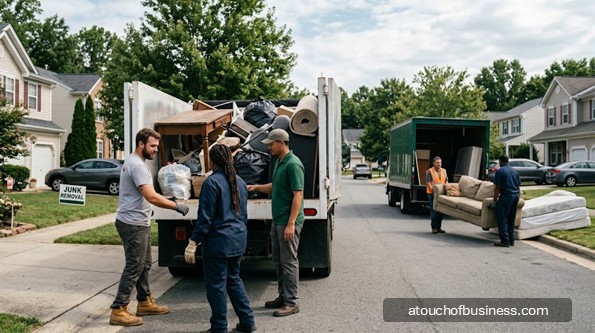
What to Expect From This Guide to Starting a Junk Removal Business
This guide walks you through the key decisions and practical steps involved in starting a junk removal business, from assessing the opportunity through planning, setup, and opening preparation. The highlights below show some of the areas covered.
Inside the guide, you will find:
- Startup steps: Follow an ordered process covering business evaluation, planning, setup, testing, and preparation for your first paid jobs.
- Startup FAQs: Review answers about hauling permits, vehicle rules, refused items, pricing, taxes, equipment choices, and customer opportunities.
- Business fit: Consider the physical demands, irregular income, customer situations, and personal circumstances involved in running this service.
- Market planning: Examine local demand, competition, customer groups, service options, disposal access, and practical ways to attract customers.
- Financial planning: Work through startup costs, operating capital, pricing, disposal expenses, cash flow, funding, and job-based profit calculations.
- Vehicles and equipment: Compare truck and trailer setups while considering capacity, weight limits, unloading methods, tools, and safety equipment.
- Requirements and risks: Review location-dependent permits, taxes, zoning, insurance, vehicle rules, disposal restrictions, warning signs, and opening preparations.
Start by considering whether the physical work, customer situations, and day-to-day demands of junk removal fit what you want from a business.
Junk removal is a hands-on service.
You drive to a customer’s property, load unwanted items into your truck or trailer, and haul them to disposal, recycling, or donation.
The barrier to entry is low. A truck, a trailer, and two strong people can take the first job.
That same low barrier means the market fills up fast with competitors.
Your edge comes from reliability, fair pricing, and a disposal plan that actually works.
This guide walks through the full startup process for a mobile, on-site junk removal business, from your first gut check to your first paid job.
Is Junk Removal the Right Fit for You?
Before you buy a truck, be honest about what this job actually involves.
You will lift, carry, and load heavy items for most of the day. That includes couches, mattresses, appliances, and furniture packed into tight spaces.
Think about your back, knees, and shoulders. This work is physical, and it stays physical even after you hire help.
You’ll also spend time driving and backing a loaded trailer. If tight parking and reversing make you nervous, practice before you commit to a purchase.
Some jobs are emotionally heavy, too. Estate cleanouts, eviction cleanouts, and hoarding situations are common in this business.
Ask yourself honestly whether you can handle those situations with patience and professionalism.
Consider these practical questions before you spend a dollar:
- Can your household cover living expenses while you build a customer base?
- Do you have support at home for the physical demands and irregular hours?
- Can you tolerate income that varies week to week, especially early on?
- Are you comfortable quoting a price on the spot, at the customer’s door?
If you answer no to more than one of these, that’s not a dead end.
It’s a signal to slow down and plan around the gap.
Talk with people who already run junk removal companies you won’t compete against. Ask them what they wish they’d known before they started.
Real business owners will tell you things a website never will, especially about disposal costs and slow seasons.
Also think through how you’ll get your first customers.
Homeowners clearing a garage, renters moving out, and property managers turning over units are common early jobs.
What they want is simple: someone reliable who shows up, quotes fairly, and gets the job done without drama.
Red Flags Before You Start
Some warning signs should make you pause, adjust your plan, or walk away entirely. Look for these before you sign anything.
Disposal access problems come first.
If the nearest transfer station or landfill won’t take commercial haulers, or sits too far away, your whole model can fall apart.
- A long drive to the dump eats your working day before you even find it.
- A facility that requires an account or permit you can’t get quickly will delay your launch.
- Some cities and counties have exclusive waste collection arrangements that block independent haulers outright.
If you skip checking this, you could buy a truck for a business you can’t legally or practically run in your area.
Crowded, price-driven markets are another red flag.
If your area already has several established haulers plus franchise locations, competing only on price will squeeze your margin fast.
Weak local demand is a related problem. Low housing turnover, low rental density, and little remodeling activity all mean fewer jobs to bid on.
Money problems sink new haulers just as often as bad markets do.
- Buying the truck and having nothing left for operating costs is a common mistake.
- Having no cushion to cover your own living expenses during the slow ramp-up period.
- Underestimating how many jobs you need each week just to break even.
Physical limitations matter, too. If lifting heavy items isn’t realistic for you, plan to hire from day one and price your jobs accordingly.
Now look at the industry itself, separate from your personal situation. These are structural facts worth understanding before you commit.
- Low startup costs keep new competitors entering the market constantly.
- Disposal fees are set by facilities you don’t control and can rise without warning.
- Revenue resets every week unless you land recurring commercial accounts.
- One truck caps your daily capacity; growth means a full second vehicle and crew, not a gradual add-on.
- Waste hauling touches vehicle rules, permits, and federal refrigerant law all at once, which is more regulation than the simple service suggests.
None of this means don’t start. It means plan with your eyes open, especially around disposal access and cash reserves.
Step 1: Decide How You’ll Handle the Physical Side
You already thought through the physical and emotional demands above.
Now make the call: will you do the lifting yourself, hire help from day one, or start solo and add a helper once bookings build?
This single decision shapes your insurance, your payroll, and how you price every job going forward.
Step 2: Talk to Owners Who Won’t Compete With You
Reach out to junk removal owners outside your service area. Also talk to people who run moving companies, dumpster rental services, and scrap yards.
Prepare your questions before the conversation. Ask about disposal costs, rejected loads, permit headaches, and what surprised them most.
These conversations are worth more than any guide, including this one, because every owner’s path looks a little different.
Step 3: Decide What Kind of Junk Removal Business You’ll Run
Full-service removal means you and your crew carry items out of the home. Curbside pickup means the customer stages everything for you.
Decide your customer mix, too: residential cleanouts, commercial and property accounts, or construction debris.
Some owners add labor-only moving help or small non-structural demolition. Others stick to hauling and keep the model simple.
Decide now whether you’ll sort items for donation and scrap. It adds labor time, but it can lower your disposal costs and add income.
Step 4: Weigh Starting From Scratch, Buying, or Franchising
Starting from scratch gives you full control over pricing, branding, and your truck setup.
Buying an existing operation might hand you commercial accounts, a phone number, and disposal facility accounts already in place.
Confirm exactly what transfers before you buy.
Franchising is a realistic path in this industry. Several national brands operate junk removal franchise systems.
Request the Franchise Disclosure Document from any brand you’re considering. Review the fees, royalties, and total investment before comparing options.
Weigh these entry paths against your budget, your timeline, and how much support you want along the way.
Step 5: Check Local Demand and Competition
Count the haulers already working your target area. Include franchise locations, independent operators, and dumpster rental companies.
Look at housing turnover, rental density, senior downsizing, and remodeling activity nearby. These all drive demand for cleanouts.
Notice whether your market is dominated by polished, well-reviewed operators or by inconsistent one-truck haulers.
That difference tells you whether you’ll need to compete on price or on reliability.
Checking local supply and demand now saves you from a bad bet later.
Step 6: Map Your Disposal Options First
This step gets skipped most often, and it shouldn’t be.
Your disposal plan decides your route, your pricing, and your service radius.
Call every transfer station, landfill, and recycling facility within a realistic drive of your service area.
Ask each facility these questions before you buy a truck:
- What are the hours, and do you admit commercial haulers?
- Do you require a prepaid account, a credit account, or a gate decal?
- How do you charge: by weight, by volume, or a flat rate?
- What materials do you refuse, and what happens if you show up with one?
Also find scrap metal yards, electronics recyclers, mattress recyclers, and local donation partners.
Ask donation partners what condition they require and whether they issue receipts. Some customers ask for those receipts directly.
If you skip this mapping step, you may buy the wrong size vehicle for the facilities you’ll actually use.
Step 7: Write Your Accepted and Refused Items List
Decide in writing what you will and won’t haul. This protects your crew and keeps you out of trouble with disposal facilities.
Materials commonly refused across the industry include:
- Wet paint, solvents, motor oil, fuel, and pesticides
- Propane tanks, fire extinguishers, and other pressurized containers
- Ammunition, fireworks, medical sharps, and pharmaceuticals
- Asbestos-containing materials and mold-contaminated debris
- Loose lithium batteries and appliances with refrigerant not yet recovered
Tires, mattresses, electronics, and heavy construction debris often need special handling or extra charges instead of a flat refusal.
Asbestos removal and biohazard cleanup require licensed specialists in most places. Plan to refer those jobs out, not take them on.
Put your refused items list on your quote form and your website. Customers who know the rules upfront cause fewer surprises on job day.
Step 8: Choose Your Truck or Trailer
Common setups include a dump trailer towed behind a heavy-duty pickup, a dedicated dump-body truck, or an enclosed box truck.
A hydraulic dump body or trailer unloads in seconds.
A box truck has to be unloaded by hand, which slows down every single job.
Measure the interior box yourself rather than trusting the advertised dimensions. This is the number you’ll price every job against.
Check your tow vehicle’s rated capacity against the loaded trailer weight before you buy either piece.
Weight, not just volume, limits dense loads like concrete, dirt, and roofing material.
Step 9: Check the Weight and DOT Rules That Apply to You
Your vehicle choice can trigger federal rules you didn’t expect. Check this before, not after, you buy.
- A gross vehicle weight or combined weight of 10,001 pounds or more crosses the federal commercial vehicle threshold.
- A pickup and trailer can cross that line together, even if neither one crosses it alone.
- Crossing it while operating across state lines generally requires a USDOT number displayed on your vehicle.
- Many states apply their own rules for hauling only within the state, and those vary by U.S. jurisdiction.
Above the federal threshold, you may also need documented vehicle inspections, driver files, and hour tracking, even without a commercial driver’s license.
Confirm your exact setup with the Federal Motor Carrier Safety Administration and your state motor vehicle agency before you finalize a purchase.
Step 10: Register Your Business and Handle Your Taxes
Talk with an attorney or accountant about your structure. A sole proprietorship is simpler, but it doesn’t separate your personal assets from business risk.
Many owners choose a limited liability company for that protection. Register your business with your state’s filing office once you decide.
Apply for a federal tax ID number directly through the IRS. It’s free, and most banks and commercial customers will ask for it.
Whether junk removal counts as a taxable service varies by U.S. jurisdiction.
Some states tax it, some don’t, and some treat one-time jobs differently than ongoing contracts.
Confirm this in writing with your state’s revenue department before you send your first invoice. Getting it wrong is an expensive mistake to fix later.
Step 11: Get Your Hauling Permits and Licenses
A general business license from your city or county is standard almost everywhere.
Beyond that, many places require a separate solid waste hauler permit for anyone transporting waste for pay.
- Some permits require a decal displayed on your vehicle.
- Some require a surety bond or proof of insurance before they’ll issue the permit.
- Some are issued per company, and others are issued per vehicle.
Ask how long approval typically takes. A slow permit office can push back your launch date more than any other single factor.
Confirm your exact licensing and permit needs with your city, county, and state before you schedule your first job.
Step 12: Check Zoning for Where You’ll Park and Work
Confirm whether your neighborhood allows a commercial vehicle or dump trailer parked overnight.
If you’ll run the office from home, check whether a home occupation permit applies where you live.
If you plan to stage sorted items or scrap before hauling them off, ask whether that counts as regulated storage in your area.
If you lease a yard or shop instead, confirm the space is approved for that use before you sign a lease.
Step 13: Set Up Insurance and Any Required Bond
Commercial auto coverage is different from your personal policy, and most personal policies exclude business use entirely.
Workers’ compensation becomes required in nearly every state the moment you hire your first employee.
Beyond those, talk with a broker about risk-planning coverage most haulers carry:
- General liability, which many permit offices and commercial customers expect to see
- Tools and equipment coverage for gear in transit or on a job site
- Coverage for customer property in your care, custody, or control
- Pollution coverage for chemical or paint exposure during cleanouts
Property managers and construction sites often require you to add them as an additional insured before you can haul for them.
Set up the right business insurance and confirm how fast your insurer can turn around a certificate when a client asks.
Step 14: List Startup Costs and Plan Your Operating Capital
List every category you’ll need to price locally: vehicle, tools, permits, insurance, signage, and software.
Get real quotes instead of guessing. Costs shift a lot based on new versus used equipment and whether you already own a tow vehicle.
Running out of operating money is one of the top reasons new service businesses close. Plan for more than the vehicle purchase alone.
Disposal fees are paid the day of the job. Commercial customers often pay weeks later on invoice terms.
Plan for that gap in cash flow.
Decide how many months your household can absorb thin income before the business needs to fully support you.
Step 15: Set Up Funding, Banking, and Payments
If you need financing, options include personal savings, equipment loans, a bank line of credit, and Small Business Administration loan programs.
If you’re buying an existing operation, ask the seller about financing the purchase directly.
Compare your funding options before you commit to a specific vehicle or equipment package.
Open a business bank account separate from your personal one from day one.
Set up mobile card acceptance, since most residential jobs get paid on the spot in the driveway.
Fund any prepaid accounts your disposal facilities require before your first scheduled job.
Step 16: Build Your Pricing Structure
Volume-based pricing, by fraction of a truckload, is the standard in this industry. Customers understand it, and you can quote it quickly on site.
Base your increments on your truck’s actual measured interior space, not a rough guess.
Set a job minimum that covers dispatching your vehicle and crew, even for the smallest pickup.
Layer in a few adjustments for accuracy:
- Weight-based charges for dense material like concrete, dirt, or tile
- Flat per-item rates for common single pickups you quote by phone
- Access surcharges for stairs, long carries, or tight approaches
- Special handling fees that match what facilities charge you for mattresses or electronics
Build your disposal cost into every quote before you add your margin.
Skip that step, and a heavy load can cost you money instead of making it.
Set your pricing from your own real costs, not from a competitor’s posted number.
Step 17: Check Your Profit Potential Before You Spend Big
This business runs job by job. Without commercial accounts, revenue resets every week.
List your fixed monthly costs: vehicle payment, insurance, permits, phone, and software.
List your variable costs per job: fuel, disposal charges, labor hours, and any special handling.
Calculate how many jobs per week, at your realistic average ticket, cover those fixed costs.
Then figure out how many more jobs it takes to pay you.
Factor in drive time between jobs and to the disposal site.
That’s the hidden cost that decides how many jobs actually fit in a day.
Model a slow stretch, too.
Winter and post-holiday periods often bring less residential cleanout work in many areas.
If the job count you need doesn’t match what your truck and crew can realistically deliver, rework your plan before you buy anything.
Step 18: Buy and Outfit Your Vehicle and Gear
Purchase your vehicle and trailer, and get any required inspection completed before your first paid job.
Round out your equipment with the essentials:
- Appliance dolly, hand truck, and moving blankets
- Straps, ramps, and a tarp system for load securement
- Basic hand and power tools for disassembly
- Personal protective gear for every crew member: gloves, boots, eye protection, and a first aid kit
Add lettering or a wrap with your business name, phone number, and any permit markings your state requires.
Step 19: Prepare Your Contracts and Paperwork
Write a simple service agreement covering scope, price basis, and payment terms.
Add a property damage waiver for pre-existing conditions, since moving heavy items through tight spaces carries real risk.
Have the customer sign both before you load a single item, not after.
Prepare a prohibited items disclosure so customers confirm what they’re putting out before you arrive.
Set up your invoice and receipt templates, plus a way to provide a W-9 to commercial vendors that ask for one.
Step 20: Set Up Your Business Identity
Confirm your business name is available, then secure a matching domain if you plan to have a website.
Set up a reliable business phone line. Missed calls are missed jobs in this business.
Order uniforms or branded shirts and business cards for commercial drop-ins.
Customers are letting you into their homes. A clearly marked vehicle and a professional crew build trust before you say a word.
Step 21: Plan How Customers Will Find You at Launch
Your first customers all have the same problem: heavy items, no truck, and no time or ability to move them alone.
Likely early customers include:
- Homeowners clearing garages, basements, and yards
- Renters and landlords handling move-outs
- Property managers with unit turnovers
- Realtors preparing homes for listing
- Contractors with debris from remodel jobs
Reaching them at launch is practical, not complicated.
Make sure your service area and phone number are easy to find online.
Introduce yourself in person to property maintenance staff, realtors, and remodelers.
Bring a business card and a certificate of insurance.
Commercial customers respond to paperwork readiness more than to a sales pitch.
Have your tax ID, W-9, and insurance certificate ready to hand over.
Step 22: Set Up Staffing, Training, and Safety
Most jobs are built around a two-person lift.
Decide whether your helper will be an employee or an independent contractor, and get that classification right from the start.
Train every crew member on the basics before their first job:
- Safe lifting technique and team lifts
- What to do if they find an item on your refused list
- Ramp, tailgate, and load securement hazards
- Awareness of sharps or broken glass in mixed loads
Once you have employees, federal workplace safety rules apply. That includes providing protective gear, basic hazard training, and reporting serious injuries.
Check your driver’s license, motor vehicle record, and any required medical certification before they get behind the wheel.
Step 23: Run a Full Test Load First
Load, secure, tarp, and drive a full practice run to your primary disposal facility before you take a paying job.
Confirm your account works at the gate and your decal or permit gets accepted without a hitch.
Time the full cycle: loading, driving, weighing in, dumping, and weighing out.
Compare your price estimate against what actually fit in the truck and what the scale charged.
Adjust your pricing sheet if the numbers don’t match.
Step 24: Complete Your Pre-Opening Checklist
Confirm every piece is in place before you take your first paid call.
- Business registered, tax ID issued, and permits in hand
- Vehicle insured, inspected, and marked correctly
- Disposal accounts funded and confirmed
- Contracts, waivers, and invoices ready to use
- Pricing sheet finalized and tested against a real load
- Business phone, website, and payment system working
If any item on this list is still open, hold your launch date until it’s closed.
Business Plan
Your business plan doesn’t need to be complicated. It needs to connect the steps above into one clear picture.
Start with your service model and your service radius. Those two decisions shape your equipment, your disposal facility choices, and your pricing.
Add your legal and compliance checklist: entity registration, tax ID, permits, zoning, and insurance. Note anything still pending verification.
Lay out your startup costs next to your operating capital plan. List them; don’t guess a total.
Price everything against your own local quotes.
Work through your break-even math using your own numbers.
Figure out how many jobs per week cover your fixed costs, then how many more pay you.
Account for drive time honestly. It’s easy to underestimate how much of your day disappears between stops and the dump.
Build in a slow-season buffer.
Demand for cleanouts tends to dip in winter and right after the holidays in many areas.
Finally, write down your funding plan and your first-customer plan side by side.
Put your full plan in writing so you can check your progress against it as you go.
Opening-Day Red Flags
Even after months of preparation, a few issues can still surface right before or on your first day. Watch for these.
- Your disposal facility account isn’t active yet, or your decal hasn’t arrived.
- Your certificate of insurance doesn’t match the limits a commercial client requires.
- Your pricing sheet hasn’t been tested against a real, measured load.
- Your crew hasn’t been trained on what to do when they find a refused item mid-job.
- You have no backup plan if your one vehicle breaks down or your primary disposal site is closed.
If you skip catching these before opening, your first week can turn into a series of avoidable scrambles.
Fix what you can before you take your first booking. Note anything you can’t fix yet, and solve it the moment it comes up.
Frequently Asked Questions
Do I need a special license just to haul junk?
A general business license is common almost everywhere.
Some states and cities also require a separate solid waste hauler permit, sometimes with a decal or bond attached.
Check your city or county solid waste office and your state environmental agency before you take a paid job.
Do I need a commercial driver’s license?
Usually not, for most junk removal setups.
The bigger trigger is the federal commercial vehicle weight threshold, which a pickup and trailer can cross together.
Above that threshold, other rules can apply even without a commercial license. Verify your exact setup with federal and state motor vehicle agencies.
Can I haul refrigerators and air conditioners?
Only with a compliant refrigerant plan.
Federal rules require refrigerant to be recovered by a certified technician before these appliances are scrapped.
Either get certified yourself or route these appliances to a facility that recovers refrigerant and documents it for you.
What should I refuse to haul?
Common refused items include wet paint, chemicals, propane tanks, ammunition, medical sharps, and asbestos.
Tires, mattresses, and electronics often need special handling instead of an outright refusal.
Confirm your exact list with every disposal facility you use, since rules can differ site to site.
Should I buy a truck or a dump trailer?
It depends on what you already own and how fast you need to unload.
A dump trailer behind an owned pickup is a lower-commitment option. A dedicated dump truck carries more per trip.
Measure interior space yourself, and check your tow rating against the loaded weight before buying either one.
How should I price jobs?
Most haulers price by fraction of a truckload, based on their actual measured interior space.
Layer in a job minimum, weight surcharges for dense material, and access charges for stairs or long carries.
Build your disposal cost into every quote before adding your margin.
Do I need to charge sales tax?
It depends entirely on your state.
Some states tax junk removal services, some don’t, and some treat one-time jobs differently than ongoing contracts.
Confirm this in writing with your state revenue department before your first invoice.
Who are my most valuable early customers?
Residential cleanouts fill your early calendar.
Property managers, realtors, and contractors offer more consistent, repeat work over time.
Have your tax ID, W-9, and insurance certificate ready before you approach these commercial contacts.
Interviews with Junk Removal Professionals
These interviews share firsthand lessons from junk removal owners covering how they entered the industry, found customers, handled operating costs, built teams, differentiated their services, and expanded their companies.
Readers can use their experiences to think through pricing, customer service, equipment, marketing, operating expenses, growth, and other decisions before starting a junk removal business.
Interview with Junk Removal Entrepreneur Nick Friedman
Nick Friedman explains how College Hunks Hauling Junk started, how the business was funded, the competition it faced, and how systems and software helped the company expand.
The interview is useful for understanding differentiation in a low-barrier industry and the additional work involved when moving from operating a junk removal company into franchising.
How Joseph Lambert Built His Junk Removal Business
Joseph Lambert discusses moving from landscaping into junk removal, using rented trucks during rapid growth, obtaining financing for branded trucks, building a team, managing insurance costs, and marketing the business.
His experience shows how an operator can start with limited equipment while also revealing the operational changes required when demand and staffing begin increasing quickly.
An Interview with Chris Babcock
Chris Babcock explains why he entered hauling and junk removal, how he researched competitors before starting, and what he learned about responsiveness and the customer experience.
The interview is useful for seeing how researching local competitors and understanding the customer’s underlying problem can help shape service positioning.
Josh Cohen on Building The Junkluggers
Josh Cohen describes starting with neighborhood jobs and his mother’s SUV, recognizing demand for a professional and reliable service, and developing an environmentally focused junk removal model before expanding through franchising.
His story gives prospective operators a useful look at starting small, validating demand through actual jobs, developing a distinct service approach, and building a model that can later support expansion.
Carol Vaillancourt of JDog Junk Removal & Hauling
Carol Vaillancourt discusses operating a junk removal franchise, serving customers going through moves and property transitions, managing employees, and dealing with the financial realities of the business.
Her advice is especially useful for thinking about expenses, key performance indicators, profit margins, and the financial pressure that can accompany business growth.
Related Articles
- How To Start a Garbage Pickup Service
- How To Start a Dumpster Rental Business
- How To Start a Construction Cleanup Business
Sources:
- U.S. Environmental Protection Agency: Refrigeration Safe Disposal, Refrigerant Management Rules
- Federal Motor Carrier Safety Administration: USDOT Number Thresholds
- Occupational Safety and Health Administration: Small Business Safety, General Industry Quick Start
- The Hartford: Junk Removal Coverage
- Insureon: Debris Removal Insurance
- Spencer Trailers: Dump Trailer Selection
- Housecall Pro: Volume Pricing Models
- RecycleFind: Transfer Station Access Rules
- Franchising.com: Junk Removal Franchises