
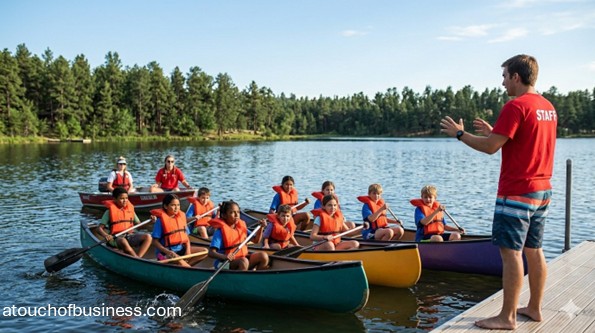
Overview of Starting a Kids’ Summer Camp
A kids’ summer camp is a seasonal business that gives families a safe, reliable place for children to spend full or partial days during school breaks. In a facility-based model, parents are not only paying for activities. They are paying for supervision, trust, clear routines, and peace of mind.
This business changes fast based on your setup. Age range matters. Daily hours matter. A camp with arts and games is not set up the same way as a camp with swimming, field trips, transportation, or food service. For a kids’ summer camp, those choices affect your facility, staffing, insurance, forms, pricing, and approval process.
Your core customers are usually working parents, families who want structured summer days, and parents who want a themed program such as sports, arts, STEM, or outdoor play. What do they care about most? Safety, dependable hours, smooth pickup, professional communication, and clear rules.
The upside is easy to see. A kids’ summer camp can meet a real seasonal need, bring repeat enrollment, and open the door to add-ons such as early drop-off, late pickup, or specialty weeks. The harder side is just as real. It is a high-trust business with little room for error, and the work is seasonal, staff-dependent, and closely tied to local rules.
That is why this is not a business to rush. A kids’ summer camp can look simple from the outside, but behind the scenes you are managing parents, children, staff, schedules, safety procedures, records, and a physical site that has to work well during busy arrival and pickup windows.
Is This Business The Right Fit For You?
Start with two questions. Does owning a business fit you? And does owning a kids’ summer camp fit you? Those are not the same question. You may like children and still dislike hiring, conflict, paperwork, parent communication, and daily operational pressure.
You need to enjoy the day-to-day work. That means supervising people, solving problems fast, handling schedule changes, and staying calm when parents are upset or a counselor calls in sick. A camp owner also needs patience, good judgment, and the ability to make clear decisions under pressure.
Ask, Are you moving toward something or running away from something?
Do not start a business just to escape a job you hate. Do not launch under financial pressure and hope the first summer fixes everything. And do not do it for status. Ownership often brings more pressure, longer days, and less certainty than people expect. What will carry you through is real interest in the work itself.
You should also talk to camp owners you will not compete against. Pick owners in another city, region, or market area. Use that time to ask the questions you actually have about staffing, parent issues, timing, pricing, and opening problems. Their answers come from real experience, which is why firsthand owner insight is so useful before you commit.
Step 1: Define Your Camp Model And Boundaries
Before you look at a building or buy supplies, define what your kids’ summer camp will actually offer. Set your age range, session length, daily hours, maximum enrollment, staff supervision plan, activity mix, food model, and whether you will offer extended care. Also decide what you will not do.
Your offer design changes everything. A camp for ages five to seven needs a different schedule, room layout, restroom support, and staffing pattern than a camp for older school-age children. A full-day camp also creates different pressure than a half-day camp because you need smoother transitions, more supplies, more supervision, and stronger parent communication.
If you are adding swimming, field trips, animals, or transportation, treat those as separate complexity decisions. They can affect approvals, insurance, staffing qualifications, parent forms, daily risk, and the kind of site you can use. A simple camp model is often easier to launch well.
This is also the time to set your business goals. How many weeks will you run? How many campers do you want per session? Will you be the on-site director, or are you hiring that role? A kids’ summer camp works best when the owner is clear about scope before spending money.
Step 2: Validate Demand In Your Area
Do not assume families in your area want the camp you have in mind. Check local demand first. Look at neighborhoods, school calendars, working-parent routines, nearby camps, rec programs, churches, community centers, and school-age programs. Study their hours, themes, prices, age ranges, and whether they fill up early.
You are looking for a gap that is real, not imagined. Maybe parents need longer hours. Maybe they want a simple full-day option close to home. Maybe there is plenty of sports programming but weak coverage for arts or STEM. A careful look at local supply and demand helps you see whether your kids’ summer camp solves an actual problem.
If you are opening in an area with many family households, that does not automatically mean strong demand for your version of camp. Parents compare convenience, trust, hours, safety, communication, and price together. A good concept in the wrong location can still struggle.
Validate demand in plain ways. Talk to parents. Ask schools, youth groups, and local employers what they hear every summer. Watch what gets posted in local parent groups. You are trying to understand how families decide, not just whether they say the idea sounds nice.
Step 3: Put Your Business Plan Together
A kids’ summer camp needs a working plan before you spend serious money. Your plan should cover your camp model, customer type, facility needs, startup costs, enrollment assumptions, staffing pattern, pricing, marketing, and the point where the business can support itself. This is where building a business plan becomes practical, not theoretical.
Keep your numbers grounded. Estimate how many campers you need each week to cover payroll, rent, insurance, software, supplies, and cleaning. Then compare that to what your building can safely handle and what families in your area are likely to pay. A kids’ summer camp fails early when the owner mixes hopeful demand with weak cost planning.
Your business plan should also include success targets. That might be hitting a certain enrollment level before opening, keeping staff fully scheduled without overtime strain, or reaching a target number of paid weeks. Clear targets help you decide faster when something needs to change.
Step 4: Confirm Camp Licensing, Permits, And Local Approvals
This is one of the most important steps in the entire setup process. In the United States, summer camp programs may be treated as licensed child care, youth camp programs, school-age programs, or legally exempt programs depending on the state and the way the camp operates. Do not guess. Ask the correct state office before you sign a lease or open registration.
For a kids’ summer camp, commonly required approvals may include a state camp or child-program classification decision, state registration or licensing if it applies, a local business license, zoning approval, and building or fire review. A certificate of occupancy may also be needed depending on the site and whether the use changes. Commonly recommended items include written facility notes from your landlord, early talks with the fire marshal, and a written list of every agency you contacted so nothing gets lost.
- Commonly Required: State classification review, business registration, local operating approval, zoning confirmation, and any building or fire sign-off tied to the site.
- Commonly Recommended: Early facility walk-throughs, written confirmation of site use, and a simple approval tracker with dates, names, and next steps.
If you are using a church, school, or community center, do not assume the existing building status covers your exact program. A kids’ summer camp may have different hours, occupancy, traffic flow, outdoor use, or child-supervision needs than the building’s normal use. Opening before approvals are in place can delay launch and create expensive rework.
Ask direct questions. Will your program be treated as a licensed child care program, a youth camp, or something else? Does your site need a zoning review? Do food service, swimming, splash play, transportation, or field trips trigger extra permits or inspections? The right answers depend on your location and setup, which is why early verification matters so much.
Step 5: Choose Your Structure, Register The Business, And Set Up Taxes
Once the camp model is clear, set up the business itself. Choose your legal structure, register the business name if needed, file a DBA if you are using a trade name, and get your tax setup in place. You also need an Employer Identification Number if the business requires one for hiring, banking, and tax administration.
Keep this step clean and organized. Use one legal name consistently. Separate personal and business finances from day one. A kids’ summer camp generates forms, payroll activity, payment records, and parent paperwork quickly, so weak setup here turns into confusion later.
This is also the right time to set up basic bookkeeping and recordkeeping. Choose how you will track deposits, tuition payments, refunds, payroll, supply spending, and vendor payments. A camp owner who cannot see the numbers clearly will have trouble making pricing and staffing decisions.
Step 6: Choose A Facility That Fits A Kids’ Summer Camp
A facility-based kids’ summer camp lives or dies on site fit. You need a building that can handle children moving through it all day, not just a room that looks available. Think about capacity, drop-off flow, pickup congestion, restroom count, outdoor access, shade, storage, first-aid access, room transitions, staff sight lines, and how parents enter and leave the building.
The site should also work for your exact program. A camp with crafts and indoor games needs different rooms than one built around sports, climbing, or science activities. If you plan to serve snacks, hold medication, or manage allergy plans, your layout needs to support those routines safely.
If you are taking over a space that already served children, you may save time, but still verify how the current approvals match your planned use. If you are converting a general commercial space, expect more questions about exits, occupancy, accessibility, traffic flow, and building condition before your kids’ summer camp is ready.
Accessibility belongs in this step, not later. Private child-facing programs generally need to comply with ADA rules, and public programs have their own obligations as well. That affects entry access, communication, policies, and reasonable modifications. For a kids’ summer camp, facility choice and program policy have to work together.
Step 7: Build Your Budget, Pricing, Funding, And Banking
Your startup costs will be shaped by the building, the number of staff you need, the condition of the site, the amount of equipment you need, software, insurance, permits, and how much working capital you need before revenue starts to flow in. Use real categories such as rent deposits, safety improvements, furniture, activity supplies, first-aid materials, payroll, training, software, marketing, and reserve cash.
Pricing should match the reality of the camp. Full-day versus half-day matters. Weekly billing versus session billing matters. Extended care, trips, and specialty activities also change the picture. Parents compare price to trust, hours, convenience, and clarity. If your prices are low but your schedule, policies, or communication feel shaky, families may still pass.
Set up your financial tools before enrollment opens. Open your business account, connect payment processing, and test your refund process. Clean financial setup matters because deposits, tuition, late pickup fees, and add-ons can become messy fast. This is where getting your business banking in place early makes the rest of the launch easier.
If outside funding is needed, know what it is for. A loan used for tenant improvements or working capital should be tied to a real plan, not vague optimism. For a kids’ summer camp, the safer move is usually to prove the model with a controlled first season rather than borrowing heavily to build too much too soon.
Step 8: Put Insurance, Safety, And Risk Controls In Place
Insurance and risk planning should match the real activities in your kids’ summer camp. Talk with a broker about the building, staffing, transportation, trips, athletic activities, water activities, and any special features that raise risk. This is not a box to tick. It is part of how you protect the business before families ever walk in the door. A good starting point is understanding the basics of business insurance for this kind of operation.
Safety procedures matter just as much as coverage. You need incident reporting, illness procedures, medication handling, pickup controls, emergency contacts, and a clear plan for injuries, weather issues, and building problems. OSHA also requires first-aid supplies to be readily available, and some employers must keep injury and illness records and report serious events on short deadlines.
If you are offering swim time, field trips, or other activities away from the main room, do not tack them on casually. Those choices can affect staffing, certifications, parent permissions, daily supervision, and your insurance conversation. A kids’ summer camp becomes harder to control each time you add one more moving part.
Risk planning also includes access and inclusion. Parents will judge your camp by how clearly you communicate expectations and how fairly you handle accommodation issues. The smoother your policies are before opening, the fewer preventable conflicts you create later.
Step 9: Buy Equipment And Set Up Your Systems
Startup equipment for a kids’ summer camp should support supervision, safety, communication, and smooth daily movement. That usually includes tables and chairs, storage shelves, cubbies or bins, outdoor gear, arts and activity supplies, staff communication tools, first-aid kits, restroom supplies, cleaning materials, and clear signage for parents and staff.
Your software matters too. At minimum, you need a system for inquiries, registration, tuition payments, attendance, emergency contacts, pickup permissions, and parent communication. A kids’ summer camp with weak systems often creates confusion at the worst times, like the first morning, the busiest pickup hour, or the moment a child needs medication.
Choose a workflow that is easy for families to follow. A simple version looks like this: inquiry, answer questions, share schedule and rules, register, collect forms, collect payment, confirm enrollment, check in, run the program, manage pickup, and follow up. Keep that path clean. Parents should never feel lost halfway through the process.
This is also the time to line up vendors. You may need suppliers for crafts, sports gear, janitorial products, first-aid materials, snacks, T-shirts, software, and printed materials. If a vendor delay would keep the camp from opening well, solve it now instead of hoping it works itself out.
Step 10: Create Parent Documents And Internal Records
A kids’ summer camp needs strong paperwork before launch. Your core documents usually include an enrollment agreement, parent handbook, emergency contact form, authorized pickup form, medication authorization, allergy or care plan form, incident report form, field trip consent, photo release, and refund or cancellation policy.
Clear paperwork does more than protect you. It sets expectations. Parents need to know arrival and pickup rules, what children should bring, how illness is handled, what happens in an emergency, how behavior issues are managed, and where the limits of your care begin and end. Weak documents create arguments later because parents fill in the gaps with their own assumptions.
Build your internal records at the same time. You need staff checklists, training logs, attendance records, payment records, incident logs, supply lists, and a simple way to store sensitive information securely. For a kids’ summer camp, good records make it easier to answer parent questions, handle disputes, and stay organized when the pace picks up.
Step 11: Hire, Screen, And Train The Right Staff
Staff quality shapes the parent experience every day. A kids’ summer camp usually needs a director or lead manager, counselors, floaters, front-desk or check-in coverage, substitutes, and activity-specific staff if you offer swimming or specialty programming. Hire for judgment, reliability, and communication, not just enthusiasm.
Know the screening rules that apply to your setup. If your program falls under licensed child care rules, staff background checks can be a major pre-opening requirement, and Childcare.gov notes that checks are required before hire and at least every five years for licensed child care staff. Build enough time into your launch calendar for that process.
Be careful with teen hires. Federal child labor rules limit what younger workers can do, when they can work, and which jobs are off limits. That matters if you plan to use junior counselors, lifeguards, or assistants. Training is just as important as hiring. Your staff should practice check-in and pickup, supervision standards, radio or phone use, injury response, parent escalation, and what to do when something feels off.
A kids’ summer camp should never rely on good intentions alone. Use written schedules, role assignments, ratio plans, opening and closing checklists, and substitute coverage plans. When staff know exactly what is expected, the camp feels calmer for both children and parents.
Step 12: Build Your Brand, Marketing, And Launch Plan
Your brand should make the camp feel trustworthy before a family ever visits. That starts with a clear name, a matching domain, simple visuals, accurate program details, and an easy way to register. A kids’ summer camp does not need fancy branding to win. It needs a brand that feels reliable, professional, and easy to understand.
Make the information parents want easy to find. That means dates, hours, age range, pricing, activity overview, what to bring, pickup process, and contact information. Add photos of the facility once it is ready. Include policies in plain language. Families are looking for signs that you are organized.
Your marketing plan should match how local parents actually choose. Start with the channels that fit a family service business: school and community networks, local parent groups, neighborhood visibility, employer connections, flyers where appropriate, and a simple website that answers common questions. The goal is not noise. It is the right parents finding the right camp at the right time.
Think about customer service before launch too. Fast replies, polite communication, consistent answers, and smooth registration help families trust your kids’ summer camp. That is also your retention plan. Parents who have a good first experience are more likely to book another week, return next year, or tell other families.
Step 13: Run A Dry Test And Open Carefully
Before the first paid day, test the entire operation. Run a mock arrival, a mock pickup, an attendance check, a parent question handoff, an injury response drill, and a lost-child response drill. Walk staff through bathroom breaks, transition times, snack handling, emergency contact access, and what happens if a counselor is absent.
A kids’ summer camp should also test the building under real pressure. Can parents get in and out without confusion? Can staff see the children clearly? Does the sign-in area back up too fast? Are allergy or medication notes easy to find? Are first-aid supplies where staff expect them to be? You want those answers before families arrive, not during the first hour of opening day.
Open carefully. A softer first week with controlled enrollment can be smarter than trying to pack the building immediately. One smooth opening creates more trust than one chaotic opening followed by quick apologies.
Daily Work And Owner Responsibilities
Even during startup, it helps to picture the daily work. For a kids’ summer camp owner, that often includes staff scheduling, vendor follow-up, supply checks, parent messages, payroll review, payment tracking, activity planning, maintenance issues, and solving last-minute problems. Some days feel calm. Others change fast.
You are also responsible for tone. Parents notice whether your staff seems prepared, whether pickup feels orderly, and whether questions get answered clearly. That is why owner responsibilities go beyond planning. You are shaping the standard the whole camp follows.
A Short Day In The Life
You arrive before families, walk the site, check rooms, confirm staffing, and review any medical or pickup notes for the day. Then the first rush starts. Parents arrive with questions, children bring different energy levels, and counselors need direction. Midday brings activity changes, supply issues, and constant supervision. Later, pickup begins, and the camp has to stay organized until the last child leaves. After that, you still have messages to answer, records to update, and tomorrow to prepare.
That snapshot tells you something important. A kids’ summer camp is not a passive business. It needs active leadership and clean systems every day.
Red Flags Before Launch
Some warning signs should stop you in your tracks. If you do not know how your state classifies the camp, you are not ready. If your pickup process is unclear, you are not ready. If your staffing plan depends on luck, you are not ready. If your building has weak flow during arrival and dismissal, you are not ready.
Watch for these problems before opening:
- Signing a lease before zoning or use approval is clear
- Opening registration before you understand the camp’s regulatory status
- Setting prices before you know your real staffing and facility costs
- Using verbal rules instead of written parent documents
- Hiring without enough time for screening and training
- Depending on one key person with no backup coverage
- Running payments manually when enrollment volume could grow quickly
- Adding trips, swimming, or transportation without fully planning the impact
Pre-Opening Checklist
Use this final check before your kids’ summer camp opens to the public.
- Camp model, age range, hours, and enrollment limits are final
- State classification, licensing status, or exemption status is clear
- Local business, zoning, building, and fire approvals are handled
- Facility access, room layout, and parent traffic flow are ready
- Business registration, tax setup, and bookkeeping are in place
- Bank account, payment processing, and refund process are tested
- Insurance is active and matched to the program
- Staff are hired, screened where required, and trained
- Parent handbook and all enrollment forms are complete
- Attendance, pickup, emergency, and incident systems are working
- First-aid supplies, cleaning supplies, and activity materials are stocked
- Website, registration path, and parent communication tools are live
- Mock arrival, pickup, and emergency drills are completed
- Vendor deliveries and opening-week supplies are confirmed
Post-Launch Tracking And Adjustment Plan
Once the first session begins, do not assume the setup is finished. Track what matters right away. For a kids’ summer camp, the useful early numbers are inquiry-to-registration conversion, enrollment by week, attendance consistency, late pickups, refund requests, staff overtime, parent complaints, and incident frequency.
Also track what parents keep asking. Repeated questions often point to unclear communication, not difficult families. The first few weeks should tell you whether pricing feels right, whether the schedule works, whether staffing is stretched, and whether your facility is supporting the experience or getting in the way.
Make changes while the season is still young. A business that adjusts early can still recover a weak opening. A business that waits too long usually spends the rest of the season managing preventable problems.
Contingency And Backup Planning
A kids’ summer camp needs backup plans because daily operations involve children, staff, families, and a physical site. Prepare for sick staff, severe weather, power loss, parent late pickups, HVAC issues, supply delays, and a room becoming unusable with little warning.
Keep contingency planning practical. Have substitute options, indoor backup activities, emergency contact access away from the main desk, and a clear policy for schedule changes or temporary closures. A calm response during a disruption protects trust far more than an improvised one.
Scale Or Exit Path
Do not think about growth until one site works well. For a kids’ summer camp, the smart order is simple: prove the model, tighten the systems, protect the parent experience, and only then consider more weeks, more themes, a second location, or year-round programs. Growth built on weak systems usually spreads the problems faster.
If you ever choose to exit, the camp will be more valuable if the records are clean, the systems are documented, the vendor list is organized, and the parent experience is consistent. Even at startup, build the business in a way that someone else could understand and operate.
FAQs
Question: Do I need a license to start a kids’ summer camp?
Answer: Maybe. Some summer camps are licensed, some are legally exempt, and some fall under separate youth camp rules.
Ask your state child care or youth camp office before you sign a lease or open registration. The answer depends on your state, age group, hours, and activities.
Question: How do I know if my camp counts as child care or an exempt program?
Answer: You need a state-level classification answer first. That answer can change your staffing, paperwork, inspections, and background check rules.
Give the agency your exact model, including ages, daily hours, food, swimming, trips, and transportation. A vague question often gets a vague answer.
Question: What legal setup should I handle before I open?
Answer: Choose your business structure, register the business, and get an EIN if the business needs one. You should also open a business bank account before accepting payments.
Keep the legal name, tax records, and payment setup consistent from the start. That makes payroll, banking, and bookkeeping much easier.
Question: What permits should I check before I sign a lease?
Answer: Check zoning, local business licensing, fire review, building approval, and whether a certificate of occupancy is needed. Extra permits may apply if you serve food, use a pool, or transport children.
Do this before you commit to the space. A site that looks fine can still be the wrong legal fit for a kids’ summer camp.
Question: Do I need an EIN for a kids’ summer camp?
Answer: Many camps do, especially if they hire staff or need business banking and tax accounts. You can get an EIN directly from the IRS for free.
Do not pay a third-party site for something the IRS issues at no cost. Handle it early so banking and payroll are not delayed.
Question: What insurance should I look at before opening?
Answer: Your insurance needs depend on the building, staff, age group, and activities. Talk with a broker before opening, especially if you plan trips, water activities, or transportation.
Do not guess your coverage. A kids’ summer camp has child-safety and injury risks that need careful review.
Question: How much does it cost to start a kids’ summer camp?
Answer: There is no reliable nationwide number. Your biggest costs are usually the facility, payroll, insurance, permits, supplies, software, and reserve cash.
Build your budget from real line items, not averages you found online. A camp with a simple indoor program costs less to launch than one with trips, swimming, or major site work.
Question: How should I set prices for my camp?
Answer: Start with your real costs, then look at local competitors, hours, staffing needs, and weekly capacity. Price should match the service level you can deliver well.
Think in weekly cash flow, not just headline rates. A low price can backfire if it leaves you short on payroll or staffing coverage.
Question: What equipment do I need before the first day?
Answer: You need check-in tools, attendance tracking, emergency contacts, first-aid supplies, cleaning supplies, storage, activity materials, and parent-facing signs. Staff also need an easy way to communicate during the day.
If your system fails during drop-off or pickup, parents will notice fast. Buy for safety and smooth flow first, then add extras later.
Question: Do I need background checks for camp staff?
Answer: If your program is licensed child care, background checks are required before hire and at least every five years. Other camp models may have different state or local rules.
Do not leave this until the last minute. Screening delays can push back training and opening plans.
Question: Can I hire teen counselors or junior staff?
Answer: Yes, but federal child labor rules can limit hours and job duties for younger workers. State child labor rules may add more limits.
Review those rules before you post the job. A teen hire can help, but only if the role is built around legal duties and proper supervision.
Question: What systems should be in place before opening day?
Answer: You need registration, payment processing, attendance, authorized pickup controls, incident reporting, and parent communication tools. Keep the setup simple enough for staff to use under pressure.
Test the full process before the first paid day. If staff cannot use it quickly, the system is not ready yet.
Question: What should my parent handbook cover before I open?
Answer: It should cover hours, arrival and pickup, illness rules, medication handling, behavior expectations, refunds, and what children need to bring. It should also explain how you handle emergencies and who may pick up a child.
Clear policies reduce confusion and protect trust. Weak policies usually turn into hard conversations later.
Question: What does a good first-day workflow look like for a new camp?
Answer: It should start with controlled arrival, fast attendance, clear room assignments, and a clean handoff from parent to staff. Pickup should be just as organized, with ID or authorized pickup checks in place.
Run a dry test before opening. First-day chaos usually starts with weak flow, not bad luck.
Question: How much cash should I keep for the first month?
Answer: Keep enough to cover payroll, rent, insurance, supplies, and timing gaps in payments. You may also need room for refunds, repairs, or last-minute hiring costs.
Question: How should I market a kids’ summer camp before opening?
Answer: Start with clear local channels that parents already use, such as schools, community groups, neighborhood networks, and a simple website. Make the age range, dates, hours, location, and registration path easy to find.
Parents are buying trust and convenience as much as activities. Clear information beats flashy promotion in the early stage.
Question: What are the most common mistakes when starting a kids’ summer camp?
Answer: The biggest ones are opening before approvals are clear, underestimating staffing needs, and using weak pickup or safety procedures. Another common problem is adding too much too soon.
Keep the first version of the camp simple and controlled. It is easier to add trips or extra features later than to fix a messy launch.
Question: Do I need to think about ADA access before I open?
Answer: Yes. Access and reasonable modifications should be part of your facility choice, policies, and parent communication from the start.
Do not treat this as a last-minute issue. It is easier to build access into the setup than to patch it later.
Question: What safety setup is non-negotiable before opening?
Answer: You need first-aid supplies that are easy to reach, emergency contacts, incident forms, and a clear plan for injuries, illness, and missing-child situations. Staff should know who does what in an emergency.
If outside medical care is not near the site, trained first-aid coverage becomes even more important. Safety should be practiced, not just written down.
21 Insider-Style Tips for Starting Your Kids’ Summer Camp
Starting a kids’ summer camp takes more than picking fun activities and finding a building. You need a clear camp model, the right approvals, strong safety systems, and a setup that works well before the first family walks in.
These tips follow the same startup path a first-time owner should work through, from fit and demand to permits, staffing, equipment, and final opening checks. Each tip is meant to help you avoid preventable problems and get your camp ready to open with fewer surprises.
Before You Commit
1. Be honest about whether you want to run a kids’ summer camp or just like the idea of it. This business means supervision, staffing, paperwork, parent communication, and fast problem-solving, not just crafts and games.
2. Define your camp before you spend money. Set the age range, daily hours, session length, maximum enrollment, and activity mix first because those choices affect the building, staffing, insurance, and approvals.
3. Keep the first version of your camp simple. A basic day camp is easier to open well than a camp with swimming, transportation, field trips, and extended care added all at once.
Demand And Profit Validation
4. Study what families in your area already have. Look at local camps, school-age programs, recreation centers, and community programs to see what they offer, what hours they run, and where the gaps are.
5. Validate demand with real parent feedback before you sign a lease. Ask what families care about most, such as hours, location, age range, price range, and whether they need full-day coverage.
6. Build your numbers from weekly capacity, not wishful thinking. A kids’ summer camp can look promising until you compare payroll, rent, supplies, and insurance against the number of paid spots you can actually fill.
Business Model And Scale Decisions
7. Choose a model that matches your site and your budget. A full-day camp, half-day camp, specialty camp, or multi-week session plan each creates different staffing patterns, pricing decisions, and parent expectations.
8. Decide early whether you will provide snacks, meals, swimming, or transportation. Each added feature can change permits, staffing needs, parent forms, insurance discussions, and daily risk.
9. Set clear care boundaries before you market the camp. Parents should understand what your camp does, what it does not do, when children can arrive and leave, and what support you are not set up to provide.
Legal And Compliance Setup
10. Find out how your state classifies your kids’ summer camp before you lease space or open registration. Some programs are licensed, some are exempt, and some fall under separate youth camp or school-age rules.
11. Confirm local zoning and building use before you commit to a facility. A building that seems perfect can still be the wrong legal fit for a camp if the city or county does not allow that use there.
12. Ask early whether the site needs fire review, building approval, or a Certificate of Occupancy before opening. This matters even more if the building is being remodeled or used in a new way.
13. Set up the business properly from the start. Choose the legal structure, register the business name if needed, get an Employer Identification Number if the business requires one, and open a business bank account before taking payments.
14. Treat background checks and youth labor rules as opening tasks, not afterthoughts. If your camp hires teens or falls under licensed child care rules, screening and job-duty limits can affect your opening calendar.
Budget, Funding, And Financial Setup
15. Build your startup budget from real categories. Include rent deposits, site work, furniture, supplies, payroll, training, software, insurance, permits, cleaning, and reserve cash for the first weeks of operation.
16. Price your camp after you understand your true staffing and facility costs. A low weekly rate can hurt the business fast if it leaves no room for safe coverage, refunds, or last-minute hiring.
17. Keep enough working cash to cover the first month without depending on perfect enrollment timing. Payroll, rent, and setup bills often come due before all camp payments are fully collected.
Location, Equipment, And Pre-Opening Setup
18. Choose a building based on child flow, not just square footage. For a kids’ summer camp, drop-off, pickup, restroom access, outdoor space, storage, staff sight lines, and emergency exits matter as much as room size.
19. Buy equipment that supports safety and control first. Start with check-in tools, attendance records, emergency contacts, first-aid supplies, cleaning materials, activity storage, and clear signs before you spend on extras.
20. Finish your parent documents before enrollment grows. Your handbook, pickup rules, medication forms, allergy forms, incident forms, refund terms, and emergency procedures should be written and ready before opening day.
Final Pre-Opening Checks And Red Flags
21. Run a full dry test before the first paid session. Practice arrival, attendance, room transitions, injury response, parent questions, and pickup release so you can fix weak spots before families depend on the system.
Learn From Camp Owners And Directors
One of the best ways to prepare for starting a kids’ summer camp is to learn from people who already run camps, train camp staff, or advise camp leaders. Their advice can help you spot blind spots early, ask better questions, and avoid expensive opening mistakes.
- American Camp Association — CampWire Podcast
- Go Camp Pro — The Camp Owners Podcast
- American Camp Association — Camp Director Insights
Related Articles
- How To Start a Craft Club
- Start a Children’s Party Planning Business
- Starting an Indoor Playground
- How To Start Your Daycare Business
- How To Start a Children’s Transportation Business
- How To Start a Tutoring Business
- Start an Art Class Business
- How To Start Your Babysitting Business
- How To Start Your Successful Nanny Agency
- Starting a Face Painting Business
- How To Start Your Clown Business
Sources:
- CHILDCARE.GOV: School-Age Child Care Camp, Staff Background Checks
- SBA: Apply Licenses Permits, Federal State Tax ID, Open Business Bank Account, Calculate Startup Costs
- IRS: Business Structures, Employer Identification Number
- U.S. DOL: Child Labor Provisions FLSA
- USCIS: Completing Form I-9
- OSHA: Medical Services First Aid, Injury Illness Recordkeeping
- ADA.GOV: Child Care Centers ADA