
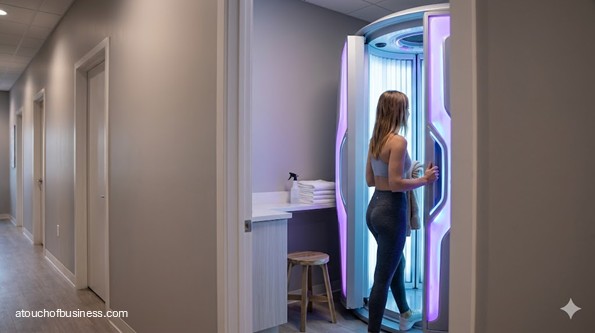
What to Expect From This Guide to Starting a Tanning Salon Business
This guide walks you through the key decisions and practical steps involved in starting a tanning salon, from checking fit and demand to planning the space, equipment, finances, compliance, and opening preparations. The highlights below show only part of the guidance included.
Inside the guide, you will find:
- Startup roadmap: Follow 20 ordered steps from evaluating fit and demand through business planning, setup, testing, opening checks, and first-day preparation.
- Industry interviews: Explore interviews with tanning owners and industry professionals discussing experiences, challenges, customer service, pricing, branding, training, and business growth.
- Startup FAQs: Find practical answers about fit, permits, equipment rules, service models, staffing, documents, delays, and first-day needs.
- Business fit: Assess motivation, risk tolerance, household impact, owner responsibilities, and whether rule-heavy customer service suits you.
- Financial planning: Review demand, competition, pricing, startup costs, funding choices, bookkeeping, payment systems, and the financial effect of your service mix.
- Equipment and rules: Compare UV and sunless equipment while checking suppliers, documentation, zoning, permits, inspections, taxes, insurance, and location-dependent requirements.
- Risks and opening: Use startup warnings, safety procedures, staff training, pre-opening tests, and readiness checks to identify reasons to delay opening.
Begin by deciding whether the demands, rules, and financial pressure of running a tanning salon fit your goals and circumstances.
Starting a Tanning Business
A tanning business provides cosmetic tanning services from a physical location. It may offer UV tanning beds, stand-up booths, spray tanning, airbrush tanning, or a mix of these services.
This is a personal care business, but it’s also a rules-driven equipment business. You need a clean space, safe customer flow, reliable equipment, clear records, trained staff, and a solid understanding of local requirements before you open.
You can use a general startup checklist to stay organized, but your tanning business needs its own path. The biggest decisions are the service mix, location, equipment, permits, safety procedures, pricing, funding, and opening readiness.
Is This Business a Good Fit for You?
Before you look at leases or equipment, look at yourself. Do you enjoy beauty and personal care services? Are you comfortable explaining rules to customers and enforcing them when needed?
A tanning business requires patience, attention to detail, and consistency. Customers care about results, cleanliness, privacy, convenience, and trust. You need to care about those things too.
You also need to be honest about pressure. The business may require a lease, equipment purchases, electrical work, permits, insurance, staff training, and enough money to cover personal living expenses while the location gets ready.
Ask yourself this: Is this move about gaining something or losing something? Don’t start a tanning business only to escape a job, financial pressure, or status anxiety. That kind of motivation can lead to rushed choices.
Talk with your household or family before you commit. A physical location can affect your time, savings, schedule, and stress level before the business earns steady income.
Learn From Non-Competing Owners
Talk with tanning salon owners before you invest. Choose owners in another city, region, or market area so you’re not asking direct competitors for sensitive help.
Prepare your questions first. Ask about equipment, inspections, slow seasons, customer age checks, staff training, spray tanning, cleaning routines, software, lease issues, and what they wish they had known before opening.
These owners have firsthand experience. Their path may not match yours, but their insight can help you see problems that don’t show up on a simple equipment quote.
For more on learning from experienced owners, this guide to getting an inside look at a business fits this stage well.
Check Local Demand Before You Commit
A tanning business depends on local demand. Don’t assume every beauty market can support another tanning location.
Look at nearby tanning salons, spray tanning studios, gyms, spas, beauty salons, and franchises. Compare their services, parking, hours, equipment type, appointment access, and customer experience.
Also look at the people in the area. Demand may come from adults preparing for vacations, weddings, dances, photo sessions, fitness events, seasonal changes, or personal appearance goals.
This is a start-or-stop test. If the area is crowded, the lease is expensive, or customers already have strong options, pause before you start.
A practical review of local supply and demand can help you think through this decision before you sign anything.
Red Flags Before You Start
Some warning signs should make you delay, change the model, buy instead of build, or walk away. Take these seriously before you sign a lease or order equipment.
- Weak local demand: Pause if nearby salons are quiet, several have closed, or customers don’t seem interested in UV or sunless tanning.
- Too much direct competition: Reconsider the location if nearby salons, gyms, spas, or franchises already offer better access, newer equipment, or stronger convenience.
- Location problems: Stop before signing if zoning, electrical capacity, ventilation, fire rules, accessibility, or certificate of occupancy issues make the space hard to use.
- Lease restrictions: Don’t move forward if the lease limits personal care services, signage, equipment installation, electrical work, or ventilation changes.
- Funding gaps: Pause if you can’t cover build-out, equipment, permits, insurance, supplies, staff setup, and opening cash needs.
- Poor equipment records: Be careful with used equipment that lacks manuals, warning labels, compatible lamp information, service records, or replacement-part access.
- Rule enforcement discomfort: Reconsider if you don’t want to enforce eyewear use, age rules, exposure procedures, customer forms, or refusal rules.
- Unsupported health claims: Stop and rethink the plan if it depends on saying UV tanning is safe, healthy, or government-approved.
Step 1: Check Your Fit Before Moving Forward
A tanning business may look simple, but like most businesses, there’s more to it. Customers check in, use a room, pay, and leave. The real startup picture is more involved.
You need to manage health-risk disclosures, customer screening, cleaning routines, equipment controls, protective eyewear, age rules, and staff behavior.
UV tanning equipment emits ultraviolet radiation. That means you must be comfortable running a beauty service where customer safety, warning labels, exposure schedules, and clear instructions matter.
This step is about honesty. If you enjoy beauty services but dislike rules, records, or technical equipment, a tanning salon may not be the right fit.
Step 2: Clarify Your Motivation and Risk Tolerance
Know why you want to open a tanning business. A clear reason helps you make better choices about the model, location, funding, and service mix.
Maybe you want a local beauty service business. Maybe you already own a salon or spa and want to add tanning. Maybe you want a physical location with repeat service demand.
Each reason leads to different choices. A standalone salon needs its own lease, brand, staff, systems, and customer flow. An add-on service may use an existing front desk but still needs equipment, approvals, safety procedures, and training.
Also think about failure. If the location, pricing, demand, or equipment plan doesn’t work out, can you absorb the loss? If not, slow down before you commit.
Step 3: Talk With Owners Outside Your Market
Before you go further, speak with owners who run tanning salons in places where you won’t compete. Their daily experience can help you avoid expensive assumptions.
Ask practical questions, not vague ones. You want details that affect startup choices.
- Which tanning beds or booths are worth buying?
- How often do lamps, acrylics, and parts need attention?
- What do inspections usually focus on?
- How hard is it to train staff?
- Does spray tanning change the room setup?
- What lease issues surprised them?
- What would they do differently before opening?
Use those conversations as a reality check. One owner’s answer isn’t a rule, but several honest conversations can reveal patterns.
Step 4: Choose Your Tanning Business Model
Your service mix shapes almost every startup decision. Choose it before you price equipment, plan rooms, talk to suppliers, or build a budget.
If you’re opening a UV tanning salon: Your startup plan will focus on tanning beds, stand-up booths, compatible lamps, timers, protective eyewear, exposure schedules, warning labels, equipment manuals, and state or local tanning rules.
If you’re adding spray tanning: You need space and equipment for spray or airbrush service. You also need a way to protect eyes, lips, and mucous membranes, and to reduce inhalation or ingestion exposure concerns.
If you’re adding tanning to an existing salon, spa, or gym: You may already have a front desk and customer flow, but you still need zoning approval, equipment setup, electrical capacity, permits, records, and staff training.
If you’re considering a mixed model: A hybrid UV and sunless tanning salon may reach more customers, but it also adds equipment, supplies, room setup, training, cleaning, and safety procedures.
Step 5: Decide Whether to Start, Buy, or Franchise
You don’t have to start from scratch. Buying an existing tanning salon or exploring a franchise can be realistic, but each path has tradeoffs.
Starting from scratch gives you more control over the location, equipment mix, layout, and brand. It also puts more setup responsibility on you.
Buying an existing salon may give you equipment, rooms, records, and a lease. But you need to review the condition of the beds, booths, lamps, permits, software, inspection history, customer records, warranties, and supplier contracts.
A franchise may provide systems and training. It may also limit your equipment choices, suppliers, branding, pricing structure, and territory.
The best path depends on your budget, timeline, support needs, risk tolerance, available businesses for sale, and how much control you want. This is a good time to compare whether to start from scratch or buy a business.
Step 6: Validate the Market Before Major Spending
Don’t move from idea to lease without local proof. The location, customer base, and competition need to make sense together.
Study the area around possible sites. Look at parking, visibility, nearby beauty services, gyms, colleges, workplaces, apartment areas, and traffic patterns.
Compare nearby businesses by service type. A UV salon, spray tanning studio, gym with tanning, and spa with airbrush tanning may all compete for the same customer.
Also check local pricing. You don’t need to copy competitors, but you need to know whether your planned prices can support the equipment, lease, staffing, and supplies.
This is also where minor-access rules matter. If your state restricts customers under 18, that can affect your customer base and business model.
Business Plan
Your business plan should turn startup decisions into a clear action plan. It should help you decide what to open, where to open, what to buy, how to fund it, and what must be ready before the first paid customer walks in.
Keep it practical. This is not a writing exercise—it’s your guide for setup and decision-making.
- Service mix: Decide whether you’ll offer UV tanning, spray tanning, airbrush tanning, retail products, or a hybrid model.
- Customer base: Define the local customers you expect to serve and why the area can support the business.
- Location: Include zoning, access, parking, visibility, certificate of occupancy, utilities, and room layout.
- Equipment: List beds, booths, spray equipment, protective eyewear, timers, software, furniture, and supplies.
- Compliance: Include state, city, county, FDA-related equipment rules, employment rules, and local verification steps.
- Startup costs: List what you need to quote, price out, verify, or compare before committing.
- Pricing: Plan how sessions, packages, memberships, spray tanning, and products will be priced.
- Opening readiness: Include permits, equipment tests, staff training, forms, cleaning logs, payment setup, and final checks.
If you need help turning these decisions into a planning document, this guide on writing a business plan can support this stage.
Step 7: Verify Federal, State, and Local Rules
Don’t treat tanning as a simple retail service. UV tanning equipment is federally regulated, and state or local authorities may control facility licensing, inspections, age rules, operator training, signage, and records.
Federal rules affect the sunlamp products themselves. UV tanning equipment should have proper timers, manual shutoff controls, warning labels, exposure schedules, compatible lamp information, protective eyewear, and user instructions.
State and local rules vary. Your state or county may require a tanning facility permit, inspection, operating license, trained operator, customer forms, age checks, or posted notices.
If you’re offering UV tanning: Verify state tanning facility rules before you order equipment or sign a lease. Ask whether the location needs approval before services begin.
If you’re offering spray tanning: Review product safety and customer protection procedures. Spray or mist services require care around eyes, lips, mucous membranes, and inhalation and ingestion exposure.
If you’re hiring employees: Check wage rules, payroll setup, worker records, and chemical safety training for disinfectants or other workplace products.
For local permits and approvals, this overview of business licenses and permits can help you organize the questions to ask.
Step 8: Set Up the Legal Business
Choose a legal structure before you register the business and open bank accounts. This decision affects ownership, taxes, liability, paperwork, and funding setup.
Common choices include sole proprietorship, limited liability company, partnership, or corporation. The right choice depends on ownership, risk, tax advice, funding plans, and how the business will be run.
After choosing a structure, register the business with the state if required. Then handle the business name, Doing Business As name if used, and Employer Identification Number if needed.
You may also need state tax accounts if you sell taxable services or products. Sales tax treatment can vary by state and by whether you sell UV sessions, spray tanning, lotions, eyewear, packages, or gift cards.
Step 9: Check the Location Before Signing
A tanning business depends on its space. Don’t commit to a lease until you know the location can legally and physically support the salon.
Ask the city or county zoning office whether tanning or personal care services are allowed at the address. Then ask the building department whether the space needs a certificate of occupancy, change-of-use approval, or inspections.
The space may also need electrical work, ventilation review, fire safety approval, accessibility updates, mechanical permits, or sign permits. These items can affect timing and startup costs.
Read the lease carefully. Make sure it allows tanning services, equipment installation, signage, electrical upgrades, ventilation changes, and any improvements needed before opening.
If the landlord says the space is “ready,” verify it anyway. A lease promise is not the same as zoning approval, inspection approval, or a certificate of occupancy.
Step 10: Plan the Salon Layout
The layout affects privacy, comfort, cleaning, staff movement, and customer trust. A tanning salon should feel easy to enter, understand, and use.
Plan for a reception or check-in area, waiting area, tanning rooms, spray tan room if offered, storage, cleaning supply area, laundry or towel storage, retail shelving if used, and staff space.
Each tanning room should support the equipment, customer privacy, cleaning access, posted instructions, and safe movement. You also need enough room for customers to enter and exit without confusion.
Think about customer flow from the first visit:
- The customer arrives or checks in.
- Staff confirm the service, age rule, form, and eyewear procedure.
- The customer goes to the assigned room.
- The session or spray service is completed.
- Staff reset the room and update records.
- The customer pays or the account is updated.
That flow should be clear before you open. If staff can’t explain it simply, customers may feel uncertain.
Step 11: Choose Equipment and Suppliers
Equipment is one of the biggest startup decisions in a tanning business. Choose it after you understand the model, space, electrical needs, compliance rules, and budget.
For UV tanning, review beds, stand-up booths, lamps, timers, acrylic shields, protective eyewear, manuals, labels, and replacement parts. Confirm the equipment has proper documentation.
For spray tanning, review booth systems, airbrush equipment, ventilation or extraction needs, spray solution suppliers, protective items, and cleaning supplies.
Also plan for supplier support. You may need an equipment service technician, lamp supplier, disinfectant supplier, software provider, payment processor, laundry service, and insurance agent.
If you’re buying used equipment: Check manuals, labels, lamp compatibility, service history, timer condition, and replacement-part access before you rely on the deal.
Step 12: Price Out Startup Costs
Don’t rely on generic startup cost numbers. Your budget changes with the location, equipment, build-out, service mix, staffing, permits, and supplier choices.
Price out each major item before you commit. You need real quotes, not rough estimates.
- Lease deposits and rent before opening.
- Build-out, room setup, flooring, lighting, and signage.
- Electrical upgrades and ventilation work.
- UV tanning beds, booths, lamps, eyewear, and parts.
- Spray tan booth or airbrush equipment if offered.
- Delivery, installation, and service setup.
- Software, booking tools, point-of-sale system, and card processing.
- Cleaning supplies, towels, laundry setup, and safety data sheets.
- Retail inventory such as lotions, bronzers, eyewear, and aftercare products.
- Permits, licenses, inspections, registrations, and local approval costs.
- Insurance, training, payroll setup, and opening cash reserve.
If you’re UV-only: Your startup costs will lean toward beds, booths, lamps, protective eyewear, timers, equipment service, and electrical needs.
If you’re sunless-only: Your cost plan will focus on spray equipment, ventilation or extraction, solution inventory, protective supplies, and room setup.
If you’re hybrid: Plan for both sets of equipment and supplies. The model may appeal to more customers, but it also raises setup complexity.
Step 13: Secure Funding Before Major Commitments
Funding should come before major equipment orders, lease commitments, and build-out work. You need to know what you can afford before the bills start.
Possible funding options include owner savings, bank or credit union loans, SBA-backed loans through participating lenders, equipment financing, equipment leasing, seller financing, franchise financing, or landlord improvement support.
Think beyond the first purchase. Funding may need to cover rent before opening, utility work, permits, inspections, equipment delivery, installation, software, supplies, staff setup, and opening cash needs.
If you’ll apply for a loan, have quotes and documents ready. Lenders will want to understand the business model, equipment, lease, startup costs, and repayment plan.
Step 14: Set Up Banking, Bookkeeping, and Payments
Keep business transactions separate from personal ones from the start. Set up the legal and tax pieces before opening the business bank account.
A bank may ask for formation documents, an Employer Identification Number or Social Security number for certain sole proprietors, ownership details, and business identification.
You also need payment processing before opening. A tanning salon may accept cards, cash, packages, memberships, prepaid sessions, gift cards, and retail product payments.
Set up bookkeeping categories for services, retail products, sales tax if applicable, payment processing fees, tips if accepted, and prepaid customer balances. Clean records help you see whether pricing decisions make sense.
This is also the time to review pricing products and services so your prices reflect real startup and operating costs.
Step 15: Prepare Forms, Notices, and Safety Procedures
Customer paperwork and safety procedures should be ready before the first session. Don’t wait until opening day to write them.
Your exact forms depend on state and local rules, but common startup documents may include customer acknowledgments, age verification steps, cleaning logs, maintenance records, lamp replacement records, exposure schedules, staff training records, and incident report forms.
For UV tanning, include a clear protective eyewear procedure. Staff should know how to explain it, check compliance, and respond if a customer refuses.
For spray tanning, prepare customer instructions that address eye, lip, mucous membrane, inhalation, and ingestion exposure concerns. Keep the wording practical and safety-focused.
Also prepare required warning signs, license displays, or public notices if your state or local authority requires them.
Step 16: Hire and Train Staff
You may start owner-operated, but a physical tanning location often needs trained help if the hours, room count, or customer volume require it.
Train staff before opening. They should know how to handle check-in, age rules, customer forms, protective eyewear, room assignments, cleaning, payment, equipment controls, emergency stop procedures, and customer questions.
If employees handle disinfectants or other hazardous chemicals, prepare labels, safety data sheets, and training. This is part of running a safe workplace.
If you’re opening with staff: Make sure every person follows the same process. Service consistency matters in beauty and personal care, especially when safety rules are involved.
Step 17: Complete Inspections and Final Approvals
Don’t open until required approvals are complete. These may include state, county, city, health, radiation control, building, electrical, mechanical, fire, or business license approvals.
The exact process varies by location. Some jurisdictions require a tanning facility license or inspection before services begin. Others focus on business licensing, zoning, and building approval.
Ask each office what must be finished before opening. Then keep proof of approvals in your records.
Also confirm whether required signs, notices, customer forms, cleaning logs, maintenance records, and trained operator documents must be available during inspection.
Step 18: Run a Pre-Opening Test
A pre-opening test helps you catch problems before customers are involved. Treat it like a full rehearsal.
Test the entire customer path. Start at the front door and go through check-in, forms, payment, room assignment, eyewear procedure, equipment controls, cleaning, records, and checkout.
Test every tanning bed, stand-up booth, timer, manual shutoff, room light, payment terminal, booking system, printer, and software process you plan to use.
If you offer spray tanning, test the spray room setup, protective supplies, ventilation comfort, cleanup process, and customer instructions.
Have staff practice the process out loud. If they can’t explain it simply, customers may not trust it.
Step 19: Confirm Opening Readiness
Opening readiness means the business is legal, practical, safe, and prepared. A presentable space is not enough.
Before you open, confirm these items are ready:
- Business registration and tax setup are complete.
- Zoning approval and certificate of occupancy are handled if required.
- State or local tanning permit is approved if required.
- Equipment is installed, tested, labeled, and documented.
- Protective eyewear procedure is ready.
- Required signs, warnings, forms, and records are in place.
- Cleaning supplies, logs, and maintenance records are ready.
- Staff are trained and scheduled.
- Payment processing and software are tested.
- Insurance is active.
- Retail products and supplies are stocked if offered.
If several items are still unfinished, delay the opening. It’s better to open cleanly than to start with avoidable problems.
Step 20: Understand the First Day Before You Open
Your first day shouldn’t feel like an experiment. You should already know how a normal customer visit will work.
A typical day may include opening the salon, checking room cleanliness, confirming eyewear and supplies, reviewing appointments, handling customer check-ins, enforcing age and safety rules, assigning rooms, processing payments, answering questions, and logging cleaning or maintenance items.
At closing, you may need to reset rooms, review sales, check supplies, secure records, and prepare for the next day.
This snapshot matters because it shows the real owner responsibilities.
Opening-Day Red Flags
These warnings don’t always mean the business idea is wrong. They mean the salon may not be ready to open yet.
- Unfinished approvals: Delay opening if permits, inspections, licenses, or certificate of occupancy items are still unresolved.
- Untested equipment: Don’t open if beds, booths, timers, manual shutoffs, or software haven’t been tested.
- Missing eyewear process: Pause if staff can’t explain or enforce protective eyewear procedures.
- No cleaning system: Delay if cleaning supplies, room reset steps, eyewear sanitation, or logs aren’t ready.
- Untrained staff: Don’t open with staff who are unsure about age checks, forms, room assignments, equipment controls, or emergency steps.
- Payment problems: Fix point-of-sale, card processing, booking, package tracking, and receipt issues before customers arrive.
- Missing records: Prepare customer forms, maintenance logs, lamp records, incident forms, and required notices before opening.
- Spray tan safety gaps: Don’t offer spray services until protective supplies and customer instructions are ready.
Frequently Asked Questions
These questions focus on startup decisions for a tanning business. Use them to check your thinking before you move forward.
Is a Tanning Business a Good Fit for a First-Time Owner?
It can be, but only if you’re comfortable with rules, equipment, safety procedures, customer forms, cleaning, inspections, and health-risk communication.
This is not a passive equipment business. You or your staff must guide the customer experience and enforce the process.
What Should I Verify Before Starting?
Verify zoning, certificate of occupancy, state and local tanning rules, equipment requirements, electrical capacity, ventilation, inspection timing, startup cost categories, and local demand.
Do this before signing a lease or ordering equipment.
Does Every State Require a Tanning Facility Permit?
No. Rules vary by U.S. jurisdiction.
Some states and local programs require licensing, permits, inspections, operator rules, forms, signs, or records. Check your state health department, radiation control program, county health department, and city licensing office.
Is There a Federal Ban on Minors Using Tanning Beds?
There is no current federal under-18 ban from the withdrawn FDA proposal mentioned in the research.
State laws still matter. Some states restrict or ban minors from UV tanning, while others use consent or accompaniment rules.
What Is the Most Important Equipment Compliance Issue?
UV tanning equipment should have proper warning labels, timers, manual shutoff controls, exposure schedules, compatible lamp information, user instructions, and protective eyewear procedures.
Don’t rely on equipment that lacks basic documentation.
Can I Offer Spray Tanning Instead of UV Tanning?
Yes. A sunless tanning studio avoids UV equipment, but it still needs proper setup.
Spray tanning requires care around eyes, lips, mucous membranes, and inhalation and ingestion exposure. Build customer instructions and protective supplies into the startup plan.
Should I Start From Scratch or Buy an Existing Salon?
Either path can work. Starting from scratch gives you more control. Buying may provide equipment, rooms, records, and a lease.
Before buying, review permits, zoning, lease terms, equipment condition, lamp records, customer records, software contracts, and inspection history.
Is Franchising Realistic for a Tanning Business?
Yes, it can be. A franchise may offer systems, training, brand structure, and supplier guidance.
It may also require specific equipment, fees, suppliers, branding, and rules. Review everything before signing.
What Belongs in the Business Plan Before Launch?
Include the service mix, location, local demand, competition, compliance steps, equipment list, supplier plan, staff training, pricing structure, startup cost categories, funding, payment setup, safety procedures, and opening-readiness checklist.
The plan should help you make real startup decisions, not just describe the idea.
Which Local Office Should I Contact First?
Start with the city or county zoning office before signing a lease.
Then contact the building department, health department, fire marshal, state tanning or radiation control program, and state revenue department as needed.
Are Health Claims a Problem?
Yes. Avoid claims that UV tanning is safe, healthy, government-approved, safer than outdoor tanning, or needed for vitamin D.
Keep customer communication factual, cautious, and tied to required warnings and safe-use procedures.
What Documents Should Be Ready Before Opening?
Prepare permits and licenses if required, certificate of occupancy if required, equipment manuals, exposure schedules, compatible lamp records, customer forms, age verification steps, cleaning logs, maintenance logs, staff training records, safety data sheets, and required warning signs.
What Can Delay Opening the Most?
Common blockers include zoning problems, certificate of occupancy issues, electrical upgrades, equipment delivery, failed inspections, missing permits, incomplete staff training, and missing customer safety procedures.
Build extra time into your startup timeline before announcing an opening date.
Do I Need Employees at Launch?
Not always. A small owner-operated salon may open with limited staff.
If your hours, room count, cleaning needs, or customer flow require help, train staff before opening. They need to know the rules, systems, cleaning steps, and customer process.
What Should Be Ready for the First Day?
The location should be approved, equipment installed and tested, protective eyewear process ready, customer forms prepared, notices posted, staff trained, payment system working, supplies stocked, insurance active, and records set up.
If those items aren’t ready, delay opening until they are.
Tips From Tanning Business Owners and Industry Experts
One of the best ways to learn about the tanning business is to listen to people who have already worked in it. Their stories can help you understand client comfort, service quality, marketing, pricing, branding, training, and the pressure of building a real business around beauty and customer trust.
Below are a few interviews and expert resources from people with direct experience in tanning, spray tanning, sunless tanning, and tanning-related business growth.
- Marketing for Spray Tan Businesses: Interview With Shonna Dexter – Shonna Dexter shares lessons from building a sunless tanning business and discusses marketing, branding, client trust, and what it takes to keep going when growth is slow.
- Canvas Rebel Interview With Kelly Callaghan, Founder of Spray Tan Class – Kelly Callaghan talks about starting with no experience, building a mobile spray tanning business, and turning her knowledge into a larger beauty education business.
- FranchiseU! Interview With Onyi Odunukwe of Glo Tanning – Onyi Odunukwe discusses his path into the tanning salon industry, growing Glo Tanning, using technology, and why strong operators matter in a salon-style business.
- Glamour Interview With Courtney Claghorn of Sugared + Bronzed – Courtney Claghorn explains how she spotted a gap in the spray tanning market, started small, improved the customer experience, and learned business lessons along the way.
- Authority Magazine Interview With Melanie Richards of goGLOW – Melanie Richards shares how she started goGLOW as a mobile sunless tanning service and built it into a larger brand focused on experience, education, and customer confidence.
- Women On Topp Interview With Jessica Stuart of Glowgetters Custom Spray Tans – Jessica Stuart discusses finding her way into spray tanning, relaunching after early struggles, serving brides and event clients, and growing into a salon setting.
- TheIndustry.beauty Interview With James Read – James Read shares his career path in tanning, product development, brand building, and trends in the sunless tanning market.
Related Articles
- How To Start a Facial Spa Business
- How To Start a Beauty Salon
- How To Start a Laser Hair Removal Business
- How To Start an Eyebrow Threading Business
- How To Start an Eyelash Extension Business
- How To Start a Massage Therapy Clinic
Sources:
- FDA: Sunlamps and Sunlamp Products, Sunless Tanners & Bronzers
- eCFR: 21 CFR 1040.20 Sunlamp Products
- EPA: UV Radiation Tanning Equipment
- Federal Register: Sunlamp Rule Withdrawal
- NCSL: Indoor Tanning Bed Laws
- Illinois DPH: Tanning Facilities
- Maine CDC: Indoor Tanning Program
- IRS: Get an EIN
- SBA: Market Research, Write Your Business Plan, Buy Existing or Franchise, Choose Business Structure, Licenses and Permits, Open Bank Account
- OSHA: Hazard Communication
- ADA.gov: ADA Small Business Primer
- DOL: Wages and FLSA
- FTC: Indoor Tanning FTC Charges