
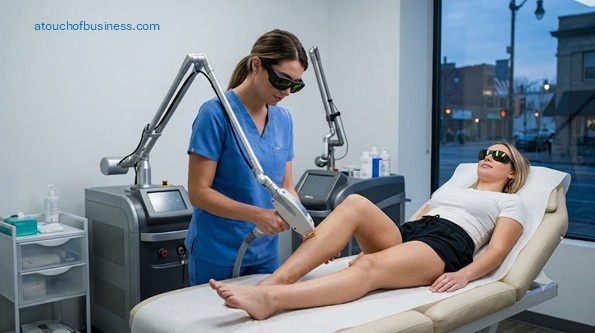
What to Expect From This Guide to Starting a Laser Hair Removal Clinic
This guide walks readers through the key decisions and practical steps involved in starting a laser hair removal clinic, from evaluating personal and market fit to building compliant systems and preparing to open. The points below highlight several of its main areas of value.
Inside the guide, you will find:
- Startup steps: Follow an ordered path from evaluating fit and demand through legal setup, funding, equipment, staffing, pricing, and opening preparation.
- Industry interviews: Learn from clinic founders and professionals discussing growth, equipment, marketing, training, safety, site selection, and operating challenges.
- Common questions: Review practical answers about ownership, laser systems, recurring costs, treatment schedules, safety roles, service scope, and pre-opening compliance.
- Business fit: Consider capital needs, credentialing timelines, income uncertainty, competition, client trust, and whether the model suits your circumstances.
- Legal requirements: Understand state-dependent ownership rules, medical oversight, operator credentials, facility registration, HIPAA duties, insurance, and local approvals.
- Financial planning: Examine funding options, break-even session volume, operating reserves, pricing structures, equipment costs, and the gradual build of repeat revenue.
- Opening preparation: Check treatment protocols, consent forms, records, payment systems, safety controls, marketing basics, and warning signs before serving clients.
Begin with the fit and compliance questions that determine whether this clinic model is workable in your state and circumstances.
Hair Removal Business Overview
As a laser hair removal clinic owner, you use FDA-cleared laser devices to reduce unwanted body and facial hair for paying clients.
Clients book appointment-based sessions, return four to eight weeks apart, and complete a course of six to eight treatments to achieve meaningful, lasting reduction.
The service is personal, results-driven, and repeat-visit by design — which means your reputation, your equipment, and your compliance setup matter before you ever take a first booking.
This guide covers the full startup path: ownership structure, medical oversight, equipment selection, facility setup, pricing, staffing, and pre-opening compliance — everything you need to understand before committing money or signing a lease.
Before you dive into the startup steps, take a few minutes to be honest about fit.
Is This Business Right for You?
Laser hair removal is not a low-barrier business to enter.
It requires medical compliance, expensive equipment, trained staff, and months of client-building before revenue becomes consistent.
Ask yourself these questions before going further:
- Can you fund equipment, build-out, legal setup, and four to six months of operating costs — all before generating meaningful revenue?
- Are you or your operators already licensed, or will training and credentialing add months to your timeline?
- Can your household manage income uncertainty during the startup and ramp-up period?
- Do you have the temperament for a compliance-heavy, appointment-driven, client-trust business?
- Does your target market have enough demand and income to support multi-session treatment courses at pricing your cost structure requires?
If you can answer yes to those questions, this business can work.
If several of those answers are unclear, spend more time validating before spending money.
Talk to people running laser hair removal clinics in non-competing markets.
Speak with solo clinic owners and medspa operators who offer the service alongside other treatments — their experiences will differ, and both perspectives are useful.
Prepare specific questions in advance: What compliance setup took longest? What did they underestimate on costs? How long before the schedule filled consistently? What would they do differently?
Firsthand owner insight is some of the most reliable research you can do before committing to this business.
You should also think carefully about whether to start from scratch, buy an existing clinic, or explore a franchise.
Buying an existing clinic gives you an established client base, equipment already in place, and a compliance history to review.
Laser hair removal franchise systems — several operate nationally — may provide equipment access, medical director relationships, training, and treatment protocols that reduce the compliance setup burden significantly for non-medical entrepreneurs.
Starting from scratch gives you full control but requires you to build every compliance system, clinical relationship, and client relationship independently.
Your best path depends on your background, available capital, timeline, and tolerance for building from zero.
Red Flags Before You Start
These are decision-stage warning signs — not reasons to walk away automatically, but issues that require honest evaluation before committing.
You have not yet spoken with a licensed healthcare attorney in your state.
In most states, the corporate practice of medicine (CPOM) doctrine prohibits non-physicians from directly owning a medical practice. Without a proper legal structure, you risk criminal liability and loss of professional licenses — for yourself and for any physician who partners with you. Do not spend money on equipment or a lease before this is resolved.
No qualified medical director is available to you.
Most states require a licensed physician to oversee clinic operations. If you cannot establish that relationship before opening, you cannot legally operate. Physician placement services exist, but securing the right arrangement takes time — factor it into your startup timeline.
You or your operators are not yet credentialed.
State requirements range from physician-only laser operation to esthetician license plus laser certification to a dedicated laser technician state license. Training and licensing can take weeks to months. If credentials are not in place before opening, the clinic cannot legally see clients.
National chains or large medspas already saturate your target market.
Established franchise chains have spent years and significant resources locking up brand recognition in major markets. An independent clinic entering a saturated market competes against those brands on visibility, pricing, and trust — at a significant disadvantage at launch. Verify the competitive landscape before signing a lease.
You cannot fund equipment, build-out, compliance setup, and an operating capital reserve.
Laser equipment is the largest single startup cost. Add legal fees, facility costs, insurance, licensing, training, and months of operating expenses before consistent revenue arrives. Launching undercapitalized is one of the primary reasons new clinics close.
The industry carries structural challenges independent of execution.
This business is capital-intensive. The primary asset — laser equipment — is expensive, requires maintenance, and becomes technologically dated over time. Large chains benefit from volume purchasing power and multi-location revenue that a single-room independent clinic cannot replicate. Independent operators must price and schedule efficiently from the start to justify the capital commitment. These are industry-level conditions worth understanding before committing, not personal failure points.
Step 1: Understand Your State’s Regulatory Structure
This step must happen before every other commitment — before location, equipment, staffing, or spending.
Laser hair removal regulations vary significantly across U.S. states. Four broad models exist:
- Physician-only — only a licensed physician may perform treatments
- Physician-delegation — doctors operate the laser or formally delegate to supervised clinical staff
- Non-physician practitioner licensing — licensed estheticians or certified laser technicians may perform treatments with appropriate training and oversight
- Unclear or fragmented — rules are inconsistent, limited, or actively changing
Your state’s model determines who may own the clinic, who may operate the laser, and what supervision structure you must maintain.
In most states, a licensed physician must serve as medical director. Non-physician owners typically need a Management Services Organization (MSO) structure paired with a physician-owned Professional Corporation (PC). This is not a minor paperwork step — it is the legal foundation of the entire operation.
Engage a licensed healthcare attorney before moving forward. The attorney should confirm your ownership structure, your state’s CPOM rules, and the supervision requirements that apply to your planned operator credentials.
Regulatory agencies to identify in your state:
- State medical board — governs physician oversight, delegation, and medical director requirements
- State cosmetology or esthetician licensing board — governs non-physician laser operator credentials
- State department of health or licensing and regulation — may govern facility registration
Some states require a separate facility license or registration certificate for laser hair removal clinics. Confirm whether yours does before you choose a location.
Step 2: Determine Your Operating Model and Business Structure
Before location or equipment decisions, decide what you are opening and how it will operate.
Key model decisions:
- Service scope: Single-service clinic (laser hair removal only) versus medspa model adding skin rejuvenation, IPL treatments, or other non-invasive services. Each additional service type adds compliance and credentialing requirements.
- Ownership structure: Physician-owner versus non-physician owner using an MSO-PC arrangement. Your legal structure must match your state’s CPOM rules.
- Staffing model: Owner-operator performing treatments versus hiring licensed laser technicians. Each affects cost structure, scheduling capacity, and compliance obligations.
- Entry path: Starting from scratch, buying an existing clinic, or joining a franchise system.
Single-service clinics have simpler compliance setups and focused staff training. Multi-service clinics can produce more stable revenue patterns but require broader medical oversight and more complex credentialing.
If you are considering buying an existing clinic, verify all licenses, medical director agreements, equipment service records, and client consent documentation before completing any purchase.
Step 3: Validate Local Market Demand
Validate the market before spending money on legal setup, equipment, or a lease.
Research your competitive landscape:
- Dedicated laser hair removal clinics (standalone and franchise)
- Medical spas offering laser as part of a broader service menu
- Dermatology offices and plastic surgery practices
- Esthetician studios with laser certification
Your core client base will skew female, ages 22 to 45. Male clients seeking facial, chest, or back treatments represent a growing and often underserved segment — worth factoring into your service planning.
Clients choose a laser clinic based on credentials, equipment reputation, skin type inclusivity, pricing transparency, consultation quality, and trust signals like medical director affiliation and certifications.
A new clinic must establish all of those markers before opening — not after.
Verify population density, local income levels, and whether your required pricing is achievable given what competitors charge in your intended market. Laser hair removal is an elective, cash-pay service with no insurance coverage. Lower-income markets or small towns may not support the volume of multi-session clients your cost structure requires.
Check local supply and demand conditions carefully before committing to a location.
Step 4: Build the Legal and Compliance Structure
Once your ownership model and state requirements are clear, build the legal foundation before any other major commitment.
Entity setup steps:
- Register the business entity with your state’s secretary of state — PC, PLLC, LLC, or MSO-PC structure as required by your state’s CPOM rules
- Obtain an EIN (Employer Identification Number) from the IRS
- File a DBA (doing business as) registration if operating under a trade name
- Register for state sales tax collection if your state taxes aesthetic services
- Register employer payroll withholding accounts if you will have employees
Medical oversight setup:
- Secure a signed medical director or collaborating physician agreement before any client receives a treatment
- Confirm the physician holds an active, unrestricted license in your state
- Define the physician’s responsibilities in writing: protocol approval, delegation authority, availability for emergency consultation, and any required chart review frequency
HIPAA compliance setup:
- Implement a HIPAA-compliant patient records system before collecting any client health information
- Prepare a Notice of Privacy Practices for clients to receive at intake
- Train all staff on privacy protocols before the first client appointment
- Establish access controls for digital records so only authorized staff can view patient files
Learn more about business licenses and permits and how to register a business as you work through this step.
Step 5: Choose a Location and Confirm Facility Compliance
A laser hair removal clinic typically occupies 800 to 1,200 square feet, zoned for personal service or medical office use.
Confirm the following before signing any lease:
- Zoning: Verify with the local planning or zoning department that the space is permitted for a laser clinic or medical aesthetic use
- Certificate of occupancy: Confirm whether a change-of-use certificate is required for clinic operations
- Health department and fire marshal: Confirm inspection requirements for facilities using Class IV laser equipment in your jurisdiction
- Electrical capacity: Laser systems require specific power supply — confirm the space can support your equipment before signing
- Window coverings: All treatment rooms must have blackout shades or light-blocking window treatments to create a laser-controlled area
Minimum space requirements for a functional clinic:
- One dedicated treatment room per laser system
- Reception and client waiting area
- Private consultation or intake space for health history review
- Client changing or preparation area
- Sanitary hand-washing facilities in or adjacent to treatment rooms
Subleasing space within an existing medical practice, dermatology office, or established medspa is worth evaluating — it can reduce build-out costs significantly and provide a compliant clinical environment from day one.
Business Plan
A working business plan for a laser hair removal clinic needs to address more than startup costs — it needs to answer whether the business can survive long enough to become profitable.
Your plan should map out the following:
- Legal entity structure and ownership model
- Medical director relationship and cost
- Equipment decision: purchase or lease, device type, vendor
- Facility selection, build-out scope, and rent level
- Staffing model and credentialing plan
- Service scope and pricing model
- Funding plan and capital sources
- Revenue projections based on realistic session volume
The break-even calculation is the most critical piece.
Calculate how many sessions per day you need to cover all fixed monthly costs before committing to a lease or equipment purchase.
Your fixed monthly costs include rent, equipment lease or loan payment, medical director fees, insurance, staff payroll, utilities, consumables, and software subscriptions.
Divide total fixed monthly costs by your average revenue per session.
That number tells you how many sessions you need each month to reach break-even — before you make a dollar of profit.
If that number requires your treatment room to be fully booked from opening day, your cost structure, your pricing, or your facility choice needs adjustment before you commit.
The multi-session revenue model creates a revenue ramp-up period.
A new client who starts a six-session course represents revenue spread over six months or more. Early months have fewer returning clients than later months. Your operating capital plan must cover fixed costs through that ramp-up — a minimum of four to six months of reserves is the standard planning benchmark for this business type.
Running out of operating capital before clients return consistently is one of the primary reasons new clinics close.
Review guidance on estimating profitability and revenue for a new business as you build this section of your plan.
Step 6: Secure Funding
Laser equipment is the largest single startup cost in this business. Most owners use equipment financing or leasing to convert that capital expense into a manageable monthly payment.
Common funding sources:
- SBA 7(a) loans — commonly used for medspa and clinic startups
- Equipment financing through laser vendors — many offer lease programs directly
- Commercial bank business loans
- Personal capital or savings
- Private investor or silent partner arrangements — must be structured to comply with your state’s CPOM and ownership rules
- Medical practice acquisition loans if buying an existing clinic
Do not sign a lease or commit to equipment before your funding is confirmed.
Banks and SBA lenders will want a detailed business plan, projected revenue, evidence of compliance setup, and information about your medical director relationship. Get those pieces in order before approaching lenders.
Learn how to approach a business loan as part of your funding research.
Step 7: Select and Purchase Equipment
Your laser system is the clinical and financial core of the business. Choose it carefully.
The four main device types:
- Diode laser (808/810 nm): Covers a broad range of skin tones, cost-effective, widely used for clinical settings. A common entry point for new clinics.
- Alexandrite laser (755 nm): Highly effective for lighter skin tones (Fitzpatrick types I–III). Faster treatment speeds but not appropriate for darker skin tones.
- Nd:YAG laser (1064 nm): The safest option for darker skin tones (Fitzpatrick types IV–VI). Effective on coarse hair.
- Dual-wavelength platform (alexandrite + Nd:YAG): Maximum skin type versatility. Higher equipment cost but broader clientele capacity.
IPL (intense pulsed light) is not technically a laser — it uses broad-spectrum light and is less precise than true laser systems. Some clinics use it for additional services.
Non-negotiable equipment requirements:
- FDA clearance specifically for hair removal — verify using the FDA’s 510(k) database before purchasing
- Integrated or compatible skin cooling system (contact cooling, cold air, or dynamic cooling) — reduces client discomfort and epidermal damage risk
- Manufacturer warranty with U.S.-based service support
- Clear consumable cost structure (gels, tips, water for cooling circuits)
Ongoing equipment costs to plan for:
- Annual maintenance contracts typically run several thousand dollars per year after the initial warranty expires
- Handpiece replacement after the rated shot count is reached
- Consumables: cooling gel (if applicable), optical cleaning wipes, distilled water for cooling circuits
Buy or lease equipment only after your entity setup, location, and funding are confirmed.
Step 8: Hire and Credential Staff
Every person who operates the laser must hold the credentials your state requires before the clinic opens.
Depending on your state, this may mean:
- An active esthetician or cosmetologist license plus a specialized laser certification
- A dedicated state-issued laser technician license obtained through an approved training program
- A medical license (RN, NP, PA, or physician) with laser-specific training
Verify your state’s approved training programs and minimum classroom and clinical hour requirements. A national laser school certificate does not automatically qualify an operator to work in your state — state licensing boards have their own approval requirements.
Before the first client appointment, document on file:
- Copies of all operator licenses and certifications
- Training program completion records
- Any state-required registration of operators with a licensing board
- Designation of the Laser Safety Officer (LSO) in writing
The Laser Safety Officer is a formal role required under ANSI Z136.3. The LSO manages protective eyewear compliance, controlled-area access, laser safety training documentation, and incident reporting. The LSO can be the owner, a staff member, or the medical director — but must have appropriate training for the role.
If you are hiring employees, comply with federal and applicable state employer requirements: I-9 employment eligibility verification, workers’ compensation insurance enrollment, and payroll withholding registration before the first payday.
Review guidance on how and when to hire as you plan your staffing model.
Step 9: Set Up Treatment Protocols, Consent Forms, and Records
A laser hair removal clinic lives or dies on its records and protocols. Weak systems create legal exposure, inconsistent results, and trust problems with clients.
Treatment protocols — drafted and approved by your medical director — must cover:
- Fitzpatrick skin typing procedure for each client
- Contraindication screening criteria (conditions and medications that make laser treatment unsafe)
- Laser settings by device type, body area, skin tone, and hair type (fluence, pulse duration, spot size, cooling parameters)
- Pre-treatment preparation steps
- Post-treatment care instructions
- Adverse event response procedures
Required client records for each patient file:
- Completed health history intake form
- Fitzpatrick skin type assessment on file
- Signed informed consent form covering risks, contraindications, realistic outcome expectations, and pre/post care
- Treatment log for each session: date, body area, device used, settings applied, operator name, and any observations or reactions
- Adverse event log if applicable
Practice management systems to have in place before opening:
- HIPAA-compliant EHR or patient records software
- Online or in-clinic appointment scheduling system with automated reminders
- Intake forms (paper or digital) for pre-visit health history collection
- Secure digital consent form storage with restricted access
Clients trust you with their health information and their skin. Consistent, professional intake and records processes signal that trust is warranted — from the very first appointment.
Step 10: Set Up Pricing and Payments
Laser hair removal pricing is based on body area size and structured around multi-session treatment courses.
The three standard pricing models in this industry:
- Per-session pricing: Client pays for each individual appointment. Priced higher per session than package equivalents. Simple to understand but doesn’t commit the client to completing a course.
- Session package pricing: Bundles of six to eight sessions per treatment area at a lower per-session rate. Standard for most clinics because it aligns with the clinical reality that clients need multiple sessions for meaningful reduction.
- Membership or subscription pricing: Monthly fee for a set number of sessions, often with a minimum commitment period. Creates predictable recurring revenue for the clinic.
Price by treatment area size: small (upper lip, chin, underarms), medium (Brazilian, abdomen, chest), and large (full legs, back, full body). The price difference across area sizes is significant — plan your menu accordingly.
Payment setup to complete before opening:
- Open a dedicated business bank account — keep business and personal finances completely separate from day one
- Set up a merchant account for card processing that can handle session packages, memberships, and deposits
- Confirm whether your state requires sales tax collection on aesthetic services and set up tax collection before processing first transactions
Review guidance on pricing your services and merchant accounts as you set up your payment systems.
Step 11: Set Up Insurance and Risk Coverage
Laser hair removal carries meaningful clinical risk — burns, scarring, pigmentation changes, and adverse reactions are documented possibilities when protocols are not followed or equipment settings are wrong. Insurance is essential.
Coverage types to secure before opening:
- Professional liability / malpractice insurance: Covers claims arising from treatment errors, adverse reactions, or failure to deliver expected results. This is the most critical coverage for a laser clinic.
- General liability insurance: Covers bodily injury and property damage claims unrelated to professional services — slip and fall, for example.
- Equipment coverage: Covers repair or replacement of your laser system after a covered loss event. Given equipment cost, this protects your primary asset.
- Cyber liability insurance: Relevant for any clinic storing digital patient health records.
- Workers’ compensation insurance: Legally required in most states for any employee. Enroll before hiring any staff member.
Verify whether any additional coverage is legally required in your state with your healthcare attorney and licensing agency.
Learn more about business insurance as you build out your coverage plan.
Step 12: Prepare for Launch-Stage Client Acquisition
Before opening, establish the trust signals that persuade new clients to book with an unfamiliar clinic.
Trust signals to have in place before the first appointment:
- A functional website listing services, pricing, credentials, medical director affiliation, and online booking
- Google Business Profile claimed, verified, and active
- Business cards and any required exterior or interior signage
Your first clients will most likely come from personal networks, professional referrals, and cross-referrals from non-competing personal care businesses — hair salons, gyms, skincare studios, and similar local services.
An introductory offer — a discounted consultation or a complimentary first session on a small treatment area — reduces the barrier for first-time clients who are unfamiliar with the service and want to experience it before committing to a package.
Clients who complete a full treatment course and see results are your most powerful source of referrals. Delivering consistent, well-documented results from the first session forward is the most effective launch-stage client-building strategy available to a new clinic.
Opening-Day Red Flags
These are the issues that most commonly create problems on or shortly after opening day.
The medical director agreement is signed but the physician has not reviewed your treatment protocols.
A signed agreement is not the same as active, functioning oversight. The physician must have reviewed, understood, and approved your specific treatment protocols before any client receives a laser treatment.
Operator credentials have not been physically verified and placed on file.
Verbal confirmation is not documentation. Before anyone operates the laser, copies of all required licenses and certifications must be in the employee file and accessible for inspection.
The laser safety eyewear is the wrong optical density for your device’s wavelength.
Protective goggles must be rated for the specific wavelength of your laser system. Universal goggles are not interchangeable across device types. Confirm wavelength compatibility with your equipment vendor before using any eyewear with clients or staff.
Laser hazard warning signs are not yet posted on treatment room doors.
ANSI Z136.3 requires hazard warning signs posted on all treatment room doors whenever a laser is in use. This is a basic compliance item that must be in place before the first treatment.
The consent form has not been reviewed by legal counsel.
A consent form drafted without attorney review may fail to protect the clinic or fail to meet state-specific requirements. Have the medical director and your healthcare attorney review the form before it is used.
No soft opening was completed before the public launch.
A soft opening with a small group of known clients — friends, family, or professional contacts — lets you test scheduling, intake workflow, equipment operation, consent processes, and post-treatment documentation before treating the general public. Problems discovered during a soft opening are far easier to resolve than problems discovered during a full launch.
The scheduling system cannot handle packages, memberships, or deposits.
If your payment system cannot process a six-session package at intake or track remaining sessions per client, you will create billing problems and client experience issues from day one. Test the full booking-to-checkout workflow before opening.
Frequently Asked Questions
Do I need to be a licensed medical professional to open a laser hair removal clinic?
Not necessarily — but it depends on your state. In most states, non-physician owners need a Management Services Organization (MSO) structure paired with a physician-owned Professional Corporation to operate legally.
Some states allow non-physicians to own a laser hair removal facility directly, with a facility certificate and a written consulting physician contract. Engage a licensed healthcare attorney before making any ownership or financial decision.
What type of laser system should I buy for a new clinic?
It depends on your intended client base and budget. Diode systems cover a broad range of skin tones at moderate cost. Alexandrite systems are highly effective for lighter skin tones (Fitzpatrick types I–III).
Nd:YAG is safer for darker skin tones. Dual-wavelength platforms offer the most versatility. Buy only FDA-cleared equipment and verify that the clearance specifically covers hair removal before purchasing.
What are the ongoing consumable costs for a laser hair removal clinic?
It varies by device type. Some diode systems have very low consumable costs — primarily distilled water for cooling circuits and cleaning supplies. Systems requiring gel application add cooling gel as an ongoing expense.
The largest periodic cost beyond consumables is equipment maintenance: annual service contracts and periodic handpiece replacement after the rated shot count is reached. Factor these into your monthly operating cost projections before finalizing your pricing.
How many sessions does a client typically need?
Most clients need six to eight sessions spaced four to eight weeks apart, depending on the treatment area and individual hair growth cycles. This means a client completing a full course represents revenue spread over six to twelve months.
Plan your operating capital to sustain the business during the ramp-up period while your client base is still building.
What is a Laser Safety Officer and do I need one?
Yes. Under the ANSI Z136.3 standard for safe use of lasers in health care, every practice operating Class 3B or Class 4 lasers must appoint a designated Laser Safety Officer. The LSO manages protective eyewear compliance, controlled-area access, laser safety training records, and incident documentation.
Some states also require a designated LSO as part of the facility registration application. The role can be filled by the owner, a staff member, or the medical director — but must be formally designated and documented before opening.
Can I offer laser hair removal alongside other aesthetic services?
Yes — both single-service and multi-service models operate in this industry. Specializing in laser hair removal keeps your compliance setup simpler and your staff training focused.
Adding services like injectable treatments raises medical oversight requirements, entity structure complexity, and credentialing needs considerably. Start by confirming which services your state permits under your planned ownership structure and operator credentials before deciding on your service menu.
Is a franchise a better option than starting an independent clinic?
It depends on your background and goals. Franchise systems in this space may include equipment access, medical director relationships, training, and proven treatment protocols — reducing the time and legal cost required to build compliance from scratch.
Independent clinics require you to build all of those systems yourself. Compare franchise disclosure documents against the full cost of an independent startup — including all legal, equipment, training, and compliance costs — before deciding.
What are the most important compliance items to have in place before opening?
At minimum, before any client receives a treatment:
- Legal entity structure confirmed compliant with your state’s CPOM rules
- Signed and active medical director agreement with a physician holding an unrestricted state license
- Verified credentials on file for all laser operators
- State facility registration or license (if required)
- Medical-director-approved signed informed consent form protocol
- Wavelength-appropriate laser safety goggles for operators and clients
- Laser hazard warning signs posted on all treatment room doors
- HIPAA-compliant patient records system active
- All required local business licenses and permits in hand
Missing any item on this list before opening creates legal risk, patient safety risk, or both.
Interview Advice From Laser Hair Removal Professionals
Readers can use the advice to evaluate the business model, identify important startup decisions, and learn from challenges encountered by professionals already operating laser hair removal clinics.
Sinclair x Laser HQ Podcast: Episode 1
LaserHQ founder Helen Quayle explains how she grew from operating in a salon room to managing a multi-clinic laser business. She discusses setbacks, innovation, branding, and building customer trust.
This interview is useful for understanding how a small laser hair removal operation can develop into a larger brand while maintaining a clear identity and dependable client experience.
How Christina Garcia Built a Six-Figure Laser Business After 15 Years as a Stay-at-Home Mom
Soft Touch Laser Hair Removal founder Christina Delgado discusses selecting equipment, attracting clients through social media, reinvesting income, hiring help, and keeping her business focused on hair removal.
Her experience gives prospective owners a practical look at marketing consistently, managing money, choosing quality equipment, and handling the transition from solo operator to growing employer.
How Laser Clinics Is Sharpening Its Focus on Canada
Jennifer Cheong of Laser Clinics Canada discusses site selection, pricing, staff qualifications, treatment safety, franchise training, operating standards, and support for clinic owners.
This interview helps readers see how location decisions, employee training, safety procedures, and operating systems affect the performance and reputation of a laser clinic.
An Interview With Claire Louise-Hutchinson
Laser practitioner Claire Louise-Hutchinson discusses entering the industry, overcoming inadequate training, understanding laser science, improving treatment protocols, and communicating honestly with clients.
Her advice shows why thorough education, professional support, realistic client expectations, and confidence with the equipment are essential before offering treatments independently.
Episode 90: Claudio Sorrentino Turns Problems Into Opportunities
Body Details co-founder Claudio Sorrentino shares his entrepreneurial experience building a company that provides laser hair removal, tattoo removal, and skin treatments.
The conversation provides a founder’s perspective on recognizing opportunities, responding to business problems, and developing the persistence required to operate and expand a laser service company.
Related Articles
- How To Start a Facial Spa Business
- How To Start a Beauty Salon
- How To Start a Dermatology Practice
- How To Start an Eyebrow Threading Business
- How To Start an Eyelash Extension Business
- How To Start a Tanning Business
Sources:
- Aesthetic Laser Courses (AML): Laser License Requirements by State, LSO Medspa Compliance 2026
- Nextech: Who Can Perform Laser Hair Removal
- ABAC Training: 50-State Laser Treatment Legal Guide
- Rocky Mountain Laser College: State Laser Rules by State
- Astanza Laser: Medical Directors for Laser Clinics, Why FDA Clearance Matters
- Medical Director Co.: Medical Director for LHR Clinics
- LocumTele: Aesthetic Clinic Medical Director
- Jackson LLP: How to Open a Medical Spa
- BMD LLC: Med Spa Legal Considerations Checklist
- StartPermit: How to Start a Med Spa 2026
- Hinshaw Law: Med Spa Compliance Legal Pitfalls
- HCH Lawyers: MSO Structure for Med Spas, Laser Hair Removal Clinics Texas
- Pabau: LHR Clinic Monthly Revenue Guide
- OSHA: Laser Hazards eTool
- John Hoopman (Laser Safety): ANSI Z136.3 Laser Safety Standard
- Agiliti Health: Understanding ANSI Z136.3 Standards
- FDA (accessdata): Diode Laser 510(k) Clearance K180353
- Cornell Law (Texas Admin Code): Texas LHR Facility Certificate Requirements
- Cornell Law (Georgia Rules): Georgia Laser Facility Requirement
- Indeed (Career Advice): How to Become LHR Technician, LHR Certification Step by Step
- Esthetician Edu: LHR Training and Certification
- Beauty Schools Directory: Get Your LHR License
- DDC Tech: Best LHR Technology Deep Dive, Choosing Best LHR Machines
- Huimai Beauty: LHR Machine Cost 2026 Buyer’s Guide
- LHR Cost Calculator: LHR Cost by Area and Package
- PPIB Corp: LHR Insurance for Medical Spas
- SCMHR: SCMHR Standards of Care
- Florida Healthcare Law Firm: HIPAA Compliance Aesthetic Clinics
- Target Patients MD: LHR Market and Demographics
- Beauty Independent: Milan Laser 400-Location Chain Model
- BYou Laser Clinic: Franchise vs Independent Med Spa