
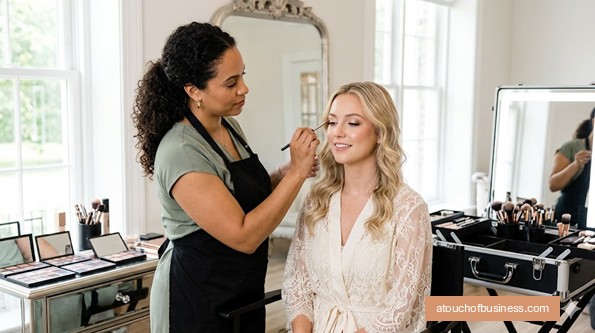
What to Expect From This Guide to Starting a Bridal Makeup Business
This guide walks you through the main decisions and practical preparations for starting a bridal makeup business, from testing personal fit and demand to defining services, verifying rules, building a mobile setup, setting terms, and preparing for the first paid wedding.
Inside the guide, you will find:
- Startup roadmap: Progress from fit, service choices, and market checks through licensing, kit preparation, pricing, testing, and opening tasks.
- Professional interviews: Explore resources featuring bridal beauty professionals discussing clients, consultations, travel, pricing, service quality, and wedding-industry realities.
- Startup FAQs: Review answers about licensing, home trials, studios, equipment, pricing, records, deposits, insurance, and service additions.
- Business fit: Consider weekend schedules, early starts, travel, strict timing, sanitation habits, client emotions, and income uncertainty.
- Mobile service planning: Define the service area, trial process, travel charges, portable workspace, backup products, and assistant needs.
- Licensing and hygiene: Verify location-dependent beauty rules while establishing sanitation, product handling, clean-tool separation, and local business requirements.
- Pricing and agreements: Account for service time, travel, supplies, cleaning, fees, booking risk, payment terms, cancellations, and client records.
Begin by deciding whether bridal makeup’s creative service, mobile routine, and wedding-day pressure fit the business life you expect.
How to Begin With Clear Bridal Makeup Decisions
A bridal makeup business provides makeup services for brides and wedding parties before weddings, photos, elopements, and related events.
With a mobile or on-site model, you bring the kit, lighting, tools, supplies, and setup to the client’s home, hotel, venue, or preparation room. That convenience is part of the value. It also adds travel, timing, packing, and backup planning to every appointment.
Make Sure the Fit Is Real
Bridal makeup can look creative from the outside. The startup reality is more practical.
You need skill, patience, clean habits, steady timing, and comfort with emotional clients. You also need to handle early mornings, weekends, traffic, parking, and strict wedding-day schedules.
Fast can feel easier than correct. But in this business, correct wins. A rushed setup, weak sanitation routine, or poor shade match can create expensive problems later.
Don’t start a bridal makeup business only to escape a job, financial pressure, or status anxiety. Start because you understand the service, enjoy the business, and can handle the pressure that comes with wedding-day expectations.
If you’re still weighing the larger startup path, a general startup checklist can help you see the broader process. Then bring the focus back to bridal makeup, because this business has its own rules, risks, and setup needs.
Speak With Owners You Will Not Compete Against
Before you buy products or book clients, talk with experienced bridal makeup owners outside your service area.
Don’t ask direct competitors in your own market to teach you their business. Look for owners in another city, region, or market area. Prepare your questions before the conversation.
- How long does a bride-only service really take?
- What causes delays on wedding mornings?
- Which products run out fastest?
- What belongs in the service agreement?
- How do they handle travel, parking, and early start times?
- What licensing surprises should a new owner check first?
Each owner’s path will be different. Still, firsthand insight is useful because these owners have already dealt with clients, venues, products, timing, and mobile setup. That kind of advice from real business owners can save you from learning everything the hard way.
Choose Your Bridal Makeup Service Model
A mobile bridal makeup business sounds simple. In practice, your offer mix changes your kit, schedule, pricing, travel load, and staffing needs.
Start by deciding what you’ll offer before opening. Clear now vs. confusing later. That choice affects almost every other startup decision.
- Bride-only makeup
- Bridal party makeup
- Mother-of-the-bride or family makeup
- Bridal trial makeup
- False lash application
- Touch-up service
- Airbrush makeup, if trained and equipped
- Hair and makeup only if you are trained, licensed, equipped, and staffed for both
You also need to decide where trials will happen. A client’s home, rented studio, your home workspace, or another location can each trigger different setup and compliance questions.
The safest startup move is to keep the first offer focused. A smaller, cleaner service list is often better than a larger offer you can’t deliver well.
Decide Whether to Start, Buy, or Franchise
Most solo bridal makeup artists start from scratch because the main assets are skill, kit, process, service quality, and client trust.
Buying an existing bridal makeup business may make sense only if the sale includes useful assets. Look for transferable bookings, equipment, a product kit, vendor relationships, name rights, website or domain rights, and clean financial records.
Franchising is less common for a solo bridal makeup business. Broader beauty-service franchises may exist, but they can reduce control and add fees, territory rules, and required systems.
More support vs. more control. That’s the tradeoff. Your best path depends on your budget, timeline, risk tolerance, available businesses for sale, and how much independence you want. The choice to start from scratch or buy a business should be made before you commit major money.
Check Local Demand Before You Spend
Local demand matters because bridal makeup is tied to weddings, venues, seasons, and local budgets.
Don’t buy a full kit just because the business sounds attractive. Check whether your area can support another mobile bridal makeup artist.
- Look at local marriage activity.
- Count nearby wedding venues, hotels, estates, and photo locations.
- Review local bridal makeup artists and beauty teams.
- Compare service lists, trial policies, travel fees, and minimum booking sizes.
- Notice whether the market is underpriced, crowded, seasonal, or dominated by established providers.
Weak demand now can become expensive later. A good local review helps you decide whether to open, narrow your service area, adjust your offer, or wait.
This is also where local supply and demand matters. A bridal makeup business may be viable in one area and difficult in another, even if the service itself is the same.
Business Plan
Your business plan should turn the startup decisions into a practical path you can follow.
Don’t make it generic. A bridal makeup business plan should focus on the service model, legal checks, mobile setup, kit needs, pricing, travel, payment terms, and opening readiness.
- Service list: Decide what you’ll offer at launch and what you’ll leave out.
- Licensing path: Confirm whether your state regulates makeup, lashes, skincare, hair, mobile service, or trial locations.
- Service area: Define your travel radius, parking rules, and travel fee policy.
- Trial process: Decide where trials happen, how long they take, and how notes are recorded.
- Kit plan: List products, tools, disposables, sanitation supplies, lighting, and backup items.
- Pricing decisions: Build prices from service time, travel, supplies, cleaning time, payment fees, taxes, and booking risk.
- Payment process: Set up deposits or retainers, invoices, receipts, final payments, and refund terms.
- Assistant policy: Decide whether large bridal parties require second artists and how those workers will be classified.
- Opening checklist: List what must be ready before the first paid wedding.
A weak plan can feel faster at the start. A clear plan gives you fewer surprises. Use a practical business plan to organize the decisions before clients depend on you.
Verify Beauty Licensing Before Offering Services
Licensing is one of the first checks for a bridal makeup business. Don’t assume makeup is regulated the same way in every state.
Rules vary by U.S. jurisdiction. Some states don’t regulate makeup application as a standalone service. Others connect makeup to cosmetology, esthetics, appearance enhancement, salon licensing, mobile salon rules, or off-premises service permission.
Check your state licensing board before you charge for services. Also check whether false lashes, skin prep, hair styling, brow work, waxing, or airbrush makeup changes the license you need.
Mobile service adds another layer. Some locations allow certain services at homes, hotels, venues, or studios. Others require a permit, licensed establishment, mobile salon license, or special approval.
Cheap now vs. expensive later applies here. Skipping the check may save time today, but it can delay your launch or put your business at risk later.
Handle Business Registration and Local Rules
After you understand the beauty-service rules, set up the business itself.
Choose a business structure, register the name if required, and file a Doing Business As name if you use a public name that differs from the legal name. You may also need an Employer Identification Number for banking, hiring, entity setup, or tax reporting.
Check state tax registration, especially if you sell cosmetics, lashes, skincare, touch-up kits, or other retail products. Sales tax treatment of beauty services and products depends on the state and locality.
Local rules can also matter, even for a mobile bridal makeup business.
- City or county business license
- Home-occupation rules
- Zoning limits for home-based storage or client trials
- Certificate of occupancy if you use a studio, salon suite, or client-facing space
- Venue rules for approved vendors, parking, access, and proof of insurance
Use local offices and state agencies for final answers. A general guide to business licenses and permits can help you know what to ask, but local confirmation is still the key step.
Build a Clean Mobile Bridal Makeup Kit
Your kit isn’t just a box of products. It’s the service in portable form.
You need enough range to serve different skin tones, undertones, ages, skin types, and lighting conditions. You also need tools that can be cleaned, packed, protected, and used safely in different locations.
- Foundations, concealers, correctors, primers, powders, and setting products
- Blush, bronzer, contour, highlight, eyeshadow, eyeliner, brow products, mascara, and lip products
- Long-wear and waterproof options for wedding-day conditions
- False lashes, lash adhesive, lash remover, and lash tools
- Brushes, sponge wedges, palettes, spatulas, and pencil sharpeners
- Disposable mascara wands, lip applicators, cotton swabs, cotton rounds, and tissues
- Brush cleaner, hand sanitizer, disinfectant, paper towels, trash bags, and clean towels
Presentation matters, but hygiene matters more. A beautiful kit that isn’t sanitary isn’t ready.
Set Up Your Mobile Workspace
Mobile bridal makeup means you don’t control the room. You may walk into poor lighting, low chairs, limited outlets, no table space, or difficult parking.
That’s why your setup must travel well.
- Rolling kit case or organized travel bag
- Portable lighting
- Mirror
- Extension cord and power strip
- Portable chair or plan for chair height
- Compact table, setup mat, or clean surface cover
- Backup light or battery pack
- Weather-protective storage
- Separate bags or containers for clean and used tools
Light packing vs. complete packing is a real tradeoff. Carry too little and you may be stuck. Carry too much and setup becomes slow. Your launch setup should balance speed, safety, and reliability.
Create a Sanitation Process Before You Book
Don’t wait until a wedding morning to figure out your sanitation process.
Prepare a clear process for hand hygiene, clean tools, used tools, disposables, product handling, brush cleaning, and waste. Keep clean and used items separated during every appointment.
- Use disposable applicators where needed.
- Don’t share eye products in unsafe ways.
- Keep old or questionable products out of the kit.
- Store cosmetics away from heat, moisture, pets, children, and direct sun.
- Clean reusable tools after appointments.
- Replace products when age, smell, texture, or contamination is a concern.
Clean now vs. explain later. A strong sanitation routine protects the client, the business, and you.
Prepare Contracts, Forms, and Records
Bridal makeup bookings need clear written terms because the date, location, timing, and service count matter.
Your service agreement should be ready before you accept paid bookings. Keep the language clear and review it with qualified help if needed.
- Wedding date and preparation location
- Start time and service schedule
- Number of people receiving services
- Trial terms
- Deposit or retainer terms
- Final payment due date
- Travel, parking, tolls, and early-start fees
- Cancellation and rescheduling terms
- Lateness policy
- Allergy and skin concern disclosure
- Photo permission, if used
- Assistant terms, if needed
You should also prepare client notes, trial records, invoice templates, receipts, mileage logs, product purchase records, and expense records from the start.
Set Pricing for a Mobile Bridal Makeup Business
Pricing isn’t just about what nearby artists charge.
Your prices need to reflect the full job: consultation, trial time, service time, travel, parking, product use, disposables, setup, cleanup, sanitation, payment fees, taxes, insurance, and booking risk.
- Bride makeup price
- Bridal trial price
- Bridal party price per person
- False lash or airbrush add-ons, if offered
- Travel fee by distance, zone, or mileage
- Parking and toll charges
- Early start fee
- Assistant fee for larger parties
- Touch-up or extended-stay fee
- Minimum booking size for peak dates
Low price can win attention. Correct price keeps the appointment worth doing. Use pricing decisions to protect both the client experience and your financial planning.
Plan Startup Costs, Funding, and Payments
A mobile bridal makeup business usually has fewer build-out costs than a salon. That doesn’t make it free to start.
Your startup budget should be based on real quotes and your actual model. Don’t rely on a universal cost range.
- Licensing or permit fees, if required
- Business registration and name filings
- Training or required schooling, if applicable
- Makeup kit and product range
- Brushes, tools, lighting, chair, mirror, table, and rolling case
- Disposable and sanitation supplies
- Booking, invoice, payment, and bookkeeping systems
- Business email, domain, and basic contact presence
- Insurance as risk planning
- Vehicle use, parking, tolls, and travel readiness
- Contract preparation
Funding may come from savings, small business credit, a microloan, or other small business financing. Spend in stages when possible. Verify licensing and demand before you buy products you may not be allowed or ready to use.
Set up a business bank account and payment process before opening. Keep business and personal transactions separate from the start.
Line Up Suppliers and Backup Products
Your suppliers affect your opening readiness. A missing foundation shade or lash adhesive can create a problem at the worst time.
Set up reliable sources before you take paid bridal bookings.
- Professional beauty supply accounts
- Pro discount accounts where available
- Local supplier for last-minute replacements
- Disposable applicator supplier
- Brush, sanitation, and lash suppliers
- Backup source for commonly used shades and products
Convenient supplier vs. dependable supplier is another tradeoff. A supplier that is cheap but often out of stock can hurt your service quality.
Decide Whether You Need Assistants
A solo bridal makeup artist can only complete so many faces before the ceremony timeline breaks down.
If you plan to serve larger bridal parties, decide whether you need assistant makeup artists or hair stylists. This affects pricing, scheduling, contracts, worker classification, and licensing checks.
Make sure each person is allowed to perform the services they provide. Also review whether assistants should be treated as employees or independent contractors based on the actual working relationship.
Small team vs. solo control. Assistants can increase capacity, but they also add legal, quality, timing, and communication responsibilities.
Test the Bridal Makeup Process Before Launch
Do a full test before the first paid wedding. A test shows what your plan misses.
Run the process as if it were real. Pack the kit, travel with it, set up, complete the service, process payment, repack, and clean tools afterward.
- Time a bride-only look.
- Time a bride plus one or more additional people.
- Test lighting in a low-light room.
- Practice with limited table space.
- Check how long setup and cleanup take.
- Test your invoice and receipt process.
- Confirm your clean and used tool system works.
A smooth test doesn’t guarantee a smooth wedding day. But a poor test is a warning. Fix problems before clients are paying.
Prepare for Opening Day
Before you launch the bridal makeup business, make sure the startup pieces are complete.
This is the point where planning becomes readiness. Don’t treat it as a formality.
- Licensing and mobile-service rules verified
- Business registration complete
- Tax setup checked
- City or county business license checked
- Home-based rules checked, if applicable
- Kit stocked and organized
- Sanitation process written and tested
- Contracts and client forms ready
- Pricing and travel terms finalized
- Payment system tested
- Suppliers and backup products identified
- Insurance reviewed as risk planning
- Assistant policy set, if needed
- Trial process tested
- Mobile setup packed and ready
Open when you can provide the service safely, legally, and consistently. Not before.
A Short Look at the Day
A mobile bridal makeup appointment often starts before the client sees you.
You may pack the kit the night before, confirm the address, review parking, check the schedule, and prepare backup products. On the wedding day, you arrive early, set up lighting and products, sanitize tools, complete each makeup service in order, handle payment if needed, clean the area, and repack used tools separately.
That snapshot matters because it shows the lifestyle. The creative part is only one piece. The rest is timing, packing, travel, cleanliness, and calm service under pressure.
Red Flags Before Starting
Some warning signs should slow you down before you spend more money.
These red flags don’t always mean you should quit. They mean you should solve the problem before opening.
- You haven’t verified whether your state requires a license.
- You assume mobile bridal makeup is exempt from beauty-service rules.
- Local demand is weak or the market is crowded with low-priced providers.
- You can’t work weekends, early mornings, or peak wedding seasons.
- Your kit doesn’t cover enough skin tones, undertones, ages, or skin types.
- You don’t have a sanitation process for multiple people in one location.
- You use old, poorly stored, unlabeled, or questionable products.
- You don’t have a written agreement.
- Your pricing ignores travel, cleaning time, supplies, taxes, and payment fees.
- You book bridal parties too large for one artist.
- You have no backup plan for illness, vehicle problems, broken lighting, or missing products.
- You’re uncomfortable managing emotional clients or strict schedules.
- You use assistants without reviewing licensing and worker classification.
- Venues require proof of insurance you don’t carry.
Easy now vs. safe later is the pattern. Most serious startup problems come from skipping checks that felt boring at the beginning.
Frequently Asked Questions
These questions focus on startup decisions for a bridal makeup business, not customer-facing service details.
Is a bridal makeup business a good fit for a first-time owner?
It can be, if you have strong makeup skill, clean habits, weekend availability, client communication skills, and comfort with contracts and payments. It’s a poor fit if you dislike travel, pressure, or strict event timing.
Do bridal makeup artists need a license?
It depends on the state and sometimes the service location. Some states don’t regulate makeup by itself. Others connect it to cosmetology, esthetics, appearance enhancement, mobile salon, or off-premises service rules.
What should I verify before buying a full kit?
Check licensing, mobile-service rules, local demand, competitor pricing, supplier access, insurance quotes, business license needs, and whether trials can happen at your chosen location.
Can I start this business from home?
The office side can often be home-based. If clients come to your home for trials, check zoning, home-occupation rules, parking, beauty licensing, and certificate of occupancy issues.
Do I need a studio?
Not typically for a mobile bridal makeup model. A studio may help with trials, but it can add rent, local approvals, salon or establishment rules, signage issues, and certificate of occupancy questions.
What should go in the business plan?
Include licensing, services, trial policy, travel radius, kit needs, sanitation, pricing, booking terms, deposits or retainers, assistant use, startup costs, local demand, and opening-readiness tasks.
What equipment is most important before launch?
You need a complete makeup kit, shade range, brushes, disposables, lash supplies, sanitation supplies, lighting, mirror, mobile case, contracts, forms, payment system, and backup products.
Should I offer airbrush makeup?
Only if you’re trained, equipped, and able to price it correctly. Airbrush adds equipment, cleaning, product, maintenance, and skill requirements.
Should I offer hair too?
Only if you or your team are trained, licensed where required, equipped, and able to manage the timing. Hair can change licensing, service time, staffing, and setup needs.
How should I set prices?
Base pricing on service time, trial time, product use, disposables, travel, parking, setup, cleanup, sanitation, taxes, payment fees, insurance, assistant cost, and booking risk.
What records should I keep from the start?
Keep contracts, invoices, receipts, payment records, mileage logs, product purchases, license records, tax records, insurance documents, client notes, and supplier invoices.
Are deposits or retainers important?
They’re commonly used to reserve wedding dates. The terms should be written clearly in the service agreement and reviewed under applicable state law.
What is the biggest compliance mistake?
The biggest mistake is assuming that “makeup only” is always unregulated. Check the rules for makeup, lashes, skincare, hair, mobile services, and trial locations.
What should be ready before the first paid wedding?
You should have legal setup, licensing verification, kit, sanitation process, contract, payment system, trial process, mobile setup, backup supplies, travel plan, and tested timing.
Is insurance legally required?
It depends on state law, worker status, vehicle use, venue contracts, and business setup. General liability and professional liability are often part of risk planning, but don’t treat them as legally required unless a rule or contract requires them.
Expert Tips From Bridal Makeup Professionals
Learning from experienced bridal makeup artists can help you see what the business is really like before you invest in products, equipment, training, or booking systems.
These resources below include interviews, podcast episodes, and articles featuring professionals who discuss bridal beauty, client expectations, pricing, consultations, travel, service quality, and the realities of working in the wedding industry.
- Q&A With Bridal Makeup Artist Renee Armour
- Luxury Bridal Makeup and Agency Work With Rachel Lusk
- Bridal Makeup Consultation Tips With Katie From Bridal Hair Couture
- Expert Interview With Vivian Ashworth
- Ellwed Talks With Irene Kyranis
- Podcast Interview With Storme Webster
- Pink Orchid Studio CEO Shannon Mann on the Business of Beauty
- From $40 to Luxury Destinations With Kellsie Bain
Related Articles
- How To Start a Bridal Boutique
- How To Start a Wedding Venue Business
- How To Start a Wedding Invitation Business
- How To Start a Photo Booth Business
- How To Start a Beauty Salon
- How To Start an Eyelash Extension Business
Sources:
- IRS: Get an EIN, Self-Employed Tax Center, Business Recordkeeping, Worker Classification
- U.S. Small Business Administration: Choose Business Structure, Register Your Business, Licenses and Permits, Pick Business Location, Market Research, Startup Costs, Fund Your Business, Business Insurance, Buy or Franchise
- CDC: Marriage and Divorce Data, Marriage Vital Statistics
- Texas Department of Licensing and Regulation: Makeup Application Rules, Barbering and Cosmetology
- New York Department of State: Appearance Enhancement Business, Esthetics License Scope
- California Board of Barbering and Cosmetology: Personal Service Permit, License Requirements, Cosmetology FAQs
- Florida Department of Business and Professional Regulation: Cosmetology Board Info, Cosmetology FAQs, Mobile Cosmetology Salon
- FDA: Eye Cosmetic Safety, Cosmetic Shelf Life
- New York Department of Taxation and Finance: Beauty Sales Tax, NYC Personal Services Tax
- California Department of Tax and Fee Administration: Beauty Shop Tax Guide, Seller’s Permit
- U.S. Department of Labor: Employment Relationship, Small Business Labor Rules, Workers’ Compensation
- The Knot: Hair and Makeup Trial, Makeup Artist Questions
- Brides: Hire Makeup Artist, Booking Makeup Trial, Wedding Makeup Cost
- BARBICIDE: Makeup Infection Control, Infection Control Certification
- Beauty Schools Directory: Makeup School Guide