
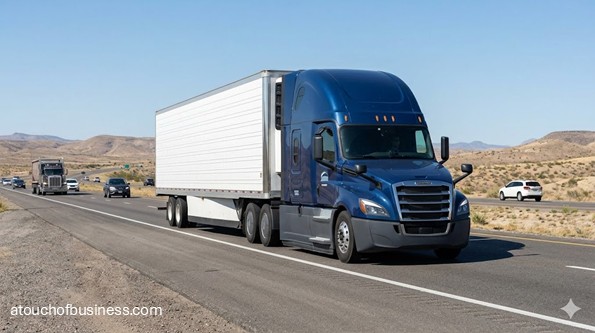
An Overview of Starting a Trucking Company
A trucking company provides freight transportation for other businesses. In a route or delivery-based setup, the owner or driver follows planned routes, handles pickups, completes deliveries, collects proof of delivery, and keeps the vehicle ready for the next run.
This type of business is part of transportation and logistics. That means timing, safety, routing, vehicles, paperwork, insurance, and reliability all matter before the first load is accepted.
- The company may use a cargo van, box truck, straight truck, tractor-trailer, dry van, refrigerated trailer, flatbed, or liftgate truck.
- The company may handle local delivery routes, regional routes, dedicated routes, scheduled business-to-business deliveries, or multi-stop delivery runs.
- The owner must understand how cargo type, route distance, vehicle weight, and state lines change the setup process.
Start with the route model, not the truck. The route decides what vehicle, permits, insurance, equipment, and records you may need.
Can You Operate Your Own Business?
Before starting a trucking company, step back and ask whether business ownership fits you. Then ask whether this specific business fits your life, skills, and tolerance for pressure.
This business can involve early mornings, delays, breakdowns, strict delivery windows, fuel costs, compliance records, and customers who expect their freight to arrive on time.
- Do you like transportation, vehicles, schedules, routing, and problem solving?
- Can you handle delays without making poor decisions?
- Are you comfortable tracking costs closely?
- Can you follow safety and compliance rules even when the route feels urgent?
- Can you deal with long days, traffic, weather, dock delays, and vehicle downtime?
You also need to be honest about motivation. Start because you are building toward a useful business, not mainly because you want to escape a job, a bad boss, or financial pressure.
Status is not enough. The idea of owning trucks will not matter much when insurance is due, a tire fails, or a customer’s delivery window is tight.
Better reasons include a real interest in transportation, strong attention to detail, and passion for your business. That kind of motivation can help you stay focused when the startup stage gets hard.
Be honest before you spend.
Talk to Owners Outside Your Market
Speak with trucking company owners who will not compete with you. Look for owners in another city, region, or market area.
Prepare real questions before the conversation. Ask about startup costs, insurance, routing, dispatch flow, vehicle choice, pricing mistakes, compliance records, and early cash flow.
- Ask what they wish they had checked before buying a truck.
- Ask which costs surprised them.
- Ask how they tested routes before taking steady freight.
- Ask what paperwork caused the most trouble early on.
- Ask how they handle breakdown risk on scheduled routes.
These conversations matter because active owners have lived through the startup process. Their experience can show you issues that a checklist may miss.
Use those talks as firsthand owner insights, not as a shortcut around local legal checks.
Understand What a Route-Based Trucking Company Provides
A route-based trucking company moves freight through planned pickup, transit, and delivery steps. The owner may drive at first, or the company may hire drivers once the operation can support payroll, safety records, and supervision.
The core service is not driving alone. It is moving cargo reliably from one point to another with the right vehicle, paperwork, timing, and proof.
- General freight delivery
- Local route delivery
- Dedicated delivery routes
- Business-to-business scheduled delivery
- Box truck or straight truck delivery
- Dry van freight
- Refrigerated freight, if the vehicle is equipped for it
- Flatbed freight, if the owner has the right securement equipment
- Liftgate delivery, if customer sites lack loading docks
Some trucking companies also move household goods, hazardous materials, oversized loads, or temperature-sensitive cargo. Those choices can add special permits, training, insurance, equipment, and records.
Do not accept a cargo type until you know what it requires.
Know Your Customers and Their Requirements
Typical customers include shippers, manufacturers, distributors, warehouses, retailers, fulfillment centers, food distributors, construction suppliers, and freight brokers.
These buyers care about reliability, timing, safety, tracking, proof of delivery, and confidence that the shipment will arrive as expected.
- Manufacturers may need scheduled pickup times.
- Warehouses may require dock appointments and delivery windows.
- Retailers may need liftgate or inside delivery support.
- Food distributors may require temperature control.
- Construction suppliers may need flatbed equipment and securement.
- Freight brokers may require authority, insurance certificates, W-9 forms, and safety records.
Before opening, you need basic trust items ready. That may include a legal business name, business phone, business email, certificate of insurance, W-9, proof-of-delivery process, and required truck markings.
Check Local Demand Before Moving Forward
A trucking company needs enough freight in the target area to support the vehicle, insurance, fuel, maintenance, permits, and owner pay.
Weak demand may mean the business idea is not a good fit for that area, even if the owner likes trucking.
- Look for warehouses, factories, industrial parks, farms, construction suppliers, retail distribution, ports, rail yards, or fulfillment centers.
- Compare the number of carriers already serving the area.
- Check whether routes create too many empty miles.
- Estimate loading time, unloading time, fuel stops, tolls, traffic, and parking limits.
- Review whether the route has enough repeat stops to support steady revenue.
Route density matters. A route with many unpaid miles between stops can look busy while still losing money.
Use local supply and demand as a go-or-stop test before buying equipment.
Validate the route before you finance the truck.
Compare Starting, Buying, and Other Entry Paths
You can start a trucking company from scratch, buy a business already in operation, or explore a route-based opportunity if one exists in your area.
The best path depends on your budget, timeline, support needs, risk tolerance, desired control, available equipment, and whether existing routes are truly profitable.
- Starting from scratch may give you more control, but you must build authority, systems, contacts, pricing, and records from the ground up.
- Buying an existing company may give you equipment, history, routes, and records, but you must verify debt, maintenance, insurance, safety issues, and customer concentration.
- A franchise or route-based opportunity may offer structure, but you must review fees, control, territory, equipment rules, and contract terms carefully.
If buying looks realistic, review the numbers, vehicles, authority status, insurance history, maintenance files, and customer contracts before committing. Buying a business already in operation may help in some cases, but only if the records support the price.
Choose the Trucking Business Model
Your trucking company setup changes based on the freight, route, geography, and fleet size. Do not treat all trucking businesses as the same.
The business model affects startup cost, compliance, equipment, insurance, route planning, and pricing.
- Local route delivery: shorter routes, more stops, more timing pressure, and close attention to traffic and loading zones.
- Regional routes: longer miles, more fuel planning, possible interstate registration, and more scheduling risk.
- Dedicated routes: repeat schedules, stronger route planning needs, and backup planning for downtime.
- Box truck delivery: useful for palletized freight, retail delivery, and local business deliveries.
- Tractor-trailer freight: higher capacity, higher startup cost, and more regulatory complexity.
- Refrigerated freight: temperature control, reefer fuel, temperature records, and higher equipment needs.
- Flatbed freight: securement gear, tarps, load rules, and more exposure to weather and cargo risk.
The safer startup choice is the one you can price, equip, insure, and operate legally.
Write the Startup Plan
Your plan should turn the trucking idea into clear startup decisions. Keep it practical and tied to the route or delivery model.
A useful plan helps you see whether the numbers, rules, and delivery workflow make sense before you open.
- Freight type
- Vehicle type
- Route area
- Stop count
- Service windows
- Expected miles and empty miles
- Fuel and toll needs
- Insurance requirements
- Permits and registration
- Dispatch and proof-of-delivery process
- Startup costs and working capital
- Backup plan for vehicle downtime
When putting your business plan together, focus on what must be true before the first load. Do not turn the plan into a long-term growth document.
Use the plan to catch problems while they are still cheap to fix.
Map the Route and Delivery Workflow
A route-based trucking company needs a clear workflow from booking to payment. If the workflow is weak, delays and missed delivery windows can hurt the business before it has a stable customer base.
Think through each step before launch.
- Confirm the load, route, pickup time, delivery window, cargo type, and required equipment.
- Dispatch the driver with route details, customer-site instructions, and paperwork.
- Inspect the vehicle before leaving.
- Load cargo and check weight, securement, and delivery order.
- Drive the planned route while tracking time, fuel, tolls, and delays.
- Deliver the cargo and collect proof of delivery.
- Complete post-trip notes, driver records, and maintenance alerts.
- Prepare the invoice and store the route documents.
For route delivery, small details matter. A missing gate code, weak loading sequence, or poor proof-of-delivery process can waste time across the whole route.
Plan Vehicles, Assets, and Backup Readiness
The vehicle is one of the biggest startup decisions in a trucking company. The wrong truck can create cost, compliance, and route problems from the start.
Choose based on freight and route facts, not appearance.
- Match cargo weight and size to vehicle capacity.
- Check gross vehicle weight rating and gross combination weight rating.
- Confirm dock access, liftgate needs, and loading height.
- Review route distance, fuel use, tolls, and parking limits.
- Check whether refrigeration, flatbed gear, or cargo securement is needed.
- Review maintenance history before buying used equipment.
- Plan for downtime, towing, repairs, tires, and inspections.
Vehicle readiness also includes documents and markings. Regulated commercial motor vehicles may need the legal business name or trade name and United States Department of Transportation number displayed correctly.
Do not buy equipment until the route and cargo are clear.
Set Up Dispatch, Routing, and Proof of Delivery
Dispatch is the control point for a route-based trucking company. Even a one-truck business needs a simple way to manage pickups, stops, timing, documents, and delivery confirmation.
Your dispatch system can be simple at first, but it must be reliable.
- Routing software or GPS
- Dispatch calendar or transportation management system
- Driver instructions
- Customer-site access notes
- Pickup and delivery windows
- Proof-of-delivery forms or app
- Bill of lading process
- Incident report form
- Invoice backup records
For repeat routes, test the route before launch. Time the stops, check parking, confirm loading access, and watch for bottlenecks.
Understand Legal and Compliance Basics
A trucking company can face serious compliance requirements. The exact setup depends on vehicle weight, cargo, state lines, freight type, driver status, and business location.
Do not guess. Verify each item before accepting freight.
- Business entity formation with the state
- Employer Identification Number from the Internal Revenue Service
- State tax and employer accounts, if applicable
- Local business license, if required
- Assumed name or Doing Business As filing, if using a different trade name
- Zoning approval for office, yard, home office, or truck parking
- Certificate of occupancy for commercial space, if required locally
For the trucking side, check whether you need a United States Department of Transportation number, FMCSA operating authority, BOC-3 process agent filing, required insurance filings, Unified Carrier Registration, International Registration Plan, International Fuel Tax Agreement, or Heavy Highway Vehicle Use Tax filing.
Your state may also require intrastate motor carrier authority, commercial plates, state safety registration, or special permits. Local offices may regulate truck parking, idling, loading zones, truck routes, signs, fuel storage, repairs, and outdoor storage.
Use local licenses and permits as a startup checkpoint, not as an afterthought.
Open only after the required authority, filings, and local approvals are ready.
Check Driver Rules and Safety Records
Drivers are central to a trucking company, even if you are the only driver at first. Vehicle weight, cargo, and route type can trigger driver rules.
Before launch, confirm what applies to each driver and vehicle.
- Commercial driver’s license class
- Required endorsements
- Entry-Level Driver Training, if applicable
- Medical Examiner’s Certificate
- Driver qualification file
- Drug and alcohol Clearinghouse registration, if applicable
- Drug and alcohol testing program, if required
- Hours-of-service records
- Electronic logging device, if required
Some local route operations may qualify for a short-haul hours-of-service exception if all conditions are met. Do not assume the exception applies just because the route is local.
Driver records should be ready before the first route, not built later under pressure.
Prepare Vehicle Inspection and Maintenance Systems
Vehicle downtime is one of the biggest risks in a route or delivery-based trucking company. A missed route can affect timing, payment, and customer confidence.
Set Up the maintenance process before launch.
- Pre-trip inspection process
- Post-trip notes
- Driver vehicle inspection reports, when applicable
- Annual inspection proof
- Maintenance file for each truck and trailer
- Repair receipts
- Tire tracking
- Emergency roadside contact
- Towing contact
- Backup plan for breakdowns on scheduled routes
Route delivery depends on timing. A truck that is not ready can break the whole day’s schedule.
Choose Equipment and Setup Essentials
A trucking company needs more than a truck. It needs cargo equipment, safety gear, route tools, documents, and basic office systems.
The exact list depends on cargo type and vehicle setup.
- Truck, trailer, or cargo van suited to the route
- Ratchet straps, load bars, tie-downs, E-track, dunnage, and cargo seals
- Pallet jack, hand truck, dollies, or liftgate support when needed
- Tarps and edge protectors for flatbed work
- Temperature monitoring for refrigerated freight
- Fire extinguisher, warning devices, and spare fuses when applicable
- High-visibility vest, gloves, and site-required safety items
- Electronic logging device, if required
- Phone, charger, GPS, routing software, and proof-of-delivery tools
- Laptop, accounting software, invoicing system, and secure document storage
You may also need International Fuel Tax Agreement decals, International Registration Plan cab cards, hazardous materials placards, or other documents based on the route and cargo.
Prepare Forms and Internal Documents
Freight paperwork protects payment, proves delivery, supports compliance, and helps resolve disputes. Set up your forms before the first customer job.
A route-based trucking company should have a clean document process.
- Bill of lading
- Delivery manifest
- Rate confirmation
- Proof of delivery
- Driver trip sheet
- Fuel and toll records
- Maintenance records
- Driver qualification file
- Incident report form
- Freight claim form template
- Certificate of insurance
- W-9
Store documents in a system you can use quickly. A lost proof of delivery can delay payment.
Estimate Startup Costs and Working Capital
Startup costs for a trucking company vary widely. Vehicle choice, cargo type, insurance, route distance, equipment condition, and regulatory needs can change the number fast.
Do not rely on a narrow national estimate. Build your own cost list.
- Business registration and trade name filing
- Licenses, permits, authority, and required filings
- Truck or trailer purchase, lease, or down payment
- Insurance premiums and required insurance filings
- Commercial plates, decals, cab cards, and tax filings
- Fuel, tolls, scales, parking, and route test costs
- Electronic logging, dispatch, routing, and proof-of-delivery systems
- Maintenance, tires, repairs, inspections, and emergency reserve
- Drug and alcohol testing setup, if applicable
- Banking, accounting, payroll, and invoicing setup
Working capital matters because fuel, repairs, insurance, and permits may be due before customers pay invoices.
Price the first routes only after you know the real cost per mile.
Set Prices Around Route Economics
Pricing decisions should start with the cost of completing the route. A trucking company can stay busy and still lose money if deadhead miles, fuel, tolls, maintenance, or delays are ignored.
Common pricing methods include per-mile rates, per-route rates, per-day dedicated route rates, per-stop charges, hourly local delivery rates, and flat route contracts.
- Fuel
- Maintenance
- Tires
- Insurance
- Driver pay or owner draw
- Tolls
- Permits
- Parking
- Deadhead miles
- Loading and unloading delays
- Liftgate use
- Refrigeration fuel
- Special handling
- Payment terms
You may also need accessorial charges for detention, extra stops, tolls, liftgate service, loading help, or special handling.
Use pricing your services as a way to test whether each route can support the business before launch.
Plan Funding, Banking, and Bookkeeping
A trucking company often needs funding for vehicles, trailers, insurance, permits, fuel, repairs, and working capital. The right funding choice depends on cost, risk, payment terms, and your ability to handle slow invoice collection.
Common funding options include owner cash, equipment financing, commercial truck loans, trailer financing, equipment leases, bank loans, lines of credit, Small Business Administration-backed loans, working capital loans, and invoice factoring.
- Open a business bank account.
- Set up invoicing before the first route.
- Use a fuel card if it fits the operation.
- Set up toll accounts where needed.
- Track fuel, tolls, permits, repairs, maintenance, insurance, and vehicle payments.
- Keep business transactions separate from personal ones from the start.
- Create a tax reserve process.
Compare banks, fees, online tools, and lending needs before setting up your business account.
Do not mix personal spending with trucking expenses.
Plan Insurance and Risk Controls
Insurance is a major startup issue for a trucking company. Some coverage may be legally required, and other coverage may be required by lenders, brokers, shippers, or contracts.
For FMCSA-regulated operating authority, required insurance filings must be submitted by the insurer or surety. Minimums vary by vehicle, cargo, and authority type.
- Public liability coverage, when required
- Cargo insurance, when required by law, contract, broker, or shipper
- Physical damage coverage
- General liability
- Trailer interchange, if relevant
- Non-trucking liability or bobtail coverage, if relevant
- Workers’ compensation, when required by state law
- Occupational accident coverage, if using a contractor-based model
Do not assume common coverage is legally required. Also do not assume optional coverage is safe to skip. Review insurance coverage for the business with an agent who understands motor carriers.
Set Up Vendors and Support Contacts
A trucking company depends on outside vendors before and after opening. You do not want to search for a repair shop during the first breakdown.
Line up core vendors early.
- Truck dealer or leasing company
- Trailer dealer or leasing company
- Motor carrier insurance agent
- Maintenance shop
- Tire vendor
- Towing and roadside assistance provider
- Electronic logging device provider
- Dispatch or transportation management software provider
- Drug and alcohol testing consortium or third-party administrator, if applicable
- Fuel card provider
- Toll account provider
- Truck parking or yard landlord
Ask vendors about response times, account setup, billing terms, and route-area coverage before relying on them.
Prepare the Business Name and Basic Identity
Your trucking company needs basic identity materials to support registration, payment, customer trust, and required markings. This is not about running a marketing campaign.
Keep the first-stage identity practical.
- Legal business name
- Trade name or Doing Business As name, if used
- Business phone number
- Business email
- Basic contact website or domain, if needed for verification
- Certificate of insurance
- W-9
- Truck markings, if required
- Permits, decals, cab cards, and proof documents
- Basic business cards, if useful for shipper, broker, or vendor contact
If you operate under a name that differs from the legal name, confirm whether a Doing Business As filing is needed before using it publicly.
Decide Whether to Hire Drivers
Some trucking companies begin with the owner driving. Others need drivers before opening because the routes, hours, or vehicle count require more staff.
Hiring adds responsibility. You must be ready for payroll, training, safety records, supervision, insurance, and compliance.
- Commercial driver’s license verification
- Medical certificate tracking
- Driver qualification file
- Drug and alcohol testing rules, if applicable
- Hours-of-service training
- Vehicle inspection expectations
- Cargo securement procedures
- Delivery paperwork and proof-of-delivery process
- Accident and incident reporting
If you are not ready to manage driver records and route accountability, staying owner-operated at first may be simpler.
Run a Pre-Opening Route Test
A route test helps you see whether the trucking company is ready before real freight is at risk. Treat the test like a live delivery.
Use the route, vehicle, documents, and timing system you plan to use after opening.
- Drive the route at the expected delivery time.
- Check pickup and delivery access.
- Confirm loading and unloading time.
- Test parking and staging points.
- Track fuel use and tolls.
- Check traffic delays and route restrictions.
- Use the proof-of-delivery process.
- Complete inspection records.
- Prepare a sample invoice.
- Review whether the price still works.
A test route can reveal weak dispatch flow, bad stop order, missing forms, poor timing, or vehicle issues before a customer is involved.
Fix the route before you offer it to customers.
Know the Main Red Flags
Some trucking company problems show up before opening. Pay attention to them early, because they can make the business hard to launch, fund, or keep profitable.
Do not ignore warning signs just because the truck is available.
- Insurance quotes are too high for the route pricing.
- The owner has not confirmed whether the route is interstate or intrastate.
- The vehicle weight triggers rules the owner has not budgeted for.
- Legal truck parking is not available.
- Local truck routes, idling rules, loading zones, or delivery-hour limits make the route impractical.
- The owner depends on one customer before proving the numbers.
- The company accepts hazardous materials, refrigerated freight, flatbed cargo, household goods, or oversized loads without the right setup.
- The driver lacks the right license, medical certificate, endorsement, or Clearinghouse status.
- There is no repair reserve for tires, towing, breakdowns, or downtime.
- The route has too many empty miles between stops.
- The owner buys equipment before confirming cargo type and route needs.
If several red flags appear at once, pause and revisit the model before signing equipment or financing agreements.
Prepare Your Pre-Opening Checklist
Before the first load, the trucking company should be ready legally, financially, physically, and operationally. Use this checklist as a launch gate.
Do not accept live freight until the required items are complete.
- Business entity or sole proprietorship setup confirmed
- Employer Identification Number obtained
- Trade name filed, if used
- State tax and employer accounts opened, if needed
- Local license and zoning checked
- Certificate of occupancy confirmed for commercial space, if required
- Truck and trailer registered, inspected, and insured
- United States Department of Transportation number obtained, if required
- FMCSA operating authority active, if required
- BOC-3 and insurance filings completed, if required
- Unified Carrier Registration completed, if applicable
- International Registration Plan and International Fuel Tax Agreement ready, if applicable
- Heavy Highway Vehicle Use Tax filing handled, if applicable
- Driver license, medical certificate, and qualification file ready
- Drug and alcohol testing setup completed, if required
- Electronic logging device installed and tested, if required
- Vehicle markings installed correctly
- Emergency equipment placed in the vehicle
- Cargo securement equipment matched to the freight
- Dispatch, route, and proof-of-delivery process tested
- Banking, invoicing, fuel card, and toll accounts ready
- Maintenance, towing, and tire vendors confirmed
Open only when the truck, route, records, and approvals are ready together.
Picture a Day in the Business
A day in a route-based trucking company starts before the vehicle moves. The owner or driver checks the route, delivery windows, truck condition, fuel, logs, cargo documents, and customer-site instructions.
Then the driver loads, secures, drives, delivers, confirms, and records the route.
- Review dispatch notes and stop order.
- Complete the vehicle inspection.
- Confirm cargo and paperwork.
- Load in the right delivery sequence.
- Drive the route and watch the schedule.
- Handle traffic, dock delays, and access problems.
- Collect proof of delivery.
- Record fuel, tolls, mileage, and route issues.
- Report maintenance concerns.
- Prepare billing records.
This is a timing business. If you dislike schedules, vehicle issues, paperwork, and route pressure, think carefully before moving forward.
Final Startup Thought
A trucking company can look simple from the outside. A truck picks up freight and delivers it. But the startup process is more involved.
You need the right vehicle, legal authority, insurance, route plan, driver setup, safety records, dispatch process, proof-of-delivery system, pricing method, and backup plan.
Start with the facts of your route. Then build the company around those facts.
Advice From People in the Trucking Business
One of the best ways to prepare for starting a trucking company is to listen to people who have already spent time behind the wheel, managed costs, worked with dispatchers, handled equipment problems, and learned from freight market changes.
The resources below include interviews, podcasts, and firsthand articles from owner-operators, trucking business voices, and industry professionals. Use them to better understand the real choices behind equipment, routes, contracts, safety, pricing, maintenance, and staying profitable.
- Truckstop: The Journey of an Owner-Operator With Samuel Bissonette
- Trucker Tools: Expert Advice for Moving From Company Driver to Owner-Operator
- DAT: Confessions of an Owner-Operator
- Overdrive: Trucker of the Year Exit Interviews
- Overdrive Radio: How to Thrive Through a Tough Freight Market
- Status Trucks: Anthony Pruitt Owner-Operator Interview
- The Heavy Duty Parts Report: Becoming an Owner-Operator in Trucking
- Uber Freight: Owner-Operator Sandford Hall Interview
Related Articles
- How To Start a Dump Truck Business
- Start a Freight Brokerage Business
- Starting a Profitable Logistics Business
- Start a Moving Business
- How To Start a Courier Business
- How To Start Your Master Expediting Business
- Starting an Automotive Fleet Maintenance Business
- Start a Tow Truck Service
- Starting a Charter Bus Company
- How To Start a Heavy Equipment Rental Business
- How To Start Garbage Pickup Service
Sources:
- Federal Motor Carrier Safety Administration: Getting Started Registration, Who Needs USDOT Number, Insurance Filing Requirements, New Entrant Program, Commercial Driver License, Medical Certification, Hours of Service, Cargo Securement Rules
- FMCSA CSA Safety Planner: Marking of CMVs, Emergency Equipment, Vehicle Inspections
- FMCSA Drug & Alcohol Clearinghouse: Clearinghouse FAQ Topics
- UCR: UCR Home
- IFTA, Inc.: Carrier Information
- Internal Revenue Service: Get an EIN, Trucking Tax Center, About Form 2290
- Pipeline and Hazardous Materials Safety Administration: Registration Information
- U.S. Small Business Administration: Register Your Business, Calculate Startup Costs, SBA Loans, Open Bank Account
- U.S. Bureau of Labor Statistics: Truck Transportation NAICS, Truck Driver Overview
- DAT: Trucking Cost Per Mile, Trucking Industry Glossary
- Cass Information Systems: March 2026 Index