
What to Expect From This Guide to Starting a Well Drilling Business
This guide takes you through the key decisions and practical steps for starting a water well drilling business, organized around how a drilling job actually moves. The bullets below highlight selected areas, not everything inside.
Inside the guide, you will find:
- Startup steps: Work through 19 ordered steps, from checking fit and licensing through equipment, pricing, and a full dry run before your first job.
- Fit and red flags: Weigh physical demands, uncertain results, and warning signs to consider before buying a rig or signing a lease.
- Demand and profit: Check local demand and geology, then test your break-even logic before you buy a rig.
- Local requirements: Learn which license, permit, vehicle, and zoning checks to verify, since rules vary by state and locality.
- Equipment and funding: Compare rig choices, new versus used equipment, tooling, insurance, and how to plan operating capital.
- Safety and workflow: See how power line clearance, utility locates, contracts, and completion records fit into each job.
- Common questions: Find answers on starting without a credential, working solo, crossing state lines, and adding geothermal loop drilling.
Start with a plain look at what drilling water wells involves and whether it fits your life.
Water well drilling contractors build wells on customer properties, from siting and drilling to casing, grouting, and testing.
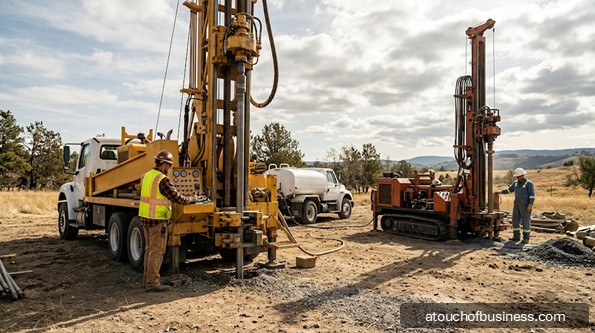
As a water well drilling contractor, you and your crew take a rig and support vehicles to each site.
Every job moves through a chain of handoffs: inquiry, site review, estimate, permit, drilling, testing, records, and payment.
This guide walks through the startup steps in job-workflow order, so each decision comes before the job step that depends on it.
Is a Well Drilling Business a Good Fit for You?
A well drilling business fits best when you can handle physical outdoor jobs, uncertain results, and equipment repairs.
Your household also needs to absorb a slow start while you build a customer base.
Start with why you want to own this business. Motivation matters on days when weather, breakdowns, or a stubborn formation slow a job.
Do you enjoy solving mechanical problems and working outdoors in every season?
Expect travel between sites and physical strain.
You’ll also need rig operation, mechanical repair, estimating, safety, recordkeeping, and customer communication skills.
Capital is part of fit too. Rigs, trucks, and licensing require spending before your first customer pays.
Income can also run uneven, especially in slow seasons.
Who in your household depends on your income, and how long can they wait for it?
Some startups don’t work out. Running short of operating capital is one of the main reasons startups close.
Ask who your first customers will be and why they’d choose you over another driller.
Before you commit funds, talk with owners you won’t compete against, and prepare your questions first.
Each owner’s journey differs, but firsthand experience shows you what the trade demands.
Think about your entry path too, since it affects your budget, timeline, and risk.
What a Typical Day on a Drilling Job Looks Like
A drilling day runs from weather and utility checks to loading, setup, drilling, logging, breakdown, and paperwork.
- Check the weather and confirm utility marks at the site
- Load the rig and materials
- Travel to the property and set up
- Drill, case, and grout the well
- Log the formations you encounter
- Break down, clean up, and complete the records
Red Flags Before You Start
These red flags should make you pause, change your model, or reconsider before you buy a rig or sign a lease.
Pause and verify if you see any of these:
- Your licensing path is unclear. Confirm experience, testing, and supervision requirements before you buy equipment.
- You lack the required experience. Change the model and gain field experience before you invest in a rig.
- Local demand looks weak or the geology looks difficult. Verify with local records and experienced owners, and reconsider your service area if results look costly or uncertain.
- Competition is heavy for your job type. Change your niche or service area.
- You can’t fund the rig plus an operating reserve. Pause and explore leasing, used equipment, or a smaller scope.
- Your break-even needs more jobs than your area supports. Reconsider before you commit.
- Zoning blocks equipment storage or truck parking. Change the location before you sign anything.
- Insurance is hard to get or unaffordable. Verify options with an agent who knows drilling.
- You have no way to staff a crew. Pause, since jobsite tasks and safety routines require people.
- You won’t follow strict safety routines. Reconsider, since electrical contact, noise, and dust are documented exposures.
- Your climate brings seasonal disruption. Verify slow months and cost effects with local owners.
Industry conditions to understand before committing:
- Heavy equipment costs favor established operators
- Used rigs can hide major rebuild costs
- Licensing steps slow entry regardless of location
- Job results stay uncertain until drilling
- Local competitors know the local geology
- Demand follows local water access and construction activity
These conditions aren’t reasons to walk away. They’re context for realistic planning.
Check local data to see whether your market is crowded or shrinking.
Step 1: Check the Physical Reality of Well Drilling
Before you spend anything, confirm you can handle outdoor field work, heavy machinery, and results you can’t predict until the hole is drilled.
Electrocution is the leading cause of on-the-job death for water well drillers, according to NIOSH.
Contact with overhead power lines is a documented hazard, so a clearance check belongs before every rig setup.
Rig engines, compressors, and drill rods also produce noise that can damage hearing without protection.
Depth and yield stay uncertain until drilling. Geology can change over a short distance, so a neighbor’s well is only a rough guide.
Are you comfortable quoting a job when the final depth is unknown?
You also need mechanical aptitude or a plan for managing repairs, since rig downtime delays every job scheduled behind it.
Step 2: Talk With Non-Competing Drillers and Pump Installers
Talk with owners who won’t compete with you, such as drillers in other regions, retired drillers, and pump installers.
Before you call anyone, write questions that follow the job workflow from site review to final payment.
Ask about:
- Which rig type fits your local geology
- How permits and notices get handled before drilling
- What happens when a hole produces little or no water
- How much repair downtime to expect
- How seasonal slowdowns affect the schedule
- Which insurance they carry and why
- What hiring helpers involves
Compare several answers, since each owner’s path differs.
Firsthand advice from real business owners helps you test your assumptions before you spend.
Step 3: Choose Your Entry Path
You can enter well drilling by gaining field experience first, starting from scratch, or buying an existing drilling company.
The best path depends on your budget, timeline, desired control, and risk tolerance. Compare the trade-offs between starting from scratch or buying a business.
If you buy an existing drilling company:
- Hire an attorney before you sign
- Confirm which licenses, registrations, permits, and insurance actually transfer in a sale
Regulator guidance for entrants warns that running a drilling firm without required registration can lead to prosecution, including after buying an existing firm.
Step 4: Identify Your Licensing Path Before Buying Equipment
Most states require a license to drill water wells, so identify your licensing path before you commit to a rig.
Before you can quote a job, you need to know whose credential that job runs under.
Find out which agency licenses drillers in your state. It’s often a water resources, environmental, health, or licensing agency.
Expect requirements like these:
- Documented experience or an apprenticeship
- A licensing exam
- Continuing education in some states
- Proof of insurance or a bond in some programs
Some states use NGWA exams as part of their licensing process.
NGWA also offers voluntary certification, including Certified Well Driller and Certified Pump Installer. Certification is separate from a state license.
Check whether pump installation falls under the same credential or needs its own.
Confirm whether you must hold credentials before you offer, quote, or advertise drilling services.
Search your state agency’s website for “water well driller license” to find the correct process.
Step 5: Define Your Services, Drilling Methods, and Service Area
Choose the wells you’ll build and the area you’ll serve, since rig type, crew size, and permits all follow from that choice.
Common water well service lines include:
- Residential wells
- Agricultural and irrigation wells
- Commercial and public-supply wells
- Well repair and rehabilitation
- Well decommissioning
- Pump installation
Loop wells and geothermal work are a separate service decision.
Before you can pick a rig, you need to know which drilling method suits your local geology.
- Mud rotary: circulates drilling fluid to carry cuttings out and works across a broad range of conditions
- Air rotary: uses compressed air, drills quickly, and can use a hammer in hard formations
- Down-the-hole hammer: cuts with rotary percussion and a button bit
- Cable tool: drills more slowly but has a reputation for reliability
Then choose a service radius you can reach with a rig and support vehicles.
Each move between sites costs setup and breakdown time.
Step 6: Validate Local Demand, Competition, and Geology
Validate demand before you spend: confirm that enough property owners in your area rely on private wells and that ground conditions are workable.
Look for areas where property owners depend on private wells instead of public water.
Review public well records if your state makes them available. Records can show typical well depths and formations in your area.
Ask local health departments how private wells are permitted in your area.
Learn who competes for your target job type and how busy they appear.
Once you know the market exists, define who your first customers will be.
- Landowners building new homes
- Farmers
- Owners of failing wells
Next, decide why they’d pick you. Possible reasons include your credentials, local geology knowledge, clear contracts, and reliable scheduling.
Finally, plan how you’ll reach them at opening.
Which builders, excavators, septic contractors, pump installers, or real estate professionals could introduce you to property owners?
Step 7: Run the Profit and Break-Even Check
A drilling business is worth starting only if your expected jobs cover fixed costs, per-job costs, and your own pay, including slow months.
Before you buy a rig, list every cost the job chain creates.
Fixed costs to list:
- Rig payments or lease
- Support trucks
- Insurance
- Yard
- Fuel
- Maintenance reserves
- Your own pay
Per-job costs to list:
- Crew time
- Materials
- Permits
- Disposal
- Travel and setup time
Next, decide how you’ll earn revenue: by footage, fixed-price jobs, materials, pump and system work, or a mix.
Then build in the risks that cut into margin:
- Unproductive holes
- Unpaid site visits
- Weather delays and slow months
- Winter conditions that slow equipment and ground work
- Seasonal road weight limits in some regions
Calculate your own break-even using local prices and your own costs. Borrowed numbers won’t fit your area.
Then decide how many completed jobs per month you need to cover costs and pay yourself.
Would that job count be realistic in your service area?
Step 8: Write Down Your Plan Decisions
Write down the drilling business decisions your plan depends on, so later steps can test them against real quotes.
Record these decisions:
- Services and target customers
- Pricing method
- Rig and equipment path
- Staffing
- Insurance
- Funding
- Operating reserve
Write the assumptions behind your break-even logic too, so you can test them as quotes arrive.
The Business Plan section later in this guide shows how these pieces connect.
Step 9: Plan Funding and Operating Capital
Confirm you can fund the rig plus an operating reserve before you sign for equipment or a yard.
Operating capital keeps drilling jobs moving through slow seasons, repair downtime, and late customer payments.
Funding options to compare:
- Equipment financing
- Leasing
- Buying used equipment
- Bank loans
- SBA-backed loans
Ask lenders which documents you must submit. Requests may include license and insurance proof.
Step 10: Form the Business and Set Up Tax Accounts
Choose a legal structure, register your business name, and get an EIN before you open a bank account or apply for licenses.
Talk with an attorney or accountant about structure, since liability exposure is real in drilling.
The IRS issues EINs free of charge, so avoid websites that charge for the service.
Then open the state and local tax and employer accounts you need.
Sales and use tax treatment of services and materials varies. Check with your state revenue department.
Step 11: Open Business Banking and Payment Methods
Open a business bank account before your first drilling deposit arrives, so job funds never mix with personal funds.
Then set up invoicing, deposit collection, and a way to accept payment on site or by transfer.
Payment is the last handoff in every job chain, so test it before your first invoice.
Step 12: Confirm Zoning and Set Up Your Equipment Yard
Confirm zoning for equipment storage and truck parking before you buy or lease property for your drilling operation.
Home-based operation may limit heavy vehicles, noise, and storage.
If you occupy a shop or office building, ask whether it needs a certificate of occupancy.
Your yard is where materials get staged before each mobilization.
Plan secure storage for:
- Casing and screens
- Grout and additives
- Drill pipe and tooling
- Fuel
Step 13: Price Out Insurance and Required Proof
Get insurance quotes before you apply for a driller license, since regulators or lenders may ask for proof of coverage.
Coverage that may be legally required:
- Workers’ compensation when you have employees, which most states require
- Liability coverage on business vehicles, which most states require
- Liability insurance and a bond, where a licensing program requires them
Common coverage that isn’t always required:
- General liability
- Commercial property
- Contractor’s equipment
- Tools lost or damaged in the hole
- Pollution liability
Talk with an agent who understands drilling operations. Read more about business insurance basics before you call.
Step 14: Apply for Licenses, Registrations, and Vehicle Credentials
Submit your driller and contractor applications once your business entity, insurance quotes, and qualifications are in place.
Take any required exams. NGWA’s voluntary exams can also add credentials if you want them.
Follow your program’s application instructions for any bond, insurance proof, or continuing education.
Some regulators ask for vehicle or equipment details at application. Verify the order in your state before you buy a rig.
Even a home-based drilling business may need a general business license from your city or county.
Rig trucks and support vehicles may trigger USDOT number or commercial driver’s license rules, depending on weight ratings and whether vehicles cross state lines.
Some states extend USDOT number and CDL rules to in-state operations. Use FMCSA’s “Do I Need a USDOT Number?” tool and ask your state motor vehicle agency.
Wells serving public water systems can fall under different drinking water rules. Check with your state drinking water program before you accept that work.
Federal drinking water law generally doesn’t cover private domestic wells, but state and local construction rules still apply.
Some states also regulate water use or water rights for certain wells. Ask your state water resources agency whether that applies to you.
Some states require owners to seal unused wells within a set period, which affects decommissioning jobs.
Step 15: Select the Rig, Tooling, and Support Vehicles
Choose the rig that fits your typical drilling jobs and local geology, then add the tooling and support vehicles each job needs.
An oversized rig means higher payments and sites you can’t reach.
Weigh new versus used equipment with these factors:
- Maintenance history and likely rebuild needs
- Financing terms for each option
- Warranty coverage
- Your ability to repair the rig, or access to a trusted mechanic
Inspect used rigs in operation whenever possible. Watch the mast raise, the jacks move, the head run, and the compressor operate.
Before you can stage materials, you need supplier accounts for casing, screens, grout, bits, and pump equipment.
Compare supplier minimums and delivery times so materials arrive before mobilization.
Plan your equipment by category:
- Rig and power: rig, mast, hoist, top head or rotary table, leveling jacks, plus a compressor for air rotary or a mud pump and pit for mud rotary
- Downhole tooling: drill pipe or rods, bits, hammers, and casing tools
- Well materials: casing, screens, filter pack, bentonite, grout, seals, and caps
- Grouting: pump, mixer, and hose or tremie pipe
- Development and testing: development equipment, pumping test gear, water level tools, flow measurement, and data forms
- Disinfection and sampling: chlorine supplies, sample containers, and a laboratory arrangement
- Pump work, if offered: pumps, pressure tanks, drop pipe, wiring, and a pump hoist
- Vehicles: support truck, water truck or tank, trailer, fuel storage, and required markings
- Site protection: settling tanks or pits, fluid containment, erosion control, cones, and signage
- Maintenance: hand tools, spare parts, hoses, and lubricants
Step 16: Set Pricing and Contract Terms Before Your First Quote
Set your pricing method and contract terms before your first quote, because the contract controls what happens when a job goes off plan.
Decide whether you’ll price per foot, at a fixed price, or with a mix.
Before you can invoice cleanly, itemize casing, grouting, development, testing, and disinfection separately from drilling.
Spell out these terms in every contract:
- Your policy for dry or unproductive holes
- Deposits
- Change orders for unexpected formations
- Who is responsible for the permit
- Who receives the well record
Trade-magazine commentary advises explaining the dry-hole policy up front rather than after the hole is drilled.
Run a total cost analysis of your operation so your rates cover your own pay.
Step 17: Hire, Train, and Build Safety Systems
Build your drilling crew and written safety routines before your first job, because jobsite hazards are part of every day.
Decide who holds the driller credential on each job. Check what your state allows helpers and apprentices to do.
Write routines for:
- Overhead power line clearance
- Utility locating
- Hearing protection
- Silica dust controls
Post power line warnings on the rig.
OSHA lists vehicle-mounted drilling rigs among the tasks that can expose workers to silica dust.
You can follow OSHA’s specified control methods or measure exposure and choose your own controls.
Brief your crew on each routine before the first job.
Step 18: Build Your Job Workflow and Paperwork
Map each drilling job from inquiry to final payment, then create the form or check that covers each handoff.
A typical job moves through these handoffs:
- Inquiry and site visit, including siting review
- Estimate and signed contract
- Permit or notice
- 811 utility locate
- Mobilization
- Drilling
- Casing and grouting
- Development
- Testing
- Disinfection
- Completion report and record delivery
- Invoice and payment
Before you can mobilize, you need to know who files the permit or notice: you or the property owner.
Call 811 before drilling starts. Wait for every utility to respond, since required wait times vary.
Local health departments may set well setbacks from septic systems and other contamination sources. Counties can be stricter than the state.
Ask your environmental agency how drilling fluid and cuttings must be handled and disposed of.
Many programs require a completion report or well log after drilling, with a copy going to the well owner.
Create templates for estimates, contracts, daily logs, and well records so each handoff leaves a paper trail.
Step 19: Complete Pre-Opening Checks and a Full Dry Run
Confirm every item below before you accept your first drilling job, then run one full dry run of mobilization, setup, and breakdown.
Credentials and finances:
- Driller license, firm registration, and any pump credentials in hand
- Vehicle credentials, USDOT number, and driver licenses confirmed if required
- Insurance active, plus any bond or proof your program requires
- Entity, EIN, tax accounts, business license, and bank account active
- Payment setup tested
Equipment and materials:
- Rig inspected and test-run, including the compressor, pumps, hoist, and mast
- Supplier accounts open and materials stocked
- Zoning and yard approvals confirmed
Safety and paperwork:
- Safety routines written and crew briefed
- 811 process practiced
- Contract, estimate, log, and completion report templates ready
- Permit process confirmed, including who files
Run the dry run without a customer’s property involved.
Any handoff that stalls during the dry run would have stalled a real job.
Business Plan
Your business plan turns the startup steps, cost lists, and break-even logic into one working document you can test against real quotes.
Organize your business plan around the decisions you wrote down in Step 8.
Your plan should connect:
- Services and target customers
- Job workflow from inquiry to payment
- Equipment path and supplier setup
- Licensing and insurance
- Pricing and contract terms
- Funding and operating reserve
- Break-even assumptions
Show how fixed costs, per-job costs, and expected jobs per month fit together.
Then test that model against slow months, unproductive holes, and weather delays.
Update your assumptions whenever equipment quotes, insurance quotes, or lender requirements change.
A plan that survives those tests tells you whether to proceed, adjust the model, or wait.
Opening-Day Red Flags
Delay your first drilling job if your credentials, insurance, rig, permit process, or safety routines aren’t confirmed.
Failure to comply with licensing and permit requirements can cost a driller the license, so treat those items as hard stops.
Delay opening if you see any of these:
- A license, registration, or vehicle credential is still pending
- Insurance or bond proof isn’t in hand
- Nobody has confirmed who files the permit or notice
- The rig hasn’t completed a full setup and breakdown
- Supplier accounts or materials for the first job are missing
- The 811 locate hasn’t been requested, or a utility hasn’t responded
- The power line clearance routine isn’t written or briefed
- Contract and record templates aren’t ready
- Payment setup hasn’t been tested
Each item on this list matches a handoff in the job chain, so any gap becomes a stall on a real job.
Frequently Asked Questions
These answers cover situations outside the standard startup path.
Can I open a well drilling business without a drilling credential or field experience?
It depends on how your state applies its licensing rules.
Some programs license the firm and require a qualified person on staff. Others also license the rig operator.
Some programs let apprentices drill only under on-site supervision by a licensed driller.
Ask your licensing agency whether you can own the firm and employ a qualified driller, and what experience counts.
When does running a rig by yourself stop working?
Solo rig operation stops working once a job needs a second person for clearance checks or required supervision.
Safety guidance says a driller should designate someone to watch mast clearance when overhead objects are hard to see.
Apprentice rules can also require an on-site supervisor. Decide who fills each role before you accept a job.
Does one state’s driller license let me work across state lines?
Not automatically. Each state’s program follows rules set by that state’s legislature.
NGWA’s certification affidavit requires contractors to keep the licenses and registrations needed in each state where they do business.
Ask each state’s licensing agency about reciprocity instead of assuming a license transfers.
Can a water well driller also drill geothermal loop wells?
Sometimes, but expect separate credentials and a separate check with your licensing agency.
NGWA’s Certified Vertical Closed Loop Driller designation is independent of its Certified Well Driller designation.
That designation requires 24 consecutive months of loop-well or water-supply-well experience and a passing exam.
The International Ground Source Heat Pump Association offers its own accreditation for geothermal drillers.
In many states, well licensing rules also cover geothermal wells. Ask whether both the firm and the rig operator need credentials.
Interviews with Well Drilling Professionals
These interviews share firsthand experience with entering the well drilling industry, choosing markets, managing equipment, training workers, controlling costs, and adapting a drilling company as conditions change.
Use the advice to better understand the skills, financial demands, operating decisions, and business challenges involved before starting a well drilling company.
Innovation in Water Well Drilling with Jack Clark
Veteran water well driller Jack Clark discusses how he entered the industry and founded 180 Water. The conversation covers licensing and state approvals, training and apprenticeships, workforce issues, standardizing operations, drilling equipment, well locations, and equipment mobilization.
This interview is useful for understanding some of the requirements and practical knowledge involved in entering the industry. It also provides perspective on training people, building operating systems, and developing a business model that can support multiple locations.
E31: How to Adapt in Tough Changing Markets | Joel Stewart
Joel Stewart, president and co-owner of Stewart Brothers Drilling Company, explains how the family business has moved between different drilling markets as demand changed. He discusses water well work, equipment, staffing, financial information, customer relationships, business mistakes, and reinvesting in rigs and other equipment.
This conversation shows why choosing the type of drilling work you pursue can have a major effect on operations and profitability. It also offers useful lessons about watching financial results, recognizing when a service is not working, and maintaining the equipment and relationships needed to keep a drilling company operating.
Water Well Journal Q&A: Monte Richardson, MGWC
Monte Richardson, president and CEO of J&S Water Wells, discusses his career as a second-generation water well contractor. Topics include professional qualifications, workplace safety, employee development, water treatment services, customer needs, and adding well abandonment and decommissioning work.
This interview can help prospective operators see how technical qualifications, continuing education, safety procedures, and additional services fit into a professional well drilling company. It also illustrates the importance of learning from experienced people within the industry.
Building a Drilling Business Ready to Buy that Next Rig
Charles “Buddy” Sebastian of Sebastian and Sons Well Drilling discusses job costs, pricing, business sustainability, equipment replacement, budgeting, and preparing financially for major drilling rig purchases. He explains why contractors need to understand their own costs instead of simply following competitors’ prices.
This interview is especially useful when considering the financial side of a well drilling business. It highlights the need to account for equipment replacement, repairs, operating expenses, and profit before setting prices or committing to expensive machinery.
From Scrapyard to Small-Town Success Story: The Brown Well Drilling Legacy
Amy Nichols explains how Brown Well Drilling developed from a homemade drilling rig into a multigenerational business. She discusses the company’s move from residential wells toward irrigation work, equipment financing, changing technology, weather and economic pressures, customer relationships, family involvement, and learning the trade.
The interview provides a practical look at how demanding the drilling business can be and how market conditions can affect the work available. It also gives prospective operators perspective on equipment costs, hands-on experience, customer relationships, and the knowledge needed to work effectively in the field.
Related Articles
Sources:
- National Ground Water Association (NGWA): Licensing Versus Certification, Contractor Certification Program, CWD and CPI Exams, State Licensing and Exams, Geothermal Driller CVCLD, Certification Application Form
- U.S. Environmental Protection Agency: Private Drinking Water Wells
- Penn State (EMS Online): Drinking Water Regulation
- PubMed Central: State Private Well Policies
- OSHA: Silica Standard Construction, Silica Standard Fact Sheet
- CDC Stacks (NIOSH): Water Well Safety Bits, Drill Rig Electrocution Hazards, Drill Rig Power Line Contact
- FMCSA: USDOT Number Registration
- Common Ground Alliance (811): Before You Dig
- IRS: Apply for EIN Online
- SBA: Get Business Insurance
- SCORE: Business Licenses and Permits
- The Driller: Pricing in Water Wells, Overlooked Seasonal Expenses, Winter Drilling Conditions, Buying Used Rigs, Used Rig Market Suppliers, Electrical Safety Worksite, Well Abandonment Decommissioning, NGWA-01-14 Construction Standard, Permits and Licenses Paper Trail
- WellOwner.org: Well Drilling Methods
- Water Well Journal: Choosing Drilling Method
- Alabama Cooperative Extension System: Decommissioning Unused Wells
- HPAC Magazine: Geothermal Contractor Checklist
- Michigan EGLE: Before Starting a Drilling Firm
- New York State DEC: Water Well Contractor Registration
- West Virginia OEHS: Waterwell Certification Program