
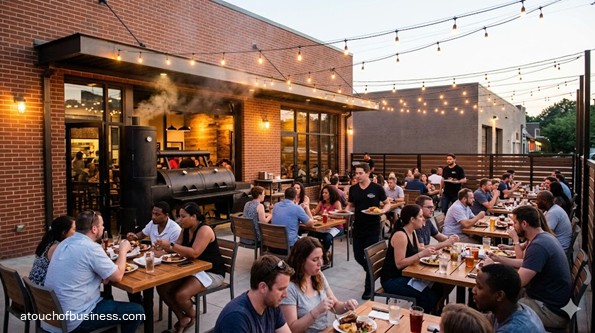
What to Expect From This Guide to Starting a Barbecue Business
This guide walks readers through the key decisions and practical steps involved in starting a barbecue business, from choosing a service format and checking demand to preparing the kitchen, approvals, staff, and test service. The bullets highlight several major areas covered.
Inside the guide, you will find:
- Startup roadmap: Progress through owner fit, format, demand, planning, site checks, registration, kitchen setup, staffing, pricing, inspections, and opening preparation.
- Operator experiences: Explore interviews, articles, and audio resources featuring barbecue owners and pitmasters discussing real operating pressures and lessons.
- Startup FAQs: Review answers about home-based limits, health permits, smokers, equipment, buying, franchising, food trucks, training, pricing, and opening checks.
- Format and demand: Compare smokehouses, takeout shops, restaurants, catering, trucks, trailers, and shared kitchens against local traffic and competition.
- Cost and pricing: Examine build-out costs, funding needs, cooked yield, portion size, labor, fuel, packaging, waste, rent, and payment fees.
- Food requirements: Review location-dependent health, zoning, fire, ventilation, grease, food safety, supplier, training, tax, and insurance considerations.
- Kitchen readiness: Plan food flow, smoker capacity, refrigeration, hot holding, sanitation, staff stations, inspections, payment tests, and controlled service.
The main discussion starts with whether the heat, long prep windows, sanitation routines, customer rushes, and financial uncertainty fit your situation.
How to Start a Barbecue Business
A barbecue business prepares and sells smoked meats, sides, sauces, drinks, and meals. It may run as a counter-service smokehouse, full-service restaurant, takeout shop, catering kitchen, food truck, trailer, or event setup.
This guide focuses on the food-service path. That means you need to think about food flow, storage, prep, service speed, sanitation, staff, payment setup, and local health approval before you open.
Barbecue can look simple from the customer side. The owner sees something else. Meat has to be sourced, stored, trimmed, seasoned, smoked, held, sliced, served, packed, cleaned up, paid for, and reordered. Skip the early planning and the problems show up fast.
You can also review the broader startup steps as background, but your barbecue business needs its own path because food safety, smoker setup, suppliers, and inspections shape the launch.
Decide if This Business Fits You
Before you spend money, ask whether this business fits your life. Barbecue takes patience, stamina, food safety discipline, and a real interest in the work.
You may start early, stand for long hours, work around heat and smoke, handle knives, clean equipment, and serve customers during rush periods. You also need to handle income uncertainty while the business is new.
Think about your household too. Can your family or support system handle the time demands? Can you cover personal living expenses during launch? Can you handle the chance that the business may take longer than expected to gain traction?
Don’t start only because you want to escape a job, financial stress, or the status that comes with owning a business.
It helps to study passion for the business before you commit. Passion won’t replace planning, but it matters when the days are long and the smoker, staff, suppliers, and customers all need attention.
Learn From Barbecue Owners Who Won’t Compete With You
Talk to owners before you sign a lease, buy a smoker, or choose a location. Speak only with barbecue owners you won’t compete against—such as owners in another city or region.
Prepare your questions first. Their journey may not match yours, but firsthand insight can reveal issues that articles and checklists miss.
- What smoker would they buy again?
- What slowed down their health inspection?
- What did they underestimate about prep time?
- Which meat costs or yield losses surprised them?
- What would they check before signing a lease?
- How did they handle opening-day service flow?
These conversations can help you spot weak assumptions early. Skip this, and you may learn the hardest lessons after you’ve already spent money.
You can use advice from real business owners to shape better questions before those talks.
Red Flags Before You Start
Some problems should make you pause before you open a barbecue business. These are not small setup tasks. They affect whether you should start, delay, change the model, buy instead, or walk away.
- Poor owner fit: If you don’t enjoy food prep, cleaning, heat, smoke, early starts, and customer service, reconsider the business.
- Weak motivation: If you’re starting only to escape a job, pause and rethink the decision.
- Weak local demand: If the area can’t support another barbecue shop, consider a smaller model or delay.
- Too much direct competition: If strong smokehouses already serve the same customers, recheck your location, offer, pricing, and format.
- Location problems: If zoning, building approval, or a certificate of occupancy can’t work for restaurant use, stop before signing.
- Smoker approval issues: If the smoker can’t meet health, fire, ventilation, or outdoor cooking rules, change the equipment or site.
- Unknown build-out costs: If hood, grease, plumbing, electrical, fire, or accessibility work hasn’t been priced out, pause.
- Weak supplier access: If you can’t get reliable meat from approved sources, don’t move forward yet.
- Poor pricing reality: If meat cost, cooked yield, waste, and labor don’t support your prices, rework the model.
- No food safety knowledge: If you’re not ready to handle safe receiving, storage, cooking, holding, cleaning, and recordkeeping, delay opening.
Step 1: Check Owner Fit Before Spending
Start with yourself. A barbecue business isn’t just about recipes—it’s about running a food-service operation under pressure.
You need to be comfortable with physical tasks, long prep windows, customer contact, sanitation, and repeated quality checks. Smoked meats also take patience because timing and temperature matter.
Ask yourself:
- Can I handle early prep and weekend demand?
- Can I stay calm during a lunch or dinner rush?
- Can I clean, track temperatures, and follow food safety steps every day?
- Can I handle waste, spoilage risk, and changing meat costs?
- Do I want the daily responsibility, not just the idea of owning a barbecue brand?
If the honest answer is no, delay the launch. You may need training, restaurant experience, or a smaller entry path first.
Step 2: Run the Motivation and Reality Check
Motivation matters because food service can test you fast. Barbecue adds smoke, heat, long cook times, supplier timing, and inspection pressure on top of that.
Don’t start only because you want independence. Independence still comes with landlords, suppliers, health rules, staff issues, customers, lenders, and bills.
Think through your risk tolerance. A new barbecue business may not generate steady income right away. You may need savings for personal living expenses, startup costs, and delays before opening.
Skip this step and you may confuse excitement with readiness—leading to fast spending and slow recovery.
Step 3: Speak With Non-Competing Barbecue Owners
Before you commit, talk to barbecue owners outside your market. They’re useful because they’ve already dealt with smokers, inspections, prep flow, staffing, waste, and service speed.
Ask about the parts customers never see: meat receiving, cold storage, trimming, seasoning, smoking, holding, slicing, packaging, cleaning, and next-day planning.
Useful questions include:
- What would you verify before leasing a space?
- What smoker capacity did you need at opening?
- What food safety issue took the most time to set up?
- What did you learn about cooked yield?
- What supplier problem hurt you early?
- What opening-day problem would you prevent now?
Each owner’s path will differ. Still, their experience can save you from costly assumptions.
Step 4: Choose Your Barbecue Service Format
Your format shapes almost every startup decision. A counter-service smokehouse is not the same as a trailer, catering kitchen, full-service restaurant, or pop-up setup.
Choose the format before you plan equipment, staffing, space, permits, and pricing.
- Counter-service smokehouse: You need a service counter, hot holding, fast ordering, takeout flow, and possibly seating.
- Full-service restaurant: You add servers, table service, more dining-room setup, tip rules, and possibly bar licensing.
- Takeout-focused shop: You still need approved food prep, holding, packaging, payment, and customer pickup flow.
- Catering model: You need safe transport, insulated carriers, event forms, and off-site holding procedures.
- Food truck or trailer: You need mobile food approval, a commissary if required, water and waste systems, power, fuel, and parking rules.
- Shared kitchen launch: You may reduce build-out costs, but smoker use, storage, hours, and health approval may be limited.
Skip this choice and you may buy equipment or sign a lease that doesn’t fit the business you’re actually trying to open.
Step 5: Decide Whether to Start, Buy, or Franchise
You can start from scratch, buy an existing food-service business, or explore a franchise. The right path depends on your budget, timeline, support needs, desired control, and risk tolerance.
Starting from scratch gives you control over recipes, equipment, service style, and brand identity. It also means building the whole system from the ground up.
Buying an existing restaurant may reduce setup time if the space already has restaurant approval, a working kitchen, grease handling, ventilation, and a certificate of occupancy. But you still need to review the lease, inspection history, equipment condition, permits, liabilities, and reputation.
Franchising may offer a defined model and training. It can also limit your recipes, suppliers, equipment choices, layout, branding, and service rules.
Review the choice to start from scratch or buy a business before you move too far. Skip this and you may choose a path that doesn’t match your capital, skills, or need for support.
Step 6: Validate Local Demand Before Major Spending
A barbecue business depends on local demand. Taste matters, but location, customer habits, traffic, parking, competition, and price expectations matter too.
Look at the area before you buy equipment or sign a lease. Compare barbecue restaurants, smokehouses, food trucks, grocery prepared foods, bar-and-grill smoked items, and catering options.
Check whether the area has enough demand for your format:
- Lunch traffic near offices or job sites.
- Dinner demand from nearby households.
- Parking or pickup access.
- Event and catering demand.
- Tourism or weekend traffic if relevant.
- Competitors with strong customer loyalty.
Use local data and observation. Talk to nearby business owners, review food-service density, and compare real customer patterns. Skip this and you may open where the food is good but the demand is too thin.
This is where local supply and demand becomes practical, not theoretical.
Step 7: Organize Your Startup Decisions
Now turn the idea into clear launch decisions. A barbecue business needs more than a list of meats and sides.
You need to know what you’ll sell, how much you can produce, where food will flow, how service will move, and what approvals must happen before opening.
- Core food offer, such as brisket, ribs, pulled pork, chicken, sausage, sides, sauces, trays, and sandwiches.
- Service style, such as counter service, takeout, catering, mobile vending, or full service.
- Smoker capacity and batch size.
- Cold storage and hot holding needs.
- Staffing needs for prep, pit work, slicing, service, cleaning, and payment.
- Permit path for health, zoning, fire, building, and certificate of occupancy checks.
- Pricing inputs, including yield loss, waste, packaging, fuel, labor, rent, utilities, and payment fees.
Skip this and your startup decisions stay scattered—making it harder to plan costs, seek funding, compare spaces, or pass inspections.
Business Plan
Your business plan should turn the startup path into a practical opening plan. Keep it focused on what must be decided, priced, verified, funded, and ready before launch.
This isn’t a generic document. It should reflect how your barbecue business will actually prepare food, serve customers, meet local rules, and control startup risk.
- Business format: Describe whether you’ll open a smokehouse, takeout shop, full-service restaurant, catering setup, food truck, trailer, or shared-kitchen model.
- Food offer: List the meats, sides, sauces, drinks, trays, and catering items you plan to offer at launch.
- Production capacity: Note smoker size, batch timing, cold storage, hot holding, prep space, and service flow.
- Location plan: Explain the type of site you need and the zoning, certificate of occupancy, fire, grease, and health checks tied to it.
- Equipment plan: List the smoker, refrigeration, sinks, prep tables, hot holding, point-of-sale system, packaging, sanitation supplies, and fire-safety items.
- Supplier plan: Identify approved meat suppliers, backup suppliers, packaging sources, fuel sources, cleaning suppliers, waste service, grease service, and pest control.
- Staffing plan: Identify who will handle prep, pit work, slicing, counter service, dishwashing, cleaning, and payment.
- Cost planning: List what must be priced out before spending, including build-out, equipment, permits, insurance, inventory, payroll setup, and service systems.
- Pricing method: Show how you’ll price based on meat cost, cooked yield, portion size, packaging, labor, fuel, waste, rent, utilities, and payment fees.
- Opening-readiness plan: List permits, inspections, test service, payment tests, supplier setup, food safety logs, staff training, and final approval checks.
A clear plan helps you compare options before you commit. It also helps you use a business plan as a launch tool instead of a formality.
Step 8: Check Zoning and Site Suitability Before Signing
Don’t sign a lease until you know the location can support a barbecue food-service business. This is one of the biggest early decisions.
Rules vary by U.S. jurisdiction. You may need to confirm restaurant use, takeout use, outdoor cooking, smoker placement, smoke or odor limits, signs, parking, deliveries, waste storage, and grease collection.
Ask the local planning or zoning office whether the site works for your intended format. Also ask the building department whether a certificate of occupancy, change-of-use approval, or building permit is needed.
Skip this and you may lease a space that can’t legally or practically open as a barbecue business.
Step 9: Confirm the Health Department Path
Food-service rules are typically handled by state and local health authorities. The rules can vary, so confirm the permit path before you buy equipment or build out the kitchen.
Your health department may review the layout, sinks, refrigeration, smoker placement, ventilation, water, wastewater, warewashing, storage, restrooms, pest control, and service flow.
Ask about:
- Food service establishment permit.
- Plan review before construction.
- Certified food protection manager rules.
- Food handler card rules.
- Commissary rules for mobile or catering setups.
- Temporary event permits if you plan to sell at events.
Skip this step and you may install a layout that fails review. Fixing it later can delay opening and add costs.
Step 10: Confirm Fire, Ventilation, and Grease Requirements
Barbecue equipment can create fire, smoke, grease, fuel, and ventilation concerns. Don’t assume a smoker is allowed just because it fits in the space.
Contact the fire marshal, building department, and health department before finalizing equipment decisions. Ask whether your smoker needs a hood, exhaust, make-up air, fire suppression, outdoor cooking approval, grease duct cleaning, or special fuel storage.
- Wood, charcoal, pellets, gas, propane, and electric equipment may be treated differently.
- Outdoor smokers may face local smoke, location, storage, or fire rules.
- Grease handling may affect plumbing, waste service, and final approval.
Skip this and the smoker you planned around may not be approved—which can change the entire business setup.
Step 11: Register the Business and Set Up Tax IDs
Choose your business structure before you apply for tax IDs, bank accounts, permits, insurance, and supplier accounts. This step affects how the business is registered and documented.
Register the legal entity with the state when required. If your barbecue business uses a trade name that differs from the legal name, check whether you need a Doing Business As registration.
After the business is formed, apply for an Employer Identification Number if needed. You may need it for taxes, hiring, bank accounts, licenses, permits, and supplier records.
Also check state tax registration. A food-service business may need sales tax setup, employer withholding, unemployment accounts, or other state registrations before opening.
Step 12: Set Up Banking and Payments
Open a business bank account before any financial transactions take place. Keep business finances separate from personal ones from the start.
You’ll also need a payment setup that fits your service style. A counter-service shop, catering setup, full-service restaurant, and mobile trailer may each need different tools.
- Business checking account.
- Merchant services or payment processor.
- Point-of-sale system.
- Card reader.
- Cash drawer.
- Receipt printer.
- Kitchen printer or kitchen display if used.
- Sales tax settings.
- Payroll setup if hiring.
Skip payment testing and opening day can become slow and chaotic. Customers care about speed and a clean checkout experience.
Step 13: Plan the Kitchen and Service Flow
A barbecue kitchen needs a clear food path. You or your staff will receive meat, store it cold, trim it, season it, smoke it, hold it, slice it, serve it, pack it, clean up, and reorder supplies.
Plan the flow before equipment is installed. A poorly designed flow can create slow service, food safety risks, wasted labor, and customer delays.
- Receiving area for meat and supplies.
- Cold storage for raw meats.
- Prep space for trimming, seasoning, and sides.
- Smoker location approved by local authorities.
- Hot holding area for cooked meats.
- Slicing and portioning station.
- Service counter or pickup area.
- Packaging area for takeout and catering.
- Warewashing and sanitation area.
- Waste and grease handling area.
Keep raw meat handling away from ready-to-eat foods. Skip this layout work and your staff will fight the kitchen instead of serving customers.
Step 14: Choose Barbecue Equipment Carefully
The smoker is central, but it’s not the only critical piece. A barbecue business also needs safe storage, prep, holding, service, cleaning, and payment tools.
Choose equipment based on your approved space, opening capacity, food offer, service format, and inspection requirements.
- Commercial smoker, such as an offset smoker, cabinet smoker, rotisserie smoker, pellet smoker, gas-assisted smoker, or electric smoker.
- Refrigeration, such as a walk-in cooler, reach-in cooler, prep refrigerator, or freezer.
- Hot holding cabinet, steam table, or warmer.
- Prep tables, cutting boards, knives, slicers if needed, scales, pans, racks, and food-grade tubs.
- Thermometers, probe thermometers, timer tools, and temperature logs.
- Handwashing sinks, warewashing setup, mop sink, sanitizer, test strips, and cleaning supplies.
- Point-of-sale system, card reader, receipt printer, and service counter tools.
- Packaging, labels, butcher paper, foil, trays, bags, portion cups, and utensils.
Don’t buy equipment because it looks impressive. Buy what fits the approved setup and the volume of food you can sell safely.
Step 15: Set Up Approved Suppliers
Supplier consistency matters in barbecue. Meat quality, delivery timing, backup products, packaging, fuel, cleaning supplies, and waste service all affect opening readiness.
Use approved sources for meat and poultry. Keep invoices and supplier records because food-service inspectors may ask about food sources.
Set up suppliers for:
- Meat and poultry.
- Produce and sides.
- Bread or buns.
- Dry goods and spices.
- Sauce ingredients or prepared sauces.
- Wood, charcoal, pellets, propane, or other fuel.
- Packaging and disposables.
- Cleaning chemicals.
- Waste pickup.
- Grease service.
- Pest control.
- Fire system service.
- Equipment repair.
Ask about delivery days, minimum orders, substitutions, cold-chain handling, emergency orders, and backup suppliers. Skip this and one missed delivery can damage your opening week.
Step 16: Create Food Safety Procedures
Food safety must be ready before you open. Barbecue involves raw meat, long cooking cycles, hot holding, cooling risks, reheating risks, and constant cleaning.
Write simple procedures that staff can follow. Then test them before customers arrive.
- Receiving checks.
- Cold holding.
- Thawing.
- Trimming and seasoning.
- Cooking and internal temperature checks.
- Hot holding.
- Cooling and reheating if used.
- Cross-contamination prevention.
- Allergen awareness.
- Cleaning and sanitizer checks.
- Employee illness rules.
- Temperature logs.
The core principles are straightforward: keep food clean, separate raw and ready-to-eat items, cook to safe temperatures, and hold food at safe temperatures. The discipline is doing it every time.
Step 17: Prepare Staffing and Training
Don’t wait until opening week to decide who handles each task. Barbecue service can slow down fast when prep, slicing, counter service, payment, and cleaning responsibilities are unclear.
Decide who will handle each station:
- Pit work and smoker checks.
- Meat prep and seasoning.
- Side preparation.
- Slicing and portioning.
- Counter service or table service.
- Cashier and payment handling.
- Dishwashing and cleaning.
- Receiving and storage.
Some roles require food handler cards, certified food protection manager credentials, or both. Verify local rules before opening.
If you plan to hire, review when to hire before you depend on staff for launch. Skip staffing planning and customer wait times and food quality will suffer.
Step 18: Set Up Employer Compliance
If you hire employees, payroll and workplace rules must be in place before they start. Food-service staffing can involve tipped employees, minors, overtime, and kitchen safety concerns.
Check federal, state, and local rules for:
- Minimum wage.
- Overtime.
- Tip rules and tip credit notice if applicable.
- Payroll records.
- State employer accounts.
- Unemployment insurance.
- Workers’ compensation rules.
- Required workplace posters.
- Youth employment limits.
Be careful with minors in a barbecue kitchen. Federal rules restrict minors from operating or cleaning certain power-driven meat processing equipment. State rules may add further limits.
Step 19: Plan Insurance and Risk Protection
Insurance is part of startup planning, not an afterthought. A barbecue business carries risks tied to food, fire, equipment, customers, employees, vehicles, and property.
Legally required coverage varies by U.S. jurisdiction. Workers’ compensation is commonly tied to hiring, but you must verify your state’s rules. A landlord, lender, event organizer, or permit office may also require certain coverage.
Ask an insurance professional about:
- General liability.
- Property.
- Food spoilage.
- Equipment breakdown.
- Business interruption.
- Product liability.
- Commercial auto if vehicles are used.
- Liquor liability if serving alcohol.
- Event coverage if catering or vending.
- Employment practices if hiring.
Skip the insurance review and you may discover exclusions after a loss, injury, fire, vehicle incident, or food-related claim.
Step 20: Price the Food Before Opening
Barbecue pricing must be based on real inputs. Don’t price solely by looking at competitors.
Start with the food itself. Brisket, pork shoulder, ribs, chicken, and sausage can lose weight through trimming and cooking. That cooked yield directly affects the real cost of each portion.
Include:
- Raw meat cost.
- Trim loss.
- Cooked yield.
- Portion size.
- Rubs, sauces, sides, bread, and drinks.
- Packaging.
- Labor time.
- Wood, charcoal, pellets, propane, or other fuel.
- Utilities.
- Rent.
- Waste and unsold food.
- Payment fees.
- Permit, insurance, and overhead costs.
Common methods include food-cost targets, plate costing, cooked-yield costing, combo pricing, and catering tray pricing. Competitor prices should be a reasonableness check, not the whole method.
For a broader pricing foundation, review pricing products and services before you finalize your barbecue prices.
Step 21: Prepare Business Identity and Public-Facing Items
Your barbecue business needs basic identity items before opening. These aren’t a marketing campaign—they help customers, suppliers, banks, inspectors, and payment systems identify the business.
Prepare:
- Legal business name.
- Trade name or Doing Business As registration if needed.
- Business phone number.
- Address or service-area information.
- Domain and basic contact page.
- Receipt details.
- Payment signs.
- Required permit displays if applicable.
- Required labor posters if hiring.
- Allergen or consumer notices if required locally.
- Exterior sign if approved by local rules.
Skip this and small details can slow down banking, supplier accounts, inspection readiness, and customer trust at launch.
Step 22: Schedule Inspections and Final Reviews
Don’t assume you can open when the kitchen looks ready. Food-service approvals may require several inspections before the first sale.
Depending on your location and format, you may need final review from health, building, fire, zoning, signage, grease, and certificate of occupancy officials. Alcohol service, mobile vending, or temporary events can add further approvals.
Keep a folder for:
- Food permits.
- Plan review approval.
- Fire inspection records.
- Hood and suppression records if required.
- Certificate of occupancy if required.
- Supplier invoices.
- Pest control records.
- Temperature logs.
- Cleaning schedules.
- Training records.
Skip final review and you may open with missing approvals—leading to delays, penalties, or a forced closure.
Step 23: Run a Controlled Test Service
A test service helps you find problems before real opening pressure hits. Keep it controlled and focused on readiness.
Test the full path from prep to payment. Check smoker timing, hot holding, slicing, portioning, packaging, service speed, register setup, receipt taxes, dishwashing, cleaning, and closeout.
Watch for:
- Slow handoffs between prep and service.
- Food holding issues.
- Unclear portion sizes.
- Packaging delays.
- Payment errors.
- Missing labels or logs.
- Staff confusion.
- Cleaning bottlenecks.
Skip this and your first customers become the test—hurting speed, consistency, and confidence.
Step 24: Open Only When the Basics Are Ready
Opening too early can create food safety issues, failed inspections, service delays, waste, and costly rework. Wait until the launch-critical pieces are in place.
Before opening, confirm that permits, approvals, smoker setup, refrigeration, hot holding, sanitation, staff training, supplier accounts, payments, insurance, and food safety procedures are all complete.
- Required permits and approvals are issued.
- Smoker, refrigeration, hot holding, sinks, and sanitation tools work.
- Thermometers and logs are ready.
- Suppliers and backup contacts are set.
- Opening inventory is ready.
- Staff know their stations.
- Payment systems are tested.
- Insurance is active.
- Required signs and notices are posted.
- Test service has been completed.
If any of these items aren’t ready, delay the opening. A slower launch is better than a failed first day.
Opening-Day Red Flags
These issues don’t always mean the business idea is flawed. They mean the barbecue business may not be ready to open yet.
- Permits or approvals are missing: Delay opening until required health, building, fire, zoning, or certificate of occupancy items are complete.
- The smoker has not been approved: Don’t operate it until the relevant local authorities clear the setup.
- Refrigeration or hot holding is unreliable: Food safety depends on safe temperatures.
- Thermometers and logs are not ready: Staff need tools to track cooking, holding, and storage temperatures.
- Suppliers are not confirmed: A barbecue business needs approved meat sources and backup contacts.
- Staff don’t know their stations: Rush periods will expose unclear roles fast.
- Payment systems are untested: Register, card reader, receipt printer, tax settings, and cash handling should all work before customers arrive.
- Food safety procedures are informal: Receiving, storage, cooking, holding, cleaning, and illness rules should be clearly documented.
- Packaging is short or wrong: Takeout, trays, sauces, and catering items need the right containers before service starts.
- The test service exposed major delays: Fix service flow before opening to the public.
Frequently Asked Questions
These questions focus on startup decisions for the future owner or operator.
Is a Barbecue Business a Good Fit for a First-Time Owner?
It can be, but only if you understand food safety, prep time, physical kitchen tasks, equipment, permits, and pricing. Prior restaurant, catering, or kitchen experience helps.
What Should I Verify Before Spending Money?
Verify local demand, zoning, certificate of occupancy requirements, the health permit path, smoker approval, fire review, lease terms, supplier access, startup cost items, and insurance availability.
Can I Start a Barbecue Business From Home?
Usually not for smoked meats sold to the public, unless your local rules allow it. Barbecue meat service normally requires an approved food-service setup. Check with your local health department before planning a home-based launch.
Does a Barbecue Business Need a Health Permit?
Rules vary by U.S. jurisdiction, but a food-service barbecue business normally needs approval from the state or local health authority before selling prepared food to the public.
Does the FDA Issue the Restaurant Permit?
Usually no. The FDA Food Code is a model. State and local agencies typically regulate restaurant and retail food operations.
What Equipment Matters Most Before Opening?
The main items include a smoker, refrigeration, hot holding, thermometers, sinks, prep tables, warewashing, sanitation supplies, food storage, service tools, packaging, point-of-sale equipment, and fire-safety items.
Should I Buy an Existing Barbecue Restaurant?
Only after reviewing the lease, inspection history, equipment condition, smoker approval, hood and fire systems, grease setup, certificate of occupancy, supplier accounts, and possible liabilities.
Is Franchising Realistic for a Barbecue Business?
Yes, food-service franchises exist, including barbecue concepts. Review franchise rules, required suppliers, build-out standards, training, fees, territory, and limits on recipes or branding.
What Belongs in the Startup Business Plan?
Include your service format, food offer, smoker capacity, facility needs, compliance path, suppliers, staffing, startup cost items, pricing method, funding plan, equipment list, and opening-readiness checklist.
How Should I Price Barbecue Food?
Use real inputs. Include meat cost, cooked yield, portion size, labor, packaging, fuel, utilities, rent, waste, payment fees, and local price reality. Don’t rely solely on competitor prices.
What Makes Startup Costs Higher?
New build-out, hood and fire suppression work, large smoker capacity, dine-in seating, restroom upgrades, grease interceptor work, cold storage, alcohol service, and mobile unit setup can all affect startup costs.
Is a Food Truck Easier Than a Restaurant?
Not always. A mobile barbecue setup may still need a mobile food permit, commissary approval, fire inspection, water and waste systems, power, fuel controls, vehicle setup, and event permissions.
Do Employees Need Food Safety Training?
Rules vary by U.S. jurisdiction. Many areas require a certified food protection manager, food handler cards, or both. Even where training isn’t required, it supports a safe opening.
Can Minors Work in a Barbecue Kitchen?
They may be allowed in some roles, but federal rules restrict minors from using or cleaning certain power-driven meat processing equipment. State rules may be stricter.
What Should Be Ready Before Opening Day?
Permits, inspections, smoker approval, refrigeration, hot holding, suppliers, food safety logs, cleaning schedules, staff training, payment setup, insurance, required notices, and a successful test service should all be in place before launch.
Real-World Lessons From BBQ Operators
One of the best ways to learn about starting a barbecue business is to listen to people who have already worked through the heat, smoke, long hours, food costs, staffing, customer service, and daily pressure.
These interviews, articles, and audio resources can help you see what experienced barbecue owners and pitmasters learned from real operations, not just theory.
- How Law School Led This Entrepreneur to Build Edley’s Bar-B-Que
- Jason Szmurlo of BBQ King Smokehouse on Expanding a BBQ Business Into a Restaurant
- What I Learned Running a BBQ Food Truck
- 16 Ways to Keep Your Barbeque Business on Top
- Interview With Matt Smith of Gator BBQ
- Interview With Pitmaster Chef Dominique Leach of Lexington Betty Smokehouse
- Shawn Walchef of Cali BBQ Media on BBQ Nation
Related Articles
- How To Start a Korean Barbecue Restaurant
- How To Start a Catering Business
- How To Start a Food Truck Business
- How To Start a Burger Shop
- How To Start a Kebab Shop
- How To Start a Korean Restaurant
Sources:
- FDA: Food Code 2022, Food Code Adoption, Retail Food Protection
- CDC: Certification and Violations, Restaurant Outbreak Factors, Preventing Food Poisoning
- FoodSafety.gov: 4 Steps to Food Safety
- USDA FSIS: Smoking Meat and Poultry, Meat Inspection Summary
- SBA: Business Guide, Tax ID Numbers, Licenses and Permits, Business Bank Account, Business Insurance
- IRS: Get an EIN, Small Business Tax Center
- OSHA: Restaurant General Hazards, Restaurant Cooking Safety, Small Business Safety
- NFPA: NFPA 96 Development, NFPA 96 Standard
- ADA.gov: Public Accommodation Rules
- TTB: Alcohol Retailer Registration, General Alcohol FAQs
- U.S. DOL: Restaurant FLSA Rules, Child Labor Cooking, Workplace Posters
- U.S. Census Bureau: County Business Patterns, Food Services Definition
- BLS: Chefs and Head Cooks
- USDA ERS: Food Price Outlook, Food Expenditure Series
- New York State Department of Health: Food Service Permits
- California Department of Public Health: Cottage Food Requirements