
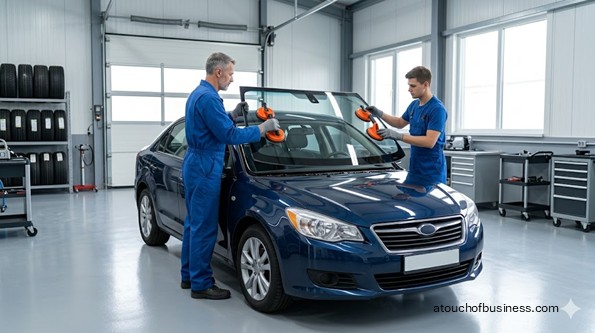
What to Expect From This Guide to Starting a Windshield Repair Business
This guide walks readers through the decisions and ordered startup steps involved in opening a windshield repair business. It progresses from technical fit, services, demand, and training to shop selection, equipment, insurance billing, compliance, and a full pre-opening dry run, with added depth beyond these highlights.
Inside the guide, you will find:
- Startup roadmap: Follow the sequence from technical assessment and service planning through registration, location, equipment, billing networks, and opening tests.
- Industry interviews: Explore podcasts and written interviews featuring independent auto glass owners, technicians, and industry professionals discussing their experiences.
- Startup FAQs: Get clear answers about licenses, service mix, TPA registration, payment timing, ADAS calibration, glass choices, zoning, insurance, and training.
- Service planning: Compare chip repair, replacement, ADAS calibration, related glass services, local competition, insurance coverage patterns, and fleet demand.
- Financial operations: Understand margins by service, break-even volume, supplier costs, working capital, and delays in insurance reimbursement.
- Shop and equipment: Evaluate bay layout, glass storage, calibration space, repair and replacement tools, suppliers, inventory, and chemical handling.
- Compliance checks: Review location-dependent licensing, safety standards, permits, insurance, customer authorizations, TPA approvals, and tested opening procedures.
The article starts by explaining the shop-based model and the technical, physical, and cash-flow demands behind it.
How to Start a Windshield Repair Business
A windshield repair business fixes chips, cracks, and broken auto glass for car owners, fleet operators, dealers, and collision shops.
The shop-based model anchors the operation in a commercial service bay. Customers drop off their vehicles, a technician performs the repair or replacement, and the car goes back to the owner the same day.
Services typically include chip and crack repair using UV-curing resin injection, full windshield replacement using urethane adhesive installation, and — on newer vehicles — ADAS camera recalibration after replacement.
It is worth clearing up a common assumption early. Many people picture a windshield repair business as a quick chip-fix operation where the big money comes from a high volume of small repairs.
In reality, a shop that offers only chip repair while skipping full windshield replacement leaves significant revenue on the table.
The two services complement each other. On modern vehicles, replacement jobs increasingly require ADAS recalibration, which adds meaningful per-job revenue.
The business draws steady demand. Road debris causes damage year-round, and insurance companies cover glass repairs and replacements under comprehensive policies.
But steady demand does not guarantee easy success. Before you invest in a lease, equipment, and training, you need to understand what the business truly requires.
Are you comfortable performing precision manual tasks in a service bay? Can you handle the physical demands of removing and installing large laminated glass panels?
Are you prepared to manage insurance billing through third-party networks and wait roughly three weeks for reimbursements to arrive? These pressures affect cash flow and daily operations from day one.
You should also be honest about your household situation. Most auto glass shops take several months to build volume.
If you cannot cover personal living expenses during that ramp-up period, the financial stress can derail the business before it finds its footing.
Talk with your family or household about what the first year may realistically look like.
One of the smartest early steps is talking with owners of auto glass shops in other markets — people you will never compete with.
Ask them about TPA billing realities, their ramp-up timeline, and what they wish they had known about equipment costs.
Each owner’s experience is different, but firsthand insight from someone already in the business is invaluable.
It also helps to think through your entry path before committing. Starting from scratch gives you full control but requires building everything from zero — customer relationships, TPA registrations, supplier accounts, and shop setup.
Buying an existing auto glass shop can put you into an operation with installed equipment, active insurance billing networks, and an established customer base.
Franchising with a brand like Glass Doctor or NOVUS Glass provides training support and brand recognition, but comes with franchise fees and ongoing royalties.
The right path depends on your budget, timeline, and how much support you need.
For a broader look at the steps involved in starting a business, that resource covers the general process. This guide focuses on what it specifically takes to open an auto glass shop.
Red Flags Before You Start
Some conditions should make you pause before committing to this business. Review these carefully.
Safelite’s presence in your target area is a serious factor to evaluate.
Safelite AutoGlass operates company-owned locations in all 50 states and holds preferred-provider agreements with major insurance carriers.
In saturated markets, Safelite’s network steers insurance-routed customers away from independent shops. Research the density of established shops — Safelite and otherwise — before choosing a location.
Low comprehensive glass coverage in your market limits insurance-pay volume.
Several states have zero-deductible glass laws that make it easy for customers to file claims at no out-of-pocket cost, which boosts repair volume significantly.
In states without those laws, more customers pay out of pocket and tend to be price-sensitive. Check whether your target market benefits from favorable glass coverage laws before building your revenue model.
Skipping ADAS calibration capability is a growing liability.
Nearly all 2016-and-newer vehicles with forward-facing cameras require recalibration after a windshield replacement. Shops that cannot offer this service — either in-house or through a subcontractor — risk losing a growing share of replacement jobs.
TPA cash flow lag can strain a new shop’s finances.
Insurance reimbursements from Third-Party Administrators average around 21 days from the time a claim is submitted.
If the shop depends heavily on insurance billing and does not have a working capital reserve, covering monthly fixed costs while waiting for payments can become a serious problem in the early months.
This business may not fit you if:
- You have no hands-on experience with auto glass and are not willing to complete formal training before opening
- Your startup capital does not cover lease costs, equipment, opening inventory, insurance, and a working capital cushion
- Your market is already saturated with established shops and you have no clear customer base — fleet, dealer, or otherwise — to anchor early revenue
- You cannot tolerate the physical demands of service bay work or the pressure of insurance billing and claim tracking
Step 1: Assess Your Fit and Technical Readiness
Before spending money on anything, spend time honestly evaluating whether this business suits you personally and practically.
Auto glass repair and replacement is precision manual work. A technician handles heavy laminated glass panels, applies urethane adhesives under cure-time constraints, and injects UV-curing resin into tight damage patterns.
Poor technique produces poor results — hazy repairs, adhesive failures, and glass that does not seat correctly.
Owning the shop does not free you from the technical side, especially in the early months when you will likely be the primary technician as well as the business operator.
Ask yourself whether you are drawn to that kind of hands-on, detail-oriented job. An interest in the business needs to include the actual service bay work, not just the idea of running a shop.
Consider the physical demands. Bay work involves bending, lifting, and working in variable temperatures.
Urethane adhesives and cleaning solvents require proper protective equipment and ventilation.
On cold days, safe drive-away time for urethane cure can extend beyond an hour. That affects how many jobs a technician can complete in a day and puts pressure on scheduling.
Think honestly about your risk tolerance and patience for delayed income.
Auto glass shops take time to build volume. Make sure you have a plan for covering personal living expenses during the ramp-up period.
Step 2: Understand the Business Model and Service Mix
The service mix you choose shapes everything downstream — your equipment needs, your shop layout, your insurance billing setup, and your profit margin.
The three core service types are:
- Chip and crack repair — Resin injection into small chips and cracks, typically suitable when damage is smaller than a quarter and not in the driver’s direct line of sight. Repair jobs take 15–30 minutes and carry very high gross margins because material costs are minimal.
- Full windshield replacement — Removal of the damaged windshield and installation of a new one using urethane adhesive, followed by a required cure period. Higher revenue per job, but lower gross margin because glass cost, adhesive, and technician time all factor in.
- ADAS recalibration — Required on most 2016-and-newer vehicles after windshield replacement. Static calibration is performed inside the shop using target boards positioned at precise distances from the vehicle. Dynamic calibration involves driving the vehicle under specific conditions so the camera system can self-calibrate.
A shop-based model performs best when it handles both repair and replacement.
Customers who come in for a repair sometimes need a replacement instead — having both capabilities means you keep that revenue rather than sending them elsewhere.
ADAS calibration adds significant revenue per replacement job on newer vehicles. Decide early whether you will invest in in-house static calibration equipment or develop a subcontractor relationship with a nearby calibration specialist.
The in-house equipment investment is substantial. But the inability to handle ADAS jobs is a growing gap for shops that serve newer vehicle populations.
You may also consider adjacent services such as side glass, rear glass, door glass replacement, or headlight restoration. These make use of existing shop space and equipment without requiring a dramatically different skill set.
Step 3: Research Local Demand and Competition
Market research for a windshield shop is not abstract. It comes down to a few practical questions that directly affect whether your shop can survive.
Count the existing auto glass shops in your target area, including Safelite locations.
If the market is heavily covered, identify whether there is a commercial or fleet customer segment — delivery companies, dealerships, rental fleets, collision shops — that existing shops are not serving aggressively.
Fleet and dealer relationships can provide consistent, predictable volume that retail walk-in traffic alone cannot.
Check your state’s glass coverage laws. States with zero-deductible comprehensive glass coverage generate higher repair volume because customers face no financial barrier to filing a claim.
In states without those laws, you will serve more price-conscious private-pay customers. Your pricing approach needs to account for that difference.
Think about your local climate and vehicle profile. Markets with frequent hail, heavy road debris, extreme temperature swings, or high average vehicle age tend to produce more glass damage.
Before you commit to any location, talk with local fleet managers, used car dealers, and collision shop owners. Ask whether they would be interested in a reliable local auto glass partner.
Their answers will tell you more about real demand than any general statistic. Understanding local supply and demand before you sign a lease is one of the most important steps you can take.
Step 4: Get Trained and Earn Your Certification
Here is something that trips up new owners: the assumption that basic mechanical aptitude is enough, and you can learn auto glass on the job once customers start arriving.
That approach produces inconsistent repairs, damaged vehicles, and liability exposure — exactly the opposite of what a new shop needs.
Complete formal training before you open. Equipment manufacturers including Glasweld, Delta Kits, and GT Tools offer training programs tied to their products.
Auto Glass University and the Auto Glass Safety Council (AGSC) provide broader instruction covering installation standards, ADAS fundamentals, and industry safety requirements.
The primary industry certifications to pursue are:
- AGSC Certified Replacement Technician — An online exam of 70 questions covering the Automotive Glass Replacement Safety Standard (AGRSS), ADAS fundamentals, OSHA safety requirements, and NAGS catalog use. This is the standard credential for technicians performing windshield replacement.
- NWRD Certified Repair Technician — Offered through AGSC’s National Windshield Repair Division. Covers the Repair of Laminated Auto Glass Standard (ROLAGS) and is the recognized credential for chip and crack repair work.
- AGSC Certified Glass Calibration Specialist — For technicians planning to perform ADAS calibration. Requires prior AGSC replacement technician certification plus at least three years of industry experience.
AGSC certification signals credibility to insurance companies and customers. Some insurers and TPA networks favor shops with certified technicians.
It also gives you a foundation in the safety standards — AGRSS, ROLAGS, FMVSS 205 — that govern how glass must be installed and repaired.
Before your first paying customer walks in, practice on salvage windshields until your repairs are consistently clean and your replacements are correctly aligned, properly adhered, and fully cured. There is no shortcut for hands-on repetition.
Step 5: Build a Startup Business Plan
Business Plan
Your business plan for a windshield shop is where you force yourself to answer the questions that will determine whether the business can survive its first year.
Start with your service mix decision: chip and crack repair, full replacement, ADAS calibration, or a combination.
That decision drives your equipment list, your lease requirements, and your revenue model.
Work through the break-even math using your own local numbers.
Chip and crack repairs carry very high gross margins because material costs are low relative to the service charge.
Full windshield replacements bring in higher revenue per job but at lower margins, since the cost of the glass, urethane adhesive, and technician time all reduce what you keep.
ADAS calibration on newer vehicles adds meaningful per-job revenue on top of a replacement.
List your fixed monthly costs: rent, utilities, insurance premiums, any loan or equipment financing payments, and your own owner’s draw to cover living expenses.
Then estimate the gross margin on your average repair and replacement job using the pricing you plan to charge and the material cost you expect from suppliers.
The critical question is: how many jobs per week does the shop need to complete to cover all fixed costs?
Compare that number to the realistic capacity of your service bay and your expected customer volume in the first few months.
If the gap is large, you need either a lower fixed-cost structure, a stronger commercial customer base at launch, or more capital to bridge the ramp-up period.
Factor in TPA cash flow timing. Insurance reimbursements from the major billing networks take roughly 21 days on average.
That lag means a shop with high insurance volume must have working capital available to pay rent, suppliers, and any staff while claims are still pending.
Your plan should also cover your supplier relationships, your TPA registration timeline, your insurance coverage plan, and the lease and equipment costs you will need to verify with real quotes before committing.
A thorough business plan pulls all of these decisions into one document you can test against your actual numbers.
SCORE offers free mentoring and plan review for small business owners — a worthwhile resource before you make major financial commitments.
For more on estimating profitability and revenue for a new business, that resource walks through the underlying logic in plain terms.
Step 6: Choose a Legal Structure and Register the Business
This step sets up the legal and tax foundation for everything that follows.
Most new auto glass shop owners choose a limited liability company (LLC) because it provides personal liability protection while remaining relatively simple to manage.
A sole proprietorship is simpler and cheaper to form but leaves personal assets exposed to business-related claims — a significant risk in a business that handles customer vehicles and performs safety-critical installations.
Choose your business structure with the help of an accountant or attorney if you are unsure. Then register the entity with your state’s business registration agency.
If you plan to operate under a trade name different from your legal entity name, file a DBA (doing business as) with the appropriate state or county office.
Apply for an Employer Identification Number (EIN) from the IRS. You will need it for business banking, tax filing, and TPA registration.
If you hire employees at any point, an EIN is required.
Step 7: Work Through All Compliance and Licensing Requirements
The compliance picture for an auto glass shop has several layers, and they vary significantly by state and city. Do not assume your general business license covers everything.
At the federal level:
All replacement glass you install must comply with Federal Motor Vehicle Safety Standard No. 205 (FMVSS 205), which governs glazing materials used in motor vehicles.
Source your glass only from reputable distributors who certify their products meet this standard.
FMVSS 212 and FMVSS 208 are also relevant — they govern windshield retention in crashes and airbag deployment geometry, both of which depend on a correctly installed windshield with properly cured adhesive.
At the state level:
Most states do not require a specific occupational license for auto glass technicians, but some do. Connecticut requires a glazing contractor license for automotive glass work.
Some states separately register or license auto glass repair shops. Massachusetts requires glass shop registration with the state’s Division of Standards, including a surety bond.
Check your own state’s requirements. Search for “auto glass shop registration” and “glazing contractor license” through your state’s licensing board or department of consumer protection.
Register for a state sales tax permit if your state taxes auto glass parts or labor — verify with your state’s department of revenue.
If you hire employees, register with the state labor and revenue agencies for unemployment insurance and income tax withholding.
At the city and county level:
Obtain a general business license from your city or county before opening. Ask the local business licensing office whether any additional auto repair shop permit or inspection is required beyond the general license.
For more on navigating business licenses and permits, that resource explains the process across different jurisdictions.
Step 8: Find and Secure the Right Shop Location
Location decisions for a shop-based auto glass business carry long-term consequences. Getting zoning, bay size, or floor conditions wrong can delay your opening or force a costly relocation.
Zoning must be confirmed before you sign anything.
Auto glass shops require commercial (C-2 or C-3) or light industrial (M-1) zoning. Residential zones almost never permit this type of use.
Contact the local planning or zoning department and ask specifically whether an auto glass repair and replacement shop is a permitted use at the address you are considering.
Do not take a landlord’s word for it — verify directly with the zoning office.
If the property is not already zoned appropriately, you would need to apply for a conditional use permit, a process that can take months and is not guaranteed to succeed.
Bay requirements matter more than total floor space alone.
You need at least one drive-through or drive-in service bay with adequate ceiling height to accommodate trucks and SUVs. Storage for glass inventory requires A-frame racks that hold panels vertically and safely.
A customer waiting area, an office or workstation for estimates and invoicing, and a chemical storage area for urethane adhesives and solvents are also needed.
If you plan to offer static ADAS calibration in-house, the calibration bay must have a level floor and consistent, controlled lighting.
It also needs enough clear space to position calibration target boards at the precise distances required by manufacturer specifications.
Measure the available space and verify it meets those requirements before committing to the location.
When negotiating the lease, ask about a tenant improvement (TI) allowance — funds from the landlord toward build-out costs.
A few months of free rent at the start of the lease is another common concession worth requesting.
Do not sign the lease until zoning is confirmed, funding is in place, and you have verified the facility can pass required inspections.
Step 9: Obtain All Required Facility Permits and Approvals
Before opening to customers, confirm that the facility has cleared every required permit and inspection.
If your lease involves tenant improvements — modifying bay doors, updating electrical, adding drainage, or changing ventilation — you will likely need a building permit. Do not start construction without one.
Many jurisdictions require a certificate of occupancy before a business opens to the public, especially after a change of use or build-out.
Contact the local building authority to find out whether this applies to your situation.
The local fire marshal may require inspection of your chemical storage setup. Urethane adhesives and primers are flammable.
Confirm that your storage cabinet, fire extinguisher placement, and ventilation meet local fire code requirements before opening day.
Apply for a signage permit before installing exterior signs.
Local sign ordinances govern size, placement, and lighting. Violations can result in fines or required removal.
Step 10: Set Up Your Glass and Supply Accounts
Your supplier relationships directly affect your ability to complete jobs on time and at a margin that supports the business.
Weak parts flow creates delayed jobs, unhappy customers, and cash tied up in the wrong inventory.
Establish accounts with auto glass distributors who stock both OEM and aftermarket replacement glass. Major distributors include Pittsburgh Glass Works (PGW), Pilkington, Guardian, and regional wholesalers.
Having a backup supplier matters — if your primary source cannot fill an order for a specific part, you need an alternative to keep jobs on schedule.
OEM glass is manufactured to the original vehicle manufacturer’s specifications. Aftermarket replacement glass meets the same FMVSS 205 safety standard but is made by a third party.
For ADAS-equipped vehicles, some manufacturers require OEM or OEM-equivalent glass for calibration to function correctly after replacement. Understand this distinction before ordering glass for a customer’s newer vehicle.
Source your chip and crack repair supplies — UV-curing resin, injection systems, pit tape, and bridge assemblies — from suppliers such as GT Tools, Delta Kits, Glasweld, or Aegis Tools.
Source urethane adhesives and primers that comply with AGRSS adhesive selection requirements from established brands used in the industry.
Understand account terms, minimum order requirements, delivery lead times, and the return process for mis-ordered or defective glass before finalizing your supplier relationships.
Step 11: Purchase and Set Up Your Equipment
A shop-based windshield business requires two distinct equipment categories: chip and crack repair tools, and full replacement tools. If you are adding ADAS calibration in-house, that is a third category requiring its own significant investment.
Chip and crack repair equipment includes:
- Windshield repair injection system — bridge assembly, vacuum and pressure injector, resin injector
- UV-curing resin in multiple viscosities for different break types
- UV curing light and pit tape for crack repair
- Drill bits for pit entry preparation
- Inspection mirror, probe tools, and safety razors for surface prep
Windshield replacement tools include:
- Cold knife, wire cutout system, and windshield cutting knives for glass removal
- Pinchweld preparation tools for adhesive removal and surface prep
- Heavy-duty glass suction cup lifters or a vacuum glass handling system
- Urethane adhesive gun — pneumatic or manual — plus primer and applicator daubers
- Glass setting blocks, retention tools, masking tape for paint protection, and molding tools
ADAS calibration equipment (if offering static calibration in-house) includes a calibration frame and target board system, a diagnostic scan tool with ADAS software coverage, and vehicle centering tools.
Complete calibration setups from suppliers can reach up to $20,000 depending on the system and vehicle coverage. The facility must also meet the floor level, lighting, and space requirements specific to each manufacturer’s calibration procedure.
For the shop bay itself, you need A-frame glass storage racks, workbenches, and shop management software for estimates and invoices.
You also need a point-of-sale terminal, a fire extinguisher rated for chemical fires, an eyewash station, and a proper chemical storage cabinet.
Do not open until every piece of essential equipment is installed, tested, and ready for actual customer jobs.
Step 12: Get the Right Business Insurance in Place
Auto glass shops carry specific liability risks that require specific coverage. Standard small-business insurance is not sufficient on its own.
The core coverage types to have before opening:
- Garagekeeper’s legal liability insurance — Covers damage to or theft of customer vehicles while they are in your shop’s care and possession. It is considered essential for any shop that accepts customer vehicles, and is typically required to be purchased from the same carrier providing your general liability policy.
- Commercial general liability insurance — Covers third-party bodily injury and property damage claims. TPA networks often require a minimum coverage level — commonly $500,000 or more — so confirm the requirement before applying to register.
- Commercial property insurance — Covers your shop, equipment, tools, and inventory against fire, theft, vandalism, and other covered losses.
- Workers’ compensation — Required by law in virtually all states once you have employees on payroll. Covers medical costs and lost wages for employees injured on the job.
Also consider equipment breakdown coverage, which pays for repair or replacement when equipment fails due to mechanical or electrical issues.
Work with an insurance agent who has experience with automotive service businesses. Business insurance in this industry has nuances that a general commercial agent may not fully understand.
Step 13: Register with Insurance Billing Networks
If you want to accept insurance-pay customers directly, you must register with the Third-Party Administrators (TPAs) that process auto glass claims on behalf of insurance carriers.
Most insurance companies route glass claims through one of four major TPAs: Safelite Solutions Network, Lynx Services, Gerber National, and StrategicClaim.
You register separately with each one, providing business registration documents, proof of general liability coverage, and basic technician information.
Once registered, the billing process works like this: a customer calls their insurer, gets routed to the TPA, and the TPA issues a claim number.
You complete the job, submit the claim, and reimbursement arrives in roughly 21 days on average.
Keep close records of every open claim. Claims that fall through without follow-up can cost you the revenue entirely.
If managing TPA submissions feels like too much administrative overhead at the start, Electronic Data Interchange (EDI) billing services can process your insurance claims on your behalf for a fee.
Weigh the cost of that service against the time and errors it saves you.
Step 14: Set Up Banking and Payment Processing
Open a dedicated business checking account before you accept a single payment or register with any TPA. Keeping business and personal finances completely separate from day one makes accounting and tax filing far simpler.
Set up a payment terminal for credit and debit card processing. Most customers pay by card.
For TPA reimbursements, confirm that your account can receive ACH transfers or checks as the billing networks require.
Keep a cash reserve specifically to cover operating expenses during the insurance billing lag.
If a significant share of your early volume comes from insurance-pay customers, the 21-day average payment cycle means multiple weeks of completed jobs may be awaiting reimbursement at any given time.
Step 15: Establish Your Business Identity and Opening Readiness
Before your first customer arrives, several practical details need to be in place.
Set up a dedicated business phone number with a professional voicemail. Customers calling for an estimate need to reach a business, not a personal cell phone message.
Prepare a customer repair or replacement authorization form. Customers should sign this form before any work begins.
It documents the agreed scope of service and protects you if a dispute arises over what was authorized.
Create invoice and work order templates. If your state requires any shop registration number or customer rights notice to be posted or included on written materials, make sure those requirements are met before opening.
Install your exterior business sign — after obtaining the signage permit — and make sure the customer waiting area is clean and presentable. Customers trust shops that look organized from the moment they walk in.
Step 16: Complete a Pre-Opening Dry Run
Do not open for business until you have tested the full workflow on practice vehicles using salvage windshields.
Run through at least one complete chip repair and one complete windshield replacement from start to finish.
Test the estimate and authorization process, confirm the TPA billing system works end to end, and verify that your payment terminal processes correctly.
If you are offering ADAS calibration, complete a test calibration on a practice vehicle before advertising the service. The calibration bay setup must be verified — floor level confirmed, lighting adequate, target positioning correct.
Confirm that your waste disposal process for used adhesive cartridges, solvents, and packaging complies with local and state environmental rules. Contact your state environmental agency to verify disposal requirements for the specific chemicals you use.
Walk through the shop with fresh eyes before opening day. Is every tool in its place?
Is the glass storage rack safely loaded? Is the chemical storage cabinet properly secured?
Is the fire extinguisher charged and accessible? Fix whatever is not ready before the first customer car comes through the bay door.
Opening-Day Red Flags
Even with solid preparation, certain gaps can quietly undercut your opening. Watch for these before and during your first days of operation.
TPA registrations are incomplete or not yet approved. If you advertise insurance billing but registrations are still pending, you will have to turn away insurance-pay customers or bill incorrectly.
Complete all TPA registrations and confirm approval before opening.
Glass inventory is not stocked for common local vehicles. If you cannot source a replacement windshield quickly for popular vehicle makes and models in your area, customers will go elsewhere.
Identify the top sellers in your local market and have those parts available or on fast order from your distributor.
The ADAS calibration bay is not ready but the service is being advertised. Do not list ADAS calibration as an available service until the setup is fully operational and tested.
Advertising a service the shop cannot yet deliver professionally damages trust and creates liability.
Safe drive-away time is being rushed or ignored. Urethane adhesive cure time is a safety requirement, not a suggestion.
On cold days, cure time can extend well beyond an hour. Returning a vehicle before the adhesive has cured compromises windshield retention in a crash and creates serious liability exposure.
Chemical storage is not compliant. Urethane adhesives and solvents are flammable.
If the storage cabinet, ventilation, or fire extinguisher placement does not meet local fire code, the fire marshal can shut the shop down during an inspection.
Customer authorization forms are not being used consistently. Every job, every time.
A missing authorization form eliminates your documentation if a customer later disputes the repair or claims damage they brought in.
Frequently Asked Questions
Do I need a specific license to perform windshield repair and replacement in my state?
Most states do not require an occupational license specifically for auto glass technicians. However, some do — Connecticut requires a glazing contractor license.
Some states also separately register auto glass repair shops. Verify the requirements with your state’s licensing board and your city or county business licensing office before opening.
Should I offer chip repair only, or both repair and full replacement?
A shop-based model typically benefits from offering both. Chip and crack repair carries very high gross margins on smaller ticket prices, while full replacement generates higher revenue per job at lower margins.
Many customers who come in for a repair turn out to need a replacement — handling both services captures that revenue. ADAS recalibration on newer vehicles adds further revenue per replacement job.
What is a TPA, and do I need to register with them?
A TPA (Third-Party Administrator) processes auto glass insurance claims on behalf of insurance carriers. The four major TPAs are Safelite Solutions Network, Lynx Services, Gerber National, and StrategicClaim.
If you want to bill insurance directly for customer jobs, you must register separately with each TPA.
Registration requires proof of general liability insurance — often a minimum of $500,000 in coverage — along with business registration documents.
How long does it take to get paid for insurance-billed work?
TPA insurance reimbursements take approximately 21 days on average from claim submission.
A shop with high insurance volume needs working capital to cover operating expenses during that payment cycle, especially in the early months.
Do I need to offer ADAS calibration from day one?
Nearly all 2016-and-newer vehicles with forward-facing cameras require ADAS recalibration after a windshield replacement. If you cannot offer it in-house, you need a subcontractor arrangement with a nearby calibration specialist or a dealer referral relationship.
Many new shops start by referring ADAS jobs out and invest in in-house equipment once volume and cash flow support it.
What is the difference between OEM and aftermarket replacement glass?
OEM glass is manufactured to the original vehicle manufacturer’s specifications, sometimes in the same facilities. Aftermarket replacement glass meets FMVSS 205 safety standards but is made by a third party.
For ADAS-equipped vehicles, some manufacturers require OEM or OEM-equivalent glass for calibration to function correctly after replacement. Know which type is appropriate for each job before ordering.
What zoning does a windshield repair shop need?
Auto glass shops are typically permitted in commercial (C-2 or C-3) or light industrial (M-1) zoning districts. Residential zoning almost never allows this use.
Verify the zoning classification of any prospective location with the local planning or zoning department before signing a lease.
What is garagekeeper’s insurance, and do I need it?
Garagekeeper’s legal liability insurance covers damage to or theft of customer vehicles while they are in the shop’s care and possession.
It is considered essential for any auto glass shop that takes in customer vehicles, and is typically required to be purchased from the same carrier providing your commercial general liability coverage.
Can I buy an existing auto glass shop instead of starting from scratch?
Yes, and it is worth exploring if an opportunity exists in your target market. Buying an existing shop can provide immediate access to an established customer base, active TPA registrations, installed equipment, and supplier accounts.
Evaluate the shop’s TPA relationships, equipment condition, lease terms, and customer mix carefully before making an offer.
Is there a franchise option for starting an auto glass business?
Glass Doctor (part of the Neighborly Group) and NOVUS Glass both offer franchise opportunities in the U.S.
Safelite AutoGlass does not franchise — all its locations are company-owned.
A franchise provides brand recognition, training, and operational support in exchange for franchise fees and ongoing royalties.
Compare the total cost of franchising against the independent startup path to determine which fits your budget and risk tolerance.
What training and certification should I complete before opening?
The AGSC Certified Replacement Technician exam is the standard credential for windshield replacement. The NWRD Certified Repair Technician credential covers chip and crack repair.
Equipment manufacturers including GT Tools, Delta Kits, and Glasweld also offer training programs.
Practice extensively on salvage windshields before working on customer vehicles — there is no substitute for hands-on repetition before you open the bay doors.
How does static ADAS calibration differ from dynamic calibration?
Static calibration is performed inside the shop with calibration target boards positioned at precise distances from the vehicle. It requires a level floor, consistent controlled lighting, and adequate bay space.
Dynamic calibration involves driving the vehicle under specific conditions so the forward-facing camera can self-calibrate.
Some vehicles require one type, some the other, and some require both. Dynamic calibration can be subcontracted to a specialist if your shop is not set up for it.
What Auto Glass Shop Owners Want You to Know
Reading a startup guide is useful. Hearing directly from people who have opened and run their own auto glass shops is something else.
These interviews and podcasts give you access to real experiences — the decisions, the mistakes, the daily pressures, and the things that actually worked. Use them alongside this article to get a fuller picture of what owning this business is really like.
Shatterproof: The Auto Glass Journey for Independents’ Podcast
The go-to audio podcast for independent auto glass professionals, hosted by Gary Hart of the Independent Glass Association. Episodes feature shop owners, industry veterans, and experts covering topics like starting a shop, navigating TPA billing challenges, ADAS calibration, and what it takes to run an independent glass business against larger competition. Free on Spotify.
An audio podcast by James Chapman, a 20-year auto glass technician and industry competitor. Episodes include interviews with shop owners, subcontractors, and tool specialists covering the realities of starting in auto glass, urethane installation standards, ADAS calibration challenges, and what separates skilled technicians from installers. Candid and practical. Free on Spotify.
Making the Jump from Customer to Shop Owner
A written interview from glassBYTEs with Joe Kook, who bought Tom’s Auto Glass in Michigan in 2020 after decades as a customer. Kook talks about transitioning from the trucking industry into shop ownership, building relationships with dealers and body shops, joining the Auto Glass Safety Council, and the approach he takes to growing a shop the “old-fashioned way.”
“I Couldn’t Let Go”: How One Repair Shop Owner Fell in Love with the Industry
A written interview from glassBYTEs with Keyonna Collins, founder of Key Glass Repair in Norfolk, Virginia. Collins shares her path from working in auto glass sales at a national chain to starting her own independent shop in 2020, including the challenges she faced learning repair, the moment she accidentally sent her new LLC paperwork to her manager, and what drove her to keep going.
A Will to Succeed Drives Utah Auto Glass Shop Owner
A written interview from glassBYTEs with Greg Malone, a Glass Doctor franchise owner in Midvale, Utah. Malone discusses opening his first shop, building a team of AGSC-certified technicians, using certification as a competitive differentiator, and the goals he set for the business’s early years. A useful read for anyone weighing the franchise path.
Related Articles
- How To Start an Auto Body Repair Shop
- How To Start an Auto Repair Shop
- How To Start a Window Tinting Business
- How To Start an Auto Detailing Business
- How To Start a Car Wrapping Business
Sources:
- AGSC: Technician certification programs, Technician accreditation details
- Auto Glass Safety Council: Certification test requirements
- myWindshield: Auto glass licensing overview, Own business vs. franchising
- Mass.gov: MA glass shop registration
- Connecticut General Assembly: CT glazing contractor license
- Delta Kits: Startup checklist, TPA insurance billing setup, TPA and billing services
- Tri Glass Inc.: TPA registration and billing
- Glasweld: Startup and training overview
- Windshield Authority: AGRSS and AGSC standards
- GT Tools: Repair kit components
- eCFR / NHTSA: FMVSS 205 glazing standard
- NHTSA: Glass repair and FMVSS 205
- Olsen’s Auto Glass: FMVSS 205, 208, 212 overview
- autoGMS Blog: Auto repair shop permits and zoning
- AutoLeap: Zoning requirements for auto repair
- Insureon: Glass contractor insurance types
- Business Insurance USA: Auto glass shop insurance coverage
- Aligned Insurance: Garagekeeper’s and CGL coverage
- Robotics and Automation News: ADAS calibration system costs
- Right Choice Auto Glass: ADAS calibration after replacement
- Best Buy Auto Equipment: ADAS calibration facility requirements
- DetailXPerts: Franchise options overview
- Startup Financial Projection: Margin and profit factors