
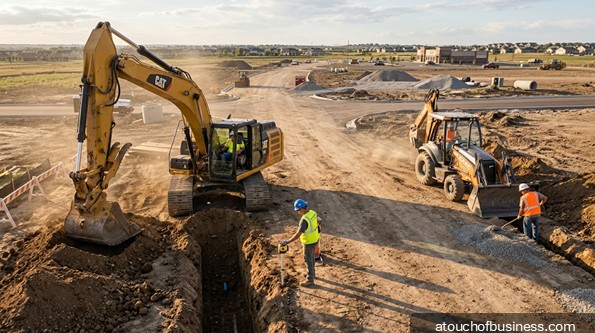
What to Expect From This Guide to Starting an Excavation Business
This guide walks you through the key decisions and practical steps involved in starting an excavation business, from checking whether it fits you to preparing for your first job. The bullets below highlight selected areas, and the article goes deeper on each.
Inside the guide, you will find:
- Startup steps: Follow 16 numbered steps from owner conversations and demand checks through licensing, equipment, pricing, and a first job.
- Business fit: Weigh physical demands, weather-driven schedules, uneven income, and personal responsibility for trench and underground hazards.
- Local requirements: Learn which licensing, safety, utility notification, stormwater, and hauling rules may apply, and how to verify them locally.
- Profit and funding: Test break-even logic, plan operating capital for slow months, and compare funding options before committing to equipment.
- Equipment and hauling: Compare machines, trench protection, and transport options, including rent-versus-buy choices and weight rules affecting your truck and trailer.
- Risks and warnings: Review red flags to consider before you commit, plus opening-day warning signs to check before your first paid job.
- Common questions: Find answers on shallow digs, repeat utility notifications, unexpected contamination, small-site stormwater permits, and hauling licenses.
The next section looks at whether excavation suits your strengths, finances, and household, since those answers shape every decision that follows.
Excavation contractors dig, move, grade, and backfill earth so a site is ready for foundations, utilities, and drainage.
Builders, homeowners, and developers hire excavation contractors to prepare their sites.
This guide follows the excavation-specific path, and the general startup steps for any venture still apply alongside it.
Most people think excavation is mostly running a machine, but the job includes planning, utility awareness, hauling, and paperwork.
You spend unpaid hours moving machines, waiting on utility marks, and arranging disposal.
Idle time affects your income as much as digging does.
Most people think a machine and a local business license are enough, but some states license excavation as a contractor classification of its own.
Licensing rules, exams, and bonding vary by location, so verify them before buying equipment.
Is an Excavation Business a Good Fit for You?
An excavation business fits best when you can handle physical outdoor jobs, weather-driven schedules, and uneven income.
Jobs arrive in bursts, and rain, frozen ground, or a delayed permit can move a schedule by days.
You carry personal responsibility for underground and trench hazards.
Ask yourself whether your household can cover living expenses through slow months, late customer payments, or an underpriced job.
Machine operation, reading soil and site conditions, estimating, and basic bookkeeping all matter.
An honest skills check should come before any equipment purchase.
Do you already run equipment comfortably, or would you need training or an experienced partner before taking paid jobs?
Machines, trucks, trailers, insurance, and licensing all carry startup costs.
You need operating capital to cover months when jobs slow down.
Talk with family or household members about long days on site and evenings spent on quotes, invoices, and machine upkeep.
A typical field day looks like this:
- Confirm utility marks and the job plan.
- Load and haul the machine to the site.
- Have the competent person inspect the excavation and protective system.
- Dig, stage the excavated soil, known as spoils, away from the edge, then haul or backfill.
- Secure the machine and site at day’s end.
Can you explain why a builder or homeowner would choose you over an excavator they already know?
Learning from experienced owners who will not compete with you is the fastest reality check.
Step 1 explains how to arrange conversations with non-competing owners.
Red Flags Before You Start
Pause before buying equipment if any of these decision-stage warning signs applies to you.
Watch for these warning signs:
- You cannot meet the licensing board’s experience, exam, bonding, or insurance requirements. Verify the pathway before buying equipment.
- Many local builders or landscapers may already own machines and dig for themselves. Confirm real demand through owner conversations, or change your service focus.
- You plan to finance machines before contracts or steady jobs exist. Consider renting or buying used equipment first.
- Your break-even numbers need more billable hours than one machine and one operator can deliver. Reconsider or change your model.
- Customers require insurance or bonding you cannot obtain. Pause and verify your options.
- Nobody on your team can serve as the competent person for excavation safety. Arrange training or hiring first.
- You have no workable disposal site or storage location, or zoning blocks equipment storage. Verify locally or change your model.
- Local ground conditions, such as heavy rock or a high water table, exceed your planned machine. Change the machine plan or service focus.
- Your household cannot cover living expenses through slow months or payment delays. Delay or reduce your commitments.
- Your machine operation skills are not yet solid. Get training or partner with an experienced operator first.
- Your truck and trailer weights trigger commercial driver’s license or USDOT rules you cannot meet. Change the transport plan.
Excavation also carries industry-level conditions you should understand before committing.
Plan around these structural conditions:
- Equipment ownership is capital-intensive, so idle machines still cost money.
- Trenching is a closely regulated hazard with high consequences.
- Underground utility strikes and unexpected soil problems create liability that insurance may limit or exclude.
- Several regulatory layers stack up: safety, licensing, stormwater, wetlands, hauling, and local permits.
- Weather and ground conditions create uneven cash flow.
- Competition varies by area, so check your local market directly.
Each structural condition is context for realistic planning, not a reason to walk away.
Step 1: Talk With Non-Competing Owners
Speak only with owners you will not compete against, such as excavators in another service area.
Landscape contractors, concrete contractors, plumbers, home builders, and utility contractors also make useful conversation partners.
Each owner’s journey differs, yet firsthand experience reveals daily realities that written advice often misses.
Consider reading advice from real business owners before you schedule your own conversations.
Prepare questions such as these:
- Which jobs and machine sizes fill most of your schedule?
- How do you handle hauling and disposal?
- How do you price jobs and cover hidden conditions?
- Which months run slow, and how long do customers take to pay?
- What surprised you most when you started?
Step 2: Choose Your Entry Path and Service Focus
Decide whether to start from scratch or buy an existing excavation operation, then pick the services you will offer first.
Buying an existing operation may bring equipment, customers, and licenses, but you must verify each one separately.
The better entry path depends on your budget, timeline, and risk tolerance.
Control preferences and the availability of operations for sale nearby also influence the entry path.
Common starting services include:
- Residential site work, including footings, foundations, trenching, drainage, grading, and clearing
- Subcontract jobs for builders and general contractors
- Utility trenching
Decide which jobs you will decline, since some specialties may fall under separate licenses.
Step 3: Validate Local Demand and Competition
Confirm that enough customers near you hire excavators before you commit capital to machines or a yard.
A broader look at local supply and demand can guide how you gather demand evidence.
Potential customers in your area may include:
- Homeowners
- Home builders and general contractors
- Landscapers, plumbers, and septic installers
- Developers and farms
- Public agencies
Check whether landscapers, builders, and others already own machines and dig for themselves.
Learn your local ground conditions, since rock, clay, sand, water table, and frost shape machine choice, pricing, and risk.
Find out where you can take spoils and where you can source fill material.
Define who your likely first customers are and why they would choose you over alternatives.
Plan how you will reach your first customers at opening through direct contact with builders, contractors, and other referral sources.
Step 4: Verify the Licensing Pathway Before Buying Equipment
Contact your state contractor licensing board before buying equipment, because some states license excavation or earthwork as its own contractor classification.
Some boards require a business-and-law exam and, for some classifications, a trade exam.
Ask the board these questions:
- Which classification covers excavation, grading, and trenching?
- What experience, exams, bonding, insurance, and financial documentation apply?
- Does a job-value threshold apply, and must you name a qualifying individual?
- Do local business licenses also apply?
Licensing requirements vary by U.S. jurisdiction, and the application timeline can affect your opening date.
Step 5: Choose Your Excavation Business Model
Decide whether you will operate alone or lead a crew.
Choose whether you will work as a subcontractor or a prime contractor.
Set your service area radius, since every mile between jobs adds unpaid travel and hauling time.
Model choices that change your costs include:
- Buying or renting each machine
- Small residential jobs versus commercial or public projects
- Hauling spoils yourself versus subcontracting the hauling
- Home-based storage versus a rented yard
Your model choices feed your startup cost list, funding needs, pricing method, and insurance plan.
Step 6: Run the Profit and Break-Even Check Before Major Spending
Before signing an equipment or hiring commitment, test whether your expected excavation jobs can cover your costs and support you.
Start by identifying how you will earn revenue, such as machine-and-operator time, per-job bids, or unit pricing.
List your fixed and recurring costs:
- Equipment payments or rental
- Insurance and bonding
- Trucks and trailers used to move machines
- Storage yard
- Software
- Any staff
Add your variable costs:
- Fuel
- Repairs and wear parts
- Disposal or dump charges
- Permits
- Trench protection rentals
- Hauling
Account for unpaid time: moving machines, waiting on utility marks, weather delays, and disposal trips.
One machine can work only one job at a time.
Calculate how many billable hours per month cover your fixed costs.
Use your own local prices and margin, because no published figure fits every excavation startup.
Test whether your break-even numbers survive slow months, wet or frozen ground, and delayed customer payments.
Step 7: Plan Funding and Operating Capital
Plan funding for equipment and operating capital, because slow periods between excavation jobs and payment gaps can drain your cash reserves.
Funding options to compare include:
- Owner savings
- Dealer or lender equipment financing
- Leases and rent-to-own arrangements
- SBA-supported loans
Check terms and conditions with each lender before committing.
Loan and lease payments continue during slow months, so match their length to the steady work you can document.
If your target customers require bonding, look into the SBA surety guarantee program for small businesses that may not meet standard surety criteria.
Step 8: Form and Register Your Excavation Business
Choose a legal structure, register the entity or business name, and obtain an EIN from the IRS.
Register for the state tax accounts your services require, and add an employer account if you hire.
Sales and use tax treatment of services and materials differs by state, so confirm rules with your revenue department.
Get any general business license your city or county requires.
File a DBA if you operate under a name other than your legal one.
Open a business bank account and set up payment methods such as checks, ACH transfers, and cards.
Business registration typically comes before the contractor license application because the application uses your registered business details. Confirm the order with your licensing board.
Step 9: Get Your Contractor License and Complete Compliance Setup
Complete the exams, experience documentation, bonding, and insurance your licensing board requires before you bid covered excavation jobs.
Designate a competent person for trench safety.
OSHA’s excavation standard, Subpart P, requires a competent person, meaning someone who can identify hazards and has authority to correct them promptly.
Designate and train your competent person before your first paid job.
Your state may run its own workplace safety program, so check your state labor or occupational safety agency.
Excavations 5 feet deep or deeper generally require a protective system, unless the excavation is in stable rock.
Protective systems include:
- Sloping
- Benching
- Shoring
- Shielding with a trench box
Protective systems for excavations deeper than 20 feet must be designed by a registered professional engineer.
Plan for utility notification.
Learn how to use 811 and your state’s one-call rules, since all states require notification before digging.
Lead times vary by state, so confirm yours with your one-call center.
Check environmental and dust rules.
Larger sites may need a stormwater construction permit.
Check with your state stormwater or environmental agency to see whether a permit applies to your sites.
Jobs near streams, ponds, ditches, or wetlands may need federal approval.
Ask the Army Corps of Engineers district office about Section 404 permits for jobs affecting waters or wetlands.
Grading and excavating usually do not create hazardous silica dust, but dry conditions can.
OSHA’s silica standard for construction lists controls such as water sprays or an enclosed cab when only the operator is exposed.
Confirm vehicle and local permit rules.
Weight ratings for your truck and trailer can trigger commercial driver’s license or USDOT registration rules.
Check with your state driver licensing agency and state DOT motor carrier office before buying a hauling setup.
Ask your city or county which excavation, grading, and right-of-way permits apply, and whether the property owner or contractor applies.
Local rules on erosion and sediment control may apply even when state or federal thresholds do not.
Step 10: Arrange Insurance Before Machines Reach a Job Site
Confirm which insurance your state and licensing board require, then add excavation risk-planning coverage before any machine reaches a site.
Workers’ compensation requirements attach to having employees and differ by state, including how owners and subcontractors are treated.
Ask your state workers’ compensation agency what applies to your setup.
Reviewing general business insurance options helps you understand the coverage terms discussed below.
Risk-planning coverage to discuss with a licensed commercial insurance agent includes:
- General liability
- Commercial auto
- Coverage for owned and rented equipment
- Pollution liability
Ask your agent whether underground utility damage, collapse, pollution, and earth-movement claims are covered or excluded, and whether endorsements are available.
Have certificates of insurance ready, since customers and general contractors may request them before a job.
Step 11: Choose Excavation Equipment and a Transport Plan
Match machine size and type to the jobs you will actually take, not the largest job you can imagine.
Compare new, used, rented, and rent-to-own options for each machine before you commit.
Core equipment categories to price include:
- Earthmoving machines: a compact or mini excavator, plus an optional backhoe loader, skid steer, compact track loader, or dozer
- Attachments: multiple bucket widths, a thumb, a grading bucket, a hydraulic breaker, and an auger
- Compaction and layout tools: a plate compactor, laser level, grade rod, string line, stakes, and tape
- Trench safety gear: shields or shoring, ladders or ramps, barriers, a dewatering pump, soil classification tools, and inspection log forms
- Utility-awareness tools: marking paint, flags, probe rods, and hand tools for exposing marked lines
- Site-control supplies: silt fence, wattles, stabilized entrance materials, stockpile covers, a water source for dust, a spill kit, and fuel containment
- Personal protective equipment: hard hats, high-visibility clothing, boots, eye and hearing protection, gloves, a first aid kit, and a fire extinguisher
- Shop and maintenance items: a grease gun, fluids, filters, hose repair supplies, a fuel transfer tank, jacks, blocking, and hand tools
Trench protection equipment is often rented and installed by experienced contractors, so price local rental sources.
Your transport setup typically includes:
- A truck sized for the trailer
- An equipment trailer with working brakes and lights
- A dump truck or dump trailer if you haul spoils
- Chains, straps, and load securement gear
Some states require permits for oversize or overweight loads and registration for for-hire hauling.
Step 12: Set Up Suppliers, Vendors, and Disposal
Line up the suppliers and vendors you will rely on before your first job.
Your supplier list typically includes:
- An equipment dealer or rental yard
- A parts and service source
- A fuel supply
- Fill and aggregate suppliers
- Hauling partners
Identify approved disposal sites and confirm what each one accepts, since rules vary by site and location.
Plan where you will store machines and materials, and confirm zoning allows it.
Check city or county planning rules on home occupations and contractor yards before parking machines at your address.
A certificate of occupancy matters only if you build or rent an office or shop space. Field jobs alone do not typically trigger one.
Secure machines and trailers against theft, and ask your insurer about storage requirements.
Step 13: Set Up Pricing and Estimating
Build a repeatable estimating method from your cost list so every bid covers your costs, overhead, and target margin.
Visit each site before bidding.
Price these inputs into each bid:
- Machine and operator time
- Transport and mobilization
- Disposal fees
- Permit and locate costs
- Materials
- A contingency for hidden conditions such as rock, groundwater, unmarked utilities, or unexpected soil problems
- Insurance and overhead
- Target margin
Confirm local pricing conventions through your conversations with non-competing owners.
Define how you will document and price scope changes through written change orders.
Set payment terms up front: deposits, progress payments, and final payment.
Step 14: Prepare Business Identity and Required Documents
Set up the identification and paperwork customers expect before you take your first job.
Prepare these items before opening:
- Business name, phone number, and email
- Vehicle and trailer lettering, with your license number where required
- Proposal or contract templates
- Change-order forms and invoices
- Certificates of insurance
- Records of one-call tickets, daily excavation inspection logs, and job safety briefings
- Stormwater plan documents if a permit applies
Some states have notice or lien procedures for construction payment, so verify them locally.
Step 15: Plan Staffing and Training
Decide who will operate machines, who will supervise, and who will serve as your competent person.
Confirm employee versus subcontractor classification rules and workers’ compensation requirements with state agencies.
Train any crew on trench safety, access and egress, spoil placement, utility awareness, and dust control.
Access and egress refers to safe ways into and out of an excavation.
Step 16: Finish the Pre-Opening Checklist and Stage a First Job
Confirm every pre-opening item below, then choose a small first job that fits your machine, license scope, and insurance.
Check these items before you open:
- Contractor license, bonding, and insurance in force
- Entity, EIN, tax accounts, and business license in place
- Zoning for storage or yard confirmed
- Business bank account and payment methods ready
- Competent person designated and trained, with inspection log forms ready
- Trench protection source arranged
- One-call process practiced
- Machines inspected, serviced, and insured
- Truck and trailer weights checked against commercial driver’s license and USDOT rules, with load securement ready
- Disposal site and fill supplier confirmed
- Dust and erosion-control materials on hand
- Contract, proposal, change-order, and invoice templates finalized
- Certificates of insurance ready to send
- Vehicle lettering and required identification complete
- Estimating method tested on sample jobs
- Operating capital reserve verified
Before digging on your first job, verify the utility marks, soil condition, protective system, competent person, and spoil plan.
A small first job lets you test your systems before larger commitments.
Business Plan
Use your business plan to turn the startup steps into decisions you can price, fund, and schedule.
A general guide on how to write a business plan can help with structure.
Organize these inputs in your plan:
- Your service focus and target customers
- Your licensing pathway, compliance checklist, and insurance plan
- A full startup cost list covering equipment, transport, trench protection, insurance, licensing, storage, and software
- Your funding sources and operating capital reserve
- Your estimating and pricing method
- Your staffing and competent person plan
Your most accurate startup cost estimate comes from listing everything you need and pricing it with local quotes.
No single budget fits every excavation startup because machine choices, location, and staffing differ.
Break-even means the point where your job revenue covers your fixed and variable costs.
Estimate how many billable hours or jobs per month cover your fixed costs after subtracting variable costs.
Margin pressure from fuel, repairs, and disposal charges raises the volume you need to reach break-even.
Test your plan against slow months, weather stoppages, and delayed payments, and adjust your equipment plans if the numbers fail.
Opening-Day Red Flags
Delay your first paid job if any pre-opening item below is missing or unverified.
Watch for these pre-opening warning signs:
- Your license, bonding, or insurance certificates are not in force or in hand. Hold off on bids until each is confirmed.
- No competent person is designated and trained, or inspection log forms are missing. Complete both before the first dig.
- Nobody has practiced your one-call process. Walk through the notification steps with your one-call center before the first job.
- Trench protection is not arranged for excavations that will need it. Confirm your rental or owned source.
- Machines are not inspected and serviced, or equipment coverage has not started. Fix both before transport.
- Truck and trailer weights, load securement, or hauling permits are unverified. Confirm them before moving a machine.
- You have not confirmed what your disposal site accepts or where your fill will come from. Verify both before the job.
- Payment methods, contracts, or change-order forms are not ready. Finish them before accepting a deposit.
- Dust and erosion-control materials are missing for the site. Stock them before mobilizing.
- Your operating capital reserve is unverified. Recheck it before committing to a start date.
Frequently Asked Questions
Does digging less than 5 feet deep skip the excavation safety rules?
No. A competent person must still inspect excavations daily and as work progresses, regardless of depth.
The protective-system requirement is waived only for stable rock, or for excavations under 5 feet where the competent person finds no sign of cave-in.
Do small jobs and repeat customers still need a new utility notification?
Yes. Every digging project requires notification, including small ones, and an earlier call for another project does not cover a new one.
Some jurisdictions issue tickets that expire, and some require each contractor on a site to hold a separate ticket.
Scope changes may require revising your one-call ticket, so confirm your state’s rules before each job.
What should you do if digging turns up an unknown tank or contaminated soil?
Stop work in and around the find, then follow your state’s notification and disposal rules.
Notification and disposal rules vary by U.S. jurisdiction, so ask your state environmental agency who must be notified and how disposal works.
Extra cleanup or disposal tasks may be handled through a change order with the customer.
Ask your insurance agent how pollution claims are treated under your policies.
Does a small job need a stormwater permit?
Usually not, unless a site disturbs 1 acre or more or is part of a larger plan that will disturb that much.
The stormwater permit operator is whoever controls plans or daily site activities, which could be the customer, developer, or you.
Some small sites may qualify for limited waivers, and many states add their own rules. Verify with your state stormwater agency.
When does hauling a machine require a commercial driver’s license or USDOT number?
Only when weight ratings and business use meet federal thresholds.
A Class A license generally applies to combinations of 26,001 pounds or more when the trailer’s rating exceeds 10,000 pounds.
A Class B license generally applies to a single vehicle rated over 26,000 pounds, even when towing a trailer rated 10,000 pounds or less.
USDOT registration may apply to commercial vehicles rated 10,001 pounds or more in interstate commerce, and some states extend it to intrastate hauling.
Verify with your state driver licensing agency and state DOT motor carrier office.
Interviews with Excavation Business Professionals
These interviews share first-hand experiences from excavation contractors who built or grew their companies. Common themes include learning the trade, equipment decisions, finding work, cash flow, pricing, hiring, marketing, and moving from operator to business owner.
Readers can use the experiences to compare different startup paths and identify decisions to think through before committing to equipment, employees, marketing, or a larger workload.
Exploring Life & Business with Austin Gurney of Gurney Excavation LLC
Austin Gurney discusses working his way from general laborer to heavy equipment operator before starting his excavation company while still employed. He also covers renting equipment, reinvesting earnings, buying machinery, marketing, and moving into the business full time.
The interview is useful for seeing how one contractor approached the transition from employee to business owner while building demand, managing equipment decisions, and developing a residential excavation operation.
How Matt Finlayson Started an Excavation Company
Matt Finlayson discusses learning the excavation trade and building a company of his own. The conversation covers equipment, cash flow, finding work, hiring help, mistakes, risk, and the shift from operating machinery to running a business.
This interview is useful for someone considering excavation because it focuses directly on getting started and the operational and financial pressures that appear as a small operation begins to grow.
Breaking Ground in Land Clearing: R&M Dozer on Growing a Dirt Work Business
Colton Rains discusses starting and growing a land clearing and excavation operation. Topics include equipment choices, attracting larger jobs, building referral relationships, marketing, competing for work, and lessons learned from mistakes.
The interview provides useful perspective on how an owner-operator can think about equipment, customer acquisition, relationships, and growth instead of focusing only on the fieldwork.
Mitchell Stokoe, Founder of Slimline Excavations
Mitchell Stokoe discusses leaving underground coal mining, buying a small excavator, and building an excavation business. The conversation covers project work, pricing mistakes, training operators, hiring a crew, business mentors, and the commitment involved in running a construction company.
This interview is useful for understanding the transition from industry employment to ownership and the decisions surrounding equipment, pricing, employees, and developing the business beyond a one-person operation.
I Left the Job I Hated and Moved to Construction
Travis Gemmell, founder of Walnut Grove Excavating, discusses moving from a corporate career into excavation. He covers cash flow, strategic planning, building a dependable team, social media, managing employees, family considerations, and balancing fieldwork with running the company.
The interview is useful for readers who want a broader view of excavation business ownership, including the financial, staffing, marketing, and management responsibilities that exist beyond operating equipment.
Related Articles
- How To Start a Demolition Business
- How To Start a Dump Truck Business
- How To Start a Geothermal Drilling Business
Sources:
- OSHA: Competent Person Excavation, Subpart P Appendix F, Silica Grading Excavating Sheet
- CDC NIOSH: Trenching and Excavation
- Murray State University: OSHA Excavation Requirements
- Purdue University: Subpart P Competent Person
- United Rentals: Top Subpart P Violations
- Equipment Contractor Magazine: Trench Shielding and Shoring
- PHMSA (U.S. DOT): Call Before You Dig
- EPA: Construction General Permit, Section 404 Permit Program
- SBA: SBA Surety Bonds
- State DOT Motor Carrier Office: USDOT Number Registration, Underground Tank Discovery
- Felling Trailers: Towing CDL Requirements