
The Delorean Story in Plain Words
DeLorean Motor Company was a bold car startup in the late 1970s and early 1980s. It was built around one car that looked like the future. It also carried the name of a famous auto exec, John Z. DeLorean.
The company rose fast and fell fast. Production began in 1981 and stopped in 1982. The car still lived on through film and pop culture long after the factory closed.
Today, people still use the “DeLorean Motor Company” name in more than one way. This article covers the original company first, and then explains the later DeLorean-branded business that kept parts, service, and licensing alive.
DeLorean Motor Company at a glance
John Z. DeLorean founded the company in 1975. The goal was to build a new sports car brand for the U.S. market. The company became best known for the DeLorean DMC-12.
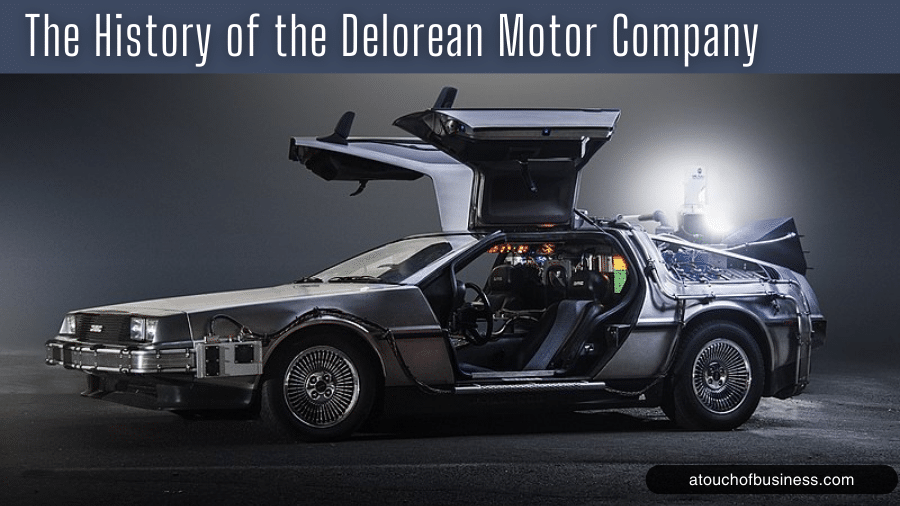
The car stood out with stainless-steel body panels and gull-wing doors. It was made in Dunmurry, near Belfast, Northern Ireland. The factory was built with major public support tied to jobs and development goals.
The original company collapsed in 1982. Yet the car became a long-term icon, helped by its role in the “Back to the Future” films. A later DeLorean-branded company built a business around parts, service, and the DeLorean name.
- Founded: 1975
- Founder: John Z. DeLorean
- Signature product: DeLorean DMC-12
- Manufacturing location: Dunmurry, Northern Ireland
- Production period: Cars began rolling off the line in early 1981; production ended in 1982
John Z. DeLorean before DeLorean Motor Company
John Z. DeLorean built his name inside General Motors. He became known as a gifted auto leader and a strong promoter. Reputable accounts link his work to landmark Pontiac performance cars.
He also had a clear personal brand. He looked and spoke like a man who wanted to shake up the system. That mix of skill and flair made him a headline figure.
When he left GM, he stepped into a new role. He would be the founder, the face, and the deal-maker. That choice set the tone for everything that came next.
- He came from the center of “Detroit” car culture and big-company power.
- He wanted to build something outside the normal rules of large automakers.
- He aimed to sell a car with a mission, not just a badge.
The problem he wanted to solve
DeLorean pitched more than a fast car. He talked about an “ethical” sports car. The idea was style plus safety, reliability, and endurance.
He also wanted independence. He did not want to wait for a big company to approve his ideas. He wanted to prove a new brand could stand on its own.
This goal shaped the product and the story. It also shaped the risk. A new car company needs huge capital, tight quality control, and steady demand.
- Design problem: Build a sports car that looked new and felt different.
- Brand problem: Sell a mission that buyers could understand in one look.
- Business problem: Launch a car company without the safety net of a large automaker.
The big idea: one unforgettable car
The company focused on a single product. That car became the DeLorean DMC-12. It aimed at the U.S. market and promised a sharp, modern feel.
Its looks did a lot of work for the brand. Stainless steel and gull-wing doors made it stand out in photos and on the street. You could spot it at a glance.
The car also had major design and engineering influence from famous names. Sources credit Giorgetto Giugiaro with design, and connect Lotus engineering to key chassis decisions. That gave the project prestige.


- Signature look: Stainless-steel exterior panels
- Signature feature: Gull-wing doors
- Design influence: Giorgetto Giugiaro
- Engineering influence: Lotus-related engineering work is widely cited in reputable coverage
How it all started in 1975
DeLorean Motor Company began in 1975. John Z. DeLorean formed it in Detroit. From the start, the company aimed at a global scale, not a small shop.
He needed far more than a great car idea. He needed factories, workers, suppliers, and distribution. He also needed trust from buyers who had never seen a DeLorean car before.
That meant deals and funding came first. The company would choose a production site based on who could offer the strongest package. That choice became a defining part of the company’s history.
- Founding a car company required huge upfront spending.
- The company needed a production plan before it could sell cars.
- Location and funding became tied together from day one.
Why Northern Ireland became the build site
DeLorean looked at more than one place for manufacturing. Reputable sources note Puerto Rico was considered at one point. In the end, a major offer tied to Northern Ireland changed the plan.
The deal centered on jobs and development. Northern Ireland wanted major new industry and large-scale employment. DeLorean Motor Company offered a high-profile project with global attention.
The result was a new factory at Dunmurry, near Belfast. It became the company’s production base. It also tied the company’s fate to a complex public support structure.
- The location was selected as part of a broader economic plan.
- Government-backed support played a major role.
- Public expectations became part of the company’s pressure.
Building the factory and the workforce
The factory at Dunmurry was built specifically for this project. Museum and audit sources place the factory build in 1978. It was designed to make DeLorean’s car at scale.
The plan was ambitious. Britannica reports the plant was built with a projected capacity of 30,000 vehicles per year. That is a large number for a new brand.
The workforce grew fast as well. The Ulster Museum describes peak operations with over 1,600 workers. It also describes long work schedules during the push to produce cars.
- Factory: Custom-built at Dunmurry near Belfast
- Scale: Projected 30,000 vehicles per year capacity (as reported by Britannica)
- People: Over 1,600 workers at peak operations (as described by the Ulster Museum)
What the company sold and what it did not sell
The original DeLorean Motor Company focused on one production car. That car was the DeLorean DMC-12. The company did not build a broad lineup the way major automakers did.
This focus had a clear upside. It made the brand easy to explain. The whole company could point to a single product identity.
It also raised the stakes. If the one car struggled, the whole company struggled. There was no second product to carry the business.
- Main product: DeLorean DMC-12
- Product strategy: Single-model focus
- Brand result: A clear, easy-to-remember image
How DeLorean Motor Company planned to make money
The core plan was simple in theory. Build cars and sell them, mainly into the U.S. market. The DMC-12 was meant to be the revenue engine.
But sales alone rarely fund a new car maker at the start. The company also relied on major public-sector support tied to the Northern Ireland project. Audit reporting describes the arrangements, oversight, and outcomes tied to that support.
That mix can work if execution stays strong. It can fail if quality problems grow, costs rise, or demand falls. With DeLorean, several pressures hit at once.
- Primary income goal: Vehicle sales
- Major support: Public assistance tied to the Northern Ireland manufacturing plan
- Key risk: High fixed costs with little room for delays or rework
Launching the DMC-12
Production began in early 1981. Britannica reports the first DMC-12 rolled off the line then. That moment turned the company from a promise into a real manufacturer.
Auto media covered the car as a serious sports and GT entrant. Car and Driver tested it and compared it with well-known rivals. That kind of test matters because it shapes how buyers view a new brand.
By late summer 1981, Car and Driver reported that thousands of cars had been built. The company had reached real production volume. The challenge was keeping quality and finances stable as the pace increased.
- Milestone: First cars rolled off the line in early 1981
- Market focus: U.S. sports/GT buyers
- Early exposure: Major automotive press tests and comparisons
What competitors looked like in the early 1980s
The DMC-12 entered a crowded sports and GT world. Buyers had many choices with strong brands and long track records. A new company had to prove itself fast.
Car and Driver grouped the DeLorean with major rivals in a comparison context. That list gives a clean snapshot of what the DeLorean had to beat. These were cars people already trusted.
The list also shows how broad the segment was. Some rivals were far more expensive. Others were closer to the DeLorean’s price band in that test context.
- Porsche 911SC
- Ferrari 308GTSi
- Chevrolet Corvette
- Datsun 280-ZX Turbo
Early quality concerns and why they mattered
Quality control became a recurring theme in reputable accounts. Britannica notes the workforce lacked experience, and that created quality-control problems. This is a common risk when a factory ramps up quickly.
Quality issues hurt in many ways at once. They raise warranty and repair costs. They also damage trust when a new brand needs trust the most.
Car and Driver described efforts to improve quality. It reported that workers were sent to a quality assurance center in California. That shows the company understood the issue and tried to fix it.
- Core issue: Inconsistent build quality during ramp-up
- Why it stung: A new brand has no long-term trust bank
- Response: Training and quality efforts reported by major auto press
Defining moments that shaped the company’s short life
Some companies have long histories with many phases. DeLorean Motor Company had a brief run, so each major event carried extra weight. The company could not afford years of slow learning.
The factory build, the product launch, and the ramp-up were defining moments. Then came receivership and closure in 1982. Those dates anchored the end of the original company.
Public perception also changed fast. John DeLorean’s legal case became part of the story. Britannica reports he was arrested in 1982 and later acquitted in 1984 after entrapment findings.
- 1978: Factory constructed at Dunmurry
- Early 1981: First cars roll off the line
- Feb 1982: Receivership begins
- 1982–1984: Arrest and later acquittal shape public views
The collapse in 1982
The end came quickly. The Northern Ireland Audit Office documents that the company went into receivership on February 19, 1982. That step signaled deep financial trouble.
The same audit reporting notes production stopped in May 1982. It also reports the plant closed in October 1982. Those events ended the original company’s ability to build cars.
Many factors fed the collapse. Coverage points to cost pressure, quality issues, and rising strain under high expectations. The company also had little time to recover from setbacks.
- Feb 19, 1982: Receivership
- May 1982: Production stops
- Oct 1982: Plant closes
John DeLorean’s legal case and the brand’s image
In October 1982, John DeLorean was arrested in a U.S. government sting. Britannica reports this event and explains that it became a headline story. For many people, the legal story became linked to the company’s failure.
In 1984, he was acquitted after entrapment findings, according to Britannica. That outcome matters because it shaped later views of DeLorean as a person. Still, public headlines often outlive the details.
This period made the DeLorean name complicated. Some saw a bold founder who got targeted. Others saw the case as proof the dream had turned messy.
- 1982: Arrest in a sting operation
- 1984: Acquittal after entrapment findings
- Brand effect: The founder’s story became part of the product story
Why the DeLorean became bigger after it died
Many cars fade when production ends. The DeLorean did not. Its design made it easy to remember, even for people who did not follow car news.
The “Back to the Future” films helped turn the car into a symbol. Britannica links the car’s long life in culture to the films released between 1985 and 1990. That kept the DeLorean in front of new audiences for decades.
This shift changed what the DeLorean “was.” It stopped being only a product. It became a pop-culture object and a collector dream.
- Design: Stainless steel and gull-wing doors stood out in film
- Timing: Film fame arrived after the factory era ended
- Result: A short-run car became a long-run icon
What happened to the cars after the factory closed
Even after the company collapsed, many cars remained on the road. Britannica notes that many DeLoreans still existed decades later. It also points to a thriving parts industry supporting them.
That matters because it kept the ownership base alive. When a car has a strong owner community, it can keep its story moving. It can also keep demand for service and parts steady.
This is where the “second life” of DeLorean begins. It is not the same as the original manufacturer. It is a new business world built around an older product.
- Collector base: Many cars remained in circulation
- Support: Parts and service networks grew over time
- Value shift: Ownership culture became part of the brand
The later DeLorean-branded company in Texas
Years after the original collapse, a separate DeLorean-branded business formed in Texas. Classic DMC describes its roots in 1995 under Stephen Wynne. It positions itself as a hub for DeLorean parts, service, sales, and restorations.
This later company is often called “DeLorean Motor Company” in casual talk. That creates confusion because it is not the same legal entity as the 1975 startup. Still, it became central to the real-world DeLorean owner ecosystem.
Classic DMC also describes a 1997 purchase of remaining DeLorean inventory and assets by Wynne. KUT and Reuters discuss related brand and rights disputes in later years. Those disputes show how valuable the DeLorean name became.
- 1995: Stephen Wynne’s DeLorean-focused business begins (as described by Classic DMC)
- Services: Parts, service, restorations, and sales
- 1997: Purchase of remaining inventory/assets is described by Classic DMC and discussed in later reporting
Licensing, trademarks, and why they kept coming up
As the car’s fame grew, the name gained value beyond the car itself. Pop culture created demand for branded goods, media tie-ins, and licensing deals. That can bring steady income, but it also brings disputes.
Reuters reported a long-running dispute involving royalties tied to “Back to the Future” merchandise. It also reported that a settlement was reached in March 2024, with terms kept confidential. This shows that licensing stayed active decades after the factory closed.
KUT also covered a trademark dispute involving the DeLorean name. It described the case and noted a confidential settlement. These stories highlight a key shift: the DeLorean brand became an asset that people fought over.
- Value source: Media fame and branded goods
- Risk: Conflicts over rights and payments
- Long tail: Legal issues continued into the 2020s
Modern revival talk and new concepts
People have talked about “bringing back” the DeLorean for years. Britannica notes a 2016 plan tied to a revived DeLorean Motor Company that did not materialize. That is a common pattern with famous cars.
In 2022, DeLorean’s website posted press-release style announcements tied to the Alpha5 EV concept. Those posts show a public attempt to connect the brand to modern electric-car interest. They also show how much the brand still matters.
It is best to separate brand activity from proven production results. Public announcements can change over time. What stays steady is the DeLorean name and the attention it still attracts.
- 2016: Revival plan noted by Britannica did not come to market
- 2022: Alpha5 concept announcements appear in DeLorean press materials
- Core truth: The brand still pulls interest long after 1982
Work, people, and culture on the factory floor
The Dunmurry plant was new, and the pressure was intense. The Ulster Museum describes long work schedules during peak operations. It also describes high weekly targets during the push to build cars.
That kind of pace can build pride. It can also strain quality and morale. For a new factory, the learning curve is steep even in calmer times.
Car and Driver’s report about quality training shows the company knew it needed stronger standards. It tried to raise skill levels and make production steadier. Still, the time window was small.
- Work pace: Long workweeks reported in museum accounts
- Training: Quality-focused training efforts reported by major auto press
- Challenge: Ramping a workforce fast while building a new car
Impact on Northern Ireland and why it mattered
DeLorean was not only a car story. It was also a jobs and development story. The factory was part of a wider effort to create work and industry in Northern Ireland.
When the company collapsed, the impact was severe. The audit record documents the sequence through receivership, production stop, and closure. That timeline shows how quickly a major industrial plan can unwind.
This local impact is part of the DeLorean legacy. For some, it represents hope and pride. For others, it represents a painful economic blow tied to a high-risk project.
- Positive impact: Large-scale job creation during ramp-up
- Negative impact: Sudden loss of work when the plant closed
- Legacy: A famous brand tied to a real regional story
Public perception: dream car, troubled company
The DeLorean has two reputations at once. One is the “dream car” image from its design and film fame. The other is the “troubled startup” image from its collapse and headlines.
Media coverage shaped both sides. Car and Driver treated the car as a serious entry and tested it against major rivals. Britannica and other reputable sources detail the business strain and the founder’s legal case.
This split image is why the DeLorean remains so interesting. You can admire the car and still see the business as a warning story. The two views can exist together.
- Icon side: A car with a look no one forgets
- Caution side: A company that ran out of time and money
- Why it lasts: Strong emotion on both sides of the story
How the DeLorean story changed over time
In the late 1970s, DeLorean was about building a new car company. In the early 1980s, it became about survival under pressure. After 1982, it became about what the car meant after production ended.
Then pop culture took over. The car became a symbol of the future, even though it came from a short-lived factory run. That is a rare outcome in the car world.
In later decades, DeLorean became a blend of collector culture, parts and service business, and licensing value. Reuters and KUT reporting show that rights and royalties remained active topics. The brand shifted from manufacturing to identity.
- Phase 1: Startup formation and factory planning
- Phase 2: Production launch and rapid ramp-up
- Phase 3: Collapse and legal headlines
- Phase 4: Collector life, pop culture fame, and brand licensing
Detailed Timeline
This timeline follows the best-supported milestones from reputable sources. It focuses on the original company’s rise and fall first. It then adds key moments tied to the later DeLorean-branded business and modern licensing and concept activity.
The original company’s timeline is short but dense. Major events happened within a few years. After 1982, the story shifts from manufacturing to culture, ownership, and brand rights.

1975
John Z. DeLorean founds DeLorean Motor Company in Detroit.
1978
A custom factory is constructed at Dunmurry near Belfast, Northern Ireland.
Early 1981
The first DeLorean DMC-12 rolls off the line.
Feb 19, 1982
The company enters receivership, marking a severe financial crisis.
May 1982
Production stops at the Dunmurry plant.
Oct 1982
The factory closes, ending the original company’s ability to build cars.
Oct 1982
John DeLorean is arrested in a U.S. government sting operation.
1984
John DeLorean is acquitted after an entrapment finding, according to Britannica.
1985–1990
The “Back to the Future” film trilogy cements the DeLorean’s pop-culture status.
1995
Stephen Wynne’s DeLorean-focused business begins, as described by Classic DMC.
1997
Wynne buys remaining inventory and assets tied to DeLorean, as described by Classic DMC and discussed in later reporting.
2014–2015
Trademark-related disputes involving the DeLorean name are reported, with settlement terms kept confidential.
2020
Reuters reports NBCUniversal began paying royalties tied to “Back to the Future” merchandise in 2020.
2022
DeLorean press materials promote Alpha5-related announcements, and Reuters reports a royalty lawsuit tied to the brand.
March 2024
Reuters reports a settlement in the NBCUniversal royalty dispute, with confidential terms.
Interesting facts you can trust
The DeLorean’s facts often get blurred by myths and fan talk. This section sticks to points supported by reputable sources used in the research.
Some facts are simple and visual. Others are about scale, timing, or the business structure. Together, they help explain why the car still feels alive.
- The original DeLorean Motor Company was founded in 1975 by John Z. DeLorean.
- The original company’s best-known production model was the DeLorean DMC-12.
- The DMC-12 is strongly associated with stainless-steel body panels and gull-wing doors.
- The car was manufactured at Dunmurry near Belfast, Northern Ireland, in a custom-built factory.
- Britannica reports the plant was built with a projected capacity of 30,000 vehicles per year.
- The Ulster Museum describes peak operations with over 1,600 workers at the factory.
- Britannica reports the first cars rolled off the line in early 1981.
- The Northern Ireland Audit Office documents receivership in February 1982, production stopping in May 1982, and closure in October 1982.
- Britannica reports John DeLorean was arrested in 1982 and acquitted in 1984 after entrapment findings.
- The DeLorean became a lasting cultural icon due in large part to the “Back to the Future” films.
Lessons from DeLorean’s journey
DeLorean Motor Company shows how hard car startups can be. The product can be brilliant, yet the business can still fail. That is not a contradiction in this industry.
The story also shows the power of identity. One striking design can carry a brand for decades. The DeLorean became famous in ways the company could not have planned.
Finally, it shows that time is a ruthless factor. A new factory and a new car leave little room for slow fixes. When problems pile up early, the runway disappears fast.
- Brand lesson: A clear, bold look can outlast a short production run.
- Operations lesson: Quality control is not optional for a new car brand.
- Finance lesson: High fixed costs demand stable funding and steady demand.
- Public lesson: Headlines can reshape a company’s image overnight.
- Legacy lesson: Pop culture can give a product a second life.
Where things stand now and what’s next
The original DeLorean Motor Company is a closed chapter in manufacturing history. Its car, however, is still present in collector culture. Reputable sources note that many cars remained extant and supported by a strong parts ecosystem.
A later DeLorean-branded business built a durable model around parts and service. It also became part of the brand-rights story tied to licensing and royalties. Reuters and KUT reporting show that these issues remained active into the 2020s.
Modern concept talk has also kept the name in the news. DeLorean press materials in 2022 promoted the Alpha5 concept. The long-term outcome of brand revival efforts can shift, but the DeLorean name still draws attention.
- Stable reality: An enduring collector base and continued service/parts demand
- Ongoing theme: Licensing and brand-rights disputes connected to pop culture value
- Open question: How modern DeLorean-branded efforts evolve beyond concepts and announcements
Sources: Encyclopaedia Britannica, Ulster Museum, Northern Ireland Audit Office, Car and Driver, Classic DMC, KUT (NPR), Reuters, DeLorean, JMortonPhoto.com & OtoGodfrey.com, CC BY-SA 4.0, via Wikimedia Commons
