
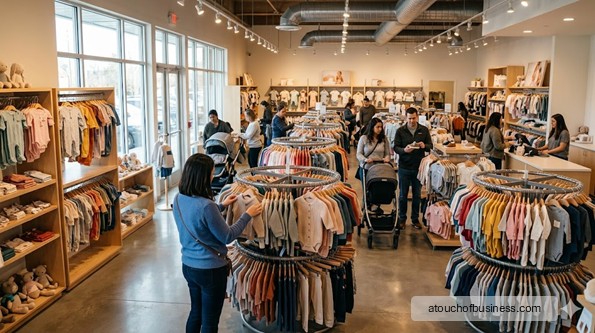
What to Expect From This Guide to Starting a Baby Clothing Store
This guide walks readers through the key decisions and practical steps involved in starting a baby clothing store, from personal fit and local research to positioning, storefront selection, compliant inventory, pricing, systems, staffing, and opening preparation. The selected highlights below show the range without summarizing every section.
Inside the guide, you will find:
- Startup roadmap: Follow a structured route from owner research and market validation through registration, location, sourcing, store setup, pricing, and opening checks.
- Owner interviews: Hear boutique owners and clothing founders discuss sourcing, inventory choices, customer needs, online sales, pricing, and everyday business demands.
- Startup FAQs: Get practical answers about retail licensing, product certificates, safety reporting, supplier checks, online competition, and store operating questions.
- Market positioning: Evaluate local family demand, chain and online competition, target customers, product range, price level, and reasons shoppers would visit.
- Store planning: Consider lease terms, parking, visibility, stroller access, fixtures, displays, storage, signage, POS features, and customer flow.
- Inventory compliance: Review supplier documentation, sleepwear standards, textile labels, size planning, seasonal buying, reordering, and markdown exposure.
- Money and opening: Examine startup costs, break-even assumptions, inventory margins, insurance, staff training, payment systems, and final readiness checks.
The article begins by asking whether boutique retail, customer interaction, inventory pressure, and an uneven income period suit your situation.
How to Start a Baby Clothing Store
A baby clothing store sells new clothing and accessories for infants and young children — typically newborns through toddlers — directly to parents, grandparents, and gift buyers from a physical storefront.
A well-run boutique offers something the big chains can’t: curation, personal service, and a gifting experience that feels special.
The path from idea to open door is longer and more capital-intensive than most first-time owners expect. The startup steps for a retail storefront involve lease commitments, inventory purchases, federal product safety compliance, and a ramp-up period before sales cover fixed costs.
Before you go further, ask yourself a few honest questions.
Do you enjoy helping expectant parents and gift buyers find the right thing? Can you handle unpredictable foot traffic and slow stretches? Are you prepared to manage inventory, supplier relationships, and daily store operations — often as a solo operator?
Running a baby clothing boutique means you’re on the floor every day. You’re receiving shipments, tagging merchandise, resetting displays, processing sales, and answering questions — all while managing the business behind the scenes.
You’ll also need financial staying power. Rent, insurance, payroll, and utilities run every month whether or not customers walk in.
Most retail boutiques take 12–24 months to reach break-even. Your household needs to be able to carry that weight.
Think through family support, personal savings runway, and your tolerance for income uncertainty before you sign anything.
What Customers Will Notice First
Customer impressions form fast in a baby boutique. The details that matter most from the moment someone walks in are often the ones owners overlook during setup.
- Whether a stroller can move through the store comfortably
- How merchandise is organized by age range and product category
- Whether the store feels curated and intentional or cluttered and random
- The quality and softness of the clothing on display
- How approachable and knowledgeable the person working the floor is
- Whether gift packaging and gift options are visible and appealing
- How easy the checkout experience is
Keep this customer perspective in mind through every setup decision — from layout to fixture height to aisle width.
Red Flags Before You Start
Some warning signs are worth knowing before you invest time and money in planning.
The local market may not support the store if:
- The area has a declining birth rate, an aging population, or low family-household density
- The target neighborhood is already well-served by Carter’s, Old Navy, Target, and similar competitors
- You don’t have a clear reason a customer would choose your store over ordering online
- Local retail rents are high relative to what a boutique-scale operation can realistically generate in sales
The finances may not work if:
- You don’t have enough capital to fund inventory, lease costs, and operating expenses for at least 12–18 months
- Your household can’t absorb a period without personal income from the business
- You don’t have verified funding secured before committing to a lease
The product side carries risk if:
- You plan to stock children’s clothing from suppliers who can’t provide federal product safety documentation
- You have no experience with wholesale buying or retail inventory management
- You haven’t mapped out a markdown and clearance strategy for slow-moving stock
Online retail — especially platforms like Amazon and large baby registry services — is a real structural pressure. Shoppers can often find the same brands cheaper online with free shipping.
Your boutique needs a genuine reason to exist in that market.
Step 1: Assess Whether This Business Fits You
Start with an honest self-evaluation before any other step.
The daily reality of running a baby clothing boutique includes managing supplier orders, receiving and tagging shipments, restocking displays, helping parents and grandparents find the right sizes, and processing returns — all while keeping the books.
Many boutique owners work long hours, especially in the early months before systems and staff are in place.
This business may not fit you if:
- You prefer behind-the-scenes work over daily face-to-face customer interaction
- You have low tolerance for slow sales periods or unpredictable income
- You don’t have a genuine interest in children’s fashion, gifting, or parent-facing retail
- You’d need the business to support your personal income within the first few months
If this still feels right after that honest look, that’s a meaningful signal. Genuine passion for the business doesn’t make the hard parts easy — but it makes them worth it.
Step 2: Talk to Baby and Children’s Clothing Store Owners
Before you commit to anything, talk to people who have already done this.
Seek out owners of baby and children’s clothing boutiques in markets you won’t compete in — different cities or different regions. Prepare specific questions before you reach out.
Good questions to bring to those conversations:
- What do you wish you had known before opening?
- How did you find your first suppliers, and what did you get wrong early on?
- Which inventory decisions cost you the most?
- How long did it take to reach break-even, and how did you manage cash flow until then?
- What’s the biggest pressure you didn’t see coming?
Every owner’s experience is different. But firsthand insight from people who’ve navigated wholesale buying, CPSC compliance, slow seasons, and lease negotiations is worth more than any guide.
Real business owner conversations are one of the best research tools available to you.
Step 3: Research Your Local Market and Competition
A baby clothing boutique lives or dies on local demand. Check yours before you plan anything else.
Look at who’s already operating in your target area. Carter’s, The Children’s Place, Old Navy Baby, and Target compete for the same customers at prices that are hard to match.
The boutique opportunity is in the gaps: curated brands customers can’t find in chain stores, a premium gifting experience, organic and eco-focused selections, or personalized service that mass-market retailers don’t offer.
Local demand signals worth checking:
- Proximity to maternity hospitals, OB/GYN offices, and pediatric practices
- Family-household density in the neighborhood
- Nearby complementary businesses — family cafés, toy stores, maternity boutiques
- Birth rate trends in your target area
- Whether there are already several baby boutiques competing for the same shoppers
Talk to expectant parents and new parents in the area. Ask where they shop now and what’s missing.
Understanding local supply and demand before choosing a location is one of the most important early steps you can take.
Step 4: Decide on Your Business Model and Store Positioning
Customers notice positioning immediately. A store that tries to be everything to everyone usually fails at being memorable to anyone.
Decide what your boutique stands for before you choose suppliers, set prices, or sign a lease.
Key decisions to make at this stage:
- Product focus: Newborns only, or newborn through toddler? Clothing only, or clothing plus accessories, gift sets, and small toys?
- Price positioning: Value-oriented basics, premium boutique, organic and eco-focused, or a mix?
- Store size and format: A small neighborhood boutique with a tight curated assortment, or a larger floor with broader categories?
- Gift registry service: Offering a baby shower registry differentiates independent boutiques from most online competitors. It requires a POS system with registry functionality and a deliberate customer experience around it.
Also think through whether you want to start from scratch or buy an existing children’s clothing store. An existing store may come with supplier relationships, inventory, and an established customer base — but also with unknown liabilities and lease terms that need careful review.
Consider whether to build or buy before committing to either path.
There’s no meaningful baby clothing franchise model for independent storefront operators. This is almost always a build-from-scratch or acquisition scenario.
Business Plan
A written plan forces you to answer the hard questions before you spend money on inventory or sign a lease.
Your plan should map out the business model and what makes you different, the store format and target square footage, location criteria, your supplier sourcing strategy, and how you’ll structure the initial inventory buy.
The financial section matters most. It should include a startup cost estimate built from real quotes — not guesses — and an operating capital reserve that covers fixed costs through the ramp-up period.
The profit picture in baby clothing retail requires honest math:
- Net profit margins in specialty clothing retail are thin after rent, staffing, utilities, and insurance
- Gross margins in a well-run baby boutique depend on controlling wholesale costs and managing inventory carefully
- Fixed costs run every month regardless of customer volume
- Seasonal demand spikes around baby showers, holidays, and clothing transitions — with quieter periods in between
- Inventory that doesn’t sell at full price must be marked down, which erodes margin
Calculate break-even using your own real numbers: monthly fixed costs, planned average transaction value, and the number of transactions per month needed to cover those costs at your target gross margin.
If the math doesn’t work with a realistic customer volume for that location, the location may not be right — or the model may need adjustment before you commit.
Your business plan also becomes the foundation for any loan application. If you’re exploring financing options, lenders will want to see it.
For guidance on structuring the plan, see how to write a business plan.
Step 5: Choose a Legal Structure and Register the Business
Most independent retail boutiques start as a limited liability company (LLC) for the liability protection it provides.
Choose your business structure before you open a bank account, sign a lease, or place any orders. Form the legal entity in the state where the store will operate.
If you plan to operate under a trade name different from your legal entity name, you’ll also need to file a DBA (doing business as) registration. Check with your state or county clerk’s office for that requirement.
Once the entity is formed, apply for an Employer Identification Number (EIN) through the IRS. You’ll need it for your business bank account, tax filing, and hiring employees. Apply online at IRS.gov and receive the number immediately.
Before investing in branding or signage, confirm your business name is available and check for trademark conflicts.
Step 6: Handle Tax Registration
Register for a state sales tax permit — also called a seller’s permit — with your state’s department of revenue or taxation. You must have this before you collect sales tax from your first retail customer.
Once you have the seller’s permit, use it to obtain a resale certificate. You’ll present this to each wholesale supplier so your inventory purchases aren’t charged sales tax at the wholesale level. Each supplier may require its own state-specific form.
Important: Some states exempt children’s or infant clothing from sales tax entirely. Others exempt it only below a certain price point. Verify the exact rule with your state revenue department before your first sale.
If you plan to hire employees, register for state and federal employer accounts as well.
Step 7: Find and Secure the Right Storefront
Location is one of the highest-impact decisions in this startup. The right space builds a customer base naturally; the wrong one makes it nearly impossible.
Customers — parents with strollers, grandparents shopping for gifts, friends picking up a baby shower present — need to find you easily, park without frustration, and move through the store comfortably once inside.
Location factors that matter most for a baby clothing boutique:
- Proximity to maternity hospitals, pediatric practices, OB/GYN offices, and family-focused neighborhoods
- Foot traffic from pedestrians and compatible nearby businesses — cafés, toy stores, maternity boutiques
- Parking availability, which is critical for parents with young children
- Stroller-accessible entry with wide doors and no steps at the entrance
- Square footage sufficient for display racks, checkout, back-of-house storage, and comfortable browsing
- Visibility from the street and a signage opportunity
Before signing any lease, verify these things:
- The space is zoned for retail use — confirm with the city or county planning department
- A certificate of occupancy for retail is in place, or will be issued after any required build-out
- The permitted use clause in the lease covers your product range
- Exterior and window signage is allowed, and what permits are required
- The space meets ADA accessibility requirements, or that required modifications will be completed before opening
Key lease terms to review carefully include base rent, annual rent escalations, common area maintenance charges, lease length, renewal options, and who is responsible for build-out costs.
Have a commercial real estate attorney or experienced tenant’s broker review the lease before you sign. A poorly structured lease is one of the most common reasons retail boutiques close early.
Don’t sign a lease before your funding is confirmed and your business plan shows the location can support break-even sales volume.
Step 8: Obtain Permits, Licenses, and Compliance Approvals
A baby clothing storefront requires several layers of approval before it can legally open.
Local and state requirements typically include:
- General business license from the city or county
- Zoning permit or land use confirmation that the space is approved for retail clothing sales
- Certificate of occupancy confirming the space is safe and approved for retail use
- Sign permit if you’re installing exterior or window signage
- Seller’s permit for sales tax collection (covered in Step 6)
ADA compliance is a federal requirement under Title III of the Americans with Disabilities Act. Retail stores are places of public accommodation, which means accessible entrances, wide aisles, and accessible pathways are legally required.
For a baby boutique, stroller-accessible aisles aren’t just a legal requirement — they’re what customers expect and need.
Some jurisdictions also require a permit for a business security alarm system. Check with local authorities.
For full guidance on what applies to retail businesses, see business licenses and permits.
Federal product safety compliance is a separate and mandatory obligation. The Consumer Product Safety Commission (CPSC) enforces safety standards for all children’s clothing sold in the United States. These standards apply to you as a retailer, not just to manufacturers.
What the CPSC requires retailers to understand:
- All children’s clothing must comply with flammability standards under the Flammable Fabrics Act (16 CFR Part 1610 for general daywear)
- Children’s sleepwear is a separately and more strictly regulated category — suppliers must provide CPSC-compliant flammability certifications for any sleepwear you stock
- All children’s products must bear a permanent tracking label identifying the manufacturer, production location, and batch number
- Children’s clothing must meet lead content limits set by federal law
Manufacturers and importers must issue a Children’s Product Certificate (CPC) for every children’s product they supply. Obtain a CPC from every supplier for every children’s clothing product you stock. You’re not legally required to maintain physical records of each one, but it’s advisable.
You also have a legal obligation to report to the CPSC any product you know or have reason to believe may pose a safety or health risk. Failure to report can result in civil or criminal penalties.
The FTC enforces textile labeling requirements as well. All clothing sold in the US must carry labels showing fiber content, country of origin, care instructions, and manufacturer or dealer identity.
As a retailer, you may not remove these labels without substituting a compliant replacement label and maintaining records for three years.
Verify CPSC compliance obligations at CPSC.gov under Business & Manufacturing → Business Guidance → Retailers Product Safety and Your Responsibilities.
Step 9: Source Suppliers and Place Your Opening Inventory Order
Your product assortment is what customers come for. Sourcing it well — and buying the right quantities — is one of the most skill-dependent decisions in this startup.
Baby clothing boutiques typically source through wholesale buying markets and trade shows, online B2B wholesale platforms like Faire, and direct wholesale accounts with children’s apparel brands.
Before placing any wholesale order, make sure:
- Your resale certificate is on file with each supplier
- You’ve requested and reviewed CPC documentation for each children’s clothing product
- Sleepwear suppliers have provided CPSC-compliant flammability certifications if you plan to stock sleepwear
Evaluate suppliers on minimum order quantities, lead times, return and exchange policies, restocking frequency, and how well their brand fits your store’s positioning.
Your opening inventory must be deep enough to fill the store with a shoppable assortment across your planned size ranges and product categories — but conservative enough to leave room for reorders once you see what actually sells.
Opening inventory planning considerations:
- Size range: newborn, 0–3M, 3–6M, 6–12M, 12–18M, 18–24M, 2T, 3T, 4T
- Product categories: onesies, sleepwear, outfits, outerwear, accessories, gift sets
- Seasonal timing: stock appropriate for the season you’re opening in, with lead time built in for your first reorder cycle
Babies outgrow sizes in weeks. Popular sizes — especially 0–3M and 3–6M — sell through quickly. Less popular ones sit. Build your size depth based on what you learn from owner conversations and early sales data.
Over-ordering in your first season is one of the most common and costly early mistakes in baby clothing retail. Order conservatively the first time. You can reorder what sells; you can’t easily move what doesn’t.
Step 10: Set Up the Store
The physical setup turns a retail space into a shopping experience. Customers form impressions quickly, and those impressions affect whether they buy — and whether they come back.
Store layout priorities for a baby boutique:
- Stroller-accessible aisles — aim for 36 inches minimum width, wider where possible
- Display racks organized by age range and product category, clearly signed
- Low fixtures that allow easy browsing without reaching overhead
- A dedicated gift display area near checkout, where gift buyers naturally look
- A clean, welcoming checkout counter with room for gift wrapping
- Back-of-house storage for reserve inventory and a receiving surface for processing shipments
Choose fixtures carefully. Avoid sharp edges or low-hanging elements that could pose risks to toddlers in the store with their parents.
Lighting, color palette, and overall feel signal your positioning immediately. A premium boutique and a value-oriented basics store should look different from the moment a customer walks in.
Your storefront signage is the first impression customers get from outside. Make sure it reflects the store’s personality and is visible from the street.
Step 11: Set Up Your POS, Inventory System, and Payments
A retail POS system designed for apparel is essential. Baby clothing has dozens of size variants, seasonal collections, and high SKU counts — you need a system built to handle that complexity.
Your POS system should handle:
- Inventory tracking by size, color, style, and SKU
- Barcode scanning and label printing for price tags
- Sales tax collection and reporting
- Payment processing — credit, debit, and contactless
- Returns and exchanges
- Gift registry functionality, if you plan to offer registry service
Options commonly used in children’s clothing boutiques include Lightspeed Retail, Square for Retail, Shopify POS, and specialty children’s boutique POS platforms.
Open a dedicated business bank account before the store processes any revenue. Keep business and personal finances completely separate from day one.
Set up a merchant account or POS-integrated payment processing so you can accept all major payment methods at launch.
Step 12: Set Your Prices
Customers notice pricing immediately — both whether it feels fair and whether it signals quality. In a baby boutique, your prices communicate your positioning as much as your merchandise does.
Retail pricing in baby clothing follows a markup model applied to wholesale cost. The markup you apply needs to cover all overhead — rent, payroll, utilities, insurance — and still leave room for profit after markdowns on slow-moving inventory.
Pricing factors to work through:
- Wholesale cost for each product category
- Target gross margin for the store overall
- Competitive price awareness in your local market
- How your pricing compares to online competitors for similar items
- Gift set and accessory pricing, which often carry stronger margins than basics
- Markdown risk — some inventory will sell below full retail, especially seasonal items
Don’t price by intuition. Calculate the markup needed on each category to reach your gross margin target after accounting for all overhead.
For guidance on pricing methodology, see pricing your products and services.
Step 13: Secure Business Insurance
Get insurance in place before you open. Some coverage is required; all of it is necessary.
Coverage to carry before opening:
- General liability insurance: protects against third-party bodily injury and property damage claims — for example, a customer slipping in the store
- Commercial property insurance: covers your fixtures, inventory, and business property; often required by your landlord as a lease condition
- Product liability insurance: important for any retailer of children’s products; covers claims related to injuries caused by products you sold
- Workers’ compensation insurance: required in most states once you hire employees; verify your state’s threshold
Business interruption insurance is also worth evaluating — it covers lost income during a forced closure.
Work with an independent insurance broker experienced in retail operations to compare policies. For an overview of what business insurance typically covers, see business insurance.
Step 14: Hire and Train Staff
Many baby clothing boutiques open as owner-operated, with one part-time assistant at most.
If you do hire, complete all required employer setup first: state and federal employer accounts, workers’ compensation, I-9 documentation, and payroll.
Customers shopping for baby clothing — especially gift buyers and first-time parents — often have questions about sizing, fabric, care, and safety. The person working the floor needs to know the products well and feel comfortable in those conversations.
Train staff on:
- Size ranges and what they correspond to in months and weight
- Material descriptions and care instruction basics customers frequently ask about
- How to operate the POS system, including gift registry lookup
- How to process returns and exchanges
- How to receive, tag, and merchandise incoming shipments
For guidance on when and how to bring on help, see hiring for your business.
Step 15: Complete Your Pre-Opening Checklist
Don’t open before you’re ready. A rushed opening leaves a first impression that’s hard to undo.
Confirm the following before you open:
- All permits are in hand: business license, certificate of occupancy, sign permit, seller’s permit
- ADA accessibility is confirmed for the space
- All business insurance policies are bound and active
- Opening inventory is fully received, inspected, tagged, and loaded into the POS system
- CPC documentation is on file from each supplier for all children’s products in stock
- Sleepwear supplier CPSC flammability compliance is confirmed if you’re stocking sleepwear
- All FTC-required textile labels are confirmed on garments — fiber content, care instructions, country of origin
- POS system, payment processing, and gift registry are fully set up and tested
- Store layout, displays, and signage are complete
- Return and exchange policy is finalized and posted at checkout
- Staff are trained and ready
Consider a soft opening before your formal launch date. A quiet test run helps catch problems — in the POS system, the layout, the checkout flow — before you’re managing real customer volume.
Opening-Day Red Flags
Even with careful planning, some issues only surface when the store opens. Watch for these before and during your first days.
On the product and compliance side:
- Any supplier who can’t or won’t provide CPC documentation — don’t put those products on the floor
- Garments arriving without required FTC labels — don’t sell them until the label issue is resolved
- Sleepwear that arrives without CPSC flammability certification documentation — pull it and verify before stocking
On the operations side:
- POS system errors or payment processing failures — test everything again the morning before you open
- Inventory not fully tagged or entered into the system — an incomplete setup creates checkout problems and inaccurate stock counts
- Aisles too narrow for a stroller once fixtures and inventory are in place — walk the floor with an actual stroller before opening day
On the location and setup side:
- Certificate of occupancy not yet issued — you cannot legally open without it
- Sign permit not in place before exterior signage is installed — some jurisdictions require inspection before the sign goes up
- A build-out or renovation that isn’t fully complete — don’t open in a space that still feels unfinished to customers
Frequently Asked Questions
Do I need a special license to sell baby clothing in a storefront?
There’s no federal license specific to baby clothing retail. You’ll need a general business license from your city or county, a state seller’s permit, and zoning approval for retail use.
CPSC product safety requirements also apply — these aren’t licenses, but they are mandatory federal compliance obligations for anyone selling children’s clothing.
What is a Children’s Product Certificate, and do I need one?
A Children’s Product Certificate (CPC) is a compliance document issued by the manufacturer or importer of a children’s product, certifying that it meets all applicable CPSC safety standards. Manufacturers and importers issue CPCs — not retailers.
As a retailer, you should obtain a CPC from every supplier for every children’s clothing product you stock. You’re not legally required to maintain physical records of each one, but it’s advisable.
You are legally required to report to the CPSC any product you know or have reason to believe poses a safety risk.
What are the rules for selling children’s sleepwear?
Children’s sleepwear is a strictly regulated CPSC category separate from general daywear. Sleepwear in sizes 0 through 6X is governed by 16 CFR Part 1615, and sizes 7 through 14 by 16 CFR Part 1616.
These standards require compliance with specific flammability requirements. Confirm that any sleepwear supplier provides proper CPSC-compliant documentation before stocking it.
Tight-fitting infant garments may qualify for different treatment under the sleepwear standards — verify with the supplier’s CPC documentation.
Is baby clothing exempt from sales tax?
Some states exempt children’s or infant clothing from sales tax, but rules vary significantly by state and sometimes by price point or garment type. There is no uniform federal exemption. Verify the specific rule with your state’s department of revenue or taxation before your first sale.
How do I source inventory for the store?
Most independent baby boutiques source through wholesale buying markets and trade shows, online B2B wholesale platforms like Faire, and direct wholesale accounts with children’s apparel brands.
You’ll need a valid resale certificate on file with each supplier before placing tax-exempt wholesale orders. Evaluate every supplier on CPSC compliance documentation, minimum order quantities, lead times, and brand fit before committing to an opening order.
How much inventory should I buy to open?
The opening order needs to fill the store with a complete, shoppable assortment across your planned size ranges and product categories — but not so deep that unsold items lock up capital.
Get actual wholesale quotes from your planned suppliers, build a detailed open-to-buy plan with planned quantities per size and SKU, and leave room in your budget for a reorder cycle within the first 60–90 days. Order conservatively your first season.
Should I offer a baby shower gift registry?
A gift registry is a meaningful differentiator for independent baby boutiques. It can generate significant gifting-driven sales and turn registry customers into regular shoppers.
It requires a POS system with registry functionality and a deliberate in-store experience for customers who come in to register. Evaluate whether your planned POS system supports this before committing to the service.
What are the most common startup mistakes in baby clothing retail?
The most costly early mistakes include signing a lease before verifying the location can support break-even sales volume, over-ordering inventory in the first season before you know what sells locally, and not planning enough operating capital to cover fixed costs through the ramp-up period.
Other common mistakes: stocking children’s products from suppliers who can’t provide CPC documentation, and not confirming ADA accessibility requirements for the space before opening.
Talking to experienced boutique owners before you start is the most reliable way to avoid the worst of these.
Advice From Baby Clothing Store Owners
These interviews share practical lessons from baby boutique owners, children’s clothing brand founders, and resale children’s clothing sellers who have already built businesses in this market.
Readers can use their advice to think through product selection, pricing, customer fit, online sales, inventory choices, local demand, and the daily reality of running a baby clothing store before getting started.
Interview with Simply Preloved Children’s Boutique: A Sustainable Solution
This interview with Kate Casey explains how she started an online preloved baby and toddler clothing boutique, including sourcing, quality checking, customer service, website setup, and balancing business with family life.
Exploring Life & Business with Carla Barba of Little Loves Baby Apparel
This founder interview covers the start of an affordable baby apparel boutique, the need for stronger baby boy clothing options, and the personal motivation behind building a small clothing business.
E28: Carolina Brown – Owner of Rok ’n’ Ell Baby Boutique & More
This audio interview discusses the small business journey behind Rok ’n’ Ell Baby Boutique, what it is like to run a local baby boutique, and how the owner adjusted after the business first felt overwhelming.
Starting a Kids Clothing Brand and Growing to $12k/mo
This founder interview with Cameron Olthuis covers creating a kids clothing brand, choosing a product concept, developing durable apparel, and building a business around a clear customer lifestyle.
How I Started A $750K/Month Infant And Toddler Clothing Brand
This interview with Erin E. Hooley of Bailey’s Blossoms explains how an infant and toddler clothing business grew from a home-based start into a larger children’s apparel brand, with useful lessons on product expansion, online selling, and persistence.
Interview of a Store Owner: Dominique – Les petits Chapelais, NY
This children’s boutique owner interview covers curation, brand selection, customer relationships, local retail challenges, and how independent children’s clothing stores can compete through personal contact and distinctive inventory.
Related Articles
- How To Start a Children’s Clothing Boutique
- How To Start a Retail Clothing Business
- How To Start a Children’s Furniture Store
- How To Start a Local Toy Store Business
- How To Start a Children’s Subscription Box Business
- How To Start an Athletic Clothing Line
Sources:
- CPSC.gov: Retailers: Product Safety Responsibilities, Children’s Sleepwear Standards FAQ, Clothing Flammability Business Guidance, Children’s Tracking Label FAQ, Flammable Fabrics Act Overview
- FTC.gov: Textile Labeling Requirements Guide, Care Labeling Rule Compliance
- Foley & Lardner: CPSC Apparel Compliance Overview
- LegalClarity.org: Children’s Clothing Safety Regulations
- Faire.com: Resale Certificate Retailer Guide
- RainPOS: Retail License for Boutiques
- UpCounsel: Retail Store Legal Requirements
- Wolters Kluwer: Retail Business License Portfolio
- ResaleCertificate.org: Boutique Resale Certificate Guide
- AccessibilityChecker.org: ADA Requirements for Retail Stores
- NRF/Retailers.com: ADA Compliance for Retailers
- SCORE.org: Choosing Retail Location
- Material Retail: Boutique Lease Mistakes to Avoid
- Aquila Commercial: Choosing the Right Retail Location
- Grand View Research: Baby Apparel Market Analysis
- Hip Baby Gear: Why Baby Stores Are Disappearing
- TRUiC: How to Start a Baby Store
- Lightspeed: Kids Clothing Store POS Guide
- POS Nation: Clothing Store POS Hardware
- GBGMT.com: Children’s Clothing Profit Margins