
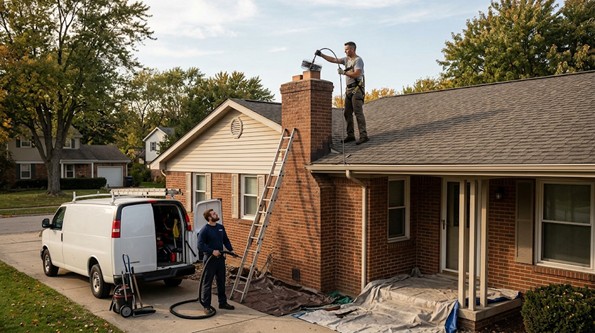
What to Expect From This Guide to Starting a Mobile Chimney Sweep Business
This guide walks you through the key decisions and practical steps involved in starting a mobile chimney sweep business, from evaluating the opportunity through setup, financial planning, and opening preparation.
Inside the guide, you will find:
- Startup steps: Follow an ordered path from evaluating the business and local demand through setup, testing, and preparing for paid appointments.
- Startup FAQs: Review practical answers about certification, part-time operation, vehicles, home-based setups, equipment choices, and when to consider hiring.
- Business fit: Consider the physical demands, seasonal workload, income patterns, and working conditions before committing to the trade.
- Market demand: Assess local housing, competing sweeps, referral opportunities, service territory, and travel time between appointments.
- Services and equipment: Plan your service menu, vehicle setup, cleaning and inspection tools, safety gear, suppliers, and job workflow.
- Local requirements: Examine business registration, licensing, certification, insurance, permits, taxes, and requirements that may depend on your location and services.
- Financial preparation: Work through startup cost categories, seasonal cash flow, pricing, profit logic, funding options, and important opening-day warnings.
With those considerations in view, you can begin by deciding whether the mobile chimney sweep business and its seasonal, hands-on work suit you.
Starting a Mobile Chimney Sweep Business
A chimney sweep inspects, cleans, and maintains chimney and venting systems for homeowners, one appointment at a time.
In the mobile model, you bring the truck, the tools, and the expertise straight to the customer’s roofline.
There’s no storefront to staff and no walk-in traffic to manage.
Your income comes from sweeps, inspections, minor repairs, and services like dryer vent cleaning that share your equipment and skill set.
Before you buy a single brush, it helps to walk through the full startup process so nothing catches you off guard later.
Is a Mobile Chimney Sweep Business Right for You?
This work is physical, seasonal, and often performed on a roof in less-than-ideal weather.
Before you commit, be honest about whether the lifestyle fits you.
- Are you comfortable on ladders and rooftops, in tight fireboxes, and in dusty attics?
- Can your household handle a year where fall and winter carry most of the income and spring and summer run lean?
- Do you have savings or another income source to cover you through a slow first off-season?
- Are you prepared for the physical toll of climbing, kneeling, and lifting several times a day during peak season?
Talk with sweeps operating outside your market and with other mobile-trade owners before you decide anything else.
Ask them about realistic daily workload, how they handle slow months, and where their referrals actually come from.
Their experience is useful precisely because every owner’s path looks a little different.
This business may be worth pursuing if:
- You want a trade with low overhead and no retail lease
- You’re drawn to hands-on, technical work with a clear right and wrong way to do it
- You’re comfortable building income around a seasonal calendar instead of steady monthly demand
Local demand matters too.
Older housing stock, colder climates, and a high share of wood-burning fireplaces or stoves all point toward stronger demand.
Check who else is already sweeping chimneys in your area.
Find out whether real estate agents or home inspectors nearby already have a go-to sweep for the inspections home sales require.
Those relationships are often how new sweeps land their first customers.
Homeowners rarely search for a sweep until the weather turns cold.
Red Flags Before You Start
Some conditions should slow you down, not stop you, but they deserve a real answer before you spend money.
- Weak local demand. Warm-climate areas with newer construction and few wood-burning appliances shrink your customer pool. Verify your local housing stock before committing.
- Uncertified competition. Anyone can advertise chimney cleaning in most places, and uncertified operators often undercut price. Check the local pricing and credential landscape before you set your rates.
- Seasonal cash flow. Demand concentrates heavily in fall and winter, leaving a real gap in spring and summer. Build an operating capital plan before you take on loan or lease payments.
- Licensing uncertainty. Whether a license applies often depends on whether you plan to do repair or masonry work. Verify this before signing a lease or buying major equipment.
- Physical fit. Rooftop work, tight spaces, and heavy lifting aren’t for everyone. If this is a limiting factor, plan to hire help before you open rather than after.
Beyond your own situation, a few things are simply true of this trade no matter how well you run it.
There’s no single national license, so compliance is a jurisdiction-by-jurisdiction question you’ll revisit as you grow.
The low barrier to entry means uncertified operators can and do compete on price.
A missed defect can contribute to a house fire or carbon monoxide problem.
That risk means your liability exposure runs higher than in many home-service trades.
None of this should scare you off.
It should shape how carefully you build your credentials, your insurance, and your pricing from day one.
Step 1: Choose How You’ll Enter the Business
You have three realistic paths into this trade: start from scratch, buy an existing operation, or explore a franchise.
Buying an existing sweep business can be appealing because much of the customer base returns year after year on an annual cycle.
If you go this route, look closely at a few factors before you sign anything.
- The seller’s customer list and how consistently those customers rebook each year
- The condition and age of the included equipment and vehicle
- Whether the seller’s certification transfers, or whether you’ll need to earn your own
Franchise systems exist in this trade as well, offering training and a protected territory.
In exchange, you take on franchise fees and other ongoing obligations.
Weigh that structure against your budget and your desire for independence.
Review the specifics in any franchise disclosure document before you decide.
Pick your entry path before you spend money on equipment or a vehicle.
Step 2: Validate Local Demand and Map Your Territory
Your service radius drives almost everything else — pricing, scheduling, and how many appointments you can realistically run in a day.
Start by sizing up the market you’d actually be entering.
- Count the wood-burning fireplaces, wood stoves, pellet stoves, and gas fireplace inserts in your target area
- Identify existing certified sweeps, along with any uncertified operators offering the same service
- Find out which real estate agents, home inspectors, and hearth or fireplace retailers are active locally
Think about your territory as a route, not just a map pin.
A tight, well-planned radius means more appointments per day and less time burned in the truck.
A radius that’s too wide looks appealing on paper but eats your day in drive time between jobs.
Build in travel buffers for traffic and weather delays rather than scheduling back-to-back appointments with zero cushion.
Set your service radius before you commit to a vehicle size or a daily appointment target.
Step 3: Build Your Service Menu
Decide what you’re actually selling before you build anything else around it.
At minimum, that means sweeping and the three levels of chimney inspection defined by the industry’s national safety standard.
Those levels range from a basic annual visual check to an in-depth investigation of suspected hidden damage.
Consider building your menu around:
- Standard sweeping and annual inspection for wood, gas, and pellet appliances
- Minor component work — caps, dampers, spark arrestors, and animal or nest removal
- Dryer vent cleaning, which uses much of the same equipment and skill set
- Referring out larger masonry, relining, or rebuild work you’re not equipped or credentialed to handle
Gas appliances belong on this list even though they don’t produce creosote the way wood fires do.
Annual inspection applies across fuel types, not just wood-burning systems.
Don’t build a menu that quietly excludes gas fireplace owners.
Write down where your skill and equipment stop.
Plan to refer anything beyond that line to a specialist.
Step 4: Set Up Your Legal Structure and Registration
Pick a legal structure before you register anything else.
Most new owners choose between a sole proprietorship and an LLC, weighing simplicity against personal liability protection.
Before you move forward, take care of:
- Registering your entity with your state
- Filing a DBA if you’ll operate under a name other than your own
- Applying for a federal EIN, which you’ll need for banking, taxes, and hiring later
Get this foundation in place before you open a business bank account or apply for any license.
Step 5: Check Licensing Requirements Before You Commit
Most places don’t issue a license called a “chimney sweep license.” That doesn’t mean you’re automatically in the clear.
Licensing can still apply depending on the scope of work you plan to offer, particularly once you move from sweeping into repair or masonry.
Verify these before signing a lease or buying equipment:
- Whether your state requires a general or home-improvement contractor license for the repair work you plan to offer
- Whether your city or county requires a general business license
- Whether operating from home triggers a home-occupation permit
- Whether your state or local sales tax rules apply to your labor, any parts you sell, or both
Check with your state’s contractor licensing board and your local business license office directly.
Rules vary by jurisdiction, so don’t assume what applies somewhere else applies to you.
Step 6: Get Certified and Join a Trade Association
Certification isn’t legally required in nearly any state, but it’s the closest thing this trade has to a national quality standard.
Certification exams typically draw from a chimney-sweeping training text and the national fire-safety standard for chimneys and venting.
They also cover residential building code material.
Review preparation comes in a few formats, including an intensive multi-day course that ends with the exam itself.
Joining a national trade association once you’re certified gives you technical support and continuing education.
It also comes with a code of ethics that builds trust before you’ve built a track record.
Put your certification badge on your vehicle, your invoices, and your website as soon as you earn it.
Step 7: Open Your Business Bank Accounts
Keep your business transactions separate from your personal ones from day one.
- Open a dedicated business checking account
- Get a business credit card for equipment and supply purchases
- Set up a way to collect payment on-site, such as a card reader linked to an invoicing platform
Have this in place before your first paid appointment, not after.
Step 8: Get Insured
General liability protects you against third-party injury and property-damage claims.
That includes soot or creosote that ends up somewhere it shouldn’t.
It also covers completed-operations exposure if a missed defect later contributes to a fire or a carbon monoxide problem.
Commercial auto coverage matters because a personal auto policy typically excludes business use of your vehicle.
Workers’ compensation becomes a requirement in virtually every state the moment you hire your first employee.
Depending on your service menu, also price out professional liability or errors-and-omissions coverage for your written inspection reports.
Coverage for your tools and equipment is worth pricing out too.
Get quotes for full business insurance coverage before you finalize your business model.
Availability and cost can shape what you’re able to offer.
Step 9: Set Up Your Mobile Service Vehicle
Your vehicle is your shop, so it needs to work as hard as you do.
A cargo van or pickup is the standard vehicle for this trade.
Size it to carry your ladder, rod cases, and vacuum equipment.
Build your vehicle around a few core needs:
- A roof- or rack-mounted ladder system rated for secure transport
- Interior shelving or bins that keep rods, brushes, and parts organized by job type
- Vehicle signage with your name, phone number, and certification credentials
- A loading routine you follow the same way before every appointment, so nothing gets left behind
Plan for vehicle maintenance and keep a backup ladder or set of core tools on hand.
A breakdown or damaged tool mid-route can cost you the rest of the day.
Build travel buffers into your schedule for traffic and weather.
Don’t book appointments back-to-back with zero cushion.
Finalize your vehicle setup before you commit to a daily appointment count.
Step 10: Build Your Equipment Kit and Safety Program
Your working kit combines traditional brushes and rods with modern tools.
That includes rotary power equipment, an inspection camera, a HEPA vacuum, and safety gear.
Core cleaning and inspection equipment:
- Chimney brushes sized and styled for different flue types and materials
- Rod and extension sets with a connector system for full-length access
- A rotary power-sweeping system with interchangeable brush, nest-removal, and creosote-scraper heads
- A flashlight or headlamp, inspection mirror, and flue-measuring gauge
- A video inspection camera for documenting flue condition, especially for the more in-depth inspection level real estate transactions require
Cleanup and safety gear:
- A HEPA-rated vacuum that captures fine soot particles an ordinary shop vacuum lets through
- Drop cloths and containment bags for debris
- A fall-protection harness, roof anchor point, and ladder stabilizer
- A respirator, goggles, gloves, and knee pads
Decide early whether you’ll start with manual brush-and-rod equipment or invest in a rotary system and camera right away.
Either way, get trained on how to use each tool safely before you rely on it in front of a customer.
As a self-employed owner with no employees, you’re not directly covered by federal workplace safety rules.
That doesn’t make fall protection optional.
Rooftop falls are the leading safety hazard in this trade.
Following recognized safety practices protects you and limits your liability either way.
Step 11: Set Up Your Suppliers
Reliable parts flow keeps a slow week from turning into a lost week.
- Open an account with a chimney supply distributor for brushes, rods, caps, dampers, and sealants
- Identify a backup supplier in case your primary source runs out of a part during peak season
- Track which parts you use most often so you can restock before you run out, not after
Set up your primary and backup supplier accounts before your first busy season, not during it.
Step 12: Build Your Job Workflow From Intake to Handoff
A clear, repeatable process is what separates a professional operation from a truck with tools in it.
A solid workflow typically moves through:
- Intake — scheduling the appointment and noting the appliance type and any known issues
- Inspection — performing the appropriate inspection level and documenting findings with photos or video
- Estimate and approval — explaining findings clearly and getting sign-off before any additional work begins
- Service — performing the sweep, cleaning, or minor repair
- Testing and documentation — confirming the work and recording before-and-after results
- Payment and handoff — collecting payment on-site and explaining any findings or follow-up recommendations
Build your paperwork around this flow before you take your first job.
- Inspection report templates for each inspection level
- Invoice and estimate forms
- A scope-of-work or liability waiver for any repair work
Clear documentation protects you if a customer later disputes what was found or what was done.
It also builds the kind of trust that turns a first-time customer into an annual one.
Step 13: Set Up Your Business Identity
Because there’s no walk-in storefront, your vehicle and your paperwork do a lot of the trust-building for you.
- Finalize your business name and logo
- Add vehicle signage or a wrap that displays your name, phone number, and certification
- Set up a website or listing page with your contact information and service area
- Order business cards to leave with every customer
Make your certification visible everywhere a customer might look, since it’s one of the few credibility signals this trade offers.
Step 14: Decide on Staffing and Line Up Your First Customers
Most new sweeps start solo. Decide now whether that’s your plan for year one or whether you’ll hire from the start.
If you do hire, get workers’ compensation coverage in place before that person’s first day, not after.
For your first customers, lean on relationships rather than cold advertising.
- Real estate agents and home inspectors, who regularly need inspections for property transactions
- Hearth and fireplace retailers, who get asked for sweep referrals constantly
- Homeowners in older neighborhoods with a high share of wood-burning fireplaces
Build these relationships before your first busy season starts, not once the phone stops ringing.
Step 15: Run a Test Job and Complete Your Pre-Opening Checklist
Before you take your first paid appointment, run through your full process once on a practice job.
Test your rod and camera system on a practice run.
Test your HEPA vacuum and containment routine at the same time.
Run through your full report and invoicing process from start to finish.
Confirm each of these before you open:
- Certification complete, or exam date confirmed
- Business entity registered, EIN obtained, and any required DBA filed
- All applicable licenses and permits in hand
- General liability and commercial auto insurance active, with certificates ready to show clients
- Workers’ compensation in place if you’re hiring before opening
- Business bank account and on-site payment processing working
- Vehicle upfitted, loaded, and organized
- Equipment tested and in working order
- Supplier accounts set up for brushes, rods, caps, and parts
- Report templates, invoices, and waiver forms finalized
- Signage, business cards, and contact information finalized
- Referral relationships started with agents, inspectors, or retailers
- Pricing finalized based on your own local research
Work through this list in full before your first paid appointment goes on the calendar.
Business Plan
Your plan doesn’t need to be complicated. It needs to turn everything above into a schedule and a budget you can actually follow.
Start by listing your major startup cost categories:
- Vehicle and ladder rack upfit
- Core sweeping and inspection equipment
- Safety gear
- Certification and association dues
- Business registration, licensing, and insurance
- Business identity and paperwork
- Operating capital to carry you through the slow season
Price each category locally rather than relying on a number you saw somewhere else.
Costs shift depending on whether you buy new or used equipment.
They also shift based on whether you already own a suitable vehicle.
Launching solo versus hiring right away changes your numbers too.
That last cost category — operating capital — deserves extra attention.
Demand in this trade concentrates heavily in fall and winter, with a real slowdown in spring and summer.
Build enough of a cash cushion to cover fixed costs like insurance and loan payments through that slower stretch.
Consider filling the gap with dryer vent cleaning or real estate inspection work.
For pricing, most owners charge a flat rate that varies by inspection level and service type.
Many also add a minimum trip charge and extra fees for heavy creosote buildup or multiple flues.
Research what sweeps in your area actually charge.
Use our pricing guide to help structure your rates.
On profit potential, remember your revenue is built appointment by appointment, not through a subscription.
Ask yourself how many jobs per week you need to cover your fixed costs.
Base that number on a full year, not just the fall rush.
If that number looks unrealistic for your territory size, revisit your pricing or your service area.
Do this before you commit to major purchases.
If you need outside funding for a vehicle or equipment, explore your options before you sign for anything.
Personal savings, an SBA-backed loan, supplier equipment financing, and a line of credit are all worth comparing.
Opening-Day Red Flags
A few gaps are easy to miss right before opening.
Each one can cost you a job or a customer relationship.
- No backup equipment. A single point of failure on your rod system or vacuum can cost you an entire day’s schedule. Have a backup plan for your core tools.
- No insurance certificate ready. Some customers, real estate agents, and property managers will ask for proof of coverage before they book you. Have it ready to send, not something you scramble for.
- Pricing not finalized. Walking into your first appointment without confirmed local pricing invites underpricing or awkward on-the-spot decisions.
- Untested workflow. If your first real job is also the first time you’ve run your full report-and-invoice process, mistakes show up in front of a paying customer instead of in practice.
- No travel buffer. Scheduling back-to-back appointments with zero cushion turns one traffic delay or one longer-than-expected job into a missed appointment.
Work through your pre-opening checklist fully before you book your first paid job.
Frequently Asked Questions
Is “certified chimney sweep” a government license?
No. In nearly every state, there’s no government license specific to chimney sweeping.
“Certified” typically refers to a private industry credential, not a government designation.
The term itself isn’t regulated, so uncertified competitors can use it loosely too.
Earning a recognized certification is still the clearest way to set yourself apart.
Can I run this business part-time while keeping my current job?
You can, but plan carefully around the calendar. Your busiest season is exactly when a second job is hardest to work around.
Decide upfront how you’ll handle overflow demand during peak months if you can’t take every call.
What if I don’t have a cargo van or pickup yet?
A passenger vehicle limits how much ladder and equipment you can transport safely, which limits which jobs you can take.
A trailer or a rack retrofit on a smaller vehicle can bridge the gap until you’re ready to invest in a dedicated work vehicle.
My lease or HOA restricts parking a marked work vehicle overnight. What then?
This is worth checking before you commit to signage or a wrap, since some agreements restrict overnight parking of marked commercial vehicles.
Confirm your lease or HOA rules directly.
Consider a nearby storage option if restrictions apply to your situation.
How do I know when solo operation stops working?
Rooftop work often goes safer and faster with a second person for ladder support, so this isn’t purely about how busy you are.
If you’re regularly turning down jobs or feeling unsafe working alone on certain roofs, that’s a signal.
Missing appointments due to scheduling conflicts is another sign it’s time to plan your first hire.
Should I buy new or used equipment?
Both are common in this trade. New equipment usually comes with a warranty and predictable reliability during your busiest season.
Used equipment can lower your upfront cost but carries more risk of downtime.
Weigh reliability against budget for each piece rather than deciding across your whole kit at once.
Is a home-based setup enough, or should I rent separate space?
For most mobile sweeps, a home-based setup is enough, since the business runs entirely on-site with no client-facing space.
The bigger questions are whether your home setup meets local permit rules and whether you have secure storage for your vehicle and equipment.
Interviews with Chimney Sweep Professionals
These interviews feature experienced chimney sweep professionals discussing how they entered the trade, built service operations, trained technicians, developed teams, and grew their businesses.
Readers can use their experiences to think through training, pricing, staffing, seasonality, customer service, and the systems needed to build a chimney sweep business that can grow beyond the owner.
Building a Service-First Business: An Interview With Bart Ogden
Bart Ogden explains how he started as a chimney sweep without a showroom and built a service-focused business. He discusses pricing, technician training, inspections, certifications, customer relationships, and using slower periods for training and cross-training.
This interview is useful for someone considering the business because it connects technical competence with knowing costs, setting profitable prices, developing technicians, and creating repeat service relationships.
Joe Ochal: From Lab Coat to Chimney Sweep
Joe Ochal describes turning a part-time chimney cleaning job into The Chimney Scientist. He also discusses ongoing technician education and the use of technology in field diagnostics.
This interview is useful for a prospective owner because it shows a path from part-time chimney work to a larger service company while emphasizing technical training as a way to strengthen the business.
Chimney Sweep to Multi-Million Dollar CEO
Daniel Gainey explains how a part-time chimney sweeping venture developed into a much larger business while he was balancing other work. The conversation also covers contractors, important business turning points, and guidance he received from mentors.
This interview is useful for someone preparing to start because it examines the transition from side work to full entrepreneurship and some of the operating decisions that arise as a chimney service company grows.
Mark Stoner: Blue Collar Gold
Mark Stoner discusses growing Ashbusters Chimney Service and lessons from scaling a chimney business. Topics include getting started in chimney work, accountability, service speed, balancing speed with quality, and reducing dependence on the owner.
This interview is useful for a new owner because it highlights the importance of building people and systems rather than creating an operation that can function only when the founder is personally involved.