
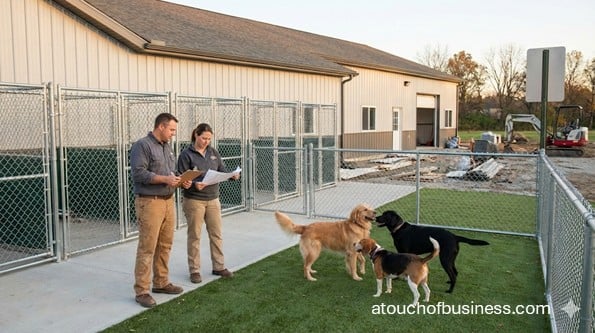
From Location Approval to Pre-Opening: What to Plan For
A dog kennel business is a place where you care for dogs when their owners can’t—most often for overnight boarding, daytime care, or both. Some kennels are simple and small. Others look more like a full facility with multiple rooms, fenced yards, a reception area, and staff coverage all day.
Before you go any further, do a personal check. “Are you moving toward something or running away from something?” If you’re starting mainly to escape a job you hate or a financial bind, that may not hold your motivation when the work gets hard.
You also need to decide if business ownership is right for you—and if this business is the right fit. Passion matters because it helps you push through problems; without it, people often look for a way out instead of looking for solutions. If you want to think this part through, start with Points to Consider Before Starting Your Business and How Passion Affects Your Business.
Now the reality check. Are you ready for uncertain income, long hours, difficult tasks, fewer vacations, and full responsibility? Is your family or support system on board? And do you have (or can you learn) the skill set—and secure enough funds to start and operate?
One more move that helps a lot: talk to owners in the same business—but only talk to owners you will not be competing against. That usually means a different city, region, or service area. You want truth, not guarded answers.
Smart questions to ask those owners:
- What did you underestimate before you opened—time, approvals, build-out, or staffing?
- Which local approvals slowed you down the most, and who helped you get clear answers?
- If you had to restart, what would you lock in before you signed a lease or built anything?
If you want a wider view of what ownership feels like, you can also read Business Inside Look. It helps you look at the flip side—what you gain, and what you carry.
Is This A Small-Scale Or Large-Scale Business?
It can be either. That’s the tricky part—and the opportunity.
A small-scale kennel might be a limited-capacity setup you run yourself, with part-time help during busy periods. A large-scale kennel usually means a bigger facility, more build-out, more approvals, and staff coverage that you can’t do alone.
Here’s a practical way to tell which direction you’re leaning. If you need a commercial lease, construction work, multiple staff members from day one, and a high monthly overhead, you’re closer to a large-scale setup. If you can legally operate with a small capacity and limited build-out, you may be able to start smaller and grow.
Think about the flip side. Starting smaller can reduce financial pressure, but it can also limit revenue and availability. Starting bigger can support more customers, but it raises risk if approvals or demand don’t line up.
Common Dog Kennel Business Models
Most new owners choose one of a few basic models, then add services later. Your model affects everything—your location, equipment list, staffing, and startup cost.
Common models include:
- Overnight boarding only: Focused on short-term stays, often tied to travel seasons and weekends.
- Daycare only: Daytime supervision and structured play, usually more tied to weekday demand.
- Boarding + daycare: The most common full-service model, but it often requires more space and more coverage.
- Standard runs vs. private suites: Suites can support higher pricing, but build-out and cleaning needs can increase.
- Solo owner-operator vs. staffed facility: A small capacity may be possible solo; higher capacity usually is not.
Your location also matters more than you might think. If you’re considering a storefront or facility customers drive to, read how to choose a business location before you commit.
How Does A Dog Kennel Business Generate Revenue
Most kennels earn revenue from time-based care. In plain terms, customers pay for a safe place for their dog to stay, plus any extras you offer.
Common revenue streams include:
- Overnight boarding fees: Often priced per night, sometimes different rates by dog size or suite type.
- Daycare fees: Often priced per day, half-day, or through packages.
- Add-on services: Basic bathing, nail trims, medication support, pick-up and drop-off, or special play options.
- Retail add-ons: Treats, toys, leashes, or food sold on-site (if you choose to sell products).
You’ll also need a clear plan for how you’ll accept payment—online, in person, or both—and how you’ll handle deposits, cancellations, and no-shows.
Dog Kennel Startup Steps
Below is a startup path that keeps you focused on pre-launch. Notice how many steps happen before you buy equipment or sign anything. That’s not to slow you down—it’s to protect you from getting stuck later.
Also, requirements differ by location. Use these steps to build your checklist, then verify your local rules before you commit.
Step 1: Decide What You’re Building And Who It’s For
Start with a clear definition of your kennel. Will you offer overnight boarding, daycare, or both? Will you serve dogs only, or dogs and cats?
Then define your customer. Are you aiming at working households who need weekday daycare, or travelers who need overnight care? You’re not trying to please everyone—you’re trying to build the right setup for the customers you can reliably serve.
Step 2: Choose A Startup Scale You Can Actually Support
This is where many first-time owners get stuck. You picture the dream version, then your budget says otherwise.
Pick a realistic opening size based on staffing, space, and approvals. If you’ll need multiple employees right away, you’re closer to a staffed facility model. If you’re planning a small capacity you can run with limited help, you may be able to start smaller—if local rules allow it.
Step 3: Prove Demand Before You Commit To A Location
Don’t assume demand just because people love dogs. You need proof that enough people will pay your rates consistently—and that the numbers can cover expenses and still pay you.
Use a simple demand check: list local competitors, what they offer, how full they appear to be, and what gaps exist. If you need help thinking this through, review supply and demand basics and apply it to your service area.
Step 4: Research Competitors Like A Customer Would
Call, email, and browse like you’re booking for your own dog. Ask about availability, vaccination documentation, drop-off and pick-up windows, and what happens in emergencies.
Then write down what you can clearly do better—without pretending you’ll be perfect. Think about the flip side: if you promise too much at launch, you may build pressure you can’t carry.
Step 5: Screen Locations For Approval Risk Before You Sign Anything
For a kennel, the location isn’t just about convenience. It’s about whether you can legally operate there.
Confirm zoning and use approvals with your city or county planning and zoning office. Also ask your building department what approvals are needed to use the space for animal boarding. In some cities, a Certificate of Occupancy (CO) is tied to the legal use of a building and may be required before you can occupy the space for your intended use.
Step 6: Build A Startup Essentials List Based On Your Capacity
Make a detailed list of the items you must have to open safely and legally. Keep it “launch-only.” You can upgrade later.
As you build the list, remember one truth: scale drives total startup cost. A kennel for six dogs needs a very different equipment and space setup than a kennel for sixty.
If you want a structured way to do this, use estimating startup costs as your framework, then match each cost to your opening capacity.
Step 7: Decide Your Ownership Structure Early
Your ownership setup affects risk, taxes, and paperwork. Many small businesses start as sole proprietorships, then form a limited liability company as the business grows and risk increases.
Think about what you’re building. If your kennel is facility-based and involves staff, customer property, and higher liability exposure, you may want to review structure options sooner rather than later.
Step 8: Register The Business And Handle Tax Setup
Business registration requirements depend on your structure and location. The U.S. Small Business Administration explains that how and where you register depends on your business structure and business location, and that requirements differ based on what you’re doing and where you’re doing it.
Start with your state’s business filing portal (often the Secretary of State). If you need a step-by-step view, use how to register a business as a guide, then confirm the exact filing steps through your state and local offices.
If you need an Employer Identification Number, the Internal Revenue Service explains you can request one directly through the IRS and that you should form your legal entity with your state first if you’re creating one.
Step 9: Confirm Licenses, Permits, And Local Rules
A kennel is a location-sensitive business. That means rules can come from multiple levels of government.
The U.S. Small Business Administration notes that license and permit requirements vary based on business activities, location, and government rules. So your job here is simple: build a checklist, then verify each item with the office that enforces it.
Step 10: Write A Business Plan You’ll Actually Use
You don’t need a fancy document to impress anyone. You need a plan that keeps you focused and makes the numbers real.
Include your model, capacity, pricing assumptions, startup expenses, monthly expenses, and what “break-even” looks like. If you want a clean outline, use how to write a business plan, then keep it practical.
Step 11: Choose A Funding Strategy And Set Up Banking
Some owners use savings. Others need financing, especially for build-out and facility equipment.
If you expect to borrow, learn what lenders usually want before you apply. A good starting point is how to get a business loan. Either way, open business accounts at a financial institution once your registrations are in place, so your business funds don’t blend with personal spending.
Step 12: Pick A Name And Lock Down Your Digital Basics
Your name needs to be usable, available, and easy to remember. It also needs to work online.
Choose a short list of names, check availability, then secure your domain and social handles. If you want a structured approach, use selecting a business name to guide the process.
Step 13: Plan Insurance And Risk Coverage
Even before you open, you need to understand the risks you’re taking on. General liability insurance is a common baseline for customer-facing businesses. Your landlord or lenders may also require certain coverage.
Workers’ compensation rules are state-based and depend on whether you have employees. The clean way to handle this is to list what you think you need, then confirm requirements through your state agencies and your insurance provider. For a simple overview, see business insurance guidance.
Step 14: Plan The Physical Layout And Build-Out Requirements
Before you buy equipment, plan the space. You’ll need areas for dog housing, separation space, storage, laundry, cleaning supplies, and customer handoff.
If you’re renovating, confirm building permits and inspections with your local building department. If you’re constructing a new facility or doing major site work, stormwater rules may apply for certain projects that disturb land at or above federal thresholds—so ask early if that’s relevant to your project.
Step 15: Decide Staffing For Opening Day
Be honest with yourself here. If your kennel will be open long hours and you plan to care for multiple dogs at once, you may not be able to do it alone.
Set a staffing plan for the first 30 to 90 days: what roles you need, what hours must be covered, and what you’ll handle yourself. If you want guidance on timing and roles, see how and when to hire.
Step 16: Set Pricing That Covers Reality, Not Hope
Pricing is not just what competitors charge. It’s what you must charge to cover your facility costs, labor needs, cleaning needs, and time.
Start with your monthly expense estimate, then work backward into daily capacity needs. For help building a pricing approach, use pricing your products and services.
Step 17: Prepare Customer Agreements And Proof Materials
Before you open, you need paperwork that protects both sides. This usually includes a boarding agreement, emergency authorization, vaccination documentation rules, drop-off and pick-up rules, and policies for special care requests.
If you’re not comfortable drafting agreements, this is a good time to use professional help. You’re not failing by getting support—you’re making sure the foundation is correct.
Step 18: Build A Simple Brand Identity And Customer Touchpoints
You don’t need a big brand package to open. You do need clear and consistent basics.
At minimum, plan your logo, colors, basic signage, business cards, and a simple website or booking page. Helpful references include corporate identity considerations, what to know about business cards, business sign considerations, and an overview of building a business website.
Step 19: Plan How Customers Will Find You
You don’t need to “go viral.” You need steady bookings from people in your service area.
If you’re location-based, think about local search, partnerships, and visibility near your facility. You may also want to review how to get customers through the door and decide what fits your budget and personality.
If a grand opening makes sense for your location, use grand opening ideas to plan something realistic—small, clear, and easy to execute.
Step 20: Do A Pre-Opening Compliance And Readiness Check
Right before launch, run a final check against your approvals and your essentials list. Confirm any required inspections are complete. Confirm your CO or local occupancy approval is in place if your city requires it.
Then test your customer flow: booking, check-in, record collection, accepting payment, and check-out. The goal is not perfection. The goal is a clean opening that doesn’t create avoidable problems.
Products And Services To Offer At Launch
Your launch services should match your space, staffing, and comfort level. You can add more later, but you can’t undo a messy opening.
Common launch offerings include:
- Overnight boarding: Standard kennel/runs or private suites, depending on your build-out.
- Daycare: Daytime care with defined play and rest periods.
- Basic add-ons: Bathing, nail trims, or special play options if you can do them consistently.
- Medication support: Only if you can follow instructions accurately and document clearly.
Think about the flip side: the more services you add at launch, the more training and tracking you need. A smaller menu can make your opening smoother.
Typical Customers For A Dog Kennel Business
You’re mostly serving local pet owners who need temporary care. Their reasons vary, but their expectations are often similar: safety, clean space, clear communication, and confidence that their dog is being watched.
Common customer groups include:
- Working households that need weekday daycare
- Traveling owners who need overnight boarding
- Families attending events who need short-term care
- Some referral relationships (varies by area) such as groomers or trainers sending clients your way
Pros And Cons Of Owning A Dog Kennel Business
Before you commit, put the good and the hard parts on the same page. That’s how you make a clear decision.
Pros to consider:
- Clear customer need when you’re in the right area and meet expectations
- Repeat bookings can happen when owners trust your process
- Service options can expand over time (as long as approvals and space allow)
Cons to consider:
- Location approvals and inspections can slow your timeline
- Facility build-out and equipment needs can raise startup cost
- Work can be physically demanding, and animal care work carries injury risk
Skills You’ll Need (And What You Can Outsource)
You don’t need to be good at everything on day one. But you do need to know what the business requires, so you can learn it or get help.
Core skills that matter for a kennel:
- Safe dog handling and basic behavior awareness
- Cleaning and sanitation discipline
- Recordkeeping and attention to detail
- Customer communication and scheduling
- Basic business financial skills: tracking expenses, planning cash needs, and pricing
Common areas where professional help can make your startup easier:
- Accounting setup and bookkeeping systems
- Legal structure decisions and drafting agreements
- Facility layout planning and code-compliant build-out
- Brand identity and basic web setup
If you want to build your support circle on purpose, see building a team of professional advisors. It helps you stop trying to carry every role yourself.
Essential Equipment Checklist (Launch-Focused)
This list is organized by category so you can match it to your opening capacity. Keep it simple at first. Your goal is to open safely and legally with the essentials in place.
Animal housing and containment:
- Individual kennels or cages sized for the dogs you will accept
- Indoor runs with secure gates and latches (if used)
- Separation enclosure space for dogs that must be kept apart
- Crates in multiple sizes for short-term containment
- Gates or portable barriers for controlled movement
- Leashes, slip leads, and backup control tools for safe handling
Feeding and watering:
- Food storage containers with tight lids
- Stainless steel food and water bowls (multiple sets)
- Measuring scoops and clear labeling supplies for special diets
- Refrigerator if you store certain foods or medications
Cleaning, sanitation, and odor control:
- Mops, buckets, squeegees, scrub brushes, and cleaning carts
- Disinfectants appropriate for animal housing areas (follow label directions)
- Gloves and other personal protective equipment
- Lockable storage for cleaning chemicals
- Trash cans with lids, heavy-duty bags, and waste pickup tools
- Drain covers or strainers where floor drains exist
Laundry and linens:
- Washer and dryer on-site, or a dependable laundry arrangement
- Laundry carts or bins for clean and soiled separation
- Towels, bedding, and blankets (multiple sets per enclosure)
- Shelving or storage bins for clean linen storage
Safety and emergency readiness:
- Pet first aid kit
- Flashlights or headlamps for power outage situations
- Fire extinguisher equipment as required by local inspection
- Secure locks for doors and gates
- Temperature monitoring tools for animal areas
Facility and security systems (as needed):
- Reliable internet service
- Security cameras and alarm system (if used)
- Ventilation, heating, and cooling appropriate for animal areas
Office and customer administration:
- Computer or tablet for booking, records, and communication
- Booking and record system for customer profiles and care notes
- Printer and scanner for documents and records
- Payment processing tools for in-person and online acceptance
- Basic office supplies for forms and filing
Outdoor areas (if you provide them):
- Secure fencing designed to prevent escapes
- Double-gate entry plan for yard access (if built)
- Shade and water access outdoors
- Outdoor cleanup stations
Day-To-Day Activities You’re Committing To
This is not “management advice.” It’s a reality snapshot so you know what the business demands. If you don’t want these tasks, you’ll need staff who can handle them.
Common daily tasks include:
- Check-in and check-out, plus document verification
- Feeding and watering based on owner instructions
- Cleaning and disinfecting enclosures and shared areas
- Monitoring dogs for signs of stress, illness, or injury
- Exercise and supervised play (if offered)
- Laundry and bedding rotation
- Reservation management, customer updates, and supply restocking
A Day In The Life Of A Dog Kennel Owner
If you’ve never run a care-based business, picture the rhythm before you commit. Most days start early, and the building still needs attention even when customers aren’t visible.
A typical owner day often includes:
- Early walk-through to check animal areas, safety, and cleanliness
- Review of schedules, special care notes, and staffing coverage
- Customer arrivals and departures during defined windows
- Ongoing cleaning, laundry cycles, and supply checks
- Handling questions, changes, and occasional emergency calls
- End-of-day security checks and planning for the next day
Think about the flip side. If you love the idea of caring for dogs but don’t want the schedule pressure, you may need a different model—or a strong staffing plan from day one.
Red Flags To Watch For Before You Open
Red flags are warning signs that your plan has risk you haven’t accounted for yet. Spotting them early can save you from locking into a location or build-out that doesn’t work.
Common red flags include:
- You can’t confirm zoning approval for animal boarding at your address
- The building department can’t clearly explain occupancy requirements for your use
- You’re ready to sign a lease before you understand permits and inspections
- Your pricing plan is based on competitor rates, not your expense reality
- You’re planning a capacity that requires staff, but you have no staffing plan
- You don’t have clear customer agreements and emergency authorization forms ready
Varies by Jurisdiction
This is the part you can’t skip. Kennel rules are heavily tied to location, and you need to verify your exact requirements before you spend heavily.
Use this checklist to verify locally:
- City or county planning and zoning: Ask if animal boarding is allowed at your address and what approvals are required.
- City or county building department: Ask what permits, inspections, and occupancy approvals apply to your intended use, including whether a Certificate of Occupancy (CO) is required.
- City or county business licensing office: Ask what general business license or registration is required before opening.
- State business filing office: Confirm how to form your entity and whether you must register a trade name if your public name differs.
- State tax agency: Confirm what tax registrations apply to your services and any products you sell.
- State labor and workforce agencies: If you will hire employees, confirm employer registrations and any required coverage rules.
Two smart questions to ask any office you contact:
- What must be approved before I sign a lease or start renovations?
- What must be approved before I can open to the public?
Pre-Opening Checklist To Keep You Grounded
Right before launch, you want a short list that keeps you from skipping something important. Keep it tight and practical.
Pre-opening essentials to confirm:
- Business registration is complete and your business name is set
- Tax identification steps are complete (as needed)
- Local licenses and permits are approved (as required)
- Inspections are complete and the CO or local equivalent is issued (if required)
- Equipment essentials are on-site and working
- Customer agreements, emergency authorization, and documentation process are ready
- Payment processing is tested and ready to accept payment
- Website or booking page is live and accurate
- Your first-week staffing plan is realistic and confirmed
101 Tips for Operating a Profitable Dog Kennel Business
These tips support different goals, from getting organized to finding new ways to grow.
Use what fits your situation right now and skip what doesn’t apply.
You may want to save this page so you can come back when a new challenge shows up.
The simplest way to get results is to choose one tip, put it into action, and then move to the next.
What to Do Before Starting
1. Decide what you are offering first: overnight boarding, daycare, or both—because your space, staffing, and pricing depend on that choice.
2. Pick a target customer and stick to it, such as working households who need weekday daycare or travelers who need overnight stays.
3. Confirm local demand by checking competitor availability, hours, and service limits, not just their posted prices.
4. Put your “must-have” list in writing before you sign a lease—kennel capacity, separation space, laundry access, and safe customer drop-off.
5. Verify zoning early with your city or county planning and zoning office so you don’t commit to a location that can’t legally operate.
6. Ask your building department what inspections and occupancy approvals are required for an animal boarding use before you renovate.
7. Choose a startup scale you can support with cash and time; a small-capacity opening is often easier to stabilize than a big launch.
8. Build a realistic first-year budget that includes build-out, equipment, insurance, utilities, software, and working cash—then add a buffer.
9. Set your legal structure based on your risk and plans; many owners begin as a sole proprietor and later form a limited liability company as the business grows.
10. If you need an Employer Identification Number (EIN), apply directly through the Internal Revenue Service and keep the confirmation with your permanent records.
11. Draft your core customer documents before opening, including boarding agreement, emergency authorization, and required health documentation.
12. Decide what you will require for health documentation and parasite prevention, then confirm what your state and local rules require.
13. Line up an emergency veterinary option before opening and document how you will contact owners and transport a dog if needed.
14. Choose a booking and records system before your first customer so you can track schedules, payments, care notes, and documents in one place.
15. Price your services based on your costs and staffing needs, not just competitor rates, so you can cover expenses and still pay yourself.
What Successful Dog Kennel Business Owners Do
16. They keep capacity honest—because overfilling a kennel usually leads to safety issues, rushed cleaning, and unhappy customers.
17. They standardize the check-in process so every dog arrives with the same verified information and clear owner instructions.
18. They track a small set of numbers weekly: occupancy by day, average revenue per dog, cancellations, and labor hours.
19. They set clear limits on what they will accept (size, behavior, medical complexity) and enforce those limits consistently.
20. They document everything that matters—feeding, medications, incidents, and owner communications—so decisions aren’t based on memory.
21. They train staff on handling and cleanliness first, then add customer service training once the basics are solid.
22. They treat cleaning like a system, not a task, with a written schedule and a supervisor check.
23. They set expectations upfront with policies that are easy to understand, then repeat them at booking and check-in.
24. They invest early in secure doors, gates, and latches because escape prevention is cheaper than recovery.
25. They build relationships with a few reliable vendors for food, supplies, laundry, and facility repairs so shortages don’t stop the business.
26. They use photos and simple updates as part of trust-building, not as a last-minute extra.
27. They review feedback monthly and treat patterns as action items, not personal criticism.
Running the Business (Operations, Staffing, SOPs)
28. Use a written daily opening checklist for safety checks, cleaning priorities, staffing assignments, and dog counts.
29. Create a standard check-in script so customers hear the same rules every time, including pickup windows, late fees, and emergency procedures.
30. Require written feeding instructions for every dog, even if it seems simple, and keep it attached to the dog’s record.
31. Use labeled, sealed containers for each dog’s food when owners bring it, and separate it from house supplies to prevent mix-ups.
32. Set a “two-step” process for medications: one person prepares the dose and another verifies the dog and instructions when staffing allows.
33. Record every medication given with date, time, and initials so you can answer questions quickly and accurately.
34. Use a clear plan for separating dogs that don’t mix well, including physical barriers and staggered yard times.
35. Keep a dedicated isolation area for dogs that show signs of illness or need separation for health reasons.
36. Build a cleaning sequence that reduces cross-contamination, such as moving from cleaner areas to dirtier areas and changing gloves as needed.
37. Use disinfectants exactly as labeled, including contact time, because “quick wipe” does not equal disinfection.
38. Keep cleaning chemicals stored and labeled, with staff trained on safe use and never mixed products.
39. Make laundry separation non-negotiable: clean items never share bins or carts with soiled items.
40. Set a bedding rotation schedule so you can keep enough clean items without running out during peak days.
41. Use a structured feeding schedule and write it down so staffing changes don’t create missed meals or double-feeding.
42. Create a yard and play rotation that fits your staffing level, not the ideal schedule you wish you had.
43. Use supervised play rules that staff can enforce, including how to interrupt rough play and when to separate dogs.
44. Train staff to spot early stress signals and to adjust handling, noise, and group size before a problem escalates.
45. Keep an incident report template ready and complete it the same day, including what happened, actions taken, and who was notified.
46. If a dog is injured or becomes ill, notify the owner quickly, document the conversation, and follow the written emergency authorization.
47. Maintain a preventive maintenance calendar for gates, locks, drains, washers, dryers, and heating and cooling systems.
48. Keep a backup plan for power outages, extreme temperatures, and water issues, including who you call and what you do first.
49. Use controlled access: only authorized staff in kennel areas, and customers stay in designated spaces unless you offer supervised tours.
50. Set shift handoff rules so every change of staff includes updated notes on feeding, medications, behavior, and any special instructions.
51. Cross-train staff so vacations and sick days don’t force you to lower standards or close unexpectedly.
52. Create written role duties for each shift—cleaning, feeding, yard rotation, customer updates—so accountability is clear.
What to Know About the Industry (Rules, Seasons, Supply, Risks)
53. Licensing and permit requirements can come from city, county, and state agencies, so treat “allowed to operate” as a verified checklist item.
54. Vaccination and health-document rules can vary by state and local requirements, so confirm what applies where you operate.
55. Noise complaints can become a serious risk for kennels, so plan sound control early when choosing a location and layout.
56. Many landlords and property managers have restrictions on animal boarding uses, so get written confirmation of allowed use before signing.
57. If you build or renovate, permits and inspections can affect your opening date, so schedule approvals before you plan your grand opening.
58. Peak demand often clusters around holidays, school breaks, and summer travel, so plan staffing and booking rules for those periods.
59. Illness outbreaks in the community can cause cancellations and stricter customer requirements, so have a plan for document checks and isolation.
60. Customer expectations for updates have risen, so decide in advance how often you will communicate and who is responsible for it.
61. Labor can be your largest controllable cost, so build schedules around predictable workload, not habits.
62. Supplies can fluctuate, so keep a minimum-stock level for core items like disinfectants, gloves, bags, and cleaning tools.
63. Bites, scratches, and lifting injuries are real risks, so train for safe handling and require protective steps when needed.
64. A single serious incident can damage trust, so prevention systems and documentation protect you as much as marketing does.
Marketing (Local, Digital, Offers, Community)
65. Build a simple online presence first: clear services, hours, pricing structure, and how customers provide required documents.
66. Set up a Google Business Profile and keep it accurate, because local searches often drive the first booking.
67. Use real photos of your facility, not stock images, so customers feel confident in what they are booking.
68. Ask for reviews at the right moment—after a smooth pickup—so the request feels natural and timely.
69. Create an offer that reduces first-time hesitation, like a daycare trial day or a short “meet-and-greet,” if it fits your model.
70. Partner with non-competing local businesses such as groomers, trainers, and veterinarians for referrals, with clear boundaries and expectations.
71. Use seasonal campaigns tied to travel seasons, but keep capacity limits firm so you don’t overload staff.
72. Make your policies easy to find before booking to reduce surprise disputes and last-minute cancellations.
73. Use simple email updates for promotions and reminders, and keep messages short so customers actually read them.
74. Track which channels drive bookings—search, referrals, social media—so you spend time where it pays off.
75. Use signage that is readable from the street and matches your business name online so people can find you again later.
76. If you do a grand opening, keep it simple and controlled so it helps your reputation instead of creating chaos on day one.
Dealing With Customers (Trust, Education, Retention)
77. Explain your rules as “how you keep dogs safe” rather than as restrictions, because safety framing reduces pushback.
78. Confirm drop-off and pickup times at booking and again the day before, because most conflicts come from timing surprises.
79. Use written updates for special care instructions and get the customer to confirm them, so there is no confusion later.
80. If a dog is not a good fit for group play, say it clearly and offer an alternative plan instead of forcing a risky situation.
81. Ask customers to disclose behavior concerns honestly by explaining you are not judging—you are planning for safety.
82. Use deposits or cancellation fees when appropriate and state them upfront, because your space is perishable and last-minute gaps hurt revenue.
83. Create a repeat-customer rhythm: a simple follow-up after pickup, then a reminder for future travel seasons.
84. If a customer is unhappy, listen first, restate the issue in your own words, and only then explain what you can do.
85. Keep customer records current—contacts, emergency numbers, and care notes—because old information creates avoidable emergencies.
Customer Service (Policies, Guarantees, Feedback)
86. Write policies in plain language and keep them consistent across phone, website, and check-in so customers don’t get mixed messages.
87. Use a clear “late pickup” policy and enforce it consistently, because exceptions quickly become expectations.
88. Document any damage to customer property (beds, leashes) immediately and explain what happened without blaming the dog or the owner.
89. Have a simple process for refunds or credits so staff don’t make inconsistent decisions under pressure.
90. When something goes wrong, focus on remedy and prevention: what you did to help now and what you changed so it does not repeat.
91. Use a short post-stay survey a day after pickup and track results monthly to spot service gaps early.
92. Respond to negative reviews calmly and factually, without revealing private details, and invite the customer to resolve it offline.
93. Train staff to handle tough conversations with the same script so customers get a consistent, professional experience.
Adapting to Change (Seasonality, Shocks, Competition, Tech)
94. Keep a staffing plan for peak weeks and a different plan for slow weeks, so labor stays aligned with demand.
95. Build a waiting list process for full days, because it protects pricing and gives you a way to fill cancellations.
96. Review your service mix twice a year and adjust based on what customers actually book, not what you hoped they would book.
97. Update your booking and records tools when they start creating friction, because slow check-ins and errors cost time and trust.
What Not to Do
98. Do not overbook and “hope it works out,” because safety issues and rushed cleaning can undo months of reputation-building.
99. Do not accept dogs without complete documentation just to fill space, because it raises health and liability risk.
100. Do not discount so heavily that you cannot staff properly, because low prices can force low standards.
101. Do not ignore staff safety concerns, because injuries, burnout, and turnover are expensive and directly affect service quality.
If you want profit, treat the kennel like a system—clear rules, consistent care, and disciplined scheduling.
Pick a few tips that match your biggest bottleneck, apply them for two weeks, and then adjust based on what you learn.
FAQs
Question: Do I need special permits or licenses to open a dog kennel where I live?
Answer: In most places, you will need a mix of licenses or permits, and the list can change by city, county, state, and what services you offer.
Start by checking your city or county business licensing portal and your state’s business and tax sites.
Question: How do I check if my address is zoned for a dog kennel?
Answer: Contact your city or county planning and zoning office and ask if “animal boarding” or “kennel” use is allowed at that address.
Do this before you sign a lease or buy property, because zoning limits can stop the project.
Question: Do I need a Certificate of Occupancy before I can open?
Answer: Many areas require an occupancy approval for a commercial space, especially if the use is changing or you remodel.
Ask your local building department what is required for your exact address and planned use.
Question: What business structure makes sense for a dog kennel?
Answer: Your structure affects taxes, paperwork, and how much of your personal assets are at risk.
Many owners start as a sole proprietor and later form a limited liability company as the business grows and risk increases.
Question: Do I need an Employer Identification Number (EIN) for a dog kennel?
Answer: Many businesses need an EIN for taxes, banking, and hiring, and you can get one directly from the Internal Revenue Service at no cost.
Apply only on official sites, because some third parties charge fees for the same filing.
Question: What tax registrations should I plan for before opening?
Answer: You may need federal and state tax identification steps, and your state may require extra registrations depending on what you sell and whether you hire.
Verify your requirements with your state tax agency and your local business licensing office.
Question: What insurance should I have in place before I take my first dog?
Answer: Many owners carry general liability coverage, and your landlord or lender may require certain policies.
If you have employees, your state may require workers’ compensation, so confirm rules with your state workers’ compensation authority.
Question: If I hire staff, what workers’ compensation steps do I need to take?
Answer: Workers’ compensation rules are set by each state, and the right place to confirm details is your state workers’ compensation board.
Set this up before your first day of paid work so you are not scrambling after an injury.
Question: Do I need a “kennel license” in my state?
Answer: Some states regulate animal boarding more directly, while others leave most rules to cities and counties.
Check your state government sites first, then confirm local licensing and inspection rules where your facility will operate.
Question: What health documents should I require from customers to protect the kennel?
Answer: Requirements can vary by state and local rules, but most owners require proof of key vaccinations and parasite control steps.
The Centers for Disease Control and Prevention notes that rabies protection is generally considered effective 28 days after an initial rabies vaccination, which matters when you set your intake rules.
Question: What equipment is essential to open a dog kennel safely?
Answer: Start with secure dog enclosures, safe barriers and leashes, cleaning and disinfection tools, laundry capacity, and a basic first aid setup.
You also need a booking and record system so you can track care notes, documents, and incidents.
Question: How do I set up cleaning and disinfection the right way from day one?
Answer: Use disinfectants exactly as the label says, including contact time, because “wipe and move on” is not the same as disinfecting.
Train staff on safe chemical handling and keep cleaning supplies stored and labeled.
Question: How should I set pricing before I open?
Answer: Build pricing from your costs, your capacity, and your labor plan, not only from competitor rates.
Do a simple break-even check so you know if the plan can cover expenses and still pay you.
Question: How much startup cash should I plan for beyond build-out and equipment?
Answer: Plan for working cash to cover rent, utilities, insurance, software, and payroll until bookings become steady.
If you skip this, you can be “open” and still run out of money while demand ramps up.
Question: If I build a new kennel or expand a site, do stormwater permits apply?
Answer: Federal stormwater rules can apply to construction that disturbs one acre or more, or smaller sites that are part of a larger plan.
Confirm whether the permit is handled by the Environmental Protection Agency or your state permitting authority for your location.
Question: Do I need any federal registration if I transport dogs for customers?
Answer: If you transport animals in commerce under certain covered situations, federal Animal Welfare Act rules may apply and registration may be required.
Check the U.S. Department of Agriculture Animal and Plant Health Inspection Service guidance and confirm whether your specific service falls under the rules.
Question: What daily records should I keep to protect the business?
Answer: Keep daily logs for feeding, medications, cleaning, incidents, and owner communications.
Good records help you run consistent care and respond fast if a dispute or emergency happens.
Question: What is a simple daily workflow that reduces errors?
Answer: Use opening and closing checklists, plus a written shift handoff that covers each dog’s key notes.
This prevents missed feedings, missed medications, and confusion when staff changes.
Question: When should I hire help instead of trying to do it all myself?
Answer: Hire when your schedule no longer allows safe supervision, consistent cleaning, and accurate recordkeeping.
If you find yourself rushing care tasks, you are already past the safe limit.
Question: What numbers should I track each week to keep the kennel profitable?
Answer: Track occupancy, average revenue per dog-day or dog-night, labor hours, cancellations, and refunds or credits.
Also track incidents and complaints, because they often predict future revenue loss.
Question: How do I reduce bite and scratch risk for staff?
Answer: Train staff on safe handling and use appropriate restraint tools when needed, and do not treat risk as “part of the job.”
Centers for Disease Control and Prevention resources for animal care workers stress bite and scratch prevention and prompt medical evaluation after injuries.
Question: What are common operating mistakes new kennel owners make?
Answer: Signing a lease before zoning and building requirements are clear is a major one.
Another is overbooking before systems and staffing are ready, which can lead to safety issues and poor cleaning.