
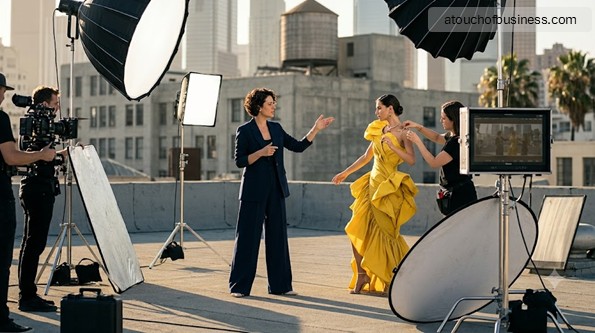
What to Expect From This Guide to Starting a Fashion Photography Business
This guide walks you through the key decisions and practical steps involved in starting a studio-based fashion photography business. It progresses from testing fit and demand to planning the studio, finances, systems, and first client shoots, with the highlights below showing only part of its depth.
Inside the guide, you will find:
- Startup roadmap: Follow an ordered path from evaluating fit and demand through business planning, studio setup, legal preparation, and pre-opening testing.
- Industry interviews: Learn from fashion photographers discussing portfolios, pricing, networking, client development, creative collaboration, and the realities of building a career.
- Startup FAQs: Review practical answers about licensing, copyright, model releases, legal structure, sales tax, studio size, contracts, and insurance.
- Business fit: Consider portfolio quality, technical skill, lifestyle demands, local competition, financial pressure, and whether a dedicated studio suits your market.
- Financial planning: Examine startup costs, funding choices, break-even needs, cash reserves, pricing methods, usage licensing, and often-underestimated post-production time.
- Studio setup: Plan the space, layout, electrical capacity, lighting, backdrops, post-production systems, wardrobe areas, equipment, backups, and freelance team.
- Local requirements: Check registration, zoning, permits, taxes, contracts, releases, insurance, banking, safety, and opening-day warning signs that vary by location.
Begin by deciding whether the skills, financial demands, and day-to-day realities of running a fashion photography studio fit your situation.
As a fashion photographer, you direct models, shape light, and produce imagery that fashion brands, clothing retailers, and designers use to present their collections to the world.
Running a studio-based fashion photography business means you control the environment where that imagery is made — the lighting, the backdrops, the shoot-day flow, and the client experience.
On shoot days, you prepare the studio, coordinate models, stylists, and hair and makeup artists, direct the session, and capture the images.
Between shoots, you cull, retouch, color grade, and deliver finished galleries to clients. You also handle invoices, contracts, equipment maintenance, and client communication.
It’s a creative business, but it runs on systems, contracts, and reliable execution — not just artistic talent.
Before you start mapping out your studio, be honest about fit. Do you have strong technical photography and lighting skills? Can you direct models and manage a production team on set? Do you understand post-production well enough to deliver retouched, color-accurate images at a professional standard?
Fashion clients evaluate your previous work carefully before booking. If your portfolio isn’t yet at a commercial level, you’re not ready to carry studio overhead.
There’s also the financial reality to consider. A leased studio creates a fixed monthly cost whether or not you have clients booked.
Can your household manage that pressure while you build a client base? Do you have enough savings or financing to cover several months of overhead before revenue becomes reliable?
If you have people in your life who depend on your income, talk with them before you sign a lease. This business takes time to build, and the financial gap during that period is real.
There’s also the broader question of business ownership itself. Running a fashion photography studio means managing contracts, taxes, insurance, invoicing, and scheduling — alongside the creative work.
If you want to explore what that reality looks like before committing, read through these pre-startup considerations first.
When you’re ready to move forward, the full startup steps guide can help you think through the process from a broader perspective as well.
Red Flags Before You Start
Some warning signs are worth checking before you commit to a studio lease or major equipment purchases.
Your portfolio isn’t at a commercial level yet.
Fashion clients — boutiques, clothing brands, e-commerce sellers, designers — look at your past work before booking.
If it doesn’t demonstrate strong studio lighting, professional retouching, and the aesthetic consistent with your intended niche, no lease or equipment will compensate for that gap.
Pause and invest in test shoots first. Build the portfolio before you build the overhead.
You don’t have enough runway to cover fixed costs during client ramp-up.
A studio lease is a fixed monthly obligation from day one. A new studio typically takes months to build a stable client base.
If you can’t cover at minimum three to six months of studio overhead and personal living expenses before opening, the cash-flow risk is serious. This is one of the most common ways new studios close.
The local market may not support a dedicated studio.
A studio-based fashion photography business depends on a real ecosystem of local clients — boutiques, clothing brands, designers, e-commerce sellers, and modeling agencies.
If your area has few of these businesses, or if well-established studios already serve the market, filling your shoot calendar will be significantly harder. Verify local demand before you sign anything.
AI-generated imagery is a structural competitive pressure in this industry.
AI tools are capable of producing e-commerce catalog imagery at a fraction of traditional photography costs, and adoption among fashion brands is growing.
Photographers who specialize exclusively in high-volume, commodity catalog work face the greatest competitive pressure from these tools. Photographers who focus on editorial campaigns, hero brand imagery, and creative work requiring human direction and physical production maintain a structural advantage.
Understand where your intended niche sits on that spectrum before you build a business model around it.
Post-production time is routinely underestimated.
Retouching, color grading, and image delivery can consume as much time as the shoot itself — sometimes more. If you underprice your work by ignoring post-production hours, the financial model breaks down quickly.
This business may not fit you if:
- Your portfolio doesn’t yet reflect commercial-quality studio work in your intended niche
- You can’t fund several months of fixed overhead before bookings become reliable
- Your local market has no meaningful base of fashion brands, retailers, or designers
- You plan to rely primarily on editorial work, which typically pays below commercial rates
- You’re not prepared to manage contracts, copyright, and licensing alongside the creative work
Step 1: Assess Your Fit and Motivation
Fashion photography is technically demanding, aesthetically driven, and production-intensive. Be honest about whether you have the skills to execute at a commercial level before you invest in a studio.
Strong camera and lighting technique is necessary, but so is the ability to direct models, communicate clearly with clients and creative teams, and deliver consistent retouched images on deadline.
The harder question isn’t whether you’re passionate about fashion and photography — it’s whether your current skill set, portfolio, and professional network are ready for commercial clients who pay for reliable results.
Consider the lifestyle tradeoffs as well. Shoot days are long. Post-production sessions stretch into evenings. Client communication doesn’t pause between jobs.
Be realistic about your risk tolerance and income uncertainty. It may take time before the studio generates consistent revenue.
Step 2: Talk to Non-Competing Fashion Photographers
Before you commit to overhead, talk to fashion photographers who operate in different markets and who won’t be your direct competitors.
Ask them what they wish they had known before opening. Ask about client acquisition timelines, how long it took to cover fixed costs, what equipment they prioritized first, and what contract or pricing mistakes they made early on.
Prepare your questions in advance. Every photographer’s experience is different, but firsthand insight into studio overhead realities and client expectations is more valuable than anything you can read in a guide.
You can also look for real perspectives from business owners to supplement those conversations.
Step 3: Define Your Business Model and Niche
Fashion photography covers several distinct specialties, each with different clients, pricing structures, equipment needs, and workflow demands. Choosing your primary focus before making major cost and equipment decisions is essential.
The primary sub-specialties to consider are:
- E-commerce and catalog photography — on-figure or flat-lay images for online retailers; high volume, consistent output, repeat commercial clients
- Editorial fashion photography — creative imagery for magazines, lookbooks, and campaigns; reputation-driven, often used to build a portfolio early in a career
- Commercial campaign photography — advertising imagery for fashion brands; higher fees, usage licensing, more complex production
- Lookbook photography — seasonal collection imagery for designers, boutiques, and brands
- Beauty and model portfolio photography — comp card and portfolio work for models and talent agencies; beauty editorial work
Your niche choice affects nearly every other decision: how large your studio needs to be, how complex your lighting setup must be, what kind of team you need on set, and how you price and structure client contracts.
Make this decision before you select a space or buy equipment. A studio built for high-volume e-commerce catalog work looks very different from one built for editorial campaign production.
Step 4: Validate Local Demand and Competition
The strength of your local client base is one of the most important factors in whether a studio-based fashion photography business can sustain itself.
Identify the fashion and retail ecosystem in your target market. How many local boutiques, clothing brands, e-commerce sellers, designers, modeling agencies, and advertising agencies are there?
Research how many competing fashion photography studios are already operating nearby. Look at how they differentiate — by specialty, aesthetic style, pricing, and the team services they offer.
Determine whether local clients are underserved, or whether they’re already well covered by established studios with strong reputations.
For more on evaluating whether the market can support your business, read about local supply and demand.
Also consider whether your studio’s physical location matters to clients. Studios near fashion districts, creative neighborhoods, design schools, and modeling agencies tend to have better access to both clients and freelance collaborators.
Step 5: Decide How to Enter the Market
There are two realistic paths into a studio-based fashion photography business.
Starting from scratch means building your portfolio, client list, supplier relationships, and studio reputation from zero. You control the direction entirely, but the ramp-up period is longer.
Buying an existing photography studio can provide an established client base, existing equipment, and immediate revenue potential. It requires careful due diligence on lease terms, equipment condition, existing contracts, and whether clients are likely to stay after ownership changes.
There are no meaningful franchise systems for fashion photography studios, so those two paths are the primary options. For a broader comparison, read about starting from scratch versus buying an existing business.
The right choice depends on your budget, your timeline to profitability, your portfolio strength, and what’s available in your market.
Step 6: Build Your Portfolio to a Commercial Level
Commercial fashion clients evaluate your past work before they book. That’s true for boutiques, brands, modeling agencies, and advertising agencies alike.
Your portfolio must demonstrate the specific type of work your studio intends to offer — studio lighting control, editorial-quality retouching, on-figure e-commerce consistency, or beauty editorial precision.
If your current portfolio doesn’t yet reflect that standard, invest in test shoots before pursuing paying clients.
Test shoots — sometimes called TFP, or Trade for Portfolio — are unpaid or low-fee collaborative shoots with models, stylists, and makeup artists that let you build the body of work you need.
A portfolio website is a practical necessity before approaching commercial clients. It’s how brands and agencies evaluate your aesthetic fit before making contact.
Business Plan
Before you sign a lease or buy significant equipment, put your business plan together in writing.
Start with the fundamentals: your primary service offerings, your target client types, your pricing structure, your equipment needs, and your studio space requirements. Then map your staffing model — will you operate solo, hire an assistant, or build all shoots around freelance teams?
The most important financial exercise is break-even analysis. A studio lease creates fixed monthly overhead that exists whether or not you have clients booked.
Calculate the minimum number of shoot days or billable images you need per month to cover all fixed costs — rent, insurance, software subscriptions, equipment payments — before generating any owner income.
Then ask whether the local market, at your planned pricing, can realistically deliver that volume of work.
Slow periods present a real cash-flow risk. Seasonal gaps, the ramp-up period after opening, and client dry spells will all test your ability to carry overhead without matching revenue.
Plan a cash reserve that covers at minimum three to six months of fixed costs.
Post-production is a hidden overhead that trips up many new studios. Retouching, color grading, and image delivery take substantial time on every job. That time must be priced into every quote or it quietly erodes your margin.
Usage licensing adds meaningful revenue on commercial work. An image licensed for national advertising use commands a different fee than one licensed only for a brand’s website. Factor licensing into your pricing model before you set rates.
For help thinking through pricing, see the guide on pricing your products and services. For a broader look at how to estimate whether the business can be profitable, read about estimating profitability and revenue.
Once you’ve mapped your costs, your pricing, and your break-even point, you’ll know what the business needs to generate to survive its first year. That’s the core of a useful business plan.
For a full walkthrough of what to include, see the guide on how to write a business plan.
Step 7: Plan Your Funding and Secure Startup Capital
Opening a fashion photography studio requires meaningful upfront capital. Work through your funding plan before you commit to a lease or major equipment purchases.
Startup cost categories to plan for include:
- Studio lease deposit and advance rent payments
- Studio build-out and improvements — electrical upgrades, flooring, cyc wall construction, ceiling rigging, blackout systems
- Camera body and lens kit
- Studio lighting system — strobes, continuous LED, modifiers, and stands
- Backdrop and background support system
- Makeup and wardrobe station setup
- Post-production workstation, color-calibrated monitor, and calibration device
- Software subscriptions — Adobe Creative Cloud, Capture One, gallery delivery platform, and accounting software
- External storage and backup systems
- Business registration, entity formation, and attorney fees for contract drafting
- Insurance premiums
- Operating reserve for the ramp-up period
Equipment can be purchased new, used, or rented at launch. Determine which items are essential for your first shoots and which can wait or be rented job by job.
Funding options to explore include:
- Personal savings
- SBA loans — the Small Business Administration’s 7(a) and microloan programs are available to service-based small businesses
- Equipment financing or leasing through dealers or specialty lenders
- Business lines of credit
Explore your funding options fully before committing to a studio lease. For a broader overview of financing options, see the guide on how to get a business loan.
Step 8: Choose a Legal Structure and Register the Business
You need to establish your business legally before you open a bank account, sign a lease, or take a paying client.
The most common structure for a studio-based photography business is an LLC — a Limited Liability Company. An LLC separates your personal assets from business liabilities, which matters when clients, models, and team members are regularly in your studio.
It also offers tax flexibility and a more professional presentation to commercial clients.
A sole proprietorship is simpler to establish but provides no personal liability protection. For a studio operation, the risk exposure typically justifies the LLC structure.
For a side-by-side comparison, read about LLC versus sole proprietorship. For guidance on choosing the right structure, see the guide on how to choose a business structure.
Once you’ve chosen a structure, register your entity with the appropriate state authority — typically the Secretary of State.
If you plan to operate under a studio name different from your legal name, you’ll also need to register a DBA, or Doing Business As. Requirements vary by jurisdiction. Read about how to register a DBA for more detail.
Obtain an EIN — Employer Identification Number — from the IRS. You need it for business banking, certain LLC formations, and hiring. Apply directly at irs.gov.
Consult a business attorney or CPA familiar with creative businesses before finalizing your structure decision.
Step 9: Research and Verify All Compliance Requirements
No state issues a photography-specific professional license. That doesn’t mean you have no compliance requirements — it means the requirements come from general business law, local ordinances, and tax law rather than from a photography board.
Federal compliance includes:
- Copyright: Under the U.S. Copyright Act, you own the copyright to your images automatically at the moment of creation. Copyright transfers to a client only through an explicit written agreement — a signed work-for-hire clause or a written copyright transfer. Every client contract must address this clearly.
- Work-made-for-hire: If you hire W-2 employees, works they create within the scope of employment belong to the studio. If you use freelance independent contractors, you must have a signed written agreement with an explicit work-for-hire clause to retain ownership of their creative contributions.
- IRS and employment taxes: Sole proprietors and single-member LLC owners pay self-employment taxes and typically make quarterly estimated payments. If you hire W-2 employees, register with the IRS for federal employer taxes.
State compliance to verify includes:
- Entity formation: File formation documents with the Secretary of State if operating as an LLC or corporation.
- Sales and use tax registration: Photography sales tax rules vary significantly by state. Tangible prints and physical media are taxable in nearly every state. Service fees are taxable in some states. Digital-only image delivery is taxable in a growing number of states. Verify your state’s specific rules with the state Department of Revenue before you accept your first payment. Search “[your state] Department of Revenue photography sales tax.”
- State employer registration: If hiring W-2 employees, register with the state Department of Labor and the state’s unemployment insurance program.
- Workers’ compensation: Legally required in most states once any W-2 employee is on payroll. Verify requirements and coverage minimums with your state’s Department of Labor or Workers’ Compensation Division.
City and county compliance to verify includes:
- General business license: Most cities and counties require one. Obtain it from the city or county business license office before opening.
- Zoning approval: Verify that your studio location is zoned for commercial photography studio use before signing a lease. Check with the local planning or zoning office. Some mixed-use or industrial zones accommodate studios; others do not.
- Certificate of occupancy: May be required when occupying or modifying a commercial space. Check with the local building department before beginning any build-out.
- Building permits: Electrical upgrades and structural modifications — including cyc wall construction, ceiling rigging, and floor changes — typically require permits. Verify with the local building department before construction begins.
- Signage permits: Exterior signage often requires a permit. Verify with the local planning or zoning office.
For a broader overview of business licensing requirements, see the guide on business licenses and permits.
Step 10: Find, Evaluate, and Lease Your Studio Space
The studio space is the foundation of this business model. The right space enables the quality of work you need to deliver. The wrong space creates problems that no amount of equipment can solve.
Fashion photography requires specific physical conditions that most standard commercial office or retail space can’t meet.
Look for these minimum physical requirements:
- A shooting floor of at least 15 × 30 feet for full-length on-figure work at proper camera distance
- Ceiling height of at least 10–12 feet — 12 feet or more preferred for overhead lighting flexibility
- Column-free shooting floor
- Hard-surface flooring — hardwood, concrete, or laminate; carpet isn’t suitable
- Electrical capacity to support studio flash systems on dedicated circuits
- Blackout capability — either existing blackout blinds or the ability to install them
For full production work with multi-person teams, dedicated makeup stations, wardrobe areas, and a client lounge, 1,200–2,000 or more total square feet is more appropriate.
Loft spaces and industrial warehouse conversions often offer the ceiling height and column-free floor plans that fashion photography studios need. Standard office space almost never has the ceiling height required.
Before you sign a lease, verify all of the following:
- The space is zoned for commercial studio use
- A certificate of occupancy is in place, or requirements for your use are confirmed
- Electrical service can support your lighting load (or can be upgraded)
- Lease terms allow the build-out modifications you need
- Any required building permits for modifications can be obtained
Pay attention to lease economics relative to your break-even calculation. Paying for more space than you can fill with bookings early on creates financial pressure that compounds over time.
Step 11: Design the Studio Layout and Complete the Build-Out
A well-planned studio layout affects how efficiently shoots run, how clients experience the space, and how comfortably your team works together.
Plan for these distinct functional zones:
- Main shooting floor with clear depth for camera-to-subject distance
- Backdrop and cyc wall area with background support system
- Lighting storage with safe stand and equipment positioning
- Equipment storage separate from the shooting floor
- Makeup and wardrobe station with proper task lighting
- Client lounge or viewing area
- Post-production workstation area
A cyc wall — a seamless, curved background wall — is the standard feature in a professional fashion studio. It creates a clean infinity background and eliminates visible floor-to-wall edges.
If the space doesn’t already have one, budget for its construction in your build-out plan.
Electrical upgrades for dedicated circuits are typically required before studio flash systems can operate safely. Hire a licensed electrician. Don’t assume the existing wiring in a commercial space can handle the load.
Hard-surface flooring is standard in fashion studios. It’s easier to clean and maintain than carpet, and it allows light to interact with the floor in a controlled way.
Obtain all required building permits before construction begins. Check with the local building department.
Step 12: Acquire Your Core Equipment
The equipment decisions you make at launch should match your primary niche, not your aspirational wish list.
Start with what’s essential for the type of work you intend to take on first. Additional specialized gear can be rented for specific jobs as needed — renting before buying is a practical way to test equipment before committing to a purchase.
Camera and lens essentials:
- Professional mirrorless or DSLR camera body — primary and backup
- Fast prime lenses — 50mm and 85mm are standard for fashion portraiture
- Zoom lens in the 24–70mm and 70–200mm range
- Tethering cable — essential for fashion studio work; allows clients to view images on a monitor in real time
- Multiple high-capacity memory cards and spare batteries
Lighting system:
- Studio strobe heads or monolight units — a minimum of two to three at launch; four to six for a full production setup
- Wireless radio triggers for strobe synchronization
- Light meter
- Ring light — widely used for beauty and fashion close-up work
- Continuous LED panels for accent and hair lighting
Light modifiers:
- Large softboxes — including an octabox — for diffused, even illumination
- Beauty dish — standard for fashion editorial and beauty work
- Strip boxes for rim and background lighting
- Reflectors (silver, gold, white) and V-flats for light direction and fill control
- Barn doors, snoots, and gels for creative light shaping
Stands and support:
- Light stands in multiple heights
- C-stands with grip arms for heavier modifiers and precise positioning
- Boom arm with counterweight for overhead lighting
- Sandbags for every stand and boom arm — tip-overs in a studio can injure people and damage equipment
Backdrops and background support:
- Backdrop support system — ceiling-mounted rollers or freestanding crossbar stands
- Seamless paper rolls in white, black, and gray in appropriate widths
- Muslin and vinyl fabric backdrops in additional colors and textures
- Backdrop clamps
Makeup and wardrobe station:
- Makeup vanity with professional task lighting — ring light or Hollywood-style bulb mirror
- Adjustable makeup chair
- Garment steamer, clothing racks, hangers, and a full-length mirror
- Sewing kit, garment tape, and hem clips for on-set wardrobe adjustments
Post-production workstation:
- High-performance desktop or laptop computer
- Color-calibrated, high-resolution monitor
- Monitor calibration device — color accuracy is essential in fashion retouching
- External hard drives for on-site redundant backup, plus off-site or cloud backup
- Adobe Lightroom and Photoshop — industry-standard tools for fashion retouching and color grading
- Capture One Pro — widely used in fashion studio workflows for tethered shooting and precise color correction
- Drawing tablet for detailed retouching work
- Client gallery delivery platform
Step 13: Set Up Your Supplier and Freelance Team Relationships
A fashion photography studio rarely operates with just the photographer. Most shoots require a team of collaborators you don’t employ full time.
Build a vetted roster of reliable freelance professionals you can call on per project. This typically includes models, fashion stylists, and hair and makeup artists.
In markets with modeling agencies, work directly with agency representatives to understand their booking processes and requirements.
Most people assume the photographer runs a shoot alone. In commercial fashion photography, the shoot-day team is just as important as the camera — and building reliable collaborator relationships before you open is more valuable than any single piece of equipment.
Freelance team members are typically engaged as independent contractors, not employees. Every freelance collaborator should sign an independent contractor agreement before working a job.
That agreement must include a work-for-hire clause if you intend to own the copyright to all creative contributions made during the shoot.
Also establish relationships with camera equipment dealers and rental houses, backdrop and prop suppliers, and equipment repair services.
Step 14: Develop Your Pricing and Usage Licensing Structure
Fashion photography pricing is more layered than most service businesses. Getting it right before you take a paying client is essential.
Common pricing structures in fashion photography include:
- Half-day and full-day shoot rates — standard for most studio bookings
- Per-image pricing — common for e-commerce catalog work where the client needs a set number of finished assets
- Creative fee plus usage licensing — standard for commercial and advertising work; the creative fee covers your time and skill; the usage fee reflects how and where the images will be used
- Retainer arrangements — for repeat commercial clients who need ongoing photography on a scheduled basis
Usage licensing is a significant revenue component on commercial work. An image used in a national advertising campaign carries different licensing terms — and a higher fee — than one licensed only for a brand’s website or internal use.
Build usage licensing into your rate structure from the start.
Post-production time must be factored into every quote. Retouching and delivery on a fashion shoot can consume as much time as the shoot day itself. Photographers who leave this out of their pricing work harder for less.
Your prices must cover all fixed overhead, variable per-shoot costs (freelance team, backdrop paper, props), post-production time, and your own income. Research what established studios in your local market charge before finalizing your rates.
Step 15: Create Your Client Contracts and Required Legal Documents
Strong contracts protect you, your clients, and the models who appear in your work. Draft them before you take a single booking.
Your client service agreement should cover:
- Scope of work — shoot date, location, deliverables, number of finished images, file format, delivery timeline
- Payment terms — deposit amount, balance due date, late payment policy
- Copyright ownership — who retains copyright and what usage rights are granted to the client
- Retouching scope — what’s included and what constitutes additional work
- Cancellation and rescheduling terms
- Liability limitations
Under the U.S. Copyright Act, you own the copyright to your images by default. Clients receive only the usage rights explicitly granted in the contract.
Many commercial clients will ask for broad usage rights or even a work-for-hire arrangement. Understand what you’re agreeing to before you sign.
A model release is required any time an identifiable person’s image will be used commercially — for advertising, marketing, product promotion, or your studio’s own promotional materials. Obtain a signed model release from every model before or at the time of the shoot.
If the model is under 18, a parent or legal guardian must also sign.
Have all documents reviewed by a business attorney familiar with photography and intellectual property law before you use them.
Step 16: Set Up Business Banking, Payments, and Accounting
Open a dedicated business checking account before you accept any client payments.
For LLCs and corporations, keeping business and personal finances completely separate is a legal requirement — and it protects your liability protection if you’re ever challenged in court.
Set up a merchant account or payment processor so you can accept client deposits and balance payments by card or bank transfer. Clients paying for commercial shoots expect professional invoicing and payment options.
Establish an invoicing system with built-in deposit workflows. A job that isn’t under a deposit agreement and signed contract before the shoot date is a risk.
Set up accounting software to track income, expenses, and time from the start. You’ll need accurate records for taxes, sales tax remittance, and financial planning.
For guidance on opening your first business bank account, see the guide on how to open a business bank account. For payment setup, see the guide on merchant accounts.
Step 17: Obtain Required Insurance
A fashion photography studio carries real liability exposure. Models, clients, and creative team members are regularly in your studio space.
Equipment tip-overs, slips, and property damage are genuine risks on every shoot day.
The insurance coverage you need includes:
- General liability insurance — required by most commercial landlords before you can sign a studio lease, and commonly required by commercial clients before a shoot. Covers bodily injury and property damage claims.
- Professional liability (errors and omissions) insurance — covers claims related to missed deliverables, contract disputes, or professional service failures.
- Equipment insurance (inland marine) — covers cameras, lenses, lighting equipment, and gear against theft and damage.
- Commercial property insurance — covers the contents of your studio space.
- Workers’ compensation insurance — legally required in most states once any W-2 employee is on payroll.
- Commercial auto insurance — required if a business-owned vehicle is used to transport equipment.
For a broader overview of business insurance options, see the guide on business insurance.
Step 18: Complete Pre-Opening Setup and Prepare to Launch
Once the studio space is built out, equipment is installed, and documents are in order, work through the final setup before your first shoot.
Install and test all lighting systems. Calibrate your monitor and post-production setup before you touch a client’s images.
Establish a consistent color profile and export workflow. Test your image delivery system from capture to client gallery.
Run a complete soft-launch test shoot to verify the full workflow — from booking and contract through shoot day, post-production, and delivery. Identify any gaps before a paying client is on set.
Confirm all of the following are in place before you open:
- All permits, licenses, and zoning approvals obtained
- All insurance certificates in force
- Client service agreement and model release forms finalized and reviewed by an attorney
- Independent contractor agreements ready for all freelance team members
- Business bank account open and payment processing active
- Accounting and invoicing systems set up
- Portfolio website live
- Sandbags on all stands; first aid kit and fire extinguisher in place; floor cables managed and secured
- Garment steamer, styling supplies, and wardrobe station stocked
Your first likely clients at launch are:
- Local boutiques and independent clothing brands that need e-commerce or lookbook imagery
- Emerging designers producing their first seasonal collections
- Fashion e-commerce sellers — Shopify brands, direct-to-consumer labels — who need consistent on-figure catalog images
- Modeling agencies looking for comp card and portfolio development work
These clients need professional imagery and are more open to working with a newer studio than established major brands. They’re a practical starting point for building your commercial reputation.
Opening-Day Red Flags
Before your first paying shoot, check every item on this list. Gaps at launch create problems that are harder to fix once clients are in the studio.
Studio and equipment readiness:
- Lighting system not tested under realistic shooting conditions
- Dedicated electrical circuits not installed or not confirmed to handle the lighting load
- Monitor not calibrated — color-inaccurate retouching will show up in client images
- No redundant backup system for shoot-day files — a single drive failure could mean losing a client’s entire shoot
- Stands and boom arms not weighted with sandbags
- Floor cables not managed — a trip hazard during a shoot with models and clients is a serious liability
Contracts and documents:
- Client contract not signed before the shoot date — no contract, no shoot
- No model release forms ready — you can’t use images commercially without them
- No independent contractor agreements for freelance team members
- Copyright ownership not clearly addressed in the client contract
Legal and financial setup:
- No general liability insurance certificate — most commercial clients and landlords require proof before a shoot or before a lease is signed
- No deposit collected before the shoot date
- Sales tax requirements not verified with your state’s Department of Revenue
- Business bank account not separate from personal accounts
Workflow readiness:
- Tethered shooting workflow not tested end-to-end before a client is on set
- Client gallery delivery system not set up or tested
- Post-production time not factored into the pricing for the first booked job
Frequently Asked Questions
Do I need a photography license to open a fashion photography studio?
No state issues a professional photography license specific to fashion or commercial photography.
You need a legal business entity, a general business license from your city or county, zoning confirmation for your studio location, sales tax registration with your state, and appropriate insurance. There’s no photography exam or credential required at the state level in the U.S.
Who owns the copyright to images produced in my studio?
Under the U.S. Copyright Act, you own the copyright to your images automatically at the moment of creation.
Copyright transfers to a client only through an explicit written agreement — a signed work-for-hire clause or a written copyright transfer. For commercial clients, the standard practice is for the photographer to retain copyright and grant the client a usage license specifying how and where the images may be used. Every client contract should address this directly.
What is a model release, and when do I need one?
A model release is a signed agreement between you and the model granting permission to use the model’s likeness commercially.
Any time an identifiable person’s image will be used for advertising, marketing, product promotion, or your studio’s own promotional materials, a model release is required. If the model is under 18, a parent or legal guardian must also sign. Obtain a release before or at the time of every shoot.
What legal structure is best for a fashion photography studio?
Most studio-based photography businesses form an LLC.
An LLC separates your personal assets from business liabilities, which matters when clients, models, and team members are regularly in your space. It also offers tax flexibility and a professional presentation to commercial clients. Consult a business attorney or CPA before finalizing your structure, as the right choice depends on your state and situation.
How does sales tax apply to a fashion photography business?
Photography sales tax rules vary significantly by state.
Tangible prints and physical media are taxable in nearly every state. Service fees are taxable in some states. Digital-only image delivery is taxable in a growing number of states. Verify your state’s specific rules with the state Department of Revenue before you accept your first payment. Search “[your state] Department of Revenue photography sales tax.”
Do I need a separate contract for freelance stylists and models I hire per shoot?
Yes. Every freelance collaborator — stylists, hair and makeup artists, and photo assistants — should sign an independent contractor agreement before working a job.
Without a signed written agreement that includes an explicit work-for-hire clause, you don’t automatically own the creative contributions of independent contractors under copyright law. Don’t assume verbal agreements are sufficient.
How much studio space does a fashion photography studio need?
For on-figure fashion work with models, a minimum shooting floor of roughly 15 × 30 feet is a practical baseline.
Ceiling height should be at least 10–12 feet, with 12 feet or more preferred for overhead lighting flexibility. For full production work with multi-person teams, dedicated makeup stations, a wardrobe area, a client lounge, and a post-production workstation, 1,200–2,000 or more total square feet is more appropriate. The right size depends on your intended niche, team size, and local lease economics.
What insurance does a fashion photography studio need?
At minimum, carry general liability insurance, professional liability insurance, and equipment insurance covering your cameras, lenses, and lighting gear.
Commercial property insurance covers your studio contents. Workers’ compensation is legally required in most states upon hiring any W-2 employee. Commercial auto insurance is required if a business-owned vehicle is used to transport equipment. General liability is commonly required by commercial landlords before a lease is signed and by commercial clients before a shoot.
Expert Advice From People in the Fashion Photography Business
These interviews share practical lessons from fashion photographers about building portfolios, finding clients, setting rates, networking, collaborating with creative teams, and developing a recognizable style.
Readers can use the advice to understand how photographers enter the industry, test their skills, build professional relationships, and gradually turn fashion photography into a business.
Photographer Alexander Karlov on Career, Style, and Success
Alexander Karlov discusses assisting established photographers, building connections, managing the business side of photography, and collaborating with creative teams.
This interview helps beginners understand why a strong portfolio, industry experience, professional relationships, and business skills all contribute to a sustainable career.
How to Become a Fashion Photographer With Holly McGlynn
Holly McGlynn explains how she built her portfolio, completed test shoots, gained experience, approached pricing, and moved from office employment into full-time photography.
Her advice is useful for photographers deciding how to gain experience, choose portfolio images, set initial rates, and make a gradual transition into the business.
Interview With Fashion Photographer Zuzana Breznanikova
Zuzana Breznanikova describes starting her business during evenings and weekends, developing service packages, creating a website, building a portfolio, and attracting referrals.
This interview shows how an aspiring photographer can test the business while employed and use model-agency relationships, portfolio quality, and word-of-mouth promotion to find clients.
Wedding and Fashion Photography as a Business With Janneke Storm
Janneke Storm discusses networking, introductory shoots, pricing, separate photography brands, creative collaboration, mentoring, and getting images published.
The conversation is useful for beginners learning how to treat photography as a business, develop a distinct style, connect with collaborators, and build industry credibility.
Fashion Photographer Marissa Alden on Building a Creative Career
Marissa Alden shares how she entered fashion photography, developed her creative direction, found clients, handled difficult beginning years, and adjusted to industry changes.
Her experience gives new photographers a realistic view of the time, experimentation, persistence, and portfolio development required before regular opportunities appear.
Related Articles
- How To Start a Photography Business
- How To Start a Fashion Magazine
- How To Start a Fashion Consulting Business
- How To Start a Fashion Accessories Store
- How To Start a Landscape Photography Business
- How To Start an Aerial Photography Business
Sources:
- U.S. Copyright Office: Copyright basics for photographers
- Professional Photographers of America (PPA): Copyright FAQs for photographers, General liability insurance guide
- FindLaw: LLC for photography business
- Tailor Brands: Photography business licenses and permits
- Wolters Kluwer: Legal setup for photography businesses
- Photo-Logica: Starting a photography business legally
- Zno: Photography licenses quick start guide
- ASMP (American Society of Media Photographers): Sales tax for photographers
- AHP Learn: Sales tax photographer guide
- Insureon: General liability for photographers
- MoneyGeek: Photography insurance coverage guide
- Full Frame Insurance: Photographer insurance overview
- BusinessDojo: Studio size requirements, Studio equipment checklist
- Circular Studios: Fashion studio space and lighting
- Isa Aydin Photography: Studio requirements guide
- Studio Binder: Model release form guide
- LegalGPS: Model consent and release contracts
- Copyright Alliance: Photographers’ copyright guide
- ProEdu: Legal side of commercial photography
- InvoiceQuickly: Photography pricing guide
- Fstoppers: AI competitive threats for photographers
- Rewarx: AI limitations in apparel photography
- TechCloud (Fashion Studio Setup): Fashion photography studio setup steps