
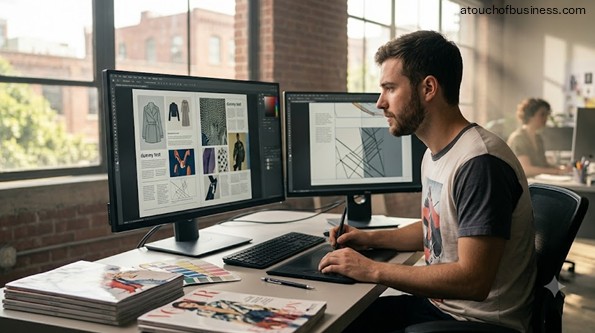
What to Expect From This Guide to Starting a Fashion Magazine
This guide walks readers through the key decisions and practical steps involved in starting a fashion magazine, from testing the concept to preparing the first issue. The highlights below represent several areas within a much broader startup path.
Inside the guide, you will find:
- Startup roadmap: Follow an ordered path from defining the niche and validating demand through funding, setup, production testing, and first-issue preparation.
- Industry interviews: Explore experiences and observations from fashion magazine founders, editors, and publishers on editorial direction, revenue, collaboration, and distribution.
- Startup FAQs: Find practical answers about ISSNs, copyright ownership, media liability insurance, advertising, formats, rates, agreements, and mandatory deposits.
- Business fit: Consider the skills, income uncertainty, industry connections, and combined creative and commercial responsibilities this publishing business demands.
- Financial planning: Examine revenue models, break-even thinking, delayed advertiser payments, funding sources, pricing decisions, and the need for a multi-issue runway.
- Production systems: Review team roles, office needs, creative equipment, software, printing, distribution, advertiser materials, and payment systems.
- Risks and requirements: Understand location-dependent requirements, publishing protections, FTC disclosures, insurance, contracts, proofing, and issues that should stop publication.
Begin by deciding whether the uncertainty and combined creative and commercial demands of fashion publishing suit your goals and circumstances.
Running a fashion magazine means you’re a publisher, an editor, a creative director, and a business owner — all at once.
You don’t just decide what looks good on a page. You commission writers and photographers, sell advertising space, manage issue deadlines, and keep the finances together long enough to publish the next one.
That’s a wide range of skills. Before you commit time and money to this, be honest about whether you have them — or can hire them.
Fashion publishing is one of the most competitive creative industries in the country. Large publishers with established brands and global advertiser networks dominate mass-market fashion coverage. As an independent publisher, your survival depends on finding a niche they can’t — or won’t — serve well.
The startup path for a fashion magazine involves editorial decisions, legal setup, intellectual property registration, production systems, advertiser infrastructure, and insurance — before you print or publish a single page.
This guide walks you through every step in the order they need to happen.
Is This Business Right for You?
Start by separating passion from fit.
Loving fashion and loving the business of running a magazine are different things. The editorial side — assigning stories, directing photo shoots, shaping a visual identity — is only part of the job.
You’ll also spend time chasing advertisers, reviewing contracts, managing contributor deadlines, and figuring out why last issue’s distribution was short.
Ask yourself these questions before going further:
- Can you lead editorial direction and manage advertiser relationships at the same time?
- Do you have professional-level writing, editing, or visual design judgment — or can you afford someone who does?
- Can your household absorb an income gap while the publication builds a reader base and advertiser relationships from zero?
- Are you comfortable with the real possibility that a new magazine generates little to no revenue from its first several issues?
- Do you have enough industry connections to build a credible contributor network of writers, photographers, and stylists willing to work with a new publication?
Talk to people who run independent magazines — not competitors in your planned niche — before you commit to anything.
Ask them directly about cash flow gaps, how long it took to attract paying advertisers, and what they’d do differently. Their experience won’t be identical to yours, but firsthand perspective from other independent publishers is more useful than any general advice.
You should also think about what business ownership actually demands day to day. Running any creative business takes more operational discipline than most people expect.
Red Flags Before You Start
Some of these warning signs are personal. Others are structural conditions built into this industry that no amount of hard work can fully overcome.
Stop and reconsider if any of these apply:
- No clearly differentiated niche. A general fashion magazine with no specific audience or perspective has no competitive ground to stand on against established titles. Identify a genuine niche — a specific demographic, aesthetic, cultural community, or price point — before you go further.
- The niche is too small for advertisers. A loyal reader base that’s too narrow to attract fashion brand advertising creates a structural revenue problem. Verify that potential advertisers in your niche have marketing budgets and a history of spending on media placements.
- No evidence of reader demand. If you have no existing audience, no community connection to your intended reader, and no proof that anyone pays for similar content, your subscription model is at serious risk from day one.
- Not enough capital for a multi-issue runway. A new fashion magazine generates little to no revenue from its first issue. Advertisers rarely pay in advance. You need capital to cover production, contributor fees, and operating costs through multiple issues before revenue becomes reliable. If that capital doesn’t exist, reconsider the launch timeline.
- Print model without verified cost coverage. Premium fashion magazine printing — the paper stocks and color quality readers and advertisers expect — is expensive. If your projected advertising revenue from early issues won’t cover or substantially offset printing costs, the print model is financially dangerous to launch.
- Advertising dependency with no fallback. If advertising is your only revenue plan but you have no audience yet to show advertisers, early ad sales will be hard to close. Consider a subscription-first or digital-first approach that generates more predictable early-stage revenue.
These are structural conditions you need to understand before committing:
- Large publishers control the most valuable fashion advertising relationships. They offer multi-title packages, global reach, and certified circulation data that no new independent can match.
- Print advertising is in long-term structural decline. Major fashion publishers have reduced print frequency and, in some cases, ended print editions entirely. You’re entering this market at a disadvantage relative to titles with established advertiser loyalty.
- Digital fashion content is widely available for free. Convincing readers to pay for subscriptions requires editorial depth and a perspective that free channels genuinely don’t offer.
- Advertisers expect circulation audit data before paying rate-card prices. New titles have no audit history. Expect to price well below market rates to attract early advertiser commitments.
- Distribution is one of the most commonly cited structural challenges for small independent print publishers. National newsstand placement typically requires minimum print runs that are cost-prohibitive at the start.
Step 1: Define Your Niche, Format, and Editorial Concept
This is your most important creative and strategic decision. Get it wrong and everything downstream suffers.
The fashion world is vast. Successful independent publishers don’t try to cover all of it — they go deep into a corner the large titles treat as secondary or ignore entirely.
Your niche might be built around:
- A specific demographic: plus-size fashion, menswear, older readers, young professionals, or a cultural community
- An aesthetic or movement: sustainable fashion, streetwear, modest dressing, slow fashion, or avant-garde design
- A geography: a city or region with a distinct style identity not served by national titles
- A price point: luxury and collectible, or accessible and practical
Once the niche is clear, decide the format.
A print-only model requires more capital but can command premium advertising rates from fashion and luxury brands that value print’s permanence and prestige. A digital-only model has lower startup costs but faces intense competition from free content. A hybrid model diversifies revenue but increases complexity.
Then decide publication frequency: monthly, bimonthly, quarterly, or biannual.
More frequent publishing increases production costs. Less frequent publishing can support a collectible or premium positioning.
Your editorial tone and visual identity flow from these decisions. They also define who your advertisers will be — which is why this step must happen before cost planning, staffing, or equipment choices.
Step 2: Validate the Market Before Spending Money
Enthusiasm for a concept is not evidence of demand. Before you spend on anything, confirm that both readers and advertisers will show up.
Research your competitors in the niche — print and digital. Study their editorial positioning, their apparent advertiser base, and the gaps they leave open.
Then talk to potential advertisers directly. Fashion brand owners, beauty brand founders, PR professionals, and boutique retailers can tell you whether they’d consider advertising in an independent niche publication — and what they’d need to see first.
If you can’t identify a meaningful group of brands that would pay to reach your intended reader, your revenue model needs rethinking before you invest further.
You should also assess local supply and demand for the type of content you plan to produce, especially if your publication has a regional or community focus.
Step 3: Choose Your Revenue Model
A fashion magazine can generate revenue from multiple sources. Knowing which ones you’ll rely on — and in what proportion — shapes your entire startup plan.
Common revenue streams for fashion publications include:
- Display advertising in print and/or digital editions
- Subscriptions (print, digital, or both)
- Single-copy sales
- Sponsored content — paid placements that must be clearly disclosed under Federal Trade Commission (FTC) rules
- Affiliate commerce tied to editorial content
- Events, brand partnerships, and licensing
Advertising is typically the largest revenue driver for consumer fashion magazines. But new publications command very low advertising rates until they can demonstrate meaningful circulation and audience engagement.
Subscriptions provide more predictable cash flow and are increasingly important for independent publishers who can’t yet attract premium advertisers.
If you assume advertising will cover costs from issue one, expect a cash flow crisis.
The strongest independent magazine models diversify across advertising, subscriptions, and at least one supplementary revenue stream.
Step 4: Decide Whether to Start From Scratch or Acquire an Existing Title
Starting from scratch gives you full creative control but requires building an audience and advertiser relationships from zero.
Buying an existing publication — even a small or dormant one — may give you a subscriber base, title recognition, an established ISSN registration, and some existing advertiser relationships. That’s a meaningful head start on the hardest parts of launching.
If you go the acquisition route, do thorough due diligence on the accuracy of circulation claims, the quality of the subscriber database, and any existing legal or financial liabilities attached to the title.
To think through the broader question of starting versus buying a business, that decision depends on your budget, timeline, risk tolerance, and how quickly you need to reach paying readers and advertisers.
Business Plan
Write your business plan before you sign a lease, hire anyone, or place a printing order.
Cover your editorial concept, your niche, your target reader, your format, your publication frequency, and your revenue model.
Then work through the break-even logic — and work through it seriously.
What advertising rate can you realistically charge at your projected circulation level? How many issues would you need to publish before advertisers trust your audience numbers enough to pay that rate?
If subscriptions are part of the model, how many paid subscribers at what price point would cover your fixed production costs if advertising falls short?
Advertisers typically pay 30 to 90 days after publication. That gap between incurring production costs and receiving payment is one of the most commonly misunderstood cash flow risks in independent publishing.
Your plan needs to address that gap directly — with real capital, not projected revenue.
Also think through slow-period risk. What happens if an advertiser cancels a commitment after files have already gone to the printer?
A strong plan also maps your funding sources. Personal capital, investor funding, pre-sold advertising commitments, and pre-sold subscriptions all reduce the cash you need to have in hand on day one.
For a fuller guide on the planning process, see how to write a business plan.
Step 5: Secure Funding and Establish a Financial Runway
A fashion magazine is capital-intensive from the start, and revenue is slow to arrive.
You need operating capital to cover multiple issues of production costs — including contributor fees, photography, printing if applicable, and office costs — before the publication reaches any financial stability.
Funding sources worth exploring include:
- Personal savings
- Friends and family capital
- Angel investors interested in fashion or independent media
- Small business loans and Small Business Administration (SBA)-backed loan programs — check with your local SBA office or Small Business Development Center
- Arts and journalism foundation grants for independent publishing
- Pre-sold advertising commitments and subscriptions before the first issue — these reduce the capital you need and validate market interest at the same time
If you’re considering a loan, see how to get a business loan for an overview of the process.
If your funding doesn’t cover at least several issues of production costs, delay the launch until it does.
Step 6: Set Up Your Legal Entity
Most independent magazine publishers form a Limited Liability Company (LLC). It separates your personal assets from the business — which matters a great deal in publishing, where defamation claims, copyright disputes, and advertising liability are real risks.
File your Articles of Organization with your state’s secretary of state or department of corporations. Fees and requirements vary by location.
Once the entity is formed, apply for an Employer Identification Number (EIN) from the Internal Revenue Service (IRS) at irs.gov. It’s free and required before you can open a business bank account.
If your publication name differs from your legal entity name, register a Doing Business As (DBA) name. Check with your state or county clerk’s office for the correct process.
Research local business license requirements with your city and county licensing offices. Requirements vary by jurisdiction.
If you plan to hire employees, register for employer tax accounts with both the IRS and your state’s revenue or labor agency before your first hire.
For more on choosing the right structure, see how to choose a business structure and the comparison of an LLC vs. sole proprietorship.
Step 7: Register Your Title and Address Copyright
Your publication’s name is a core business asset. Protect it before you go public with it.
Search the U.S. Patent and Trademark Office (USPTO) database for conflicts before you commit to the title. If the name is clear, consult an intellectual property attorney about filing a trademark application with the USPTO.
Next, apply for an International Standard Serial Number (ISSN) through the U.S. ISSN Center at the Library of Congress (loc.gov/issn). The ISSN is free and identifies your publication as a serial in distribution, retail, and postal systems. If you publish both print and digital editions, each requires a separate ISSN.
Copyright obligations for print publishers:
- Under 17 U.S.C. § 407, publishers of print periodicals in the U.S. must establish two complimentary subscriptions for the Library of Congress so it automatically receives two copies of each issue.
- Contact the Library of Congress Copyright Office Acquisitions and Deposits division at copyright.gov/mandatory before your first print issue ships to confirm the correct subscription setup.
- For online-only serial editions, the U.S. Copyright Office has authority to issue mandatory deposit demands — verify current requirements at copyright.gov/cad.
- Formally registering each issue with the U.S. Copyright Office (copyright.gov) provides important legal advantages and is strongly recommended.
Before any contributor writes or photographs for you, establish written agreements that spell out who owns the copyright to the work.
Without a written agreement, a freelance writer or photographer typically owns their work. If you want to own it, the agreement must specify a work-for-hire arrangement or include a copyright assignment. Get an intellectual property attorney to draft these agreements before your first issue.
You also need signed model release forms from every person photographed for the magazine — obtained before each shoot begins, not after.
Step 8: Secure Your Office or Studio Space
A fashion magazine’s office typically serves editorial planning, layout and design, advertiser meetings, and contributor coordination.
Many independent publishers operate from a small dedicated office and rent photography studio space per shoot rather than running one on-site.
The space needs to be commercially zoned for office and media production use. Verify this with your local planning or zoning department before signing any lease.
If your jurisdiction requires a certificate of occupancy for new tenants, confirm this with the local building department before you occupy the space.
Don’t pay for more space than your team and workflow require at launch. A lean initial footprint with room to expand is a safer choice than committing to space you can’t fill.
If advertisers will visit the office, the space needs to feel professional. A disorganized or underequipped editorial environment sends the wrong signal to the brands you’re asking to invest in your publication.
Check signage permit requirements with the local planning or building department if you plan any exterior signage.
Step 9: Build Your Editorial, Design, and Production Team
A fashion magazine requires a mix of editorial, visual, and operational talent that few individuals possess alone.
Key roles to fill before launch:
- Editor-in-chief or managing editor — oversees all content decisions and editorial direction
- Art director or graphic designer — responsible for layout, typography, visual style, and production files
- Fashion editor or stylist — curates fashion shoots and directs styling
- Photographers — either on staff or a reliable freelance network
- Copyeditor or proofreader — catches errors before files go to print or digital publish
- Advertising sales representative — without someone actively selling ad space, advertising revenue won’t materialize
- Production manager or coordinator — tracks issue deadlines, ad drop dates, and print or digital ship windows
Independent startups commonly launch with a small core team and rely heavily on freelance contributors — writers, photographers, stylists, illustrators, and beauty editors.
Every freelancer needs a written contributor agreement before work begins. The agreement should cover deliverables, deadlines, payment terms, copyright ownership, kill fee terms if content isn’t used, and exclusivity terms if applicable.
If you’re hiring employees rather than contractors, consult an employment attorney about worker classification and required employer registrations. Misclassifying employees as independent contractors creates legal liability.
For guidance on the hiring process, see how and when to hire.
Step 10: Set Up Equipment, Software, and Production Systems
A fashion magazine runs on a specific set of professional creative tools. The production environment needs to be fully operational before the first issue enters production.
Design and editorial workstations:
- High-performance computers with color-accurate displays — color fidelity matters in fashion publishing
- Hardware color calibration tool to keep monitor color accurate for print proofing
- Adobe Creative Cloud: InDesign for layout and pagination, Photoshop for image editing and retouching, Illustrator for graphics, Acrobat for PDF preparation and print submission
Photography and shoot production:
- Digital camera system capable of high-resolution capture suitable for 300 DPI print output
- Studio lighting: monolight strobes or continuous LED units, light stands, softboxes, umbrellas, and reflectors
- Seamless paper or fabric backdrops in assorted colors
- Garment steamer, lint roller, clothes racks, and hangers — standard on-set styling essentials
- Tethering cable and software for live-preview capture during shoots
Production and file management:
- Color laser or inkjet proof printer for in-house proofing before submitting to the commercial printer
- External hard drives and cloud backup for archiving every issue’s files and photography
- Digital asset management system for organizing photography by issue and shoot
- Editorial calendar and project management software for tracking assignments, deadlines, ad close dates, and ship windows
- Subscription management platform with payment processing for reader billing
- Cloud file sharing for remote contributors
If you’re producing a digital edition, test the publication platform across multiple devices and screen sizes before the launch date.
For general office setup guidance, see essential office equipment.
Step 11: Select Printers and Distribution Partners
This step applies to print publications. If you’re launching digital-only, skip the printer selection but review the distribution section carefully — digital distribution has its own setup requirements.
Get quotes from commercial magazine printers and confirm they support your trim size, paper stock, page count, binding method, and color specifications.
Fashion magazine printing typically requires CMYK color, minimum 300 DPI photographic resolution, and a 0.125-inch bleed on all four sides of the page. Confirm these specs in writing before submitting files.
Understand lead times. Commercial printing requires final files well before your intended publication date.
Distribution options for independent print publishers include:
- Direct subscription fulfillment from your website — most cost-effective for independent publishers at launch
- Specialty retailers and bookstores on consignment
- Independent magazine distributors for broader retail placement
- Newsstand distribution through national distributors — typically requires minimum print runs that may be cost-prohibitive early on
Subscription fulfillment — processing orders, managing subscriber databases, printing mailing labels, and handling renewals — can be managed in-house or outsourced to a magazine fulfillment service.
If you plan to mail at periodical rates through the U.S. Postal Service, you’ll need a periodicals mailing permit from your local postmaster. Contact the post office for current requirements before your first mailing.
Step 12: Build Your Advertiser Infrastructure
Advertisers won’t find you — you have to go to them, and you need the right materials to do it professionally.
Develop a media kit before launch. This document describes your editorial concept, your target reader, projected circulation or audience size, advertising rates, ad specifications, issue close dates, and submission deadlines.
Your advertising rate card should be based on a cost per thousand (CPM) framework tied to your projected reach.
Niche publications with a tightly defined, highly engaged audience can justify higher CPMs than general-interest titles. Set rates at a level you can justify to an advertiser — then expect to negotiate below rate card to close early commitments.
Frequency discounts for multi-issue advertising commitments are standard in magazine publishing. Include them in your rate card from the start.
Have an attorney review your advertising contract and insertion order template before you use them. These documents define the terms of every commercial relationship the publication enters.
Set your subscription pricing — for print and/or digital editions — before launch. Independent niche magazines typically price subscriptions higher than mass-market titles, reflecting production quality and limited distribution.
For a framework on pricing decisions, see pricing your products and services.
Set up a dedicated business bank account and payment processing for both subscription billing and advertiser invoicing before the first issue ships.
See how to open a business bank account and how to set up a merchant account.
Step 13: Establish FTC Disclosure Policies
The FTC requires clear and prominent disclosure whenever content is sponsored, paid for, or part of a material commercial relationship with an advertiser or brand.
Fashion publishing is one of the industries the FTC monitors closely for editorial-advertising blurring. Establish a written internal policy before the first issue that clearly distinguishes editorial content from paid placements.
Every sponsored piece — whether in print or digital — must be labeled as “Advertisement,” “Sponsored,” or “Paid Placement.” Vague labels like “presented by” are not sufficient under FTC guidelines.
Document your disclosure policy in writing and apply it consistently from the first issue. Compliance problems that surface later are much harder to correct than a policy put in place before launch.
Step 14: Get Insurance Before You Publish
Standard commercial general liability policies contain specific exclusions for media-related claims. If someone sues you for defamation, libel, copyright infringement, invasion of privacy, or plagiarism — the exact risks that publishing creates — a standard GL policy will not cover you.
You need media liability insurance before you publish your first page. This coverage — also called publisher’s liability or professional liability insurance for publishers — covers the content-specific risks that general liability policies exclude.
Other insurance to consider:
- Commercial general liability — covers bodily injury and property damage at your office or at production events
- Commercial property insurance — covers your office equipment, computers, and photography gear; may be required by your landlord
- Workers’ compensation — required by most states when you hire employees; verify with your state’s labor agency
- Cyber liability — relevant if you store subscriber data or payment information
For a broader overview of business coverage, see business insurance.
Step 15: Run a Production Test Before the Official Launch
Before your first public issue, produce a sample or dummy issue and run it through the full production workflow.
For a print publication, submit files to the printer and review a proof copy. Check color accuracy, image resolution, bleed, trim, and text placement. If anything is off, catch it now — not after a full print run.
For a digital publication, test the edition across multiple devices and browsers. Confirm that subscription paywalls, payment processing, and reader access work exactly as intended.
Distribute the sample to a small group of trusted readers, potential advertisers, and industry contacts for honest feedback.
Before the official launch date, confirm that every contributor agreement, model release, image license, and advertiser contract for the first issue is fully executed. If a single contract is missing, the first issue isn’t ready.
Opening-Day Red Flags
These are issues that should stop you from publishing — or prompt an immediate correction before the first issue goes out.
- Model releases not yet signed. Every person photographed for the issue must have a signed release before the issue publishes. No exceptions. Publishing a photo without a signed release creates immediate legal exposure.
- Contributor agreements incomplete. If any writer or photographer contributed to the issue without a signed agreement, copyright ownership is unresolved. Pause and get the agreement signed before publishing.
- Sponsored content not labeled. If any paid placement in the first issue isn’t clearly and prominently labeled as advertising or sponsored content, correct it before publication. An FTC disclosure violation in your first issue is a damaging way to start.
- Media liability insurance not yet bound. If your policy isn’t active before the first issue publishes, you’re exposed. Confirm the policy is in force before files go to the printer or a digital edition goes live.
- Library of Congress subscriptions not established. For print publishers, contact the Library of Congress Acquisitions and Deposits division before your first issue ships to confirm the mandatory deposit subscription is properly set up.
- Print files submitted without proofing. Never send final files to a commercial printer without reviewing a physical or digital proof. Color shifts, resolution problems, and bleed errors are common — and expensive to correct after a full print run.
- Subscription billing not tested. If your payment processing fails on launch day, you lose the subscribers you just acquired. Test the full billing and access flow before the issue goes public.
- Copyright notice and ISSN missing from the masthead. Every issue must display the ISSN, copyright notice, and publication ownership information. These aren’t optional — distributors, libraries, and postal services expect them.
Frequently Asked Questions
Do I need an ISSN before publishing my first issue?
It’s strongly advisable to apply before the first issue, but the Library of Congress will accept an application once a first issue has been published.
Getting the ISSN before publication is the better approach — distributors, retailers, and postal services use it for identification, and it needs to appear on the masthead and barcode.
The ISSN is free through the U.S. ISSN Center at the Library of Congress. If you publish both print and digital editions, each requires a separate ISSN.
Who owns the copyright to articles and photos contributed by freelancers?
Under U.S. copyright law, a freelance writer or photographer owns their work unless they’ve signed a written agreement transferring those rights.
Without a written agreement, you can only use the work for the specific purpose for which it was contracted. If you want to own the copyright, the agreement must specify a work-for-hire arrangement or include a copyright assignment clause.
Have an intellectual property attorney draft your contributor agreements before the first issue.
Is media liability insurance really necessary for a small independent magazine?
Yes. Standard general liability policies exclude media-related claims — defamation, copyright infringement, invasion of privacy, plagiarism — which are the exact risks publishing creates.
Even a claim with no merit can cost significant money to defend. Media liability insurance covers both defense costs and settlements.
Can I accept advertising for any type of product?
Generally yes, but all advertising claims must be truthful and not misleading under FTC standards. Sponsored content must be clearly disclosed as paid placement.
If you plan to accept advertising for alcohol or tobacco, consult an attorney about applicable compliance requirements. Your media liability policy may also restrict certain advertising categories — review the policy terms carefully.
Should I launch as a print magazine, digital magazine, or both?
The answer depends on your capital, niche, and intended audience. A digital-first model has significantly lower startup costs and suits audiences that consume content primarily on screens.
A print model requires more capital but can command premium advertising rates from fashion and luxury brands. A hybrid model offers both advantages — at both cost structures.
Most new independent publishers start digital-first and add print selectively as revenue grows.
How do I set advertising rates when I have no circulation data yet?
Set initial rates based on projected circulation, the specificity of your target niche, and CPM benchmarks from comparable independent publications in your segment.
Expect to price at an introductory discount below where you intend to be once circulation is established. Collect media kits from comparable magazines and use their rate structures — not large national titles — as your reference point.
Transparency and a credible media kit with honest projections will do more to close early advertisers than inflated claims that can’t be verified.
What legal agreements do I need before the first issue?
At minimum: a freelance contributor agreement for every writer and photographer, a model release form for every person photographed, a photographer image license, an advertising insertion order and contract, and a subscription terms of service and privacy policy.
For sponsored content, you need a written agreement that includes the disclosure terms. Have a media and publishing attorney review all of these before use.
How do I handle the mandatory deposit requirement with the Library of Congress?
Publishers of print periodicals in the U.S. must establish two complimentary subscriptions for the Library of Congress under 17 U.S.C. § 407, so it automatically receives two copies of each issue.
Contact the Library of Congress Copyright Office Acquisitions and Deposits division at copyright.gov/mandatory before your first print issue ships to confirm the correct setup.
For online-only serial editions, the Copyright Office has authority to issue mandatory deposit demands. Check current requirements at copyright.gov/cad.
Formally registering each issue with the U.S. Copyright Office satisfies the mandatory deposit requirement for that issue while providing the additional legal benefits of registration.
Interviews With Fashion Publishing Professionals
These interviews share lessons from fashion magazine founders, editors, and publishers. They discuss editorial positioning, audience development, advertising, collaboration, financing, distribution, and maintaining a distinct identity.
Use their experiences to refine your magazine concept, study possible revenue sources, and identify the relationships and production systems you will need before publishing your first issue.
How to Start a Fashion Magazine?
10 Magazine founder Sophia Neophitou-Apostolou discusses editorial identity, international editions, local contributors, communication, and the time required to grow a publication.
This interview helps aspiring publishers understand how a magazine can enter different markets without losing its central voice or values.
The Scoop With David Martin: On How to Sustain an Indie Fashion Magazine
Odda founder David Martin explains how he created a prototype, contacted fashion brands, produced his first issue, secured advertising, and sustained the magazine.
His experience shows why persistence, industry relationships, personal commitment, and realistic expectations about advertising revenue matter when starting independently.
Olivier Zahm: A Manifesto for the Independent Publishing Industry
Purple Magazine co-founder Olivier Zahm discusses editorial independence, advertiser relationships, profitability, brand collaborations, and reinvesting revenue into future issues.
This interview offers a useful financial and editorial perspective for founders deciding how advertising will support the magazine without controlling its content.
From Magazine Worshipper to Publisher: A Chat With Moon’s Founder Verity Pemberton
Verity Pemberton explains how personal creative projects developed into Moon magazine and describes the importance of collaborators, design identity, editorial voice, and international stockists.
Her story helps prospective founders see how a small publication can develop gradually while building a recognizable look, reliable team, and wider readership.
Fashion Magazine PETRIe Is Not Afraid to Challenge Its Readers
PETRIe’s editorial team discusses the publication’s purpose, subject selection, contributor perspectives, visual presentation, and approach to combining fashion with serious journalism.
This interview can help a founder define a clear editorial position and choose topics that distinguish the magazine from established fashion publications.
Dazed Founder Jefferson Hack, a Lifetime of Breaking New Grounds
Dazed co-founder Jefferson Hack discusses changing media formats, understanding an audience, publishing across multiple channels, distribution, and building a broader media company.
His insights help new publishers think beyond individual issues and consider how audience knowledge, adaptability, and related services can support the publication.
Related Articles
- How To Start a Fashion Photography Business
- How To Start a Fashion Consulting Business
- How To Start a Fashion Accessories Store
- How To Start a Photography Business
- How To Start a Desktop Publishing Business
Sources:
- U.S. Copyright Office: Mandatory Deposit Requirements, Online Serial Deposit
- Library of Congress: U.S. ISSN Center Overview, ISSN Frequently Asked Questions, ISSN for Serials Basics
- Federal Trade Commission: Endorsements and Reviews Guidance, Disclosure Requirements Guidance
- FindLaw: Copyrights and Periodicals
- Copyrightlaws.com: Copyright Issues in Publishing
- Aaron Hall, Attorney: Online Magazine Legal Setup
- Insureon: Media Liability Insurance Overview, Publishers Insurance
- Hotaling Insurance Services: Media Liability Insurance Guide
- Business of Fashion: Survival Strategy for Fashion Magazines
- WWD: Fashion Magazine Print Frequency Decline
- Publitas: Digital Magazine Revenue Models
- Publica.la: Digital Magazine Distribution Guide
- GoPublish: Magazine Publishing Software
- Unique Print NY: Design for Print Guide
- C&D Printing: Independent Magazine Printing and Distribution
- eMagazines: Magazine Production Steps
- Encyclopedia.com: Magazine Industry Production Process
- Bizfluent: Setting Magazine Advertising Rates
- StudioBinder: Model Release Form Guide
- GLAM OBSERVER: Fashion Magazine Editorial Roles
- Film Emporium: Publishers E&O Insurance
- Indie Magonomics / Medium: Indie Magazine Economics