
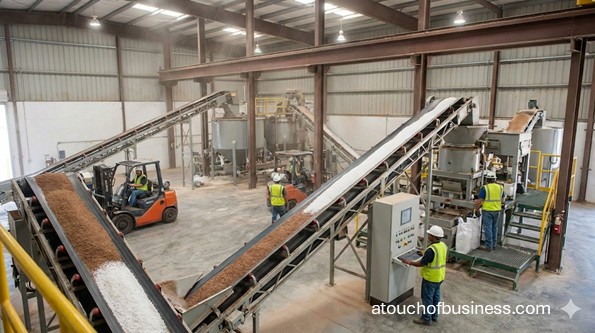
Permits, Equipment, and Setup Basics for First-Time Owners
A fertilizer production business is not a casual side project. You are working with regulated materials, label rules, and facilities that can trigger permits.
You can build something real here. But you need to be honest about the load you are taking on.
Fit: Do you want a business where a mistake can create safety issues, compliance issues, or both? If you do not like procedures and recordkeeping, this can be a tough match.
Passion: Passion is not hype. It is what keeps you steady when a permit takes longer than you expected or a supplier changes a spec. If you want a quick reset on what that looks like, read why passion matters in business.
Motivation: Ask yourself this exact question: “Are you moving toward something or running away from something?” If you are trying to escape a job or stress, the pressure can follow you into the next thing.
Risk and responsibility: You will be responsible for safe handling, safe storage, and accurate labels. If you have a family depending on you, talk through the time and financial risk before you commit.
You should also talk to owners in the same business, but only in a non-competing area. You want real answers without putting anyone on defense. Use this business inside look approach to guide your questions.
Ask a few direct questions like these.
- What surprised you most about permits, inspections, or label rules?
- What would you do differently before signing your first lease?
- Which product line was easiest to launch first, and why?
If you want a broader scan of what most new owners overlook, start with these business start-up considerations.
Step 1: Choose Your Fertilizer Lane First
MUST: Decide what you are actually producing before you spend money. “Fertilizer production” can mean dry blending, liquid blending, bagging bulk blends, or full manufacturing like granulation.
SHOULD: Start with a lane that fits your budget and local rules. Dry blending and bagging in a small industrial space can be a lower-complexity start than building a plant that granulates and dries material.
This choice sets everything else. It affects your facility needs, your safety planning, and which permits you may face.
Step 2: Decide the Scale and Ownership Setup
MUST: Match your business structure to your risk and scale. A true manufacturing plant is usually not a solo build. It often needs major capital, lenders or investors, and multiple staff roles from day one.
SHOULD: If you are starting small with blending and bagging, you may be able to begin lean. But even then, you are usually leasing industrial space and handling materials that require careful controls.
Many owners start as a sole proprietor when risk is low and the work is simple. As exposure grows, they often move into a limited liability company for stronger separation between business risk and personal assets. Your Secretary of State and a qualified attorney can help you choose the right path for your state and situation.
Step 3: Pick the Products You Will Launch With
MUST: Build your first product list around what you can make consistently and label correctly. Your first products should be repeatable and easy to inspect.
SHOULD: Limit your launch to a small set of standard formulas. Add custom blends later if you decide to offer them.
Stay cautious with claims. If your label or marketing starts sounding like pest control, you may create a different regulatory burden than you planned.
Step 4: Define How You Will Generate Revenue
How does a Fertilizer Production Business Generate Revenue? Most revenue comes from producing and selling fertilizer blends, but the sales route can vary.
You can sell bulk loads to farms, deliver totes to turf accounts, sell bagged products to retailers, or produce private-label blends for other brands. Some businesses also earn revenue by contract blending, bagging, or packaging services for distributors.
MUST: Choose one primary route for launch. Your packaging, labeling, and delivery setup will look different depending on who you sell to.
Step 5: Validate Demand and Profit Before You Lease a Building
MUST: Verify that customers exist and that they will pay prices that can cover your costs. This business can carry real fixed costs once you sign a lease and install equipment.
SHOULD: Do simple validation first. Talk to distributors, farm supply outlets, turf suppliers, and landscape supply yards. Ask what they carry now, what they wish they had, and what it takes to get on their shelf or delivery list.
If you need a clean way to think about this, use a practical supply and demand approach before you lock in your plan.
Step 6: Choose a Location That Can Legally Support Production
MUST: Use a location that is zoned for your activity. Fertilizer blending, storage, and packaging are usually not a home-based fit.
SHOULD: Look for light industrial or industrial zoning with truck access. Ask early about fire code reviews, chemical storage expectations, and whether outdoor storage is allowed.
Use this guide to choosing a business location as a checklist before you sign a lease.
Step 7: Screen Environmental Permits Before You Build Out
MUST: Check stormwater, air, and wastewater triggers early. Some industrial sites must obtain stormwater permit coverage for stormwater discharges associated with industrial activity.
SHOULD: Ask your state environmental agency how to confirm coverage for your exact activity and address. If you are in an area where the Environmental Protection Agency is the permitting authority, you may need to use federal tools instead of a state program.
If your process can emit dust or other air pollutants, you may also face preconstruction air permitting under the New Source Review program, depending on your potential emissions and local rules.
Step 8: Plan for Chemical Safety Rules From Day One
MUST: Plan for workplace chemical safety. If you have employees, you will need a Hazard Communication approach that covers labels, Safety Data Sheets, and training for hazardous chemicals.
SHOULD: Treat this as a startup requirement, not a future task. It affects how you store materials, how you label containers, and how you train staff.
Some operations may also trigger Process Safety Management requirements if they have covered processes with specified chemicals at or above threshold quantities. This is not universal. You must verify it based on your chemical list and amounts.
Step 9: Decide If You Will Handle Materials That Affect Transportation Rules
MUST: Identify whether you will ship or store materials that can trigger hazardous materials transportation rules. This can change training and packaging requirements.
SHOULD: If you plan to handle ammonium nitrate-based fertilizer products, verify how they must be classified and shipped. Do not assume your supplier’s label equals your shipping classification.
If you will not ship regulated hazardous materials, keep your launch scope aligned with that decision.
Step 10: Build the Equipment List Around Your Process
MUST: List the exact process steps you will run, then match equipment to each step. Do not buy equipment because it “looks standard.”
SHOULD: Start with equipment that supports repeatable batching, clean handling, and accurate packaging. Those three items will show up in almost every inspection and customer requirement.
If you want a simple way to keep this organized, create your startup list the same way you would build any budget, using a structured startup cost estimate as your base.
Step 11: Write a Business Plan That Matches Reality
MUST: Write a business plan, even if you are not raising money. You need a clear plan for products, customers, compliance, equipment, and cash needs.
SHOULD: Keep it practical. Your plan should make it easy to answer, “What exactly are we launching first?” and “What has to be true for this to work?”
If you need a framework, use this guide to writing a business plan and adapt it to your chosen lane.
Step 12: Plan Funding and Banking Before You Commit
MUST: Know how you will pay for the lease, build-out, equipment, initial materials, and working cash. This business can require large upfront spending, even at small scale.
SHOULD: If you need lending, talk to lenders early and bring your plan and estimates. If you want a starting point, review how business loans work and what lenders typically ask for.
Open business bank accounts once your entity and tax setup are ready. Keep business and personal finances separate from the beginning.
Step 13: Register the Business and Get Your Tax Identifiers
MUST: Register your business with your state if you are forming a legal entity. Most owners start by filing with their Secretary of State.
SHOULD: Use a clear checklist so you do not skip steps. A good starting point is how to register a business, then confirm the exact filing steps on your state’s official portal.
You will also need an Employer Identification Number from the Internal Revenue Service for many common business tasks. Apply directly through official channels.
Step 14: Handle Product Rules and Label Readiness
MUST: Confirm state fertilizer rules for every state where you plan to sell. Fertilizer programs often sit under a state agriculture agency, and requirements vary.
SHOULD: Build label templates early so you are not scrambling right before launch. Keep your product claims tight and factual. Make sure your guaranteed analysis matches your product and your records.
If you plan to use biosolids or sewage sludge-derived materials, you must also review the federal standards for sewage sludge use and disposal and how your state implements them. This is an “only if applicable” item, but it is a major one.
Step 15: Lock in Suppliers and Incoming Material Specs
MUST: Pick suppliers that can provide consistent material specs and documentation. Your product depends on what you bring in.
SHOULD: Write down the specs you need for each raw material, such as concentration, particle size range, and packaging type. Confirm lead times and minimum order sizes before you set your production calendar.
This is also where you decide if you will keep raw materials in bags, totes, or bulk. That choice affects your receiving equipment and storage layout.
Step 16: Set Pricing and Your Sales Terms
MUST: Set pricing that matches your costs, your market route, and your delivery plan. Pricing is not guesswork in a business with materials, packaging, and compliance costs.
SHOULD: Decide how you will price bulk, bagged, and custom products, and what your minimum order rules are. If you want a simple method, use a practical pricing guide and tailor it to your lane.
Write basic terms for delivery windows, returns, and payment timing. You can keep them simple, but you need them.
Step 17: Build the Physical Setup and Run Test Batches
MUST: Set up your space so you can receive, stage, blend, package, and store product without cross-contact and without messy traffic flow.
SHOULD: Run test batches before you “open.” Test your measuring steps, mixing steps, packaging seals, and label placement. Keep batch records from the first day, even for trial runs.
This is also the right time to confirm any required inspections tied to building, fire authority review, and a Certificate of Occupancy, if your local building department requires it for your use.
Step 18: Set Up Payment, Invoicing, and Basic Paperwork
MUST: Be ready to accept payment, invoice customers, and document deliveries. If you sell business-to-business, buyers will often ask for documentation and clear terms.
SHOULD: Prepare templates for invoices, delivery tickets, and product spec sheets. Keep your process consistent so you do not create confusion during your first weeks.
Professional help can save you time here. A bookkeeper or accountant can set up your accounts correctly so you are not trying to fix it later.
Step 19: Build Your Name, Website, and Basic Brand Tools
MUST: Secure a business name you can use legally and consistently. Check name rules with your state and confirm your domain name is available.
SHOULD: Use a business name selection process so you do not rush into something that causes problems later.
Create a simple website that explains who you serve, what products you offer, and how to request a quote or order. If you need a starting point, review an overview of building a business website.
Basic items like business cards and clear labeling for deliveries can still help, even in business-to-business sales.
Step 20: Plan Insurance and Risk Controls
MUST: Confirm legally required coverage for your situation. Workers’ compensation is required in many states once you have employees, but the rules vary.
SHOULD: Get professional guidance for coverage that matches your exposures. Use a business insurance overview to understand common coverage types, then confirm requirements with your state and a qualified broker.
Risk control is not just insurance. It is also safe storage, clean labeling, training, and documentation.
Step 21: Launch With a Tight Pre-Opening Checklist
MUST: Confirm your registrations, permits, and inspections are complete or documented as not required for your location and activity.
SHOULD: Start marketing in a way that fits your sales route. If you sell business-to-business, you may focus more on direct outreach and distributor relationships than walk-in traffic. If you still want a public kickoff, you can adapt grand opening ideas to your industry.
Before your first real order goes out, verify your labels, your lot coding method, and your ability to trace what went into a batch.
What You Are Really Building: Small Scale vs Large Scale
There is a wide gap between a small blending and packaging setup and a full fertilizer manufacturing plant. You need to choose the version you can fund and operate safely.
A small setup may run in a leased industrial unit with a limited product line and a small team. A large plant with granulation, drying, and bulk logistics usually requires major capital and more staff roles.
As you scale, you may also trigger more permits, more inspection time, and more training requirements. That is normal, but it should be planned.
Products and Services You Can Offer at Launch
Your first offerings should be simple, consistent, and easy to label. You can expand once your process is stable and your compliance routine is proven.
- Dry bulk blends for farms or turf accounts
- Bagged granular blends in common sizes
- Liquid fertilizer blends, if your facility can store and handle liquids safely
- Micronutrient blends as add-ons to standard formulas
- Private-label blends for distributors or retailers
- Contract blending and bagging services for brands that want production help
Typical Customers for a Fertilizer Production Business
Who you sell to changes your packaging, labeling, and delivery needs. Choose a primary customer type for launch.
- Farms and growers
- Agricultural retailers and cooperatives
- Turf and ornamental suppliers
- Landscaping supply yards
- Golf courses, sports fields, and grounds departments
- Garden centers and retail channels for bagged product
Pros and Cons to Consider Before You Commit
This business can create repeat orders if customers standardize on formulas. It can also create long compliance task lists if you expand too fast.
Use these points as a decision check, not a sales pitch.
- Pros: Multiple sales routes (bulk, bagged, private label, contract blending)
- Pros: Repeat demand can be steady in agriculture and turf markets
- Pros: Product lines can expand over time once your process is stable
- Cons: Facility rules, permits, and inspections can slow your timeline
- Cons: Safety and labeling errors can create serious consequences
- Cons: Raw material pricing and availability can affect planning
Essential Start-Up Items and Budget Reality
Costs vary widely by location, scale, and product line. A small blending and packaging setup can still require substantial capital. A full manufacturing plant can move into multi-million-dollar territory quickly.
Use this as a planning guide and then validate real numbers with suppliers, contractors, and local regulators.
- Facility: Lease deposit, build-out, utility setup, and code compliance work
- Permits and professional help: Environmental permitting support, safety consulting, and legal review when needed
- Core equipment: Blending, weighing, conveying, and packaging equipment matched to your lane
- Material handling: Forklift or pallet handling tools, storage racks, and containers
- Safety controls: Dust control for powders, spill controls, and required safety fixtures
- Startup materials: Initial raw materials, packaging, labels, and pallets
- Working cash: Enough to cover payroll, rent, and supplies while you build steady orders
Equipment You Will Likely Need (Organized by Category)
This list focuses on common essentials for fertilizer blending and packaging. Your lane may require more or less, especially if you handle liquids or run a true manufacturing process.
Finalize your list after you decide your products, packaging, and site layout.
- Receiving and Material Handling: forklift or pallet handling tools, floor scale or access to a truck scale, conveyors or augers as needed, hoppers or bins, pallets and storage racks
- Dry Blending: batch weighing system, mixer or blender matched to your materials, screening or sieving equipment if needed, transfer system to packaging or bulk load
- Liquid Blending (If Applicable): storage tanks, mixing tank with agitation, metering pumps and flow meters, hoses and fittings rated for the liquids, fill station for drums or totes, secondary containment
- Packaging and Labeling: bagging system, checkweigher, bag sealer, label printer and applicator, palletizing setup, stretch wrapper
- Dust and Ventilation Controls (Especially for Powders): dust collection system, local exhaust ventilation at transfer points, industrial vacuum designed for the dust type present
- Quality Checks: bench scale, basic sampling tools, sieve set for particle size checks, retained sample containers, record templates for batch and label checks
- Safety and Compliance Support: Safety Data Sheet access station, spill kits, eye wash and safety shower where required by hazards present, storage separation tools, fire extinguishers as required by local authority
- Utilities and Maintenance: air compressor if you use pneumatic equipment, maintenance tools, spare parts storage
Skills You Need (And What You Can Outsource)
You do not need to be an expert in everything. You do need to know what must be correct, and who can help you get it right.
When you are new, it is smart to learn the basics and then bring in professionals for the parts that carry the most risk.
- Basic chemical safety literacy and safe storage planning
- Batch math and measurement discipline
- Label readiness and recordkeeping habits
- Equipment setup and basic maintenance awareness
- Permitting and compliance coordination (often supported by consultants)
- Sales and account setup for your chosen customer type
If you want a structured way to build your support team, use a guide to building a team of professional advisors.
What Your Workdays Tend to Look Like
This is not a full operations guide. This is a reality check so you know what you are signing up for.
Even with a small setup, your day will touch materials, paperwork, and customer needs.
- Receiving and staging materials, and checking documentation
- Weighing and blending batches and completing batch records
- Packaging or bulk loading, labeling, and staging finished goods
- Coordinating deliveries and customer paperwork needs
- Keeping the space clean and controlled to reduce dust and spill risk
A Day in the Life of the Owner
You may start your day with deliveries and end your day with paperwork. That is common in this category of business.
One day you might be focused on a production run. Another day you might be working through a permit question or a supplier change.
- Confirm the day’s production plan and any scheduled inbound deliveries
- Walk the space to check housekeeping, storage separation, and label control
- Approve batch records, lot codes, and finished product staging
- Handle customer questions, quotes, and delivery scheduling
- Review compliance tasks tied to your facility and materials
Legal and Compliance Basics (Keep It Simple and Verify Locally)
Do not guess on rules. Verify with official sources and keep proof of what you found. Requirements can change by state, county, and city.
Start with the basics, then add activity-specific rules based on your lane, materials, and facility type.
- Business formation: File your entity with your Secretary of State if you are forming a legal entity, and confirm trade name rules if you use a different public name.
- Employer Identification Number: Apply through the Internal Revenue Service when you need an Employer Identification Number for tax administration and common business tasks.
- Tax accounts: Register for state sales and use tax if needed, and employer withholding and unemployment insurance if you hire.
- Local licensing: Confirm city and county business licensing requirements before you open.
- Zoning and occupancy: Confirm zoning allows your activity. If required, obtain building approvals and a Certificate of Occupancy before operation.
- Environmental permits (only if applicable): Verify whether you need industrial stormwater permit coverage, air permitting, or wastewater discharge approvals based on your site and process.
- Workplace chemical rules (if you have employees): Prepare for Hazard Communication requirements, including labels, Safety Data Sheets, and training.
- Emergency reporting (only if applicable): If hazardous chemicals are present at or above reporting thresholds, confirm whether Tier II reporting applies.
If you are unsure, get professional help. Environmental consultants, safety consultants, and attorneys can help you avoid expensive errors early.
Varies by Jurisdiction
Use this checklist to keep your local verification fast and organized. Your goal is to confirm who regulates you, what triggers requirements, and what proof you should keep.
Do not rely on general articles for final answers. Use them to find the right office and the right search terms.
- State Secretary of State portal: Confirm entity filing steps, name rules, and assumed name requirements.
- State tax agency portal: Confirm sales and use tax registration and employer withholding steps.
- City or county licensing portal: Confirm general business licensing and fee rules.
- City or county planning and zoning: Confirm your use is permitted at your address and zoning district.
- Local building department: Confirm building permits and Certificate of Occupancy requirements for your use.
- Fire authority: Confirm whether chemical storage quantities trigger reviews, permits, or special storage conditions.
- State environmental agency: Confirm industrial stormwater coverage, air permits, and wastewater discharge requirements based on your site and process.
Ask your local offices a few direct questions like these.
- Does my planned activity count as manufacturing, blending, or warehousing for zoning and permits?
- Will outdoor storage, loading areas, or exposed material handling trigger industrial stormwater permit coverage?
- Do my materials and quantities trigger fire code review or hazardous material storage permit steps?
Red Flags to Watch for Before You Launch
If you catch these early, you can save months of frustration. Most launch delays come from decisions made too fast.
Use these as warning lights during planning.
- Leasing a space before confirming zoning, fire review needs, and permit triggers
- Planning outdoor storage without verifying industrial stormwater permit coverage needs
- Using marketing claims that create pesticide-type regulatory risk
- Handling biosolids-based materials without reviewing the federal standards and state implementation
- Shipping materials that may be regulated hazardous materials without verifying classification and training needs
- Hiring staff without a basic Hazard Communication plan for labels, Safety Data Sheets, and training
Pre-Launch Self-Check
You do not need perfection. You do need clarity and proof.
Before you spend another dollar, write down your lane, your first products, your customer type, and the exact offices you will contact for permits and approvals. Then make those calls.
101 Tips to Consider for a Fertilizer Production Business
These tips are here to give you options, not to box you into a single path.
Pick the ideas that fit your current stage and ignore the rest for now.
Save this page so you can come back when the next decision shows up.
Try one tip at a time and watch what changes.
What to Do Before Starting
1. Decide your production lane first: dry blending, liquid blending, bagging bulk blends, or full manufacturing like granulation. Your lane drives your facility needs, permit triggers, and startup budget.
2. Write a clear product short list for launch, not a long catalog. Start with formulas you can produce consistently and label accurately.
3. Pick your primary customer type before you choose packaging. Bulk farm accounts, turf accounts, and retail bags each require different equipment and handling.
4. Talk with non-competing fertilizer blenders in other regions and ask what delayed their opening. Use their answers to build a realistic timeline and checklist.
5. Confirm your location is zoned for manufacturing and chemical storage before signing anything. Ask the planning and zoning office what approvals are required for your use at your specific address.
6. Ask the local fire authority early whether your planned materials and quantities require review, special storage conditions, or permits. Do this before you design the layout.
7. Screen stormwater permitting needs if you will have outdoor storage, outdoor loading, or exposed material handling. Industrial stormwater coverage can apply based on site conditions and activity type.
8. Screen air permitting needs if your process can create dust or other emissions. Preconstruction review may apply depending on your potential emissions and local rules.
9. Create a chemical inventory list for everything you plan to store onsite. Use it to check whether Tier II reporting or other reporting programs could apply to your facility.
10. Build your label plan before you order packaging. Many states follow uniform fertilizer labeling conventions, including how guaranteed analysis is presented and in what order.
11. Set up your record system early: lot coding, batch sheets, ingredient weights, and retained samples. This is hard to retrofit after you start shipping.
12. Choose suppliers based on documentation and consistency, not just price. Get written specs for nutrient grade, particle size, and packaging type.
13. Plan your safety basics before the first delivery arrives: spill response supplies, secure storage, and clear rules for separating incompatible materials. A clean, controlled site is a startup requirement.
14. Estimate startup costs in categories tied to your lane: facility, permits, equipment, startup materials, and working cash. Scale drives costs, so price a small version and a larger version before you commit.
What Successful Fertilizer Production Business Owners Do
15. Treat compliance as a build item, not paperwork. Successful owners keep a simple folder of permits, inspection notes, labels, and training records so questions get answered fast.
16. Keep product claims tight and factual. If you drift into pest-control type claims, you can trigger a different set of rules than fertilizer programs.
17. Standardize your first formulas and lock the ingredient specs. Consistency reduces customer complaints and helps you trace issues when they happen.
18. Design your layout to prevent cross-contact and mix-ups. Clear staging zones for raw materials, in-process product, and finished goods reduce errors.
19. Use checklists for receiving and batching. A two-minute verification step can prevent a wrong material from entering a batch.
20. Prioritize dust and spill control from day one. Clean transfer points and fast cleanup protect safety and reduce the chance of environmental problems.
21. Build relationships with your state fertilizer program staff and inspectors. When you ask clear questions early, you avoid delays later.
22. Keep a disciplined approach to working cash. Materials, packaging, and freight can create big cash swings before you have steady reorder cycles.
23. Document every lot you ship and keep retained samples in a consistent way. If a customer questions performance, you need facts, not memory.
24. Train every worker on chemical hazards and safe handling before they touch materials. Workplace chemical communication rules can apply when employees are exposed to hazardous chemicals.
Running the Business (Operations, Staffing, SOPs)
25. Write a simple standard operating procedure for receiving, staging, batching, and packaging. Keep it short and train from it so your work stays consistent.
26. Calibrate scales on a set schedule and keep a log. Accurate weights support label guarantees and reduce blend errors.
27. Create a receiving checklist that matches your supplier specs. Check labeling, packaging condition, and documentation before materials enter storage.
28. Use clear, large bin and pallet labels for every ingredient and every finished lot. Visual control prevents mix-ups when the pace picks up.
29. Separate raw materials by compatibility and keep aisles open for inspection access. Storage layout is a safety control, not just organization.
30. Control moisture exposure for dry materials. Wet product can clump, change flow, and create packaging issues.
31. Set a rule for rework and returns before you accept them. Decide how you will identify, quarantine, and document any material that comes back.
32. Maintain a basic preventive maintenance calendar for mixers, conveyors, baggers, and dust collection equipment. Small failures can shut down production during peak season.
33. Train forklift operators and set traffic rules in the facility. Most injuries happen during routine moves, not during mixing.
34. Create a simple process to issue and update Safety Data Sheets for materials you use and products customers request. Keep them easy to find for staff.
35. If you sell custom blends, require a written blend request form. Include target analysis, crop or turf use, and any restrictions so you can confirm feasibility.
36. Build a shipment checklist that confirms the right lot, the right label, and the right packaging count. This reduces wrong-shipments that are expensive to fix.
37. Decide your staffing sequence: what you can do yourself at first and what must be hired. Mixing, packaging, logistics, and compliance can become separate roles as volume grows.
38. Schedule short internal audits of storage, labeling, and housekeeping. A quick monthly walk-through can catch problems before an inspector or customer does.
What to Know About the Industry (Rules, Seasons, Supply, Risks)
39. Assume fertilizer product rules vary by state until you confirm otherwise. Many states regulate registration, labeling, and reporting through a state agriculture agency.
40. Learn the basic label structure used in many state programs. Guaranteed analysis is commonly presented in a specific order and format, such as listing primary nutrients in a defined sequence.
41. Build labels so they can pass a desk review. Avoid vague qualifiers like “about” or “approximately” when a guaranteed analysis is required.
42. Keep a clear separation between fertilizer and pesticide claims. If your marketing suggests pest prevention or control, you may trigger pesticide oversight.
43. Plan around seasonality in your target markets. Agriculture, turf, and lawn care can have strong peaks that affect staffing, materials, and delivery capacity.
44. Expect supplier volatility and long lead times for some inputs. Create at least one backup supplier for critical nutrients and packaging.
45. Understand that ammonium nitrate-based products can have special handling and shipping rules when classified as regulated hazardous materials. Verify requirements before you ship.
46. Know that workplace chemical hazard communication standards can apply when employees handle hazardous chemicals. Plan labeling, Safety Data Sheets, and training early.
47. Stormwater controls can be a major issue for material handling sites. Outdoor storage, uncovered loading areas, and spills can create permit obligations and inspection findings.
48. Air permitting may apply if your process emits dust or other pollutants. Preconstruction requirements can apply before you install or modify equipment in some cases.
49. Tier II reporting under emergency planning laws can apply if certain hazardous chemicals are present at or above thresholds. Maintain an accurate chemical inventory so you can evaluate applicability.
50. If you plan to sell “organic” fertilizer products, verify what qualifies under the National Organic Program and how your inputs must be documented. Do not use the term casually.
51. Plan for customer documentation requests in the business-to-business market. Many accounts will want product specifications, Safety Data Sheets, and traceability basics before they buy.
52. Treat contamination control as a reputation issue. Even if a blend meets the label, foreign material, wet product, or inconsistent granule size can create complaints and returns.
Marketing (Local, Digital, Offers, Community)
53. Lead with your lane and your customer type in your messaging. “We blend bulk fertilizer for turf accounts” is clearer than “we do fertilizer.”
54. Create a one-page product spec sheet for each launch product. Include guaranteed analysis, package size, storage notes, and ordering details.
55. Photograph your packaging and labeling clearly for quotes and onboarding. Many business customers want to see labeling before they place a first order.
56. Offer a simple sampling or trial program with clear limits. Small trial orders help new accounts test your product without big risk.
57. Build relationships with local agricultural retailers and turf suppliers. Distributors can be a faster path to volume than direct-to-consumer sales.
58. Use seasonal outreach timing. Contact turf accounts before spring demand spikes and farms before common application windows in your region.
59. Show proof of consistency, not hype. Talk about lot coding, documentation, and repeatable formulas to build trust with business customers.
60. Make it easy to request a quote. Use a standard quote form that captures product, quantity, packaging, delivery location, and timing.
61. Track which messages generate serious inquiries. If a message attracts price-only shoppers, adjust your offer and qualification questions.
62. Plan your local presence if you have a physical facility. Clear signage rules and local permissions can apply, so confirm requirements before installing signs.
Dealing with Customers (Trust, Education, Retention)
63. Set expectations about what you guarantee. Be clear that guaranteed analysis is based on defined nutrient claims and that application results depend on use and conditions.
64. Require customers to specify intended use for custom blends. Crop, soil conditions, and application method can change what is appropriate.
65. Use written confirmations for every order. Confirm formula, packaging, quantity, delivery date, and any special handling notes.
66. Create a simple process for customer questions about compatibility. Some materials do not blend well or can clump, so confirm before you commit.
67. Keep a record of every customer complaint and how it was resolved. Patterns often point to a supplier change, a packaging issue, or a process step that needs adjustment.
68. Provide clear storage guidance for customers, especially for hygroscopic or moisture-sensitive products. This can reduce “bad product” claims that are actually storage problems.
69. If you sell to distributors, learn their onboarding checklist early. They may require proof of labeling, traceability, and documentation before they add you.
70. Use lot numbers in customer conversations. When a customer calls, ask for the lot number first so you can trace ingredients and packaging quickly.
71. Be careful with performance promises. Stick to what the label and documentation support and avoid claims that can be interpreted as pest control.
Customer Service (Policies, Guarantees, Feedback)
72. Publish clear lead times for each product and packaging type. Customers plan around application windows, so surprises create churn.
73. Set a damage and shortage policy before you ship. Define how quickly customers must report issues and what documentation you require.
74. Create a standard process for Safety Data Sheet requests. Respond fast and keep a record of what was provided and when.
75. Build a simple refund or replacement policy tied to verification steps. Use retained samples and batch records to confirm whether an issue is product-related.
76. Keep a “do not ship” hold process for any product with labeling, packaging, or batch record questions. A short delay is cheaper than a wrong shipment.
77. Create a script for handling angry calls. Ask for order number, lot number, and the specific issue before you react.
78. Offer a feedback loop after first orders. A short check-in can uncover shipping or handling issues before they become a reputation problem.
79. Prepare a basic product withdrawal plan even if you never use it. Know how you would notify customers, identify affected lots, and document actions.
Sustainability (Waste, Sourcing, Long-Term)
80. Design your site to prevent releases, not just to respond to them. Use covered storage, controlled transfer points, and spill containment where liquids are present.
81. Keep outdoor material handling to a minimum. Outdoor spills and dust can create stormwater issues and attract regulatory attention.
82. Choose packaging that balances protection and waste. Strong bags reduce product loss and returns caused by torn packaging.
83. Plan for waste streams from the start, such as sweepings, off-spec material, and empty containers. Decide what can be reused, what must be disposed of, and how it will be documented.
84. Control dust at the source using sealed transfer points and dust collection where appropriate. Less dust improves safety and reduces cleanup time.
85. Ask suppliers about recycled content and take-back programs for pallets and bulk containers. Small changes can cut disposal volume without changing your product.
86. Train staff to clean spills and dry material releases correctly. The fastest cleanup method is not always the safest or the most compliant.
87. Keep your facility organized to prevent cross-contact and contamination. Clean staging zones and labeled containers are practical sustainability controls.
Staying Informed (Trends, Sources, Cadence)
88. Subscribe to updates from your state agriculture agency fertilizer program. Label rules, registration steps, and forms can change.
89. Track Environmental Protection Agency updates relevant to industrial stormwater and air permitting. Permit renewals and guidance updates can affect compliance expectations.
90. Monitor Occupational Safety and Health Administration updates for hazard communication and chemical safety topics. Training and labeling expectations can shift with updates.
91. Follow Pipeline and Hazardous Materials Safety Administration guidance if you ship regulated hazardous materials. Classification and shipping interpretations can change your obligations.
92. Join a reputable industry association and attend safety-focused webinars. Many provide practical, non-sales resources for safe handling.
93. Set a quarterly calendar reminder to review your permits, registrations, and posting requirements. Staying current is easier than fixing a lapse.
94. Keep a change log for formulas, suppliers, and labels. When a problem shows up, that history helps you isolate the cause fast.
Adapting to Change (Seasonality, Shocks, Competition, Tech)
95. Build flexibility into your packaging plan. If bags are backordered, being able to ship in bulk or totes can keep orders moving.
96. Maintain at least one alternate carrier option for peak seasons. Freight disruptions can strand product when customers need it most.
97. Plan for raw material substitutions only with documented specs and label impact review. A “similar” input can change nutrient content and flow characteristics.
98. Watch competitor moves, but do not copy their claims blindly. If their labels or marketing cross a regulatory line, copying it can create problems for you too.
What Not to Do
99. Do not sign a lease before verifying zoning, fire review needs, and permit triggers for your exact activity and address. Fixing a bad location choice can be expensive.
100. Do not ship product with unclear or unverified labeling. If you cannot support the guaranteed analysis with records, pause and correct it before product leaves your site.
101. Do not treat training as optional. Untrained handling of chemicals and equipment is one of the fastest ways to create injuries, releases, and enforcement actions.
FAQs
Question: What kind of fertilizer production can a first-time owner start with?
Answer: Many first-time owners start with dry blending and bagging or liquid blending, not full manufacturing like granulation. Your lane drives equipment, permits, staffing, and startup cash needs.
Question: Can I run a fertilizer production business from home?
Answer: In most cases, no, because production, storage, and truck activity often require industrial zoning and fire authority review. Verify allowed use with your city or county planning and zoning office before you commit to any location.
Question: Do I need a business license to start making fertilizer?
Answer: Many cities and counties require a general business license, and requirements vary by location. Check your city or county licensing portal using your business activity and address.
Question: Do I have to register fertilizer products before I sell them?
Answer: Many states regulate fertilizer distribution and may require product registration and compliant labeling before sale. Start with your state agriculture agency fertilizer program and confirm requirements for each state where you will sell.
Question: What must be on my fertilizer label?
Answer: Label rules vary by state, but many programs expect items like net weight, brand, guaranteed analysis, directions for use, and the registrant’s name and address. Use state fertilizer labeling guidance and confirm with the state fertilizer program staff.
Question: What permits should I check first for the facility?
Answer: Start with zoning approval, fire authority requirements, and environmental permit triggers tied to stormwater, air, and wastewater. Verify with your state environmental agency or the Environmental Protection Agency where it is the permitting authority.
Question: When does an industrial stormwater permit apply?
Answer: Industrial stormwater coverage can be required when stormwater is exposed to industrial activity at the site. Outdoor storage, uncovered loading areas, and material spills can increase the chance it applies.
Question: Do I need an air permit for dust from blending and bagging?
Answer: It depends on your equipment and potential emissions, and some locations require preconstruction review before you build or modify. Ask your state or local air permitting office whether minor New Source Review applies to your planned process.
Question: Do I need to file Tier II chemical inventory reports?
Answer: Tier II reporting can apply if your facility stores certain hazardous chemicals at or above reporting thresholds. Use your chemical inventory to evaluate applicability and verify with your state emergency response agency.
Question: Do I need an Employer Identification Number?
Answer: Many businesses need an Employer Identification Number for tax administration, payroll, and common banking and vendor setups. You can apply directly with the Internal Revenue Service.
Question: What tax registrations should I expect when I start?
Answer: You may need state registrations for sales and use tax, and employer withholding and unemployment insurance if you hire employees. Requirements vary by state, so verify on your state department of revenue site.
Question: What insurance is legally required to start?
Answer: Legal requirements vary, but workers’ compensation is commonly required once you have employees. Confirm requirements with your state workers’ compensation agency or state labor department.
Question: If I hire employees, what safety rules do I need to follow?
Answer: If employees are exposed to hazardous chemicals, Hazard Communication requirements can apply, including labels, Safety Data Sheets, and training. Build this into your startup plan before your first production run.
Question: If I ship regulated hazardous materials, what training is required?
Answer: Hazardous materials employers must train and test hazardous materials employees, certify training, and keep records. Verify requirements with Pipeline and Hazardous Materials Safety Administration guidance and the federal training rules.
Question: What equipment do I need to start dry blending and bagging?
Answer: Common essentials include a mixer or blender, accurate scales, bins or hoppers, conveying equipment, bagging and sealing equipment, and pallet handling tools. Dust control equipment is also important when handling powders.
Question: What equipment do I need to start liquid blending?
Answer: Common essentials include storage tanks, a mixing tank with agitation, metering pumps, hoses and fittings rated for the liquids, and a fill station for drums or totes. Secondary containment may be needed depending on the chemicals and local rules.
Question: How do I choose suppliers for raw materials and packaging?
Answer: Choose suppliers who can provide consistent specs and documentation like Safety Data Sheets and written grade information. Get clarity on lead times, minimum orders, and packaging options before you set your production plan.
Question: Can I label my product as organic?
Answer: If you plan to use organic claims tied to the United States Department of Agriculture organic program, you need to follow National Organic Program rules. Verify whether certification applies to your product and business model with the National Organic Program and an accredited certifier.
Question: How should I estimate startup costs without guessing?
Answer: Price your startup in categories: facility and build-out, permits and professional help, equipment, startup materials and packaging, and working cash. Get quotes from suppliers and contractors, then add time for inspections and approvals.
Question: What does a basic day-to-day workflow look like once I am running?
Answer: A common flow is receiving materials, staging and labeling inventory, batching and blending, packaging or bulk loading, and documenting lots and shipments. Housekeeping and spill control are part of the daily routine, not optional extras.
Question: When should I hire my first employees?
Answer: Hire when production volume or safety risk is beyond what you can do alone without cutting corners. Many owners staff first for material handling and packaging, then add admin and compliance support as orders grow.
Question: What numbers should I track weekly as an owner?
Answer: Track cash on hand, accounts receivable aging, inventory on hand by key inputs, and rework or scrap events. Also track on-time shipments and order accuracy to spot process problems early.
Question: What are common mistakes new fertilizer producers make?
Answer: Common mistakes include leasing a site before confirming zoning and permit triggers, weak label control, and poor batch records. Another common error is ignoring stormwater and dust controls until an inspection forces changes.
Related Articles
- How to Start a Garden Supply Business Successfully
- How to Start a Seed Business: Essential Steps
- How to Start a Greenhouse Business: Complete Guide
- How to Start a Hydroponic Farm Business
- How to Start a Plant Nursery That Grows and Thrives
- How to Start a Horticulture Consulting Business: Step-by-Step Guide
Sources:
- eCFR: 40 CFR Part 122 permits
- Environmental Protection Agency: Industrial stormwater discharges, Preconstruction air permit rules, Tier II forms instructions, Chemical Data Reporting basics, Sewage sludge biosolids info, Sewage sludge laws regs, Minor NSR basics
- Internal Revenue Service: Get employer identification
- Montana Department of Agriculture: AAPFCO labeling guide, Fertilizer labeling requirements
- Occupational Safety and Health Administration: Hazard Communication standard, Process safety management
- Pipeline and Hazardous Materials Safety Administration: Ammonium nitrate presentation, Training requirements
- The Fertilizer Institute: Safety and security
- U.S. Small Business Administration: Register your business
- USDA Agricultural Marketing Service: Organic regulations