
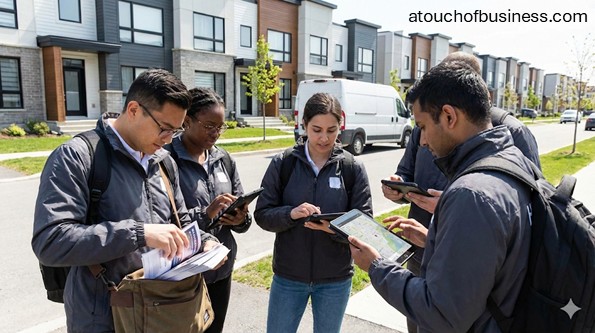
Starting a Flyer Distribution Business: Planning Checklist
Flyer Distribution Business Overview
A Flyer Distribution Business delivers printed advertising pieces to targeted neighborhoods and locations. The core work is physical delivery, not printing, and not mailing.
In federal classification work, “advertising materials distribution” includes delivering items like flyers and samples by methods other than mail, such as door-to-door, on car windshields, and in public locations. It can also include assembly tasks like bundling materials for distribution. (If you plan to include printing or design, treat those as add-on services and separate them in your planning.)
This is usually a small, owner-run startup you can launch from home with a vehicle, basic gear, and tight process control. It can scale later by adding independent contractors or employees once you have consistent demand and a way to verify delivery.
Common Business Models
This business can be structured a few different ways. Your choice affects staffing, cash needs, and what you promise clients.
Before you pick a model, think about your capacity. Are you doing this full time, part time, or only during peak seasons?
- Door-to-door delivery: Deliver to residences on a defined route, often by neighborhood, carrier route, or postal code.
- Public-location handouts: Distribute in allowed public areas (and only where permitted), such as event areas, sidewalks, or approved community spots.
- Windshield placement: Place items on vehicles only where it is allowed and where property rules permit it.
- Door-hanger campaigns: Hang materials on doors or handles (where allowed), often used by local services.
- Bundling and prep add-on: You assemble packets (for example, bag stuffing) and then deliver them.
- Subcontractor model: You win client accounts and assign routes to contractors with clear standards and proof requirements.
- Agency partner model: You serve marketing agencies, print shops, or direct mail firms that want a local distribution partner.
- Mail-based alternative (not delivery by you): Some clients may prefer postal “saturation” programs like Every Door Direct Mail. If you offer help here, you are coordinating mail preparation rules rather than physically delivering door-to-door.
Start With Fit, Motivation, And Risk
Before you plan routes or buy gear, decide if owning a business is right for you and if this specific business is right for you. If you want a broader readiness checklist, start with Points to Consider Before Starting Your Business.
Passion matters because it helps you push through problems. Without it, people often look for an exit instead of solutions. If you want a clear explanation of why that matters early, read How Passion Affects Your Business.
Now check your motivation. Ask yourself: “Are you moving toward something or running away from something?” If you are starting only to escape a job or fix a short-term financial bind, that pressure may not sustain you when the work gets repetitive or the first month is slower than expected.
Also do a risk and responsibility check. Income can be uncertain at first. You may work long hours, handle difficult tasks, take fewer vacations, and carry full responsibility when something goes wrong. Make sure your family or support system is aligned, and ask yourself if you have (or can learn) the skills and can secure funds to start and operate.
Talk To Experienced Owners Before You Commit
One of the fastest ways to avoid blind spots is to speak with people already doing the work. Only talk to owners you will not be competing against.
If you want a structured way to approach these conversations, use Business Inside Look as your guide.
- What delivery proof do clients ask for most often, and what do they reject?
- Which local rules or property restrictions surprised you when you first started?
- What do you wish you had written into your first client agreement?
Step 1: Define Exactly What You Deliver And Where
Start by defining your delivery methods and your boundaries. Decide whether you will do door-to-door delivery, door hangers, public-location distribution, windshield placement, or a mix.
Be clear about what you will not do. For example, the United States Postal Service restricts placing items in or on a mailbox by anyone other than USPS, and depositing unstamped advertising materials in a mailbox can violate federal law, so “mailbox delivery” is not the same as door delivery and can create legal risk.
Step 2: Confirm Demand And Confirm Profit
You need two validations before you spend real time or cash. First, confirm there is demand for what you offer in your area. Second, confirm there is enough profit to pay yourself and cover your bills and expenses.
A simple way to keep this grounded is to review supply and demand basics and then do local outreach. Talk to potential clients and ask what they buy now, how they measure results, and what they would change.
Step 3: Choose A Target Area And A Delivery Standard
Pick a service area you can realistically cover. Define what “complete delivery” means for you, including how you handle gated communities, locked buildings, “no solicitation” notices, and inaccessible addresses.
Also decide what you will track. Many clients want proof that distribution happened, so define your proof method early and keep it consistent.
Step 4: Decide How You Will Operate And Staff
This is often a solo startup. You do the delivery, coordinate with clients, and manage proof and reporting. That lowers early costs and helps you learn what clients actually value.
If you plan to scale quickly, your plan changes. Adding contractors or employees means you need training, route assignment, quality checks, and a way to address complaints. If you are not sure when to add help, review how and when to hire so you can plan for it instead of reacting.
Step 5: Write Your Service Offer And Pricing Structure
Put your offer in writing in plain language. Define the delivery method, the area, the timing, and the proof you provide. Decide what counts as an exception (for example, locked entry) and how you document it.
Then set pricing. You can use a per-piece price, per-route price, per-hour price, or a package price tied to a defined area and delivery window. If you want a framework for pricing choices, review pricing your products and services.
Step 6: Build Your Startup Items List And Price It Out
Make a detailed bullet list of every item you need to launch. Include equipment, supplies, software, branding, insurance, and any legal setup costs.
Once your list is complete, research estimated pricing per item. The size and scale of your operation drives startup costs, so build two versions of your list if you are unsure: a solo “lean start” and a “ready to subcontract” start. For a structured approach, use Estimating Startup Costs.
Step 7: Write A Business Plan Even If You Self-Fund
A business plan keeps you on track. It forces you to define your offer, your market, your pricing, your proof method, and your assumptions.
If you want a practical structure that stays focused on what matters, use How to Write a Practical Business Plan as your outline.
Step 8: Choose Funding And Set Up Your Banking
Decide how you will fund the startup: personal savings, a partner, or outside funding. Most small startups begin without investors, but you still need enough cash to cover your launch expenses and the ramp-up period.
If you need financing, review how to get a business loan and confirm what lenders require before you apply.
Then set up accounts at a financial institution so you can keep business transactions separate from personal spending. This makes bookkeeping cleaner and helps if you later add partners or apply for financing.
Step 9: Pick Your Legal Structure And Register The Business
Many small businesses start as sole proprietorships by default, meaning there is no state formation filing for the business itself, even though you may still need licenses or a “doing business as” name registration. Many owners later form a limited liability company for liability and structure, and it can also help with banking and partners.
To get a step-by-step view of what typically applies, use How to Register a Business and then verify details with your state and local offices.
Step 10: Handle Tax Registration And Basic Accounts
If you form an entity or hire workers, you may need an Employer Identification Number from the Internal Revenue Service. You can confirm whether you need one and how to apply on the official Employer Identification Number page.
Sales and use tax rules vary by state, and some states tax certain services while others do not. Confirm how your state treats advertising distribution services by checking your state department of revenue guidance before you set pricing and invoicing terms.
Step 11: Confirm Licenses, Permits, And Local Rules
Some places regulate handbill distribution, solicitation, or commercial activity in public rights-of-way. Property owners may also set their own rules for access and distribution.
Use the Small Business Administration guides to understand the categories that may apply, then verify locally: apply for licenses and permits.
Step 12: Set Insurance Before You Start Taking Jobs
At minimum, plan for general liability insurance. If you use a vehicle for business, confirm whether you need business auto coverage. If you store client materials at home or in a storage unit, consider property coverage for business contents.
Many clients, venues, or agencies ask for proof of coverage before they will hire you, so treat insurance as a pre-launch requirement. For an overview of common coverages, see business insurance basics.
Step 13: Build Your Brand Basics And Client-Facing Assets
You do not need a complex brand to launch, but you do need clear, professional basics. That usually includes a business name, a simple logo, and materials that make you look legitimate when you approach clients.
Start with your name choice and availability. Use business name selection tips, then secure a matching domain name and social media handles if available.
Next, decide what you need for launch: a basic website, business cards, and a simple identity set. If you want a structured approach, review how to build a business website, business card basics, and a corporate identity package overview.
Step 14: Set Up Your Tools, Storage, And Proof Process
Before your first job, make sure you can receive materials, stage them, deliver them, and prove what happened. The proof process is often what protects you when a client says, “We did not see results,” or “I think it was not delivered.”
Also decide how you will store materials so they stay dry and organized. A clean home office area, shelving, and labeled bins can be enough for a solo start.
Step 15: Prepare Your Client Agreement And Payment Process
Use a written agreement that defines what you deliver, where, and when. Include how you handle exceptions like locked buildings, unsafe conditions, or restricted properties.
Set up invoicing and a way to accept payment before you start. Keep your proof files and customer paperwork organized from day one so you can respond fast if a client questions delivery.
Step 16: Plan How You Will Get Your First Customers
Your early customers often come from local relationships: small businesses, service providers, event promoters, real estate professionals, political campaigns, nonprofits, and marketing agencies.
Create a simple outreach plan. Decide who you will contact first, what proof you will show, and what offer you can deliver consistently. Your goal before launch is not volume. It is a few repeatable jobs that test your process.
Step 17: Run A Pre-Launch Test And Fix Weak Spots
Before you take a large job, do a controlled test run. Use a small area and a clear piece count. Then verify your prep time, your delivery pace, your proof method, and your reporting.
This is where you learn the flip side: what looks simple on paper can break down in the field. Locked buildings, weather, signage, and property rules can change your plan fast.
Step 18: Do A Final Pre-Opening Check
Right before you launch, confirm your legal setup, insurance, tools, and marketing are ready. Then start with a manageable first job and build from there.
If you plan to add a vehicle sign or other exterior signage, confirm local sign rules and consider company sign considerations before you order anything permanent.
How A Flyer Distribution Business Generates Revenue
Revenue usually comes from delivering printed materials for a client under a defined scope. The scope is typically tied to piece count, a defined area, and a delivery window.
Common pricing structures include per-piece delivery, flat-rate delivery for a defined neighborhood, hourly delivery for special events, and recurring campaigns for repeat clients. If you offer add-ons like bundling or basic design coordination, keep those separate in your pricing so clients can see what they are paying for.
Products And Services You Can Offer
Most offerings are service-based. Your value is reliable delivery, clear boundaries, and proof that supports what you claim.
- Door-to-door flyer delivery (where permitted)
- Door hanger placement (where permitted)
- Distribution in public locations (only where allowed)
- Windshield placement (only where allowed)
- Bundling and assembly (sorting, bagging, grouping)
- Pickup from print shops and staging for delivery
- Proof of distribution package (photos, counts, exception notes)
- Coordination for mail-based neighborhood coverage using postal programs when requested (coordination, not mailbox placement)
Who Your Customers Usually Are
Customers are typically organizations that want local reach and fast visibility. Your early market often depends on what industries are concentrated in your area.
- Local service businesses (home services, gyms, salons, cleaning, repair)
- Restaurants and retail stores promoting openings or specials
- Real estate agents and property managers
- Event promoters and community organizations
- Political campaigns and advocacy groups (rules and locations can vary)
- Marketing agencies that need a local delivery partner
- Print shops and copy centers offering distribution as an add-on
Pros And Cons To Think Through
This business can be simple to start, but it is not always simple to standardize. Think through both sides before you commit.
- Pros: Can be launched as a solo service; basic equipment; flexible service area; can build repeat work with recurring campaigns.
- Cons: Physically demanding; weather exposure; quality disputes without proof; local restrictions vary; inconsistent demand in some markets.
Essential Equipment And Startup Items
Below is an itemized list of the essentials most startups use. Your exact list depends on your delivery method, your proof standard, and whether you will store materials at home.
Build your own checklist from this and then research pricing item by item.
- Transportation And Field Mobility
- Reliable vehicle appropriate for your service area
- Vehicle phone mount and charging cable
- Portable battery pack
- Weather-appropriate footwear
- Rain gear and layered clothing for field work
- Distribution Gear
- Delivery bag, satchel, or durable backpack
- Hand truck or folding cart (for larger drops)
- Rubber bands or bundle straps
- Clipboards or field notebook for counts and exception notes
- Door hanger applicator tools (if needed for your material type)
- Staging And Storage
- Plastic storage bins with lids
- Labeling supplies (labels, marker, tape)
- Shelving or racking for organized staging
- Moisture protection (trash bags, tarps, or plastic wrap)
- Basic workspace table for counting and bundling
- Proof, Reporting, And Admin Tools
- Smartphone with camera
- Turn-by-turn navigation tool or app
- Cloud storage for proof files
- Spreadsheet or campaign tracking tool
- Email account on your business domain (recommended)
- Invoicing and payment processing tool
- Basic document templates (agreement, scope sheet, invoice)
- Safety And Visibility
- High-visibility vest (especially near traffic or parking lots)
- Flashlight or headlamp for low-light conditions
- Basic first aid kit
- Sun protection (hat, sunscreen)
- Work gloves (if handling bundled materials)
- Brand And Sales Basics
- Basic website with service description and contact form
- Business cards and a simple brochure or leave-behind
- Logo files and consistent fonts/colors for documents
- Simple rate sheet tied to defined service options
- Optional Items If You Add Staff Or Contractors
- Training checklist for delivery standards and restrictions
- Contractor agreement or employment onboarding documents
- Quality control checklist for routes and proof review
Skills You Will Need
You do not need every skill on day one, but you do need a plan to cover the basics. You can learn, hire, or outsource where it makes sense.
- Clear communication with clients (scope, timing, proof expectations)
- Basic math for counts, coverage, and pricing
- Organization for staging, bundling, and tracking
- Time planning and route logic
- Comfort working outdoors and walking for long periods
- Attention to rules, signage, and property restrictions
- Basic recordkeeping for invoices, proof files, and tax needs
- Conflict handling when a customer disputes delivery or results
Day-To-Day Activities Once You Start Taking Jobs
Even though this guide focuses on startup, it helps to know what your early days will look like. This is the work your systems should support.
- Confirm scope and timing with the client
- Pick up materials from a printer or receive deliveries
- Count pieces and stage bundles by route
- Deliver using your defined method and document exceptions
- Capture proof and organize files by campaign
- Send a completion report and invoice
- Track feedback and update your agreement or scope language when patterns show up
A Day In The Life Of An Owner
You might start early, especially in warm seasons or busy neighborhoods. Your first hour is often staging and verifying counts, because fixing a counting error after you leave is harder.
Next comes delivery. You are watching for access issues, signage, and safety concerns. You document exceptions as you go and keep proof files organized so you can answer questions later without digging.
After delivery, you review your proof, send a completion note, and invoice. Then you switch gears and do outreach for the next job, because demand is not automatic. The business stays healthier when your delivery work and your customer pipeline both get attention.
Red Flags To Watch For
Some problems are avoidable if you spot them early. These are common warning signs to take seriously.
- A client asks you to place flyers in or on mailboxes, or says “everyone does it.”
- A client wants you to ignore “no solicitation” signs or gated access rules.
- The scope is vague (no piece count, no area definition, no timing).
- The client refuses a written agreement or rejects proof requirements.
- You cannot verify whether a location allows distribution (especially public locations or private parking lots).
- A customer expects guaranteed results instead of verified delivery.
- You are tempted to underprice to win work without confirming you can still pay yourself and cover costs.
Legal And Compliance Basics
Your compliance work has two layers: general business setup and activity rules tied to where and how you distribute materials.
For general setup, the Small Business Administration outlines typical steps for choosing a structure, registration, and licensing. Start with choosing a business structure and registering your business.
For activity rules, a major universal issue is mailbox restrictions. The United States Postal Service explains restrictions on placing materials in or on mailboxes on its official resources. Review the mailbox flyer restrictions and the related mailbox access notice before you define what you offer.
Varies By Jurisdiction
Rules differ by state, county, and city. Your job is to verify what applies to your delivery method and where you plan to work.
Use this as a quick verification checklist, and confirm with official offices before you launch.
- Business registration and entity filings: Verify with your state Secretary of State. Search: “Secretary of State business entity search” and “business formation filing.”
- Assumed name or “doing business as” filings: Often handled by the county clerk or state office. Search: “assumed name filing” plus your state and county.
- State tax registration: Verify with your state department of revenue. Search: “register for sales and use tax” and “service taxability” plus your state.
- Local business licensing: Verify with your city or county business licensing office. Search: “business license application” plus your city or county name.
- Zoning and home-based business rules: Verify with your city or county planning or zoning department. Search: “home occupation permit” and “zoning verification” plus your city or county.
- Certificate of Occupancy: Applies if you lease or open a space that requires building approval for your use. Verify with your local building department. Search: “Certificate of Occupancy” plus your city or county.
- Handbill or solicitation rules: Some jurisdictions regulate door-to-door distribution or public right-of-way activity. Verify with city clerk, police department permitting, or municipal code resources. Search: “handbill distribution ordinance,” “solicitation permit,” and “right-of-way permit” plus your city name.
- Employment accounts: If you hire, you will likely need state employer accounts (unemployment insurance and related registrations). Verify with your state labor or workforce agency. Search: “register as an employer” plus your state.
If you want a few questions that quickly narrow what applies, start here.
- Will you operate from home, a storage unit, or a leased office space?
- Will you have employees or contractors in the first 90 days?
- Will you distribute in public rights-of-way, private parking lots, or gated communities that may require permission?
Pre-Opening Checklist
Use this final checklist right before you accept your first campaign. It helps you catch gaps while they are still easy to fix.
- Business name chosen and basic brand assets ready (website, business cards, simple identity files)
- Business structure chosen and registration steps completed as required
- Employer Identification Number obtained if needed
- State and local tax registrations verified
- Local licensing and distribution rules verified for your delivery method
- Insurance in place (general liability at minimum; vehicle coverage verified)
- Client agreement template ready and proof process defined
- Equipment and supplies staged (bins, labels, delivery bag, safety gear)
- Invoicing and payment processing ready to accept payment
- Test run completed and your process adjusted based on what happened in the field
101 Tips for Building a Solid Flyer Distribution Business
These tips cover different parts of starting and running this type of business.
Some will fit your situation right away, and others won’t matter until later.
Save this page and come back when you need the next step.
What to Do Before Starting
1. Decide which delivery methods you will offer, such as door-to-door placement, door hangers, public-area handouts, or windshield placement where allowed.
2. Write down what you will not do, especially anything involving putting materials in or on mailboxes.
3. Pick a starter service area you can realistically cover without rushing, and keep it small enough to test your process.
4. Identify your first customer types, such as local service businesses, restaurants, real estate professionals, event promoters, and community organizations.
5. Define what “completed delivery” means in plain language, including counts, dates, and what happens when access is blocked.
6. Create an exceptions rule now, such as locked buildings, gated entry, safety concerns, or posted restrictions, and use it consistently.
7. Choose a proof method you can deliver every time, such as time-stamped photos, count logs, and documented exceptions.
8. Build a basic work order template that captures the delivery method, area boundaries, piece count, dates, and proof requirements.
9. Decide how you will charge, such as per piece, per area, per hour for special events, or a recurring package for repeat drops.
10. Run a “profit reality check” on your pricing by estimating time, travel, prep, and proof work, then confirm you can still pay yourself.
11. Make a startup items list before buying anything, including field gear, storage, admin tools, and safety supplies.
12. Price your startup list item by item so you understand what a lean start costs versus a larger launch with extra support.
13. Decide whether you are starting solo, with a partner, or with outside funding, and match your plan to that choice.
14. Choose a business structure that fits your risk level, and confirm registration steps with your state and local offices.
15. If you plan to hire employees soon, build employer registrations into your timeline instead of treating them as an afterthought.
16. Set up a separate business banking setup early, so business transactions are easier to track and reconcile.
17. Get general liability coverage quotes before you quote jobs, because some clients will ask for proof of coverage.
18. Do a small test run with a clear piece count and proof requirements before accepting larger campaigns.
What Successful Flyer Distribution Business Owners Do
19. They sell clarity, not vague promises, by defining the delivery method and proof standard before work starts.
20. They treat every campaign like a contract deliverable with a written scope, not a casual “drop these somewhere” request.
21. They standardize counting so piece totals match what the client expects, especially when multiple bundles are used.
22. They document exceptions consistently, because exceptions are where disputes usually begin.
23. They keep client materials dry and organized, using labeled bins and a staging area that prevents mix-ups.
24. They build relationships with local print shops so pickup timing and packaging are predictable.
25. They keep a short “campaign checklist” for every job, so no steps are skipped when work gets busy.
26. They price for the full job, including preparation, travel, documentation, and reporting time.
27. They use simple reporting that matches the scope, such as counts completed, dates, and documented exceptions.
28. They protect their reputation by refusing work that requires breaking mailbox rules or ignoring posted restrictions.
29. They track what kinds of customers return, then focus future outreach on the customer types that repeat.
30. They keep sample work orders and reports ready, so prospects can see exactly how delivery is handled.
31. They build a repeatable process before adding more service areas, so growth does not break quality.
32. They treat safety as part of quality, because injuries and avoidable incidents can stop deliveries fast.
Running the Business (Operations, Staffing, SOPs)
33. Create a standard operating procedures binder that covers staging, counting, delivery rules, proof capture, and reporting.
34. Use route sheets with clear boundaries, starting points, and expected piece counts so the job stays controlled.
35. Stage each campaign separately, and never mix multiple customers’ materials on the same table at the same time.
36. Use labeled bins for each campaign, including labels for date, area, and piece count.
37. Bundle materials into manageable sets so you can verify counts without constant recounting.
38. Keep a tally counter or another consistent counting method so your numbers do not drift during long walks.
39. Take proof photos the same way every time, such as one photo per block or per defined segment, based on what you promised.
40. Store proof files using a consistent naming system that includes customer name, date, and area.
41. Build a simple “delivery log” that records start time, finish time, and exceptions, even when the job feels easy.
42. Set a cutoff time for weather decisions so you do not start a job that will be ruined by rain or wind.
43. Carry basic supplies that prevent avoidable failures, such as bags for rain protection and extra bundle ties.
44. If you deliver near traffic, wear high-visibility clothing and avoid risky crossings even if it slows the route.
45. In hot weather, plan water breaks and shaded breaks into your route plan, not as a “when I remember” task.
46. Set a clear policy for unsafe conditions, such as aggressive animals, unsafe areas, or severe weather, and document when you stop.
47. If you offer public-area distribution, get written permission when possible, and keep it on file.
48. Avoid placing materials on poles, traffic signs, or other public structures unless you have confirmed it is allowed.
49. If a campaign includes multiple items, assemble packets in a controlled space so each packet is identical.
50. If you use contractors, require them to follow the same proof standard you promised the client.
51. Train contractors using your written procedures, then do a small supervised run before assigning full routes.
52. Build a quality check step, such as reviewing proof files the same day, so problems are caught quickly.
53. Keep a simple inventory record for customer materials you store, including how many you received and how many remain.
54. Create a payment policy that sets when invoices are due and what happens if a customer delays payment.
55. Save every campaign’s work order, proof package, and report so you can resolve disputes with facts.
What to Know About the Industry (Rules, Seasons, Supply, Risks)
56. Mailbox rules are not “optional,” so build your business model around lawful delivery points like doors and permitted public areas.
57. Some cities and counties regulate handbills, solicitation, or distribution in public rights-of-way, so verify rules before each new territory.
58. Private property rules can be stricter than local ordinances, so expect restrictions in gated communities, large apartment complexes, and private parking lots.
59. Plan for seasonality, because demand often spikes around openings, elections, and holiday promotions.
60. Weather is a real operational risk, so treat rain, wind, snow, and extreme heat as scheduling factors, not surprises.
61. If you promise delivery in a tight window, build a buffer for access problems, travel time, and proof work.
62. Do not assume you can enter multi-unit buildings, because access often requires permission or a key code.
63. If you deliver door hangers, confirm the customer’s materials are designed for door placement and will not fall off easily.
64. If you place flyers on windshields, confirm local rules and property owner rules first, because some places restrict it.
65. Understand that “distribution” and “results” are different, so avoid language that implies guaranteed sales.
66. Expect complaints from residents in some areas, and plan a respectful response that follows local rules and posted restrictions.
67. If you deliver to new areas, verify whether a permit applies to canvassing or similar activity before your first job there.
68. Consider that heavy foot traffic routes can raise safety risks, so choose daylight hours when possible.
69. If you handle product samples, confirm whether the items create litter risk and plan cleanup expectations with the customer.
70. Keep your paperwork ready for quick review, because some clients will ask for insurance proof and a written scope before hiring.
Marketing (Local, Digital, Offers, Community)
71. Build a simple website that explains your service options, your service area, your proof method, and how customers request a quote.
72. Use a short portfolio of sample work orders and completion reports to show prospects how you document delivery.
73. Focus early outreach on businesses that already use print advertising, such as local services, restaurants, and real estate professionals.
74. Partner with print shops by offering a clear referral process, including how you handle pickup, staging, and delivery proof.
75. Create a “starter campaign” offer with clear limits, such as a defined area and piece count, so first-time customers can test you.
76. Use local business groups and chambers of commerce to meet owners who need neighborhood promotion.
77. Track which outreach channels create real leads, then double down on the ones that produce repeat customers.
78. Keep your message focused on the deliverable, such as reliable delivery and clear proof, rather than broad marketing claims.
79. Ask satisfied customers for permission to use their campaign report format as an example you can show to prospects.
80. If you work with agencies, build a separate offer for them that emphasizes consistency, documentation, and predictable scheduling.
81. Use simple local search profiles so people can find your service area and contact details quickly.
82. Avoid advertising services you cannot legally provide in every territory, because local rules vary.
83. Keep your pricing structure transparent enough that customers understand what drives cost, such as area size, piece count, and delivery method.
Dealing with Customers (Trust, Education, Retention)
84. Start every customer conversation by confirming the delivery method they want and whether it is allowed where they want it done.
85. Educate customers early that mailbox placement is restricted, so they do not ask for something that creates legal risk.
86. Use a written scope that includes the area boundaries, the piece count, the delivery dates, and the proof package.
87. Ask customers what they consider acceptable proof before work starts, then document that agreement in writing.
88. Confirm how the customer wants exceptions handled, such as locked buildings or posted restrictions, and avoid “silent changes” in the field.
89. If a customer wants public-area distribution, ask for the exact locations and confirm permissions before you accept the job.
90. When customers blame distribution for weak results, bring the discussion back to what you can verify: delivery, timing, and documented exceptions.
91. Build retention by offering a predictable schedule option, such as monthly neighborhood drops, if demand supports it.
92. Keep a record of customer preferences, such as preferred neighborhoods and timing, so repeat campaigns feel easy to place.
Customer Service (Policies, Guarantees, Feedback)
93. Create a clear complaint process that requires the customer to share the issue location and timing so you can review proof efficiently.
94. Set a policy for redo requests that ties back to your scope and proof, so you are not reworking campaigns based on vague claims.
95. Respond quickly to concerns, even if the full review takes time, because silence makes small issues feel bigger.
96. Ask for feedback after each campaign, specifically about clarity of reporting and proof, not just “Did it work?”
97. Keep your customer communications professional and consistent, because trust is a major reason customers renew.
Sustainability (Waste, Sourcing, Long-Term)
98. Encourage customers to print only what they can reasonably distribute, because overprinting leads to wasted materials and storage issues.
99. If a campaign generates litter complaints, work with the customer to adjust placement methods and timing to reduce waste.
100. Store materials properly so they do not get damaged by moisture, because ruined flyers often become avoidable trash.
101. Build long-term stability by focusing on repeat customers and documented delivery quality, not constant one-off campaigns.
FAQs
Question: Is a Flyer Distribution Business something I can start solo, or does it need staff?
Answer: Most owners start solo with a vehicle, basic gear, and a clear delivery and proof process.
Staff often comes later when you have repeat demand and a way to verify quality across routes.
Question: What is the NAICS code for flyer distribution work?
Answer: A common classification is NAICS 541870 for advertising material distribution services.
Use it as a starting point, then confirm with your accountant or state filing guidance if you are unsure.
Question: Is it legal to put flyers in or on mailboxes?
Answer: Postal Service guidance restricts placing items in or on mailboxes by anyone other than USPS, and depositing unstamped mailable matter in a mailbox can violate federal law.
If a client asks for mailbox placement, treat it as a red flag and offer door placement or a mail option instead.
Question: If I cannot use mailboxes, what is a legal alternative for neighborhood coverage?
Answer: You can deliver to doors where allowed, or coordinate a Postal Service option like Every Door Direct Mail for mail delivery.
Mail programs have specific preparation rules, so confirm requirements before you promise timelines.
Question: Do I need a business license to start a Flyer Distribution Business?
Answer: Many cities and counties require a general business license, but requirements vary by location.
Start with the Small Business Administration licensing guide, then verify on your city or county licensing portal.
Question: Do I need a solicitor or handbill permit for door-to-door delivery?
Answer: Some cities regulate solicitation, canvassing, or handbill distribution, and the rules can change by municipality.
Check your city clerk or municipal code site for “handbill,” “solicitation,” and “canvasser” rules before your first drop in a new area.
Question: Can I run this business from home?
Answer: Often yes, but home-occupation and zoning rules vary by city and county.
Confirm with your local planning or zoning office, especially if you store large quantities of printed materials.
Question: Do I need an Employer Identification Number to start?
Answer: Many owners need an Employer Identification Number if they form an entity, hire employees, or meet certain banking needs.
You can apply directly with the Internal Revenue Service through its official tools.
Question: What insurance should I line up before taking jobs?
Answer: General liability is a common baseline, and you may also need vehicle-related coverage if you drive for business.
If you store customer materials, consider coverage for business property, and confirm any coverage requirements a client or venue might require.
Question: What essential equipment do I need to start?
Answer: Plan for a reliable vehicle, a smartphone for documentation, storage bins, bundling supplies, and a simple counting method.
Add safety basics like a high-visibility vest and weather gear if you will work near traffic or outdoors for long periods.
Question: What documents should I have ready before my first campaign?
Answer: Use a written scope that defines the delivery method, area, piece count, dates, and proof standard.
Also prepare an invoice template and a simple completion report format so you can close the job cleanly.
Question: How should I set prices for distribution jobs?
Answer: Price for the full job, including preparation, travel time, delivery time, and proof and reporting work.
If you price only by piece count without time assumptions, you can undercharge fast in areas with access issues or long walking distances.
Question: How do I estimate startup costs for a Flyer Distribution Business?
Answer: Build a detailed startup list, then price each item and include insurance and registration costs you can verify locally.
Make a lean solo version and a second version that includes staffing support so you see how scale changes costs.
Question: Should I use contractors or hire employees for routes?
Answer: Worker classification depends on the facts, including how much control you have over how the work is done.
Review Internal Revenue Service guidance and Department of Labor guidance before you decide, and get professional advice if you are unsure.
Question: What does a simple daily workflow look like once I am operating?
Answer: A basic flow is staging and counting, route delivery, proof capture, and then reporting and invoicing.
Keep it repeatable, because consistency is what protects you when a customer questions delivery.
Question: What metrics should I track to manage the business?
Answer: Track pieces delivered, hours per job, exception rates, travel time, and repeat customer rate.
These numbers help you adjust pricing and spot which routes or customer types create problems.
Question: How do I handle customer complaints that “it was not delivered”?
Answer: Use your agreed proof method and exception log to respond with facts instead of opinions.
If complaints repeat, tighten your scope language and proof steps before taking the next campaign.
Question: How do I get clients without relying on random walk-ins?
Answer: Start with businesses that already use printed promotions, plus print shops and marketing agencies that want a local delivery partner.
Bring a sample work order and completion report so prospects understand what you deliver and how you document it.
Question: How do I avoid cash flow problems in the first months?
Answer: Set payment terms before work starts and use invoices that match the scope and dates.
Keep a cash buffer for slow weeks and do not take large campaigns that you cannot fund upfront.
Question: How do I manage weather and heat risks when routes are outdoors?
Answer: Build weather decisions into scheduling and stop work when conditions become unsafe.
If you have workers, follow heat safety basics like water, rest, and shade planning when temperatures rise.
Question: What are the most common legal mistakes new owners make in this business?
Answer: The biggest ones are mailbox placement, ignoring local handbill rules, and treating private property like public space.
Confirm rules for each new city, and do not assume the next town has the same rules as the last one.
Related Articles
- Starting Your Own Courier Business
- How to Start a Graphic Design Business
- Desktop Publishing Business Startup Guide
- How to Start a Screen Printing Business
- Starting a Vinyl Decal Business
- Car Wrapping Business Startup Guide
- How to Start an Errand Business
- How To Get Customers Through the Door Using These Tips
- Direct Sales Business Startup
Sources:
- Internal Revenue Service: Employer Identification Number, Independent Contractor Employee
- U.S. Small Business Administration: Choose Business Structure, Register Your Business, Apply Licenses Permits, Get Business Insurance
- USPS: Every Door Direct Mail
- USPS.com: Mailbox Flyer Restrictions
- USPS Newsroom: Mailbox Access Restricted
- Cornell Law School: 18 U.S. Code 1725
- U.S. Census Bureau: NAPCS 54187 Product List, NAICS 541870 Listing
- OSHA: Heat Water Rest Shade
- CDC NIOSH: Heat Stress Recommendations
- U.S. Department of Labor: Independent Contractor Rulemaking