
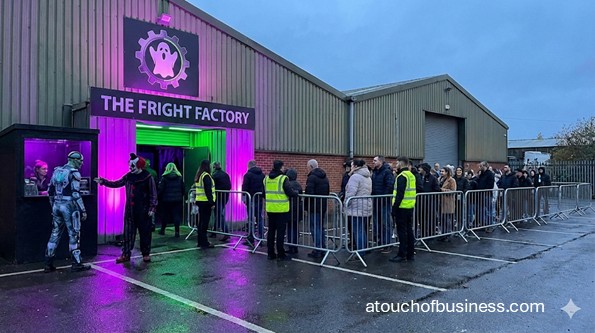
Build-Out, Compliance, Pricing, and Pre-Launch Prep
Haunted Attractions: What This Business Really Is
A haunted attraction is a walk-through entertainment experience built around sets, lighting, sound, performers, and controlled guest flow. Most run as seasonal events (often in the fall), but some operate as pop-ups or special-event experiences.
A haunted house business often requires upfront build-out, permits/approvals, safety planning, and multiple staff roles for guest flow and safety. Even a small attraction can involve building approvals, safety planning, and a team for guest control, performers, and emergency response roles.
How Does a Haunted House Business Generate Revenue
Revenue is usually tied to attendance. You’re selling admission to a scheduled experience, often with timed entry or ticket windows.
Common revenue methods include:
- General admission tickets (online and onsite)
- Timed-entry tickets (reserved entry slots)
- Premium tickets (front-of-line access or small-group entry)
- Group sales (private nights or reserved blocks for organizations)
- Merchandise (theme items, apparel, souvenirs)
- Photo add-ons (branded photo area or photo package)
- Off-season events (special nights, pop-up themes, or holiday overlays)
Products and Services You’ll Offer
The “product” is the experience. That includes the physical build, the story theme, and how guests move through it.
Typical offerings include:
- Walk-through attraction experience (indoor or outdoor)
- Queue-line entertainment (actors, video, themed staging)
- Ticketing and entry services (timed entry, scanning, wristbands)
- Optional add-ons (premium entry, photos, merchandise)
- Private bookings (when your venue, local rules, and staffing allow it)
Who Your Customers Usually Are
Customer mix depends on your theme, intensity level, and local demand. Many attractions market by age guidance and intensity to set expectations.
Common customer groups include:
- Local and regional visitors looking for seasonal entertainment
- Friend groups and couples planning an evening out
- Families attending a “lighter scare” version (when offered)
- Corporate or organization groups booking a private time slot
- Tourists if you’re near a travel corridor or destination area
Pros and Cons to Know Up Front
This is a high-planning, safety-sensitive entertainment business. The trade-offs are real, so it helps to look at both sides early.
Common advantages and constraints include:
- Pros: Strong seasonal demand in many areas; repeat annual interest; clear event-style marketing windows
- Pros: Multiple pricing formats (timed entry, premium access) and add-ons
- Cons: Upfront build-out and permitting work can be significant
- Cons: Staffing needs can spike during open nights
- Cons: Compliance and inspections can affect timelines and layout
- Cons: Weather can impact outdoor events and customer turnout
A Quick “Day in the Life” During the Pre-Launch Phase
Pre-launch days usually revolve around build progress, compliance steps, and readiness checks. You’re coordinating people, materials, and deadlines.
A typical pre-launch day might include a site walk-through, a call with a contractor, a permit or inspection question for the city or county, and then time on ticketing setup and marketing. Late-day work often shifts to lighting and sound testing once the space is quiet.
Is This the Right Fit for You?
Before you plan anything else, decide two things: whether owning and operating a business is right for you, and whether this business is the right fit for you.
If you want a broader view of what you’re getting into, start with startup considerations so you don’t miss the big decisions that shape everything later.
Next, pressure-test your motivation. Passion matters because it helps you persist and solve problems when challenges hit. Without it, many people look for an exit instead of solutions. If you want a practical way to think about that, read why passion matters before you start.
Now ask yourself this exact question: “Are you moving toward something or running away from something?”
If you’re starting mainly to escape a job or a financial bind, that may not sustain motivation when the build runs late, approvals take longer, or staffing falls through.
Also be honest about readiness. Can you handle uncertain income, long hours, difficult tasks, fewer vacations, and full responsibility?
Is your family or support system on board with the time and stress this can create?
Do you have (or can learn) the skills, and can you secure enough funds to start and operate through the early phase?
One of the smartest things you can do is talk to owners who run similar attractions—only talk to owners you will not be competing against. Think different city, different region, or a market you won’t be serving.
If you want a simple method for learning from real operators, use this guide on getting an inside look and go in with focused questions like:
- “What surprised you most about permits, inspections, or fire department requirements?”
- “What did your opening timeline look like from lease signing to first ticket sold?”
- “On a busy night, how many staff did you need on site for guest flow and safety?”
Step 1: Choose Your Attraction Model and Scale
Start by choosing what you’re actually building. The model affects your timeline, approvals, staffing, and startup budget.
Common models include an indoor walk-through in a leased building, an outdoor walk-through on private land, a pop-up inside a shared venue, or a multi-attraction event with separate ticketed experiences.
- Decide if you’re building a single attraction or multiple experiences (main walk-through plus add-ons)
- Decide if it will be full time or part time (most are seasonal, but build work can be months)
- Decide whether you’re going solo, partnering with others, or bringing in investors
- Decide what you’ll do yourself and what you’ll hire out early (construction, electrical, fire protection, legal, accounting)
Step 2: Validate Demand and the Ability to Profit
You’re not just checking if people like the idea. You’re checking whether demand is strong enough to cover all costs and still pay you.
Start with basic local research, then validate with real signals before you commit to a lease or major build work.
- List direct and indirect competitors (other haunted attractions, seasonal events, entertainment venues)
- Estimate your realistic capacity (entry rate, hours open, season length) and compare it to local demand
- Test interest with pre-season sign-ups, email list growth, and social engagement in your area
- Run numbers to confirm you can cover expenses and still pay the owner
If you want a simple framework for checking demand without overcomplicating it, see this market demand guide.
Step 3: Choose a Location That Can Be Approved
Location isn’t only about convenience for customers. For this type of business, the space must also support safe entry, exit, and the kind of build you plan.
For a location-based attraction, choose a site that’s easy for customers to reach, has adequate parking or transit access, and can support queue lines without creating hazards.
- Confirm zoning allows the use (and ask what approvals apply)
- Ask about a Certificate of Occupancy (CO) process if you’re using a building open to the public
- Confirm you can meet exit access and crowd-flow needs for your planned attendance
- Confirm landlord or venue restrictions on construction, décor, fog, sound, and hours
For a practical way to think through site selection, use this location guide.
Step 4: Start Safety and Code Conversations Early
Don’t wait until the build is complete to think about life safety. Many jurisdictions expect early review for this type of attraction.
Example guidance from a local fire marshal’s office shows how detailed haunted attraction requirements can be, including planning and inspections. Review a fire marshal haunted house guideline to see the kinds of issues that often come up.
- Plan for clear, unobstructed exits and emergency lighting
- Plan how you’ll manage lines, crowd density, and entry timing
- Identify materials and décor that may be restricted by local fire rules
- Decide early if you’ll use fog or similar effects, because that can affect alarms and review requirements
Step 5: Build Your Essentials List and Price It Out
This is where your startup budget starts to get real. You’ll list what you must have to open safely and legally, then gather pricing estimates.
Scale drives cost totals. A short attraction in a small space and a large multi-scene build are not the same project.
If you want a structured way to estimate your startup costs, use this startup cost estimating guide.
Essential items often include the following categories:
- Facility Build-Out and Scenic Construction: framing and wall panels, fasteners, lumber and sheet goods, paints and coatings, adhesives, scenic foam and fabric, doors and hardware, flooring protection, tools and ladders
- Electrical and Power Distribution: power distribution equipment, approved extension cords as needed, cable protection and management, work lighting, backup power planning (when required by your design and local rules)
- Lighting, Audio, and Show Control: lighting fixtures, controllers (when used), speakers, amplifiers, audio playback devices, wiring and connectors, control hardware for timed effects
- Effects and Props: animatronic props, pneumatic or mechanical components (when used), fog or haze equipment (when used), scent effects (when used), set dressing props, mannequins, themed décor
- Costumes and Character Gear: costumes, masks, makeup supplies, storage racks, cleaning and care supplies
- Guest Flow and Queue Setup: stanchions or barricades, directional and safety signage, wristbands or entry identifiers, queue lighting, weather coverings when outdoors (when allowed)
- Ticketing and Payment Tools: ticketing platform account, scanners, tablets or handheld devices, card readers to accept payment, receipt printing (when used), secure storage for onsite materials
- Safety and Emergency Equipment: fire extinguishers as required, first aid kits, emergency exit signs and emergency lighting where required, radios for staff communication, flashlights
- Security and Monitoring: cameras where allowed, incident log tools, access control for staff-only areas
- Office and Admin Basics: computer, printer, internet equipment, secure document storage, basic office supplies
As you price items, keep the quotes organized by category. This makes it easier to see what drives your total and what changes when you scale up or down.
Step 6: Decide How You’ll Legally Structure the Business
Your structure affects taxes, liability exposure, and how you bring in partners or investors.
Many U.S. small businesses start as sole proprietorships and later form a Limited Liability Company (LLC) as they grow, especially when liability risk and business complexity increase.
- Pick an entity type based on your risk profile, staffing plan, and ownership structure
- Register the business with your state (usually through your Secretary of State or similar office)
- Apply for an Employer Identification Number (EIN) with the Internal Revenue Service if needed for hiring, banking, or tax accounts
For a plain-language overview of registration steps, see SBA guidance on registering a business and this registration walkthrough.
For the EIN process, start here: IRS EIN information.
Step 7: List the Permits, Licenses, and Accounts You May Need
This step is about building your “approval checklist.” You’re not guessing what applies. You’re building a list, then confirming it with the right offices.
The Small Business Administration maintains a high-level overview of the licenses and permits process here: SBA licenses and permits guidance.
- Business registration and tax accounts: state and local tax registration (including sales and use tax when applicable), employer accounts for payroll taxes when you hire
- Local permission to operate: general business license or local registration where required
- Name filing: assumed name or “doing business as” registration when you operate under a name different from the legal entity name
- Building approvals: building permits for build-out work, inspections, and a Certificate of Occupancy (CO) when operating in a public-facing building
- Fire department review: plan review, inspections, and any fire operational permits that apply to your setup
- Sign approvals: signage permits where required by the city or county
- Employment compliance: wage and hour compliance and child labor rules when you hire minors
Varies By Jurisdiction
Rules change by state, county, and city. Your goal is to verify requirements directly with official offices and portals, then document what they tell you.
Use this quick verification checklist:
- State: Secretary of State or business filing office → use your state’s official link directory via USAGov state government links → search “business entity search” and “register an LLC” (wording varies by state)
- State corporate filing help: use NASS corporate registration resources to find official business registration entry points
- State tax: Department of Revenue or Taxation → search “sales and use tax registration” + your state (wording varies by state)
- City or county: business licensing portal → search “business license” + your city or county (wording varies by jurisdiction)
- Zoning and building: planning/building department → search “zoning verification” and “Certificate of Occupancy” + your city or county
- Fire marshal: fire prevention bureau or fire marshal office → search “haunted attraction” or “special amusement building” + your city or county (wording varies by jurisdiction)
If you contact an office, keep it tight and practical. Ask 2–3 questions like:
- “What approvals apply to an indoor walk-through attraction open to the public in this building?”
- “Will you require a plan review before construction, and what is the inspection timeline?”
- “Are there restrictions on materials, effects, or queue setup that I should design around?”
Step 8: Plan Accessibility and Public Accommodation Basics
If you’re open to the public, accessibility is part of your launch planning. That can affect entry routes, restrooms, and how guests access parts of the experience.
Start with the Department of Justice overview for public-facing businesses: Businesses Open to the Public (ADA Title III). For standards and technical detail, the Access Board is a key reference: ADA Accessibility Standards.
Step 9: Set Pricing and Confirm Key Suppliers
Pricing starts with your capacity, your season length, and your cost base. Before you publish prices, you want confidence that each ticket sold helps cover the full cost of opening.
If you want a clear pricing framework, use this pricing guide.
- Choose your base ticket structure (general admission versus timed entry)
- Decide whether to offer premium entry and group packages
- Confirm ticketing, scanning, and entry tools early so your marketing can match your entry plan
- Identify core suppliers: scenic materials, props, costumes, audio/lighting gear, printing and signage
Step 10: Choose Your Name and Lock Down Your Online Presence
Pick a name you can use consistently across registration, signage, and online listings. Then check that you can secure a matching domain and social profiles before you invest in design work.
For a structured approach, see this guide to choosing a business name.
- Run a state business name search (where available) before filing
- Secure your domain name and key social handles
- Create a basic website plan so customers can find hours, location, and ticket info
If you’re building your first site, this helps you avoid random pages and missing basics: how to build a business website.
Step 11: Plan Your Financial Setup and Funding
Even if you’re not seeking a loan, you still need a plan for startup spending and early bills. A business plan helps you organize the numbers and the timeline.
Use this business plan guide as a simple framework, then expand only as needed.
- Open business accounts at a financial institution once you have the right registration and tax IDs
- Set a startup budget and keep personal and business transactions separate
- Decide how you’ll fund the build: savings, partners, investors, or financing
If financing is part of your plan, start with this business loan overview so you know what lenders usually expect.
Step 12: Insurance and Risk Requirements
Insurance often comes up early because landlords, venues, and contracts may require proof of coverage before you can open.
At a minimum, many operators plan for general liability, and then add coverage based on the venue and what you own.
- General liability
- Property or equipment coverage if you own significant gear
- Workers’ compensation when required by your state rules and employee count (verification varies by state)
- Event-related requirements when required by a venue contract or local permit
For a plain-language overview, see business insurance basics.
Step 13: Plan for Staff, Training, and Hiring Rules
Most attractions need a seasonal team for performers, guest flow, ticket scanning, and safety roles. Decide what you’ll hire now and what you’ll do yourself until you’re closer to opening.
If you need a simple hiring framework, see how and when to hire.
- Decide your minimum staffing per open night and build it into your budget
- Create role outlines (actors, queue staff, ticketing, security, safety leads)
- If you plan to hire minors, review federal child labor guidance and verify state rules
For federal child labor basics, start with: U.S. Department of Labor Fact Sheet 43.
Step 14: Build-Out, Installation, and Pre-Opening Inspections
This is the stage where timelines can slip if approvals weren’t clarified early. Keep your build aligned with what local officials and your lease allow.
Also plan how you’ll handle chemicals used for effects and cleaning. If you have employees exposed to hazardous chemicals, federal hazard communication rules may apply. A starting point is: OSHA Hazard Communication.
- Schedule building, electrical, and fire inspections early, based on local timelines
- Prepare documentation that inspectors may ask for (plans, materials info, equipment specs)
- Run full walk-through tests with staff to confirm lighting, exits, and guest flow
If you want an example of how some fire code references treat “special amusement buildings,” review this code review document: special amusement buildings code review.
Step 15: Brand Basics and Pre-Launch Marketing
Your brand isn’t just a logo. It’s your name, your promise of what guests can expect, and the basic materials people see before they buy a ticket.
Keep it simple: consistent look, clear info, and easy ticket access.
- Logo, colors, and basic visual identity (when you’re ready, use corporate identity basics)
- Business cards for partnerships and local outreach (see business card basics)
- Signage planning (see sign considerations)
- A local marketing plan to drive early ticket sales and opening-week awareness
If you’re a brick-and-mortar attraction, you’ll also want a plan for local visibility and partnerships. Start here: getting customers in the door.
If you plan to use promotional email, review federal requirements under the CAN-SPAM Act: FTC CAN-SPAM compliance guide.
Step 16: Plan Your Opening Event and Final Checklist
Even if you don’t do a “grand opening” in the traditional sense, you still want a planned kickoff: clear dates, clear ticket flow, and a controlled first night.
If you want a structured checklist approach for an opening event, use grand opening planning basics and adapt it to an event-style launch.
Pre-opening checklist items often include:
- Final confirmation of required permits, inspections, and approvals
- Final test of lighting, sound, and any timed effects
- Exit signs, emergency lighting, and safety equipment verified and accessible
- Ticketing system tested end-to-end (purchase, scan, entry flow)
- Staff schedules and role assignments finalized
- Marketing kickoff scheduled (posts, local outreach, partner reminders)
Red Flags to Watch for Before You Commit
Some problems don’t show up until you’re close to opening. Spotting them early can save you months of work and a lot of sunk cost.
Common red flags during startup include:
- A venue that can’t realistically meet exit, alarm, or approval requirements for your design
- Unclear answers from a landlord or venue about what construction and effects are allowed
- A timeline that depends on “hoping” inspections happen quickly instead of scheduling based on official guidance
- Budget totals that don’t include staffing, insurance, permits, and entry tools
- Marketing plans that assume huge attendance without a demand check
If you want general startup pitfalls to avoid (beyond this niche), see common startup mistakes.
When to Bring in Professional Help
You don’t have to do everything yourself. In fact, some parts are smarter and safer with experienced help, especially when public safety and compliance are involved.
Many first-time owners lean on professionals for legal structure, accounting, insurance, construction, electrical work, fire protection systems, and branding. If you want a practical overview of building a support team, start here: building a professional advisor team.
Final Reality Check
A Haunted House Business can be a real business, but it’s not a casual weekend project when you’re inviting the public into a built environment. Your safest path is a clear model, verified demand, documented approvals, and a budget that matches your scale.
If you handle the planning steps in order, you can move forward with fewer surprises and a much cleaner opening timeline.
101 Tips for Launching a Strong Haunted House Business
You’re about to read tips that cover different parts of the startup process.
Use what matches your plan and skip what doesn’t apply right now.
Keep this page saved so you can revisit it as you move from idea to opening night.
Pick one tip, act on it, then return when you’re ready for the next step.
What to Do Before Starting
1. Pick your format first: indoor walk-through, outdoor trail, pop-up in a leased space, or a multi-attraction event. Each choice changes permitting, build needs, and staffing.
2. Decide your “scariness level” and who you want attending. If you can’t describe the experience clearly, customers won’t know if it’s right for them.
3. Set a simple capacity target based on entry timing and how long the experience takes. Your capacity drives pricing, staffing, and whether the project works financially.
4. Research nearby attractions and list what they offer, when they run, and how they price. You’re not copying them—you’re learning what your market already expects.
5. Visit attractions outside your area and take notes on guest flow, signage, and queue management. Choose regions where you won’t become a direct competitor.
6. Write a one-paragraph concept summary for city and county conversations: venue type, dates, expected attendance, and whether you use fog or strobe lighting. Officials can guide you faster when the plan is clear.
7. Call the local building department early and ask what approvals apply to a temporary seasonal attraction versus a permanent installation. Then document what they say so your project stays aligned.
8. Call the fire marshal or fire prevention office before you build sets. Ask what they require for exit visibility, emergency lighting, and shutdown procedures for effects and sound.
9. Treat “special amusement building” as a key phrase to ask about in your area. If your layout intentionally confuses exits or limits visibility, code requirements can change.
10. Choose a location with customer convenience in mind, but don’t stop there. Confirm parking, safe line space, and whether the property can support the occupancy you want.
11. Confirm lease terms allow your build-out and effects before you sign. Put key permissions in writing, including hours, noise limits, and what you can attach to walls and ceilings.
12. Decide whether you’re starting solo, with partners, or with investors. A haunted attraction is rarely a “just me” startup once you account for safety staffing and public-facing risk.
13. Pick your business structure based on risk and scale. Many small businesses start as sole proprietorships, then form a Limited Liability Company as they grow and need clearer separation.
14. Create a startup budget by category, not by guesswork. Include build materials, equipment, permits, insurance, marketing, and staffing for open nights.
15. Price out essentials with real quotes. Even a rough estimate is more useful than a wish list because it forces trade-offs early.
16. Build a realistic timeline with permit and inspection lead time built in. If you plan to open in October, your design decisions often need to happen months earlier.
17. Validate demand before you commit to a large lease or major build. Collect local email sign-ups, track interest by zip code, and test pre-sale demand if your plan supports it.
18. Decide whether you will sell concessions. Food and drink can trigger health department rules, which can expand your approvals and staffing needs.
19. Line up professional help for the parts you shouldn’t learn the hard way, like insurance, legal structure, and code-driven build decisions. Paying for expertise can protect your timeline.
What Successful Haunted House Business Owners Do
20. They design for safety first, then add scares. If guests can’t move safely, you won’t pass inspections or keep people comfortable enough to finish the experience.
21. They treat officials like early partners, not last-minute obstacles. A quick pre-review conversation can prevent expensive rework.
22. They document the build as they go with photos and notes. That helps with inspections, maintenance, and training new staff.
23. They use modular scenery whenever possible. Reusable walls and set pieces reduce rebuild time and lower costs over multiple seasons.
24. They plan a “lights on, effects off” emergency procedure and train it. It’s easier to explain, test, and execute under stress.
25. They test the experience with different types of guests before opening. Watching how people react reveals bottlenecks, confusion points, and safety issues you won’t notice alone.
26. They keep the entry process simple and predictable. Clear signage and timed entry reduce crowd pressure and keep staff from constantly improvising.
27. They set expectations honestly in marketing about intensity, strobe lights, fog, and physical movement. The right customers leave better reviews because they knew what they were buying.
28. They build a staffing plan around safety roles, not just performers. The best shows still need line control, guest assistance, and technical coverage.
29. They track small issues early and fix them fast. A loose cable cover, dim exit sign, or confusing turn can become a bigger problem on opening weekend.
Running the Business (Operations, Staffing, SOPs)
30. Write simple standard operating procedures for entry, line control, emergency response, and shutdown of sound and effects. If it isn’t written, it won’t be consistent.
31. Assign clear roles for every open night, even if people wear multiple hats. When something goes wrong, “someone should handle it” is not a plan.
32. Build a communication plan using two-way radios or headsets. Fast communication is a safety tool, not just a convenience.
33. Create an “opening checklist” that includes exits clear, emergency lighting working, and any required safety equipment accessible. Use it every time so nothing depends on memory.
34. Create a “closing checklist” for powering down safely, securing props, and documenting issues to fix before the next night. Small fixes are easier when you capture them right away.
35. Train staff on guest assistance, not just performance. People may need help exiting, calming down, or finding the nearest staff member quickly.
36. If you hire minors, confirm federal and state rules for hours and prohibited work. Put boundaries into scheduling so you don’t discover a problem after you’re already operating.
37. Keep a basic first aid plan and decide who calls emergency services. Don’t wait to figure that out when the line is full and the music is loud.
38. If you use fog fluids, cleaners, paints, or adhesives, handle chemical information properly for employees. Hazard communication rules can apply when staff are exposed to hazardous chemicals.
39. Plan cable routing and floor protection as part of the build, not after. Most trip hazards are predictable if you design for them.
40. Create a simple maintenance routine for animatronics and moving props. A “check it before doors open” habit prevents breakdowns during peak hours.
41. Decide how you will accept payment and handle chargebacks. A clear ticket policy and accurate marketing reduce disputes.
42. Choose ticket scanning and entry tools that can handle low light and fast pace. Test them with real devices and real staff before you open.
43. Build staff training around the customer journey from parking to exit. It helps everyone understand why line control and exit clarity matter.
44. Set up a basic incident log for injuries, guest complaints, and equipment problems. Patterns show you what to fix before it becomes serious.
What to Know About the Industry (Rules, Seasons, Supply, Risks)
45. Many jurisdictions treat certain haunted attractions as “special amusement buildings,” especially when the layout makes exits hard to see. Ask the local building official and fire marshal if that classification applies to your design.
46. In some adopted building codes, special amusement buildings can trigger sprinkler requirements. Don’t assume your venue is exempt—verify before you commit to a site.
47. Exit visibility is not optional, even when the show is dark. Plan how guests will identify exits quickly under normal conditions and under emergency conditions.
48. Fog and haze can affect alarms and visibility. Coordinate effects plans with the fire marshal early so you don’t redesign at the last minute.
49. Fire departments often restrict fireworks, pyrotechnics, and flame effects without specific approval. If your theme “needs fire,” confirm what’s allowed before you build around it.
50. Seasonal demand creates seasonal pressure on vendors. Order key items early so supply delays don’t push your opening date.
51. Your busy nights will cluster around weekends and late-season dates. Plan your staffing and ticketing so you don’t rely on long lines as your only way to handle demand.
52. Weather is a business risk for outdoor attractions. Build a clear rain plan, including safe walking surfaces and how you communicate schedule changes.
53. Noise and traffic can trigger neighbor complaints. Check local rules and plan parking and line control so you don’t create a public safety issue outside your property.
54. Temporary builds still trigger rules in many areas. Ask what inspections apply when you install temporary walls, electrical runs, or large scenic structures.
55. Accessibility needs should be considered early because they can affect entrances, routes, and customer communication. If you wait until the last week, changes get expensive.
56. If you sell tickets online, you’re handling customer data. Use reputable payment processing and limit who has access to customer lists.
57. Contracts with venues, cities, or sponsors may require proof of insurance and additional insured endorsements. Read the requirements before you sign so you can price the project accurately.
58. Your timeline is only as strong as your inspection schedule. Build time for corrections so a failed inspection doesn’t end your season before it starts.
Marketing (Local, Digital, Offers, Community)
59. Define your realistic drive radius and target marketing there first. Most seasonal attractions win by being the obvious local choice, not by trying to reach everyone.
60. Build a simple website that answers the basics: location, dates, ticket types, age guidance, and what guests should expect. If customers can’t find details fast, they won’t buy.
61. Make sure your business name is consistent across your website, listings, and tickets. Inconsistency creates confusion and hurts search visibility.
62. Claim and update local listings early so opening-week searches show accurate hours and directions. Correct info reduces customer frustration before they even arrive.
63. Use early marketing to validate demand, not just to “make noise.” Track sign-ups, ticket clicks, and local engagement to see what actually works.
64. Offer early-bird tickets only if your schedule and approvals are solid. Selling too early can create refunds and reputation damage if opening moves.
65. Use short behind-the-scenes updates that show progress without giving away the full experience. You’re building anticipation while protecting the surprise.
66. Partner with local organizations for group nights or fundraisers if it fits your plan. Community ties can drive attendance and make permitting conversations easier.
67. Create clear messaging about strobe lighting, fog, and intense scenes. Clear expectations reduce complaints and improve reviews.
68. Use time-based ticketing if your layout has tight hallways or limited capacity. It can reduce crowd pressure and make staffing more predictable.
69. Plan signage that helps guests from parking to entry without confusion. Good wayfinding reduces late arrivals and line disorder.
70. Build a simple press kit for local media: your story, key facts, safety notes, and high-quality photos. Local coverage can be a strong early boost.
71. If you send marketing emails, follow CAN-SPAM rules and include clear opt-out options. Compliance protects your domain reputation and reduces complaints.
72. Track which marketing channels drive actual ticket sales, not just likes. You need results that pay for the project.
73. Plan your opening as an organized event, not a casual “first night.” A smooth first weekend sets the tone for the rest of the season.
Dealing with Customers (Trust, Education, Retention)
74. Publish clear age guidance and content warnings. People should know what they’re buying before they arrive.
75. Post health-related advisories about strobe lights, fog, and intense audio. It helps customers self-select and reduces avoidable incidents.
76. Make entry rules visible before purchase and again at arrival. A clear policy reduces arguments at the door.
77. Create a simple accessibility information page that explains entrances, surfaces, and how guests can request assistance. Clarity helps customers plan and lowers staff stress.
78. Decide whether you allow late entry, and stick to it. Consistency keeps your line fair and your timing controlled.
79. Provide a clear contact method for ticket questions. Fast answers reduce chargebacks and negative reviews.
80. Set a behavior policy that protects staff and guests, especially in crowded queues. When you enforce it consistently, most issues disappear quickly.
81. Create a lost-and-found process and train staff on it. Small service wins can turn a frustrated guest into a repeat customer.
Customer Service (Policies, Guarantees, Feedback)
82. Write a refund and exchange policy that matches your ticketing system and staffing limits. If you can’t support flexible changes, don’t promise them.
83. Train staff to de-escalate quickly and respectfully. A calm response is often the difference between a resolved issue and a viral complaint.
84. Collect feedback right after the experience while it’s fresh. A short survey can reveal safety issues and confusing points in the guest flow.
85. Respond to reviews with facts and respect. You’re showing future customers how you handle problems.
86. If you take photos or video, set a privacy approach. Tell guests what to expect and how they can opt out where feasible.
87. Keep a simple system for tracking repeat issues by category. When you fix the top three problems, customer satisfaction often jumps fast.
Sustainability (Waste, Sourcing, Long-Term)
88. Choose reusable build materials whenever possible so next season costs less. Modular pieces reduce waste and reduce rebuild time.
89. Plan waste disposal and storage before you build. If you don’t know where materials go after teardown, you’ll lose time and money fast.
90. Use energy-efficient lighting when it fits your theme. Lower power draw can reduce electrical strain and simplify planning.
91. Source costumes and props responsibly, then clean and maintain them for reuse. A well-managed inventory prevents last-minute shopping.
Staying Informed (Trends, Sources, Cadence)
92. Check your city or county permitting pages at the start of each season. Requirements and forms can change without warning.
93. Reconfirm fire department expectations each season, even if your layout is similar. Officials may interpret rules differently over time or your build may trigger new requirements.
94. Stay current on workplace safety basics if you hire seasonal staff. A simple annual refresher can prevent injuries and improve compliance.
95. Follow reputable industry and safety sources, not rumor-driven forums. When safety is involved, you want information you can trust.
Adapting to Change (Seasonality, Shocks, Competition, Tech)
96. Build a backup plan for weather, including how you communicate cancellations or delays. Make the plan visible before guests buy tickets.
97. Prepare for staffing swings by having a short list of trained backups. Seasonal hiring can be unpredictable, so resilience matters.
98. Use ticketing data to adjust entry timing and staffing quickly. Small timing changes can reduce congestion and improve safety.
What Not to Do
99. Don’t sign a lease or spend large amounts on build materials before you confirm what permits and inspections apply. Verifying requirements early protects your timeline.
100. Don’t block exits or rely on darkness to hide safety features. Scares can be creative without making egress confusing.
101. Don’t use pyrotechnics or open flame effects unless you have explicit approval from the fire authority. A surprise “no” late in the process can force major redesign.
FAQs
Question: Do I need to register a business before I start planning a haunted attraction?
Answer: You can plan first, but you usually register before signing major contracts, opening a bank account, or hiring staff. The Small Business Administration outlines the common launch steps and where to look for your local rules.
Question: Do I need an Employer Identification Number, and how do I get one?
Answer: Many owners get an Employer Identification Number (EIN) to open financial accounts and handle tax filings. Apply directly with the Internal Revenue Service so you don’t pay a third party for a free service.
Question: What licenses and permits are typical for a haunted house operation?
Answer: Many areas require a general business license plus building and fire approvals for the venue and build-out. Requirements vary by city, county, and state, so verify through your local licensing portal and building department.
Question: What inspections should I expect before I can open?
Answer: Expect building and fire inspections tied to life safety, exits, and any construction or electrical work. Your local fire marshal can explain what must be reviewed before opening to the public.
Question: How do I know if my attraction is treated as a “special amusement” space?
Answer: Ask your building official and fire marshal if your layout and effects make exits hard to see or the path intentionally confusing. Model codes treat “special amusement buildings” differently, and your local adoption controls what applies.
Question: Will I need a Certificate of Occupancy for a seasonal haunted house?
Answer: Many jurisdictions require a Certificate of Occupancy when a building is used for public assembly or changes use for an event. Your local building department can tell you if you need a new certificate or a temporary approval.
Question: Can sprinkler or alarm system rules apply to a haunted attraction?
Answer: Yes, depending on how your local code treats special amusement areas and your building type. Ask early because these requirements can affect site selection and budget.
Question: What should I ask the fire marshal before I build sets?
Answer: Ask about exit visibility, emergency lighting, combustible decorations, and how effects must be shut down in an emergency. Also ask what documentation they want to see during review and how far in advance to schedule inspections.
Question: How do fog, haze, or strobe effects affect approvals?
Answer: These effects can impact visibility and fire alarm behavior, so they often get extra scrutiny. Share your effects plan with the fire authority early so you can design around any limits.
Question: What insurance should I have before signing a lease or selling tickets?
Answer: Many owners start with general liability, then add property or equipment coverage if they own major assets. Venues and landlords often require proof of insurance and specific endorsements, so confirm requirements before you commit.
Question: Are there legal rules around accessibility for a public haunted attraction?
Answer: If you are open to the public, accessibility rules can apply to your facility and alterations. Review the ADA design standards early because they can affect entrances, routes, and restrooms.
Question: Can I hire minors as actors or ticket staff?
Answer: Federal child labor rules limit hours and restrict certain hazardous work for minors. Your state may be stricter, so verify both before scheduling or assigning tasks.
Question: What equipment and build items should I budget for first?
Answer: Budget early for exit and emergency lighting needs, safe walking surfaces, cord management, and any required safety equipment. Add show gear next, because effects are easier to scale than compliance items.
Question: Do workplace chemical rules matter for fog fluids, paints, or cleaners?
Answer: If employees can be exposed to hazardous chemicals, hazard communication rules may apply. Keep safety data sheets accessible and train staff on safe handling.
Question: How do I set up ticket types and pricing before launch?
Answer: Start with capacity, entry timing, and the length of your season, then build prices that cover all fixed and nightly costs. Use timed entry if it helps you control crowding and staffing needs.
Question: How do I choose a location that won’t block approvals?
Answer: Look for a site that can support safe exits, line space, parking, and the expected occupant load. Before signing, confirm zoning, building approval steps, and fire marshal expectations for that address.
Question: What roles do I need on an open night besides actors?
Answer: Most operators need entry and ticket scanning, line control, guest assistance, and technical support for lights and sound. You may also need dedicated safety oversight depending on your local requirements and crowd size.
Question: What staff training should I run before opening?
Answer: Train emergency response basics, how to guide guests to exits, and how to shut down effects and raise lights quickly. Run a walk-through drill so staff understand the full guest path and key risk points.
Question: What systems help me run the season without chaos?
Answer: Use short written procedures for opening checks, closing checks, incident logging, and who makes decisions in an emergency. A simple incident log helps you spot repeat problems and fix them before they grow.
Question: How do I market by email without creating legal trouble?
Answer: If you send commercial email, follow CAN-SPAM rules like accurate sender info and a clear opt-out method. Keep your list permission-based so complaints do not damage your deliverability.
Related Articles
- Start an Escape Room Business
- Start a Costume Rental Business
- Starting a Theatre Company
- Starting a Dinner Theatre
Sources:
- ADA.gov: Businesses open public, ADA Design Standards
- Fairfax County, Virginia: Haunted house guideline
- Federal Trade Commission: CAN-SPAM compliance guide
- Internal Revenue Service: Employer ID number
- International Code Council: Special amusement definition, Special amusement sprinklers
- National Association of Secretaries of State: Corporate registration
- NFPA: NFPA 1 haunted houses
- North Carolina Department of Insurance: Special amusement buildings
- Occupational Safety and Health Administration: Hazard Communication
- U.S. Department of Labor: Child labor Fact Sheet
- U.S. Small Business Administration: Register your business, Licenses permits, Get business insurance
- USAGov: State governments