
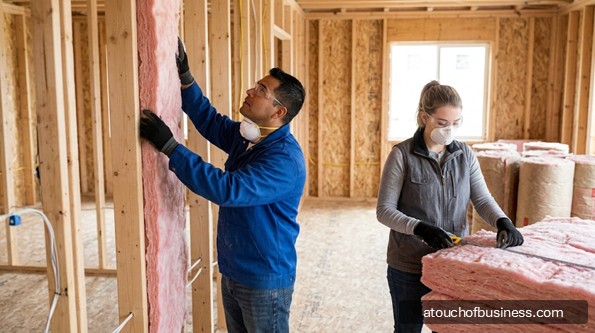
What to Expect From This Guide to Starting an Insulation Contractor Business
This guide walks you through the key decisions and practical steps involved in starting an insulation contractor business, from evaluating personal fit through licensing, equipment, and your first scheduled job. The bullets below highlight selected areas of value, not everything the guide covers.
Inside the guide, you will find:
- Startup steps: Follow a numbered sequence of decisions and setup tasks, from choosing your service focus through opening-day readiness.
- Business fit: Weigh the physical demands, income timing, and reality-check questions worth asking before you commit.
- Local requirements: See how licensing, certification, and insurance vary by state and by the services you choose to offer.
- Equipment needs: Compare the vehicles, tools, and safety gear required for batt, blown-in, and spray foam work.
- Financial planning: Work through cost categories, pricing methods, and the break-even logic behind project-based income.
- Risks and warnings: Review red flags before you start and pitfalls that surface once you’re actively scheduling jobs.
- Common questions: Find answers to situational questions the main guide leaves open, like solo versus crew work and new versus used equipment.
From there, the guide moves into the physical realities and startup decisions that shape whether this trade fits your goals.
Is This Physical, Field-Based Work Right for You?
Insulation work means climbing into hot attics, crawling through tight spaces, and spending hours on ladders.
Before you commit money or time, ask yourself: does this kind of physical, hands-on work genuinely suit you?
Respirators, coveralls, and confined spaces are part of the job, not an occasional inconvenience.
Think honestly about your tolerance for heat, dust, and awkward, cramped positions.
Starting a field trade also means living with income that ramps up unevenly.
Early jobs may be spaced out while you build a reputation and a steady pipeline of work.
Talk with your household about covering living expenses during that ramp-up period.
A reality check worth having early: not every startup in this trade succeeds.
That possibility is worth planning around, not ignoring.
Before you invest in licensing or equipment, talk with insulation contractors who won’t compete with you for jobs.
Ask about their toughest seasons, their biggest startup mistakes, and what they wish they’d known before their first year.
Firsthand insight from experienced owners is a genuinely useful reality check.
Every owner’s path looks different, so treat their experience as perspective, not a script to copy.
Think about who your first customers are likely to be.
Homeowners upgrading an under-insulated attic, and builders who need a reliable subcontractor, are both common starting points.
Consider why a customer would choose you over an established competitor.
Clear pricing, responsive scheduling, and clean, careful work all help build that trust.
Ask yourself: can you realistically deliver on that promise from day one?
For a broader look at the process every new business works through, see the general startup steps guide.
Red Flags Before You Start
Some conditions should make you pause, adjust your plan, or reconsider the timing before you commit further.
Watch for these warning signs before you invest in licensing or equipment:
- Weak demand in a mild climate where insulation upgrades aren’t a common priority
- Heavy competition from established regional or franchise insulation companies in your area
- Startup costs, especially for spray foam equipment, that stretch beyond what you can realistically fund
- Limited financing options for specialized equipment like a blowing machine or spray rig
- Thin margins caused by volatile material prices for foam chemicals or fiberglass inputs
- Heavy seasonal swings that leave long gaps between jobs in your area
Some of these are personal fit issues you can address with planning.
Others are structural facts about this industry that apply no matter how well you execute.
Industry-wide conditions worth understanding before you commit:
Large distributors and buying groups can hold significant leverage over independent contractors in the material supply chain.
This can affect your pricing power and access to materials as a new, small operation.
Skilled labor shortages across construction trades can also limit how quickly you’re able to grow beyond solo or small-crew work.
None of this means you shouldn’t start. It means you should plan your growth with these conditions in mind.
Step 1: Choose Your Insulation Service Focus
Insulation contracting covers several different services, and you don’t need to offer all of them at launch.
Decide whether you’ll focus on retrofit work in existing homes, new-construction subcontracting for builders, or both.
Common insulation types to choose among:
- Batt and fiberglass insulation, installed by hand
- Blown-in insulation, including fiberglass, cellulose, and mineral wool
- Spray polyurethane foam (SPF), applied with a dedicated rig
Batt and blown-in work require less specialized equipment and certification than spray foam.
Spray foam adds real capability, but it also adds certification, ventilation, and insurance requirements you’ll need to plan for.
Ask yourself: does it make more sense to launch narrow and add spray foam later, once you have a customer base?
Step 2: Decide Whether to Start From Scratch, Buy, or Explore a Franchise
Starting an insulation business from scratch gives you full control over your service area, pricing, and pace of growth.
Buying an existing insulation company can hand you crews, equipment, and builder relationships already in place.
A franchise may offer training and brand recognition, in exchange for less independence.
The right path depends on your available capital, your timeline, and how much support you want as you launch.
Review the considerations for starting versus buying a business before you decide.
Step 3: Validate Demand for Insulation Work in Your Area
Before you commit to licensing and equipment, confirm that your service area can actually support this business.
Research these factors before choosing where to focus:
- Your region’s climate zone, which affects typical demand for insulation upgrades
- How many established competitors, including regional or franchise companies, already serve the area
- Whether local utilities or weatherization programs generate steady lead flow for insulation work
If competition is heavy or demand looks thin, consider a narrower niche or a different nearby area.
This is worth slowing down for. A rushed answer here shapes every decision that follows.
Step 4: Choose a Business Structure and Register Your Business
Decide on a business structure for your insulation company before you register anything else.
Many new contractors compare an LLC against a sole proprietorship for the liability protection it offers.
Register your business name, and file a DBA if you plan to operate under a different name.
Apply for a federal tax ID once your structure is set.
Step 5: Get Licensed for Insulation Contracting
Contractor licensing for insulation work varies significantly depending on where you operate.
Some states issue a specific license for insulation and acoustical work.
Others require a general contractor or home-improvement license, or fold insulation into a broader specialty category.
Check your state’s contractor licensing board to confirm which classification applies to you.
Some licenses require passing a trade exam, documenting prior experience, or carrying proof of insurance or a bond.
Confirm these requirements early, since they can take time to satisfy.
A reality check worth remembering: rushing licensing to save a few weeks rarely pays off if it means starting under the wrong classification.
Step 6: Complete Certification and Safety Training
Licensing covers your legal right to operate. Certification and safety training cover your ability to do the work well and safely.
If you plan to install spray foam insulation, look into the Spray Polyurethane Foam Alliance’s Professional Certification Program.
It offers levels matched to your experience, from assistant through project manager.
Manufacturer training is also available for fiberglass, cellulose, and mineral wool installation.
If you’ll work in homes built before 1978, you’ll need EPA lead-safe renovator and firm certification.
This applies to any paid work that disturbs painted surfaces in those homes, including some insulation-access work.
Set up a respiratory protection program before your first job, matched to the materials you’ll install.
Blown-in materials typically call for dust respirators.
Spray foam typically calls for full-face or supplied-air respirators.
Step 7: Set Up Insurance, Bonding, and Business Banking
General liability insurance is a baseline for any insulation contractor, and most clients expect proof of it.
If you hire employees, workers’ compensation coverage typically becomes a requirement, not just a good idea.
Commercial auto insurance covers your vehicle while you’re driving between job sites.
If you install spray foam, ask about contractors pollution liability coverage.
Standard general liability policies often exclude chemical exposure and overspray claims.
Confirm whether your state license requires a surety bond, and get that in place alongside your insurance.
Open a business bank account to keep your finances separate from the start.
Step 8: Set Up Your Workspace, Vehicle, and Equipment
Decide where you’ll store insulation materials, tools, and your vehicle between jobs.
A home-based setup can work early on.
Check local fire-code limits before storing spray foam chemical drums at a residence.
If those limits rule out home storage, you may need a rented shop or yard sooner than planned.
Core equipment depends on the services you chose in Step 1:
- A cargo van, box truck, or trailer sized to your equipment and crew
- A blowing machine and hoses, for fiberglass, cellulose, or mineral wool
- A spray foam rig, including a proportioner, heated hoses, spray gun, generator, and air compressor, if you offer SPF
- Hand tools for batt installation, along with fasteners, netting, and vapor barrier materials
Stock personal protective equipment matched to your materials before your first scheduled job, not after.
Ladders, attic access aids, and portable lighting round out the basics for typical attic and crawlspace work.
Step 9: Set Up Suppliers and Your Pricing Method
Open accounts with insulation material distributors before you need supplies for a scheduled job.
Ask about lead times, since material availability can affect how far out you can realistically book work.
Decide how you’ll price jobs: per square foot, per board foot for spray foam, or as a per-project bid.
Review pricing approaches before you quote your first job.
Build a simple estimate template that lists scope, materials, and any conditions that could trigger a change order.
A written scope document protects you and the customer if access conditions or existing insulation turn out to be different than expected.
Step 10: Plan Staffing and Crew Coordination
Many insulation contractors start solo, handling smaller jobs alone while they build a customer base.
Spray foam work typically needs at least two people: an applicator and a helper.
Ask yourself: how many jobs can you realistically handle alone before quality or scheduling starts to suffer?
That threshold is your signal to start hiring, not an arbitrary date on a calendar.
If you do hire, plan for training time on safety procedures and equipment before a new hire works unsupervised.
Step 11: Build Your Estimating and Scheduling Workflow
A predictable workflow builds customer trust in any project-based insulation business.
A typical project moves through these stages:
- Initial inquiry from a homeowner or general contractor
- Site review to check access conditions, existing insulation, and scope
- A written estimate covering materials, labor, and any conditions that could change the price
- Customer approval before work is scheduled
- Scheduling around weather, crew availability, and material delivery
- Work completion, followed by a final walkthrough with the customer
- Payment and any documentation the customer needs for their records
Weather and access conditions can shift a schedule with little notice.
Build flexibility into how far ahead you book jobs.
If a job reveals a condition your estimate didn’t cover, document it and issue a change order before continuing.
Step 12: Set Up Your Business Identity
Add your insulation business name and license number to your vehicle, since many states require this display.
A working phone number and clear contact information matter more at launch than an elaborate brand.
Basic business cards and a simple way for customers to reach you round out what you need before your first job.
Business Plan
Pull the decisions from the steps above into one practical plan before you take on paying work.
List your chosen service focus, your licensing and certification status, and your core equipment.
List your startup cost items—vehicle, equipment, insurance, licensing fees, and initial materials.
Price each one out locally.
Your most accurate cost estimate comes from listing everything you need and getting real, local quotes rather than relying on a general figure.
Think through your profit potential before you commit to major spending:
Project-based pricing means your revenue depends on how many jobs you complete, not a steady paycheck.
Fixed costs, such as insurance, licensing, and equipment payments, continue whether or not you have jobs booked.
Calculate how many jobs per month you’d need to cover those fixed costs, using your own local pricing and material costs.
Factor in slow seasons and weather delays, since gaps between jobs are common in this trade.
Plan enough operating capital to cover those gaps without falling behind on insurance or vehicle payments.
Does this math work for your situation, given your real startup costs and local pricing?
That’s worth answering honestly before you sign any leases or equipment contracts.
Opening-Day Red Flags
Some risks only show up once you’re actively scheduling and running insulation jobs.
Watch for these signs before and during your first jobs:
- A supplier account that isn’t fully set up when your first material order is due
- Insurance or bonding paperwork still pending when a general contractor asks for proof of coverage
- PPE that hasn’t been stocked and checked before your first scheduled attic or crawlspace job
- A permit or inspection requirement you didn’t confirm with the local building department in advance
- Suspected asbestos-contaminated material, such as vermiculite, discovered mid-job in an older home
If you find suspected vermiculite or a similar material during a job, stop work in that area.
Bring in a licensed asbestos abatement contractor rather than disturbing the material yourself.
This kind of discovery can pause or reshape a straightforward job.
Build it into how you talk with customers about scope before you start.
This is also where the hands-on, physical pace of this trade shows up most.
It’s a fair point to check whether that pace still feels right.
Run a soft-launch or test job before filling your full schedule, so you can catch workflow gaps early.
Frequently Asked Questions
How can I tell if attic insulation might be vermiculite that needs professional testing?
Vermiculite is a pebble-like, loose-fill material, usually light brown, silver-gray, or gold in color.
Each piece tends to have a shiny, accordion-layered look.
Visual identification alone isn’t reliable enough to rule out asbestos contamination.
If you see this kind of material in an older home, treat it as a possible hazard and recommend professional testing before continuing.
Does subcontracting for a general contractor change what insurance or licensing I need, compared to working directly with homeowners?
General contractor requirements for subcontractors often go beyond what your state license requires.
A GC may require specific insurance limits or additional-insured status before letting you work under their contract.
Confirm a GC’s requirements before you bid a job, since they can differ from a typical homeowner-direct project.
Working direct-to-homeowner still requires your standard state licensing and insurance, just without that extra layer of GC-specific requirements.
Should I buy spray foam equipment before or after completing certification?
Complete your Spray Polyurethane Foam Alliance certification, and confirm real demand in your area, before you commit to a rig.
Buying the equipment first risks leaving you with a costly asset you aren’t yet certified or busy enough to use.
Certification and confirmed demand both reduce the risk of that investment sitting idle.
Is it realistic to stay a solo operation instead of building a crew?
Staying solo works for many contractors handling batt and blown-in jobs at a modest pace.
It becomes harder to sustain if you take on spray foam work, since SPF typically needs an applicator and a helper.
A permanent solo model also caps how much job volume you can realistically take on.
That’s a fair tradeoff if steady, moderate income fits your goals better than growth.
Should I buy new or used equipment when I’m starting out?
New equipment comes with a warranty and no unknown wear, but costs more upfront.
Used equipment can lower your starting costs, if you can verify its maintenance history and remaining service life.
Weigh your available capital against how much risk you’re comfortable taking on with unknown equipment condition.
There’s no single right answer here. It depends on your budget and your tolerance for repair risk early on.
Interviews with Insulation Contractor Professionals
These conversations cover the technical and business sides of insulation contracting, including training, equipment, staffing, profitability, building science, safety, and managing complex jobs.
Use the experiences to identify skills you may need to develop, understand potential operating challenges, and think through equipment, hiring, training, and job-planning decisions before starting an insulation business.
Contractor Series: Wisdom from A Spray Foam Pioneer
Carlos Bales discusses his 27-year career in insulation, including growing from a one-man operation, training installers, maintaining equipment, protecting profitability, pricing work, and handling the financial demands of commercial projects.
His experience helps prospective contractors see how installer skills, equipment reliability, pricing discipline, and cash-flow demands can directly affect the viability of an insulation business.
Todd Bolton
Todd Bolton talks about learning the spray foam trade, buying his first rig, finding mentors, understanding building science, hiring qualified sprayers, and the financial and operational difficulties of running a spray foam operation.
The discussion is useful for anyone considering the field because it addresses the learning curve, shortage of qualified workers, equipment commitment, potential liability, and limited room for mistakes.
Tanks for the Challenge
Lane Mizera explains how he moved from buying his first spray foam rig and training in the trade to operating Total Site Services with his wife, Stacey. The article also follows the planning, equipment, transportation, safety, staffing, and backup preparations involved in a large industrial insulation project.
His experience shows why insulation contracting can require substantial preparation beyond installation itself, particularly when equipment reliability, jobsite access, safety procedures, materials, and unexpected failures must all be planned for.
Spray Foam Insulation Part 1 with Tom Harris
Tom Harris discusses decades of experience with polyurethane foam and explains contractor training, equipment education, chemical handling, installer qualifications, common application mistakes, surface preparation, and differences between open-cell and closed-cell foam.
This interview is especially useful for understanding the technical knowledge behind spray foam contracting and why buying equipment alone is not enough. It highlights the importance of training, installation knowledge, safety practices, and recognizing conditions that can cause failed work.
Related Articles
- How To Start a Home Energy Audit Business
- How To Start an HVAC Business
- How To Start a Roofing Business
- How To Start a General Contracting Business
- How To Start a Custom Home Construction Business
Sources:
- ICAA: Commercial Contractor Certification
- NIA: Training Tools Programs
- OSHA: Weatherization Job Hazards, Weatherization Respiratory Protection
- Insulation Institute: NAIMA Health Safety, State Energy Codes Standards, R-Values Performance Measure
- EPA: RRP Program Contractors, RRP Firm Certification, Vermiculite Insulation Guidance
- SPFA: Professional Certification Program, Individual Certification Levels, Company Accreditation Programs
- Energy Vanguard: Thermal or Ignition Barrier
- UpCodes: Thermal Barrier Code Section
- American Chemistry Council: Spray Foam Attic Code Guide
- Insureon: Insulation Contractor Insurance
- Wexford Insurance: Spray Foam Insurance Coverage
- HM Advisors: Insulation Contractor Insurance
- Service Partners: Insulation Tools Equipment
- SprayFoam Magazine: Spray Foam Equipment Guide
- IndexBox: US Insulation Market Report
- Supply Chain Game Changer: Insulation Supply Chain Challenges
- FieldCamp: Insulation Contractor License Requirements
- InsulationMachines.net: State Licensing Guide