
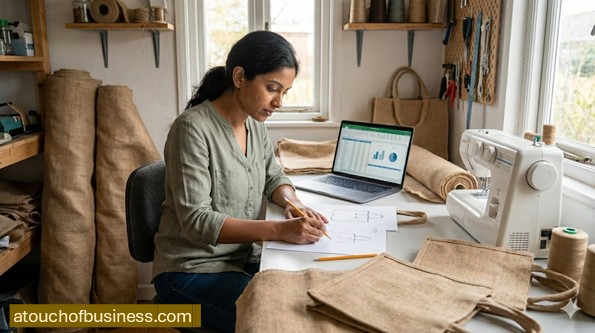
Start a Jute Bag Manufacturing Business With Confidence
Overview of A Jute Bag Manufacturing Business
Before you order fabric or shop for machines, pause for a real readiness check. Owning a business changes your weeks, your stress level, and your personal risk. Is owning a business right for you—and is this business right for you?
A Jute Bag Manufacturing Business produces bags made from jute textiles (often called jute cloth and often sold as burlap) using a cut-and-sew workflow, sometimes with optional printing or branding.
Your offer can range from simple blank totes to custom branded bags with labels, packaging, and approvals.
Passion matters here, but not in a “feel good” way. Passion helps you problem-solve when suppliers delay, samples fail, or a customer wants changes right before production. If you want a quick gut-check on what “passion under pressure” looks like, read how passion affects your business when it gets hard.
Now ask yourself this—are you moving toward something or running away from something? If the goal is only to escape a job or financial stress, this type of business can backfire. Early income can be uneven. Hours can run long. Some tasks are tedious. And when something goes wrong, it’s on you.
Reality check time: you may face uncertain income, fewer vacations, long days, and full responsibility. You’ll need family support (or at least family understanding). You’ll also need either skills or a plan to learn quickly—or hire help for areas like accounting, legal setup, design, and brand identity.
If you want a broader readiness checklist before you go further, use these points to consider before starting your business. It’s the kind of thing that saves you from rushing into the wrong setup.
One more smart move: talk to owners in the same business, but only talk to owners you will not be competing against. Different city. Different region. No overlap. You want real insight without creating problems.
To spark those conversations, you can also browse inside advice from real business owners and compare what you hear with your own plan.
- “What product types sell most often for you—blank bags, custom printed, or private label?”
- “What surprised you most about space, equipment, and setup?”
- “Where do new owners usually underestimate time or cost before opening?”
- “What quality issues show up early, and how do you catch them before shipping?”
- “If you had to start again, what would you do before signing a lease or buying equipment?”
Is This The Right Fit For You?
This business can be started in different ways. Some setups are small and lean. Others look like a full production shop with staff, space, and strict process control. The fit depends on which path you choose.
If you want to start smaller, a common approach is to avoid full cut-and-sew at first and focus on adding printing/branding to sourced bags, or assembling semi-finished components. If you want full domestic production from fabric rolls, expect more equipment, more space planning, and more setup work before launch.
This may be a good fit if you:
- Like tangible products and clear specifications (size, seams, handles, printing rules).
- Are comfortable with supplier lead times and quality checks.
- Can follow a repeatable process and document how work gets done.
- Can handle customer approvals and change requests without losing control of the schedule.
This may not be a good fit if you:
- Need fast, predictable income right away.
- Don’t want to deal with production details, defects, and rework.
- Prefer a business where you can start without any space or equipment planning.
Quick self-check: can you see yourself writing specifications, testing samples, setting up a workspace, and saying “no” to unrealistic deadlines? If that sounds exhausting, think about the flip side—maybe a different product business fits you better.
Choose Your Scope And How You’ll Generate Revenue
Start by deciding what you will actually do before opening. That choice drives everything else—space, equipment, permits, costs, and pricing.
Most owners end up in one of these models:
- Cut-and-sew production: you buy jute fabric rolls and manufacture bags from scratch.
- Printing/branding-only: you source finished blank bags and add logos or designs.
- Contract manufacturing: you produce to a client’s specification under their brand.
- Private label wholesale: you build a product line and sell to retailers in volume.
- Direct-to-consumer: you sell your own branded bags online.
Be honest about scale. A one-person startup can launch with a narrower product line and simpler workflow. A full production shop is more likely to need staff, structured quality control, and stronger funding.
Confirm Demand Before You Commit
You don’t need perfect data, but you do need proof the market exists for your version of the product. Demand is not just “people like eco bags.” Demand is “a specific group will order these bags at a price that leaves room for costs and profit.”
Start with simple validation using basic supply-and-demand thinking:
- List your likely customer groups (retail brands, promotional distributors, local retailers, online shoppers).
- Compare what competitors offer: bag styles, customization, minimum order quantities, and lead times.
- Identify what you can do differently (faster turnaround, better specs, simpler ordering, specific niches).
Then test it. Ask potential business customers what they would need to place a first order. If you can’t get clear answers or interest, that’s a signal to adjust before you spend.
Decide On Your Products And Specifications
This business runs on specifications. Without them, you’ll struggle to quote, control quality, and stay on schedule.
Decide what you will offer at launch. Keep it tight—fewer styles, fewer options, fewer surprises.
- Bag types (totes, wine bags, drawstring sacks, promotional bags).
- Size and dimensions.
- Handle style and handle materials.
- Thread type and reinforcement points (especially at handles).
- Printing method (if offered), ink type, and curing/drying approach.
- Packaging requirements (labels, tags, case packing, cartons).
Plan for samples and approvals. A pre-production sample and an approval step protect you from “that’s not what I expected” problems right before shipping.
Plan Your Location And Basic Layout
Your space choice affects what you can legally do and what your workflow can support. Some locations allow light manufacturing. Others don’t. Home-based production is often restricted for manufacturing activities—this varies by jurisdiction.
If customers will not visit you, your facility still needs to support receiving, storage, production, and packing. A practical starting layout usually includes:
- Receiving and material storage.
- Cutting area.
- Sewing/assembly area.
- Printing and curing/drying area (if you do printing on-site).
- Packing and labeling area.
- Finished goods staging and shipping prep.
If you’re choosing a commercial space, use this guide on picking a business location as a planning tool. The goal is to avoid signing a lease before you confirm the space can be approved for your activities.
Build Your Essential Equipment List
Equipment selection depends on whether you’re producing from fabric rolls, branding finished bags, or doing both. Keep your list tied to launch needs only. You can always expand later after you’ve validated demand.
Here’s an equipment framework you can use to build your launch list.
- Cutting and pattern prep: cutting tables, measuring tools, templates, cutting tools sized to your expected volume, marking tools, clamps/weights.
- Sewing and assembly: industrial lockstitch machine(s), overlock/safety stitch machine (if your design uses edge finishing), bartacking machine for reinforcement points, thread stands, bobbin winding tools, spare needles/feet, guides/attachments as needed, hardware press only if your design uses hardware.
- Printing/branding (if offered): printing system appropriate to your method, screens/plates/consumables as required, curing/drying equipment suitable for your ink/substrate, proofing and test tools.
- Finishing, quality check, and packing: inspection lighting, measuring tools for checks, tag/label tools, scales, carton sealing tools.
- Material handling and storage: shelving/racking, carts, bins for work-in-process, pallet jack if you receive pallets.
- Safety and compliance basics: guarding for moving parts, Safety Data Sheet access method if using hazardous chemicals, labeling supplies for chemical containers.
- Office and basic tech: computer, printer/scanner, invoicing/accounting tools, simple photo setup for product images.
If you’re not sure what you’ll need, that’s a sign to narrow your product line and workflow first. Equipment choices get clearer when your specifications get clearer.
Estimate Startup Costs And What Drives Them
Most new owners don’t get into trouble because they forgot one expense. They get into trouble because they didn’t separate “must have to open” from “nice to have later,” and they didn’t plan for the cost drivers that swing widely.
Use this startup cost estimating guide to build a realistic list. For this business, common startup cost categories include:
- Facility costs (deposits, buildout, utilities setup, inspections as required).
- Production equipment (cutting, sewing, and printing/curing if applicable).
- Tools and consumables (needles, thread, cutting blades, printing supplies if applicable).
- Materials for launch (jute fabric, handles, labels/tags, packaging cartons).
- Compliance and safety setup (guards, chemical labeling, required permits if applicable).
- Professional support (business registration help, accounting setup, contract review, brand identity work).
- Insurance (legally required coverage if you have employees, plus common recommended coverage).
- Brand and digital setup (domain, email, website basics, photography).
Key cost drivers are usually your workflow choice (manufacturing vs branding-only), equipment capacity, new vs used equipment, how much space you lease, and whether printing or chemicals trigger extra compliance requirements. If you can’t validate demand yet, avoid locking into high fixed costs.
Write A Simple Business Plan You Can Use
You don’t need a long document. You need a plan you can follow. A useful plan explains your product line, your customer types, how pricing works, what you need to open, and what success looks like in the first phase.
If you want a structure to follow, use this business plan guide. For this business, make sure your plan includes:
- Your chosen business model and why it fits your budget and skills.
- Your launch product list and the specifications you will follow.
- Your supplier plan (materials, lead items, quality expectations).
- Your pricing method (how you quote and what affects price).
- Your location plan and how you’ll confirm approvals before setup.
If writing isn’t your strength, you can hire help for a plan—just make sure it matches real numbers and real steps, not generic business talk.
Choose A Legal Structure And Register The Business
Entity formation is handled at the state level. Your structure affects taxes, liability protection, and what documents banks and lenders will want later.
Many first-time owners use a limited liability company or corporation structure, but what fits you depends on your situation. You can review the structure options on the Small Business Administration site and then register through your state’s Secretary of State portal.
If you want step-by-step help with registrations, use this guide on how to register a business. If you’re unsure, a qualified accountant or attorney can help you choose a structure based on your risk level and tax needs.
Set Up Tax Accounts And Basic Financial Setup
You’ll typically need an Employer Identification Number from the Internal Revenue Service for business banking and hiring. Apply directly through the Internal Revenue Service website—avoid paid third-party sites that charge a fee for something the government provides at no cost.
Then confirm your state tax needs. Sales and use tax rules depend on where you have obligations and what you sell. If you’ll have employees, you’ll also need state employer accounts for withholding and unemployment insurance. These rules vary—use your state Department of Revenue and workforce agency portals to confirm what applies.
Now think about the “keep it clean” side of financial setup. Separate business and personal transactions from day one. It keeps your records clear and makes banking, taxes, and insurance easier to manage.
Verify Licenses, Zoning, And Building Approvals
This is where many manufacturing-style startups get delayed. Requirements depend on your city, county, and state. Don’t assume what applies in one place applies everywhere.
Use the Small Business Administration guidance on licenses and permits as a starting checklist, then verify locally:
- General business license: often handled by your city or county licensing office.
- Assumed name / Doing Business As filing: if you use a public-facing name different from your legal entity name (varies by state and sometimes county).
- Zoning approval: confirm your specific activity is permitted at your address.
- Certificate of Occupancy: many commercial spaces require this for the approved use before you operate.
- Fire and building inspections: may apply if you modify the space, store certain materials, or install certain equipment.
How to verify locally: go to your city or county business licensing portal and search “business license.” Then contact planning and zoning and ask, “Is textile production and on-site printing permitted at this address?” If you’re leasing, do this before you sign. If you’re unsure, hire a local professional who deals with zoning and permitting.
Screen Environmental Requirements Early
Not every shop triggers environmental permits, but some do—especially if you have on-site printing, coatings, or chemical cleaning, or if your facility has stormwater exposure. These rules are location-dependent and enforced through federal, state, and local programs.
Start with three screening questions. If you answer “yes” to any of them, verify requirements with your state environmental agency and local sewer authority:
- Stormwater: will industrial materials or work areas be exposed to rain or runoff? Industrial stormwater rules may require permit coverage and a stormwater pollution prevention plan (varies by jurisdiction).
- Wastewater: will you discharge process wastewater to a municipal sewer (for example, washout water from printing cleanup)? Pretreatment and local limits may apply (varies by jurisdiction).
- Air emissions: do your inks, solvents, or coatings create regulated emissions? Minor source air permitting rules may apply (varies by jurisdiction).
If you only assemble and pack without chemicals and without outdoor exposure, your environmental needs may be minimal. But don’t guess—verify with the agencies that enforce the rules in your area.
Set Up Workplace Safety Basics Before You Hire
If you’ll have employees, plan for safety requirements before your first hire. Even if it’s just you at first, safety planning is part of being ready to run equipment responsibly.
Two common federal requirements to know about:
- Machine guarding: moving parts and points of operation must be guarded to protect operators.
- Hazard communication: if you use hazardous chemicals (inks, cleaners, adhesives), you need labeling, Safety Data Sheets access, and training.
Keep this practical. You’re not building a complex system—you’re building a safe, documented setup that won’t fall apart when you add a helper or hire your first employee.
Choose Suppliers And Set Clear Expectations
Your suppliers shape your quality, your lead times, and your cash needs. In a jute bag business, common supplier categories include fabric, handles, thread, labels/tags, packaging cartons, and printing supplies if you print on-site.
When you request quotes, ask for the details that affect launch readiness:
- Material specifications (fabric weight/weave, handle materials, thread type).
- Minimum order quantities and price breaks.
- Lead times and reorder expectations.
- Quality consistency and what counts as an acceptable defect.
- Defect and return policy.
If you plan to import fabric, components, or finished bags, learn the basics of importing through U.S. Customs and Border Protection and confirm tariff classification using the Harmonized Tariff Schedule tools. If that sounds technical, a licensed customs broker can help you do it correctly.
Build Pricing That Matches Real Work
Pricing is where many first-time owners get trapped. They price based on what competitors charge without understanding their own labor time, waste, and overhead. Then every order feels like pressure instead of progress.
Common pricing methods for this type of business include:
- Cost-plus per unit: materials + labor time + overhead allocation + margin.
- Tiered volume pricing: lower unit price at higher quantities.
- Custom quoting: base bag plus add-ons for printing colors, labels, packaging upgrades, or special materials.
- Setup charges: artwork setup and proofing steps, especially for branded orders.
What affects pricing most: fabric yield and waste, stitch time, reinforcement needs, printing method and curing/drying time (if applicable), packaging rules, and shipping terms.
If you want a clear way to think about pricing without getting lost, use this guide to pricing your products and services and build a quote calculator you can update as you measure real production time.
Choose Funding And Set Up Banking
Funding should match your model. If you’re starting with a lean workflow, you may self-fund and grow step by step. If you’re building a full production shop with equipment and a lease, you may need outside financing.
Common funding paths include owner funds, equipment financing, and Small Business Administration-supported loan programs through lenders. The Small Business Administration also describes microloans (small loan amounts through intermediary lenders) and other loan programs.
If you want a plain-language overview of what lenders tend to look for, use this guide on getting a business loan. A lender will typically want a clear plan, a cost breakdown, and evidence you understand your market.
For banking, open a business bank account once your registration and tax setup documents are ready. Banks commonly ask for formation documents and your Employer Identification Number. Confirm the exact list with your bank before you show up.
Plan Insurance And Risk In Two Buckets
Insurance is not one thing. Separate what’s legally required from what’s commonly recommended. Then choose coverage based on your actual risks—equipment, inventory, product liability, and your workspace.
Legally required (varies by jurisdiction):
- Workers’ compensation: often required once you have employees, but rules and thresholds vary by state. Verify with your state workers’ compensation agency.
Commonly recommended coverage:
- General liability: for accidents and claims related to business activity.
- Product liability: relevant for physical products sold to customers.
- Property coverage: for equipment, inventory, and supplies (especially if you lease space).
If you want a clear starting point for coverage types, use this business insurance guide and then confirm specifics with a licensed agent in your state.
Set Your Name, Domain, And Digital Footprint
Don’t treat your name like an afterthought. You’ll use it on bank forms, invoices, vendor accounts, and customer quotes. Also, you don’t want to invest in branding only to learn the name is unavailable or confusing.
Start with the basics: pick a name, check availability with your state business registry, and check domain and social handle availability. If you want a step-by-step naming process, use this guide to selecting a business name.
Then secure what you need before launch:
- Domain name and a simple email address that matches it.
- Key social handles (even if you don’t post much at first).
- A basic website or landing page with a clear product overview and how to request a quote.
Create Core Brand Assets Before You Open
You don’t need fancy branding to launch, but you do need consistent assets so you look legitimate and make ordering easy.
Common brand assets for a product-based manufacturing startup include:
- Logo files (usable for print and web).
- Basic color and font rules.
- Product spec sheets and a line sheet for wholesale or business customers.
- Simple photo standards (lighting, angles, backgrounds) so product images look consistent.
- Order terms in writing (lead time ranges, minimum order rules, proof approval expectations).
If you want professional help here, that’s normal. You can hire support for corporate identity and design, but keep it aligned with what you actually sell and how customers order.
Prepare Quotes, Proof Approvals, And Basic Forms
Custom products create custom problems if you don’t control the paperwork. Your goal is to reduce confusion and avoid last-minute changes that wreck your schedule.
Before opening, draft simple templates you can reuse:
- Quote template: includes minimum order quantity, lead time expectation, pricing method, and what is included.
- Proof approval process: clear steps for approving artwork or layout before production starts.
- Purchase order acceptance rules: what you require before you begin work.
- Deposit and payment terms: how you accept payment and when it’s due.
If you sell to business customers, clarify how you handle changes after approval. Being clear early protects the relationship later.
Run A Pilot Batch And Validate Quality Checks
Don’t skip the pilot run. A controlled sample batch tells you what will break in real life—stitch quality, handle reinforcement, print adhesion (if applicable), packing issues, and timing.
Build a simple quality checklist around your specifications:
- Dimensions and tolerances.
- Seam strength and stitch consistency.
- Handle attachment strength and reinforcement points.
- Printing alignment and durability (if you print).
- Packing integrity and damage prevention during shipping.
This is also where you measure real labor time. If your pricing model assumes 10 minutes and the pilot takes 25, you just learned something that can save you from under-quoting.
Watch For Red Flags Before You Launch
Some problems are normal. Others are warning signs that your setup is not ready. Pay attention to these red flags:
- No written product specifications and no approval process.
- Suppliers can’t confirm consistent specs, lead times, or defect handling.
- You chose a space without verifying zoning approval and Certificate of Occupancy requirements.
- Your pricing is based on guesswork instead of measured labor time and real material use.
- You plan to use claims like “eco-friendly” or “Made in USA” without understanding what you can substantiate.
If you see these, slow down and fix the foundation. A delay before opening is often cheaper than opening in chaos.
Plan How Customers Will Find You
Your early marketing plan should match your customer type. If you want business customers, your plan should focus on being easy to evaluate and easy to order.
Common pre-launch channels for this type of business:
- Business outreach: local retailers, brands, event organizers, and promotional product distributors.
- Sample kits: a small set of bag styles with clear specifications and customization options.
- Website catalog: a simple page that explains products, minimums, lead times, and how to request a quote.
- Clear documentation: line sheet, spec sheets, and a consistent quote process.
Keep it grounded. Your goal is not to “go viral.” Your goal is to get a small number of serious conversations that turn into repeatable orders.
Final Pre-Opening Readiness Checklist
Use this checklist as a last-pass review. The goal is simple: no surprises on day one.
- Business setup: entity registered with the state; Employer Identification Number obtained; any assumed name filings completed if needed.
- Local approvals (varies by jurisdiction): general business license confirmed; zoning verified; Certificate of Occupancy requirements completed for the approved use; fire/building inspections completed if required.
- Environmental screening (varies by jurisdiction): stormwater, wastewater, and air permitting questions resolved with the correct agencies if applicable.
- Equipment readiness: cutting and sewing equipment installed and tested; printing/curing process validated if applicable; safety guarding in place.
- Supplier readiness: vendor accounts established; lead times and minimums documented; materials ordered for pilot and first production.
- Quality controls: specifications written; inspection checklist ready; pilot batch completed and reviewed.
- Financial setup: business bank account open; invoicing and payment methods ready to accept payment; sales tax account set up if required by your state.
- Documents: quote template, proof approval steps, and order terms ready to use.
- Brand basics: name and domain secured; product spec sheets/line sheet ready; simple website live.
If you’re stuck on any item, don’t force it. This is where professionals can help—accountants for tax setup, attorneys for entity choices and contracts, and local permitting experts for zoning and building approvals. You’re not supposed to know everything on day one. You just need to verify the right things with the right authorities.
27 Startup Tips for Your Jute Bag Manufacturing Business
Starting a product-based business gets real fast—because your early decisions lock in costs, space needs, and compliance work.
These tips stay focused on planning, setup, approvals, equipment, suppliers, and opening readiness.
Use them as a pre-launch checklist so you don’t spend money before you’ve verified what your business actually needs.
Before You Commit (Fit, Skills, Reality Check)
1. Decide if you can handle production detail work before you spend anything. This business lives or dies on specs, samples, and repeatable quality—not just a good idea.
2. Choose what you will personally do versus what you will hire out. If you don’t have sewing setup, patterning, or print process control skills, plan how you’ll learn quickly or bring in experienced help before taking orders.
3. Do a time-and-responsibility reality check. Pre-launch often means long days of supplier calls, space planning, testing, and paperwork with no guarantee of immediate income.
Demand And Profit Validation
4. Validate demand for your specific product style, not for “jute bags” in general. Pick two to four bag types (like totes or wine bags), then confirm who orders them, why they choose them, and what order size they expect.
5. Ask business customers what would make them place a first order. Focus on minimum order quantities, lead times, customization rules, and what approvals they need internally—because those factors drive your pricing and setup process.
6. Build a simple “profit test” before you commit to equipment. Estimate materials per bag, labor time per step (cut, sew, print, pack), packaging, and shipping prep—then see if the price customers will accept leaves room for overhead and a margin.
Business Model And Scale Decisions
7. Choose your launch model first, because it changes everything. Decide if you will manufacture from fabric rolls, import finished blanks and only add printing/branding, assemble components, or work as a contract manufacturer to client specs.
8. Keep the first version of your offer narrow. Fewer bag styles and fewer options make it easier to write specs, quote accurately, buy the right equipment, and avoid quality surprises.
9. Match your scale to your funding reality. A lean branding-only startup may be feasible for one person, while full cut-and-sew production usually increases space needs, equipment count, and the likelihood of staff sooner.
Legal And Compliance Setup
10. Register your business with your state before you set up banking and vendor accounts. Your exact filing steps depend on your state’s business registration system, so use your Secretary of State portal as the main authority.
11. Get an Employer Identification Number directly from the Internal Revenue Service. Do it early so you can open a business bank account and complete vendor paperwork without delays.
12. Confirm sales and use tax registration rules with your state tax agency. Product taxability and collection rules vary by state, and you don’t want to discover a registration requirement after you’ve started accepting payment.
13. Treat zoning and a Certificate of Occupancy as a “must verify before signing” item. Ask your city or county planning and building departments if textile production and on-site printing (if you plan it) are allowed at your address.
14. Screen environmental requirements before you install equipment if you will print, coat, or use chemical cleaners. Industrial stormwater, wastewater discharge limits, and minor air permitting can apply depending on your activities and location, so verify with your state environmental agency and local sewer authority.
Budget, Funding, And Financial Setup
15. Separate “open the doors” costs from “nice later” purchases. Your opening budget should prioritize essential equipment, initial materials, compliance items, and a small pilot batch—not optional upgrades.
16. Write down the cost drivers that can swing your budget. The biggest ones are usually workflow choice (manufacturing vs branding-only), equipment capacity, new versus used machines, facility size, and whether printing triggers extra compliance steps.
17. Set up your financial foundation before you take orders. Open a business bank account, choose your payment methods (invoice, card, online checkout if needed), and keep transactions separate from personal spending from day one.
Location, Build-Out, And Equipment
18. Plan your workspace in zones before you choose a location. At minimum, you need receiving/storage, cutting, sewing/assembly, printing and drying/curing (if applicable), packing/labeling, and finished goods staging.
19. Build your equipment list based on your exact workflow, then pressure-test it with a pilot plan. If you can’t explain how each machine supports a launch product, don’t buy it yet.
20. Don’t underestimate reinforcement and consistency needs for bag construction. Handle attachment strength, seam consistency, and dimensional tolerance should be part of your specs and your inspection plan before you make anything for sale.
21. If you offer printing, validate your curing or drying method on the actual jute substrate you plan to sell. A print that looks fine on day one can fail later if the cure isn’t correct, so test and document the settings you’ll use.
22. Put safety basics in place before you bring anyone into the workspace. Machine guarding and chemical labeling and Safety Data Sheets access matter early, especially if you use inks, solvents, adhesives, or cleaning chemicals.
Suppliers, Contracts, And Pre-Opening Setup
23. Treat suppliers like part of your startup plan, not an afterthought. Ask for fabric specifications (weight and weave), lead times, minimum order quantities, defect policies, and consistency expectations before you place your first major order.
24. If you plan to import materials or finished bags, confirm the basics before shipping anything. Learn the import process, verify tariff classification using the Harmonized Tariff Schedule tools, and consider using a licensed customs broker if you are new to importing.
25. Create simple paperwork that prevents chaos. Use a quote template, a proof approval process for any custom branding, and clear order terms that define lead time expectations and what happens when changes are requested after approval.
Branding And Pre-Launch Marketing
26. Keep your brand assets “launch-ready,” not fancy. Secure a business name, domain, and key social handles, then build a basic product overview with clear specs, minimum order expectations, lead time ranges, and how to request a quote.
27. Audit your claims before you publish a single product page. If you plan to say “eco-friendly,” “biodegradable,” or “Made in USA,” confirm what you can substantiate and use qualified language when needed so you don’t create an advertising compliance problem before you open.
If you work these tips in order, you’ll avoid most “surprise” delays that hit product startups.
Your goal is simple: verify requirements, lock specs, test a pilot batch, and open with a setup you can actually repeat.
FAQs
Question: What exactly is a Jute Bag Manufacturing Business?
Answer: It’s a business that produces bags made from jute textiles using a cut-and-sew setup, sometimes with optional printing or branding. You can sell blanks, custom branded bags, or private label products depending on your model.
Question: Should I manufacture from jute fabric rolls or start by branding sourced blank bags?
Answer: Manufacturing from rolls usually needs more equipment, more space planning, and more setup work before you open. Branding sourced blanks can reduce early complexity, but you still need a clear process for specs, proofs, and quality checks.
Question: Can I start a jute bag business from home?
Answer: It varies by jurisdiction, and manufacturing activities are often restricted in residential areas. Ask your city or county planning and zoning office about home-occupation rules for textile production and on-site printing.
Question: What permits and licenses do I need before I open?
Answer: It varies by state and city, but common needs include state registration, local business licensing, and zoning approval for your address. Use your city or county licensing portal and planning department to confirm what applies to your specific activity.
Question: Do I need an Employer Identification Number even if I don’t have employees yet?
Answer: Many owners get one early because banks and vendors often require it. You can apply directly with the Internal Revenue Service to avoid delays.
Question: Do I have to collect sales tax when I sell jute bags?
Answer: It depends on your state rules and where you have tax obligations. Verify requirements with your state Department of Revenue or tax agency before you start accepting payment.
Question: What’s the biggest legal risk with choosing a location too early?
Answer: Signing a lease before confirming zoning approval and any building requirements can stall your opening. Ask the city or county building department whether a Certificate of Occupancy is required for your intended use.
Question: Are there environmental rules that could affect a small manufacturing setup?
Answer: Yes, especially if you do on-site printing, use chemical cleaners, or have industrial activity exposed to stormwater. Verify stormwater, wastewater discharge, and any local sewer limits with your state environmental agency and local sewer authority.
Question: If I import jute fabric or finished bags, what should I do before the first shipment arrives?
Answer: Learn the basic importing process and confirm what documents and duties may apply to your goods. If you’re new to importing, a licensed customs broker can help you avoid expensive delays.
Question: What insurance is legally required for this business?
Answer: Workers’ compensation is commonly required once you have employees, but the rules vary by state. Confirm requirements with your state workers’ compensation agency before your first hire.
Question: What insurance should I consider even if it’s not required by law?
Answer: Many owners consider general liability and product liability before selling products to the public. If you lease a space, you may also need coverage for equipment, inventory, and supplies.
Question: What equipment do I need to open with a basic cut-and-sew setup?
Answer: Most launch setups include cutting tables and cutting tools, industrial sewing machines for assembly, and reinforcement capability for stress points like handles. You also need packing tools, storage racks, and a simple inspection station for quality checks.
Question: If I offer printing, what should I verify before taking a branded order?
Answer: Test your printing and curing or drying method on the exact jute material you plan to sell. Document the settings you will use so results stay consistent from sample to production.
Question: How do I set prices without guessing?
Answer: Build a quote calculator using materials per unit, measured labor time, packaging, and an overhead allowance. Then add tiered pricing for volume and separate setup charges for custom work like artwork preparation.
Question: What supplier details matter most before I place my first big order?
Answer: Get fabric specifications, minimum order quantities, lead times, and defect policies in writing. Ask how they handle shade variation, consistency from batch to batch, and returns for defects.
Question: What should be in my quoting and proof approval process before I open?
Answer: Include minimum order rules, lead time ranges, what is included in the price, and how changes work after approval. Make the proof approval step clear so production does not start until the customer signs off.
Question: What does a pre-launch workday look like for the owner?
Answer: You’ll spend time confirming local approvals, sourcing materials, testing samples, and documenting specs and quality checks. You’ll also build basic templates for quotes, proofs, and ordering so you can process the first orders cleanly.
Question: What should I watch in the first month so cash doesn’t get tight?
Answer: Track cash going out for materials, packaging, and any facility expenses against when you get paid on orders. Use deposits or clear payment terms on custom work so you are not funding production out of pocket.
Question: Should I hire help before opening?
Answer: Only hire early if it’s needed to complete setup, pilot runs, or early orders on time. If you do hire, confirm state employer registrations and workers’ compensation rules before the start date.
Question: What marketing claims are risky for a new jute bag brand?
Answer: Environmental claims like “eco-friendly” and origin claims like “Made in USA” can create compliance risk if you can’t support them. Review Federal Trade Commission guidance and use careful wording that matches what you can prove.
Question: What are the most common startup errors in this business?
Answer: Skipping written specs, buying equipment before validating demand, and choosing a space before confirming zoning are big ones. Another common problem is pricing without measured labor time and real material use.
When you’re starting a manufacturing business, real-world stories can save you time and prevent expensive assumptions.
Interviews with bag founders and manufacturers show what they had to figure out early—finding production partners, controlling quality, setting product specs, and building a brand that actually sells.
Use the resources below to sharpen your pre-launch checklist and spot problems before you commit to space, equipment, or large material orders.
- Green Dreamer Podcast — Sharon Rowe (ECOBAGS) on building a reusable bag business
- Leafbox — Interview with Emily Sugihara, CEO of Baggu
- Gear Patrol — Interview with Mark Dwight (Rickshaw Bagworks)
- CEOCFO Interviews — Sylvia Feldzamen Reusable bag production and materials (includes jute)
- A Sustainable Mind (Libsyn) — Baba Bags founder interview (Fedia Kourbatov)
Why these interviews help: You’ll hear how real founders handled early decisions like choosing a production path, getting consistent quality, working with suppliers, and shaping a product line that’s easy to quote and repeat.
That perspective can help you avoid buying equipment too early, underestimating approvals, and pricing without real time-and-material data.
Section title ideas (pick one):
- Expert Advice From Bag Founders And Manufacturers
- Lessons From Real Bag Businesses
- What Experienced Bag Owners Would Tell You First
- Founder Insights For Launching A Bag Manufacturing Brand
- Real-World Guidance From People Who Make Bags
Related Articles
- Start a Backpack Manufacturing Business
- Fabric Dyeing Business Startup Guide
- How to Start an Embroidery Business
- How to Start a Screen Printing Business
- Starting a T-Shirt Business
- How to Start a Fair Trade Business
- Crochet Business Startup Guide
- How to Start a Tie Dye Business
- Starting an Athletic Clothing Line
- Doll Clothing Business Startup FAQ
Sources:
- CBP: Basic importing exporting
- EPA: Minor NSR basic info, Pretreatment local limits, Industrial stormwater discharges
- FDA: Food packaging contact info, Packaging food contact substances
- FTC: Green Guides, Environmental marketing claims, Complying Made in USA
- IRS: Get employer ID number
- OSHA: General machine requirements, Hazard communication standard
- SBA: Choose business structure, Register your business, Get federal state tax IDs, Apply licenses permits, Calculate startup costs, Open business bank account, Get business insurance, 7(a) loans, 504 loans, Microloans
- USPTO: Apply trademarks online
- USITC: Harmonized Tariff Schedule