
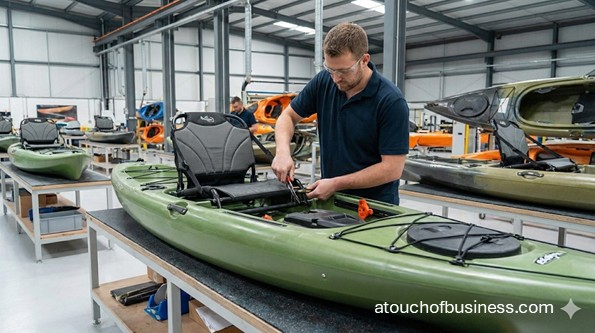
Start a Kayak Manufacturing Business With a Solid Plan
Overview Of A Kayak Manufacturing Business
A Kayak Manufacturing Business designs and produces kayaks, then sells them through direct sales, dealers, or fleet accounts. Your first job is to decide what kind of kayak you will build and how you will build it—because the build method drives your equipment, your space needs, and your startup budget.
Most startups begin with one clear product line and a tight plan for prototyping, tooling, and a small pilot run. You’re not trying to make every kind of kayak. You’re trying to launch one that you can produce consistently and ship without surprises.
How a Kayak Manufacturing Business generates revenue usually comes from selling finished kayaks and optional add-ons that fit the model. Some brands also sell replacement parts that support the launch, like hatch covers or seat components, but your main focus is getting the first sellable boats out the door.
Common products and launch-phase offerings include:
- Kayaks by category: recreational, touring/sea, fishing, whitewater, youth (based on your initial scope)
- Optional add-ons tied to your design: hatch systems, seat upgrades, deck rigging kits, rudder-ready hardware (if your model supports it)
- Replacement parts planning (launch support): hatch covers, seat parts, foot brace parts, basic hardware kits
Typical customer types include:
- Direct customers buying online and shipping to home or a delivery terminal
- Paddle sports retailers that stock boats (dealer model)
- Outfitters and rental fleets that need durable boats and predictable lead times
- Programs like camps or universities that buy in batches
Pros of starting this type of business (startup-focused):
- Multiple paths exist: in-house manufacturing, contract manufacturing, or a hybrid approach
- A strong first model can support future variants (lengths, trims, features) without reinventing everything
Cons to plan for before you launch (startup-focused):
- Tooling and molds can be a large early commitment, depending on your process
- Storage and shipping are harder than most product businesses because kayaks are large items
- Risk exposure is real, so insurance and documentation matter early
Scale reality: This can be a one-person startup if you use contract manufacturing and keep your first launch small. If you manufacture in-house, it often becomes a larger startup because equipment, space, and safety controls add up fast.
Is A Kayak Manufacturing Business The Right Fit For You?
Start with fit, not fantasy. Is owning a business right for you—and is building kayaks the right kind of business for your skills, patience, and budget?
Passion helps, but it doesn’t replace planning. When problems show up—and they will—passion is what helps you stay steady and solve the next problem instead of quitting. If you want a deeper gut-check, read how passion can support you when things get hard.
Now check your motivation. Are you moving toward something or running away from something? If you’re starting this only to escape a job or financial stress, you can end up making rushed choices you regret.
Here’s the reality check. Income can be uncertain early. Hours can run long. Some tasks won’t be fun. Vacations can be fewer for a while. You’re responsible for quality, safety, delivery, and customer expectations. Does your family support the time and budget you’ll need?
If you want a broader readiness framework, review key points to consider before you start any business. It’ll help you think through time, risk, and money planning without glossing over the hard parts.
Also, talk to owners—only in places you will not be competing against. That means a different city, region, or market area. For a practical way to approach those talks, see inside advice from real business owners.
Questions to ask non-competing kayak manufacturers or boat builders:
- What surprised you most during prototyping and your first pilot run?
- Which choice caused the biggest delay—tooling, materials, facility setup, or shipping?
- What quality issue showed up late that you wish you planned for earlier?
- What would you do differently if you had to launch your first model again?
- What did you underestimate about packaging and freight?
Step 1: Define The First Kayak You’ll Build
Your kayak manufacturing operation starts with product clarity. In a kayak manufacturing operation, small setup choices can create big problems later—so get this right before you open.
Pick one category for your first launch: recreational, touring/sea, fishing, whitewater, or youth. Then define what “success” looks like for that boat in simple terms: size range, intended use, and feature set.
Your material and process choice matters early. Common kayak construction approaches include rotomolded polyethylene, thermoformed plastics, and composite layups, and each one behaves differently in cost planning and production setup.
Before you move on, write down a tight “first model brief” that includes:
- Use case and customer type you’re building for
- Target length range and basic feature set (hatches, seat system, deck rigging, skeg/rudder-ready if applicable)
- Build method you intend to use (even if you confirm it in Step 2)
- How you will test fit and sealing (where applicable) before selling anything
Step 2: Choose A Kayak Manufacturing Business Model
This is one of those steps that looks generic, but it works differently in a Kayak Manufacturing Business. Your business model is not just “how you sell.” It’s also “how you produce,” and that choice sets your budget, your space, and your timeline.
Common models for a Kayak Manufacturing Business include:
- In-house production + direct sales: You control production, but you need equipment, space, and safety controls.
- In-house production + dealer sales: You plan for wholesale terms and dealer expectations from the beginning.
- Contract manufacturing + in-house finishing: A supplier produces hulls or full boats, and you handle outfitting, quality checks, and brand.
- Hybrid: Outsource what you can’t do yet, and bring steps in-house later when volume supports it.
Ask yourself a simple question: do you want to become a production facility now, or a product brand that manages production? Either can work, but they require different skills and different funding plans.
If you lack the process skills, you can learn, or you can hire help. This is also where professionals can be useful—design consultants, manufacturing advisors, and product engineers can help you avoid expensive rework.
Step 3: Validate Demand Before You Pay For Tooling
Think about how this will feel in your kayak manufacturing operation on a busy day—does your plan still hold up? Demand validation is not about hype. It’s about proving that customers will choose your boat over others when it’s time to pay.
Start by defining how people will find you. Are you planning direct online sales, dealer placement, or fleet sales to outfitters and rental operations? Each path changes how you price, how you ship, and how you handle returns.
Use a basic supply-and-demand lens. If you want a simple framework, read how supply and demand affects opportunity. Then apply it to your kayak idea.
Validation actions that fit a pre-launch kayak brand:
- List 10–20 competing models close to your target (materials, features, warranties, distribution style)
- Talk to non-competing retailers or outfitters about what sells and what gets returned
- Collect intent signals you can verify (waitlists, dealer interest, fleet inquiries)
- Test your shipping assumptions early (dimensions, packaging concept, carrier options)
Don’t confuse “people like it” with “people will order it.” Your goal is proof that a real customer would place an order at a price that supports your costs.
Step 4: Build Your Skills Plan And Support Team
The goal here is simple: make your kayak line easy to run and hard to break. You don’t need every skill yourself, but you do need a plan for how the skills get covered.
Core skills that matter before launch:
- Product design discipline (clear specs, drawings, revision control)
- Process knowledge for your chosen build method
- Basic quality checks (fit, sealing where applicable, hardware installation checks)
- Supplier management (quotes, lead times, material specs)
- Packaging and freight planning for large items
If you don’t have certain skills, you can learn or hire help. This is also a good moment to use professionals for accounting, business setup and registration, business plans, design/layout, consulting, and corporate identity.
If you want a structured planning approach, a simple business plan can help you connect product choices to cost and funding. See how to write a business plan as a practical guide for organizing your launch decisions.
Step 5: Create Design Controls Before You Build
For a kayak manufacturing operation, this decision affects your costs, your workflow, and your customer experience. Design controls sound formal, but they’re simple: you document what you’re building so you can build it the same way twice.
Before you commit to production tooling, set up:
- Drawings and specifications for the hull, deck, and outfitting locations
- A bill of materials that lists every part and material you will use
- Version control so changes don’t get lost
- Simple acceptance checks (dimensions, alignment, sealing where applicable)
This is how you prevent “we changed it last week” surprises. It also helps if you use contract manufacturing, because vendors will need clean specs to quote and produce correctly.
Step 6: Prototype And Test The Kayak Before Scaling
If you skip this step, your kayak manufacturing company may still open—but you’ll pay for it later. Prototyping is where you catch design issues before they become tooling problems.
Your prototype goal is not perfection. It’s proof that the design can be built, outfitted, and checked in a repeatable way.
Typical prototype and test checks include:
- Fit and ergonomics (cockpit, seating, foot braces)
- Hardware placement and attachment strength (pull checks where needed)
- Sealing and watertightness where applicable (hatches, bulkheads)
- Stability and feel checks in controlled conditions
Document what you learn. Then update your drawings and specs before you commit to tooling or a first production run.
Step 7: Equipment For A Kayak Manufacturing Business
Picture your Kayak Manufacturing Business in real life—what has to be true for opening day to go smoothly? Your equipment list depends on your process, but you can still plan it in clear categories.
Below is an itemized equipment outline you can use to plan your launch. Treat it as a checklist, then tailor it to your build method and space.
Design, engineering, and documentation
- Computer workstation for design work
- Computer-aided design software
- Measuring tools (calipers, measuring tapes, straight edges)
- Scale for verifying materials and components
- Document control system for drawings, specs, and revisions
Prototyping and test tools
- Prototype fabrication capability (matched to your process)
- Leak/seal test tools where applicable
- Basic attachment test tools for hardware and outfitting
- Plan for controlled water testing access
Tooling and molds (process-specific)
- Rotomolding molds for hull and deck (if rotomolding)
- Thermoforming molds and trimming fixtures (if thermoforming)
- Composite molds and mold prep supplies (if composites)
- Fixtures and mounting hardware tied to your mold system
Production equipment (process-specific)
- Rotational molding machine/oven system (if rotomolding)
- Material handling and storage tools for resin/powder or sheets (as required by suppliers)
- Thermoforming equipment and trimming station (if thermoforming)
- Resin mixing/dispensing tools and vacuum equipment (if composites and if used)
- Cure control capability if required by your resin system (supplier-dependent)
Finishing and assembly
- Edge finishing tools (deburring, sanding, routing tools)
- Drill/fastener tools for outfitting installation
- Adhesive/sealant application tools and fixtures
- Installation jigs for repeatable seat, hatch, and hardware placement
Safety, ventilation, and compliance controls
- Ventilation suited to dust, fumes, or chemicals generated by your process
- Personal protective equipment matched to your hazard assessment
- Spill control supplies if you store resins, solvents, or similar materials
- Safety Data Sheets accessible at the worksite if you have employees and use hazardous chemicals
- Fire protection equipment as required by local fire code and your risk profile
Material handling, storage, and pack-out
- Racks for hull/deck storage and protection from damage
- Handling tools like pallet jacks or forklifts (site-dependent)
- Packaging station for wrap, foam, cartons, or crates as designed
- Shipping scale and labeling tools
- Freight staging space for large-item shipments
Step 8: Set Up Suppliers And Vendors Early
This is how you avoid last-minute chaos when you’re preparing to manufacture kayaks. Supplier setup is not only about price. It’s also about lead time, quality consistency, and what happens when something arrives wrong.
Supplier types you may need, depending on your process:
- Raw material suppliers (plastic resin/powder or plastic sheets, or composite fabrics/resins)
- Tooling and mold builders
- Outfitting hardware suppliers (seats, foot braces, hatch systems, deck rigging parts)
- Packaging suppliers
- Freight carriers that handle large items
What to ask vendors before you rely on them:
- Minimum order quantities (varies by vendor)
- Lead times for materials and tooling (varies by vendor)
- Payment terms and whether credit accounts are available
- Quality specs and what happens if parts don’t meet them
- Quote validity window and update process when costs change
Keep it simple. Start with the few suppliers that affect your timeline the most: tooling, primary materials, and key hardware parts that can delay an entire build.
Step 9: Startup Costs For A Kayak Manufacturing Business
The smartest move is to set this up now, while your Kayak Manufacturing Business is still in planning mode. You’re not trying to predict every dollar. You’re trying to identify the categories and the cost drivers so you don’t run out of cash before launch.
For a deeper framework, review how to estimate startup costs. Then tailor it to your build method and your facility plan.
Common startup cost categories (itemized):
- Design and prototyping materials and tools
- Tooling and molds (often a major cost driver)
- Production equipment acquisition (purchase, used, or lease)
- Facility costs (lease deposits, basic buildout, utilities setup)
- Safety and ventilation controls tied to your process
- Initial materials and outfitting components
- Packaging development and first packaging batch
- Freight setup (carrier accounts, pallets/crates, damage-handling plan)
- Legal and admin setup (entity, registrations, accounting setup)
- Insurance premiums and deposits
- Brand setup (name, basic design assets, product photography plan)
Key cost drivers that push your range up or down:
- Your build method (different processes require different tooling and equipment)
- Whether you manufacture in-house or use a contract manufacturer
- Facility needs (power, ventilation, storage space, layout changes)
- Packaging strength needed to reduce shipping damage
- Site-specific stormwater and waste compliance requirements, if they apply
If you need reliable ranges for your plan, don’t guess. Get written quotes from tooling vendors, equipment suppliers, contractors, and insurers. Use those quotes as your planning ranges.
Step 10: Legal Setup For A Kayak Manufacturing Business
Don’t aim for perfect—aim for ready. That matters a lot in a Kayak Manufacturing Business. Legal setup is not a single form. It’s a series of checks so you can build, store, and sell products without stepping into a rule you didn’t know existed.
Use this step as a universal checklist, then verify locally. If something varies by jurisdiction, treat it as “confirm before you sign a lease or accept payment.”
Business formation and tax setup (state-driven)
- Choose an entity type and register with your state’s business filing office (often the Secretary of State). If you want a step-by-step overview, see how to register a business.
- Apply for an Employer Identification Number through the Internal Revenue Service if needed for your setup.
- Register for sales tax where required (Varies by jurisdiction). Verify with your state tax or revenue agency.
- If hiring, set up required employer accounts (Varies by jurisdiction). Verify with your state workforce or labor agency.
Federal items that can apply when you manufacture boats
- Hull Identification Number planning: If you manufacture boats for sale, you may need a Manufacturer Identification Code and a process to affix Hull Identification Numbers. Verify with the United States Coast Guard Boating Safety manufacturer guidance.
- Defect notification responsibilities: Manufacturers have obligations tied to defects and noncompliance for recreational vessels. Review the federal defect notification rules so you know what documentation to keep.
- Capacity and flotation labeling: Some federal rules include applicability sections that exclude canoes and kayaks. Verify whether labeling rules apply to your specific product category and design.
Local approvals tied to your location (Varies by jurisdiction)
- General business license or local registration: Check your city or county licensing portal.
- Zoning approval: Confirm manufacturing use is allowed at your address before you sign a lease.
- Certificate of Occupancy: If required for your space and use type, confirm with your local building department.
- Fire code review: If you store or use regulated materials, confirm requirements with the fire marshal.
- Sign permits: If you plan exterior signage, confirm permit rules with the city planning or building office.
Environmental and safety checks (process and site dependent)
- Industrial stormwater: Some industrial activities require permit coverage. Confirm with your state environmental agency or the Environmental Protection Agency guidance on industrial stormwater.
- Hazardous waste: If your process creates regulated waste, confirm requirements and whether you need an Environmental Protection Agency identification number.
- Wastewater and pretreatment: If you discharge industrial wastewater to a municipal sewer, confirm local pretreatment requirements with the wastewater utility.
- Hazard communication: If you have employees and use hazardous chemicals, confirm Safety Data Sheet access and training needs under hazard communication rules.
Quick applicability questions for you
- Will you manufacture in-house, or use a contract manufacturer?
- Will you have employees in the first 90 days?
- Will your process use resins, solvents, or similar chemicals that change storage, waste, or safety requirements?
Local verification questions to ask agencies
- Licensing: “Do I need a general business license for manufacturing at this address, and what must be filed before opening?”
- Zoning and planning: “Is boat manufacturing allowed at this address under current zoning, and what approvals are required?”
- Building department: “Is a Certificate of Occupancy required for this use, and what inspections apply?”
- State tax agency: “Do I need a sales tax permit before taking orders, and how do I register?”
Step 11: Pricing, Terms, And Payment Readiness
In this kayak manufacturing operation, pricing is not a guess. It’s a calculation tied to materials, labor, overhead, packaging, freight risk, and warranty expectations.
For practical pricing methods you can adapt, see pricing your products and services. Then tailor it to your first model and your sales channel.
Common pricing methods for a launch-stage kayak brand include:
- Cost-plus: Add a margin on top of verified unit cost (materials, labor, overhead allocation, packaging).
- Tiered models: One hull platform with feature tiers (seat system, hatch package, rigging package).
- Channel-based pricing: Direct price and wholesale price built from the same cost base.
What to verify before you set prices
- Full landed unit cost, including packaging and expected freight handling
- Warranty and return assumptions tied to your materials and hardware choices
- Dealer terms if you plan wholesale (payment terms, damage claims process)
- Sales tax collection requirements for where you will sell (Varies by jurisdiction)
Payment readiness is part of pricing. Before you accept payment, you typically need a business bank account, a processor account if taking cards, and a clean invoicing and order-terms process.
Step 12: Insurance For A Kayak Manufacturing Business
This is one of those steps that looks generic, but it works differently in a Kayak Manufacturing Business. You’re building a product that will be used on water, shipped long distances, and handled by customers in unpredictable ways. Your coverage should match that reality.
If you want a clear overview of common coverage types, review business insurance basics, then speak with an insurance professional who understands product-based risk.
Coverage that may be legally required (Varies by jurisdiction and your situation):
- Workers’ compensation if you have employees (rules vary by state)
- Commercial auto liability if you operate business vehicles (state rules vary)
Commonly recommended coverage (not typically legally required, but often practical):
- General liability for premises and operations
- Product liability aligned to your product category
- Commercial property coverage for materials, tools, equipment, and finished goods
- Coverage for goods in transit if your shipping exposure is meaningful
Ask your insurance professional what documentation they want to see. Having clear specs, quality checks, and packaging plans can support better underwriting conversations.
Step 13: Name, Domain, And Digital Footprint
If you skip this step, your kayak manufacturing company may still open—but you’ll pay for it later. A confusing name or messy online footprint can slow down trust, especially for a product customers can’t try in person.
Start with a name that fits your product line and is easy to say, spell, and remember. For a practical naming process, see how to select a business name.
Pre-launch digital setup usually includes:
- Domain registration that matches your brand as closely as possible
- Social handle reservations on the platforms you will actually use
- A simple email setup tied to your domain
- Basic brand assets you can reuse (logo, simple style guide, product spec sheet template)
When you’re ready to build the site, focus on clarity over flash. If you need a straightforward guide, see how to build a website for a practical checklist you can adapt.
Step 14: Pre-Launch Marketing And How Customers Will Find You
Picture your kayak manufacturing setup in real life—what has to be true for opening day to go smoothly? One of those “true” items is that customers know you exist and trust you enough to place an order.
Your pre-launch marketing plan should match your sales path. Direct sales usually mean content, product pages, email capture, and clear shipping information. Dealer or outfitter sales usually mean outreach, spec sheets, and a repeatable way to quote lead times.
Pre-launch actions that fit a kayak brand:
- Create a product page with clear specs, materials, and what’s included
- Build a photo plan that shows details customers care about (storage, seating, rigging points)
- Set up a waitlist or inquiry form for direct customers and dealers
- Draft simple dealer terms if you plan wholesale (pricing tiers, minimums, lead times)
Keep it factual. Inform, don’t persuade. Your goal is to reduce uncertainty so the customer can make a clear decision.
Step 15: Pre-Opening Checklist For A Kayak Manufacturing Business
The goal here is simple: make your Kayak Manufacturing Business easy to run and hard to break. This checklist is about readiness, not perfection. You want proof that your first production run can be built, checked, and shipped without breaking your schedule.
Product and production readiness
- Finalized design files, specs, and bill of materials with version control
- Prototype results documented and changes incorporated
- Tooling and molds ready, inspected, and tested in a pilot run
- Quality checks documented (dimensions, fit, sealing where applicable, hardware installation checks)
- Packaging tested to reduce shipping damage risk
Legal and compliance readiness
- Entity formation completed and basic registrations filed (state)
- Employer Identification Number obtained if needed (federal)
- Sales tax setup completed where required (Varies by jurisdiction)
- Local approvals confirmed: business license if required, zoning clearance, Certificate of Occupancy if required
- Manufacturer Identification Code and Hull Identification Number process ready if you manufacture boats for sale
- Stormwater and waste determinations completed, with permit coverage where required
- Safety Data Sheets available and hazard communication needs addressed if you have employees and hazardous chemicals are used
Supplier, materials, and logistics readiness
- Supplier accounts open and lead times confirmed for all critical materials and hardware
- Incoming inspection checklist ready for materials and components
- Packaging supplies staged for the pilot run and first sellable batch
- Freight carriers selected and shipping workflow tested
Financial setup readiness
- Business bank account opened and transactions kept separate
- Payment processor set up if accepting cards
- Invoicing templates ready (deposits, balances, refunds, lead time terms)
- Order terms drafted (delivery expectations, cancellations, shipping damage handling)
Step 16: Day-To-Day Responsibilities Before Launch
This is how you avoid last-minute chaos when you’re preparing to manufacture kayaks. Pre-launch work can feel like “planning,” but it’s real work with deadlines.
Typical owner responsibilities in the pre-launch and early launch window include:
- Requesting quotes, comparing lead times, and locking vendor commitments
- Reviewing tooling progress and signing off on design changes
- Setting up quality checks and documentation before producing sellable units
- Coordinating facility readiness: layout, utilities, storage, and safety controls
- Testing packaging and refining shipping steps
- Finalizing product pages, policies, and customer communication templates
If you’re trying to do this alone, be honest about time. If you’re stretched thin, hire help for focused tasks or bring in professionals for the parts you don’t know well.
Step 17: Pre-Launch Day In The Life Snapshot
The smartest move is to set this up now, while your kayak business is still in planning mode. A pre-launch day looks more like project management than “building boats all day.”
Morning: check tooling updates, vendor lead times, and what could delay your pilot run. Midday: review prototypes, measure critical dimensions, and document any design changes. Afternoon: work on facility readiness, packaging tests, insurance paperwork, and banking setup. End of day: update your checklist and confirm the next day’s priorities.
Step 18: Red Flags To Watch For Before You Launch
Don’t aim for perfect—aim for ready. That matters a lot when you’re about to build kayaks for customers. Red flags are not “bad luck.” They’re signals that you’re skipping steps that protect your time and your money.
Common pre-launch red flags in a kayak manufacturing startup:
- Paying for production tooling before your design and specs are locked
- No packaging test plan for large-item shipping
- No documented quality checks before you build sellable units
- Unclear plan for Hull Identification Numbers if you manufacture boats for sale
- No clarity on stormwater, waste, or wastewater requirements tied to your site and process
- No plan for Safety Data Sheets and chemical controls if hazardous materials are used
- Pricing set without a verified full landed unit cost
If you hit a red flag, slow down and verify. You can still launch, but you want fewer unknowns when the first orders arrive.
27 Tips to Strengthen Your Startup Plan for a Kayak Manufacturing Business
Starting a Kayak Manufacturing Business is part product design, part manufacturing planning, and part compliance and logistics.
These tips stay in the startup and pre-launch window, so you can validate demand, choose a build method, and open with fewer surprises.
Use them like a checklist—each one points to a concrete action that reduces risk before you accept your first order.
Before You Commit (Fit, Skills, Reality Check)
1. Write down what role you actually want: product brand managing production, or hands-on manufacturer running a facility. This decision shapes your budget, your timeline, and how many tasks land on you every day.
2. Do a skills inventory around design discipline, materials/process knowledge, and quality checks. If gaps are real, plan how you’ll cover them—learn, hire help, or use a specialist for the high-risk parts like tooling and process setup.
3. Stress-test your motivation in plain words: “Are you moving toward something or running away from something?” If you’re starting mainly to escape a job or financial stress, slow down and validate the business before you spend on tooling.
Demand And Profit Validation
4. Choose your first customer path early—direct online buyers, dealers, or fleet accounts—because each one changes your specs, your packaging needs, and your lead time promises. Don’t try to design one kayak that “fits everyone.”
5. Build a competitor comparison sheet with 10–20 similar models and track what’s measurable: materials, key features, warranty terms, and how they sell. If your difference can’t be explained in one sentence, your plan is not ready.
6. Validate shipping reality before you validate marketing. Measure expected package size, identify freight options for large items, and define how you’ll handle damage claims—because shipping friction can erase demand fast.
Business Model And Scale Decisions
7. Pick a manufacturing approach you can actually fund: in-house production, contract manufacturing, or a hybrid where you finish and outfit in-house. This is one of those “looks simple” choices that drives your equipment list and facility needs.
8. Set a pilot-run target that matches your real capacity, not your best-case sales hopes. Your first goal is consistent build quality and repeatable pack-out—not maximum volume.
9. Match ownership structure to capital intensity. If you need major equipment and build-out, decide whether you’re solo, bringing in partners, or planning outside funding before you sign leases or commit to tooling.
Design, Prototyping, And Quality
10. Freeze your first model in writing before you order production tooling. Create version-controlled drawings/specs and a bill of materials so changes don’t get lost or repeated by accident.
11. Prototype with a test checklist, not opinions. Verify ergonomics, hardware placement, sealing where applicable, and attachment strength so you catch problems before they become expensive production changes.
12. Define “pass/fail” acceptance checks that you can repeat on every unit, even in a small startup. Document results and keep records—this supports consistency and helps you respond if a defect is reported later.
Legal And Compliance Setup
13. Get your Employer Identification Number (EIN) early if your setup needs it, and keep the confirmation with your core formation documents. Banks, vendors, and payment providers commonly ask for clean identity and registration paperwork.
14. If you manufacture boats for sale in the United States, plan your Hull Identification Number process and apply for a Manufacturer Identification Code before production starts. Don’t treat this as an “after we launch” task.
15. Set up a simple defect-response plan before you ship anything: how you will capture owner contact info, track unit identifiers, and document corrective actions. Federal defect notification rules exist for recreational vessels, and preparation is easier than scrambling later.
16. Run a location-based compliance screen tied to your process and site: industrial stormwater exposure, hazardous waste generation, and any industrial wastewater discharge. If any of these might apply, call your state environmental agency or local wastewater utility before you choose a facility and before you build out equipment.
Budget, Funding, And Financial Setup
17. Build your startup budget by categories that match how kayak manufacturing actually works: design/prototyping, tooling/molds, equipment, facility build-out, safety/ventilation controls, initial materials/hardware, packaging, freight setup, insurance, and legal/admin.
18. Treat tooling and molds as a gate with a written quote process. Get multiple quotes, ask what causes change orders, and plan for iteration—because a “small design change” can become a major delay once tooling begins.
19. Finish your financial setup before you accept payment: business bank account, clean records, and an invoicing and deposit policy that matches your lead times. If you need a professional for accounting or registration, bring them in early—This is cheaper than fixing errors after.
Location, Build-Out, And Equipment
20. Choose your location based on long-product realities: storage length, damage prevention, pack-out space, and safe material handling. Confirm zoning and whether a Certificate of Occupancy is required for your manufacturing use before you sign a lease.
21. Layout your space around flow and protection, not convenience. Plan racks for hull/deck storage, a controlled finishing area, and a dedicated pack-out zone so your first batch doesn’t get scratched, warped, or delayed.
Suppliers, Contracts, And Pre-Opening Setup
22. Qualify suppliers with startup questions that prevent delays: minimum order quantities, lead times, defect replacement process, and whether samples can be approved before full orders. This matters for materials, outfitting hardware, packaging, and freight partners.
23. Put the critical vendor terms in writing: lead times, change-order rules, tooling ownership, and what happens when specs aren’t met. A short, clear agreement can save your timeline when you’re building your first production run.
Branding And Pre-Launch Marketing
24. Lock your business name, domain, and social handles before you print anything or collect interest. Consistency matters more in a product business where buyers check details, compare specs, and look for trust signals.
25. Build pre-launch marketing assets that reduce uncertainty: a one-page spec summary, clear photos of key features, packaging/shipping expectations, and a realistic lead-time statement. Your goal is to help the customer decide without guessing.
Final Pre-Opening Checks And Red Flags
26. Run a full “one-unit drill” before you open: build, outfit, inspect, package, label, and stage for shipment as if it’s a real order. Time the steps and write down every friction point, then fix the worst ones before launch.
27. Treat these as stop signs: paying for production tooling before specs are frozen, having no shipping damage plan, skipping hazardous materials planning, or ignoring stormwater/wastewater questions tied to your site. Your business can still open, but the cost of fixing these later is usually higher than delaying a launch.
If you work through these tips in order, you’ll tighten your plan across product decisions, compliance, cost control, and launch readiness.
The goal isn’t to remove every risk—it’s to replace avoidable surprises with verified answers before opening day.
FAQs
Question: Can one person start a Kayak Manufacturing Business, or does it require a full team?
Answer: You can start solo if you keep the first launch small and use contract manufacturing or a very limited in-house setup. If you run full in-house production, you may need more space, more safety controls, and more hands sooner.
Question: What are the first big decisions I should make before I spend money?
Answer: Decide what kayak category you will build first and which production method you will use. Then pick a sales path (direct, dealers, or fleet) because it affects pricing, packaging, and lead times.
Question: Do I have to register my business with the state before I do anything else?
Answer: Your location and business structure determine what you must file with state and local offices. Start by choosing your structure and then follow your state’s business registration steps.
Question: Do I need an Employer Identification Number before opening?
Answer: Many owners get an Employer Identification Number early because banks, vendors, and payroll setups often ask for it. The Internal Revenue Service provides official ways to apply, and you should avoid paid sites that claim to be required.
Question: Do I need a sales tax permit to sell kayaks?
Answer: It varies by state, and rules can depend on where you have a tax obligation and what you sell. Verify with your state tax or revenue agency before you accept payment.
Question: Do I need a Manufacturer Identification Code and Hull Identification Numbers?
Answer: If you manufacture boats for sale, federal rules require Hull Identification Numbers, and you need a Manufacturer Identification Code to assign them. Confirm your exact obligations with the United States Coast Guard manufacturer guidance and the federal regulations.
Question: Do I need to worry about federal defect notification rules as a small manufacturer?
Answer: If you are a manufacturer, you should understand the federal defect notification framework before you ship products. Set up basic recordkeeping so you can trace units and notify owners if a safety defect is found.
Question: What permits or approvals depend on my location and facility?
Answer: Local items often include zoning approval, business licensing, and whether your space needs a Certificate of Occupancy for manufacturing use. Verify with your city or county licensing office, zoning or planning department, and building department before you sign a lease.
Question: Could industrial stormwater rules apply to a kayak manufacturing site?
Answer: Federal rules require certain industrial stormwater discharges to be covered under National Pollutant Discharge Elimination System permits. Ask your state permitting authority if your activity and site conditions trigger coverage.
Question: What environmental rules might apply if I use resins, solvents, or coatings?
Answer: Your waste type and volume can trigger hazardous waste rules, and some activities may require an Environmental Protection Agency identification number. If you discharge process wastewater to a sewer, the local wastewater utility may require pretreatment approvals.
Question: Do I need Safety Data Sheets and chemical labeling rules if I have a small shop?
Answer: If you have employees and you use hazardous chemicals, hazard communication rules can apply, including Safety Data Sheet access and labeling requirements. If you have no employees, confirm what rules apply in your state and local area before assuming anything.
Question: What insurance is legally required versus just smart to have?
Answer: Legal requirements vary by state, and workers’ compensation is commonly required if you have employees. Many manufacturers also carry general liability and product liability coverage because the risk exposure can be significant.
Question: What essential equipment should I plan for at launch?
Answer: Plan by categories: design and documentation tools, prototyping and test tools, molds and tooling, production equipment, finishing and assembly tools, safety and ventilation controls, and pack-out and shipping prep. Your build method determines which categories become the largest investments.
Question: How do I budget for molds and tooling without guessing?
Answer: Get written quotes early and ask what triggers change orders, lead time shifts, and rework. Do not commit to production tooling until your drawings, specifications, and bill of materials are locked.
Question: How should I set prices for my first kayak model?
Answer: Start with a verified unit cost that includes materials, labor, overhead allocation, packaging, freight handling, and a warranty allowance. Then set pricing that fits your sales channel, because wholesale pricing and direct pricing behave differently.
Question: What needs to be in place before I accept payment?
Answer: You typically need a business bank account, a payment processor setup if taking cards, and clear order terms for deposits, lead times, and cancellations. Your bank may ask for formation documents and tax identification details.
Question: What does my daily workflow look like in the pre-launch and first month?
Answer: Expect vendor calls, quote comparisons, tooling reviews, prototype checks, and facility readiness tasks to dominate your day. In the first month, add pilot-run tracking, quality check documentation, and pack-out testing to reduce defects and damage.
Question: When should I hire my first helper or contractor?
Answer: Hire when quality checks, finishing steps, or pack-out work starts to slip because you are overloaded. If you bring in help, document the build steps and inspection checks first so output stays consistent.
Question: What basic systems or tech should I set up before opening?
Answer: Set up version control for drawings and specifications, a simple inventory tracker for critical parts, and a build checklist tied to quality checks. Use a basic invoicing and recordkeeping system so payments, deposits, and tax records stay clean from day one.
Question: What basic policies should I write before opening?
Answer: Write order terms that cover deposits, lead times, cancellations, and delivery expectations in plain language. Also write a warranty claim intake process and an internal defect tracking process so issues do not get handled randomly.
Question: What are the biggest red flags before opening?
Answer: Red flags include paying for production tooling before specs are locked, having no packaging test plan, and ignoring location-based approvals like zoning and building requirements. Another red flag is accepting payment without a realistic production schedule and a documented quality check process.
Expert Advice From Kayak Manufacturers And Designers
Founders and builders can help you spot the “gotchas” that don’t show up in generic startup advice—tooling mistakes, production bottlenecks, quality risks, and what really drives costs.
Use these interviews to pressure-test your plan before you commit to molds, a facility, or a launch timeline.
- Paddling Magazine — Exclusive: Eric Jackson Launches New Kayak Brand
- Searchfunder — My First Six Months as an Operator (Eddyline Kayaks)
- Kayak Angler — Behind-the-Scenes: How Fishing Kayaks Are Made
- The Paddle Sport Show — Interview: Jason Yarrington
- Kayak Session Magazine — Interview: Eric Jackson on Resigning From Jackson Kayak
- Authority Magazine (Medium) — Interview With Eric Jackson (Jackson Kayak)
- Playak — Interview: Robert Peerson (WaveSport Kayaks)
- Paddler Guide — Interview: Graham Goldsmith (Kayak/Canoe Manufacturer)
Related Articles
- Start a Canoe and Kayak Rental Business
- Start a Backpack Manufacturing Business
- Starting a Boat Rental Business
- Start a Tugboat Business
- Starting a Boat Cleaning Business
- How to Start a Rock Climbing Gym
- Start a Beach Gear Rental Business
Sources:
- eCFR (Electronic Code of Federal Regulations): Part 181 manufacturer rules, Part 179 defect notice, Display capacity information, Flotation requirements inboard
- EPA (Environmental Protection Agency): Stormwater industrial discharges, Hazardous waste instructions form, Pretreatment standards local limits
- IRS (Internal Revenue Service): Get employer identification number
- OSHA (Occupational Safety and Health Administration): 1910.1200 hazard communication
- Paddling Magazine: Pros cons kayak materials
- SBA (Small Business Administration): Register your business, Apply licenses and permits, Open business bank account
- U.S. Coast Guard Boating Safety: Manufacturers quick links