
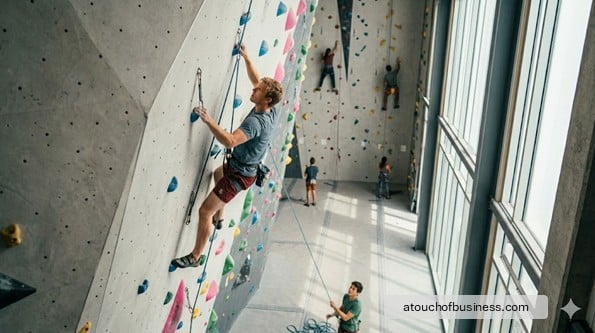
What to Expect From This Guide to Starting a Rock Climbing Gym
This guide presents an ordered path through the major decisions and practical preparations involved in opening a rock climbing gym, from testing demand and choosing a format to completing the facility, safety systems, staffing, and final checks. The bullets highlight selected areas from a detailed article.
Inside the guide, you will find:
- Startup roadmap: Advance from owner fit and market research through funding, facility selection, wall construction, systems, staffing, pricing, and opening preparation.
- Founder interviews: Hear from gym developers and operators about financing, construction, market selection, project delays, partnerships, leadership, and community building.
- Common questions: Clarify building needs, licenses, staff training, sales tax, gym formats, trade associations, additional revenue, and development timelines.
- Facility feasibility: Evaluate zoning, ceiling height, structural capacity, parking, permits, engineering, layout, wall design, and professional construction support.
- Financial model: Examine capital needs, fixed costs, membership growth, added revenue streams, pricing, presales, funding sources, and operating cash.
- Safety systems: Prepare waivers, belay controls, inspections, emergency procedures, equipment records, staff training, insurance, and work-at-height protections.
- Opening checks: Verify occupancy, structural approvals, equipment condition, crash-pad coverage, software, payment processing, staffing, signage, and emergency rehearsals.
The main article starts with an honest assessment of the capital, experience, and patience this facility demands.
Running a rock climbing gym means creating an experience climbers want to return to every week — a space where beginners feel welcome and serious climbers find routes worth the drive.
You’re not just opening a facility. You’re building a vertical community, one route at a time.
The startup process for a climbing gym is real and takes time. It also rewards people who prepare honestly and patiently.
Is a Rock Climbing Gym Right for You?
Indoor climbing has grown significantly since the sport entered the Olympics in 2020. North America now has more than 870 climbing gym locations, and the industry continues to expand.
That growth is real — but it doesn’t make this an easy business to start.
A climbing gym is one of the most capital-intensive small businesses you can open. Build-out, wall installation, and equipment require serious funding.
The facility must reach a solid membership count before it can cover its fixed costs — and that ramp-up typically takes 12 to 24 months.
Ask yourself a few honest questions before going further.
This business may not fit you if:
- You’ve never spent meaningful time inside a climbing gym
- You can’t cover personal living expenses for one to two years without a salary from the gym
- You don’t have access to substantial capital — or a realistic path to securing it
- You’d struggle with a long build-out period before any revenue arrives
- You’re not prepared for the physical and operational demands of managing a safety-critical facility
If some of those feel uncomfortable to read, that’s actually useful information. You’re not behind — you’re just at the beginning, and this is the right time to think clearly.
The owners who do well in this industry tend to love climbing as a sport and a culture. They also treat it as a business from day one.
Running this kind of venue means managing a team, enforcing safety protocols, planning route refreshes, handling facility maintenance, and watching membership numbers closely. It’s fulfilling, but it’s operationally demanding.
Talk with people who already run climbing gyms — ideally in markets you won’t compete in. Ask what the first 18 months felt like financially. Ask what surprised them. Firsthand owner insight is some of the most useful input you can gather before you commit.
Red Flags Before You Start
A few specific conditions are worth pausing on before you move forward.
Market saturation: If a well-funded chain gym is already operating in your target area with strong membership, competing on the same format is structurally difficult. Research who’s already there before choosing a location.
Funding shortfall: This is the most common early failure point. The total capital requirement — including operating funds to cover rent, payroll, and debt service while membership builds — is substantial. Don’t sign a lease or commit to wall construction without confirmed funding in place.
Wrong facility: Finding a space with the right ceiling height, structural capacity, and correct zoning classification for a climbing gym is genuinely hard. If a structural engineer finds that a building can’t support your wall system, you need to know that before you sign the lease.
No climbing industry experience: Running a gym without a background in climbing operations means heavy dependence on staff for safety decisions, route quality, and community culture. Consider working in a climbing gym for a year or two before opening your own, or bringing on a partner with direct experience.
2025 industry conditions: New gym openings declined in 2025 compared to 2024, and many existing gyms reported flat or declining traffic and revenue. The post-Olympic boom has settled. Plan conservatively — don’t count on rapid membership growth to solve cash flow problems.
Routesetter availability: Routes need to be refreshed every four to eight weeks per wall section to keep members engaged. Experienced routesetters are a specialized workforce. Verify that your target labor market has the talent you need before you commit to a location.
Step 1: Assess Fit and Talk to People Who’ve Done It
Start here, before any location searches or business plans.
Visit multiple climbing gyms in different markets — as a paying customer. Watch how the front desk handles check-in. Observe how staff manage beginners. Notice how routes are organized, how the bouldering zone flows, and how busy the facility gets at different times of day.
Spend time thinking about whether you have the passion, familiarity with the sport, management capacity, and financial resilience this business requires.
Then reach out to people who run climbing gyms in non-competing markets. Prepare specific questions before those conversations — about build-out timelines, early cash flow, staffing challenges, and what they’d do differently. Ownership is harder than it looks from the outside, and every owner’s journey is different.
Step 2: Study the Industry and Evaluate Entry Paths
Before you settle on a concept, understand the three main gym formats and how they differ.
The three primary formats:
- Bouldering-only: No ropes, lower ceiling requirements, lower capital cost. The fastest-growing format in the industry right now.
- Top-rope and lead climbing: Requires ceilings of 30 feet or more, anchor systems, rope inventory, and a belay certification program. Significantly more complex and expensive to build.
- Hybrid facility: Combines bouldering, roped climbing, and often fitness, yoga, or other programming. More revenue potential, but also more startup complexity and cost.
This format decision affects everything that follows — ceiling height requirements, wall installation cost, staffing needs, programming, and your overall startup budget. Make this decision before you begin your location search.
Also consider whether starting from scratch is the right path. Buying an existing climbing gym gives you an operating membership base, known cash flow history, and existing equipment — though you’ll need careful due diligence on the facility’s structural condition, equipment state, lease terms, and liability history.
Franchise options in the climbing gym space are limited. If any models exist when you’re researching, evaluate them carefully.
Step 3: Validate Local Demand
Your gym needs a real customer base within a reasonable drive.
Research the climbing population in your target area. Look for concentrations of young adults, fitness-focused people, families with children, and university populations — those are the primary customer segments for climbing gyms.
Map existing gyms within roughly 20 to 30 miles of your target location for an urban market. Visit each one. Observe peak hours, evaluate the quality of the route programming, and identify what those gyms aren’t providing.
Check local demographics: disposable income levels, population density, and whether affordable outdoor climbing options nearby might compete with your indoor facility.
Assess the local labor market, too. You’ll need routesetters, belay-certified floor staff, and front desk employees with climbing knowledge. Verify that talent exists in your area before committing to a location.
Pre-selling memberships before you open is a proven way to validate demand and generate early cash. Many climbing gym operators use presale campaigns as both a proof-of-concept and a funding tool. Understanding local supply and demand before you commit is one of the most important steps you can take.
Step 4: Choose a Business Model and Build Your Plan
Once you know the format, think through the full revenue picture before you write a single number.
Memberships and day passes typically form the core of a climbing gym’s income — often 65 to 75% of gross revenue. But ancillary streams matter just as much for profitability.
Common revenue streams beyond memberships:
- Group instruction and beginner climbing classes
- Belay certification programs
- Youth programs, camps, and competitive team training
- Birthday party packages and corporate team events
- Gear rental (shoes, harnesses, chalk bags, belay devices)
- Retail sales of climbing gear and apparel
- Café or snack sales
Think through which of these you’ll offer at launch and which you’ll add later. A well-structured mix of recurring membership income and higher-margin add-ons like classes and events is what makes the model work over time.
Also outline how you plan to reach customers at launch. Climbing gyms build their communities through direct outreach, presale campaigns, opening events, and word of mouth within the local climbing scene. Identify your likely early adopters and how you’ll get the facility in front of them before opening day.
Business Plan
A detailed business plan isn’t a formality here — it’s something your landlord and lender will both require. It’s also your own best tool for catching problems before they cost you.
Your plan should cover the full startup picture: your chosen gym format, the facility you’re targeting, your wall system design, projected startup costs by category, your staffing plan, your pricing structure, and your membership growth timeline.
The financial section is where this gets real. Climbing gyms carry high fixed costs — rent, payroll, insurance, and debt service on the build-out all run whether the gym is full or not.
You need to know how many members you need at your planned membership price to cover those fixed costs each month. Then ask: how long will it realistically take to reach that number?
Operating capital — the cash that keeps the gym open while membership builds — is as important as your startup funding. Plan for a ramp-up period of 12 to 24 months before revenue stabilizes.
If your financial plan doesn’t hold up through that period under a conservative scenario, it needs more work before you commit to a lease.
Include your funding sources, your presale strategy, and a conservative scenario for what happens if growth is slower than projected. Lenders and investors will notice whether you’ve thought through the downside. Building a thorough business plan is time well spent at this stage.
For more help thinking through profitability and revenue estimates for a new business, that resource walks through the logic in plain terms.
Step 5: Assess Your Funding Before You Commit to Anything
This step belongs before any lease signing, any architect engagement, and any wall builder conversations.
A climbing gym build-out is one of the most capital-intensive projects in the small business world. The wall system alone is the single largest cost item, and it comes after construction is already complete.
You also need operating capital to carry the gym through the months between opening and reaching a stable membership base.
Funding options to explore:
- SBA loans (7(a) or 504 programs for larger projects)
- Conventional commercial bank loans
- Equipment financing offered by some wall builders
- Private investors or limited partners
- Pre-opening membership presales
- Crowdfunding campaigns
Most commercial lenders will want to see a meaningful personal equity contribution and a solid business plan before approving financing. Start those conversations early — well before you need the money. A business loan process takes time, and you don’t want to be under lease pressure while you’re still securing funds.
Step 6: Form Your Legal Entity and Complete Initial Registrations
Most rock climbing gym owners choose a limited liability company (LLC) or corporation to limit personal liability. Given the inherent injury risks of climbing, personal liability protection matters here more than in many other businesses.
Consult a business attorney before making your structure decision. The right advice upfront is worth the cost.
Once your entity is formed, apply for an Employer Identification Number (EIN) with the IRS. You’ll need it to open a business bank account, hire employees, and handle tax filings. Explore your business structure options before filing anything.
If you’ll operate under a name different from your legal entity name, you may need to file a DBA. Check your state and county requirements. Also confirm that your gym name is available as a trademark if you plan to build a brand around it.
Step 7: Verify Zoning and Facility Requirements Before Signing a Lease
This step can make or break your entire project — and it must happen before you commit to a space.
Rock climbing gyms are classified differently by different jurisdictions. Some municipalities treat them as health and fitness establishments. Others classify them as assembly uses, recreational facilities, or specialty uses.
The classification affects your permitted zoning districts, parking requirements, and whether you need a conditional use permit or special exception approval.
Before you sign any lease, confirm:
- The zoning classification and whether a climbing gym is permitted at the address
- Whether a conditional use permit or special exception is required
- Parking ratio requirements for a recreational facility of your planned size
- What building permits will be required for your wall system and facility renovation
- What change-of-use permits apply if the space was previously used for something else
Ceiling height is non-negotiable. Bouldering gyms typically need at least 14 to 20 feet of clear height for commercial operations. Top-rope and lead climbing walls typically require 30 feet or more.
Lower ceilings limit what routes you can offer and how the facility feels to experienced climbers.
The building’s structural capacity must be verified by a licensed structural engineer before you anchor any climbing walls. Floor slab thickness, foundation capacity, and roof or ceiling framing all need to be assessed. Don’t commit to a space before a structural engineer signs off on it.
Engage a licensed architect and structural engineer before — or as part of — your lease negotiation. Many experienced climbing gym operators build lease language that addresses build-out responsibilities, rent abatement during construction, and certificate of occupancy timelines. Have an attorney review the lease before you sign.
Step 8: Complete Legal Setup, Tax Registration, and Banking
Once you have your entity and a signed lease, complete the remaining setup before any money moves or employees start.
Register for state and local sales tax accounts. The tax treatment of climbing gym memberships, day passes, class fees, gear rental, and retail sales varies significantly by state.
Some states treat fitness memberships as taxable services. Others exempt them. Retail sales of climbing equipment are typically taxable in most states. Verify the specific rules with your state’s revenue or taxation department — don’t guess.
If you’ll have employees, register for state employer tax accounts covering unemployment insurance and state income tax withholding.
Open a dedicated business bank account using your EIN and entity documents. Keep business and personal finances completely separate from the start.
Set up your gym management and point-of-sale software. You’ll need a platform that handles memberships, digital waivers, day pass sales, class registration, gear rentals, and payment processing.
This system is your front desk’s operational backbone — test it fully before you open. Setting up a merchant account for card processing should happen in parallel with your software setup.
Step 9: Design the Facility and Hire a Professional Wall Builder
Your climbing wall system is the core product of the gym. It’s also the most complex and expensive element of the build-out. Don’t treat it as a purchase — treat it as a design collaboration.
Work with a licensed climbing wall manufacturer and builder who has experience with safety engineering, structural load calculations, anchor design, and industry standards. The Climbing Wall Association (CWA) includes member wall builders who design and install systems specifically for commercial climbing facilities.
Bring your wall builder into the conversation before you finalize a location if possible. They can assess ceiling height, structural constraints, and whether your planned format is feasible in a given space before you’re committed to a lease.
When designing the layout, plan for more than just climbing surfaces. A functional facility needs room for:
- Belay zones and crash pad coverage in bouldering areas
- Equipment inspection and check-in stations
- Front desk and check-in area with clear sightlines to the floor
- Changing rooms and restrooms
- Locker or cubby storage for guest belongings
- Seating and social space
- Retail display, if applicable
- Emergency access routes and exit signage
Route planning should cover a range of difficulty grades — from welcoming beginner terrain to challenging advanced problems. A gym that only serves experienced climbers limits its membership ceiling significantly.
Wall installation requires structural permits in most jurisdictions. Obtain all required building permits before installation begins. Don’t anchor any wall system without licensed engineering approval of the load plan.
Step 10: Set Up Safety Systems, Documents, and Emergency Procedures
This is one of the most important steps in the entire process — and it can’t be rushed or treated as paperwork.
Climbing involves inherent physical risk. Falls happen. Your job as the owner is to build a safety culture that is thorough, consistent, and documented.
Before you open, have an attorney draft your liability waiver. A jurisdiction-appropriate waiver — signed by every visitor before they climb — is a core element of your risk management program. For minors, a parent or legal guardian must sign separately. A generic template pulled from the internet is not sufficient.
Post clear, visible safety rules throughout the climbing floor. Rules should address harness use, belay checks, auto-belay clip-in procedures, bouldering zone conduct, and fall zone clearance.
Establish a belay certification process for any climber who will belay others on roped routes. Keep written records of who has been certified and when.
Write and rehearse an Emergency Action Plan with your staff before opening. It should cover fall injuries, medical emergencies, and evacuation procedures.
Stock first aid kits and an AED (automated external defibrillator) throughout the facility, and train staff in their use.
Set up written inspection schedules for climbing holds, ropes, anchor hardware, auto-belay devices, harnesses, and bouldering mats. Log every inspection. These records protect you legally and help identify equipment issues before they cause harm.
The CWA’s Industry Practices publication is the primary voluntary framework for commercial climbing facility operations in the U.S. Read it carefully before you open.
If you’ll have employees doing route-setting or wall maintenance at height, OSHA’s General Industry fall protection standards apply. Employees exposed to heights of four feet or more above the lower level must receive appropriate fall protection equipment and training. The CWA’s Work-at-Height Certification Program is a voluntary framework aligned with those OSHA requirements.
Step 11: Obtain Insurance Before Anyone Enters the Building
Secure your insurance coverage before your facility opens — not after, and not the week before.
General liability insurance is the foundational coverage for a climbing gym. It protects against injury claims and lawsuits from climbers, visitors, and guests. Given the physical risk inherent in climbing, this coverage is not optional.
Workers’ compensation insurance is legally required in most states once you have employees. Verify your state’s employer requirements and have coverage active before your first employee starts work.
Additional coverage to discuss with your broker:
- Commercial property insurance (covers the facility, wall structure, and equipment)
- Participant accident medical insurance (pays without fault attribution for climber injuries)
- Professional liability insurance (covers instruction and supervision claims)
- Umbrella or excess liability coverage
- Business interruption insurance
Work with an insurance broker who specializes in adventure sports, recreation, or climbing facilities. The CWA offers group insurance programs through Monument Sports Group for member gym operators — those programs are designed specifically for this industry and worth exploring.
Learn more about business insurance to understand the coverage landscape before you meet with a broker.
Your insurer will want to see your risk management program, waiver language, staff training protocols, and equipment inspection records. A strong safety system doesn’t just protect your members — it directly affects your insurability and premiums.
Step 12: Hire and Train Your Team
A climbing gym needs the right people in place before it opens — not just enough people to fill shifts.
At a minimum, you’ll need front desk and floor staff capable of handling check-in, conducting beginner orientations, and monitoring the climbing floor. You’ll also need a routesetting crew ready to install initial routes before opening day, and a general manager or operations lead if you won’t be present full-time.
There are no federal legal requirements mandating specific certifications for climbing instructors at indoor gyms. However, your insurer may require or recommend that instructors hold first aid and CPR certifications, particularly for staff who lead classes. Verify this with your insurer before finalizing your training plan.
All floor staff must be trained in belay verification procedures, safety rule enforcement, emergency response, and first aid and CPR before the facility opens.
Routesetters need demonstrated climbing experience and the ability to create routes across a range of difficulty grades. Staff who work at elevation must receive fall protection training and appropriate equipment under OSHA’s General Industry standards.
Look for people within the local climbing community. Experienced climbers often seek instructor or routesetter roles that give them access to the gym, and they tend to connect naturally with members.
For more guidance on when and how to hire, that resource covers the basics.
Set up your payroll system and complete all required employer documentation — Form I-9, new hire state reporting, state withholding registration, and OSHA recordkeeping — before anyone’s first day.
Step 13: Set Your Pricing and Activate Your Systems
Pricing decisions need to be made before your booking and membership system goes live — not as an afterthought on opening week.
Research comparable facilities in your market carefully. Look at what nearby gyms charge for memberships, day passes, punch cards, class fees, and event packages. Pay attention to what’s included — some memberships include gear rental; others don’t.
Your pricing needs to cover fixed costs at a realistic membership volume. Benchmark against competitors, but make sure your own numbers work at the membership count you can realistically reach in the first 12 months.
Pricing categories to establish before opening:
- Monthly and annual memberships (consider tiered options)
- Day passes and punch cards
- Class fees by program type
- Gear rental rates (shoes, harness, chalk bag, belay device)
- Group event packages (birthday parties, corporate events)
- Retail pricing for gear and apparel
Once pricing is set, configure your gym management software fully. Test the membership sign-up flow, digital waiver collection, class booking, and payment processing before anyone else uses it.
Booking and payment systems that fail at peak times create the kind of first impression that’s hard to recover from.
More guidance on pricing your products and services can help you think through the decision-making process.
Step 14: Complete Pre-Opening Checks and Open
Before you open the doors, work through your pre-opening checklist methodically. Don’t rush this.
A soft opening or limited preview day with invited climbers before your public launch gives you a chance to identify flow problems, staffing gaps, and operational issues while the stakes are lower.
Key pre-opening confirmations:
- All building permits obtained and final inspections passed
- Certificate of occupancy obtained and posted
- Structural engineer has signed off on wall installation
- Fire safety inspection passed; emergency lighting and exit signage in place
- ADA compliance verified for all public areas
- All insurance policies active with certificates of insurance on file
- Attorney-reviewed liability waivers (adult and minor versions) loaded into your system
- Auto-belay devices inspected and service records documented
- Ropes, holds, and bouldering mats inspected and logged
- All staff trained, scheduled, and certified in required safety protocols
- Gym management and payment systems tested end-to-end
- Safety signage posted throughout the facility
- Emergency Action Plan rehearsed with all staff
- Cleaning protocol established and supplies stocked
Chalk dust accumulates heavily and constantly in a climbing gym. Plan your daily cleaning routine before opening — not after you see what the floor looks like after the first busy session.
Opening-Day Red Flags
Even after a thorough build-out process, a few issues are worth watching for as you prepare to open.
Holds that aren’t fully torqued or feel loose: All holds must be checked before any climber touches the wall. A spinning or loose hold is a direct injury risk. Walk every route before opening.
Auto-belay devices with missing service records: Each auto-belay device must have documented inspection by the manufacturer or a certified technician before use. Don’t open any auto-belay route without this paperwork in hand.
Crash pad gaps or misaligned coverage: Bouldering mat coverage must be verified from the climber’s fall perspective, not just the floor plan. Walk the bouldering area and check for gaps, seams that could catch a foot, or coverage that doesn’t extend far enough.
Staff who haven’t run through the Emergency Action Plan: Every staff member on opening day needs to know what to do if a climber is injured. If the team hasn’t rehearsed the response, the facility isn’t ready to open.
Booking or payment system failures: Test the full flow — membership creation, waiver signing, payment, and check-in — the day before you open, not the morning of.
No clear capacity plan for peak times: Think through what happens when the gym is busier than expected. Who manages the floor? How is the bouldering zone monitored? Having a plan for a busy Saturday is part of being ready to open.
Frequently Asked Questions
What type of building do I need for an indoor climbing gym?
You need a large, structurally sound commercial space — typically a warehouse or industrial building. Ceiling height is non-negotiable.
Bouldering gyms generally need at least 14 to 20 feet of clear height. Top-rope and lead climbing gyms typically need 30 feet or more.
The floor slab and structural framing must support the wall system’s load. A licensed structural engineer must review any candidate space before you sign a lease.
Do I need a specific license to open a climbing gym?
There’s no single federal license for operating a climbing gym. You’ll need standard registrations: entity formation, an EIN, and a local business license.
A certificate of occupancy is required for the facility. Some states have licensing or disclosure requirements for health clubs that accept prepaid membership fees. Verify what applies in your state with a consumer protection or licensing agency.
Are climbing gym staff legally required to be certified?
There are no federal legal requirements mandating specific certifications for climbing instructors at indoor gyms.
However, your general liability insurer may require or recommend that instructors hold first aid and CPR certifications or belay-specific training. OSHA’s General Industry fall protection standards apply to routesetters and maintenance staff who work at height.
How does sales tax apply to memberships and day passes?
This varies significantly by state. Some states apply sales tax to gym memberships and admission-type charges; others exempt them.
Retail sales of climbing equipment and gear rental are typically taxable in most states. Verify your state’s specific rules with your state’s department of revenue before you set up your point-of-sale system.
What’s the difference between a bouldering gym and a full-service climbing gym?
A bouldering gym offers only bouldering walls — no ropes, lower ceilings, lower capital cost. It’s the fastest-growing and most capital-efficient format right now.
A full-service gym adds top-rope and lead climbing, which requires taller ceilings, anchor systems, rope inventory, and a belay certification program. It supports more revenue streams but costs substantially more to build and operate.
What is the CWA and should I join?
The Climbing Wall Association (CWA) is the primary U.S. trade association for commercial climbing gym operators, wall builders, and manufacturers. Membership is voluntary.
CWA membership provides access to group insurance programs, the Industry Practices operational framework, and a network of experienced operators. Many insurers and lenders view CWA membership favorably. It’s worth exploring seriously before you open.
How do climbing gyms make money beyond memberships?
Memberships and day passes form the core revenue — often 65 to 75% of gross income. Ancillary streams include climbing classes, youth programs, gear rental, retail, birthday party packages, corporate events, and café sales.
Gyms with well-developed instruction programs and event revenue are significantly more profitable than those that rely on memberships alone.
How long does it take from lease signing to opening day?
Most operators should plan for six to 12 months from lease signing to opening. Larger or more complex projects take longer.
The timeline covers architectural and engineering design, permitting, construction, wall installation, equipment setup, staff hiring and training, and final inspections. Budget for rent and operating costs throughout this entire period — not just after you open.
Expert Advice From People in the Rock Climbing Gym Business
These interviews share practical lessons from climbing gym founders, operators, developers, and industry leaders who have dealt with funding, construction, market selection, staffing, customer experience, and community building.
Readers can use these interviews to compare different gym models, spot common startup risks, and think through whether their market, budget, building, and operating plan are strong enough before opening.
Building Gyms from the Ground Up – CBJ Podcast with Eric Hires
This interview covers the development and construction of Stone Climbing’s gyms in Florida, including ground-up building, local market challenges, and lessons from opening a first location.
It is useful because it shows how a founder thinks through location, design, construction, and expansion in a market without a deep outdoor climbing tradition.
The Value of Collaboration in Gym Creation – CBJ Podcast with Parker Simms
This interview covers the process of building Gravity Bear, a bouldering gym inside a renovated historic building, with attention to construction timelines, subcontractors, and facility vision.
It is useful because it highlights the pressure of project management, the value of hiring the right team, and the need to balance ambition with financial reality.
From Outsider to Industry Leader – CBJ Podcast with Alice Kao
This interview covers Alice Kao’s path from launching Sender One with savings, loans, and investor support to building a multi-location climbing gym company.
It is useful because it gives startup readers a realistic look at funding, unpaid founder years, leadership growth, and the management mistakes that can come with scaling.
How To Be an Entrepreneur – CBJ Podcast with Andrew Potter
This interview covers Andrew Potter’s planning process for a climbing gym, including market reading, SBA loan knowledge, local demand, and choosing a facility concept for Kansas City.
It is useful because it shows why a founder must understand the local climbing audience, nearby competition, and whether bouldering, ropes, or a mixed model fits the market.
What It’s Like to Open a New Gym During a Pandemic
This written interview covers Travis Klinghagen’s experience opening Climberz in South Dakota during the pandemic, including lease timing, construction, delays, and landlord discussions.
It is useful because it shows how much risk can appear after commitments are already made and why backup plans, cash control, and flexible agreements matter.
This interview covers Jean-Marc de la Plante’s experience developing multiple Canadian climbing gyms, including market assessment, facility types, development partners, and community appeal.
It is useful because it helps a future owner think beyond the wall design and consider market fit, partnerships, customer culture, and the long-term role of the gym in its community.
Related Articles
- How To Start a Boxing Gym
- How To Start a Kickboxing Gym
- How To Start a Dojo
- How To Start a Yoga Business
- How To Start an Indoor Playground
- How To Start a Bowling Alley
Sources:
- Climbing Wall Association: CWA Standards Overview, Industry Practices Sourcebook, Group Insurance Programs, Climbing Gym Career Paths
- Climbing Business Journal: Gyms and Trends 2025 Report, Gyms and Trends 2024 Report, Employee Classification and Insurance
- OSHA: General Industry Fall Protection 1910.28
- Gymdesk: How to Open a Rock Climbing Gym
- PerfectGym: Rock Climbing Gym Startup Guide
- Member Solutions: Climbing Gym Startup Overview
- Sadler Sports Insurance: Indoor Climbing Wall Insurance
- Granite Insurance: Climbing Gym Insurance Coverage Guide
- Grand View Research: U.S. Climbing Gym Market Analysis
- ICP Climbing Walls: Climbing Gym Site Selection Guide
- Eldorado Climbing Walls: Indoor Bouldering Wall Guide
- Aerial Adventure Tech: OSHA Compliance for Climbing Gyms
- IndoorClimbingGym: Climbing Gym Industry Consolidation
- LegalClarity: States That Tax Gym Memberships
- TaxJar: Sales Tax on Fitness Memberships
- Rock Climbing Realms: Climbing Gym Revenue Model