
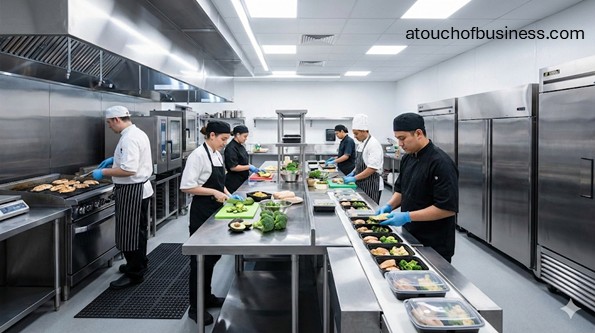
Steps to Prepare Your Meal Prep Setup to Open
Overview of a Keto Meal Prep Business
A Keto Meal Prep Business prepares ready-to-eat or ready-to-heat meals that are built around a very low carbohydrate approach. You sell those meals as single orders, bundles, or recurring subscriptions, usually for pickup or local delivery.
Your offer is typically a set of prepared meals plus optional add-ons like breakfast items, snacks, sauces, and bulk proteins or vegetables. Early planning has to cover food safety, labeling, cold storage, and local approvals.
Is a Keto Meal Prep Business the Right Fit for You?
Before you price a single meal, ask a bigger question—are you the right person for this kind of food business? A keto-focused meal prep service can be started by one person in many cases, but only if you can access an approved kitchen and keep your process consistent.
If you want a broader “reality-first” look at ownership, read points to consider before starting your business. Use it to spot gaps before you commit.
Passion matters here, but not as a slogan. Passion helps you keep solving problems when equipment breaks, suppliers substitute items, or approvals take longer than you want. If you’re unsure how your drive holds up under pressure, review how passion affects your business.
Now check your motivation. Are you moving toward something or running away from something? If you’re starting only to escape a job or financial stress, this path can backfire because the early stage brings uncertainty and extra pressure.
Here is the hard part to say out loud. Income can be uncertain at the start. The hours can be long. The tasks can be tiring and repetitive. Vacations are harder to take. You’re responsible for the food, the timing, the paperwork, and the customer experience—and your family has to be on board with that.
One of the fastest ways to learn what this feels like is to talk to owners. Only talk to owners you will not be competing against. Look for a different city, region, or delivery area. A good place to start is inside advice from real business owners, then reach out with clear questions.
Questions to ask non-competing owners:
- What surprised you most about approvals, inspections, or kitchen requirements in your area?
- What equipment did you think you needed, but later realized you could delay?
- How did you keep your recipes and portions consistent while you were still learning?
- What would you do differently to protect time and family support in the first 90 days?
Pros and Cons to Weigh
In a Keto Meal Prep Business, the upside is real, but the constraints are real too. Seeing both sides early helps you choose the right kitchen path and a launch plan you can actually carry out.
When you weigh the upside and downside early, you make better choices about kitchen access, equipment, and pricing.
Potential pros to consider:
- Repeat orders are common when customers rely on meal packs or subscriptions.
- Clear positioning can help you stand out if you keep your portions and ingredients consistent.
- Bundles can simplify ordering and production planning in the first stage.
Potential cons to plan around:
- Food safety and time-temperature control add process and equipment requirements.
- Perishable inventory creates waste risk if demand is overestimated.
- Home-based production is limited in many areas for prepared meals (varies by jurisdiction).
Choose a Business Model for Your Keto Meal Prep Business
Start by choosing how your meal prep operation generates revenue. Will you sell direct to customers only, sell to accounts like gyms or offices, or do a mix? Direct-to-customer is often simpler to start because you control ordering and handoff, but it still needs compliant food production and safe holding.
Next decide how you will package the offer:
- Bundles: customers buy packs of meals for a week.
- Subscriptions: recurring orders on a set schedule.
- Single orders: customers choose meals as needed.
Keep the scale honest. Many owners start solo by using a shared commercial kitchen or a small permitted space. If you plan a leased facility, staff, and larger volume from day one, your funding needs and approvals will usually increase.
Validate Demand and Competition
This is one of those steps that looks generic, but it works differently in a keto meal prep operation.
Confirm there is demand in your area, prices can cover costs, and you can stand out without overpromising.
Use simple checks:
- List direct competitors and note what they sell, how customers order, and how pickup or delivery works.
- Talk to potential customers about convenience needs, portion preferences, and pickup windows.
If you want a structured way to think about demand and saturation, use this guide to supply and demand and translate it into your local area.
Define Your Offer List and Portion Standards
Think about how this will feel in your keto meal prep service on a busy day—does your plan still hold up?
Start with a small, controlled set of items you can repeat. In meal prep, consistency is part of the product. Customers expect the same portion size and the same ingredients each time.
Build your foundations:
- Standard recipes with weights, yields, and portion sizes.
- Ingredient lists for each item, updated whenever you change brands or substitutes.
- A simple batch record so you can repeat results and track what changed.
Allergen control belongs here, not later. The Food and Drug Administration lists the major food allergens (“Big 9”), which include sesame. If your items use common allergens like milk, eggs, tree nuts, peanuts, wheat, soybeans, fish, shellfish, or sesame, your labeling and handling must stay accurate.
Plan Food Safety and Inspection Readiness
Food safety is part of the product in a keto-focused meal prep service. Your process has to protect customers and hold up during inspections.
Most local regulators use a version of the Food and Drug Administration’s Food Code as a model for retail food safety rules. Plan around safe temperatures, cleanable surfaces, handwashing access, sanitation tools, and simple logs.
At a minimum, plan how you will:
- Keep cold foods cold and hot foods hot until they are packaged and stored.
- Monitor temperatures with calibrated probe thermometers.
- Prevent cross-contact between allergen and non-allergen items.
- Clean and sanitize tools and surfaces using methods your local inspector accepts.
If you feel unsure, this is a good time to bring in help. A local food safety consultant, a shared kitchen manager, or an experienced operator can help you build a process that is realistic and inspection-ready.
Decide Where You Will Produce Food
In a Keto Meal Prep Business, small setup choices can create big problems later—so get this right before you open.
Where you cook and package drives everything that comes next. Many areas do not allow the full range of prepared meal production from a home kitchen, and the rules differ by city and state. Treat this as a “verify first” step.
Common options include:
- Shared commercial kitchen: you rent time in a permitted kitchen.
- Your own permitted kitchen: leased or owned space built to meet local requirements.
- Home-based: varies by jurisdiction and may be limited by the type of food and how it is sold.
Also confirm whether pickup is allowed at your address and whether the building needs a Certificate of Occupancy or similar approval for the intended use. A practical starting point for location planning is this business location guide, then confirm the local rules with zoning and the health department.
Plan Your Kitchen Layout, Storage, and Handoff
This is how you avoid last-minute chaos when you’re building a keto-focused meal prep service.
Even in a shared kitchen, you still need a layout plan. You have to move ingredients through prep, cooking, packaging, labeling, and storage without creating cross-contact.
Decisions to make before you commit to a space:
- Where ingredients are received and checked, including temperature checks for perishables.
- Where labels are applied and verified before storage.
- How pickup or delivery handoff works without breaking the cold chain.
If customers will pick up at a location, confirm signage rules and whether the pickup point is permitted for that use (varies by jurisdiction).
List Essential Equipment and Confirm Capacity
If you skip this step, your keto meal prep business may still open—but you’ll pay for it later.
Equipment planning is not about buying everything. It is about matching capacity to your first few weeks of orders. If you can’t safely cool, store, and package your meals, you are not ready to sell.
Core equipment categories to plan for:
- Cooking and hot prep: ovens, cooktops, sheet pans, hotel pans, pots, and pans.
- Cold holding and freezing: commercial refrigeration and freezer space, plus thermometers.
- Food prep and portioning: cutting boards, knives, food processor, blender if needed, and food-safe scales.
- Packaging and labeling: containers, lids, sealing method, labels, and tamper-evident seals if used.
- Sanitation and warewashing: access to required sinks, cleaning tools, sanitizers, and test strips.
- Transport: insulated carriers and cold transport containers for delivery or pickup staging.
If you are using a shared kitchen, some items may be included. Verify what is provided and what you must bring.
Build a Startup Budget That Matches Reality
Picture your keto meal prep operation in real life—what has to be true for opening day to go smoothly?
Your startup budget should separate “must-have to open” from “nice to have later.” A useful approach is to build your numbers around the model you chose and the kitchen path you confirmed.
Common startup cost categories for this business include:
- Kitchen access or facility costs (rent, deposits, utilities setup, shared-kitchen fees).
- Permits, licenses, inspections, and plan review fees (varies by jurisdiction).
- Initial ingredients and packaging.
- Equipment purchases or rentals not provided by the facility.
- Brand basics (name, labels, item photos, website setup).
- Insurance and professional services (accounting, legal setup, consulting as needed).
- Delivery setup if you will deliver (insulated carriers and related tools).
If you want a structured way to build the estimate, use this guide to estimating startup costs and fill it with local quotes.
Set Pricing Rules Before You Accept Orders
This is one of those steps that looks generic, but it works differently in a meal prep business built around keto goals.
Pricing is not only about what customers will pay. It is also about whether the business survives early waste, schedule changes, and ingredient swings. Start with basic methods, then choose the one you can actually manage.
Common pricing approaches include:
- Cost-plus per meal: portion cost plus packaging, kitchen time, labor, and a margin.
- Bundle pricing: a pack price that reduces the per-meal rate.
- Subscription pricing: recurring weekly packs with clear pickup or delivery rules.
- Tiered pricing: different prices based on portion size or protein choice.
Before you set final prices, verify whether sales tax applies to prepared meals in your state or locality and confirm what labeling format applies to the way you sell. For practical pricing frameworks, see pricing your products and services and adapt it to meal packs and subscriptions.
Pick Funding and Set Up Your Financial Setup
The smartest move is to set this up now, while your meal prep operation is still in planning mode.
Many owners fund the first stage themselves, especially if they start with shared kitchen time and a small equipment list. If you need outside funding, it helps to tie the request to a clear budget and a simple plan for compliance and launch.
Funding paths that are commonly used include savings, bank or credit union loans, and microloans. The Small Business Administration explains how its microloan program works through intermediary lenders.
Whatever your funding path, set up your business bank account early and keep transactions separate. If you want a practical overview of lending prep, review how to get a business loan.
Form the Business and Register Basics
Once your keto-focused meal prep plan is real, set up the business structure and tax basics so you can sign agreements and accept payment properly.
Once your model and kitchen path are real, set up the legal structure. This usually includes registering the business with your state, getting an Employer Identification Number from the Internal Revenue Service, and opening the accounts you need for taxes and payroll if you will hire.
If you want a plain-language walkthrough of the steps, use this guide on how to register a business. If you have partners, consider professional help.
Confirm Permits, Licensing, and Local Food Rules
Local approval is a required part of launching a keto meal prep operation. Treat this step as a checklist and verify each item with the right office.
Rules vary by jurisdiction, so treat this as a local verification checklist. Start with your state’s business portal and Secretary of State for entity filings. Then confirm sales and employer tax accounts with your state revenue agency if they apply.
On the food side, the local health department is usually the key agency for permits, plan review, and inspections for prepared meals. Also contact city or county offices for business licensing and zoning approvals for your location.
If you plan to ship meals across state lines or use a facility that manufactures, processes, packs, or holds food beyond typical retail sale, ask whether Food and Drug Administration food facility registration applies or whether an exemption such as a retail food establishment fits your model.
Local questions that help you get the right answer:
- Am I producing food in a shared commercial kitchen, a permitted facility I control, or a private residence?
- Will customers pick up at my address, or is it delivery only?
- Will I have employees or drivers in the first 90 days?
Handle Labeling and Claims Carefully
If you skip this step, your Keto Meal Prep Business may still open—but you’ll pay for it later.
Prepared meals can be sold in different ways, and labeling requirements depend on how the food is packaged and offered. The Food and Drug Administration provides labeling guidance and also explains when small businesses may qualify for nutrition labeling exemptions.
What you can do now, before printing labels:
- Write an ingredient list for each item and keep it updated when you change ingredients or suppliers.
- Identify and declare major allergens when present.
- Decide whether you are making any nutrition-related claims that would require extra care.
- Confirm with your regulator what label elements are required for your specific sales format.
Set Up Suppliers and Packaging Vendors
Suppliers can change your ingredient list without warning. In a keto meal prep operation, that can affect allergen accuracy and customer trust.
Supplier reliability is part of food safety. Late deliveries and substitutions can change your ingredient lists and affect allergen accuracy.
Common supplier types include broadline foodservice distributors, local wholesalers, direct-from-producer accounts for meat and produce, and packaging suppliers. Before you design your weekly offerings, confirm minimum order requirements, delivery days, and what happens when items are out of stock.
When you compare vendors, look for:
- Consistent quality and cold-chain handling for perishable items.
- Clear substitution policies and communication.
- Traceability basics such as lot information or clear receiving documents.
- Packaging that matches your holding and reheating instructions.
Build Your Name, Domain, and Digital Footprint
This is how you avoid last-minute chaos when you’re building a keto-focused meal prep service.
Start with a name that is clear, easy to say, and not likely to be confused with another food business. Use this guide to selecting a business name, then run a basic trademark search on the United States Patent and Trademark Office site.
Next lock your domain and social handles. If you need a simple checklist for the digital side, use how to build a website and keep the first version focused on ordering, pickup or delivery rules, and clear item descriptions.
Create Simple Brand Assets You Can Use Anywhere
Your keto-focused meal prep service needs consistent labels, photos, and order messages. These basics reduce confusion when you start taking real orders.
You do not need a large brand package to open, but you do need consistency. At minimum, plan a logo, a consistent color and font choice, and label templates that match your packaging.
Core assets to prepare before launch:
- Product photos that reflect real portions and packaging.
- Label template(s) that can be updated when ingredients change.
- A basic order confirmation message and pickup or delivery instructions.
- Simple business cards or a one-sheet handout for partners and referrals.
If design is not your strength, you can hire help. Many owners use a designer for labels and a consultant for launch planning so the work is done once and reused.
Plan How Customers Will Find You
This is one of those steps that looks generic, but it works differently in a keto meal prep operation.
Pre-launch marketing is about clarity, not hype. Customers need to know what you offer, how to order, and when pickup or delivery happens. They also need confidence that the food is handled safely.
Starter channels that fit early launch:
- Local search listings and consistent business information online.
- Partnerships with gyms, trainers, or wellness communities that do not require wholesale production.
- Simple social posts that show real portions, packaging, and pickup or delivery windows.
If you plan any sampling, confirm what your local health department allows (varies by jurisdiction).
Plan Pickup and Delivery for Early Launch
Think about how this will feel in your keto meal prep service on a busy day—does your plan still hold up?
Pickup and delivery are not just logistics. They change your cold storage needs and your timing. Decide what you can do safely and consistently in the first month.
Early-launch choices to define:
- Pickup windows and cutoff times for orders.
- Delivery area and delivery days if you deliver.
- Cold transport plan from kitchen to handoff point.
- How you will handle late pickups and failed deliveries.
If you plan to accept payment online, run a full test from order to receipt before you announce your launch.
Set Up Payment Readiness and Basic Policies
Before you accept payment, test the full flow from checkout to deposit for your meal prep service.
Before you accept payment, make sure the business banking is set, your payment processor is connected, and your checkout is tested end to end. Many owners also set simple policies for cancellations, subscription changes, and refunds so decisions are consistent.
Pre-launch items to have in writing:
- Order cutoffs and what happens if a customer misses a pickup window.
- Subscription terms and how changes are handled.
- Allergen and ingredient disclosure approach, consistent with your labeling and local rules.
- A basic incident plan for complaints or suspected food safety issues.
Insurance and Risk Planning for a Keto Meal Prep Business
Insurance planning should match your real exposure. You are producing food, storing perishable items, and possibly delivering to customers. The exact legal requirements vary by state and by whether you have employees or vehicles used for business.
Coverage that may be legally required, depending on your situation:
- Workers’ compensation: often required once you have employees; verify requirements with your state labor or workforce agency.
- Auto insurance:</strong required to operate vehicles under state law; if you deliver, verify that your coverage matches business use.
Commonly recommended coverage to discuss with an insurance professional:
- General liability.
- Product liability.
- Commercial property coverage for equipment and inventory.
- Business interruption coverage, if available and appropriate.
Know the Skills You Need for Launch
Launching a keto-focused meal prep service is mostly about repeatable basics. You can learn skills as you go, but you should not guess on safety or compliance.
You do not need to be a chef to start, but you do need repeatable execution. If you lack a skill, plan how you will learn it or who you will hire to cover it.
Skills that matter in pre-launch:
- Food safety discipline, including temperature checks and sanitation habits.
- Recipe standardization, portioning, and basic yield tracking.
- Allergen awareness and ingredient control.
- Basic costing and budgeting.
- Customer communication and schedule management.
Many first-time owners use professionals for accounting, registration, and planning. You can also hire design help for labels, photos, and brand assets.
What Your Days Will Look Like Before and Right After Launch
Before launch, your time goes to approvals, testing, and setup. Right after launch, your schedule tightens and mistakes cost more.
Pre-launch work is a mix of planning and hands-on testing. Early launch adds timing pressure. This is where you find out if the business fits your life.
Expect to spend time on:
- Calling agencies, filling forms, and scheduling inspections.
- Testing recipes, weighing portions, and refining packaging.
- Supplier setup, receiving checks, and updating ingredient lists.
- Planning your first production schedule and cold storage plan.
If you want structured support, consider building a small advisor group. A bookkeeper, an insurance agent, and a food safety specialist can keep you from guessing.
A Day in the Life During Pre-Launch
Pre-launch days in a keto meal prep operation are split between paperwork and hands-on tests. You are building a system you can repeat, not just cooking.
In the morning, you confirm kitchen access, check supplier lead times, and update item descriptions when substitutions happen. Midday is for a test batch, portion weighing, and packaging checks.
In the afternoon, you run a payment test, review your budget, and follow up with the health department or city offices. At night, you tighten the launch plan and decide what you will delay until after opening.
Red Flags to Fix Before You Launch
Red flags are problems you can see now but hope will disappear later. In a Keto Meal Prep Business, they usually show up as approval gaps, storage limits, or unclear labeling.
Red flags are usually about gaps you can see now but hope will disappear. Treat them as a checklist for risk.
- You have not confirmed the local approval path for your kitchen model.
- Your refrigeration and freezer capacity is not proven for your planned first-week volume.
- Your ingredient lists and allergen declarations are inconsistent across labels and your website.
- You do not have a repeatable portioning method and batch record.
- Your pricing is not connected to your real costs and kitchen fees.
- You plan to deliver but have no clear cold transport plan.
Pre-Opening Readiness Checklist for Your Keto Meal Prep Business
This checklist is built for a Keto Meal Prep Business that is about to take its first orders. Use it as a final gate before you announce opening day.
This checklist is your final gate. If an item is not ready, delay the launch until it is resolved. A clean opening is easier than fixing problems after customers are already ordering.
Permits and approvals:
- Business registration completed and Employer Identification Number obtained.
- City or county business license verified if required (varies by jurisdiction).
- Zoning approval confirmed for the kitchen address and any pickup activity (varies by jurisdiction).
- Health department permit category confirmed; inspections and approvals completed as required (varies by jurisdiction).
- Sales tax and employer accounts set up if they apply (varies by state and locality).
Facility and equipment:
- Refrigeration and freezer holding temperatures verified with thermometers.
- Probe thermometers available and calibrated.
- Sanitation supplies ready and accepted by your facility or inspector.
- Packaging and labels fit the container and remain readable.
- Cold transport plan ready for pickup staging or delivery.
Products, labeling, and customer experience:
- Recipes finalized with consistent weights and portions.
- Ingredient lists updated; allergen declarations accurate.
- Ordering flow tested end to end; payment deposits confirmed.
- Pickup and delivery rules posted clearly.
- Basic policies written for order changes, cancellations, and refunds.
Final launch prep:
- First-week production schedule set with realistic volume.
- Supplier delivery days confirmed and backup options identified.
- Soft launch plan ready within the rules that apply to your area.
27 Field-Tested Tips for Starting Your Keto Meal Prep Business
A Keto Meal Prep Business can be a solid one-person start—if you get the kitchen path, food safety expectations, and labeling right.
These tips are startup and pre-launch focused, so you can build a plan that is realistic before you accept your first order.
Use them as a sequence check: fit, demand, model decisions, legal setup, budget, kitchen and equipment, suppliers, and final readiness.
Before You Commit (Fit, Skills, Reality Check)
1. Make sure you actually like the day-to-day reality: measuring portions, repeating recipes, and staying strict on timing and cleanliness—because consistency is part of what customers are paying for in a Keto Meal Prep Business.
2. Pressure-test your motivation early by asking, “Are you moving toward something or running away from something?” If you are only trying to escape a job or financial stress, the uncertainty of pre-launch approvals and setup costs can hit harder than you expect.
3. Do an honest skills gap check before you spend: food safety discipline, portion control with a scale, basic costing, and allergen awareness are not optional for this type of business.
4. Talk to owners only if you will not be competing against them (different city, region, or delivery area), and ask what surprised them about approvals, kitchen requirements, cold storage needs, and label accuracy.
Demand and Profit Validation
5. Define your first customer group in plain terms (busy professionals, families, fitness-focused customers), then validate where they already shop or spend time so you are not guessing how they will find you.
6. Build a competitor grid that includes pack sizes, pickup windows, delivery days, and how orders are placed—because in meal prep, convenience details often matter as much as the food.
7. Run an interest test that does not require selling food (for example, collecting preferred pickup windows and pack sizes) until you confirm what your local rules allow for sampling, pre-orders, and production locations.
Business Model and Scale Decisions
8. Choose your fulfillment lane early—pickup, local delivery, or shipping—because each option changes your cold-chain planning, packaging needs, and which rules may apply.
9. Start with a controlled offer structure (bundles or subscriptions with a short list of items) so your early production plan stays repeatable and your ingredient lists stay accurate.
10. Pick a realistic launch scale: shared commercial kitchen time is often a lower-commitment start than leasing and building out your own space, but the best choice depends on local approvals and your budget.
Legal and Compliance Setup
11. Confirm the correct permit category for your Keto Meal Prep Business with your local health department before you commit to a kitchen, because “meal prep” can be treated differently than other food sales depending on how you package and sell.
12. Verify zoning for your address (and pickup activity if customers come to you) with your city or county zoning or planning office before you sign anything, because the wrong location can block your launch.
13. Set up the business structure and get an Employer Identification Number early so you can open a business bank account, sign agreements, and keep transactions separate; if you feel unsure, use a professional for registration and accounting setup.
14. Confirm sales tax rules for prepared meals with your state revenue agency, because taxability can vary by state and sometimes by locality.
15. Treat labeling as a compliance project, not a design project: keep ingredient lists current, identify major allergens, and confirm whether Nutrition Facts labeling is required or whether an exemption applies based on your specific situation.
Budget, Funding, and Financial Setup
16. Build a “must-open” startup budget that separates required launch items (permits, kitchen access, refrigeration capacity, packaging, thermometers) from nice-to-have upgrades you can delay.
17. Price from fully loaded costs, not just ingredients: include packaging, kitchen fees, labor time per batch, and spoilage risk—because underpricing is easier to do in meal prep than most new owners expect.
18. If you plan to borrow, match the loan amount to a written startup budget and your approvals timeline, so you are not paying for money you cannot deploy while you wait on inspections or permits.
Location, Setup, and Equipment
19. Design a simple kitchen flow (receiving → prep → cooking → packaging → labeling → cold storage) to reduce cross-contact risk and last-minute confusion, especially when allergens like dairy, eggs, and nuts are common in keto recipes.
20. Do a cold-storage capacity check in numbers: count how many labeled meals and add-ons you plan to stage at peak, then confirm you can hold them at safe temperatures without stacking problems or door-opening spikes.
21. Build your equipment list by category (hot prep, cold holding, portioning, packaging and labeling, sanitation, transport) and confirm what a shared kitchen provides in writing so you do not double-buy or show up missing key items.
22. Test packaging before launch with real portions: check leak resistance, stack stability, label adhesion in cold storage, and whether reheating instructions match what the container can safely handle.
Suppliers, Packaging, and Pre-Opening Setup
23. Vet suppliers for reliability, not just price: ask about minimum order quantities, delivery days, substitution policies, and lead times, because substitutions can force label and allergen updates in a Keto Meal Prep Business.
24. Create a receiving checklist for perishables (temperature, condition, and documentation) so you can reject unsafe deliveries and keep basic traceability records from day one.
25. Write the minimum set of pre-opening documents you will need to operate cleanly: order cutoffs, pickup or delivery windows, subscription terms if used, and a clear approach to allergen disclosure that matches your labels and local rules.
Branding, Launch Prep, and Final Readiness
26. Lock your business name, domain, and social handles early, then do a trademark search before you invest in labels and signage, because a forced name change can stall your launch and waste printed materials.
27. Use a hard “ready-to-open” gate: approvals in hand, inspection completed if required, refrigeration holding temperatures verified, labels proofed against current ingredients and allergens, payment flow tested end-to-end, and a small soft launch plan that fits your kitchen capacity and local rules.
Use these tips as a pre-launch checklist, not a motivation poster.
If you can verify the rules locally, build a realistic budget, and prove you can produce safely in a compliant kitchen, your Keto Meal Prep Business will be in a much stronger position on opening day.
FAQs
Question: Do I need a commercial kitchen to start a Keto Meal Prep Business?
Answer: In many areas, prepared meal production must happen in a permitted kitchen, not a home kitchen.
Confirm the allowed kitchen types with your local health department before you spend money on equipment or branding.
Question: What permits and licenses do I usually need to start this business?
Answer: It varies by jurisdiction, but most owners need some mix of business registration, local business licensing, and a food permit with inspection.
Start with your state business registration site, then your city or county licensing portal, and your local health department.
Question: Who do I call first to confirm the food rules for meal prep in my area?
Answer: Call your local health department and ask which permit category applies to prepared meal production and packaging.
Ask whether plan review is required before inspection, and what kitchen setups are accepted in your jurisdiction.
Question: Do I need an Employer Identification Number before I open?
Answer: Many owners get an Employer Identification Number early because it helps with banking, taxes, and hiring setup.
You can apply directly with the Internal Revenue Service when you are ready to form the business and set up accounts.
Question: Do I have to charge sales tax on prepared meals?
Answer: It depends on your state and sometimes your locality, so you should not assume the answer.
Verify taxability and permit needs with your state department of revenue before your first sale.
Question: Do I need to register with the Food and Drug Administration as a food facility?
Answer: Some food facilities must register, but there are exemptions and the details depend on how and where you sell.
Review the federal rules and confirm whether your setup fits an exemption, especially if you sell beyond direct local retail.
Question: Do I need Nutrition Facts labels on my meal containers?
Answer: Sometimes yes, but exemptions can apply based on your business facts and how the food is sold.
Confirm this before printing labels, especially if you plan to make nutrition claims.
Question: What allergen rules should I plan for when launching?
Answer: You should identify major allergens used in your recipes and make sure they are declared accurately where required.
Because keto recipes often use dairy, eggs, and nuts, build cross-contact controls and label discipline early.
Question: What business model is easiest to launch for a Keto Meal Prep Business?
Answer: Many first-time owners start with direct-to-customer pickup or local delivery using meal bundles or simple subscriptions.
This can reduce complexity, but your local kitchen and inspection rules still control what you can do.
Question: How do I keep the business from feeling too big for one person?
Answer: Limit the launch offer to a short list of repeatable meals, fixed pickup windows, and a realistic weekly volume.
Choose a kitchen setup that matches your time and budget, like a shared commercial kitchen if it is allowed and available.
Question: What equipment is truly essential before opening day?
Answer: You need reliable cold holding, calibrated thermometers, portioning tools like scales, and packaging and labeling tools that work in real conditions.
You also need cleaning and sanitation supplies that match what your facility and inspector expect.
Question: How do I plan cold storage so I do not fail on day one?
Answer: Count your peak number of meals and add-ons, then confirm your refrigeration and freezer space can hold them safely without over-stacking.
Test temperature stability with normal door openings during prep and staging.
Question: How should I set pricing without guessing?
Answer: Start with a fully loaded cost per meal that includes ingredients, packaging, kitchen fees, and your time per batch.
Then test bundle or subscription pricing only after you confirm your true costs and local tax rules.
Question: What startup costs should I plan for besides equipment?
Answer: Common categories include kitchen access, permits and inspections, initial ingredients and packaging, insurance, and brand basics like labels and a simple website.
Your largest cost drivers are usually kitchen setup, cold storage needs, and packaging choices.
Question: What insurance do I need to open a Keto Meal Prep Business?
Answer: Legal requirements vary, but workers’ compensation is commonly required once you have employees, and vehicle coverage must match business use if you deliver.
Many owners also consider general liability and product liability coverage for risk planning.
Question: What should my daily workflow look like in the first phase?
Answer: A simple flow is receiving checks, batch prep, cooking, portioning by weight, labeling, and immediate cold storage.
Build your schedule around safe holding and a handoff plan that does not break the cold chain.
Question: Should I hire help before I open?
Answer: Many owners start solo, but you may need help if your planned volume exceeds what you can prep, package, and label safely in your kitchen time.
If you hire, set up employer accounts and required coverage before the first shift.
Question: What basic systems should be ready before I take the first order?
Answer: You need a tested way to accept payment, capture orders with clear pickup or delivery windows, and track what each customer ordered.
You also need a simple record system for recipes, ingredient lists, and batch notes so you can repeat results and update labels fast.
Question: What basic policies should I write down before launch?
Answer: Set written rules for order cutoffs, pickup windows, cancellations, and subscription changes if you offer subscriptions.
Keep allergen and ingredient disclosures consistent with your labels and the requirements in your area.
Question: What are the most common mistakes that delay opening?
Answer: The biggest delays come from choosing a kitchen setup that is not permitted, printing labels before requirements are confirmed, and underestimating cold storage needs.
Another common delay is skipping early calls to zoning and the health department before signing agreements.
Real Founder Advice for Starting Meal Prep
When you’re starting a Keto Meal Prep Business, founder interviews help you spot the real pressure points before they cost you time and cash.
You can learn how operators think about kitchen setup choices, cold storage limits, packaging and labeling discipline, pricing logic, and early workflow—without having to discover every lesson the hard way.
Below is a list of resources available
Audio Interviews
- Entrepreneurs On Fire — Greg Connolly (Trifecta) Interview
- Thorne Take 5 Daily — Greg Connolly (Trifecta) Podcast
- PricePlow Podcast — Jamie Giovinazzo (Eat Clean Bro)
- ZJ Means Business — Tessa Sandmann Meal Prep Founder Interview
Printed Interviews
- Entrepreneur — Eat Clean Bro Founders on Building Meal Prep
- Grocery Dive — Q&A With Freshly Co-Founder/CEO
- BrandProject — Freshly CEO Interview on Prepared Meals
- Authority Magazine (Medium) — Fresh n’ Lean Founder Interview
Related Articles
- How to Start a Meal Prep Business
- How to Launch a Nutrition Business
- Start an Acai Bowl Cafe
- Start a Butcher Shop
- Starting an Olive Oil Business
- Start a Cooking Class Business
- Start a Delicatessen
- Starting a Food Truck Business
- How to Open a Breakfast Restaurant
- How to Start a Bakery
- Start a Cookie Business
Sources:
- IRS: Get employer ID number
- SBA: Register business, Apply licenses permits, Open business bank account, Get business insurance, Microloans
- FDA: FDA Food Code, Food allergies, Guidance industry food labeling, Small business nutrition, Registration food facilities
- eCFR: Registration food facilities, Definitions apply subpart
- USPTO: Trademark search