
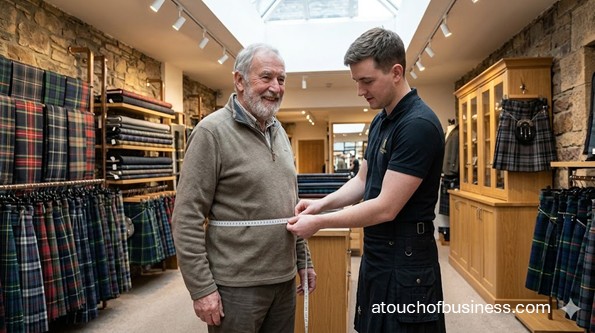
An Overview of a Kilt Store
Decide What Kind Of Kilt Store You Want To Run
A kilt store is a specialty apparel shop. You are not just putting clothes on racks. You are helping customers choose tartans, compare full Highland dress options, handle fittings, and complete outfits that often include kilts, jackets, waistcoats, hose, brogues, sporrans, belts, and pins.
Your first big choice is simple. Will you be a stocked retail store, a special-order store, or a hybrid? That choice affects your opening inventory, your cash needs, your floor layout, and the kind of service your customers expect the moment they walk in.
A storefront kilt store usually works best as a hybrid. You stock core accessories, display sample outfits, carry a focused tartan range, and use fittings and special orders to cover the rest. That gives people a real in-person experience without forcing you to buy too much inventory too early.
Your likely customers are not one group. Some want a wedding outfit. Some want a family or clan tartan. Some want pipe band uniforms. Others want a single kilt, a full outfit package, or help understanding what each piece does. That is why a kilt store needs both product knowledge and patient customer service from day one.
Decide Whether This Business Fits You
Before you think about rent, inventory, or signs, ask whether business ownership fits you at all. A kilt store can look fun from the outside, but the daily work is practical. You will receive stock, steam garments, check labels, answer questions, take measurements, manage special orders, fix vendor problems, handle returns, and keep the sales floor looking sharp.
Then ask whether this specific business fits you. Do you enjoy detailed product work? Can you stay calm when a customer needs a wedding outfit fast, a shipment is late, or a measurement has to be checked twice? A kilt store rewards people who care about presentation, accuracy, and service.
Passion matters here. If you do not enjoy the product, the customer conversations, and the slower parts of specialty retail, hard weeks will feel longer. That is one reason passion for the work matters more than many people expect.
Ask, Are you moving toward something or running away from something? Do not start this business only to escape a hated job, solve immediate financial pressure, or chase the image of being a business owner. That is a weak reason to sign a lease and fill a stockroom.
You also need a reality check about lifestyle. A storefront kilt store ties you to hours, customer traffic, receiving schedules, and seasonal demand around events. You are not just choosing a business. You are choosing a work rhythm.
One of the best early moves is to talk with owners you will not compete against. Speak with kilt or specialty apparel store owners in another city, region, or market area. Use those talks to ask real questions about inventory mistakes, fittings, slow stock, vendor delays, and customer expectations. That kind of firsthand owner insight is hard to replace because it comes from people who have already lived the work.
Decide Whether Your Area Can Support A Kilt Store
The next choice is market reality versus wishful thinking. A kilt store can stand out, but being different is not enough. You need enough people in your area who will buy kilts, accessories, and full Highland dress often enough to support a storefront.
Start by looking at who the first customers are likely to be. Wedding customers, people shopping by tartan, gift buyers, pipe band customers, and people looking for formal Scottish wear are all realistic starting points. You do not need every group in equal size, but you do need enough of the right kind of demand to keep the store moving.
This is where you need to look closely at local supply and demand. Are there similar stores nearby? Are people already buying online because no local shop offers fitting help and product guidance? Does your area have enough demand for a specialty apparel store with a narrow focus?
Your kilt store does not need to serve everyone. In fact, it should not. Pick the customers you want to serve first, then build the offer around them.
Decide What Your Kilt Store Will Sell First
The tradeoff here is selection versus control. A broad product line can look impressive, but it can also bury you in slow stock. A tighter opening assortment is safer, but only if it still feels complete to the customer.
For a kilt store, the smartest opening mix is usually a balanced one. Stock core items that help customers complete an outfit on the spot, such as hose, flashes, belts, some brogues, shirts, and selected sporrans. Add sample kilts and jackets for fitting and display. Then use special orders for deeper tartan options, hard-to-predict sizes, and full made-to-measure needs.
Think in outfit logic, not just single items. A customer who comes in for a kilt may also need a jacket, shirt, hose, flashes, belt, sporran, or pin. If your opening mix does not support that natural bundle, you will lose easy add-on sales.
That choice affects everything else in your kilt store, from supplier setup to storage to how much cash you need before opening.
Decide How You Will Handle Tartan Choice And Fittings
This choice is about service level versus simplicity. If you want your storefront to stand apart from general apparel retail, you need a clear process for tartan selection and customer measurement.
Many customers will not know exactly what they need when they arrive. Some will ask for a family tartan. Some will need help understanding that tartan is the broader pattern term, while clan association is only one part of the conversation. Others will want a wedding outfit and need help choosing every item that goes with it.
Your fitting process should be ready before opening. That means having cloth tape measures, a clear measurement form, a good mirror setup, sample garments, and a simple way to track special orders, deposits, and pickup dates. If you treat fittings casually, you increase the chance of expensive mistakes.
A kilt store wins trust when the customer feels guided, not rushed. That is one reason your service process matters as much as the products on the wall.
Decide How You Will Put Your Business On Paper
The choice here is legal structure versus simplicity. You need to choose how the business will exist legally before you start opening accounts and signing long-term agreements.
Some owners start as a sole proprietor. Others set up an entity such as a limited liability company. The right choice depends on ownership, tax treatment, liability comfort, and how formal you want the setup to be from the start. If you need more background on structure, compare your options before you file anything.
After that, settle the business name. If your kilt store will trade under a name that is different from the legal owner or entity name, you may also need a DBA. Do not order signs, cards, tags, or labels before that part is clear.
As you move through these early decisions, it helps to have a simple roadmap for building a business plan. Your plan does not need to be fancy. It needs to show what you will sell, who you will sell to, what the location must do, how much inventory you will carry, and how you expect the store to open without running out of cash.
Decide Whether The Location Truly Fits A Storefront Kilt Store
This decision is about visibility versus cost. Cheap rent is not a bargain if the location is hard to find, weak for retail use, or awkward for fittings and displays.
A storefront kilt store needs more than a front door and a cash wrap. You need room for garments, mirrors, fitting conversations, backroom storage, receiving, and a checkout area that does not feel cramped. You also need a space that can legally operate as apparel retail.
Do not sign the lease first and ask questions later. The address itself changes what approvals may apply. A kilt store with displays, fitting space, stock storage, and signs has very different needs than a simple office lease.
What To Verify:
- Confirm the address allows apparel retail use.
- Ask whether the space needs a certificate of occupancy before opening.
- Find out whether your sign needs a local permit.
Decide Which Licenses, Tax Accounts, And Local Approvals Apply
The tradeoff here is speed versus clean setup. You can rush this part, but if you miss something important, opening day gets delayed.
At the federal level, you will usually want an Employer Identification Number before banking, payroll, and vendor paperwork. If you hire employees, payroll taxes and federal labor rules start to matter right away.
At the state level, a kilt store that sells tangible goods will usually need sales tax registration where that applies. Hiring may also trigger unemployment and workers’ compensation requirements.
At the city or county level, you may need a general business license, zoning clearance, building sign-off, signage approval, or a certificate of occupancy depending on the space and the work done to it. That is why it helps to review your local licenses and permits before your build-out is too far along.
What To Verify:
- Ask your state tax agency whether you need seller registration before your first sale.
- Ask your city or county business office whether a general business license is required.
- Ask the planning or building office whether tenant work, signage, or occupancy review applies to your space.
Decide How You Will Source Products Before You Buy Deep Inventory
This choice is breadth versus discipline. Specialty retail owners often get excited about product before they build a buying system. That is where early trouble starts.
Your supplier plan should cover kilts, jackets, waistcoats, shirts, hose, brogues, sporrans, belts, flashes, and pins. It should also show which items you will stock, which items you will display as samples, and which items you will special-order only.
Lead times matter. So do vendor terms, return rules, minimums, and defect handling. If you are importing directly, country-of-origin and import marking issues matter too. If you are buying through domestic wholesalers, the process is usually simpler, but you still need to know what can be reordered quickly.
Do not buy inventory based on enthusiasm alone. Build your opening assortment around what customers are most likely to ask for first, and keep the rest under control with a clear special-order process.
Decide How Your Inventory System Will Work Before Stock Arrives
The tradeoff here is convenience versus control. Manual tracking feels cheaper at first, but a specialty apparel store becomes messy fast when you mix stocked items, customer deposits, sample garments, and special orders.
Your kilt store should have a point-of-sale system that can handle product records, taxes, barcode scanning, and purchase orders. You also need a simple SKU structure that makes sense for category, size, tartan, and status. Some items may already have barcodes. Others may need your own internal labels.
Receiving should follow one repeatable routine. Check the shipment, match it to the purchase order, inspect the item, tag it, and place it in the right location. Do the same with special-order items, but keep them clearly separated from normal stock so they do not get sold by mistake.
This is not boring backroom work. In a kilt store, inventory discipline protects your cash and your reputation.
Decide How The Store Will Look And Flow
This choice is presentation versus clutter. A kilt store needs to feel clear and inviting, not packed with random garments and accessories.
Plan the sales floor around customer movement. Put strong visual displays up front. Show complete outfit examples so new customers can understand what goes with what. Use full-length mirrors and give people enough room to step back and look. Keep the fitting area private enough to feel comfortable, but close enough that staff can guide the process easily.
Your backroom matters too. You need racks, shelving, bins, garment bags, a receiving table, and a place to hold paid orders awaiting pickup. If you do not plan the stockroom, the front of the store will start paying for that mistake within weeks.
Storefront retail also lives and dies on checkout flow. Make sure the counter, bagging area, receipt setup, and card processing feel easy for both staff and customers.
Decide How You Will Price The Offer
The tradeoff here is margin versus conversion. Price too low and the store struggles. Price too high without enough service value and customers hesitate.
Pricing in a kilt store works best when you think in layers. Some items will be single-item purchases. Some will be package sales. Some will be quote-based because sizing, tartan choice, or construction changes the final amount.
Your pricing decisions should reflect product cost, shipping, alterations, staff time, display strategy, and how often the item is likely to move. Accessories may help margin. Full outfits may help average sale size. Special orders may require deposits and longer lead times.
If you want extra guidance on setting your prices, work through that before tags go on the rack. It is much easier to build a clean pricing system now than to fix confused pricing after opening.
Decide How You Will Pay For Startup Costs
This decision is growth pace versus financial pressure. A storefront kilt store can cost much more than people expect because the money is tied up in rent, fixtures, signs, systems, and inventory before the first sale happens.
Your main startup cost categories are usually lease deposit, rent, build-out, fixtures, signage, opening inventory, point-of-sale equipment, software, packaging, insurance, and working capital. The real cost range varies widely because the biggest drivers are location, the condition of the space, and how broad your opening assortment will be.
That is why your plan needs simple first-stage targets. How much stock can you carry without hurting cash flow? How many months of basic expenses do you need covered? How much can you commit to fixtures without starving the inventory budget?
If you need outside funding, explore loans carefully before you commit. If you want more detail on the financing side, review the basics of getting a business loan before you borrow against a retail concept you have not tested locally.
Decide How You Will Handle Banking, Payments, And Records
The tradeoff here is speed versus organization. You can take payments with simple tools, but your records still need to be clean from the start.
Open the business account early. That gives you a clear place for owner funds, vendor payments, deposits, payroll, and card settlements. If you need help with the setup, start with the basics of opening a business bank account before the first purchase order goes out.
Your payment process should support card sales, refunds, deposits, and special orders without confusion. You also need forms and records that match the way a kilt store actually operates. That means purchase orders, receiving records, measurement sheets, customer deposit records, special-order forms, return rules, and pickup documentation.
When records are weak, the problems show up everywhere. Inventory drifts. Deposits get hard to track. Special orders get delayed. Customers lose confidence. Keep it simple, but keep it clean.
Decide Whether You Need Staff At Opening
This choice is labor support versus payroll burden. Some kilt stores can open as owner-run shops. Others need at least part-time help because of hours, fittings, receiving, and customer service demands.
If you start solo, be honest about what that means. You will handle the floor, the backroom, the paperwork, and the vendor calls yourself. If that feels workable, keep the opening lean. If not, hire carefully and train for the real work, not just the selling.
For a kilt store, early staff training should cover product basics, fitting accuracy, tartan conversations, point-of-sale use, receiving, returns, and how to separate special orders from normal stock. Friendly help is not enough if the basics are sloppy.
If you hire even one employee, remember that payroll taxes, workplace notices, and state employment requirements can start right away. Do not leave those until the week before opening.
Decide How You Will Handle Labeling, Policies, And Risk
The tradeoff here is convenience versus protection. A specialty apparel store looks simple from the customer side, but retail mistakes can still be expensive.
Textile and wool goods sold in the United States can require fiber-content, country-of-origin, and care labeling. That is especially important if you buy from more than one source or import directly. Check incoming goods before they hit the sales floor so you are not fixing labeling problems after launch.
You also need clear store policies. Write your return policy, exchange rules, deposit terms, and special-order terms before your first customer asks. A kilt store often handles measurement-based and order-based sales, so a vague return policy can turn into an expensive argument fast.
Insurance matters too. General liability, property coverage, and workers’ compensation where required are all part of opening a physical retail store. This is not the place to guess.
Decide How You Will Present The Brand From Day One
This choice is polish versus delay. You do not need a giant brand package to open, but you do need the basics to look consistent.
Your kilt store should have a clear business name, simple visual identity, readable signage, a workable website or landing page, and accurate business information wherever customers find you. In-store presentation matters just as much. If the sign looks one way, the hang tags another way, and the receipts another way, the store feels less settled.
For a storefront business, the basics matter most. Signs should be easy to read. Product displays should feel intentional. Printed cards and simple branded paperwork can help the store feel established without turning branding into a big project.
The point is not to look fancy. The point is to make the shop feel trustworthy and ready.
Decide How You Will Launch The Kilt Store
The last choice is speed versus readiness. It is tempting to open as soon as the racks are up, but a storefront kilt store should not open until the space, the systems, and the service process all work together.
Run a soft opening first. Receive actual stock. Ring up test sales. Take at least one full practice order from measurement to deposit to pickup record. Watch how people move through the store. See whether the fitting area works, whether the point-of-sale is clear, and whether the backroom can handle a normal day.
A realistic pre-opening day in a kilt store includes checking deliveries, steaming garments, fixing displays, answering tartan questions, taking measurements, entering purchase orders, and making sure tagged stock matches what is in the system. If that sounds draining, pay attention. That is a preview of ownership, not an exception.
Opening day should feel calm, not rushed. That is your sign that the startup work was done in the right order.
Decide What Must Be Ready Before You Unlock The Door
This final check is about confidence versus assumptions. If something important is still unclear, opening will magnify the problem.
Before the kilt store opens, make sure the legal setup is finished, tax accounts are in place, location approvals are cleared, inventory is checked in, labels are reviewed, pricing is loaded, the payment system works, and customer forms are printed or ready digitally.
You should also know exactly how you will handle deposits, returns, special orders, pickups, and staff coverage. If those answers are still fuzzy, pause. A short delay is better than an opening week filled with preventable errors.
Quick Check Are the Following Are Ready:
- Business registration, tax ID, and any local licensing are complete.
- The space is approved for opening, including signage and occupancy issues where required.
- Inventory is received, tagged, stored correctly, and matched to the system.
- The fitting area, mirrors, displays, and checkout station work in real use.
- Policies for returns, exchanges, deposits, and special orders are clear.
- Staff, if any, know the sales process, fitting basics, and stock-handling rules.
- A soft opening or full test run has exposed the weak spots before the public launch.
FAQs
Question: Do I need a special license to open a kilt store in the United States?
Answer: Usually, no industry-only license applies just because you sell kilts. You still need the normal registrations and local approvals for a retail shop.
Question: What legal setup should I finish before I sign a lease?
Answer: Pick your business structure, secure your business name, and get your tax ID plan in order first. You should also confirm who will sign the lease and carry the liability.
Question: Will I need sales tax registration for a kilt store?
Answer: In most states, a retail store selling clothing and accessories must register before making taxable sales. Check your state tax agency because the rules and local taxes vary.
Question: What local approvals matter most for a storefront like this?
Answer: The big ones are zoning, business licensing, signage rules, and building or occupancy clearance when the space changes hands or gets altered. Those are tied to the address, not just the business type.
Question: Do I need insurance before opening the doors?
Answer: Yes, most owners put coverage in place before inventory arrives and before customers enter the shop. General liability, property coverage, and workers’ compensation if you hire staff are common starting points.
Question: Is it better to stock a lot of tartans right away or start smaller?
Answer: Most new owners are safer starting with a narrow range and using special orders for the rest. Too much slow stock can trap cash fast in a niche apparel store.
Question: What equipment do I really need before opening a kilt store?
Answer: Start with racks, mirrors, fitting tools, a point-of-sale system, barcode support, storage, and a clean checkout area. You also need a simple way to record measurements and special orders.
Question: How should I set prices when some items are stocked and others are ordered for the customer?
Answer: Build separate rules for shelf items, packaged outfits, and custom or special-order goods. Your pricing should cover product cost, shipping, handling time, and any fitting or alteration work tied to the sale.
Question: What are the biggest early cost drivers for a kilt store?
Answer: Rent, fixtures, signs, opening stock, and working cash usually drive the first budget. The width of your product line can change the total more than most beginners expect.
Question: What mistakes do new kilt store owners make before launch?
Answer: Common problems are buying too many items, choosing a weak location, and opening without a clean stock system. Another big one is treating fittings and special orders like casual side tasks.
Question: What does the daily workflow look like in the first month?
Answer: A normal day often includes receiving goods, checking stock records, helping customers choose outfit pieces, taking measurements, and processing payments. You may also spend time fixing display gaps and tracking orders that are still in transit.
Question: Should I hire staff right away or open alone first?
Answer: That depends on your hours, your budget, and how much fitting help the shop will provide. Many owners start lean, then add help once traffic and routine become clearer.
Question: What basic store policies should be written before opening day?
Answer: Put your rules for exchanges, deposits, pickups, damaged goods, and custom orders in writing before the first sale. Clear policies reduce confusion when a special-order item arrives late or does not fit as expected.
Question: What tech should be working before my first real customer walks in?
Answer: Your register, card reader, tax settings, inventory records, and receipt setup should all be tested in advance. If you take deposits or special orders, that process should be tested too.
Question: How can I market the store in the first phase without doing anything advanced?
Answer: Start with a clear storefront, accurate business listings, a simple website, and sharp photos of the products and full outfits. Early traction often comes from being easy to find and easy to understand.
Question: What should I watch closely in the first month so cash does not get tight?
Answer: Track rent, payroll, reorder timing, and how much money is tied up in items that are not moving. A specialty store can look busy while cash stays stuck on the racks.
Question: Do I need to worry about product labels if I am buying finished goods from suppliers?
Answer: Yes, you should still check what arrives before it goes out for sale. Textile and wool goods can require fiber, origin, and care information under U.S. rules.
Expert Tips From People In The Kilt Business
If you are serious about opening a kilt store, it helps to hear from founders, kiltmakers, and operators who have already built brands, handled product choices, and learned where the real pressure shows up.
The resources below give readers a practical way to learn from people who know the trade, the craft, and the selling side of Highland wear.
- Fashion History Now #46: 21st Century Kilts, an interview with Howie Nicholsby — A direct interview with the founder of 21st Century Kilts.
- How Scottish Brand Le Kilt Became A Cult Favourite — Samantha McCoach talks about starting small, selling direct, keeping production local, and avoiding growth that makes the brand harder to manage.
- Migration from Magento to Shopify — Scotland Kilt Company Story — Sonny Singh explains how Scotland Kilt Company started, how it moved from eBay into its own site and retail operation, and what he personally handles across product, pricing, and warehouse work.
- One of Scotland’s Last Master Kilt Tailors Creates Unique Online Course to Keep the Artform Alive — Marion Foster shares why traditional kilt knowledge is easy to lose and why fit, tailoring, and training matter so much in this field.
- An Interview with ScotlandShop’s Anna White — A helpful founder interview on early milestones, realistic timeframes, technology, and the day-to-day pace of building a tartan-focused retail brand.
Related Articles
- Starting an and Grow Your Wig Shop
- How To Start a Successful Men’s Clothing Store
- Starting a Retail Clothing Business
- Start a Bridal Boutique
- How To Start Your Children’s Clothing Boutique
- Start a Baby Clothing Store
- Start an Athletic Clothing Line
- Start a T-Shirt Business
- How To Start a Shoe Store
- How To Start a Hat Store
- How To Start a Kimono Store
Sources:
- IRS: Get An Employer ID Number, Employment Taxes
- SBA: Register Your Business, Pick Your Business Location, Federal And State Tax IDs, Open A Business Bank Account, Fund Your Business
- FTC: Apparel And Labeling
- U.S. Department Of Labor: Workplace Posters
- U.S. Customs And Border Protection: Country Of Origin Marking
- The Scottish Register Of Tartans: Scottish Tartan Register
- USA Kilts: USA Kilts Home, Kilt Outfit Packages
- Kinloch Anderson: Highland Dress And Kilts
- Square: Square Retail Barcodes